Hunting in California means navigating the state’s complex licensing system and understanding zone-specific regulations that can make or break your hunt. Whether you’re a first-time hunter seeking your hunter education certificate or a seasoned veteran planning your next big game adventure, we’ll help you cut through the regulatory maze and focus on what matters most: finding and harvesting game.
Here’s what we’ll cover:
- Complete breakdown of California hunting licenses, tags, and mandatory requirements
- Detailed season dates, bag limits, and regulations for all major game species
- Prime hunting locations including public lands, guided hunts, and private lease opportunities
Let’s dive into the essential information every California hunter needs to know.
Quick Overview: Season Dates, California Hunting Licenses, and Regulations
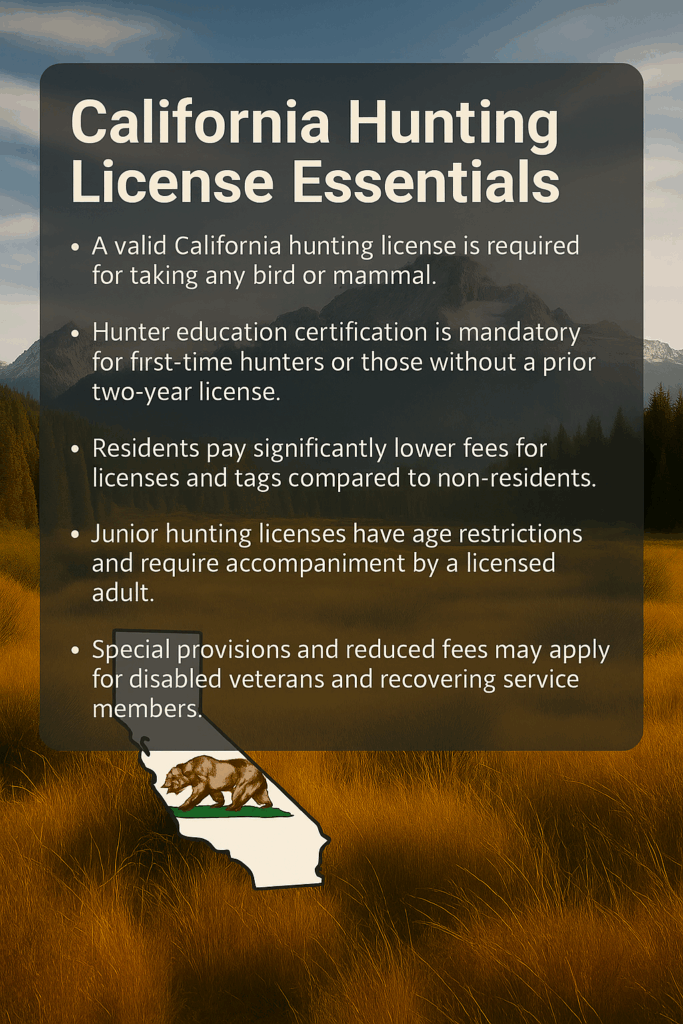
Understanding California hunting regulations and licensing requirements is your first step toward legal hunting in the state. The California Department of Fish and Wildlife manages all hunting licenses and tags, with specific requirements varying based on your residency status, age restrictions, and hunting experience. California residents enjoy significant cost advantages over nonresidents, while special provisions exist for disabled veterans and recovering service members undergoing medical treatment.
California Hunting License Types and 2025 Fees Reference Table:
| License Type | California Residents | Non-Residents | Requirements |
|---|---|---|---|
| Annual Hunting License | $56.50 | $184.25 | Hunter education certificate |
| Junior Hunting License (Under 16) | $11.75 | $42.00 | Accompanied by licensed adult |
| Lifetime Hunting License | $735.50 | Not Available | California residents only |
| Disabled Archer Permit | Reduced fees | Varies | Medical documentation required |
| One-Day Hunting License | $26.49 | $53.06 | Valid for consecutive 24 hours |
All hunters must complete hunter education certification unless they’ve held a hunting license from any state within the previous two years. Age restrictions apply to junior hunting license holders, who must be accompanied by a licensed adult. Apprentice hunts allow unlicensed individuals to hunt under supervision of experienced hunters. California accepts certificates from courses meeting International Hunter Education Association standards. Disabled veterans and recovering service members may qualify for reduced fees with proper medical documentation and proof of status.
The 2025 hunting seasons offer diverse big game hunting opportunities across California’s complex zone system. Season dates vary significantly by species, hunting zone, and weapon type, requiring careful planning for success. The big game drawing system uses preference points for premium species like elk and bighorn sheep.
2025 California Hunting Seasons and Bag Limits:
| Species | Season Dates | Zones | Bag Limit | Special Requirements |
|---|---|---|---|---|
| Deer (General) | Aug 9 – Dec 29 | A-X Zones | 1 buck | Deer tag required |
| Deer (Archery) | Jul 12 – Aug 8 | AO Zone | 1 buck | Archery equipment only |
| Elk | Sep 14 – Nov 30 | Limited units | 1 per permit | Preference point system |
| Bighorn Sheep | Aug 30 – Dec 15 | Premium units | 1 per permit | Once-in-lifetime permit |
| Pronghorn Antelope | Aug 16 – Sep 29 | Eastern Sierra | 1 per permit | Preference point system |
| Wild Turkey (Fall) | Nov 8 – Dec 31 | Statewide | 1 per day, 3 total | Upland Game Validation |
| Wild Turkey (Spring) | Mar 29 – May 4 | Statewide | 1 bearded bird | Upland Game Validation |
| Bear | Sep 14 – Dec 29 | Statewide | 1 per year | Bear tag required |
| Wild Pig | Year-round | Statewide | No limit | Wild Pig Validation |
| Waterfowl (Ducks) | Oct 26 – Jan 26 | Zone dependent | 7 per day | Duck Validation + Federal Duck Stamp |
California Deer Hunting
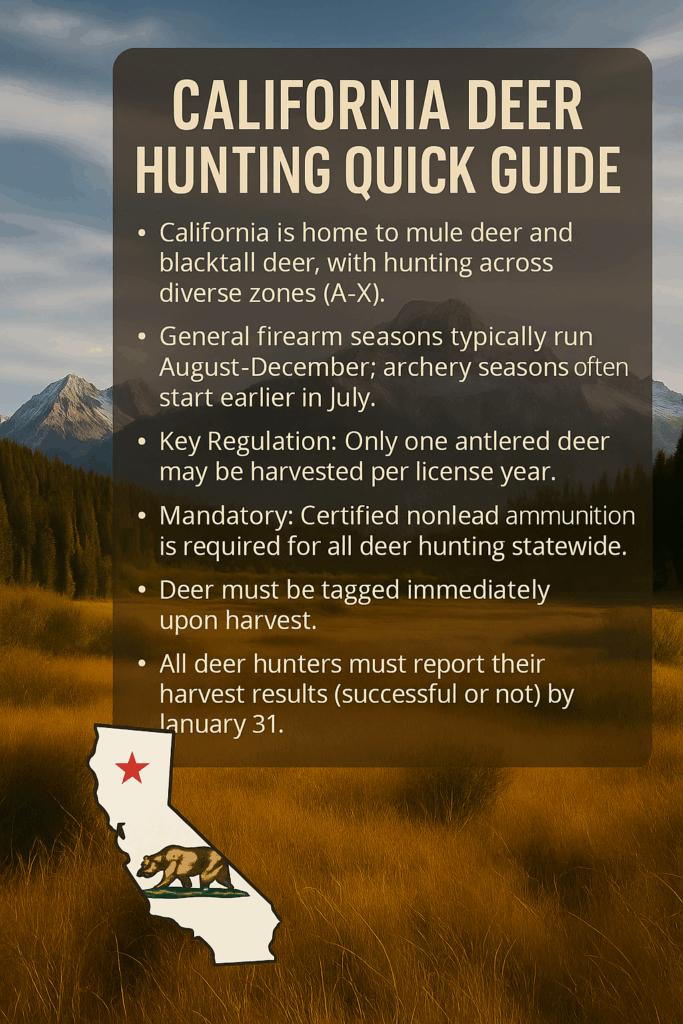
Deer hunting represents California’s most popular big game pursuit, with over 170,000 hunters purchasing deer tags annually. The state’s diverse terrain supports both mule deer and blacktail deer populations, offering opportunities from coastal forests to high alpine meadows in areas like the White Mountains.
California Deer Hunting Seasons
General Firearm Seasons run from August through December across California’s lettered zones (A through X), with each zone featuring specific dates tailored to local deer populations and habitat conditions. Zone A hunters enjoy some of the highest success rates at 25.8%, while the expansive AO (Archery Only) zone offers a longer season but lower success rates around 9.9%. California residents and nonresidents compete equally in the draw system, though nonresidents pay significantly higher permit fees.
Archery-Only Seasons typically begin in mid-July, providing bowhunters with earlier access during warmer weather when deer patterns are more predictable. These seasons often extend into the general firearm periods, giving archery hunters extended opportunities. Disabled archer permit holders receive special consideration under California hunting regulations.
Special Hunts include junior-only hunts and premium lottery draws for specific units, some achieving success rates between 70-100% due to limited participation and prime hunting areas. The big game drawing system requires applicants to file applications by specific deadlines each year.
The 2023 deer harvest statistics show a statewide harvest of 28,637 deer with an overall hunter success rate of 16.6%, though results vary dramatically by zone and hunting method.
California Deer Hunting Regulations
California deer hunting operates under strict regulations designed to maintain healthy populations while providing quality hunting opportunities.
- One buck rule: Hunters may harvest only one antlered deer per license year, regardless of zone or season
- Antler restrictions: Some zones require minimum antler point requirements or antlerless-only seasons
- Nonlead ammunition mandatory: All deer hunting requires certified nonlead ammunition statewide since July 2019
- Immediate tagging required: Deer must be tagged immediately upon harvest with the appropriate deer tag
- Harvest reporting mandatory: All deer hunters must report their results, whether successful or not, by January 31
California Elk Hunting
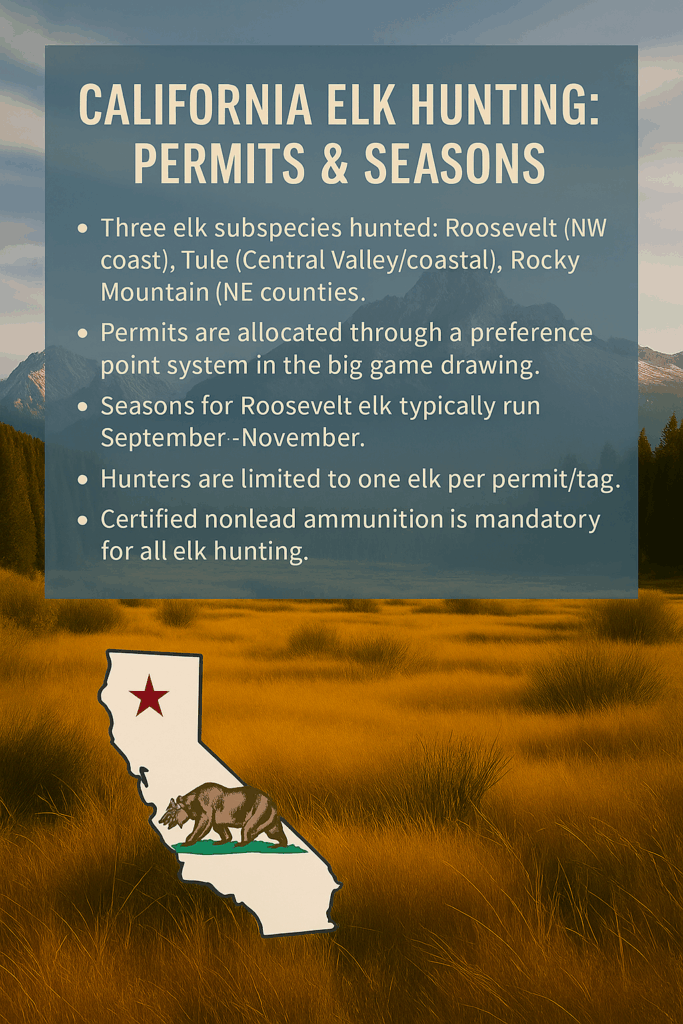
Elk hunting in California represents one of the state’s most prestigious big game hunting opportunities. The state manages three distinct elk subspecies through a carefully controlled permit system that uses preference points to allocate tags among qualified applicants.
California Elk Hunting Seasons
Roosevelt Elk hunting occurs primarily in the northwestern coastal regions, with seasons typically running from September through November. These massive elk, weighing up to 1,100 pounds, inhabit dense coastal forests where close-range encounters test hunters’ skills.
Tule Elk provide unique hunting opportunities in the Central Valley and coastal ranges. These smaller elk, endemic to California, offer hunting in more open terrain compared to their Roosevelt cousins. The big game drawing allocates limited permits to successful applicants who accumulate preference points over multiple years.
Rocky Mountain Elk hunting takes place in the northeastern counties, where transplanted herds have established huntable populations. These hunts often coincide with the elk rut, providing opportunities to hear bugling bulls in California’s high country.
California Elk Hunting Regulations
Elk hunting regulations reflect the species’ limited availability and conservation importance.
- Single elk limit: Each permit allows harvest of one elk as specified on the tag
- Preference point system: Applicants build points annually to improve draw odds for future years
- Nonlead ammunition mandatory: All elk hunting requires certified nonlead ammunition
- Immediate tagging required: Elk must be tagged immediately upon harvest and checked within five days
- Zone-specific regulations: Each hunt unit has specific boundaries, dates, and weapon restrictions
California Bighorn Sheep Hunting
Bighorn sheep hunting represents the pinnacle of California big game hunting, with permits so rare they’re considered once-in-a-lifetime opportunities. These magnificent animals inhabit some of California’s most remote and challenging terrain.
California Bighorn Sheep Hunting Seasons
Desert Bighorn Sheep seasons occur primarily in southeastern California’s mountain ranges, where small populations cling to rocky outcrops and steep canyons. Seasons typically run from August through December, with specific dates varying by hunt unit.
Sierra Nevada Bighorn Sheep hunting takes place at high elevations in the Sierra Nevada range, where federally endangered populations require extremely limited harvest. These hunts represent the ultimate challenge for California big game hunters.
The big game drawing for bighorn sheep permits uses a preference point system, with successful applicants often waiting decades to draw a tag. Nonresidents face even longer odds but remain eligible for the same draws as California residents.
California Bighorn Sheep Hunting Regulations
Bighorn sheep regulations emphasize conservation while providing limited hunting opportunities.
- Once-in-lifetime permit: Successful hunters cannot apply for another bighorn sheep tag
- Mandatory orientation: All permit holders must attend a pre-hunt orientation meeting
- Guide requirements: Some units require hunters to use licensed guides
- Harvest reporting mandatory: Detailed biological data must be collected from harvested sheep
- Nonlead ammunition mandatory: All bighorn sheep hunting requires certified nonlead ammunition
California Pronghorn Antelope Hunting
Pronghorn antelope hunting in California focuses on the eastern Sierra region, where these speed demons inhabit high desert plateaus and sagebrush flats. The big game drawing system manages limited permits through preference points.
California Pronghorn Antelope Hunting Seasons
Eastern Sierra Hunts typically occur from August through September, coinciding with cooler weather and increased pronghorn activity. These hunts take place in open terrain where long-range shooting skills prove essential.
Preference Point System governs tag allocation, with successful applicants often accumulating points for multiple years before drawing permits. The limited number of tags maintains quality hunting while protecting pronghorn populations.
California Pronghorn Antelope Regulations
Pronghorn hunting regulations balance opportunity with conservation needs.
- Single antelope limit: Each permit allows harvest of one pronghorn as specified
- Long-range shooting common: Open terrain requires accurate shooting at extended distances
- Nonlead ammunition mandatory: All pronghorn hunting requires certified nonlead ammunition
- Harvest reporting required: Biological data collection supports population management
- Access challenges: Most huntable areas require permission to cross private lands
California Bear Hunting
Black bear hunting in California offers a unique opportunity to pursue one of North America’s most challenging big game animals. With an estimated population exceeding ecological carrying capacity, bear hunting serves an important wildlife management function while providing memorable hunting experiences.
California Bear Hunting Seasons
General Bear Season runs from September 14 through December 29 statewide, with no zone restrictions limiting where hunters may pursue bears. The season coincides with fall feeding periods when bears are most active preparing for winter.
Tag Availability remains over-the-counter, though California maintains an annual harvest quota of 1,700 bears. In 2024, only 808 bears were reported harvested despite over 30,000 tags sold, indicating significant opportunity for dedicated hunters. Both California residents and nonresidents can purchase bear tags without entering a drawing system.
Success Factors include understanding bear behavior during hyperphagia (pre-hibernation feeding), identifying food sources like oak groves and berry patches, and adapting to California’s prohibition on using dogs for bear hunting.
California Bear Hunting Regulations
Bear hunting regulations reflect both safety considerations and the species’ protected status outside of hunting season.
- One bear limit: Hunters may harvest only one bear per license year with a valid bear tag
- No dog use: California prohibits using dogs for bear hunting, though AB 1038 proposes potential changes
- Immediate tagging required: Bears must be tagged immediately upon harvest and checked within five days
- Nonlead ammunition mandatory: All bear hunting requires certified nonlead ammunition
- Safety zones apply: No hunting within 150 yards of occupied dwellings without landowner permission
California Wild Pig Hunting
Wild pig hunting provides California’s only year-round big game opportunity, with huntable populations established across much of the state. These non-native animals offer exciting hunting while helping control agricultural damage and habitat destruction.
California Wild Pig Hunting Seasons
Year-Round Season allows wild pig hunting 365 days a year statewide, making it an excellent option for hunters seeking immediate opportunities or practice for other seasons. No age restrictions apply beyond normal hunting license requirements.
Peak Activity Periods occur during cooler months when pigs are more active during daylight hours. Early morning and late evening hunts prove most productive year-round.
Population Concentrations are highest in coastal counties, with Monterey County leading harvest numbers at 25.8% of the statewide total, followed by San Luis Obispo (15.2%), Kern (8.3%), and Tehama (7.0%) counties.
California Wild Pig Hunting Regulations
Wild pig hunting operates under simplified regulations reflecting their non-native status and year-round availability.
- Wild Pig Validation required: Effective July 2024, hunters need a Wild Pig Validation instead of individual tags
- No bag limit: Hunters may harvest unlimited wild pigs with proper validation
- Nonlead ammunition mandatory: All wild pig hunting requires certified nonlead ammunition
- Harvest reporting encouraged: While not mandatory, reporting helps wildlife managers track populations
- Private land permission required: Most productive pig hunting occurs on private lands requiring landowner permission
California Waterfowl Hunting
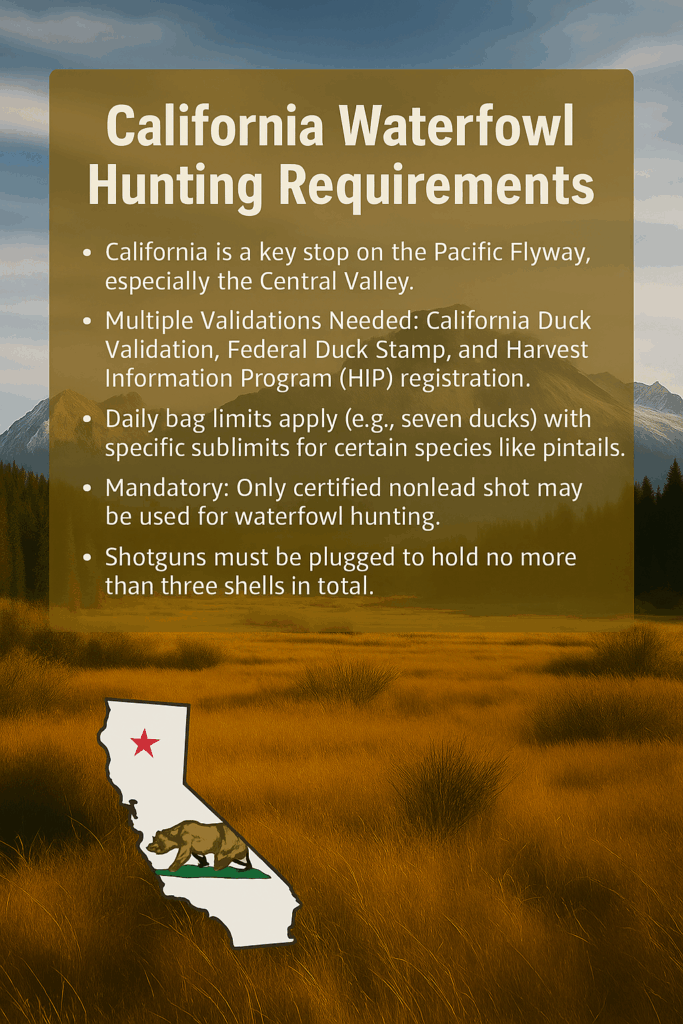
California’s position on the Pacific Flyway makes it a premier waterfowl destination, with the Central Valley supporting millions of ducks and geese during fall and winter migrations. From mallards in flooded rice fields to pintails in managed wetlands, the state offers world-class waterfowl hunting opportunities.
California Waterfowl Hunting Seasons
Duck Seasons for 2024-2025 feature 103 days in the Southern San Joaquin Valley, Southern California, and Balance of State zones, representing an increase from previous years. The Northeastern Zone maintains its traditional schedule with slightly different dates. Any person taking waterfowl must comply with both state and federal regulations.
Goose Seasons run concurrently with duck seasons in most zones, though bag limits and species-specific regulations vary. Canada geese and white-fronted geese comprise the majority of the harvest.
Special Seasons include Black Brant hunting along the coast with a reduced 27-day season, and various youth-only opportunities designed to recruit new waterfowl hunters. Age restrictions for youth hunts vary by specific programs.
California Waterfowl Hunting Regulations
Waterfowl hunting involves both state and federal regulations due to the migratory nature of these birds. The Harvest Information Program requires all waterfowl hunters to register annually.
- Multiple validations required: Hunters need a California Duck Validation, Federal Duck Stamp, and Harvest Information Program registration
- Daily bag limits vary: Seven ducks daily with species-specific sublimits (e.g., two pintails, one canvasback)
- Nonlead ammunition mandatory: All waterfowl hunting requires certified nonlead shot
- Shooting hours restricted: Legal hunting from 30 minutes before sunrise to sunset
- Plugged shotguns required: Shotguns must be plugged to hold no more than three shells total
California Minor Game Species Hunting
California supports numerous small game and upland bird species that provide excellent hunting opportunities for both beginners and experienced hunters seeking diverse experiences. These species often have more liberal regulations and longer seasons compared to big game hunting.
California Upland Game Bird Hunting Information
Valley Quail represent California’s most popular upland species, found throughout oak woodlands, chaparral, and agricultural edges. These birds provide fast-paced action and excellent table fare, with a generous bag limit of 10 birds daily during the October through January season. No special permit beyond the basic hunting license and upland game validation is required.
Wild Turkey hunting offers both spring and fall opportunities, with spring seasons focusing on breeding toms and fall seasons allowing harvest of either sex. Turkey populations have expanded significantly, now providing hunting opportunities in most California counties. Age restrictions for youth turkey hunts provide additional opportunities for junior hunters.
California Dove Hunting Information
Mourning Dove seasons occur during September and again in late December, coinciding with migration periods. California’s agricultural areas, particularly in the Central Valley, support excellent dove populations with daily bag limits of 15 birds. Hunters must file harvest information through the Harvest Information Program for all migratory bird hunting.
White-winged Dove hunting is available in southeastern California during September, offering opportunities for this desert-adapted species in areas like the Salton Sea and Colorado River regions. Nonresidents enjoy the same opportunities as California residents for dove hunting.
California Small Game Mammal Hunting Information
Rabbit and Hare species include cottontail rabbits, brush rabbits, and jackrabbits, with some species available year-round. These provide excellent opportunities for new hunters and those seeking meat for the table. No special permit beyond the basic hunting license is required for most rabbit species.
Tree Squirrel hunting focuses on gray squirrels in oak and pine forests, offering challenging shooting and excellent eating. The season typically runs from September through January in most areas. Apprentice hunts often focus on small game species as ideal learning opportunities for new hunters.
Where to Hunt in California
California’s hunting landscape encompasses over 100 million acres of diverse terrain, from coastal redwood forests to high desert plains. Understanding where to find hunting opportunities is crucial for success, whether you prefer the solitude of public lands or the managed conditions of private properties. Both California residents and nonresidents have access to the same public hunting areas.
Best Public Lands
California offers extensive public hunting access across multiple land management agencies, with each requiring different permits and following specific laws:
- National Forests provide over 18 million acres including the Angeles, San Bernardino, Los Padres, and Sierra National Forests, offering everything from deer hunting to small game
- Bureau of Land Management lands span over 15 million acres with 99% open to hunting, particularly strong for desert species and upland birds
- State Wildlife Areas managed specifically for hunting include Gray Lodge, Los Banos, and Mendota Wildlife Areas, excellent for waterfowl and upland birds
- National Wildlife Refuges offer limited hunting opportunities on select refuges like Sacramento River NWR during special seasons
Guided Hunts
Professional California hunting outfitters provide valuable services ranging from day hunts to multi-day adventures. Guided hunts prove especially beneficial for nonresidents unfamiliar with local conditions, offering expertise in everything from trophy deer hunting in the Sierra Nevada to waterfowl hunting in Central Valley rice fields. Many outfitters specialize in specific species or regions, providing equipment, local knowledge, and field dressing services that significantly improve success rates. Outfitters can assist hunters with serious injury or medical conditions requiring special accommodations.
Private Land Hunting
Private land hunting often delivers better success rates and less crowded conditions compared to public areas. California hunting leases provide seasonal or annual access to prime hunting areas, while day hunts offer shorter-term opportunities. For those seeking permanent hunting access, hunting land for sale throughout the state ranges from small parcels suitable for upland birds to large ranches supporting multiple species. Applicants for private land access should provide proof of insurance and hunting license validity.
Hunting Locator connects hunters with landowners across California who lease or sell their hunting properties. Our platform provides access to thousands of private hunting opportunities that aren’t available elsewhere, from exclusive deer leases in premium zones to waterfowl properties in the Central Valley. Whether you’re seeking a weekend dove hunt or a long-term big game lease, Hunting Locator helps you find and secure the private land access that transforms good hunts into great ones. Each person using our platform can file preferences and receive notifications when suitable properties become available.
FAQ
What licenses do I need to hunt deer in California?
You need a California hunting license plus a deer tag obtained through the lottery drawing system. First-time hunters must also complete hunter education certification. Nonresidents pay significantly higher fees but follow the same application process as California residents.
Can I use lead ammunition for hunting in California?
No, California requires certified nonlead ammunition for taking any wildlife anywhere in the state, effective July 1, 2019. This statewide requirement protects scavenging wildlife from lead poisoning and applies to all hunting, not just specific areas.
When do California deer tag applications open?
Deer tag applications typically open in early summer with deadlines usually in June. Applicants must file applications by specific deadlines to be eligible for the big game drawing. Specific dates vary by year, so check the California Department of Fish and Wildlife website for current application periods.
What’s the best time to hunt wild pigs in California?
Wild pigs can be hunted year-round, but cooler months from October through March offer the most comfortable conditions and increased daytime activity. Early morning and evening hunts prove most productive regardless of season. No age restrictions apply beyond normal hunting license requirements.
Do I need hunter education if I’m visiting from another state?
Nonresidents need hunter education certification if they haven’t held a hunting license from any state within the previous two years. California accepts hunter education certificates from other states meeting IHEA standards. Proof of previous license or education must be provided when purchasing California licenses.
Where can I find current hunting season dates?
Current season dates are available on the California Department of Fish and Wildlife website at wildlife.ca.gov/Hunting/Seasons. Seasons vary by species, zone, and weapon type, so verify specific dates for your intended hunt before making plans. Laws and regulations change annually based on wildlife population assessments.
The Final Shot
California hunting offers unmatched diversity and opportunity for those willing to navigate the state’s comprehensive regulations. From the high country pursuit of mule deer to the valley floors teeming with waterfowl, the Golden State rewards prepared hunters with world-class experiences and excellent table fare. Whether you’re a California resident taking advantage of reduced fees or a nonresident seeking new adventures, understanding the laws and permit requirements ensures successful and legal hunting.
Success in California requires understanding the complex licensing system, staying current with regulation changes, and securing access to quality hunting areas. Whether you choose public lands for their vastness and challenge or private properties for their management and exclusivity, California’s hunting opportunities continue to attract sportsmen seeking adventure in one of America’s most beautiful and diverse landscapes.


