At Hunting Locator, we’ve watched more hunters discover bowfishing each year, and for good reason. Bowfishing has made a strong comeback because it scratches that archery itch when deer season feels like a distant memory. The best part? Beginners find it easy to get started since you’re shooting at much closer targets than you’d ever see in the woods.
Here’s what we’ll cover:
- Essential gear (and what you can skip)
- Where to find fish this summer
- The aiming trick that changes everything
But first, let’s talk about staying legal on the water.
Know Before You Go: Essential Prep
Getting the paperwork right isn’t just about avoiding tickets. It’s about earning access to great fishing spots and being the kind of angler that landowners and wildlife managers want around.
Regulations Check
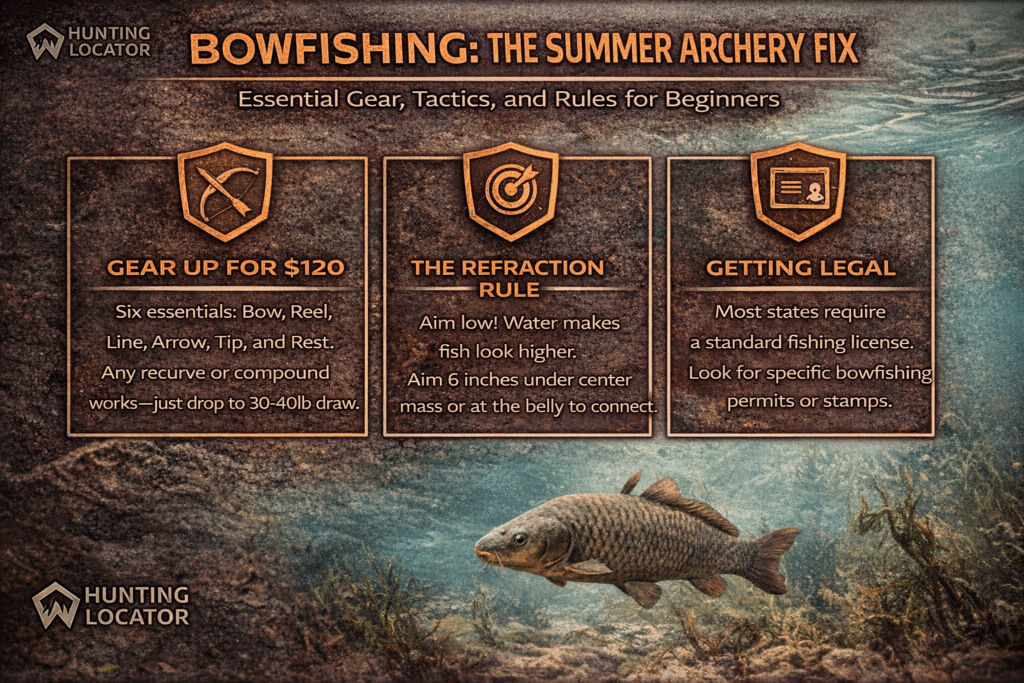
Start with a fishing license. Most states treat bowfishing as fishing, not hunting, though this gets murky for out-of-state visitors.
Species regulations vary wildly. Most states limit you to invasive, non-game, or non-native fish. Georgia, Illinois, and Indiana allow targeting non-game and invasive species, but hands off the game fish.
Timing matters too. Missouri opens up 24-hour bowfishing starting March 1 on commercial fishing rivers. Meanwhile, Texas bans bowfishing in community lakes under 75 acres and state park waters.
License costs for visitors range from reasonable to ouch. Georgia offers 3-day licenses for $20, while Pennsylvania hits you for $52.70 annually. Good news for border hoppers: Louisiana and Texas have reciprocal agreements for border waters.
Here’s a rule that surprises newcomers: Texas requires you to keep any edible fish or bait fish you shoot, including all gar, carp, and buffalo. No catch and release here.
License & Tag Acquisition
Getting legal is straightforward:
- Hit your state wildlife agency website – Skip the outdated forum posts
- Figure out license type – Usually fishing, sometimes hunting
- Look for special stamps – Some states tack on bowfishing permits
- Buy before you shoot – Wardens don’t accept “I was going to buy one” excuses
Remember, a decent bowfishing setup runs about $120. License fees are pocket change compared to your gear investment.
Scouting & Habitat: Finding Your Targets
Bowfishing works anywhere you can see fish in shallow, clear water. The sweet spots are shallow bays and estuaries where fish hunt and feed.
Your hit list includes the usual suspects: bighead carp, common carp, grass carp, catfish, buffalo, and gar species including massive alligator gar. Beginners should start with tilapia for easy targets, while rays offer plentiful, relatively easy shots.
Here’s the feel-good angle: many states encourage carp bowfishing because these invasive fish wreck native ecosystems. Your summer fun actually helps conservation.
Peak Activity Times
Late spring and early summer are money time. Carp and rough fish move shallow to spawn. Stick to spring spawn for daytime success.
Local Intelligence
Don’t be shy about asking around. Hit up local guides and tackle shops for carp and rough fish spots. Since these fish compete with sport fish, most locals will gladly point you toward the best areas.
Core Gear Checklist: Setting Up for Success
At Hunting Locator, we’ve done the homework so you don’t have to. Essential bowfishing gear breaks down to six items: bow, reel, line, arrow, arrow tip, and arrow rest.
Budget-friendly news: you can build a solid setup for around $120. Already bow hunt? You’re halfway there.
The Bow: What You Need (and What You Already Have)
Converting your hunting bow means stripping it down. Pull off the stabilizer, sight, rest, and quiver mounts, then install bowfishing-specific accessories.
Don’t stress about having the perfect bow. Any recurve or compound works fine for beginners. Comfort beats fancy equipment every time.
Here’s where bowfishing differs from hunting: 30-40 pounds of draw weight handles most situations. Lower weights prevent burying arrows in lake bottoms, making retrieval easier and breaking fewer arrows.
Compound bows convert easily thanks to riser mounting spots, while recurves offer simplicity that appeals to traditionalists and newcomers.
Check out our archery equipment selection for bowfishing-ready bows.
Bowfishing Reels: Your Retrieval System
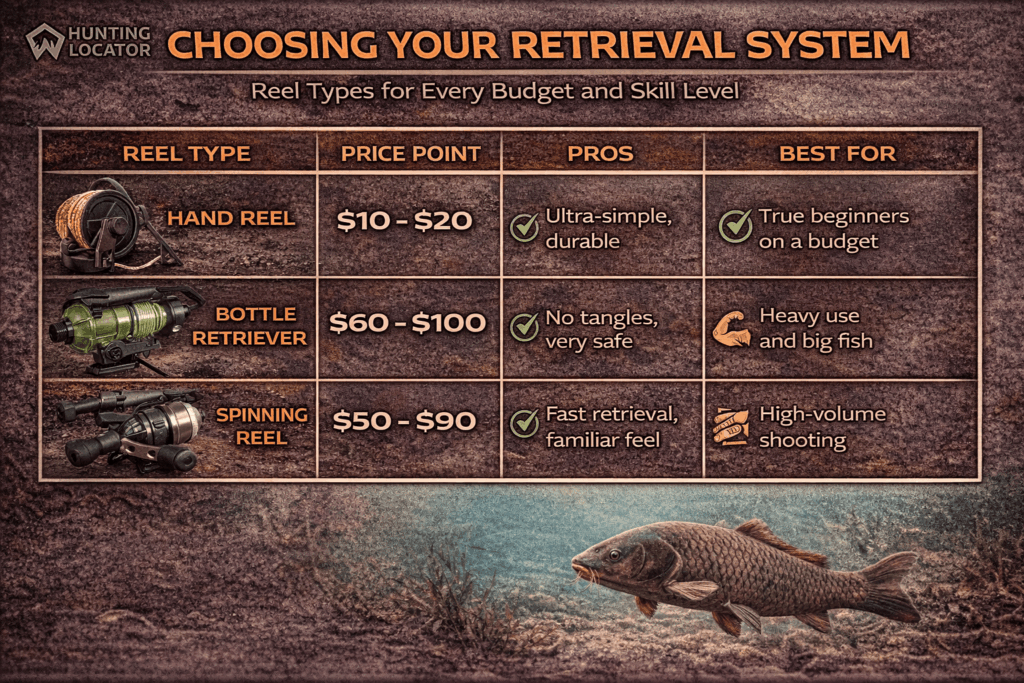
This is where things get specialized. Three reel types dominate: hand reels, bottle reels, and spinning reels. Hand reels are old school and clunky. Bottle retrievers and spincast reels are the modern standards.
Budget options exist: basic hand reels start at $10, while quality reels run around $60.
Sight mounting holes work for bottle reels like AMS or Cajun Winch models, while spincast and hand reels mount to stabilizer holes with included brackets.
Line choice matters by reel type: hand reels need thick braided line to protect your hands, while spinner reels use standard braided fishing line.
Arrows & Points: Purpose-Built for Water
Your hunting arrows won’t cut it. Bowfishing arrows are much heavier and have attached lines.
Consider your target species and fishing conditions when choosing arrow and point combinations.
Browse our arrows, points and broadheads for the right setup.
Arrow Rests: Why Drop-Aways Don’t Work
Drop-away rests popular in bowhunting are dangerous with bowfishing arrows.
Whisker biscuits and rolling arrow rests are common bowfishing choices. You need a fixed, stationary rest, not the drop-away style from your hunting setup.
Find bowfishing-compatible arrow rests in our selection.
Essential Accessories
Always wear eye protection. Polarized sunglasses cut surface glare and help you spot fish. Day fishing requires sunscreen, hat, and polarized glasses.
Lights matter for night fishing. Bow-mounted lights are battery-powered and easy to install.
Ditch your release aid. Bowfishing uses finger shooting with finger savers for quick draws.
Check our archery accessories for finger savers, bow lights, and other essentials.
Ready to build your setup? Browse our archery equipment selection for everything you need.
Tactics & Technique: Making the Shot
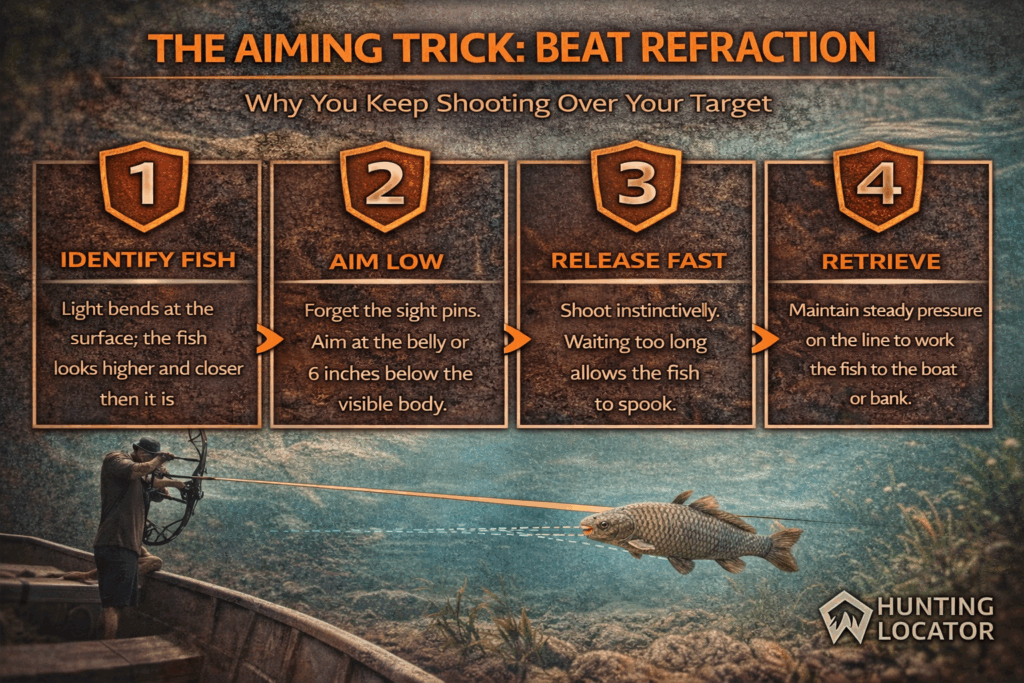
Bowfishing is accessible, but water refraction trips up every beginner. Here’s how to connect consistently.
The Refraction Rule: Aim Low
This kills more shots than anything else. Water refraction means aiming much lower than you think. General rule: aim at the fish’s belly.
Shoot about six inches under your target, or at a big fish’s belly, to hit center mass. Shooting 1-2 feet lower than the visible fish is common.
Peak Activity Times
Spring spawn is daytime gold. Fish are visible in shallow reeds and completely distracted.
Night fishing is when things get exciting. Fish are more active in shallow water, and bright boat lights make spotting easy. Fish activity and visibility often peak after dark.
Shooting Form & Technique
Forget hunting sights for bowfishing. Most bowfishers shoot instinctively because it’s fast-paced action.
Practice on water bottles and soda cans in your yard. Shoot targets at different distances to get a feel for your bow and develop consistent pressure.
Platform Options
Post-Harvest Care: The Work After the Shot
Your shot connects, but the work isn’t over. Proper fish handling keeps you legal and ethical.
Tracking & Recovery
Unlike hunting, recovery is usually instant since your line connects you to the fish. Big gar can fight hard though. Keep steady pressure and work fish toward you systematically.
Field Care & Processing
Remember the no-release rule: edible fish or bait fish like gar, carp, and buffalo can’t go back in the water after being shot.
Processing & Transport
Many bowfishing targets like carp and gar are excellent table fare when prepared properly. Gar is prized in Southern cooking. Research cleaning techniques for your target species, and bring a cooler with ice for longer trips.
More Resources from Hunting Locator
Expand your archery adventures with these specialized categories:
- Archery Sights – Not needed for bowfishing, but perfect for hunting season prep
- Archery Targets – Practice targets for honing instinctive shooting
- Bow and Crossbow Cases – Protect your gear during transport
- Bow Stabilizers – Essential for hunting, though you’ll remove them for bowfishing
- Bow Release Aids – Perfect for hunting when bowfishing season ends
FAQ
Do I need a special bow for bowfishing?
Any recurve or compound bow works fine for beginners. The key is using 30-40 pounds of draw weight and adding the right accessories like a bowfishing reel and fixed arrow rest.
How much does it cost to get started?
You can build a solid bowfishing setup for around $120. Basic hand reels start at just $10, making it very accessible.
What fish can I legally shoot?
Most states limit you to invasive, non-game, or non-native fish. Common targets include bighead carp, common carp, grass carp, catfish, buffalo, and gar varieties. Always check local regulations first.
Is bowfishing hard for beginners?
Not at all! Beginners find it easy to get started because targets are much closer than hunting situations. Many beginners succeed on their first outing.
When’s the best time to go?
Late spring and early summer are prime time when carp and rough fish move shallow to spawn. Night fishing is most effective when fish are active in shallow water.
Do I need a boat?
Nope! Shallow, flat-bottom boats work great, but shore shooting and wading flooded areas or shallows are also productive. Many successful bowfishers start from the bank.
The Final Shot
Bowfishing bridges that gap between hunting seasons while letting you help local ecosystems by targeting invasive species. From mastering refraction and regulations to building the right setup and finding productive water, you’ve got everything needed for success.
What makes this sport special is how welcoming it is. Whether you’re a seasoned archer extending your season or someone completely new to archery, bowfishing works for all skill levels. With beginners often succeeding on their first trip and setup costs around $120, there’s no better time to start.
Ready to gear up? Visit our archery equipment store today! We stock quality bows, reels, arrows, and accessories to get you on the water this summer.


