Losing your hearing is not something that is rare in the hunting community for hunters who are not using the appropriate ear protection. Mayo Clinic’s Dr. Gregory Jones, who’s both an ENT specialist and passionate hunter, puts it bluntly: “Even one shot can cause permanent injury.”
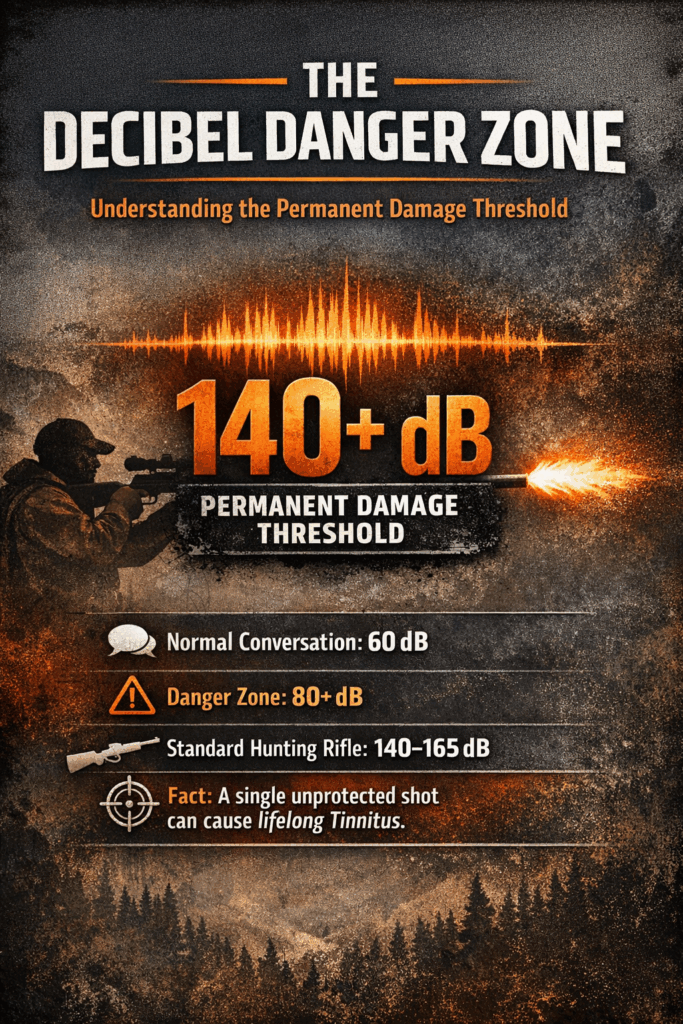
Here’s what blew my mind: normal conversation hovers around 55-60 decibels, but firearms blast at 140+ decibels. That’s way past the danger zone where your hearing gets permanently damaged.
The good news? Electronic hearing protection has completely changed the game. You can now hear that turkey gobbling three ridges over while staying protected when you squeeze the trigger. No more choosing between safety and success.
Here’s what we’ll cover:
- Why most hunters seriously underestimate hearing damage risks
- Choosing between passive and electronic protection (spoiler: electronic wins for most situations)
- A practical gear checklist that actually works in the field
Let’s dive into what you need to know before your next hunt.
Know Before You Go: Essential Prep
Getting your hearing protection sorted is just as important as checking your zero or studying wind patterns. Yet most hunters treat it like an afterthought. Big mistake.
Regulations Check
State hunting regs change every year, and some states now have specific hearing protection requirements—especially for youth hunters. Don’t assume last year’s rules still apply. Check early, not the night before opening day.
Quick tip: Get your license and tags early. States offer better pricing for early birds, plus popular units sell out fast.
Physical & Gear Readiness
Tree stand hunters need different conditioning than guys hiking ten miles a day chasing elk. Same goes for your hearing protection—what works in a heated blind won’t cut it during a December whitetail hunt in Minnesota. Test your electronic ear pro before each hunt. Dead batteries during prime time? That’s a special kind of frustration.
Why Hearing Protection Matters for Hunters
Mayo Clinic research found something pretty disturbing: “Unfortunately, many hunters don’t use hearing protection while in the field. The most common complaints about hearing protection devices are that they don’t allow hunters to hear game, and the devices are uncomfortable.”
The science doesn’t lie about what we’re dealing with. Noise over 140 decibels can permanently damage hearing, and basically every firearm crosses that line:
- Normal conversation: 55-60 dB
- Danger zone starts: 80+ dB
- Permanent damage threshold: 140+ dB
- Your hunting rifle: 140+ dB (and climbing)
The Cumulative Damage Problem
Every unprotected shot steals a little more of your hearing. It adds up. If you’re already dealing with that constant ringing (tinnitus), protecting what’s left becomes absolutely critical. Think about it this way: your hearing is your hunting legacy. Lose it, and you lose decades of future hunts, conversations with hunting buddies, and those magical moments when everything goes quiet in the woods.
Understanding NRR Ratings
Noise Reduction Rating (NRR) tells you how much noise a device blocks, measured in decibels. Higher numbers mean better protection, but here’s the catch—real-world performance usually falls 25-50% short of what the lab tests show.
What hunters need to know:
- Bare minimum: NRR 22+ for most hunting firearms
- Electronic protection sweet spot: NRR 22-27 dB range
- Reality check: Expect 25-50% less protection than advertised
Electronic hunting protection typically features NRR ratings in the 22-27 dB range, which works for most hunting situations while keeping you aware of what’s happening around you.
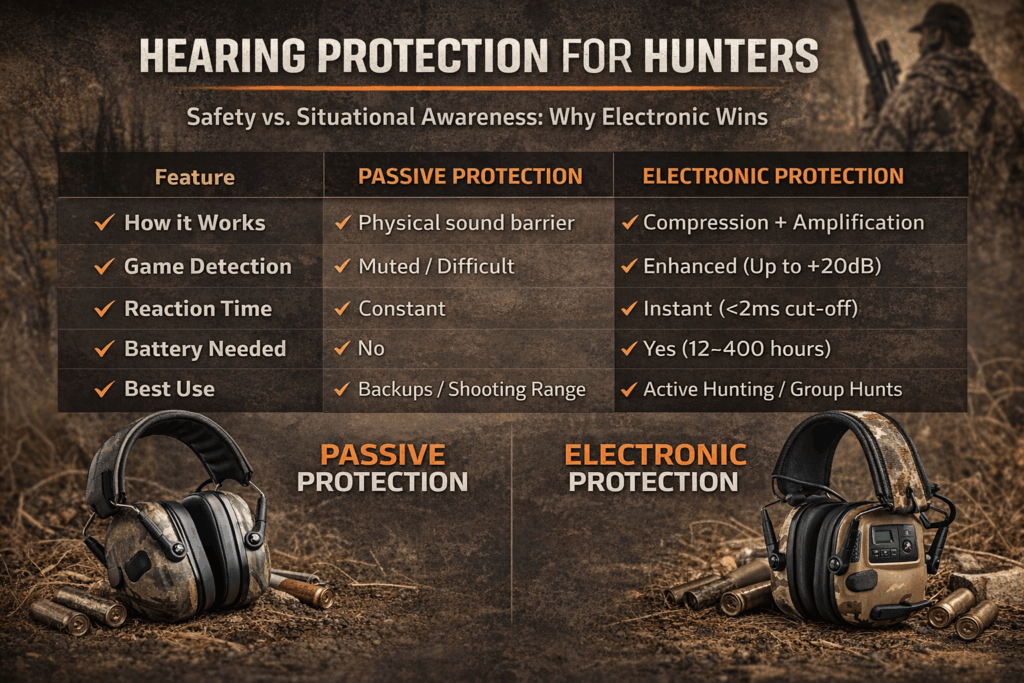
Types of Hearing Protection: Passive vs. Electronic
The choice between passive and electronic protection comes down to one question: do you want to hear what’s happening around you or not?
| Type | How It Works | Pros | Cons | Best For | Price Range |
|---|---|---|---|---|---|
| Passive | Physical barrier blocks everything | Simple, reliable, cheap, no batteries needed | Blocks everything—good and bad sounds | Tight budgets, backup protection | $5-$50 |
| Electronic | Amplifies safe sounds, cuts harmful noise | You can hear everything important, communicate normally, enhanced hearing | Costs more, needs batteries, more complex | Active hunting, group hunts, serious hunters | $50-$400+ |
Passive Protection: The Simple Solution
Foam plugs, pre-molded plugs, basic earmuffs—they all work the same way. Create a barrier, block the sound. All of it. The problem? You can’t hear anything else either.
When passive makes sense:
- You’re just starting out and budget’s tight
- Backup for your electronic gear
- Range shooting where you don’t need to hear much
Outdoor Life makes a good point: “Often, the cheap, easy solutions are the best when it comes to ear pro for hunting”—but only if you’ll actually use them consistently.
Electronic Protection: The Modern Hunter’s Advantage
Electronic hearing protection solved the old problem of choosing between safety and awareness. These devices monitor everything happening around you, amplifying safe sounds like conversation and game movement while reacting almost instantly, in less than 2 ms, to block the spike when you fire.
How it actually works:
- Microphones pick up environmental sounds
- Processors amplify safe sounds (usually under 82 dB)
- Instant compression blocks dangerous noise spikes
- You get better hearing than normal, plus protection
Check out our hearing protection collection to see what’s available.
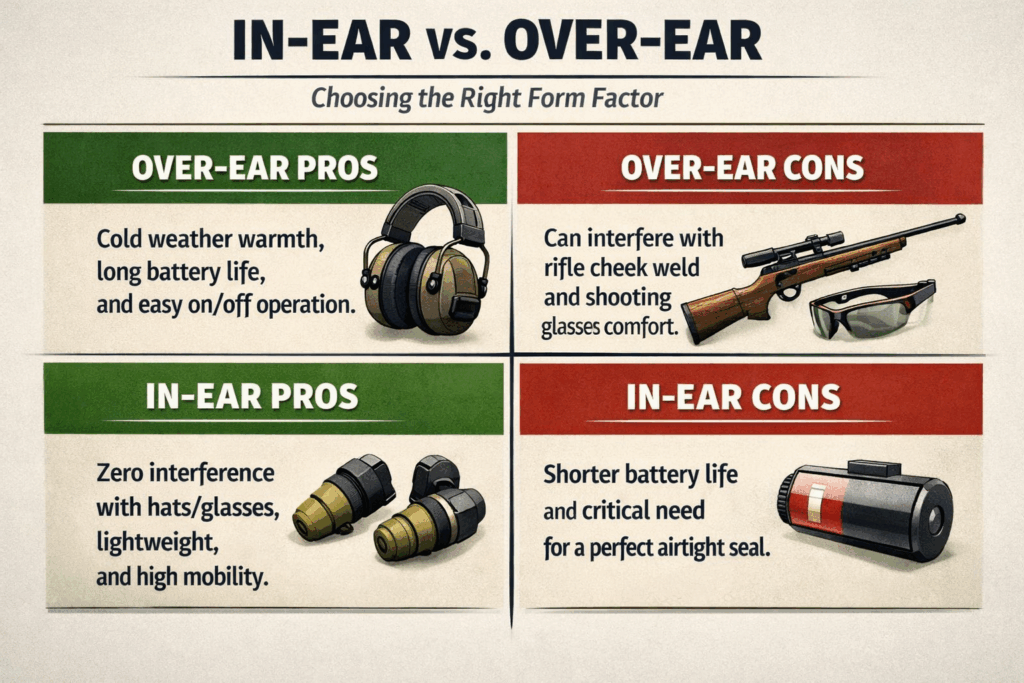
Form Factor: Over-Ear vs. In-Ear
Over-Ear wins for:
- Cold weather hunting
- Easy on/off in the field
- Longer battery life
- All-day comfort
Over-Ear struggles with:
- Getting a good cheek weld on your rifle
- Wearing tight-fitting muffs makes wearing glasses uncomfortable
- Takes up space in your pack
In-Ear excels at:
- Staying out of the way
- Working with glasses and hats
- Will not interfere with shooting glasses, headwear or active target shooting movements
- Lightweight for long hikes
In-Ear limitations:
- Must fit properly or they don’t work
- Easy to drop in the woods
- Usually shorter battery life
Features That Matter for Hunters
Skip the marketing fluff. Here’s what actually makes a difference when you’re in the field.
Sound Amplification
Good electronic protection doesn’t just block bad noise—it makes you hear better than normal. Some products reproduce and amplify ambient sounds up to 20 dB in High-Fidelity. That means you’ll hear turkey gobbles from farther away, pick up deer movement in thick cover, and locate game by sound when visibility sucks.
Directional Audio
With certain electronic ear protection, omnidirectional mics help you with telling where sounds actually come from. This isn’t just nice to have—it’s essential when you need to pinpoint game location by sound alone.
Battery Life
Nothing ruins a hunt like dead batteries during prime time. Electronic protection varies wildly in power consumption:
- Budget models: 12-40 hours typical
- Mid-range options: 50-100 hours
- Premium models: Up to 220-400 hours
Pro move: Always pack spare batteries and test before every hunt.
Bluetooth Connectivity
For hunters who want it all, Bluetooth allows you to listen to audio or take calls without compromising safety and awareness. Not essential, but pretty convenient when it works right.
Weather Resistance
Hunting means rain, snow, sweat, and humidity. Your gear needs to handle it. Quality electronic protection uses tech like P2i Aridion nanotechnology that repels water from electronic components, giving you solid protection from moisture and corrosion. Waterfowl hunters, pay attention to this one.
Hunting Scenario Guide
Different hunts need different approaches. Match your gear to your hunting style.
Best for Tree Stand Hunting
What matters: Long sits, detecting approaching game, cold weather performance.
Go with: Electronic over-ear protection. You’re not moving much, so bulk doesn’t matter. Sound amplification helps you hear deer moving through leaves from way out. Over-ear designs handle cold better too.
Best for Waterfowl Hunting
What matters: Wet conditions, cramped blinds, hearing wingbeats and calls.
Go with: Water-resistant electronic options are non-negotiable. In-ear might work better in tight blinds, but over-ear gives better protection when it’s cold and wet.
Best for Spot-and-Stalk
What matters: Constant movement, weight matters, quick shots.
Go with: Compact in-ear electronic options. Less bulk, less interference with movement, but you keep protection and awareness.
Core Gear Checklist: Building Your Hunting Kit
Building a solid hunting kit means balancing safety gear with performance equipment. Hearing protection sits right in the middle—it’s safety gear that directly affects your hunting success.
Hearing Protection: Your Most Important Safety Gear
One shot can wreck your hearing permanently. That makes quality hearing protection absolutely essential for any responsible hunter. Electronic protection gives you the best of both worlds—safety and hunting effectiveness.
How to choose:
- Tight budget: Good passive protection now, plan to upgrade to electronic later
- Balanced approach: Mid-range electronic over-ear or in-ear options
- Go all-in: Advanced electronic protection with Bluetooth and marathon battery life
Find what works for your hunting style in our hearing protection collection—we’ve picked options for every budget and hunting situation.
Navigation & Safety Essentials
Electronic hearing protection actually makes you safer by improving your ability to hear other hunters, emergency signals, and environmental dangers.
Don’t hunt without:
- GPS and navigation tools for scouting and staying found
- Compass for when electronics fail
- Survival and first aid essentials every hunter should carry
Scent Control
Electronic hearing protection helps you monitor wind changes by sound, supporting your scent control game. Round out your prep with scent elimination products that keep you undetected while your enhanced hearing keeps you aware.
Field Processing Gear
Be ready when success happens. Stock up on game processing equipment for efficient field dressing, and hunting knives built for reliable field performance.
Tactics & Strategy: Putting It All Together
Electronic hearing protection doesn’t just protect you—it makes you a better hunter by giving you superior situational awareness.
Peak Activity Times
Most game moves during early morning and late evening when light is limited. Electronic hearing protection becomes crucial during these times when you’re relying more on sound than sight to detect game movement, feeding activity, and approach patterns.
Wind & Scent Control
Electronic protection helps you stay on top of wind changes through sound cues—rustling leaves, shifting grass, other audio indicators that tell you when wind direction changes and might blow your scent toward game.
The Approach & Shot Placement
When your moment comes, your hearing protection should already be working. Electronic protection keeps you fully aware during the stalk while ensuring you’re protected when the shot opportunity arrives.
Remember: Always ensure clean, ethical shots within your effective range and ability.
Post-Harvest Care
Success doesn’t end with the shot—proper post-harvest care honors your harvest and maintains meat quality.
Tracking & Recovery
Electronic hearing protection keeps providing value during tracking by helping you hear other hunters in the area and maintaining awareness during recovery.
Field Dressing & Transport
With your hearing protected throughout the hunt, you can focus on critical post-harvest tasks without dealing with ringing ears or temporary hearing loss.
More Resources from Hunting Locator
Take your hunting prep to the next level:
- Hunting Accessories – Complete gear setup with essential accessories for every scenario
- Hunting Backpacks – Organize and haul your gear efficiently
- Hunting Flashlights – Reliable lighting for early setups and late recoveries
- Hunting GPS – Stay oriented and mark important spots
- Hunting Survival – Emergency prep for safe adventures
FAQ
What’s the difference between NRR ratings and real-world protection?
NRR (Noise Reduction Rating) shows laboratory-tested maximum noise reduction under perfect conditions. Real-world protection typically delivers 25-50% less due to fit issues, user error, and field conditions. For hunting, look for NRR 22+ ratings, but focus more on proper fit and actually using the protection consistently.
Can I use electronic hearing protection with prescription glasses?
Absolutely, but form factor matters. In-ear designs will not interfere with shooting glasses, headwear or active target shooting movements, while over-ear models vary by design. Walker Razor Slim earmuffs fit perfectly with a ‘medium squeeze’ and work well with glasses.
How long do batteries last in electronic hearing protection?
Battery life varies dramatically. Budget options typically give you 12-40 hours, mid-range models provide 50-100 hours, while premium options can deliver up to 220-400 hours of continuous protection. Regardless of claimed battery life, always pack spares.
Will electronic hearing protection work in wet weather?
Quality electronic hearing protection handles weather well. Look for models with features like P2i Aridion nanotechnology that repels water from electronic components, giving you solid protection from moisture, sweat, and corrosion—especially important for waterfowl hunters.
Can electronic hearing protection enhance my ability to hear game?
Yes, electronic hearing protection can actually make your hearing better than normal. Some products reproduce and amplify ambient sounds up to 20 dB in High-Fidelity, helping you detect distant game movement, turkey gobbles, and other critical hunting sounds while maintaining protection from gunshot noise.
Should I choose over-ear or in-ear electronic protection?
Depends on your hunting style and priorities. Over-ear models offer better cold weather performance and easier operation but can mess with rifle cheek weld and glasses. In-ear options give you better mobility and gear compatibility but require proper fit to work effectively. Think about your primary hunting situations when deciding.
The Final Shot
Protecting your hearing isn’t just about safety—it’s about preserving your ability to experience everything hunting offers for decades to come. The sound of wings cutting through morning air, that distant gobble that gets your heart racing, or the subtle crack of a twig that alerts you to approaching game. These sounds make hunting what it is.
Modern electronic hearing protection eliminated the old choice between safety and effectiveness. You don’t have to pick between protecting your hearing and staying aware of what’s happening around you. With quality electronic protection, you can actually hear better than with naked ears while staying safe from the damaging blast of gunfire.
Ready to gear up for your best season yet? Check out our store! We’ve got the best hearing protection, navigation tools, and essential hunting accessories to set you up for success in the field.


