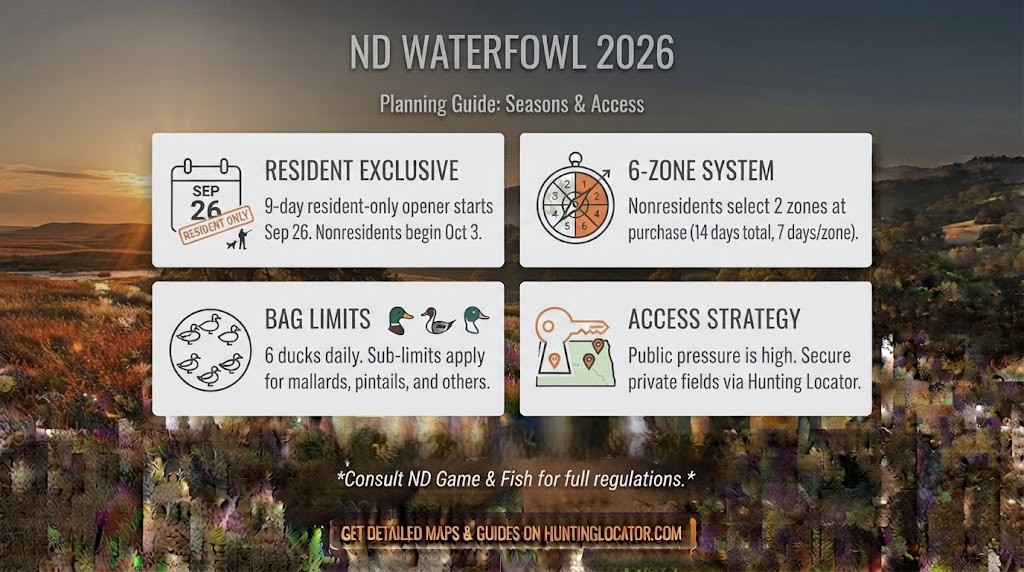
Two changes from the North Dakota Game and Fish Department will affect how you plan this season: the resident-exclusive opening period has been extended from seven days to nine days, and the six-zone nonresident system is permanent—the statewide nonresident waterfowl license no longer exists. Show up without accounting for either and you may be hunting on the wrong date, in the wrong zone, or without the right license.
This guide covers the 2026–27 season dates, bag limits, license requirements, and land access options for every waterfowl species in North Dakota.
Here’s what’s included:
- Season dates and bag limits for ducks, geese, sandhill crane, tundra swan, and more
- License, permit, and stamp requirements, including the nonresident zone rules
- Where to hunt: public land options, private leases through Hunting Locator, and guided hunts
Gear Up Before the Season Starts: Before we get into the dates and regulations, make sure your kit is ready for North Dakota’s prairie conditions. Browse waterfowl hunting gear at the Hunting Locator store and get dialed in before opening day.
North Dakota Waterfowl Season 2026: Quick Overview
Residents open September 26; nonresidents start October 3 under the confirmed six-zone system. No statewide nonresident license is available this season.
The table below reflects 2026–27 season data. Cross-reference with the official North Dakota 2026–27 Hunting and Trapping Guide before purchasing licenses, as final proclamation details are subject to official release.
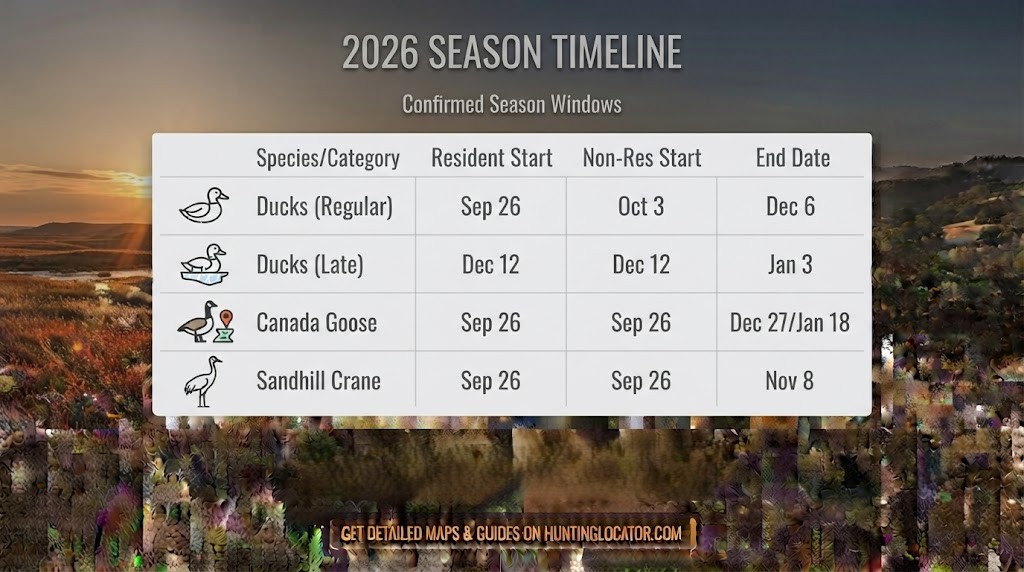
| Species | Season Type | Start Date | End Date | Bag Limit |
|---|---|---|---|---|
| Ducks/Coots/Mergansers | High Plains Unit (Residents) | Sep 26, 2027 | Dec 6, 2027 | 6 ducks daily, 15 coots |
| Ducks/Coots/Mergansers | High Plains Unit (Late) | Dec 12, 2027 | Jan 3, 2028 | 6 ducks daily, 15 coots |
| Ducks/Coots/Mergansers | Low Plains Unit (Residents) | Sep 26, 2027 | Dec 6, 2027 | 6 ducks daily, 15 coots |
| Ducks/Coots/Mergansers | All Zones (Nonresidents) | Oct 3, 2027 | Dec 6, 2027 | 6 ducks daily, 15 coots |
| Ducks/Coots/Mergansers | All Zones — Late (Nonresidents) | Dec 12, 2027 | Jan 3, 2028 | 6 ducks daily, 15 coots |
| Blue-winged Teal | Bonus Season (All Units) | Sep 26, 2027 | Oct 4, 2027 | 6 daily |
| Waterfowl | Youth/Veteran/Military Days | Sep 19, 2027 | Sep 20, 2027 | Regular limits |
| Canada Goose | Early — Western Zone | Aug 14, 2027 | Sep 14, 2027 | 5 daily |
| Canada Goose | Early — Eastern Zone | Aug 14, 2027 | Sep 21, 2027 | 5 daily |
| Canada Goose | Early — Missouri River Zone | Aug 14, 2027 | Sep 6, 2027 | 5 daily |
| Canada Goose | Regular — High Plains Unit | Sep 26, 2027 | Dec 27, 2027 | 3 daily |
| Canada Goose | Regular — Low Plains Unit | Sep 26, 2027 | Jan 18, 2028 | 3 daily |
| Light Geese (Snow/Blue) | Regular Season | Sep 26, 2027 | Jan 18, 2028 | 25 daily, no possession limit |
| Light Geese (Snow/Blue) | Spring Conservation Order | Mar 13, 2028 | May 9, 2028 | No limit |
| White-fronted Goose | Regular Season | Sep 26, 2027 | Oct 24, 2027 | 2 daily |
| Sandhill Crane | Draw Hunt (Statewide) | Sep. 26, 2027 | Nov 8, 2027 | 3 daily |
| Tundra Swan | Draw Hunt (Statewide) | Sep. 26, 2027 | Dec 25, 2027 | 1 per season |
| Rails & Snipe | Regular Season | Sep 1, 2026 | Nov 9, 2026 | 25 rails / 8 snipe daily |
Every hunter must carry these items to legally pursue North Dakota waterfowl:
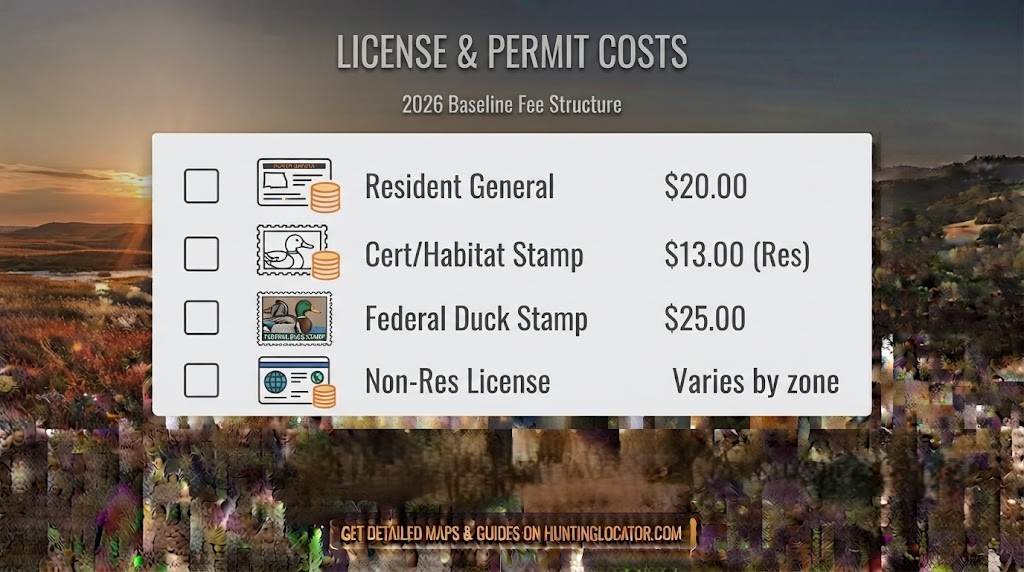
- General Game and Habitat License: $20 for residents; varies for nonresidents
- Fishing, Hunting, Furbearer Certificate: $3 for residents / $15 for nonresidents
- Waterfowl Restoration Stamp: $10 (required for all hunters, resident and nonresident)
- Federal Duck Stamp: $25 (required for all migratory bird hunters age 16 and older)
For current duck season dates and final bag limits by zone, verify directly at gf.nd.gov before purchasing your license.
North Dakota Duck Hunting Seasons
The 2026–27 season brought the most significant structural changes in years for duck hunters. The extended 9-day resident-exclusive period and the permanent six-zone nonresident system both affect when you arrive, which license you buy, and how you structure your hunt.
Resident Duck Seasons & the Extended Resident-Exclusive Period
Key dates for resident hunters:
- Blue-winged Teal Bonus Season: Sep 26 – Oct 4 | 6 daily
- High Plains Unit Regular Season: Sep 26 – Dec 6 | 6 ducks daily, 15 coots
- Low Plains Unit Regular Season: Sep 26 – Dec 6 | 6 ducks daily, 15 coots
- High Plains Unit Late Season: Dec 12 – Jan 3 | 6 ducks daily, 15 coots
The significant change for 2026 is the extended 9-day resident-exclusive period, running from the September 26 opener through approximately October 4. According to the NDGF, this extends the resident-only portion from seven days in 2025–26 to nine days in 2026—a direct response to resident hunters who raised concerns about crowded public land conditions during the early season.
Nonresident Duck Seasons & the Six-Zone System
Nonresident hunters face a different planning process this season. As confirmed by the North Dakota Game and Fish Department, the number of nonresident waterfowl zones increased to six, and a statewide nonresident waterfowl license is no longer available. Here’s how the system works:
- Season window: Oct 3 – Dec 6 (regular); Dec 12 – Jan 3 (late)
- Bag limit: 6 ducks daily, 15 coots, 5 mergansers daily
- Six designated zones: statewide license eliminated; zones must be selected at purchase
- Total hunting days: 14 days maximum—structured as two 7-day periods in two different zones
- Zone restriction: You cannot hunt the same zone twice
- Zone selection: Must be made at time of purchase—changes are not permitted afterward
If you’re planning two trips, you’ll choose Zone A for your first 7-day window and Zone B for your second. Those zones cannot overlap, which means your scouting, lease selection, and accommodations all need to align with your chosen zones before you purchase. For zone selection strategy, our North Dakota waterfowl hunting season resource walks through the planning process in detail.
Nonresidents are also excluded from the first 9 days of the season entirely. The resident-only portion runs from September 26, with nonresidents permitted to begin hunting October 3. Use that lead time to confirm land access is secured before you arrive.
For official zone boundary maps and the full nonresident license proclamation, refer to gf.nd.gov.
Understanding Your 6-Bird Duck Bag Limit
The daily duck limit is 6 birds, but that total includes species-specific sub-limits that govern how those birds can be composed. These caps fit within your 6-duck daily total, not in addition to it:
- 4 mallards (max 2 hens)
- 3 pintails
- 3 wood ducks
- 2 canvasbacks
- 2 redheads
- 1 scaup
- 5 mergansers daily (counted separately from the 6-duck bag)
Know these sub-limits before you’re in the field. Identification errors in fast-moving shooting situations carry real legal consequences.
North Dakota Goose Hunting Seasons
North Dakota’s goose season calendar gives hunters more opportunity than nearly any other state in the Central Flyway. From August Canada goose management hunts through the spring light goose conservation order, the structure accommodates a wide range of hunting styles.
Early Canada Goose Management Season
The early Canada goose season opens before the regular waterfowl season and targets local resident birds prior to migration—a good opportunity to extend your time afield and build landowner relationships before the main-season pressure sets in.
| Zone | Start Date | End Date | Daily Bag Limit |
|---|---|---|---|
| Western Zone | Aug 14, 2027 | Sep 14, 2027 | 5 daily |
| Eastern Zone | Aug 14, 2027 | Sep 21, 2027 | 5 daily |
| Missouri River Zone | Aug 14, 2027 | Sep 6, 2027 | 5 daily |
Early season hunting typically sees light pressure. Decoy spreads, layout blinds, and electronic calls (where legal) are standard tools—verify current e-caller rules with the North Dakota Game and Fish Department before the August opener.
Regular Canada Goose Season
The regular Canada goose season overlaps with duck season and runs considerably longer—especially in the Low Plains Unit, which extends into late January.
| Unit | Start Date | End Date | Daily Bag Limit |
|---|---|---|---|
| High Plains Unit | Sep 26, 2027 | Dec 27, 2027 | 3 daily |
| Low Plains Unit | Sep 26, 2027 | Jan 18, 2028 | 3 daily |
Note that extended shooting hours until 2:00 PM for geese on Fridays starting in late November apply during the regular season. Confirm the exact start date for this provision in the official NDGF proclamation before hunting.
Light Geese (Snow & Blue Geese)
The regular light goose season runs from late September through mid-January, followed by the spring conservation order.
- Regular Season: Sep 26, 2027 – Jan 18, 2028 | 25 daily, no possession limit
- Spring Conservation Order: Mar 13, 2028 – May 9, 2028 | No limit
The spring conservation order allows electronic calls and unplugged shotguns—tools restricted during the regular season. If you’re planning a dedicated light goose hunt, the conservation order period is when numbers are highest and shooting opportunities are most consistent. As private land leasing demand has surged alongside crowded public areas, securing exclusive access has become especially important during peak light goose season.
White-fronted Geese (Specklebellies)
White-fronted geese run a shorter season with a conservative bag limit.
- Season: Sep 26, 2027 – Oct 24, 2027 | 2 daily
The specklebelly window aligns with the early duck season, so you can pursue both species on the same outing. Scout fields and flight lines early—these birds are wary and respond best to confident calling and tight concealment.
North Dakota Sandhill Crane & Tundra Swan Seasons
North Dakota offers two draw-hunt opportunities for hunters interested in limited-availability species. Both require lottery permits in addition to standard waterfowl licenses.
Sandhill Crane Season
The sandhill crane season operates as a lottery draw hunt, with approximately 1,000 permits issued annually statewide.
- Season: Sep 26, 2027 – Nov 8, 2027
- Bag Limit: 3 daily
- Permit Requirement: Lottery draw; ~1,000 permits issued annually statewide
The crane season overlaps with the heart of North Dakota’s fall duck and goose season, making a sandhill crane permit a natural addition to a broader waterfowl trip. Harvested corn and sunflower fields concentrate migrating cranes and create reliable decoying conditions. Check the North Dakota Game and Fish Department for current application windows and draw odds.
Tundra Swan Season
Tundra swan permits are limited in number and cover a long season window.
- Season: Sep 26, 2027 – Dec 25, 2027
- Bag Limit: 1 per season
- Permit Requirement: Lottery draw; limited permits issued annually
The season runs through Christmas, giving permit holders a wide window to plan around migration timing. Tundra swans travel through North Dakota on their way south through the Central Flyway, concentrating on open water and agricultural fields during migration peaks. Apply through NDGF and monitor permit availability and application deadlines as soon as the 2026–27 proclamation is released.
North Dakota Waterfowl Licenses and Permits
North Dakota’s waterfowl licensing structure differs significantly between residents and nonresidents, and the 2026–27 season introduced changes that affect nonresidents most directly.
North Dakota Hunting Licenses
| License / Fee | Residents | Nonresidents |
|---|---|---|
| General Game and Habitat License | $20 | Varies |
| Fishing, Hunting, Furbearer Certificate | $3 | $15 |
| Waterfowl Restoration Stamp | $10 | $10 |
| Federal Duck Stamp | $25 | $25 |
All waterfowl hunters—resident and nonresident, any age—are required to purchase the Waterfowl Restoration Stamp. The Federal Duck Stamp is required for all migratory bird hunters age 16 and older.
Nonresident zone-restricted waterfowl licenses carry separate pricing that varies based on zone selection and season structure. Verify current nonresident license costs directly through the North Dakota Game and Fish Department before purchasing, as fees are subject to change in the official proclamation.
North Dakota Hunting Permits
Several species require additional permits beyond base licenses—some purchasable directly, others requiring a lottery draw.
- Sandhill Crane Permit: Lottery draw required; approximately 1,000 permits issued annually statewide. Apply through NDGF during the announced application window.
- Tundra Swan Permit: Lottery draw required; limited permits issued per season. Apply through NDGF; permit counts and odds are detailed in the annual proclamation.
- Nonresident Zone-Restricted Waterfowl License: Select two zones at time of purchase; selections cannot be changed afterward. Allows two 7-day periods in two different zones (14 days total). The same zone cannot be used twice.
All licenses and permits can be purchased online through gf.nd.gov. For draw permits, monitor the NDGF site for application window announcements well ahead of the season—these windows typically open and close months before the opener.
North Dakota Waterfowl: Where to Hunt
The state has substantial public access options, but as private land leasing demand has surged alongside crowded public areas, securing quality exclusive access has become harder to do at the last minute.
Best Public Lands
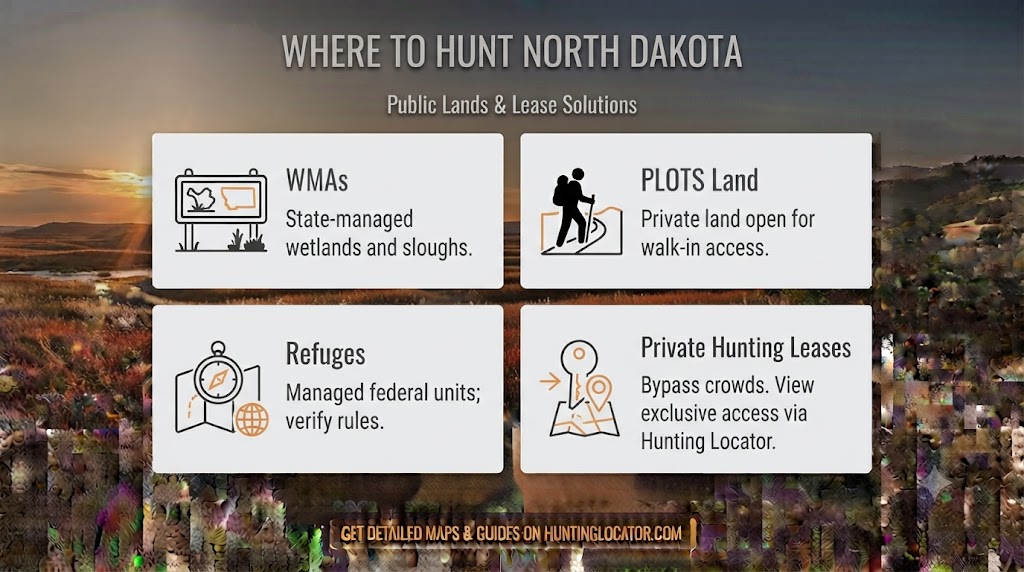
North Dakota offers public hunting access through several programs and land types:
- Wildlife Management Areas (WMAs): The NDGF manages hundreds of WMAs statewide, many in prime waterfowl habitat across the Prairie Pothole region. WMAs are open to public hunting and often include wetlands, sloughs, and agricultural edges that hold migrating ducks and geese.
- National Wildlife Refuges (NWRs): North Dakota hosts numerous NWRs managed by the U.S. Fish and Wildlife Service. Hunting is permitted on designated refuge units during established seasons—check each refuge’s specific regulations before visiting, as rules vary by unit.
- PLOTS (Private Land Open To Sportsmen): The PLOTS program enrolls private landowners who voluntarily open their land to walk-in public hunting. PLOTS maps are published annually by the NDGF and are available as a free download or print atlas. Popular PLOTS tracts draw heavy pressure during peak season—arrive early or plan weekday hunts.
- U.S. Army Corps of Engineers Lands: Shoreline and upland areas managed by the Corps around major reservoirs offer additional waterfowl habitat, particularly along the Missouri River system.
- National Grasslands: The Dakota Prairie Grasslands (Sheyenne, Little Missouri, Cedar River, and Grand River units) provide extensive public acreage that often holds early-season geese and migrating ducks near wetland areas.
North Dakota’s Prairie Pothole region makes it a premier Central Flyway destination, but the best-known spots are well-hunted, especially during the opener and peak migration windows.
Private Land Hunting with Hunting Locator
Leasing private land gives you exclusive access to potholes, flooded fields, and goose roost areas that aren’t available on public ground. Hunting Locator’s North Dakota lease listings connect you directly with landowners ready to lease their property for waterfowl hunting. Whether you’re looking for a single-season duck lease on a private pothole complex, a Canada goose field lease for early season, or multi-species access across a full season, the platform provides searchable, current listings with direct landowner contact.
For hunters interested in long-term access, Hunting Locator also connects buyers with landowners willing to sell hunting-quality land in North Dakota—eliminating the annual lease process and giving you control over habitat management and hunting pressure.
Hunting Locator is a SaaS platform built to connect hunters with landowners who want to lease or sell their property. Browse available North Dakota hunting leases and secure your access before the best parcels are taken for the 2026–27 season.
Guided Hunts
A guided waterfowl hunt makes particular sense under the new zone system, where local knowledge of which fields are producing and how birds are moving through each zone is difficult to replicate in a short visit. North Dakota outfitters know the ground, the birds, and the timing.
Guided hunts typically include:
- Field scouting: Guides scout active feed fields and flight lines in the days before your hunt, placing you where birds are moving currently.
- Full decoy spreads: Quality outfitters run large spreads of full-body and shell decoys with motion equipment that individual hunters can’t practically transport or deploy before light.
- Calling expertise: Experienced callers who can read birds and adjust on the fly improve success rates on wary late-season geese and mixed duck flocks.
- Land access: Outfitters maintain relationships with private landowners across multiple zones, giving guided clients access to fields not available to the general public.
- Species knowledge: Guided crane expeditions place hunters in blinds on wetlands and agricultural fields where sandhill cranes concentrate during migration—a setup that takes years of local experience to execute consistently.
For a nonresident working within a 7-day zone window, a guided hunt removes the scouting time you don’t have. Book early—the best North Dakota guides fill their calendars months ahead of the opener, and the combination of zone restrictions, limited nonresident windows, and surging land demand makes early planning more critical than ever.
North Dakota Waterfowl Hunting Tips
North Dakota’s field hunting is technical. Birds are pressured for weeks, the landscape is wide open, and weather can shift conditions overnight. These tips reflect what actually matters out there.
- Scout the day before, not the week before. North Dakota ducks and geese move with the harvest. A field loaded with birds on Monday can be empty by Thursday once the combines roll through. Confirm your setup location the evening before each hunt.
- Go bigger on your decoy spread. Prairie birds are used to seeing large flocks. A dozen decoys won’t cut it in most field setups. Run full-body decoys in realistic loafing and feeding postures, and use motion stakes or spinning-wing decoys (where legal) to add realism at distance.
- Concealment matters more than most hunters allow for. North Dakota’s open landscape means birds can spot your blind from hundreds of yards out. A layout blind that doesn’t match the stubble color, a profile that breaks the horizon, or any barrel shine will flare birds before they’re in range. Cover everything, including your face and hands. Check the Hunting Locator store for layout blinds, blind covers, and prairie camo gear.
- Know your sub-limits before you get in the blind. With species-specific caps built into the 6-duck bag, field identification is a legal requirement. Study pintails, redheads, and canvasbacks before you go—especially for shots at mixed flocks in low light.
- Hunt weather transitions. The most consistent North Dakota waterfowl movement happens when cold fronts push birds south. A falling barometer and northwest wind are your signals to be set up early. Watch the forecast and stay flexible with your schedule.
- Use the teal bonus season to extend your trip. The blue-winged teal bonus season (Sep 26 – Oct 4) offers fast-action early shooting before the main duck migration begins. A 12-gauge or 20-gauge with improved cylinder is appropriate for these fast-flying birds.
- Dress for cold fronts, not just cold days. Late-season hunting in December and January on the High Plains can turn severe quickly. Prioritize waterproof waders, insulated chest packs, and hand warmers. Gear up at the Hunting Locator store.
- Buy your licenses before you leave home. With zone selection locked at purchase for nonresidents, you can’t grab a license when you arrive in town. Complete your purchase online through NDGF before your trip, confirm your zones, and carry printed or digital proof of all required stamps and licenses in the field.
More Resources from Hunting Locator
- Hunting Locator Home — Find hunting leases, outfitters, guides, and land access tools across the country. Search by state, species, or acreage.
- North Dakota Hunting Leases — Browse available private land leases in North Dakota, including waterfowl, deer, and multi-species properties.
- North Dakota Hunting Season Guide — Dates and regulations across every major North Dakota species.
- North Dakota Waterfowl Hunting Season — Additional zone and timing strategy for ducks, geese, and migratory bird species.
- North Dakota Deer Hunting Season — Season dates, license information, and land access guidance for whitetail and mule deer hunters.
- North Dakota Turkey Hunting Season — Spring and fall turkey hunting in North Dakota, including public land options and lease access.
- North Dakota Pronghorn Hunting Season — Permit information, season dates, and access options for pronghorn.
- North Dakota Elk Hunting Season — Draw permit details and planning guidance for North Dakota’s limited elk hunting opportunities.
- North Dakota Moose Hunting Season — Season structure, permit information, and access guidance for moose hunters.
- North Dakota Game Bird Hunting Season — Pheasant, sharptail grouse, Hungarian partridge, and other upland bird seasons for resident and nonresident hunters.
- North Dakota Furbearer Hunting Season — Trapping and furbearer hunting regulations, season dates, and licensing for coyote, fox, beaver, and other species.
- North Dakota Bighorn Sheep Hunting Season — Season structure, draw information, and planning resources for bighorn sheep hunters.
- Hunting Locator Store — Waterfowl gear, layout blinds, camo, waders, decoys, and more.
Frequently Asked Questions
When does the North Dakota waterfowl season open for residents vs. nonresidents?
North Dakota’s waterfowl season opens for residents on September 26, while nonresidents may begin hunting October 3. The gap reflects the 9-day resident-exclusive period at the front of the season. This change extended the resident-only portion from seven days in 2025–26 to nine days in 2026, driven by resident hunter concerns about crowded public land during the opener.
How does the nonresident six-zone system work in North Dakota?
North Dakota’s six-zone system means a statewide nonresident waterfowl license is no longer available. Nonresidents must select two zones at the time of license purchase and are limited to 14 total hunting days—structured as two 7-day periods, each in a different zone. The same zone cannot be used twice, and zone selections cannot be changed after purchase.
What licenses and stamps do I need to hunt North Dakota waterfowl?
Every hunter needs four core items: a General Game and Habitat License ($20 for residents), a Fishing, Hunting, Furbearer Certificate ($3 residents / $15 nonresidents), a Waterfowl Restoration Stamp ($10 for all hunters), and a Federal Duck Stamp ($25, required for all migratory bird hunters age 16 and older). Nonresidents also need a zone-restricted waterfowl license. Verify current fees through the NDGF before purchasing.
Do sandhill crane and tundra swan require special permits?
Yes. Both species require lottery draw permits, separate from your standard waterfowl license. The sandhill crane season issues approximately 1,000 permits annually for a season running September 26 – November 8 (3 daily bag limit). The tundra swan season issues limited permits for a season running September 26 – December 25 (1 per season). Apply for both through the North Dakota Game and Fish Department and monitor the NDGF site for application window announcements well ahead of the opener.
Can I hunt all zones in North Dakota as a nonresident?
No. Nonresidents are limited to two zones per season, hunted as two separate 7-day periods. The same zone cannot be used twice, and zone selections are locked at the time of license purchase.
Where can I find private land to hunt waterfowl in North Dakota?
Hunting Locator’s North Dakota lease listings connect hunters directly with landowners ready to lease hunting access for the season. The platform lets you search by location and species, contact landowners directly, and secure exclusive access to potholes, flooded fields, and goose roost areas that aren’t available on public ground.
Planning Summary
North Dakota remains one of the top waterfowl destinations in the Central Flyway, but the 2026–27 season requires more advance planning than previous years. The extended resident-exclusive period, the permanent six-zone nonresident system, and continued pressure on public land all point in the same direction: know your dates, buy the correct license before you leave home, select your zones carefully, and lock in land access early—whether that’s a PLOTS tract, a private lease, or a guided hunt with an outfitter who already has the ground and the birds figured out.


