This Arkansas waterfowl guide lays out the verified 2026–27 season dates, bag limits, resident and non-resident licensing requirements, and where you can actually hunt — public land, private lease, or guided trip.
If you want more detail than what’s here, see the full Arkansas waterfowl companion guide.
What’s covered below:
- When to hunt — the full 2026–27 season calendar, from the September teal opener through the light goose conservation order that runs into spring.
- What it costs — resident and non-resident licenses, stamps, and the new WMA permits.
- Where to hunt — the top public WMAs, private leases through Hunting Locator, and guided hunt options.
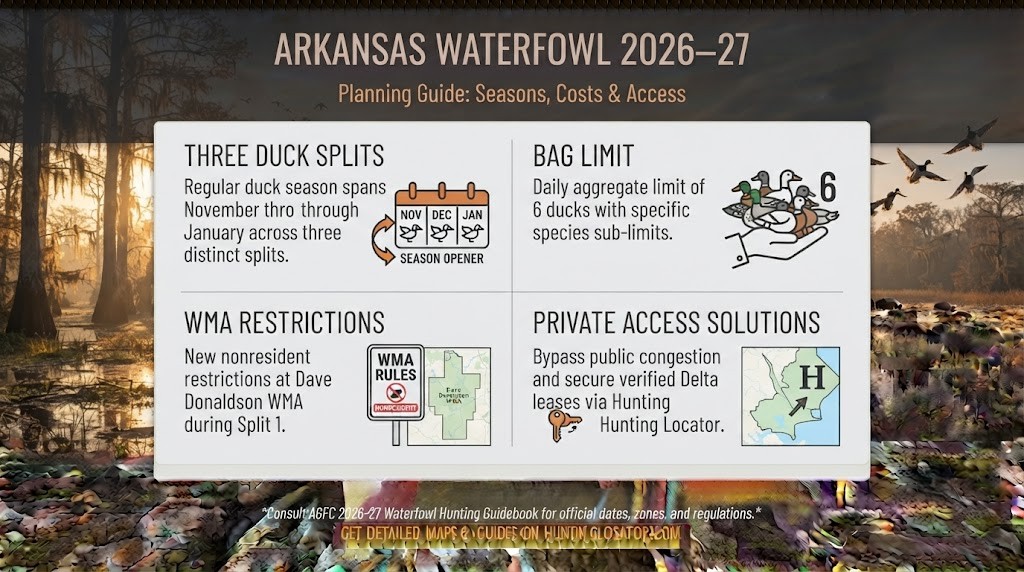
Quick Overview: Arkansas Waterfowl Seasons at a Glance
The Arkansas Game and Fish Commission (AGFC) has finalized the 2026–27 waterfowl season dates. The table below covers every split, species, and limit for the year — worth bookmarking as a quick reference before you head to the blind.
| Species | Season Type | Start Date | End Date | Daily Bag Limit | Notes |
|---|---|---|---|---|---|
| Blue-winged & Green-winged Teal | Early Season | 19-Sep-26 | 27-Sep-26 | Part of 6-duck aggregate | Warm-up season |
| Duck, Coot, Merganser | Split 1 | 21-Nov-26 | 30-Nov-26 | 6 ducks / 15 coots | — |
| Duck, Coot, Merganser | Split 2 | 9-Dec-26 | 22-Dec-26 | 6 ducks / 15 coots | — |
| Duck, Coot, Merganser | Split 3 | 26-Dec-26 | 30-Jan-27 | 6 ducks / 15 coots | — |
| Duck, Coot, Merganser | Youth/Military/Veteran Day | 6-Feb-27 | Feb 7, 2027 | 6 ducks | Special day |
| Canada/White-fronted Goose | Splits 1–4 | 24-Oct-26 | Jan 30, 2027 | 5 dark geese | Four segments |
| Light Geese (Snow, Blue, Ross’) | Regular Season | 24-Oct-26 | 30-Jan-27 | 5 | — |
| Light Geese | Conservation Order | 31-Jan-27 | 24-Apr-27 | 15 | Electronic calls, no plugs |
A note on terminology: your possession limit is always 3x your daily bag limit. If you’re allowed 6 ducks a day, you can legally have up to 18 in possession at any time. It’s simple math, but it trips up a lot of hunters, especially on multi-day trips.
Before you load the truck, check these boxes. Every waterfowl hunter in Arkansas needs the following, regardless of residency:
- Base Hunting License — Required for all hunters; the specific type varies depending on your residency status.
- Arkansas State Waterfowl Stamp — $7 for residents, $50 for non-residents, required for hunters 16 and older.
- Federal Duck Stamp — Required nationally for every waterfowl hunter 16 and older.
- HIP Registration — Free and mandatory for all migratory bird hunters, resident or non-resident alike.
- Hunter Education — Required for hunters born after a certain date; younger hunters can still get started by hunting under a licensed adult mentor.
There are a few notable changes for 2026–27, including new permit options and access restrictions, covered in the licenses and permits section below.
Arkansas Waterfowl Hunting Seasons
AGFC organizes the Arkansas waterfowl calendar around the migration itself: an early teal warm-up in September, three duck splits as the weather cools, goose seasons layered along the way, and a light goose conservation order that stretches into spring.
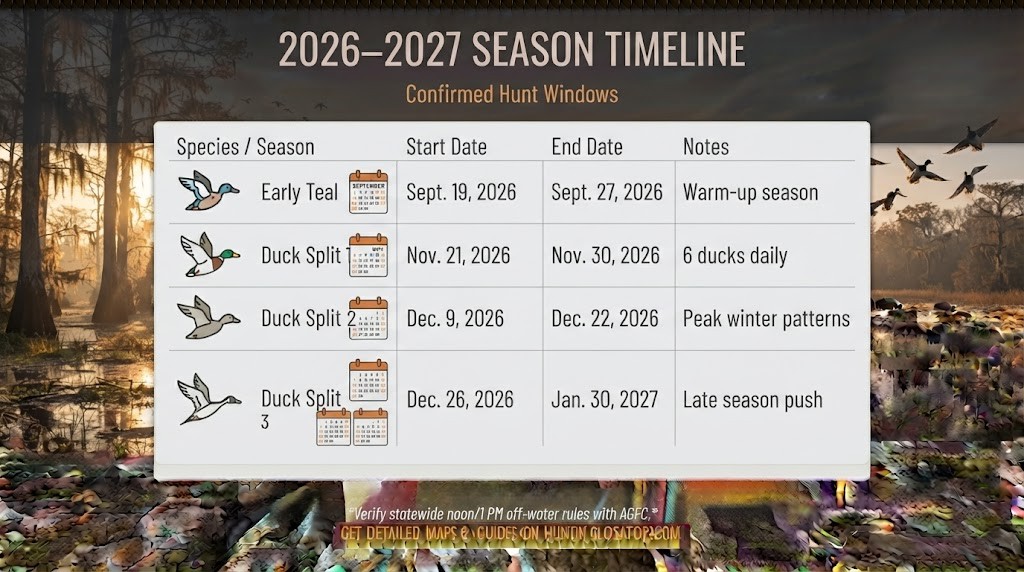
Early Teal Season
Early teal season (September 19–27, 2026) covers blue-winged and green-winged teal moving through while it’s still hot outside and the rest of the flyway hasn’t filled in yet. Teal move early and fast, so timing matters more here than in any other segment of the season.
Duck, Coot & Merganser Season
The three-split structure tracks the birds rather than the calendar. Split 1 (November 21–30) catches the first real cold fronts pushing birds south out of the northern flyway. Split 2 (December 9–22) tends to deliver the most consistent hunting of the year, as birds settle into winter patterns and hold in the Delta’s flooded timber and rice fields. Split 3 (December 26–January 30) extends deep into winter, as birds from farther north keep filtering down.
Your overall daily limit is 6 ducks, but several species carry their own sub-limits within that total:
| Species | Daily Sub-Limit |
|---|---|
| Total ducks (aggregate) | 6 ducks |
| Mallards | 4 (max 2 hens) |
| Wood ducks | 3 ducks |
| Pintail | 1 pintail |
| Redheads | 2 redheads |
| Canvasbacks | 2 canvasbacks |
| Black ducks | 2 ducks |
| Scaup | 1 scaup |
| Mottled duck | 1 duck |
| Coots | 15 (separate limit) |
Remember: your possession limit is 3x the daily bag. Plan your coolers and paperwork accordingly on multi-day hunts.
Mark your calendar for the Youth/Military/Veteran Waterfowl Day on February 6–7, 2027. Youths 15 and younger may harvest ducks, geese, coots, and mergansers on these days. If a young hunter hasn’t completed hunter education yet, they need to be accompanied by a mentor 21 or older; the mentor can call birds in but can’t shoulder a gun. It’s one of the better low-pressure ways to introduce a new hunter to the sport.
Goose Seasons: Dark & Light Geese
Canada and White-fronted geese run across four segments — October 24–November 1, November 21–30, December 9–22, and December 26–January 30 — with a daily limit of 5 dark geese.
Light geese (Snow, Blue, and Ross’s) follow the same regular-season framework through January 30, also capped at 5 birds per day. The Light Goose Conservation Order (January 31–February 5, and again February 8–April 24) then allows essentially unlimited harvest on these species, with electronic calls and unplugged guns permitted. It exists because snow, blue, and Ross’s goose populations have grown large enough to damage their Arctic breeding habitat, and AGFC uses the extended season and relaxed gear rules to manage that overabundance. Bag limit during the order jumps to 15 per day.
One change for 2026–27: a valid Arkansas hunting license and state duck stamp are now required to participate in the conservation order. The “no limit” framing doesn’t mean “no paperwork.”
Arkansas Waterfowl Licenses and Permits
Knowing the dates is only half of it — you also need the right paperwork to legally be in the blind. AGFC’s licensing structure splits between residents and non-residents, and 2026–27 brings a few updates worth knowing before you buy anything.
Arkansas Resident Licenses & Stamps
Arkansas residents need a base hunting license (typically a Resident Sportsman or Combination license), the $7 State Waterfowl Stamp, free HIP registration, and the Federal Duck Stamp if 16 or older.
One notable addition this season: a new $75 Leased Lands Permit now grants access to all leased-land WMAs through a single purchase, rather than requiring separate permits for each area. For residents hunting multiple leased WMAs through the season, that’s a real simplification, and good value if you move around the Delta chasing birds.
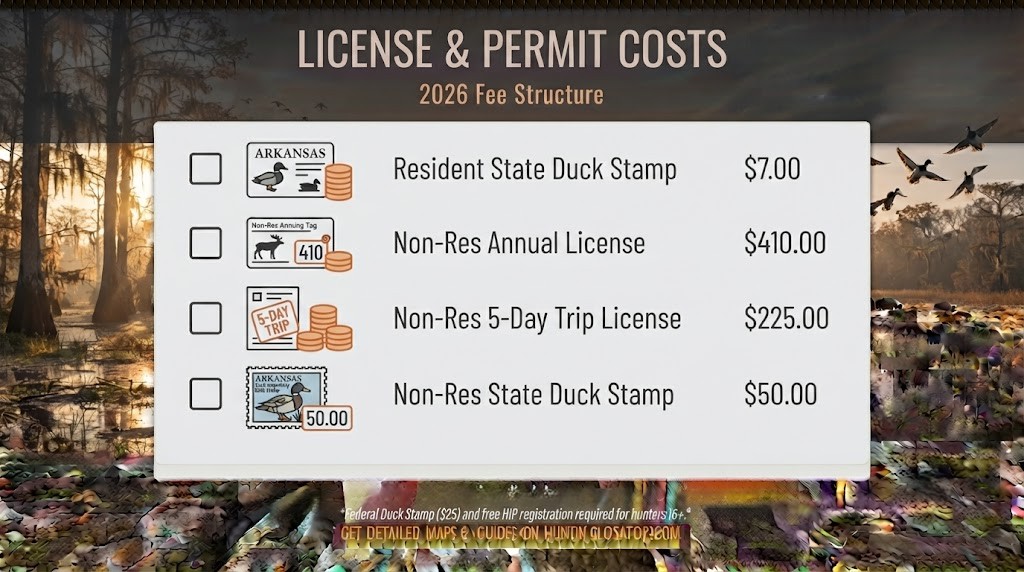
Arkansas Non-Resident Licenses & Stamps
Non-residents face a more layered fee structure, largely tied to WMA access:
| Item | Resident | Non-Resident |
|---|---|---|
| Base Hunting License | Required (Sportsman/Combination) | Annual $410 or 5-Day Trip $225 |
| State Waterfowl Stamp | $7.00 | $50 |
| Federal Duck Stamp | Required 16+ | Required 16+ |
| HIP Registration | Free (mandatory) | Free (mandatory) |
| 5-Day WMA Waterfowl Permit | N/A | $40 per WMA |
| Seasonal WMA Waterfowl Permit | N/A | $100 per WMA |
| 30-Day Non-Resident WMA Waterfowl Permit (NEW) | N/A | $200 (valid all non-resident waterfowl dates) |
Important restriction for non-residents: AGFC has prohibited non-resident waterfowl hunting at Dave Donaldson Black River WMA during the first split of regular duck season (November 21–29/30, 2026). If Dave Donaldson was part of your plan, you’ll need another spot for that window — worth catching early rather than discovering on arrival.
The new 30-day nonresident permit is valid for every date non-residents are allowed to hunt waterfowl on Arkansas WMAs, which makes it a strong option if you’re planning multiple trips or a longer stay rather than a single quick hunt.
Licenses and stamps are purchased through AGFC’s online licensing platform or through authorized agents statewide. There’s no lottery or draw system for general duck hunting permits in Arkansas — it’s first-come, first-served on licensing, so the real competition is for good ground, not a permit slot.
Permits, WMA Access & New 2026–27 Areas
A few additional permit details worth knowing as you plan:
- AGFC WMA/Lake Conservation Permit — Anyone 16 or older using an AGFC-owned WMA or lake needs this annual permit, separate from your hunting license and waterfowl stamps.
- New Permit-Hunt Opportunities — AGFC has added waterfowl permit hunts at Prairie Bayou WMA, the Buckingham Flats Greentree Reservoir on Bayou Meto WMA, and the Wiville West Unit of Rex Hancock Black Swamp WMA for 2026–27.
- Non-Motorized Access Changes — Portions of several popular WMAs now restrict access to non-motorized boats only, part of AGFC’s ongoing effort to reduce crowding and conflicts on the state’s busiest hunting areas.
Where to Hunt Arkansas Waterfowl
Once your dates and licenses are locked in, the real question is where you’ll actually be standing when the birds start working. Arkansas offers three real paths: public WMAs, private leases, and guided hunts. Public land here is genuinely world-class, but that reputation draws crowds, which is why many hunters — resident and non-resident alike — start looking at private access as their season goes on.
Best Public Lands for Arkansas Waterfowl
Arkansas offers more than 50,000 acres of publicly accessible greentree reservoirs across its wildlife management areas, and a handful of names come up again and again:
- Bayou Meto WMA (George H. Dunklin Jr.) — One of the most legendary greentree reservoir hunts in the country. Note the noon off-water rule here, earlier than the statewide standard.
- Dave Donaldson Black River WMA — Prime public ground and a longtime favorite, but remember the new non-resident restriction during the first split, plus its own noon off-water rule.
- White River National Wildlife Refuge area — Vast bottomland hardwood habitat that holds birds throughout the season.
- Bayou DeView WMA — Flooded timber forest that represents some of the most classic Arkansas duck hunting terrain around.
Across most of the state, hunters need to be off water-inundated areas by 1 p.m. during regular duck season, with the noted noon exceptions at Dave Donaldson and Bayou Meto.
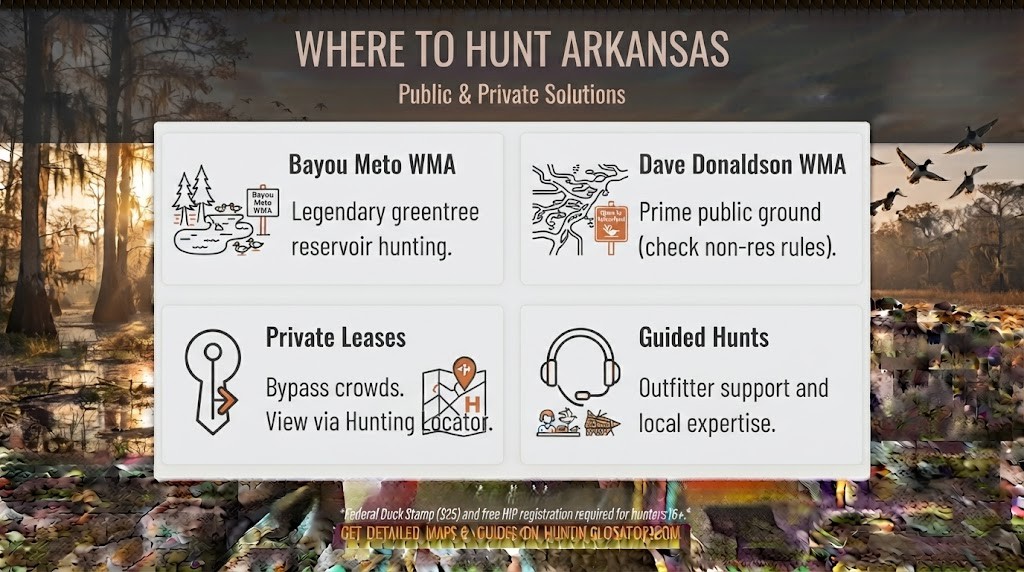
Private Land Hunting with Hunting Locator
Popular WMAs get crowded fast, especially on weekends and during the prime Split 2 window. Private access solves that problem directly: more space, more consistency, and less competition for the birds.
There are two paths here. Leasing gives you seasonal access to prime rice-field and flooded-timber ground without the long-term commitment of ownership, useful if you want a reliable spot without tying up capital. Buying hunting land is the longer-term play, giving you a piece of Arkansas waterfowl country you control outright, season after season. Hunting Locator connects hunters directly with landowners across the state who are ready to lease or sell, cutting out the cold-calling and classifieds.
Current listings include flooded rice fields, timber holes, and Delta bottomland from landowners actively looking to connect with hunters this season.
You can browse Arkansas waterfowl leases now and see what’s available in your target region, whether that’s Grand Prairie flooded rice, Delta timber, or bottomland closer to the White River.
Guided Duck Hunts in Arkansas
If you’re visiting Arkansas for the first time or still building confidence in the blind, a guided hunt is worth considering. A guide handles the scouting and setup and brings local knowledge, and most are glad to teach beginners the basics: reading a flock’s approach, knowing when to call and when to stay quiet. Leases make more sense once you know the region and want repeat access on your own schedule, without coordinating around someone else’s calendar. It comes down to whether you’re prioritizing mentorship and convenience or independence and long-term access.
Arkansas Waterfowl Hunting Tips
These are the fundamentals that consistently separate a good Arkansas waterfowl hunt from a frustrating one, whether you’re hunting flooded timber or open rice fields.
- Dress in Waterproof Layers — Flooded timber and rice fields run cold and wet, often in the same morning. Layer up and make sure your outer gear is genuinely waterproof, not just water-resistant.
- Master Your Calls — Practice your feeding, greeting, and comeback calls before the season starts. Birds that are call-shy from pressured public land require more finesse to pull into range.
- Set a Convincing Decoy Spread — Realistic decoy placement sells the illusion more than volume does. If you’re new to this, start simple and build complexity as you learn how birds react to your spread.
- Scout the Migration — Each split hunts differently. Split 1 catches early cold-front movers, Split 2 tends to be the most consistent, and Split 3 depends on continued pushes from the north. Plan your hunts around the weather, not just the calendar.
- Know Your Species ID — Correct identification in the moment keeps you legal within the 6-duck aggregate and its species-specific sub-limits, especially with birds like pintail and mottled ducks capped at just 1 per day.
- Respect Off-Water Rules — Be off the water by 1 p.m. statewide, or noon specifically at Dave Donaldson and Bayou Meto.
Before opening morning, make sure your gear is ready for Arkansas conditions. You can find waterfowl gear in the Hunting Locator store, from waders built for flooded timber to calls and decoys suited for Delta rice fields.
More Resources from Hunting Locator
Planning more than just a waterfowl trip? Here’s the rest of the Arkansas hunting library:
- Arkansas Hunting Season Hub — The umbrella guide covering every Arkansas hunting season in one place.
- Arkansas Waterfowl Hunting — Our deeper companion piece on waterfowl specifically, with additional regional detail.
- Arkansas Migratory Bird Hunting — Related migratory bird seasons and regulations beyond core waterfowl.
- Arkansas Deer Hunting — Plan your deer season alongside your waterfowl trips.
- Arkansas Turkey Hunting — Spring turkey season details for after waterfowl wraps up.
- Arkansas Small Game Hunting — Squirrel, rabbit, and other small game opportunities statewide.
- Arkansas Feral Hog Hunting — Year-round hog hunting opportunities across Arkansas.
- Arkansas Black Bear Hunting — Everything on Arkansas’s growing bear season.
- Arkansas Alligator Hunting — Details on the state’s limited alligator season.
- Arkansas Elk Hunting — A look at Arkansas’s unique and limited elk hunt.
- Hunting Locator Gear Store — Waders, calls, decoys, and other essentials for your season.
- Hunting Locator Home — Search leases and land nationwide by state, game type, or acreage.
Frequently Asked Questions
What are the 2026–27 Arkansas duck season dates?
The regular duck season runs in three splits: November 21–30, 2026; December 9–22, 2026; and December 26, 2026–January 30, 2027. There’s also a special Youth/Military/Veteran waterfowl day on February 6–7, 2027. These dates reflect AGFC’s finalized 2026–27 schedule.
How much does a non-resident Arkansas waterfowl license cost?
Non-residents need a base hunting license — either a $410 Annual license or $225 5-Day Trip license — plus a $50 State Waterfowl Stamp. For WMA access, you can choose a $40 5-day permit, $100 seasonal permit, or the new $200 30-day permit valid for all non-resident waterfowl dates. A Federal Duck Stamp is also required for hunters 16 and older.
What is the Arkansas duck bag limit?
The daily limit is 6 ducks, with species sub-limits: 4 mallards (2 hen maximum), 3 wood ducks, 1 pintail, 2 redheads, 2 canvasbacks, 2 black ducks, 1 scaup, and 1 mottled duck. Your possession limit is always 3x your daily bag, so up to 18 ducks in possession at once.
Do I need a Federal Duck Stamp and HIP registration to hunt Arkansas waterfowl?
Yes to both. The Federal Duck Stamp is required for every waterfowl hunter 16 and older, and HIP registration is free but mandatory for all migratory bird hunters, whether resident or visiting from out of state. Neither requirement is optional, and AGFC enforces both consistently.
Can non-residents hunt Dave Donaldson Black River WMA in 2026?
Not during the first split. Under new AGFC rules for 2026–27, non-residents are prohibited from waterfowl hunting at Dave Donaldson Black River WMA during the first regular duck season segment (November 21–29/30, 2026). Check WMA-specific rules before finalizing your trip, and consider a private lease as a backup for that window.
When is the Arkansas light goose conservation order in 2027?
The conservation order runs January 31–February 5 and again February 8–April 24, 2027, with a 15-bird daily bag limit. Electronic calls and unplugged guns are allowed during this period. AGFC now requires a valid Arkansas hunting license and state duck stamp to participate.
How do I find private duck hunting leases in Arkansas?
The easiest way is to browse verified listings through Hunting Locator, where you can connect directly with Arkansas landowners offering waterfowl leases across the Delta and Grand Prairie regions. Start with the Arkansas waterfowl leases page to see what’s currently available in your target area.
The Final Shot
Between the September teal opener, three duck splits, dark and light goose seasons, and a conservation order that runs into April, the 2026–27 Arkansas waterfowl calendar gives you a full season to work with. Pair those dates with a clear understanding of your licensing requirements and a realistic plan for where you’ll actually hunt, and you’ve got what you need for a season worth remembering.
Mark your splits on the calendar, buy your license and stamps early so there’s no last-minute scramble, and lock down your ground now while quality leases are still available. These dates and rules reflect AGFC’s finalized 2026–27 regulations, which leaves more of the season for scouting birds and less for digging through fine print.
Quality Arkansas waterfowl ground doesn’t sit unclaimed for long, especially as the teal opener approaches. Browse available leases through Hunting Locator and get your season planning done early.


