This Massachusetts Black Bear Hunting Season Guide for 2026 pulls together the official regulations in one place. We’re Hunting Locator, and we’ve built this guide to save you from digging through a dozen sources to piece together dates, licenses, and land access. It also connects you to huntable land and gear, whether you’re a licensed resident confirming this year’s dates, a non-resident planning a first Massachusetts trip, or a new or youth hunter getting oriented.
Here’s what this guide covers:
- Season dates & regulations — when you can legally hunt and the rules that keep you compliant all season long
- Licenses & permits — the two credentials every bear hunter needs, resident or non-resident
- Where to hunt — public land options, private leases through Hunting Locator, and guided hunt considerations
For the wider picture beyond bear season, our broader Massachusetts hunting seasons guide covers the full calendar. Here are the fast facts first.
Quick Overview: Massachusetts Black Bear Season at a Glance
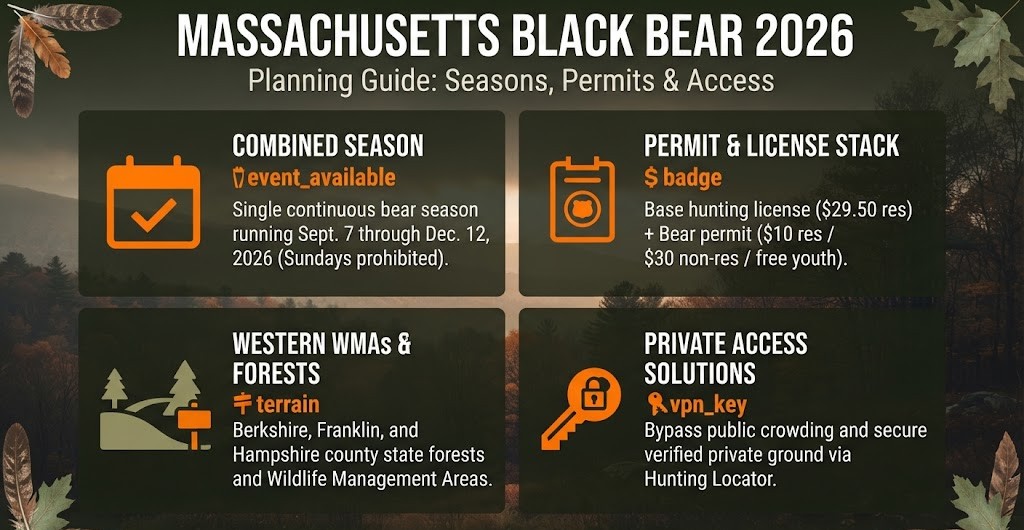
The 2026 Massachusetts black bear season runs as one combined season from September 7 through December 12, with a one-bear-per-year bag limit and two required credentials before you head into the woods. Sundays are off-limits statewide. Massachusetts has also added a free youth bear permit for hunters ages 12–17, which lowers the barrier for newer hunters.
| Category | Detail |
|---|---|
| Season Dates (2026) | September 7 – December 12, 2026 (combined single season) |
| Sundays | Hunting prohibited on all Sundays |
| Daily Hunting Hours | ½ hour before sunrise to ½ hour after sunset (sunrise–sunset on certain WMAs) |
| Bag Limit | No more than one black bear per calendar year |
| Required Credentials | Valid hunting or sporting license + bear permit |
| Tagging | Attach bear tag to carcass immediately before moving it |
| Reporting | Report harvest online or at an official check station |
| Tooth Submission | MassWildlife requests a tooth for population age studies |
You need two credentials, not one. A base hunting or sporting license alone won’t cover you — you also need a separate bear permit, and both have to be on you in the field. This is a common mistake regardless of experience level, so it’s worth confirming before season opens.
Before you buy anything, here’s what you’ll need:
- A valid resident hunting or sporting license (your base credential)
- A separate bear permit — resident, non-resident, or free youth, depending on your situation
- A hunter education certificate (or proof of a prior license) if you’re a first-time license buyer
For more detail on bear-specific rules this year, see our deeper Massachusetts bear breakdown.
Massachusetts Black Bear Hunting Seasons
For 2026, Massachusetts moved away from its previous multi-part season structure and consolidated everything into one combined black bear season. More continuous days afield means more flexibility to work around weather, work schedules, and overlapping deer season plans.
The 2026 Combined Season
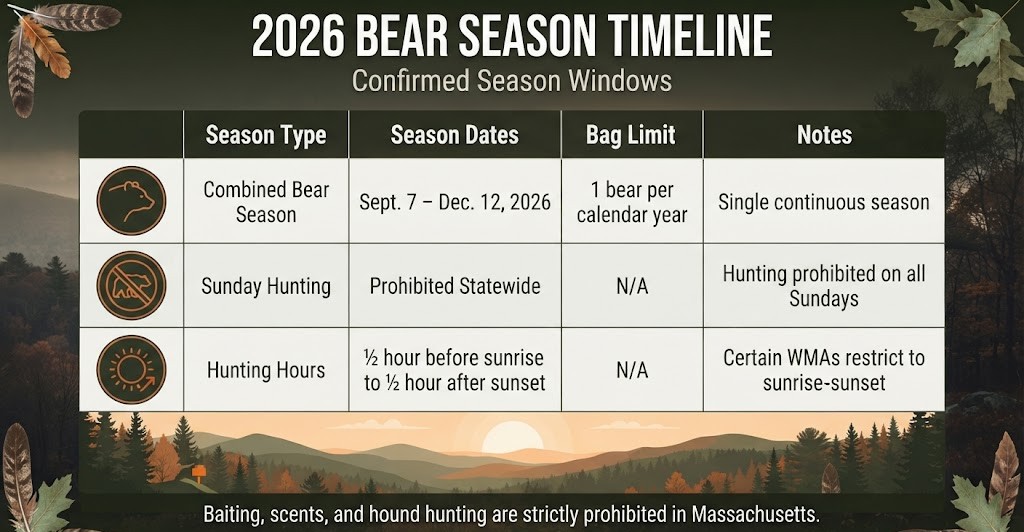
The 2026 Massachusetts black bear season runs September 7 through December 12, 2026, with all dates inclusive. This single window replaces the fragmented structure from past years. According to the state’s official 2026 fall announcements, the change was designed to simplify planning while giving hunters more time in the field.
Hunting Hours & Sunday Rule
Legal hunting hours run from ½ hour before sunrise to ½ hour after sunset, though certain wildlife management areas restrict hunting to sunrise-to-sunset only — worth checking before you head to a specific WMA. Sundays remain off-limits for hunting statewide, so a multi-day trip needs to be built around weekday and Saturday sits. The official black bear regulations page confirms both the hunting hours and the Sunday rule directly from the state.
Bear & Deer Season Overlap
Bear season often overlaps with deer season in Massachusetts, which gives hunters a real chance to pursue two big game species on one trip. That’s worth factoring in if you’re a non-resident trying to get more value out of a single Massachusetts visit. More on the bear and deer overlap is available if you want to plan around it, and our Massachusetts deer season dates guide breaks down timing for both.
Massachusetts Bear Licenses and Permits
You need two separate credentials to legally hunt bear in Massachusetts, and neither works alone. This section covers the base licenses, the bear permits, and how the buying process works, so you’re not scrambling the week before season opens. A hunting or sporting license gets you in the door; the bear permit is what actually authorizes you to pursue bear.
Massachusetts Hunting Licenses
Before you can get a bear permit, you need a base license — either a hunting license or a sporting license. Both serve as your foundational credential; the choice mostly comes down to whether you also want to fish under the same license, since sporting licenses typically bundle more privileges.
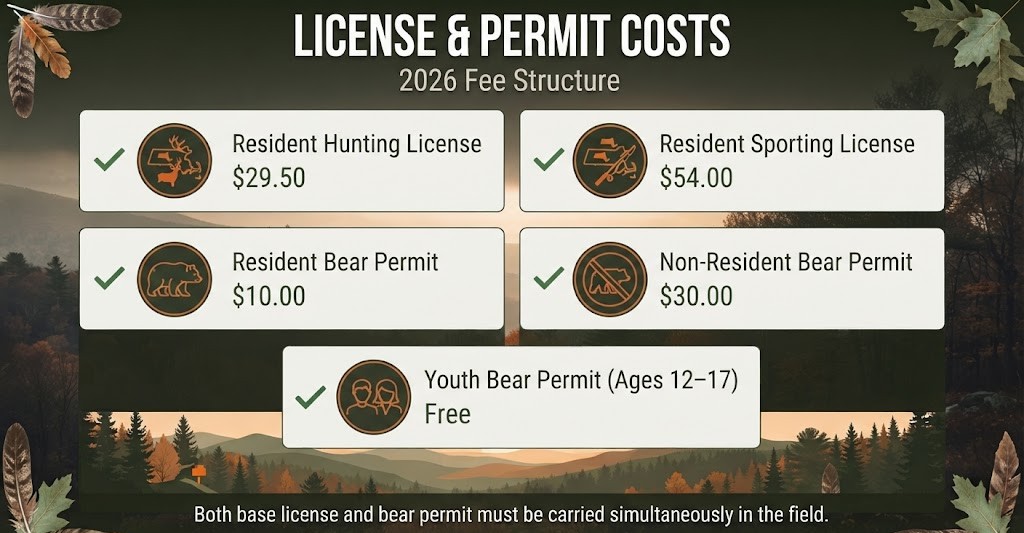
| Credential | Cost |
|---|---|
| Resident Hunting License | $30 |
| Resident Sporting License | $54 |
| Resident Bear Permit | $10.00 |
| Non-Resident Bear Permit | $30.00 |
| Youth Bear Permit (Ages 12–17) | Free |
A base hunting or sporting license is required before you can hunt bear — there’s no way around it. If you’re buying a Massachusetts hunting license for the first time, expect to show a Basic Hunter Education certificate or proof of a prior license held before January 1, 2007. For non-resident hunters, the $30 bear permit is the key credential alongside a valid license. For younger hunters, the free youth bear permit removes cost as a barrier to getting into the field.
Massachusetts Bear Permits
Which permit you need depends on residency and age: residents pay $10, non-residents pay $30, and youth hunters ages 12–17 get theirs free. The bag limit stays the same across all categories — one bear permit and one bear per calendar year.
Here’s how the buying process breaks down:
- Hold or purchase a base license — either the resident hunting license or sporting license (non-residents will have their own equivalent license type).
- Purchase the appropriate bear permit — resident, non-resident, or free youth permit, matched to your situation.
- Carry both credentials in the field — your license and your bear permit must both be on you while hunting; one without the other isn’t sufficient.
Both licenses and permits are purchased through MassFishHunt, the state’s official licensing portal. We didn’t find any published quota information for non-resident permits, so it’s worth confirming current availability directly with MassWildlife before finalizing travel plans.
Where to Hunt Black Bear in Massachusetts
Knowing the dates and having your paperwork in order only gets you halfway there. The land itself matters just as much, especially if you’re a non-resident without local knowledge or existing access — though residents benefit too from knowing their options beyond the same handful of public spots everyone else hunts.
Best Public Lands
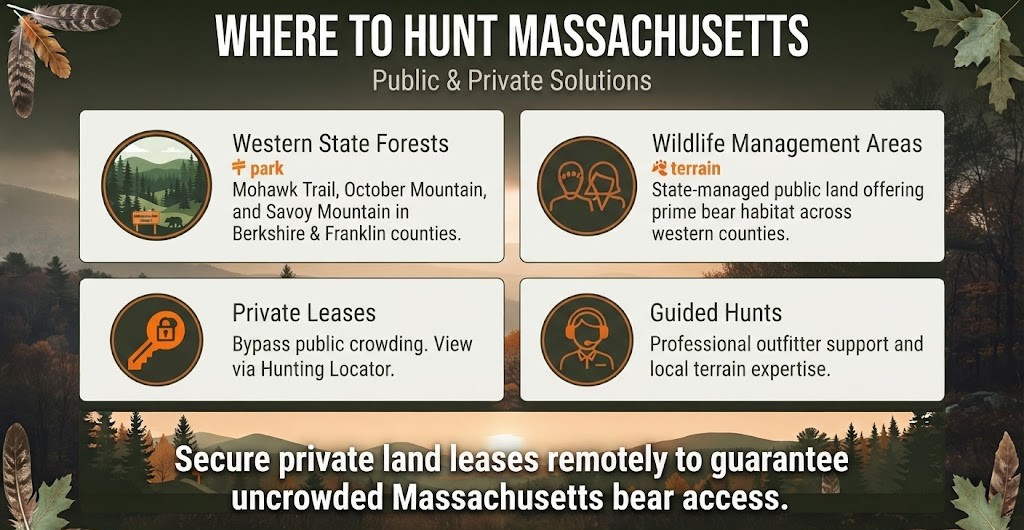
Western Massachusetts consistently produces the strongest bear activity in the state, with Berkshire, Franklin, and Hampshire counties standing out as the primary region. Central Massachusetts, particularly Worcester County, has also seen a noticeable uptick in bear activity in recent years. According to top public land regions commonly cited by hunters, these areas offer some of the best publicly accessible bear habitat in the state:
- State forests such as Mohawk Trail, October Mountain, and Savoy Mountain
- Wildlife Management Areas spread across the western counties
- Central Massachusetts and Worcester County areas showing rising bear activity
For hunters new to the area or traveling from out of state, these public land options are a solid starting point for scouting before season opens.
Private Land Hunting with Hunting Locator
Public land works, but it comes with tradeoffs: more hunting pressure, more competition for prime spots, and less predictability. For a non-resident without a local connection, that pressure can turn a promising trip into a frustrating one. Leased or purchased private land avoids that problem.
Leasing gets you consistent, lower-pressure access to bear habitat without the long-term commitment of ownership. Buying land is the longer-term option for hunters who want a permanent Massachusetts base for years to come. Either route puts you on ground that isn’t being hunted by everyone else who found the same public WMA map.
This is where Hunting Locator comes in. We’re a platform built to connect hunters directly with landowners across the country who are ready to lease or sell huntable land — no middleman, no cold calls to strangers. You can browse live Massachusetts listings, connect directly with landowners, and secure access on your own timeline. Browse Massachusetts hunting leases to compare properties that fit your budget and season plans.
Guided Hunts
For hunters new to bear hunting or unfamiliar with Massachusetts terrain, a guided hunt can shorten the learning curve considerably. Guides typically bring local knowledge of bear movement and habitat, access to scouted land, and help with the logistics that trip up first-timers — things like check-in procedures or which terrain features actually hold bears this time of year.
A guided hunt generally offers:
- Local expertise on bear movement patterns and terrain specific to your hunting area
- Pre-scouted land that’s already been evaluated for bear sign and activity
- Logistics support for tagging, reporting, and other compliance steps that can trip up newcomers
Whether you go guided or on your own, get your gear sorted before opening day — gear up for your hunt at the Hunting Locator store as you finalize your plans.
Black Bear Hunting Tips
Every tip below assumes you’re hunting within the rules. Baiting is strictly prohibited, including scents or cover scents meant to attract bears, and hound hunting isn’t permitted either. According to no bait or scents regulations governing the season, these restrictions apply across the board, so plan around legal spot-and-stalk and stand-hunting methods only.
With that established, here’s what actually moves the needle on success:
- Hunt the Feeding Windows: Bear movement peaks during early morning and late afternoon, and activity tends to increase on cold, damp days and just ahead of storms. Plan your sits around these windows rather than the middle of the day.
- Scout Mast-Rich Terrain: Focus your scouting on hardwood stands — oak and beech in particular — that produce mast, along with dense cover and travel corridors like ridgelines and old logging roads. According to scouting bear habitat basics, bears rely heavily on these corridors to move between feeding and cover.
- Learn Bear Sign: Before the season opens, spend time scouting tracks — particularly the larger front-pad impressions — along with trails and scat to pinpoint the most active spots.
- Dress for the Terrain & Climate: Massachusetts fall conditions shift fast, so layer accordingly and invest in boots built for wet, uneven ground. The Hunting Locator store carries gear suited to exactly these conditions.
- Carry the Right Tools: A dependable rifle or bow setup, solid optics, and a proper field-dressing kit all make a real difference once you’re on a bear. Browse quality bear hunting gear to make sure you’re equipped before opening day.
More Resources from Hunting Locator
Bear season is one piece of the Massachusetts hunting calendar. Here are the companion guides and tools worth bookmarking as you plan the rest of your year.
- Hunting Locator homepage — start your search for land, gear, and guides all in one place.
- Massachusetts hunting leases — browse live private-land leases across the state.
- Hunting Locator store — shop gear for your bear hunt and every season after it.
- Massachusetts black bear season guide — our companion deep-dive on bear-specific regulations.
- Massachusetts hunting season guide — the full statewide season overview.
- Massachusetts deer hunting season — plan a combined bear and deer trip.
- Massachusetts turkey hunting season — cross-species planning for spring and fall.
- Massachusetts waterfowl hunting season — for hunters chasing ducks and geese too.
- Massachusetts small game hunting season — round out your season with small game options.
- Massachusetts upland game bird hunting season — upland bird season details.
- Massachusetts furbearer hunting season — furbearer opportunities across the state.
Frequently Asked Questions
What are the 2026 Massachusetts black bear season dates?
The 2026 Massachusetts black bear season runs September 7 through December 12, 2026, as one combined season. Sunday hunting is prohibited throughout the season, so plan weekday and Saturday sits accordingly to make the most of your available days afield.
How much does a Massachusetts bear permit cost?
Resident bear permits cost $10, non-resident bear permits cost $30, and youth hunters ages 12–17 qualify for a free permit. You’ll also need a base license — $29.50 for a resident hunting license or $54.00 for a resident sporting license — since the permit alone isn’t sufficient.
What license do non-residents need to hunt bear in Massachusetts?
Non-residents need a valid hunting or sporting license plus the $30 non-resident bear permit, and both must be carried in the field simultaneously. Both are purchased through MassFishHunt, the state’s official licensing system, so plan to set up your account ahead of your trip.
Is a youth bear permit available in Massachusetts?
Yes — hunters ages 12 through 17 qualify for a free youth bear permit. It removes cost as a barrier for families getting kids into the sport and makes this one of the more accessible seasons for younger hunters.
Can you use bait or hounds for bear hunting in Massachusetts?
No — baiting is prohibited, including the use of scents or cover scents meant to attract bears, and hound hunting isn’t permitted either. Stick to legal spot-and-stalk and stand-hunting methods to stay compliant throughout the season.
What must I do after harvesting a bear?
Attach your bear tag to the carcass immediately before moving it, then report the harvest online or at an official check station. MassWildlife also requests a tooth from your harvested bear to help study the age structure of the state’s bear population.
Where can non-residents find land to hunt bear in Massachusetts?
Public options include western-county state forests and Wildlife Management Areas, particularly in Berkshire, Franklin, and Hampshire counties. For more reliable, lower-pressure access, browse Massachusetts leases through Hunting Locator to connect directly with landowners.
The Final Shot
Know your dates, carry your credentials, and secure your ground early. The 2026 Massachusetts black bear season gives you September 7 through December 12 to work with — more continuous time afield than hunters have had in recent years — but that time only pays off with a valid license and bear permit in hand and a place to actually hunt.
Start by confirming your dates against this guide, then lock in your license and bear permit through MassFishHunt well before opening day. From there, turn your attention to land: browse Massachusetts leases through Hunting Locator, connect with a landowner who fits your budget and goals, and secure access before the season gets crowded. Round it out by gearing up at the store so you’re not scrambling the week before your hunt.
We built this Massachusetts Black Bear Hunting Season Guide for 2026 to be the resource you need to get legal and get on quality ground. Browse Massachusetts hunting leases to start planning for opening day.


