This New York waterfowl guide covers dates, limits, licensing, and access for the rest of the 2026 season, for hunters who live in New York and those traveling in from out of state. If you need gear before the next split opens, Hunting Locator’s store has gear for your New York hunt.
It covers:
- Season dates, zone splits, and bag limits in one table
- Licenses, Duck Stamp, and HIP requirements, with costs for residents and nonresidents
- Where to hunt (public marshes, private leases, and guides), plus a link to the complete New York hunting season guide for every other season
Dates and rules below should be confirmed with NYSDEC before you hunt.
New York Waterfowl Season at a Glance: Quick Overview
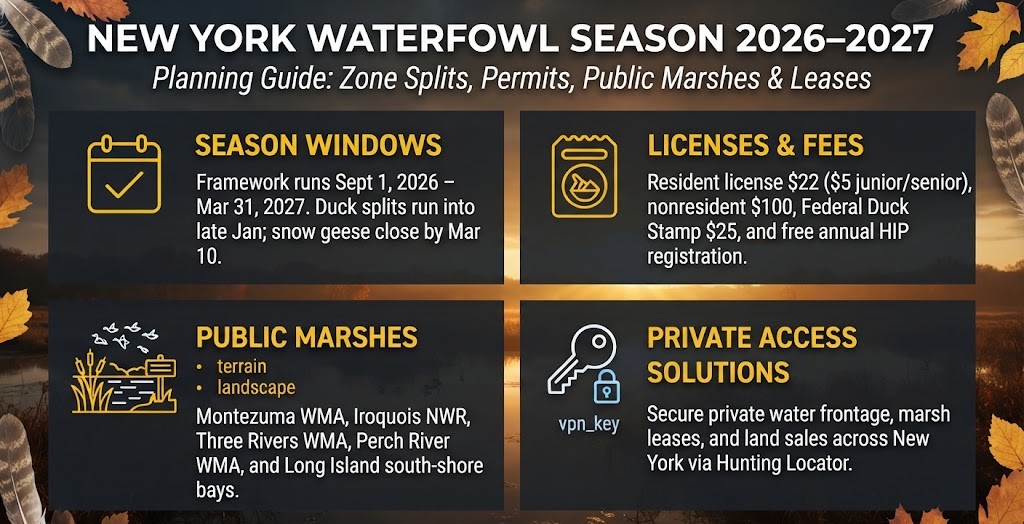
The 2026–2027 framework runs September 1, 2026 through March 31, 2027, and dates depend on your zone. Ducks are managed in the Northeast, Southeast, Western, Lake Champlain, and Long Island zones, while Canada geese use separate Goose Hunting Areas under the Atlantic Flyway framework. If you want ground away from crowded public marshes, the private land section below covers New York hunting leases.
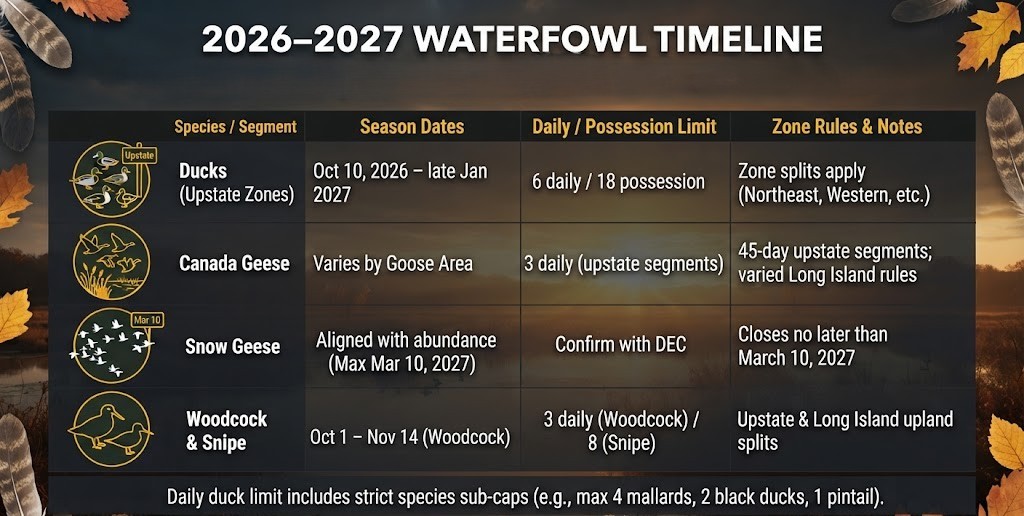
| Species | Season Dates / Segments | Daily Limit | Possession | Notes |
|---|---|---|---|---|
| Ducks | Opens Oct 10, 2026; zone splits run into late Jan 2027 | 6 total | $18.00 | Species sub-limits apply; Long Island opens later |
| Canada geese | Varies by Goose Hunting Area; 45-day upstate segments plus early-September segments | 3 (standard upstate segments) | 3x daily | Long Island seasons are longer and limits vary by area; check DEC |
| Snow geese | Aligned with zone abundance; closes no later than Mar 10, 2027 | Confirm with DEC | Confirm with DEC | Federal framework deadline |
| Woodcock | Oct 1 – Nov 14, 2026 (Upstate & Long Island) | $3.00 | 9 | — |
| Snipe & rails (Upstate) | Sept 1 – Nov 9, 2026 | $8 | 24 | — |
Confirm with NYSDEC: Regulations can change. Verify zone maps, Goose Hunting Area boundaries, and final dates with NYSDEC waterfowl season-setting details before you go.
Before you load the truck, check these requirements:
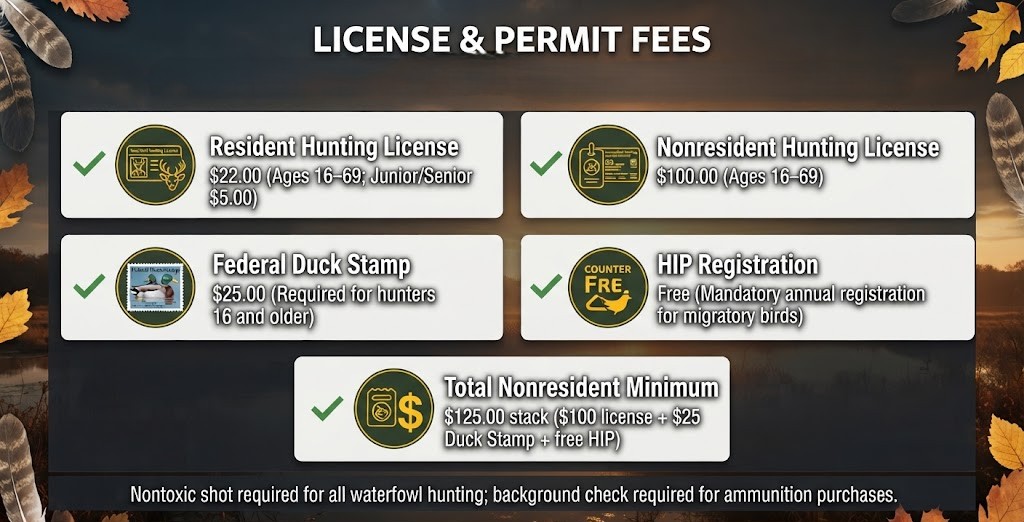
- New York hunting license: resident $22, nonresident $100, junior $5, senior $5
- Federal Duck Stamp: $25, required for hunters 16 and older
- HIP registration: free, mandatory, and renewed annually
- Hunter education certificate: required before you buy your first license
- Nontoxic shot: required for all waterfowl hunting
For a nonresident, the total is $100 + $25 + $0 HIP = $125 before gear and travel.
New York Waterfowl Hunting Seasons for 2026–2027
Each species has its own season, and your zone or Goose Hunting Area sets the exact dates. Every date in this guide is zone-dependent, so find your zone first and plan around it.
Duck Season
Ducks opened October 10, 2026 across upstate zones, with split segments running into late January 2027. Long Island opens later.
Reported zone splits (confirm with DEC before you hunt):
- Northeast: Oct 10–Nov 29 and Dec 12–20
- Western: Oct 10–Nov 1 and Dec 5–Jan 10
- Long Island: Nov 21–29 and Dec 12–Jan 31
- Southeast and Lake Champlain: check DEC for current splits
The break between splits lets later migration pushes arrive, which is why the second split often holds the best action after a cold front moves birds down.
The daily limit is 6 ducks, a total cap with species sub-caps inside it. Possession is three times the daily limit, or 18 ducks. The species limits are:
| Species | Daily Limit |
|---|---|
| Mallards | 4 (no more than 2 hens) |
| Wood ducks | 3 |
| Black ducks | 2 |
| Redheads | 2 |
| Canvasbacks | 2 |
| Pintail | 1 |
| Sea ducks | Up to 4 |
Identification matters. Taking a third hen mallard or an extra black duck is a violation even when your total is under six, so confirm what you are shooting at before you shoot.
The Long Island youth waterfowl hunt, November 7–8, 2026, is still ahead. The upstate youth days (September 26–27) have passed, so mark them for next season.
Canada Goose Season
Canada goose seasons are set by Goose Hunting Area. West Central, East Central, Northeast, and Hudson Valley return to 45 days at 3 per day, according to the DEC season-setting details linked above. Long Island areas run longer seasons with limits that vary by area, so check DEC before you hunt there.
DEC ties timing to bird abundance. Goose numbers in the West Central area peak from mid-November to mid-December, and Hudson Valley geese open with the second duck split to line up with the final corn harvest. The best goose days are still ahead.
The special September segment, with its liberal limit aimed at resident geese before migrants arrive, has already closed. Note it for next year; the standard 3-per-day segments are the ones running now.
Snow Goose and Late Season
The snow goose season closes no later than March 10, 2027, to comply with federal frameworks, with timing aligned to zone abundance. Check DEC for your zone’s final dates.
Woodcock run October 1 to November 14, and upstate snipe and rails run September 1 to November 9, as shown in the table above. For upland birds, see Hunting Locator’s New York game bird hunting season guide.
New York Waterfowl Licenses and Permits
Waterfowl hunting requires three things: a state license, the Federal Duck Stamp, and HIP registration. Get all three squared away before your next hunt.
New York Hunting Licenses
| License / Item | Who | Cost | Validity / Notes |
|---|---|---|---|
| Resident Hunting License | Ages 16–69 | $22 | Sept 1 – Aug 31 |
| Nonresident Hunting License | Ages 16–69 | $100 | Sept 1 – Aug 31 |
| Junior License | Ages 12–15 (resident & nonresident) | $5.00 | — |
| Senior License | Residents 70+ | $5.00 | — |
| Federal Duck Stamp | Waterfowl hunters 16+ | $25 | Required |
| HIP Registration | All migratory bird hunters | Free | Mandatory, annual |
You need hunter education before your first license. A nonresident license is $100, bringing your total to $125 once you add the Duck Stamp and HIP. Plan ahead on shells, too: buying ammunition in New York requires a background check that can take anywhere from ten minutes to two days, so bring nontoxic loads with you or allow extra time.
Hunters under 16 do not need a Federal Duck Stamp, but junior hunters still need their license and HIP registration.
New York Hunting Permits
New York has no separate waterfowl permit lottery. The credentials you need are:
- Federal Duck Stamp: Required if you are 16 or older. Buy it at post offices or from license agents and online sellers.
- HIP registration: Free and completed annually, typically when you buy your license.
- Hunter education: A prerequisite for your first license.
- Refuge rules: Some refuges require extra credentials. Iroquois NWR, for example, requires a Waterfowl Identification Card, so check before you go.
Where to Hunt Waterfowl in New York
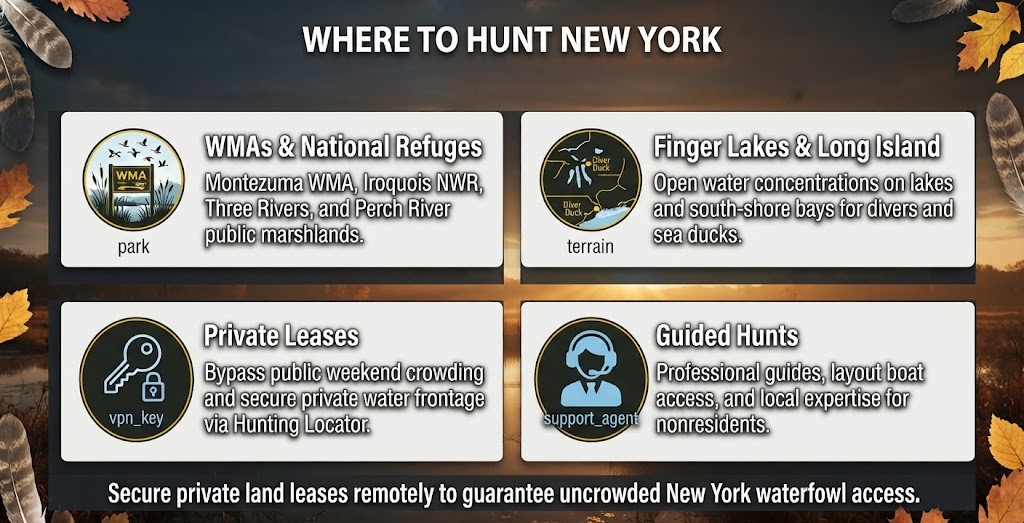
Options run from free public marshes to private leases to guided hunts. Moving up that list generally costs more and brings less crowding and more control.
Best Public Lands
New York has more than 200 Wildlife Management Areas covering over 200,000 acres, and the popular waterfowl marshes can fill up on weekends. Scout midweek when you can. Good places to start:
- Montezuma and Northern Montezuma WMA: diverse species and a classic Central New York waterfowl destination
- Iroquois NWR with Oak Orchard and Tonawanda WMAs: a major concentration area between Buffalo and Rochester (refuge ID rules apply)
- Three Rivers WMA: a Central New York standout for waterfowl
- Perch River WMA: northern New York marsh hunting
- Lake Champlain marshes: late-season divers and dabblers when smaller water freezes
- Finger Lakes (Cayuga, Seneca, Canandaigua): open water concentrates birds during hard winters
- Long Island south-shore bays: Jamaica Bay, Shinnecock Bay, and Great South Bay offer puddle duck, diver, and sea duck hunting
Private Land Hunting with Hunting Locator
Pressure is the main problem on public land, and private access addresses it. A lease gives you a dependable spot, control over your scouting, and fewer hunters competing for the same birds.
When you evaluate a waterfowl lease, look at:
- Water access: ponds, marsh, or river frontage that holds birds
- Feed fields: harvested corn and grain draw ducks and geese
- Flyway position: how the property sits relative to migration routes
- Neighboring pressure: what the adjacent properties are doing
- Written terms: access, liability, and rules spelled out in the agreement
If you want permanent access, buying land is the long-term option. Hunters searching for hunting land for sale in New York can use the same platform to connect with landowners who sell.
Visit New York hunting leases to browse current listings by location and game type.
Hunting Locator connects hunters with landowners who lease or sell land, which cuts down the search time. Landowners get responsible, qualified hunters who respect their property. Browse New York leases or list your land at Hunting Locator.
Guided Hunts
A guide trades cost for local knowledge, which helps nonresidents and beginners most. A typical northern New York day hunt runs roughly $275–$350. A guide makes sense when:
- You are a first-time waterfowler
- You are a nonresident with limited days
- You want sea duck or layout hunts that require boats
- You have no time to scout
Before you book, check the following:
- Proper licensing
- What is included in the price
- Blind and decoy setup
- Bird-cleaning policy
- References from past clients
The New York State Outdoor Guides Association covers Western NY, the Finger Lakes, Central NY, and the Adirondacks, with services ranging from basic access to full-service packages. Hunting Locator also connects hunters with outfitters.
Waterfowl Hunting Tips for New York
The Hunting Locator store carries decoys, calls, waders, and blinds.
- Scout feeding fields and roosts. Watch where birds feed in the morning and where they settle at night, then set up on the X.
- Hunt fronts and migration pushes. Cold fronts move new birds down, and the second duck split often benefits most.
- Learn waterfowl identification. Know a hen mallard from a drake and a black duck from the rest so you stay inside your sub-limits.
- Use nontoxic shot. Steel or bismuth is required, and a 12-gauge with a modified or full choke is a solid all-around setup.
- Build the right decoy spread. Full-body decoys in cut corn work well for geese, and the store’s decoys are a good place to start.
- Call softly to pressured birds. Late-season birds have heard it all, so soft, realistic calling works better than loud, constant calling.
- Respect cold water. Wear a life jacket and never hunt alone on open water.
- Plan layout boats for sea ducks. Long Island sea duck hunting calls for layout boats, shoreline blinds, or kayaks.
- Avoid pressure. Hunt midweek or secure private access to get away from the crowds.
More Resources from Hunting Locator
These pages cover other seasons and access options in New York, organized by what you want to hunt next.
- Waterfowl deep-dive: the New York waterfowl hunting season reference page for ducks and geese
- All seasons: the New York hunting season guide for a year-round calendar
- Upland and turkey:
- New York game bird hunting season for woodcock, grouse, and pheasant
- New York small game hunting season for squirrel, rabbit, and more
- New York turkey hunting season for spring and fall gobblers
- Big game:
- New York deer hunting season guide for bow, muzzleloader, and firearm dates
- New York black bear hunting season for seasons and regulations
- Predator: New York coyote hunting season for a late-winter option
- Access: New York hunting leases for private land listings
FAQ
When does duck season start in New York in 2026?
Duck season opened October 10, 2026 in the upstate zones. Long Island opens later, and split segments run into late January 2027. Zone dates differ, so confirm yours with NYSDEC before you hunt.
What is the daily duck bag limit in New York?
You may take 6 ducks per day in total, with species sub-limits inside that cap: 4 mallards (2 hens max), 3 wood ducks, 2 black ducks, 2 redheads, 2 canvasbacks, 1 pintail, and up to 4 sea ducks. Possession is 18.
Do I need a Federal Duck Stamp in New York?
Yes, if you are 16 or older. The Federal Duck Stamp costs $25 and is sold at post offices and through license agents and online sellers. Sign it and carry it with your license whenever you hunt waterfowl.
Do kids need a duck stamp?
No. Hunters under 16 do not need a Federal Duck Stamp. Juniors aged 12–15 still need a $5 hunting license and HIP registration. The Long Island youth hunt, November 7–8, 2026, is still ahead this season.
How much is a nonresident hunting license in New York?
A nonresident hunting license costs $100. Add the $25 Federal Duck Stamp and free HIP registration, and your total is $125. Buying ammunition in New York requires a background check, so allow extra time.
Is HIP registration required?
Yes. HIP registration is free, mandatory, and renewed annually for every migratory game bird hunter. You typically complete it when you buy your license, and it covers ducks, geese, woodcock, snipe, and rails.
When does snow goose season end in New York?
The snow goose season closes no later than March 10, 2027, to comply with federal frameworks. Dates are aligned with zone abundance and vary by zone, so check NYSDEC for your area’s exact window.
Can I lease private land for duck hunting in New York?
Yes. Landowners across the state lease water and fields for waterfowl, and you can browse current listings by location and game type at New York hunting leases. Compare water access, feed fields, and neighboring pressure.
What else can I hunt during waterfowl season?
Woodcock, snipe, and rails run alongside waterfowl, and small game seasons overlap too. See the New York small game hunting season and New York deer hunting season guide for the overlap. Regulations can change, so confirm with NYSDEC.
The Final Shot
Know your zone, respect the species sub-caps, and carry your license, Duck Stamp, and HIP confirmation every time you go out. The second splits and the goose peaks are the main opportunities left this season.
For access, browse New York hunting leases or explore Hunting Locator. Once the ducks are gone and winter settles in, coyote hunting in New York keeps the season going.


