This Kansas waterfowl guide puts every 2026–27 zone date, bag limit, and stamp in one place for residents and nonresidents, and shows how to plan around the noon rule. Hunting Locator can help with planning and finding access, while the Kansas Department of Wildlife and Parks (KDWP) remains the final word on regulations.
It covers:
- Zone-by-zone dates, bag limits, and sub-limits for ducks, geese, and coots, including what’s still open.
- Every license and stamp, with resident and nonresident cost totals, plus the status of the proposed fee change.
- Where to hunt: public marshes, how the noon rule works, and how to get full-day private access through Kansas hunting leases.
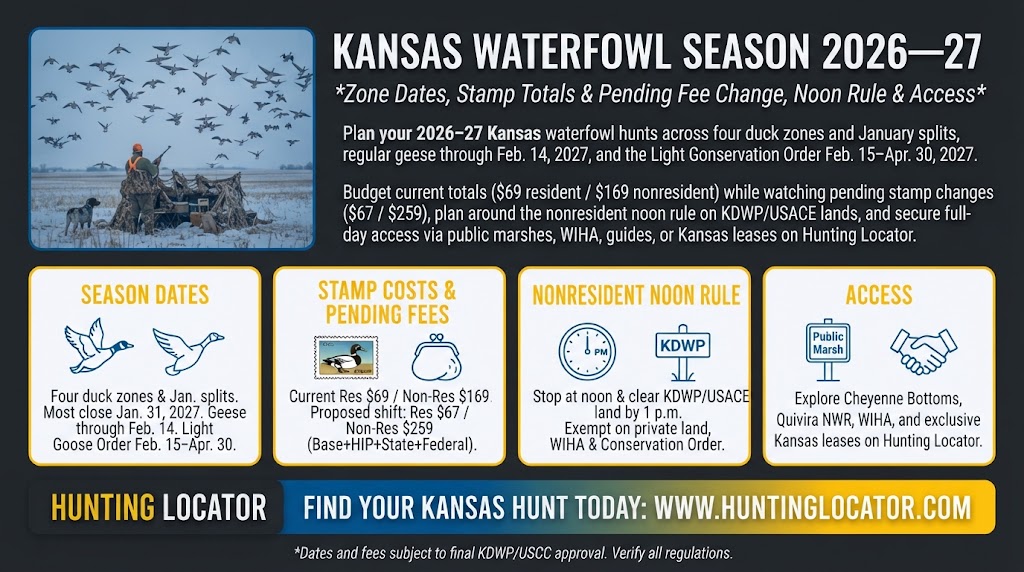
Quick Overview: Kansas Waterfowl Season at a Glance
Find your zone first, because it sets your dates.
Kansas splits duck season into four zones: High Plains, Low Plains Early, Low Plains Late, and Low Plains Southeast. Check KDWP for exact segment closures and teal dates. You can also see all Kansas hunting seasons in one place.
| Species | Season Type/Zone | Dates | Daily Bag | Notes |
|---|---|---|---|---|
| Ducks & Mergansers | High Plains Unit | Oct 10, 2026 (passed)–Jan 3, 2027; Jan 22–31, 2027 | 6 (sub-limits apply) | Opener passed; January split ahead |
| Ducks & Mergansers | Low Plains Early Zone | Oct 10–Dec 6, 2026 (passed); Dec 19, 2026–Jan 3, 2027 | 6 | Closed Dec 7–18 |
| Ducks & Mergansers | Low Plains Late Zone | Oct 31, 2026 (passed)–Jan 3, 2027; Jan 23–31, 2027 | 6 | Opener passed |
| Ducks & Mergansers | Low Plains Southeast Zone | Nov 7, 2026 (passed)–Jan 3, 2027; Jan 16–31, 2027 | 6 | Opener passed; confirm second segment with KDWP |
| Youth/Veteran/Military | HP Oct 3–4; LP Early Sept 26–27; LP Late Oct 17–18; SE Oct 24–25, 2026 (all passed) | — | 6 | All passed |
| Coots | Same as duck dates by zone | — | 15 | — |
| Dark Geese (Canada/Cackling) | Statewide | Oct 31–Nov 1, 2026 (passed); Nov 4, 2026–Feb 14, 2027 | 6 | — |
| White-fronted Geese | — | Confirm dates with KDWP | 2 | — |
| Light Geese | Statewide | Oct 31–Nov 1, 2026 (passed); Nov 4, 2026–Feb 14, 2027 | 50 | — |
| Light Geese | Conservation Order | Feb 15–Apr 30, 2027 | Unlimited | Exempt from the nonresident noon rule |
Possession limit for ducks: 3x daily (18).
Before you hunt, you’ll need:
- A Kansas hunting license
- HIP stamp ($2.50)
- State Waterfowl Stamp ($10)
- Federal Waterfowl Stamp ($29)
- Hunter education, if required (born on or after July 1, 1957, unless exempt; confirm with KDWP)
Details and totals are in the licenses section below.
Kansas Waterfowl Hunting Seasons
Kansas runs separate frameworks for ducks and coots, dark geese, and light geese, so plan each trip around the species you want.
Teal dates have already passed: Low Plains Sep 12–20, 2026 (passed) and High Plains Sep 19–27, 2026 (passed). For teal, dove, rail, and snipe, see our Kansas migratory bird hunting season guide. Everything below follows the Central Flyway calendar and the Kansas duck season dates for 2026–2027.
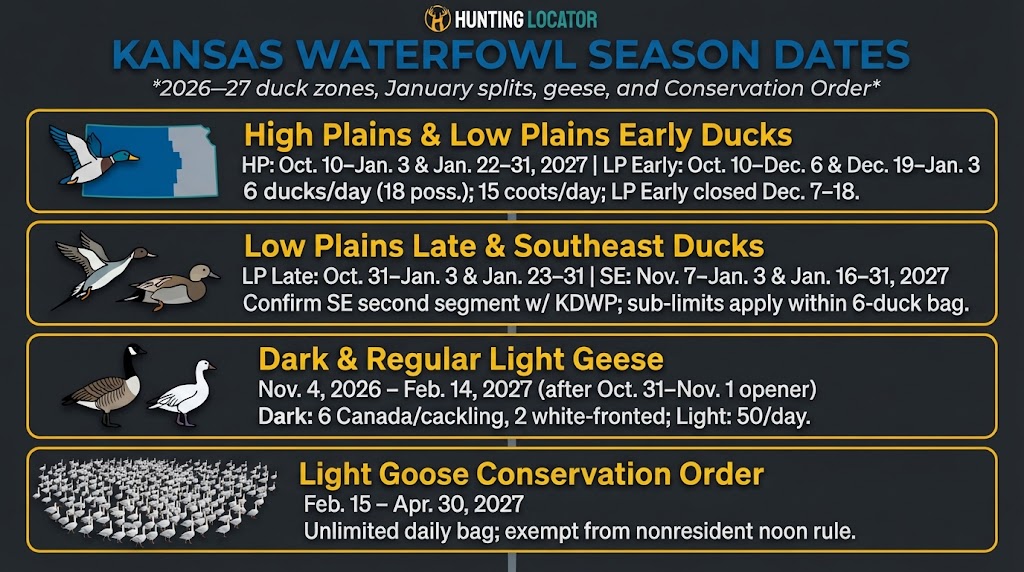
Duck, Merganser & Coot Season
Duck season in the Low Plains Late Zone runs Oct 31, 2026–Jan 3, 2027 and Jan 23–31, 2027. By zone:
- High Plains: The Oct 10–Jan 3 run is open now, and the Jan 22–31 split is a late-trip window.
- Low Plains Early: The season is closed Dec 7–18, reopens Dec 19, and ends Jan 3.
- Low Plains Late: The January split (Jan 23–31) serves late migrants.
- Low Plains Southeast: This zone has the latest opener, Nov 7 (passed), and a Jan 16–31 second segment. Confirm that segment with KDWP.
January splits matter because cold fronts and freeze-ups push birds south through the Central Flyway, so late segments can produce when conditions line up. That is planning logic, not a guarantee, so watch the weather before you commit to dates.
Youth, Veteran, and Military days have all passed this season (HP Oct 3–4, LP Early Sept 26–27, LP Late Oct 17–18, SE Oct 24–25). Mark them on next year’s calendar.
The daily limit is 6 ducks total, and the sub-limits below count inside that total:
- 5 mallards (max 2 hens)
- 3 wood ducks
- 3 pintails
- 2 redheads
- 2 canvasbacks
- 2 scaup
Coots are 15 per day. The possession limit for ducks is 3x the daily limit, or 18.
Nonresident note: Shooting hours for nonresidents run from one-half hour before sunrise to 11:59 a.m. in all waterfowl seasons except teal and the Conservation Order. On KDWP/USACE public land, stop hunting by noon and clear the property by 1:00 p.m.
Dark Goose Season (Canada, Cackling & White-fronted)
Dark goose season runs Nov 4, 2026–Feb 14, 2027, after an Oct 31–Nov 1 opening segment that has passed. The limit is 6 Canada or cackling geese per day and 2 white-fronted geese per day. Confirm white-fronted dates with KDWP.
Field goose hunting extends your trip well past duck closures, all the way through Feb 14.
Nonresident note: The noon rule applies on KDWP/USACE public land during goose season.
Light Geese & the Conservation Order
The Kansas Light Goose Conservation Order runs Feb 15–Apr 30, 2027, with no daily limit. The regular light goose season runs Nov 4, 2026–Feb 14, 2027, with a 50-per-day limit.
The Conservation Order is exempt from the nonresident noon rule, which makes it the most flexible window for traveling hunters. Confirm Conservation Order permit and method details with KDWP before you go.
Kansas Waterfowl Licenses and Permits
Every Kansas waterfowler needs a base license plus three stamps. Nonresidents also face a pending fee change that could raise their total.
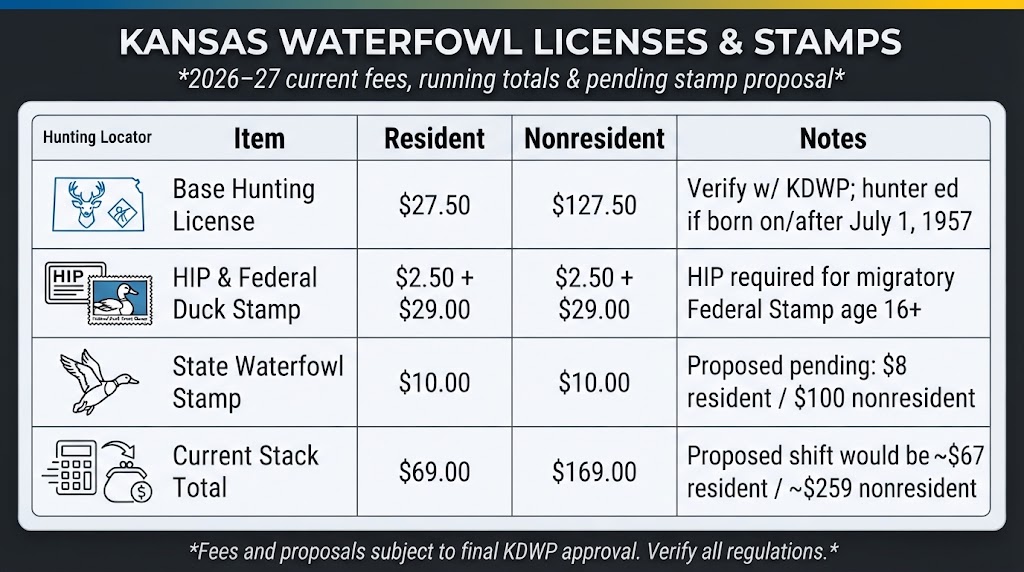
Kansas Hunting Licenses
Your total depends on residency and on what happens with the proposed stamp change. Each item costs:
| Item | Who needs it | Cost | Notes |
|---|---|---|---|
| Resident base license | Kansas residents | $28 | Verify with KDWP |
| Nonresident base license | Out-of-state hunters | $127.50 | Verify with KDWP |
| HIP stamp | All waterfowl hunters | $2.50 | Required for migratory birds |
| State Waterfowl Stamp | All waterfowl hunters | $10 | Proposed: $100 nonresident / $8 resident (pending) |
| Federal Waterfowl Stamp | Hunters 16+ | $29.00 | Federal requirement |
| Hunter education | Born on/after July 1, 1957, unless exempt | Varies | Confirm with KDWP |
Running totals:
- Resident, current: $27.50 + $2.50 + $10 + $29 = $69.00
- Nonresident, current: $127.50 + $2.50 + $10 + $29 = $169.00
- If the proposed change takes effect (pending):
- Resident: $67.00
- Nonresident: $259.00
Fee change alert: The proposed $100 nonresident stamp and $8 resident stamp was scheduled for a November 2026 commission vote, with potential December 2026 implementation. Confirm current pricing with KDWP before you buy.
Licenses are typically valid by license year. Carry your license and stamps afield every time you hunt.
Kansas Hunting Permits
Waterfowl hunting in Kansas requires stamps and certifications rather than a lottery. You need:
- HIP certification: Required for all migratory bird hunters.
- State and federal waterfowl stamps: Required for ducks and geese.
- Conservation Order requirements: This season may carry its own requirements, so confirm with KDWP.
Buy your license and stamps through KDWP’s licensing system or licensed vendors. No draw or application is needed for waterfowl.
Nonresident note: Buy before you travel, and recheck stamp pricing if your trip falls after December 2026.
Kansas Waterfowl: Where to Hunt
Kansas has well-known public marshes, but the managing agency now determines how long a nonresident can hunt a given property.
Best Public Lands
Public waterfowl ground in Kansas ranges from famous marshes to reservoir shorelines. Each entry below lists its managing agency so you know which rules apply:
- Cheyenne Bottoms Wildlife Area: KDWP-managed, so the noon rule applies to nonresidents.
- Quivira National Wildlife Refuge: USFWS federal land. Check refuge-specific rules before you hunt.
- Marais des Cygnes Wildlife Area: KDWP-managed, so the noon rule applies.
- Kansas reservoirs (USACE-managed): The noon rule applies.
- Walk-In Hunting Access (WIHA): Exempt from the noon rule. Check individual tract suitability for waterfowl.
The noon rule, explained: For Fall 2026–Winter 2027, nonresidents hunting waterfowl and coots on KDWP- and USACE-managed lands and waters must stop hunting by noon and clear the property by 1:00 p.m. See the KDWP nonresident hunting regulations for the official language. Exceptions include teal season, the Conservation Order, WIHA, and KDWP Special Hunts. A simple day plan: hunt the morning flight, be off the property by 1:00 p.m., then spend the afternoon on a lease or chasing pheasants.
If you want to pair a morning flight with an afternoon upland hunt, see our Kansas upland game season guide.
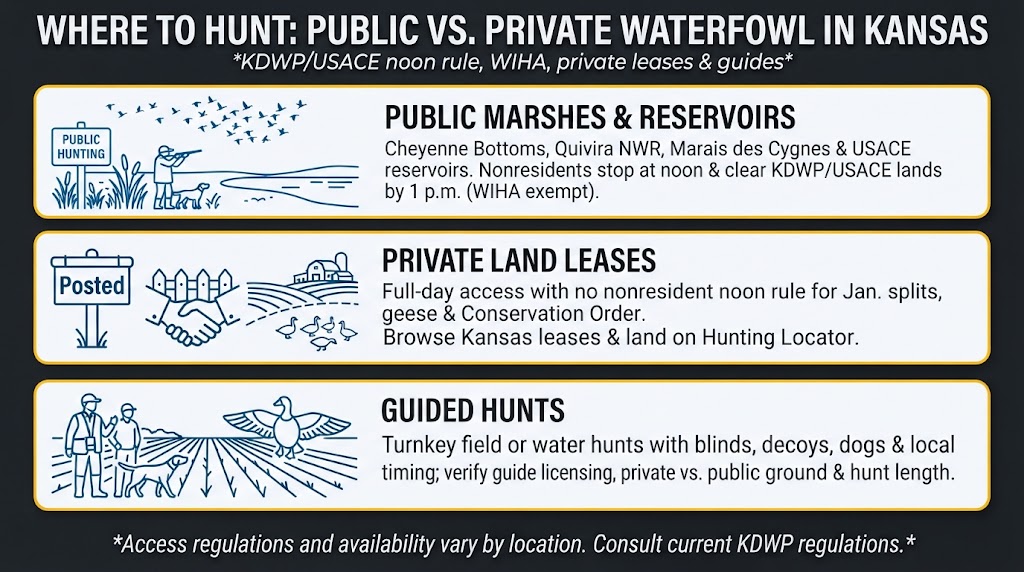
Private Land Hunting with Hunting Locator
The noon rule does not apply on private land, which makes full-day private access more useful as the cutoff and nonresident fees take effect.
Leasing. Most waterfowl leases are annual, often with renewal options. Exclusive waterfowl leases often run into the thousands per season. When you evaluate a property, look for shallow water, flooded crops, river bottoms, and field goose ground. If you’re leasing as a group, put dates, guests, and blind or decoy rules in a written agreement, and ask about liability insurance.
Buying. Owning land gives you long-term control over your hunting access, and you can lease out unused dates. If you’re weighing a purchase, look closely at water access and the surrounding habitat before you decide.
Hunting Locator connects hunters directly with Kansas landowners who lease or sell land. Browse Kansas leases and land for sale, compare acreage and habitat, and reach out to secure full-day access for the January splits, goose season, or the spring Conservation Order. You can filter by county, acreage, and game type, then contact landowners directly when a property fits your plans.
Guided Hunts
A guided hunt is a turnkey, often full-day option for nonresidents and groups, especially on private ground.
Before you book, check the following:
- What’s included: Blinds, decoys, a dog, and bird cleaning, if any of those matter to you.
- Guide credentials: Is the guide licensed and insured?
- Private or public ground: On public ground, the noon rule still applies to you.
- Field or water hunt: Confirm which style you’re booking.
- Hunt length: Does the hunt deliver a full day afield?
Search outfitters and landowners offering hunts on Hunting Locator.
Waterfowl Hunting Tips
Preparation drives most Kansas waterfowl success, so build your plan around these tips.
- Scout feed fields: Find where birds are feeding before you set up.
- Watch cold fronts and freeze-ups: These push fresh birds south and open late-season opportunities.
- Match decoys to field vs. water hunts: Use the spread that fits where you’re hunting.
- Shoot non-toxic shot: It is federally required for waterfowl.
- Layer for cold: Plan for late-season temperatures with insulated, waterproof layers.
- Choose quality waders and calls: These matter most on water hunts.
- Use concealment and layout blinds: These are especially important when field hunting geese.
- Know your sub-limits and bird ID: Pay particular attention to mallard hens and canvasbacks.
- Pair mornings with afternoon upland: Nonresidents can hunt waterfowl in the morning, then pheasant or quail in the afternoon. See our Kansas upland game hunting season guide.
Get waterfowl gear at the Hunting Locator store.
More Resources from Hunting Locator
These pages cover land searches and other Kansas hunts.
Find land
- Kansas leases & land for sale: Browse available Kansas hunting properties and connect with landowners.
- Hunting Locator home: Search leases, outfitters, and guides nationwide.
Kansas season guides
- All Kansas hunting seasons: A statewide overview of every Kansas season.
- Kansas waterfowl season: Bookmark this page for in-season updates.
- Migratory birds: Teal, dove, rail, and snipe details.
- Upland game: Pheasant and quail for your afternoon hunts.
- Small game: Squirrel, rabbit, and other small game.
- Deer: Seasons and rules for Kansas deer hunters.
- Elk: Kansas elk hunting information.
- Antelope: Kansas antelope season details.
Gear up
- Hunting Locator store: Gear for your next waterfowl trip.
FAQ
When does Kansas duck season close?
Most zones close Jan 31, 2027. That covers the High Plains, Low Plains Late, and Southeast zones after their January splits. The Low Plains Early Zone closes Jan 3, 2027. Verify closures with KDWP before you hunt.
What is the Kansas duck bag limit?
The limit is 6 ducks per day, with sub-limits of 5 mallards (max 2 hens), 3 wood ducks, 3 pintails, 2 redheads, 2 canvasbacks, and 2 scaup. Coots are 15 per day. The possession limit is 18 ducks.
What stamps do I need to hunt waterfowl in Kansas?
You need the HIP stamp ($2.50), the State Waterfowl Stamp ($10), and the Federal Waterfowl Stamp ($29), plus a valid Kansas hunting license. Confirm current pricing with KDWP before you buy.
How much does a nonresident pay to hunt waterfowl in Kansas?
Currently, a nonresident pays $169.00 ($127.50 license, $2.50 HIP, $10 state stamp, $29 federal stamp). The total would be $259.00 if the proposed fee change takes effect. Confirm with KDWP.
What is the Kansas nonresident noon rule?
On KDWP- and USACE-managed lands and waters, nonresidents stop hunting by noon, with shooting hours ending at 11:59 a.m. You must clear the property by 1:00 p.m. The rule applies for Fall 2026–Winter 2027.
Does the noon rule apply on private land or during the Conservation Order?
No. It does not apply on private land. The rule also exempts the Conservation Order, teal season, WIHA, and KDWP Special Hunts.
When is the Kansas Light Goose Conservation Order?
It runs Feb 15–Apr 30, 2027, with no daily limit. Confirm permit and method details with KDWP before you go.
Is the $100 nonresident waterfowl stamp in effect?
It was proposed and scheduled for a November 2026 commission vote, with potential December 2026 implementation. Confirm current pricing with KDWP before buying.
How do I find a Kansas waterfowl lease?
Browse Kansas hunting leases on Hunting Locator and connect directly with landowners. Compare acreage, habitat, and lease terms before you commit.
Do I need hunter education to hunt waterfowl in Kansas?
It’s generally required for hunters born on or after July 1, 1957, unless exempt. Confirm your status with KDWP.
The Final Shot
Find your zone, know your sub-limits, and budget for stamps while the fee change is pending. The rest of the season includes the January splits, goose season through Feb 14, and the Feb 15–Apr 30 Conservation Order.
To lock in full-day access for what’s left of the season, browse Kansas leases and land for sale.
Regulations can change. The Kansas Department of Wildlife and Parks is the final authority. Verify dates, fees, and closures before you hunt.


