This guide cuts through Alaska’s hunting regulations and gives you a clear action plan. You’ll get exact season dates for general hunts, step-by-step licensing processes for the upcoming seasons, prime hunting locations, and insider strategies that separate successful hunters from those who go home empty-handed.
Here’s what you’ll learn:
Quick Reference Guide
| What You Need | Key Details | Action Required |
|---|---|---|
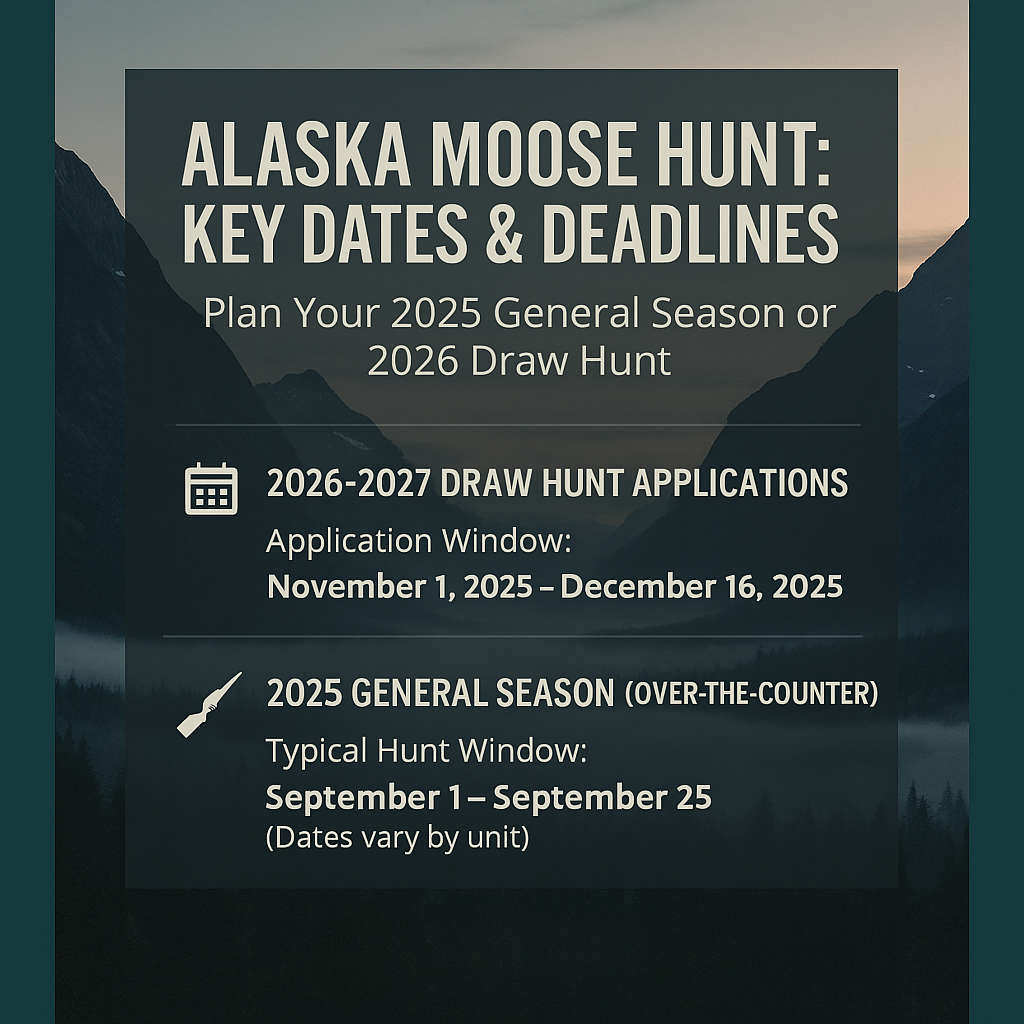
| 2026 Application Deadline | November 1, 2025 – December 16, 2025 | Prepare for the 2026 draw |
| 2025 General Season Dates | September 1-25 (varies by unit) | Plan your vacation time |
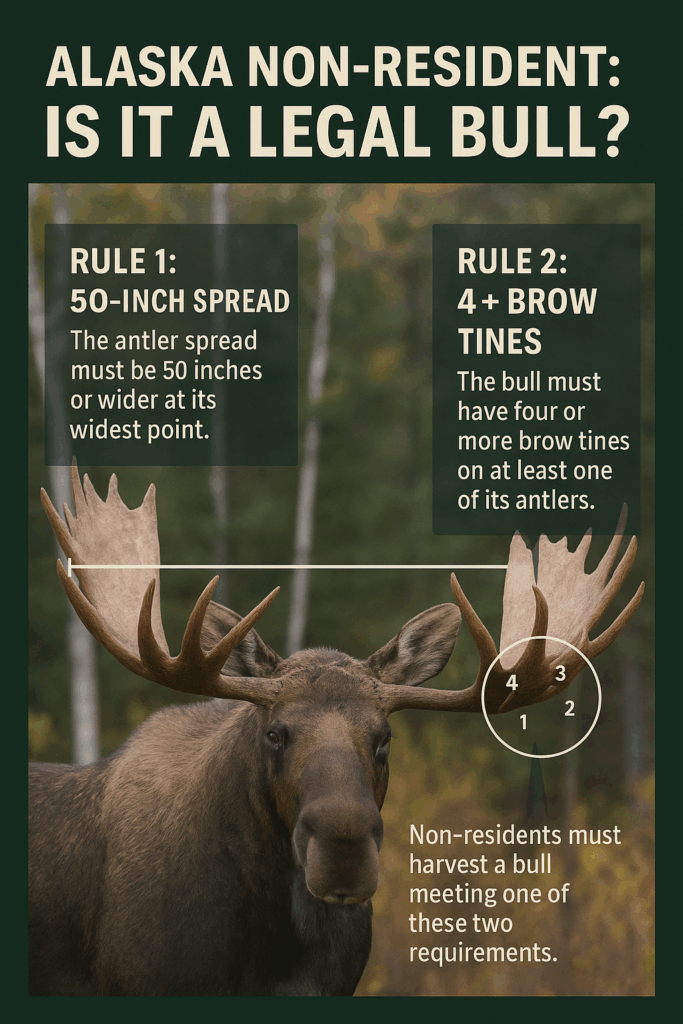
| Antler Restrictions | 50″+ spread OR 4+ brow tines | Know what you can legally shoot |
| Total Cost Range | $8,000-$40,000+ depending on method | Set your budget early |
Quick Overview: Alaska Moose Hunting at a Glance
Here’s the reality check: when you add up all of the resident hunters, the average statewide success rate is usually around 20%. That means proper planning isn’t just helpful—it’s essential for getting any return on your investment.
2025 Season Dates and Regulations
For non-residents, the moose hunting season in Alaska typically spans from early September to late September, but the specific dates vary dramatically by hunting unit and method.
| Season Type | Start Date | End Date | Units | Bag Limits | Application Required |
|---|---|---|---|---|---|
| General Rifle | Sept 1-5 | Sept 20-25 | Most Units | 1 Bull (50″+ or 4+ brow tines) | No – Over-the-counter |
| Draw Permit Areas | Sept 1 | Sept 30 | Select Units | 1 Bull (varies by unit) | YES – Deadline passed for 2025 |
| Archery Season | Sept 1 | Sept 30 | Limited Units | 1 Bull (50″+ or 4+ brow tines) | Varies by unit |
The big difference for out-of-state hunters: Moose hunting Alaska residents are allowed one bull moose while non residents are allowed one bull moose with 50-inch antlers or antlers with 4 or more brow tines. This restriction changes everything about your hunting strategy.
Pro Tip: Check out Alaska’s public hunting lands to scout the best areas for your hunting style before you commit to a specific unit.
License Requirements Checklist
If you were born after January 1, 1986, you are required to have taken a hunter education class before you can legally hunt in Alaska.
What Every Non-Resident Moose Hunter Must Have:
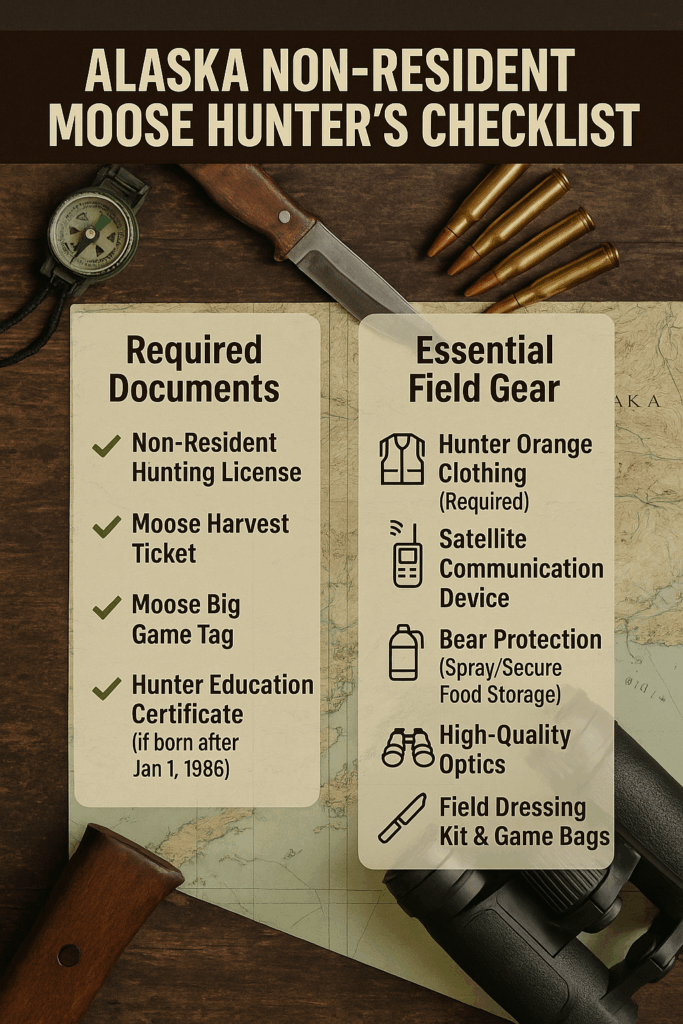
- ✅ Hunting License: Valid Alaska non-resident hunting license
- ✅ Harvest Ticket: Required for all moose hunting units
- ✅ Moose Tag: Non-residents are required to possess a big game tag for the species they are hunting
- ✅ Hunter Education Certificate: Required if born after January 1, 1986
Critical Rule: In order to go moose hunting in Alaska, residents and visitors will need a hunting license, a harvest ticket, and a moose tag. Missing any of these documents means immediate violations and potential criminal charges.
Budget Reality Check: The base cost of an unguided moose hunt can range from $8,000 to $15,000 per hunter, and licensing fees are just the tip of the iceberg.
Alaska Moose Hunting Seasons: 2025 Dates by Method
Your hunting method determines your season dates, success rates, and overall experience. Here’s what you need to know about each option.
General Season (Rifle) Dates
For non-residents, the moose hunting season in Alaska typically spans from early September to late September. Most hunting units offer over-the-counter opportunities during this period.
2025 General Season Calendar:
- Units 1-5 (Southeast): September 1-20, 2025
- Units 6-8 (Southcentral): September 5-25, 2025
- Units 9-10 (Southcentral): September 1-20, 2025
- Units 11-13 (Southcentral): September 10-25, 2025
- Units 14-16 (Southcentral): September 1-20, 2025
Why Choose General Season:
- No lottery system or advance applications required
- Over-the-counter harvest tickets available
- Multiple unit options for flexibility
Success Strategy: Target the first week of September when bulls are most active during the rut. Moose are most abundant in recently burned areas with willow and birch shrubs, timberline plateaus, and along rivers.
Archery Season Opportunities
Alaska offers limited but rewarding archery opportunities for hunters who want extended seasons and less competition.
Archery Season Benefits:
- Extended season dates in select units (typically September 1-30)
- Less hunting pressure compared to rifle seasons
- Same bag limits as rifle hunters
Equipment Requirements: Hunters cannot use a crossbow with a peak draw weight less than 100 pounds for hunting big game. Traditional bows and compound bows meeting Alaska’s minimum draw weight requirements work fine.
Special Draw Hunt Seasons
PLAN FOR 2026: The application period for 2025 draw hunts has passed. The next application window for the 2026-2027 season will be from November 1, 2025, to December 16, 2025.
Draw Hunt Details:
- Application Window for 2026 Hunts: November 1 – December 16, 2025
- Season Dates: Typically September 1-30 in draw units
- Success Rates: Generally higher than general season areas
Important Reality: Draw areas are usually created to limit hunting pressure, not necessarily to manage for trophy-sized moose. However, reduced pressure often means higher success rates and better hunting experiences.
Licenses and Permits: Your Complete Checklist
Follow this step-by-step process to make sure you have every document needed for a legal hunt. Missing any required permit or license results in immediate violations and potential criminal charges.
Non-Resident Hunting License Requirements
Non-residents are required to possess a big game tag for the species they are hunting, and you must complete this process before your hunt begins.
Step 1: Check Your Hunter Education Status
- Who Needs It: If you were born after January 1, 1986, you are required to have taken a hunter education class
- What’s Accepted: Valid hunter education certificate from any state
Step 2: Buy Your Alaska Non-Resident Hunting License
- Where: Online through Alaska Department of Fish and Game website
- Cost: Approximately $160-200 for annual non-resident license
- Valid: Calendar year (January 1 – December 31)
Step 3: Get Required Tags and Permits
- Harvest Ticket: Required for all moose hunting units
- Moose Tag: Locking tag that must be attached immediately upon harvest
- Draw Permits: If hunting in draw-only units, must be secured during the application window
Understanding Moose Tags and Harvest Tickets
In order to go moose hunting in Alaska, residents and visitors will need a hunting license, a harvest ticket, and a moose tag. Each serves a specific legal purpose.
What Your Harvest Ticket Does:
- Gives you legal authority to hunt in specific units
- Must be purchased before hunting begins
- Contains unit-specific regulations and bag limits
What Your Moose Tag Does:
- Physical tag that must be attached to harvested moose immediately
- Locking mechanism prevents reuse or transfer
- Required for meat transportation and processing
Critical Post-Hunt Requirements
Reporting Deadline: Successful moose hunters are required to report within 15 days of kill. Miss this deadline and face violations and potential license suspension.
Meat Salvage Reality: A 1,600-lb moose will dress out at about 950 lbs, yielding approximately 500 lbs of meat. All edible portions must be properly salvaged and removed from the field—no exceptions.
Where to Hunt: From Public Lands to Private Paradise
Your location choice dramatically impacts your hunting success, costs, and overall experience. Here’s how to match your options with your budget, experience level, and success expectations.
Best Public Land Opportunities
Alaska offers incredible public land hunting opportunities. Most state refuge lands and federal public lands open to hunting under Alaska state law give you millions of acres to explore.
Top Public Land Units for Non-Resident Success:
- Unit 20A: High moose density with road access options
- Unit 16B: Excellent trophy potential with fly-in access
- Unit 19D: Consistent populations with multiple access points
- Unit 13: Road-accessible with good success rates
- Unit 20E: Large area with diverse habitat types
Public Land: Pros and Cons
The Good:
- No additional land access fees beyond licenses and tags
- Millions of acres of hunting opportunities
- Freedom to hunt multiple areas within unit boundaries
The Challenging:
- Competition from other hunters, especially near access points
- Limited or difficult access to remote areas
- Potential crowding during peak hunting periods
Pro Tip: Use Alaska’s public hunting land database to identify specific access points and unit boundaries before you travel.
Guided Hunt Advantages
The success rate difference between guided and unguided hunts is huge. While the average statewide success rate is usually around 20%, quality outfitters report much higher success rates. One outfitter reported they were 75% successful last season, and that has been consistent with our average moose hunting success rates.
Guided Hunt Investment Range:
- Basic Guided Hunts: $25,000-35,000 per hunter
- Premium Guided Hunts: Guided moose hunts in Alaska can cost anywhere from 30,000-40,000k per hunter
- Luxury Guided Experiences: $45,000+ per hunter
What You Typically Get:
- Professional guide services and local expertise
- Transportation to and from hunting areas
- Field dressing and meat care assistance
- Comfortable base camps with meals and lodging
Planning Timeline: Good outfits are booked out a few years in advance, so start planning early.
Check out vetted Alaska outfitters to compare services, success rates, and availability.
Private Land Hunting: The Sweet Spot Option
Private land hunting gives you the reduced competition of guided hunts with more flexibility and potentially better value than full-service outfitters.
Why Private Land Works:
- Exclusive or limited access reducing hunter competition
- Flexible hunting schedules and methods
- Better success rates due to reduced hunting pressure
- Direct relationships with landowners
Hunting Method Comparison
| Hunting Method | Average Cost | Success Rate | Competition Level | Flexibility |
|---|---|---|---|---|
| Public Land DIY | $8,000-15,000 | 20% | High | High |
| Guided Hunts | $30,000-40,000 | 75% | Low | Low |
| Private Land | $15,000-25,000 | 50-60% | Very Low | High |
Get Exclusive Access with Hunting Locator
The biggest challenge for serious hunters seeking private land opportunities is finding available properties and connecting with willing landowners. Hunting Locator solves this problem by connecting you directly with Alaska landowners interested in leasing or selling hunting rights.
Why Hunting Locator Works:
- Direct Landowner Connections: Skip the middlemen and negotiate directly with property owners
- Exclusive Opportunities: Access to private lands not advertised elsewhere
- Flexible Arrangements: Lease options from single-season to multi-year agreements
- Purchase Opportunities: Long-term investment options for serious hunters
Whether you need a single-season lease for your 2025 hunt or you’re considering a long-term investment in Alaska hunting property, Hunting Locator provides the connections you need. Check out Alaska land for lease for immediate opportunities or browse Alaska hunting land for sale for permanent hunting access.
Alaska Moose Hunting Success Tips
Success in Alaska’s challenging environment requires more than just a hunting license and rifle. These proven strategies can dramatically improve your odds of harvesting a trophy bull moose.
Essential Gear Beyond the Basics
Safety Requirements:
- Hunter Orange: It is required to wear hunting orange clothing such as a vest or jacket during all big game hunting in Alaska
- Satellite Communication: Essential for emergency situations and daily check-ins in remote areas
- Bear Protection: Bear spray and proper food storage—Alaska’s brown bears are active in all moose hunting areas
Practical Gear:
- Weight Limits: Weight is limited to 70lbs of gear per person for fly-in hunts
- Quality Optics: High-quality binoculars and spotting scope for glassing vast Alaska terrain
Field Dressing and Meat Care in Remote Alaska
The Reality of Processing a Moose:
- Size Matters: A 1,600-lb moose will dress out at about 950 lbs, yielding approximately 500 lbs of meat—plan for extensive field work
- Cooling Requirements: Alaska’s September temperatures require immediate cooling and proper meat handling
- Transportation Rules: Deboning meat at airport facilities is not permitted, requiring field processing
- Salvage Regulations: All edible portions must be removed from the field—waste violations carry severe penalties
Timing Your Hunt for Maximum Success
When to Hunt:
- Rutting Season: Early September offers peak bull activity and calling opportunities
- Weather Windows: Monitor weather patterns for optimal hunting conditions and safe travel
- Movement Patterns: As the season progresses, moose move to lower elevations and areas with more abundant forage
Where to Focus:
Frequently Asked Questions
How much does a complete Alaska moose hunt cost for non-residents?
The base cost of an unguided moose hunt can range from $8,000 to $15,000 per hunter, while guided moose hunts in Alaska can cost anywhere from $30,000-40,000 per hunter. Private land leasing through Hunting Locator provides a middle-ground option, typically ranging from $15,000-25,000 with better success rates than DIY public land hunting. Remember, one of the biggest cost drivers is transportation to remote hunting areas.
What are the antler restrictions for non-resident moose hunters in Alaska?
Non residents are allowed one bull moose with 50-inch antlers or antlers with 4 or more brow tines. This restriction applies to all non-resident hunters regardless of hunting method or location and ensures non-residents target mature bulls.
Do I need a guide to hunt moose in Alaska as a non-resident?
You do not need a guide to hunt moose in Alaska. Guides are only required for brown/grizzly bear, sheep, and mountain goat hunting in Alaska. However, guides provide significant advantages including local knowledge, higher success rates, and logistical support.
When is the deadline to apply for Alaska moose permits?
The application period for 2025 draw hunts has already passed. The next application period for the 2026 hunting season will run from November 1, 2025, to December 16, 2025, at 5 p.m. (AKST).
What’s the success rate for non-resident moose hunters in Alaska?
When you add up all of the resident hunters, the average statewide success rate is usually around 20%. However, success rates vary dramatically by hunting method and location. Quality guided operations report success rates of 75% or higher, while private land hunting typically achieves 50-60% success rates.
What hunter education requirements apply to non-resident Alaska moose hunters?
If you were born after January 1, 1986, you are required to have taken a hunter education class before hunting in Alaska. This requirement applies to all hunters regardless of residency status. Hunter education certificates from any state are accepted.
Your Next Steps
Alaska moose hunting represents the pinnacle of North American big game experiences, but success requires careful planning, proper documentation, and smart decision-making. From the upcoming November 1, 2025 application deadline for 2026 draw hunts to choosing between public lands, guided hunts, and private land opportunities, every decision impacts your hunting success and overall investment.
Here’s what you need to do right now:
- Mark your calendar for the November 1, 2025, start of the 2026 permit application period.
- Decide on your hunting strategy based on your budget and experience level for this year’s general seasons or next year’s draw.
- Begin the application or booking process immediately once you’ve made your decision.
Whether you choose the challenge of DIY public land hunting, the support of a professional guide, or the exclusive access of private land through Hunting Locator, proper preparation separates successful hunters from those who go home disappointed.
Remember that Alaskans and nonresidents annually harvest 6,000 to 8,000 moose, proving that with proper planning and execution, your Alaska moose hunting dreams can become reality. Your Alaska bull moose is out there—start planning today.
For exclusive access to Alaska’s premier private hunting lands, explore Alaska hunt clubs and begin your journey toward hunting success in America’s last frontier.


