This Nevada hunting guide cuts through the confusion. We’ve pulled together everything you need for Nevada’s 2026-2027 seasons, whether you’re a local hunter wanting quick updates or planning your first Western adventure from out of state. Recent wildlife surveys show promising news: “three consecutive wet winters have improved food availability and habitat conditions for wildlife which means that many of our northern Nevada big game herds are thriving.”
Here’s what we’re covering:
- License costs and tag fees (spoiler: non-residents, brace yourselves)
- Season dates for every major species, broken down by weapon type
- Where to actually hunt—public land realities and private access solutions
Let’s get you ready for Nevada hunting success.
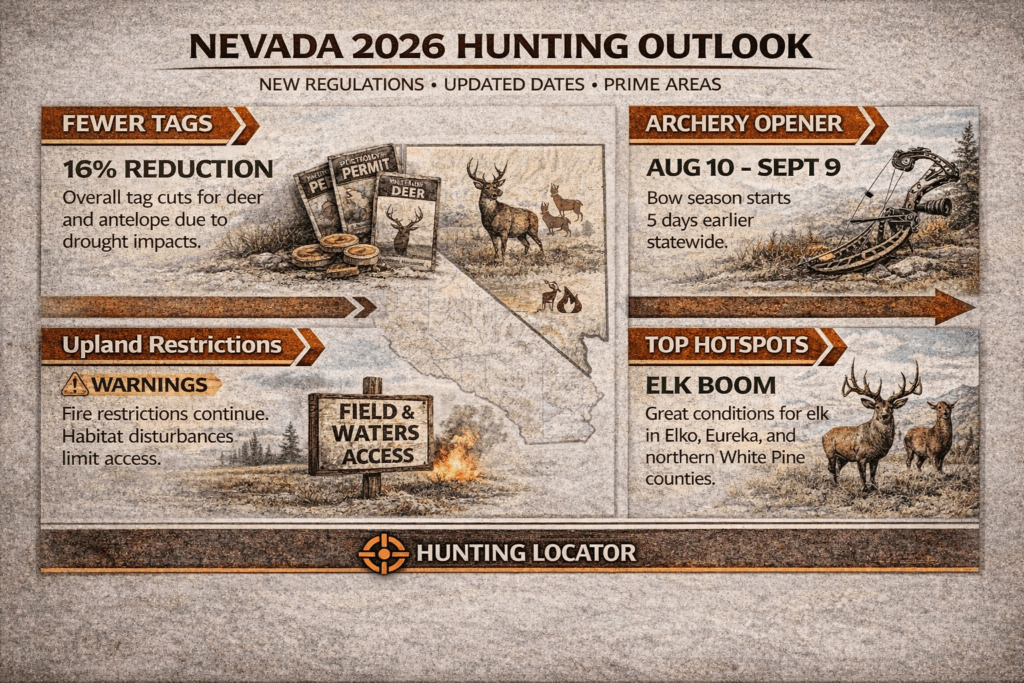
Quick Overview: Season Dates, Nevada Hunting Licenses, and Regulations
Here’s your at-a-glance reference for planning Nevada hunts. All information comes straight from Nevada Department of Wildlife Commission Regulation 25-07 and official fee schedules.
License costs hit different depending on where you live. Nevada residents get a reasonable deal, while non-residents… well, you’re paying for the privilege of hunting some of America’s best big game country.
| License Type | Description | Resident Cost | Non-Resident Cost |
|---|---|---|---|
| Adult Hunting License (18+) | Required base license for all hunting | $38.00 | $155.00 |
| Combination Hunt/Fish License | Covers both hunting and fishing privileges | $75.00 | $155.00 |
| Youth License (12-17) | Hunt/fish combo for junior hunters | $15.00 | $15.00 |
| Senior Resident (65+) | Discounted license for Nevada seniors | $15.00 | N/A |
| Big Game Application Fee | Per-species application fee | $14.00 | $14.00 |
| Elk Application Fee | Separate elk-specific application fee | $19.00 | $19.00 |
| Bonus Point Only | Purchase points without applying | $11.00 | $11.00 |
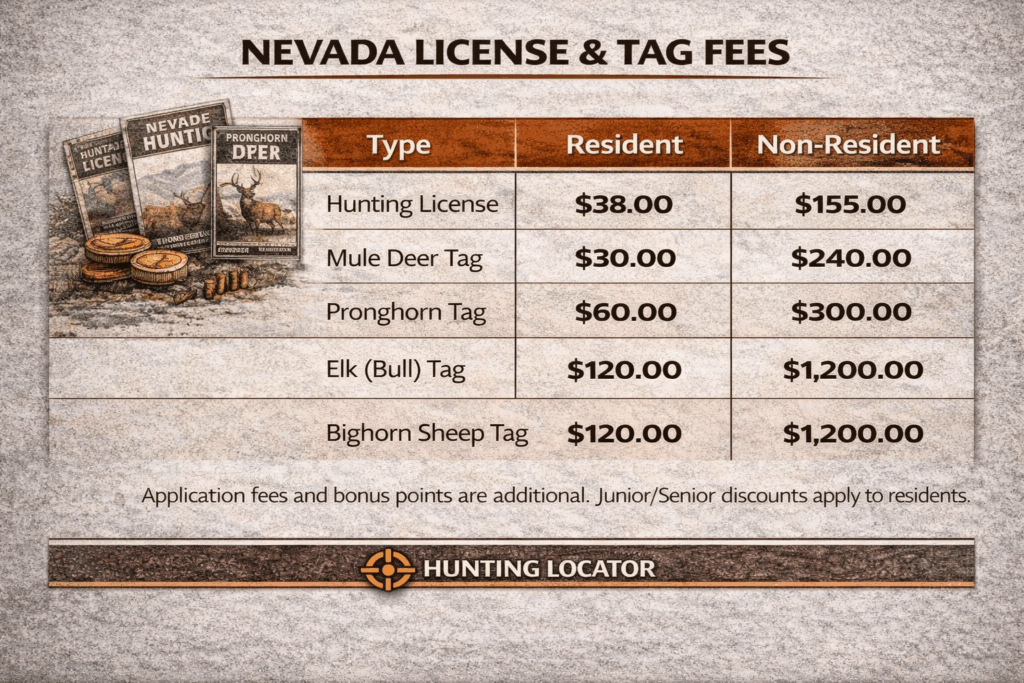
Tag fees only get paid if you draw—but they’re where the real money shows up, especially for non-residents.
| Species | Resident Tag Fee | Non-Resident Tag Fee |
|---|---|---|
| Mule Deer | $30.00 | $240.00 |
| Pronghorn Antelope | $60.00 | $300.00 |
| Elk (Bull) | $120.00 | $1,200.00 |
| Bighorn Sheep | $120.00 | $1,200.00 |
| Mountain Lion | $29.00 | $104.00 |
Nevada runs a draw system for big game using squared bonus points. Even first-time applicants have a shot at any tag, though your odds improve dramatically with points. Key dates you can’t miss:
- Big Game Draw Applications: Open late March, close May 7, 2026
- Draw Results: Released by May 29, 2026
- Spring Turkey 2027: Applications due early February 2027
- Harvest Questionnaire: Must complete before applying next season
Season dates for major species:
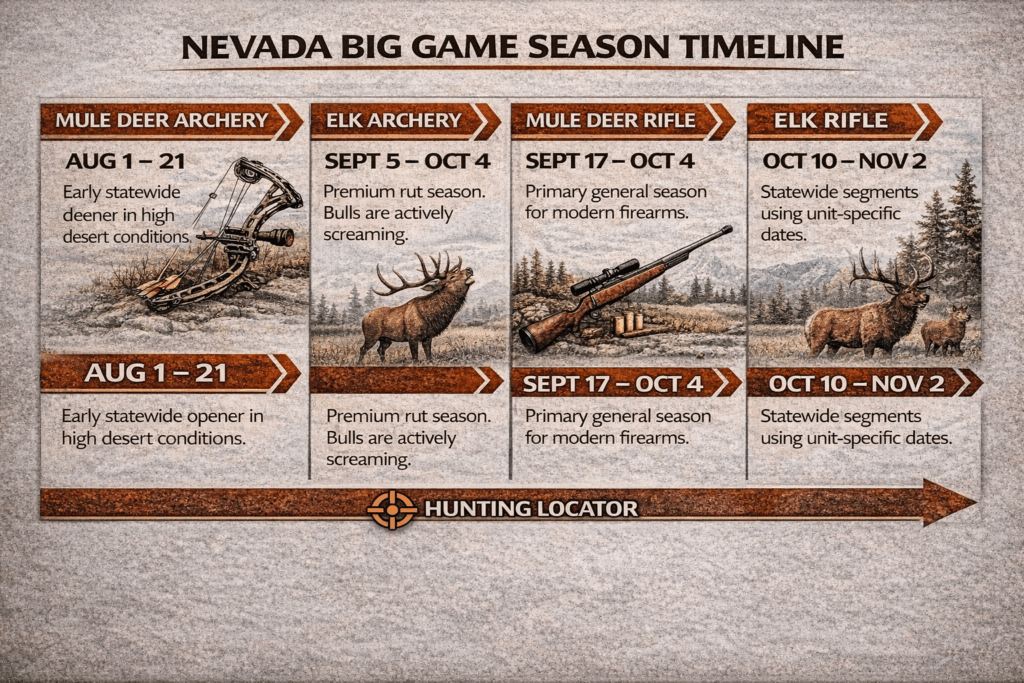
| Species | Season Type | 2026 Dates | Notes |
|---|---|---|---|
| Mule Deer | Archery | Aug 1–21 | Early statewide |
| Mule Deer | Muzzleloader | Aug 15–21 | Select units |
| Mule Deer | Rifle | Sept 17–Oct 4 | Primary general season |
| Mule Deer | Late Rifle | Nov 6–Jan 1 | Trophy units only |
| Pronghorn | Archery | Aug 1–21 | Varies by unit |
| Pronghorn | Rifle | Aug 15–Sept 30 | Varies by unit |
| Elk | Archery | Sept 5–Oct 4 | Peak of the rut |
| Elk | Rifle (Bull) | Oct 10–Nov 2 | Statewide segments |
| Bear | Spring Archery | Apr 1–May 31 | Draw only |
| Bear | Fall Rifle | Oct 1–31 | One per season |
Nevada Mule Deer Hunting
Mule deer hunting is Nevada’s bread and butter—the most popular big game opportunity in the state. Applications are due May 7, 2026, and current conditions look promising thanks to “three consecutive wet winters” that have boosted food availability and habitat quality across Nevada’s deer ranges.
The state offers multiple seasons to match different hunting styles and weapon preferences. For unit-by-unit breakdowns and draw odds, check out our complete Nevada mule deer hunting season guide.
Nevada Mule Deer Hunting Seasons
Archery Season (August 1–21) gets you first crack at bucks while they’re still running in bachelor groups. The downside? Early August in Nevada’s high desert regularly hits 90°F+, making for some brutal hunting conditions.
Muzzleloader Season (August 15–21) runs in select units only, overlapping with late archery. Short window means you better have your smokepole dialed in before you arrive.
Rifle Season (September 17–October 4) is Nevada’s main event for mule deer. Weather’s more reasonable, bucks are getting restless as the rut approaches, and this is where most hunters focus their efforts.
Late Rifle Season (November 6–January 1) is trophy unit territory. You’ll need serious bonus points to draw these tags, but you’re hunting during peak rut. Weather becomes a major factor—snow and freezing temps can make or break your hunt.
Nevada Mule Deer Hunting Regulations
Nevada has some specific rules that might catch you off guard if you’re coming from other states.
- Rifle hunters need centerfire cartridges .22 caliber or larger (but not bigger than .50 cal) with cases longer than 2 inches
- Muzzleloaders must be single barrel, .45 caliber or larger
- Nevada doesn’t require hunter orange—unusual for a Western state
- Trail cameras are banned on public land August 1–December 31
- You must complete the harvest questionnaire after your hunt, successful or not
Nevada Elk Hunting
Nevada elk hunting is a premium Western experience that comes with a premium price tag. Non-residents are looking at $155 for the license, $19 to apply, and $1,200 if you draw—that’s serious money. But Nevada produces trophy bulls every year, and the archery season hits right during peak rut activity.
Plan on Nevada being “a three- to five-year to ten-year state” for building bonus points in the better elk units. Our detailed Nevada elk hunting season guide covers unit strategies and application tactics.
Nevada Elk Hunting Seasons
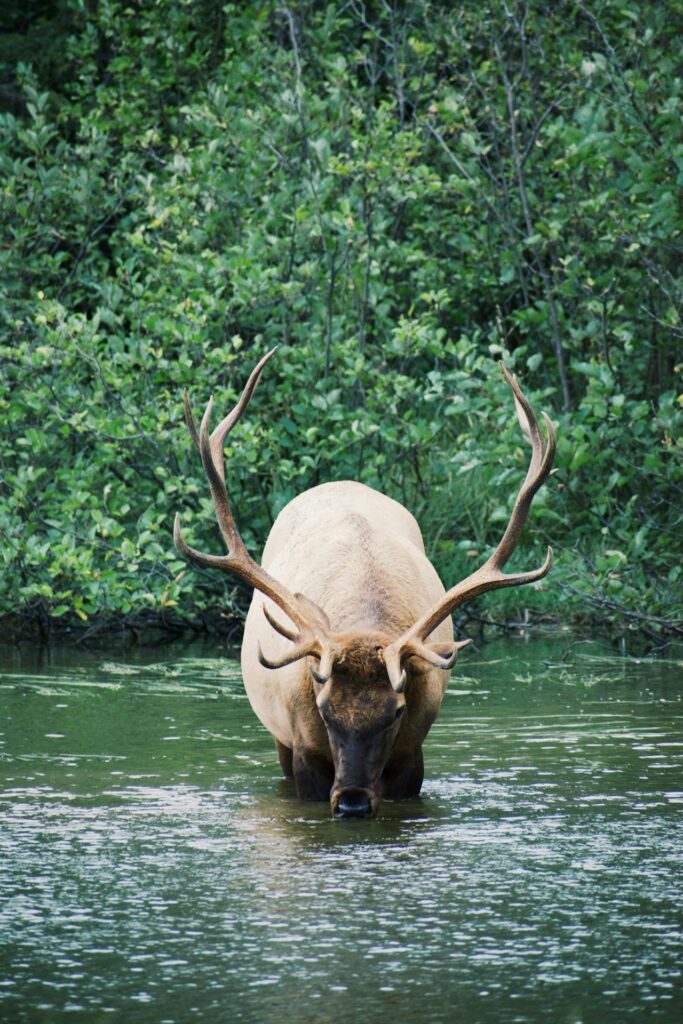
Archery Season (September 5–October 4) is pure magic. Peak rut, bulls screaming, perfect weather with warm days and cool nights. If you’re going to hunt elk in Nevada, this is the season that delivers the full experience.
Rifle Season (October 10–November 2) uses statewide segments with unit-specific dates within this window. You get rifle range while elk are still fired up from rutting, though the peak bugling might be tapering off by late October.
Nevada Elk Hunting Regulations
Elk regs follow the same weapon requirements as deer, with a few elk-specific details.
- Same rifle caliber rules (.22 to .50 cal, case longer than 2 inches)
- One bull per tag
- Some units offer antlerless elk hunts (check NDOW for details)
- Trail camera ban applies (Aug 1–Dec 31 on public land)
- Harvest questionnaire required before next season’s application
Nevada Pronghorn Hunting
Nevada’s pronghorn hunting is absolutely incredible right now. The state’s pronghorn population hit a record 36,500 animals—nearly four times the 9,800 counted back in 1981. This recovery makes Nevada one of the top pronghorn destinations in the West.
For archery and muzzleloader pronghorn tags, you’ve got decent odds with three to five points, making antelope more accessible than elk or premium deer units. Check our Nevada pronghorn hunting season guide for unit recommendations.
Nevada Pronghorn Hunting Seasons
Archery Season (August 1–21) is the ultimate challenge—spot-and-stalk bowhunting against animals with incredible eyesight in wide-open country. Season dates vary by unit, so double-check your specific unit.
Rifle Season (August 15–September 30) gives you a longer window with unit-specific variations. Nevada made changes for 2026, eliminating early and late seasons in some units and combining them into single seasons.
New for 2026: Nevada added a Junior-only (ages 12-17) Antelope hunt with “Horns Shorter Than Ears” restrictions in several units, giving young hunters dedicated opportunities.
Nevada Pronghorn Hunting Regulations
Pronghorn hunting follows standard Nevada big game rules with some species-specific notes.
- One pronghorn per permit
- Standard weapon requirements apply
- New junior-only hunt for ages 12-17 (Horns Shorter Than Ears)
- Unit-specific season dates—verify your exact dates with NDOW
- Harvest questionnaire mandatory
Nevada Bear Hunting
Nevada bear hunting is all draw, all the time. Both spring and fall seasons offer different experiences for hunters looking for something beyond the typical big game species.
For detailed bear hunting strategies and unit selection, see our Nevada black bear hunting season guide.
Nevada Bear Hunting Seasons
Spring Archery Season (April 1–May 31) is bowhunters only and requires drawing a tag. Bears are coming out of hibernation and hitting new vegetation hard, making their movements more predictable.
Fall Rifle Season (October 1–31) gives rifle hunters a full month. Bears are feeding heavily for winter, focusing on berry patches and high-calorie food sources. Important note: one bear per season limit, regardless of how many tags you might draw.
Nevada Bear Hunting Regulations
Bear hunting has specific requirements you need to understand before applying.
- All bear hunting is draw-only
- One bear per season (not per tag)
- Spring archery and fall rifle seasons available
- Check NDOW for unit-specific opportunities
- Immediate harvest reporting required
Nevada Minor Game Species Hunting
Beyond the big game draws, Nevada offers excellent hunting for smaller species that don’t require the draw system. These hunts provide immediate action and can extend your hunting season significantly.
Nevada Upland Bird Hunting Information
Nevada’s upland birds are tough desert species perfectly adapted to harsh conditions. Chukar and partridge season runs October 12 through February 1 with a 6-bird daily limit—months of challenging wing-shooting in Nevada’s rocky canyon country.
Quail hunting (Gambel’s and California quail) offers an extended season from September 14 through January 31 with an 8-bird daily limit. Recent wet winters have been good to Nevada’s quail populations. Look for coveys near water sources and brushy draws. Our Nevada game bird hunting season guide has detailed upland information.
Nevada Sage Grouse Hunting Information
Sage grouse are Nevada’s most exclusive upland opportunity—brief season from September 19-27, 2-bird daily limit, select units only. This hunt requires serious planning due to the short season and limited availability.
Success means understanding sage grouse habitat and being ready for the physical demands of Nevada’s high desert. Check NDOW regs carefully since not all units offer sage grouse hunting.
Nevada Turkey Hunting Information
Nevada turkey hunting has expanded significantly in recent years. Fall archery turkey season runs October 15 through January 31, giving bowhunters an extended window. Spring turkey hunting operates on a draw system from April 1 through May 31, hitting peak gobbling activity.
Turkey populations have moved into new Nevada areas, creating opportunities in units that previously had limited or no turkey hunting. Our Nevada turkey hunting season guide covers the best units and strategies.
Nevada Waterfowl Hunting Information
Waterfowl season generally runs October 10 through January 31, though you need to pay attention to North and South zone splits that create different dates within the state. Nevada benefits from its Pacific Flyway position and key wetland areas.
Youth waterfowl hunts provide special opportunities for hunters 17 and younger, with youth hunters 16 and older required to have a federal duck stamp. For complete waterfowl regulations and zone maps, visit our Nevada waterfowl hunting season guide.
Where to Hunt in Nevada
Nevada spans 110,000 square miles of incredible hunting country—high desert sagebrush perfect for pronghorn, mountain ranges holding mule deer and elk, canyon country full of upland birds. But here’s the reality: most hunting lands in Nevada are privately owned, creating both challenges and opportunities.
Best Public Lands for Nevada Hunting
Nevada has substantial public hunting through BLM and Forest Service lands, though access and hunting pressure vary dramatically by location.
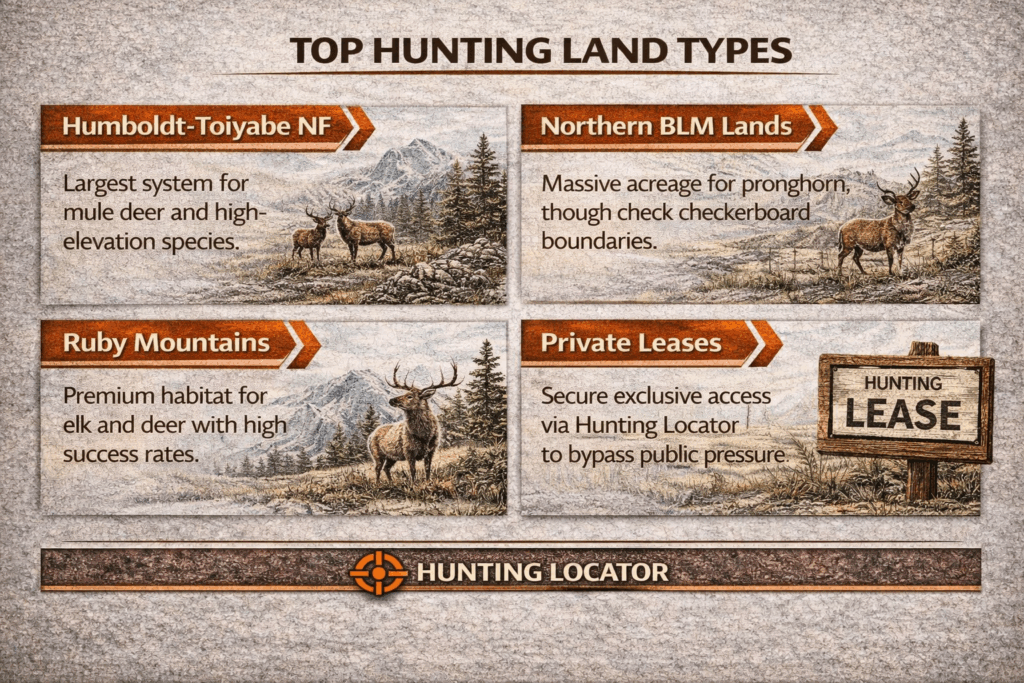
- Humboldt-Toiyabe National Forest – Nevada’s biggest national forest system, offering everything from high-elevation mule deer to lower-elevation upland birds
- BLM lands throughout northern Nevada – Massive acreage supporting pronghorn, mule deer, and upland species, though access gets tricky due to checkerboard land ownership
- Ruby Mountains area – Premium elk and deer habitat with established access, but expect company during rifle seasons
- Jarbidge Wilderness – Remote hunting for those willing to pack in, less pressure but requires serious physical preparation
Online mapping like onX Hunt is essential for navigating Nevada’s complex land ownership patterns and understanding private boundaries.
Guided Hunts in Nevada
Professional outfitters provide serious value for hunters unfamiliar with Nevada’s terrain or wanting a premium experience. Nevada offers a special Nonresident Guided Mule Deer Hunt with applications typically opening mid-February and results by late March—exclusively for non-residents.
Quality outfitters bring local knowledge, equipment, and field care that can dramatically improve your success, especially if you’re unfamiliar with Nevada’s challenging terrain. When selecting an outfitter, verify their NDOW licensing and ask for recent client references.
Private Land Hunting Access
Private land hunting in Nevada offers major advantages—less hunting pressure, better game management, higher success rates. Most hunting lands in Nevada are secured with gates and fences, making them ideal for hunters, but access requires proper planning and respecting landowner relationships.
Nevada law prohibits hunting on private land if the owner has told you not to or if there are posted signs without owner permission (NRS 503.240). Always get written permission and understand any specific restrictions.
Hunting Locator: Your Private Land Access Solution
Finding quality private hunting land doesn’t have to mean years of door-knocking and hoping for the best. Hunting Locator connects serious hunters with Nevada landowners ready to lease or sell hunting access. Our platform eliminates guesswork with verified listings, detailed property information, game species data, and direct landowner contact.
Whether you want a season-long lease on prime mule deer habitat or you’re interested in buying your own hunting property, Hunting Locator’s Nevada listings give you immediate access to opportunities that would otherwise take years to develop.
FAQ
When is the deadline to apply for Nevada big game tags in 2026?
Applications close May 7, 2026, with results by May 29. This deadline covers all major big game species—mule deer, elk, pronghorn, and bear. Miss this deadline and you’re waiting until next year since Nevada doesn’t offer over-the-counter big game tags.
How much does it cost for a non-resident to hunt elk in Nevada?
Non-resident elk hunting costs $155 for the hunting license, $19 elk application fee, and $1,200 tag fee if drawn—$1,374 total before gear, travel, or lodging. This reflects the premium nature of Nevada elk hunting and limited tag availability.
Do I need hunter orange clothing to hunt in Nevada?
No, Nevada doesn’t require big game hunters to wear hunter orange, unlike most other states. Still smart to wear bright colors for safety, especially during rifle seasons when multiple hunters might be in the same area.
Can I use trail cameras on public land in Nevada?
No, trail cameras are banned on public land from August 1–December 31 each year. This covers the entire big game season and is strictly enforced. Trail cameras are allowed on private land with landowner permission.
What happens if I don’t complete the harvest questionnaire after my hunt?
The Big Game Harvest Questionnaire is mandatory after your hunt, successful or not, and required for applying for big game tags the following season. Skip this and you can’t apply for tags in future years until it’s completed.
How does Nevada’s bonus point system work?
Nevada uses a squared bonus point system, meaning your points get squared to determine draw chances. With 5 bonus points for mule deer, that’s 5×5 plus 1 (this year’s application) equals 26 chances in the drawing. This gives hunters with more points significantly better odds while still allowing anyone to draw.
The Final Shot
Nevada’s 2026-2027 seasons offer incredible opportunities across diverse species and landscapes—record pronghorn numbers, trophy mule deer in vast high desert, elk bugling in mountain basins. Success starts with understanding the timeline: mark May 7, 2026 on your calendar and get your applications ready early.
Drawing a tag is just the beginning. The real challenge is knowing where to hunt once you have one. Nevada’s public lands provide extensive opportunities, but the reality is most hunting lands are privately owned, and the best experiences often come from securing quality private access.
Ready to move beyond crowded public land and discover Nevada’s premier private hunting opportunities? Explore Hunting Locator’s Nevada hunting leases and connect directly with landowners who want you on their property. Your next great Nevada hunt is waiting—and it doesn’t involve fighting for a parking spot at the trailhead.


