This Virginia hunting guide cuts through the confusion and gives you exactly what you need to plan your Virginia hunting season. No fluff, no endless scrolling through government websites. Just the essential info: license costs, season dates, bag limits, and where to actually hunt. Whether you’re a Virginia native or traveling from out of state, we’ve got you covered. And once you’ve got your license sorted, having quality gear can make or break your hunt.
Here’s what you’ll find:
- License requirements and costs (resident vs. non-resident breakdown)
- Complete season dates and bag limits for deer, bear, turkey, and waterfowl
- Public land options, guided hunts, and private land access strategies
Let’s jump into the basics: what licenses you need and what they’ll cost you.
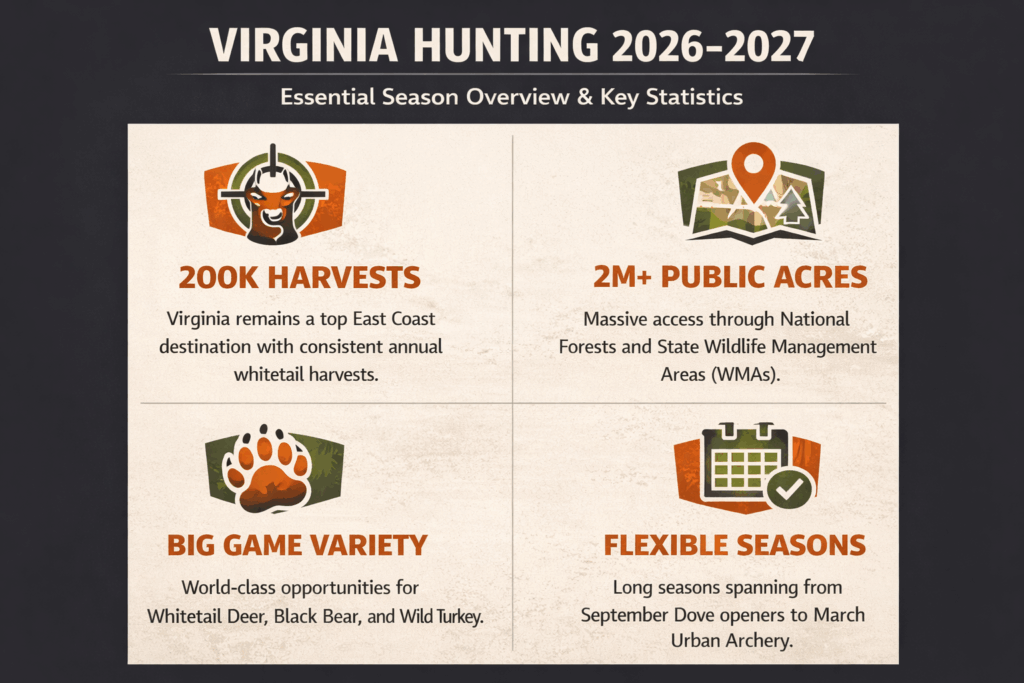
Quick Overview: Season Dates, Virginia Hunting Licenses, and Regulations
Getting your Virginia hunting license sorted is step one. The state offers several options depending on what you’re hunting and how often you plan to get out there. Here’s the breakdown:
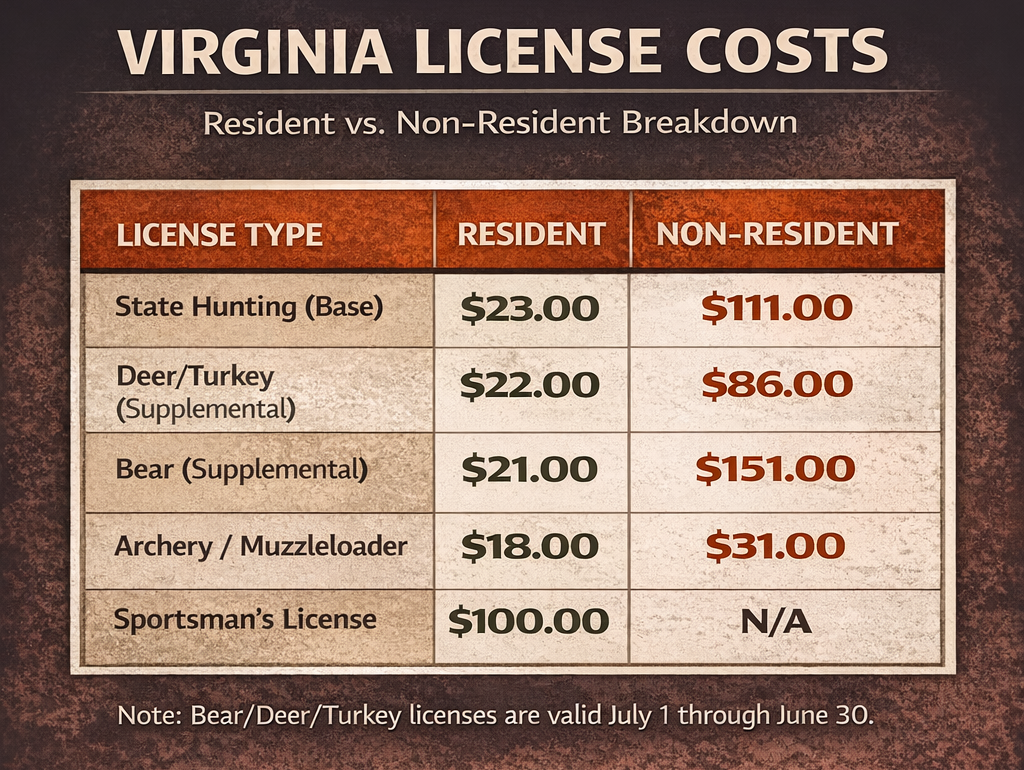
| License Type | Resident | Non-Resident |
|---|---|---|
| State Hunting (Base) | $23.00 | $111.00 |
| Deer/Turkey (Supplemental) | $22.00 | $86.00 |
| Bear (Supplemental) | $21.00 | $151.00 |
| Archery License | $18.00 | $31.00 |
| Muzzleloader License | $18.00 | $31.00 |
| Sportsman’s License | $100.00 | N/A |
Most licenses are good for one year from purchase date, but Bear/Deer/Turkey licenses run July 1 through June 30. If you’re a Virginia resident planning to hunt deer, turkey, and bear, that $100 Sportsman’s License is usually your best deal. Non-residents pay more, but when you consider Virginia’s 2+ million acres of public hunting land and consistent game populations, it’s worth every penny.
Virginia structures its seasons to give you multiple shots at success throughout fall, winter, and spring. The state splits some regulations between areas east and west of the Blue Ridge Mountains, so pay attention to where you’re hunting.
| Species | Season Type | Start Date | End Date | Notes |
|---|---|---|---|---|
| White-Tailed Deer | Urban Archery (1) | Sept 6, 2025 | Oct 3, 2025 | Select cities/towns only; Antlerless only |
| Urban Archery (2) | Jan 4, 2026 | Mar 29, 2026 | Select cities/towns only; Antlerless only | |
| Early Archery | Oct 4, 2025 | Nov 14, 2025 | Statewide | |
| Early Muzzleloader | Nov 1, 2025 | Nov 14, 2025 | Statewide | |
| General Firearms | Nov 15, 2025 | Jan 3, 2026 | Length varies by county (4 or 7 weeks) | |
| Late Muzzleloader | Dec 13, 2025 | Jan 3, 2026 | West of Blue Ridge & select East counties | |
| Black Bear | Firearms (Early) | Nov 28, 2025 | Nov 30, 2025 | Select counties |
| Firearms (Late) | Dec 22, 2025 | Jan 3, 2026 | Select counties | |
| Wild Turkey | Fall Firearms | Oct 18, 2025 | Jan 24, 2026 | Dates vary significantly by county |
| Spring 2026 | April 11, 2026 | May 16, 2026 | Noon close until April 26; Sunset after | |
| Spring 2027 | April 10, 2027 | May 15, 2027 | Estimated based on standard Saturday start | |
| Mourning Dove | First Segment | Sept 1, 2025 | Oct. 19, 2025 | Statewide |
| Early Teal | Special Season | Sept 20, 2025 | Sept 28, 2025 | 6 daily limit; Dates vary East/West of I-95 |
| Ducks | Split Seasons | Oct. 10, 2025 | Jan. 31, 2026 | Typical split: Oct 10–13, Nov 19–30, Dec 19–Jan 31 |
| Canada Goose | Early Season | Sept 1, 2025 | Sept 25, 2025 | Statewide; High daily bag limits |
Virginia White-Tailed Deer Hunting
Virginia deer hunting is legendary for good reason. Those 200,000 annual harvests don’t happen by accident. The state’s got everything: mountain hardwoods, agricultural edges, and thick swamps that grow big bucks. Virginia splits its deer management between east and west of the Blue Ridge, with different bag limits for each region. Want the full scoop on tactics and hotspots? Check out our detailed Virginia deer hunting guide for location-specific strategies.
Virginia White-Tailed Deer Hunting Seasons
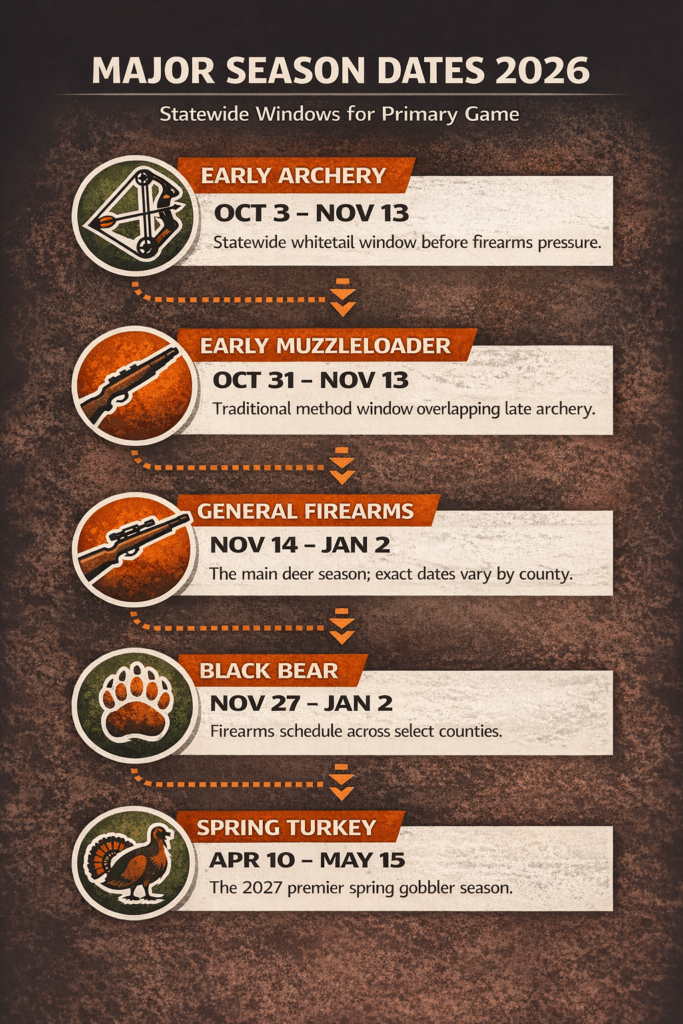
Urban Archery Season runs September 5 – October 2 and January 3 – March 28, but only in specific cities and towns. This is all about population control in suburban areas where rifle hunting isn’t an option.
Early Archery Season gives bowhunters statewide access from October 3 – November 13. This is prime time before gun season pressure changes deer behavior patterns.
Early Muzzleloader Season overlaps with late archery from October 31 – November 13. Traditional hunters get their statewide window before the main firearms season kicks off.
General Firearms Season is the big show: November 14 – January 2. Most Virginia deer hunters live for this season. But here’s the catch—exact dates vary by county, so double-check your specific area through the Virginia Department of Wildlife Resources.
Late Muzzleloader Season gives you one last shot from December 12 – January 2, but only west of the Blue Ridge and in select eastern counties.
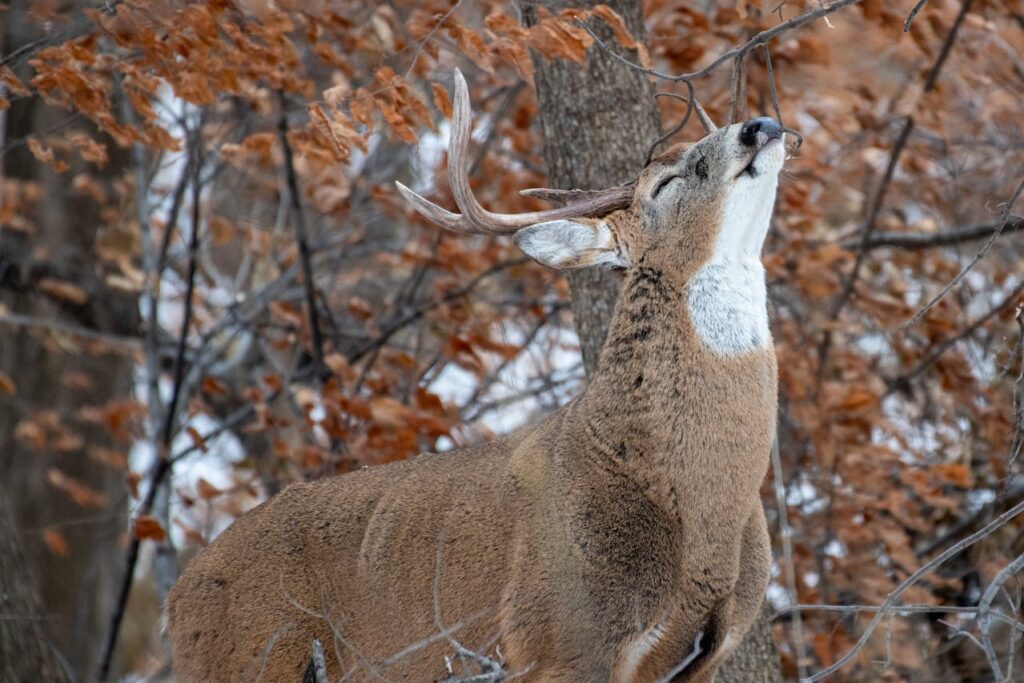
Virginia White-Tailed Deer Hunting Regulations
Virginia’s deer rules balance population management with quality hunting, but they change based on where you hunt. The Virginia Department of Wildlife Resources sets different bag limits for east and west of the Blue Ridge Mountains.
- East of Blue Ridge: 6 deer per season (max 3 antlered)
- West of Blue Ridge: 5 deer per season (max 2 antlered)
- Daily limit: 2 deer per day (unlimited in some Northern Virginia areas)
- Tagging: Tag immediately and report through VDWR’s game check system
- Antler restrictions: Check your specific county’s requirements
Virginia Black Bear Hunting
Bear hunting in Virginia is serious business. These aren’t your average game animals—we’re talking about one of North America’s most impressive creatures. Virginia’s bear population is thriving, especially in the western mountains where thick forests and abundant food create perfect bear habitat. For complete bear hunting strategies and prime locations, our Virginia bear hunting guide covers everything you need to know.
Virginia Black Bear Hunting Seasons
Firearms Season runs on a split schedule: November 27–29 and December 21–January 2. But here’s the important part—only select counties are open for bear hunting. You absolutely must verify your hunting area is legal for bears.
Additional Methods let you hunt bears during deer seasons in bear-open counties. So archery and muzzleloader hunters can pursue bears during overlapping deer seasons.
Virginia Black Bear Hunting Regulations
Bear regulations are strict, and for good reason. Virginia manages its bear population carefully to maintain healthy numbers while providing hunting opportunities.
- Bag limit: 1 bear per license year
- Minimum weight: 75 lbs dressed weight (roughly 100 lbs live weight)
- Protected bears: Never harvest females with cubs
- License requirement: Bear license required beyond base hunting license
- Reporting: Check in within 24 hours of harvest
Virginia Wild Turkey Hunting
Turkey hunting in Virginia offers two completely different experiences. Fall hunting means breaking up flocks and calling scattered birds back. Spring hunting is all about fooling a gobbler with hen calls during breeding season. Virginia’s turkey populations are strong across diverse habitats, from mountain hollows to farm country. For calling techniques and seasonal strategies, our Virginia turkey hunting guide breaks down both seasons in detail.
Virginia Wild Turkey Hunting Seasons
Fall Firearms Season runs October 17 – January 23 in select counties. It’s a long season but limited geographically. Fall turkey hunting is challenging because birds are flocked up and less responsive to calling.
Spring 2027 Season operates April 10 – May 15 and this is what most turkey hunters live for. Key detail: hunting closes at noon until April 25, then you can hunt until sunset for the rest of the season.
Virginia Wild Turkey Hunting Regulations
- Combined bag limit: 3 birds total (spring and fall combined)
- Spring restrictions: Bearded turkeys only
- Shooting hours: Noon close until April 25; sunset close after
- Fall either-sex: Both gobblers and hens legal during fall in open counties
- License requirement: Deer/Turkey license needed ($22 resident / $86 non-resident)
Virginia Minor Game Species Hunting
Don’t overlook Virginia’s waterfowl and dove hunting. The state sits right on the Atlantic Flyway, making it a crucial stopover for migrating birds. This often means the earliest hunting action of the fall season.
Virginia Waterfowl Hunting Information
Duck Hunting follows split seasons: typically October 9–12, November 18–29, and December 19–January 30. You’ll need a federal duck stamp (16+), Virginia duck stamp (16+), and HIP registration on top of your hunting license.
Goose Hunting includes early Canada goose season September 1–25, with regular seasons varying by Atlantic Population (AP) and Resident Population (RP) zones. The zone system reflects different management needs across Virginia’s waterfowl habitats.
Teal Season offers special early action September 5–13 with a 6-bird daily limit. These early migrants provide fast-paced shooting to kick off the season. For complete waterfowl strategies, our Virginia waterfowl guide covers duck and goose hunting statewide.
Virginia Mourning Dove Hunting Information
Dove season kicks off Virginia hunting with the first segment running September 1 – November 9. Dove hunting is social, high-volume shooting that’s perfect for season openers and getting new hunters started. The fast action and challenging shots make great practice for other hunting seasons.
Want to explore more small game beyond waterfowl and doves? Our Virginia small game guide covers additional species and opportunities throughout the state.

Where to Hunt in Virginia
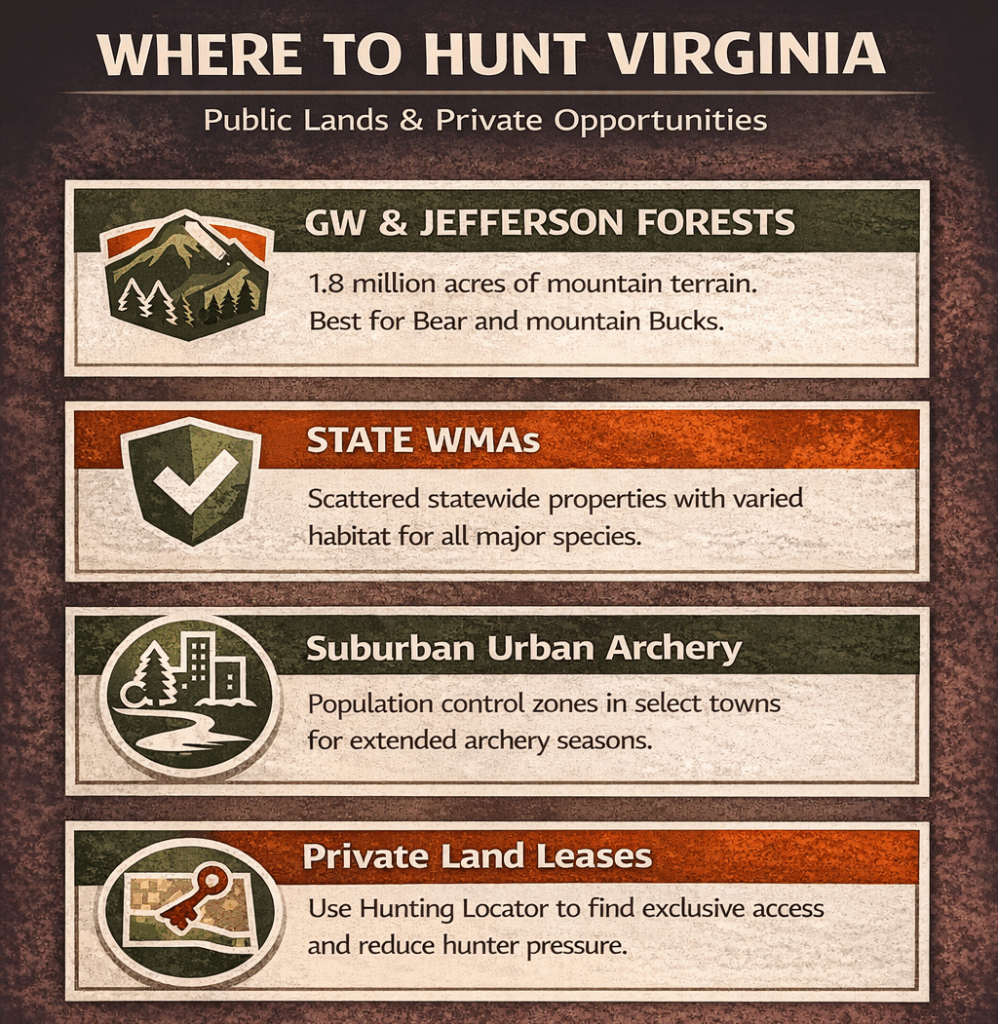
Virginia’s hunting landscape runs from Appalachian peaks to coastal plains, creating diverse habitats for different game species. The state provides over 2 million acres of public hunting land, giving hunters substantial access at minimal cost. But many hunters eventually want private land access for less pressure, better management, and more consistent opportunities.
Best Public Lands
Virginia’s public hunting lands offer solid starting points, especially if you’re new to the state or exploring different areas. The Wildlife Management Areas (WMAs) and national forests provide legitimate hunting at minimal cost.
- George Washington and Jefferson National Forests: 1.8 million acres in western Virginia with excellent deer, bear, and turkey habitat in mountainous terrain
- Virginia Wildlife Management Areas: State properties throughout Virginia with varied terrain and species, though specific regulations may differ from statewide rules
- Shenandoah National Park: Limited hunting through special permits for deer management
- Military installations: Some bases offer hunting programs for military and civilian hunters on well-managed properties with reduced pressure
Guided Hunts
Professional guides eliminate the headaches of scouting, land access, and logistics while providing expert local knowledge. Outfitters lease most of the best hunting properties, giving clients access to premium ground that individual hunters can’t reach.
Virginia’s guided options range from day hunts on private farms to multi-day lodge experiences. Yes, it costs more than DIY hunting, but you get valuable learning opportunities and access to consistently productive properties.
Private Land Hunting
Private land hunting delivers the ultimate in quality and consistency. Less pressure, better management, and the ability to develop long-term strategies on familiar ground. The challenge? More people want private land access while few properties become available.
Leasing Private Land gives hunters exclusive or semi-exclusive access for defined periods. Hunting leases are agreements between hunters and landowners for access rights over specific timeframes. While finding good properties that don’t cost thousands is challenging, smaller properties often provide excellent hunting at reasonable costs.
Buying Private Land is the ultimate investment in hunting access, giving you permanent control and the ability to implement long-term habitat improvements.
Hunting Locator: Your Private Land Solution
Finding quality hunting land shouldn’t be a nightmare of cold calls and dead ends. Hunting Locator connects serious hunters with verified Virginia landowners ready to lease or sell to qualified hunters. Our platform cuts through the frustration with a curated database of hunting properties, complete with game population details, property features, and lease terms. Whether you want a seasonal deer lease or your own hunting property, Hunting Locator matches you with opportunities that fit your goals and budget.
FAQ
What hunting license do I need as a non-resident to hunt deer in Virginia?
Non-residents need a State Hunting License ($111) plus the Deer/Turkey supplemental license ($86). If you’re using archery or muzzleloader, add those method-specific licenses ($31 each). Total cost for non-resident deer hunters: $197 for firearms, $228 for archery.
How do Virginia’s deer bag limits work east vs. west of the Blue Ridge?
Virginia splits deer limits by region. East of Blue Ridge: 6 deer per season (max 3 antlered). West of Blue Ridge: 5 deer per season (max 2 antlered). Daily limit is 2 deer statewide, though some Northern Virginia counties allow unlimited daily harvest.
When does Virginia’s general firearms deer season open?
General firearms season runs November 14 – January 2, but exact dates vary by county. You must check your specific county’s dates through Virginia Department of Wildlife Resources since some counties have different opening or closing dates.
Do I need a special license to hunt bear in Virginia?
Yes, you need a Bear License beyond your base hunting license. Costs $21 for residents, $151 for non-residents. Bear licenses run July 1 – June 30, with a limit of 1 bear per year at minimum 75 pounds dressed weight.
What’s the difference between Virginia’s spring and fall turkey seasons?
Fall season (October 17 – January 23) allows both gobblers and hens in select counties. Spring season (April 10 – May 15) permits only bearded turkeys statewide. Spring has specific hours: noon close until April 25, then sunset close. Both count toward the 3-bird annual limit.
Where can I find the best public hunting land in Virginia?
Virginia offers 2+ million acres of public hunting, with George Washington and Jefferson National Forests providing 1.8 million acres in western Virginia. Wildlife Management Areas (WMAs) are scattered statewide with diverse opportunities, though individual WMAs may have specific regulations beyond statewide rules.
The Final Shot
Virginia’s 2026-2027 seasons deliver incredible opportunities from September dove hunting through March deer seasons. Whether you’re chasing spring gobblers, working a muzzleloader during the rut, or pursuing Virginia’s impressive black bears, this season has something for every hunter.
Success comes down to understanding the regulations, getting proper licenses, and securing access to quality hunting ground. Virginia’s public lands offer substantial opportunities, but many hunters find that private land access through leases or guides provides the consistency that creates truly memorable seasons.
Ready to lock down access to Virginia’s best hunting? Browse Virginia hunting leases on Hunting Locator and connect with verified landowners ready to welcome serious hunters.


