We’ve put together this Washington Hunting Season Guide to give residents and non-residents everything they need for planning successful hunts across the state. We dug through the latest WDFW regulations, license requirements, and season dates so you can spend your time on what really counts—actually hunting.
Here’s what this guide covers:
- Complete 2026-2027 license costs for residents ($117.30 Big Game Combo) and non-residents ($1,076.40)
- Season dates for deer, elk, bear, cougar, turkey, and waterfowl
- Hunting locations: public lands, guided options, and private access
Whether this is your first Washington hunt or you’re coming back for another round, having the right gear can make or break your trip. Let’s get into the essential info you need to make 2026-2027 your best hunting season yet.
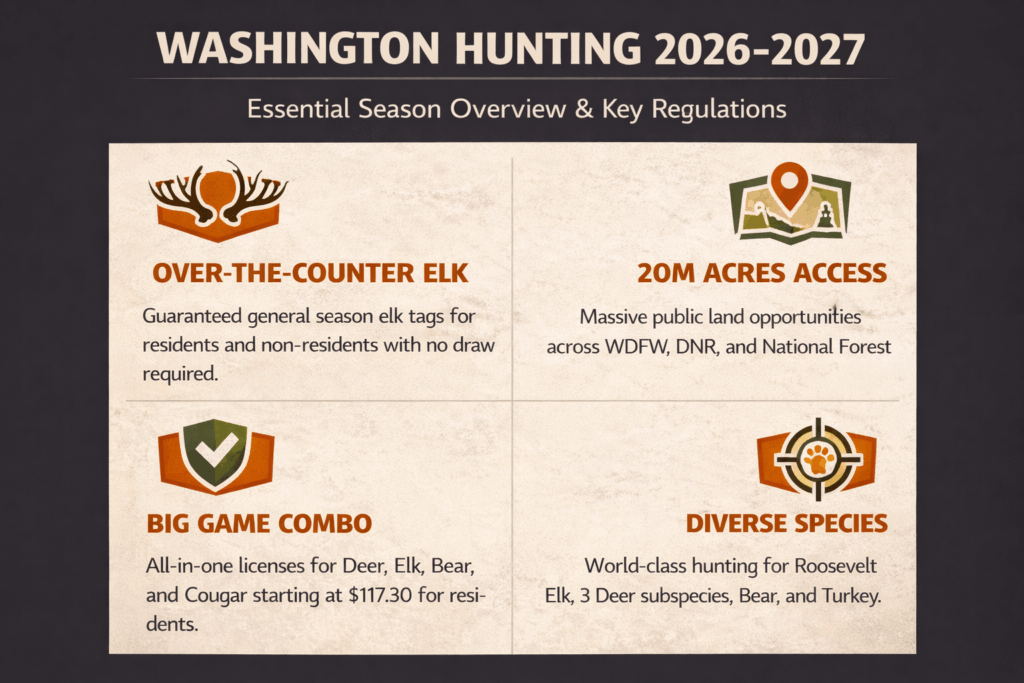
Quick Overview: Season Dates, Washington Hunting Licenses, and Regulations
Washington runs its license year from April 1 to March 31, giving hunters a full year of opportunities across multiple seasons. Anyone born after Jan. 1, 1972 needs to show proof of completing hunter education, and the Washington Hunter Ed Course runs $24.95. This certification works in all 50 states, so it’s worth the investment for any serious hunter.
Getting a handle on license types and costs upfront helps you budget smart and pick the right combo for your hunting plans. Non-residents should know that Washington offers solid value compared to other western states, especially with those over-the-counter elk tags that don’t require expensive draw applications.
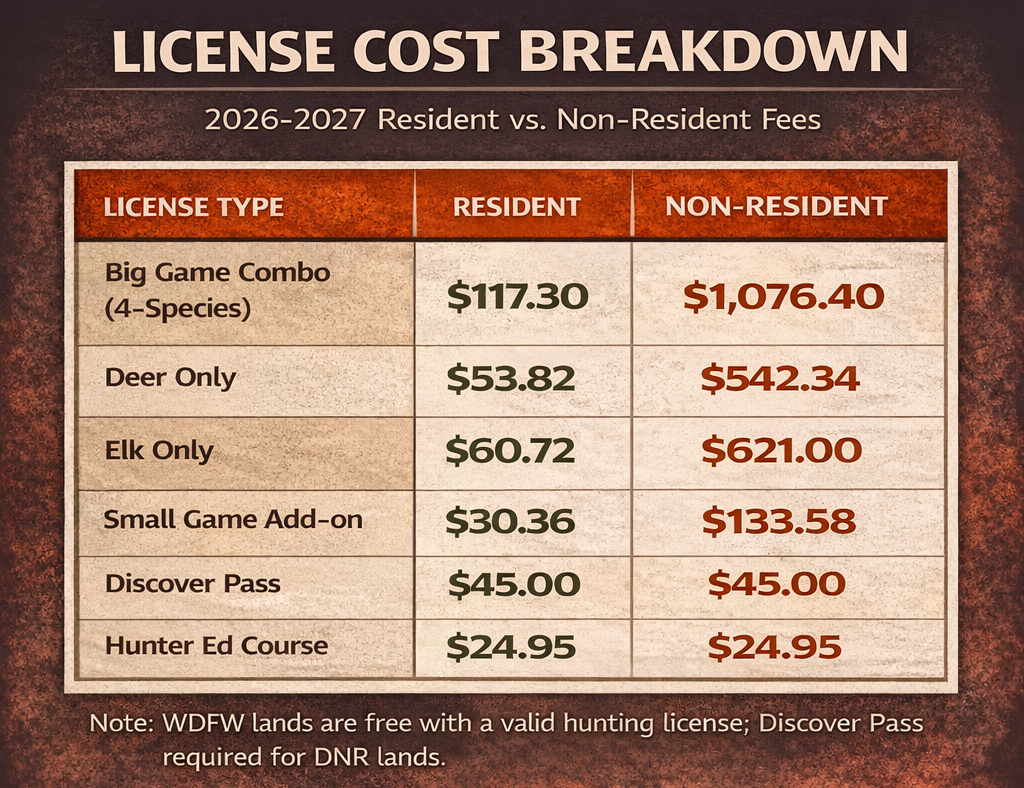
| License Type | Description | Resident | Non-Resident |
|---|---|---|---|
| Big Game Combo | Deer + Elk + Bear + Cougar | $117.30 | $1,076.40 |
| Deer Only | Single species deer tag | $53.82 | $542.34 |
| Elk Only | Single species elk tag | $60.72 | $621.00 |
| Small Game (w/ Big Game) | Add-on to Big Game license | $30.36 | $133.58 |
| Discover Pass | Vehicle access to state lands | $45.00 | $45.00 |
The Discover Pass gets you into State Parks and DNR lands, but if you’ve got a valid hunting license, you can access all WDFW-managed lands for free. Still, the Discover Pass opens up three million more acres of DNR trust lands for hunting.
Seasons and antler rules change dramatically at the Cascade crest. Eastern and Western Washington have completely different regulations for everything from bag limits to legal hunting methods, so you need to know which side you’re hunting.
| Species | Season Type | Start Date | End Date | Bag Limit / Notes |
|---|---|---|---|---|
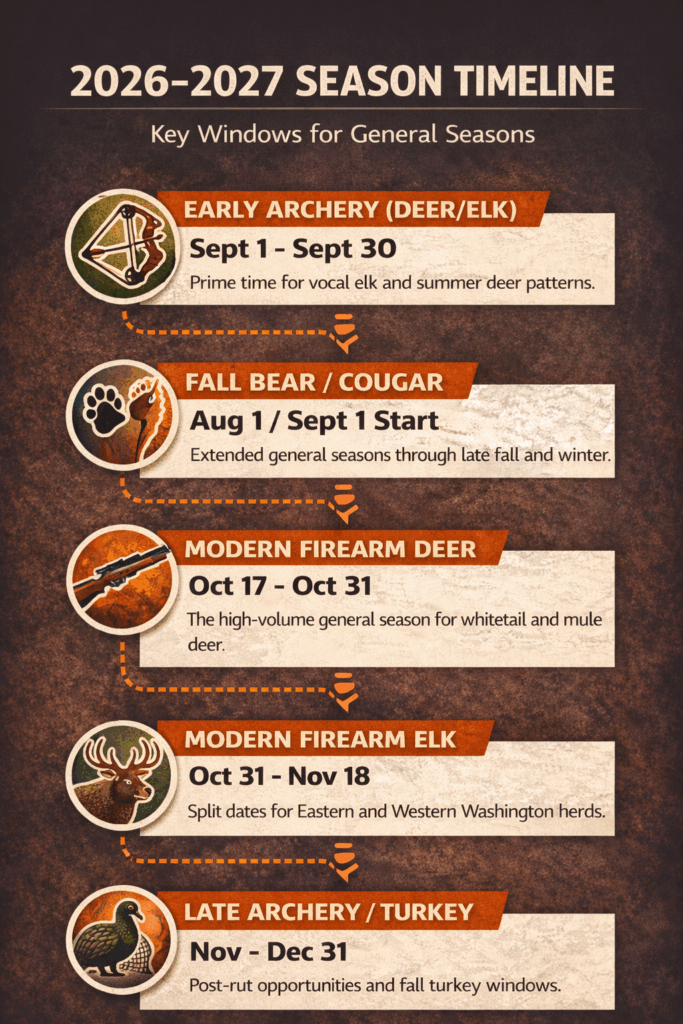
| Deer | Archery (Early) | Sept 1 | Sept 30 | 1 per year; (Some Sept 21-26 endings by GMU) |
| Muzzleloader | Oct 3 | Oct 10 | 1 per year; Specific legal buck rules apply | |
| Modern Firearm | Oct 17 | Oct 31 | 1 per year; Dates vary slightly by GMU/Species | |
| Archery (Late) | Nov 1 | Dec 31 | West ends Dec 31; East ends Nov 30 | |
| Elk | Archery (Early) | Sept 12 | Sept 24 | 1 per year; Check GMU for “Any Bull” vs “Spike” |
| Muzzleloader (Early) | Oct 3, 2026 | Oct 9, 2026 | 1 per year | |
| Modern Firearm | Oct 31 | Nov 18, 2026 | East: Oct 31–Nov 8; West: Nov 7–Nov 18 | |
| Archery (Late) | Nov 25, 2026 | Dec 8, 2026 | Varies by GMU; often “3-pt min” or “Antlerless” | |
| Black Bear | Fall General | Aug 1, 2026 | Nov 15, 2026 | 2 per year; (Only 1 may be from Eastern WA) |
| Cougar | General | Sept 1 | Mar 31, 2027 | 1 per year; Must check hotline for quota closures |
| Turkey | Fall General | Sept 1 | Dec 31 | Limit 3/year; (Max 2 in Eastern WA) |
| Spring 2027 | Apr 15 | May 31 | Limit 2/year; (Bearded birds only) | |
| Waterfowl | Ducks / Geese | Oct 10 | Jan 24, 2027 | 7 Ducks daily; Geese vary (4-10) by area |
| Forest Grouse | General | Sept 1 | Dec. 31, 2026 | 4 daily; (Max 3 of any single species) |
| Pheasant | General | Oct 24 | Nov 30 | 2–3 daily; (Western: 2 either sex / Eastern: 3 cocks) |
| Quail | General | Oct 17 | Jan 18, 2027 | 10 daily; (Mixed bag of Valley/Bobwhite) |
| Chukar | General | Oct 3, 2026 | Jan 31, 2027 | 6 daily |
Spring bear season is Special Permit only—you need to apply in February. Individual GMU regulations might restrict or extend these dates further, so double-check current regs for your specific hunting area before you head out.
Washington Deer Hunting
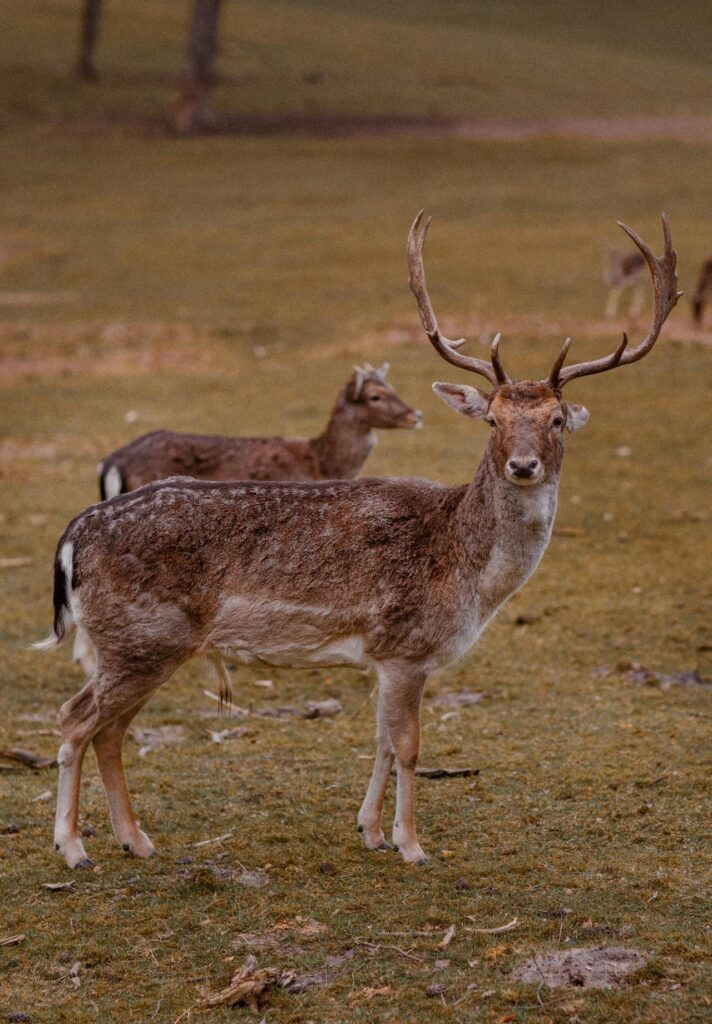
Washington hunters bag an average of 13,629 white-tailed deer annually, making up about 35 percent of the total deer harvest. Blacktailed and mule deer fill out the rest, giving you completely different hunting experiences across Washington’s terrain. The state has three deer subspecies—whitetail (mostly Eastern WA), mule deer (Eastern WA), and blacktail (Western WA)—and each one will test you differently.
Blacktail deer are worth calling out as incredibly elusive creatures. Hunting them takes serious patience and skill since they’re basically invisible in their forest habitat. If you want a real test of your hunting abilities, blacktail hunting in Western Washington’s thick forests will definitely deliver.
Deer licenses are available over-the-counter for residents and non-residents alike, making Washington accessible for hunters from anywhere in the country. The annual bag limit and regional antler restrictions keep the harvest sustainable while giving you plenty of chances for success. For detailed strategies and GMU-specific info, check out our complete Washington deer hunting guide.
Washington Deer Hunting Seasons
Early archery season from September 1-30 gives you the first shot of the year, when deer are still following summer patterns and haven’t been spooked by hunting pressure yet. This season is gold for hunters who put in scouting time during late summer, since deer are usually pretty predictable about their feeding and watering spots.
Muzzleloader season runs October 3-10, giving you a short but productive window if you like the challenge of traditional firearms. This season bridges archery and modern firearm seasons, often hitting right when rutting activity starts making deer more active during daylight.
Modern firearm season from October 17-31 is when most hunters get out there and when the majority of Washington’s deer get harvested. Modern firearm tag holders can hunt during modern firearm seasons using archery, muzzleloader, crossbow, or modern firearm equipment, so you’ve got flexibility in methods while staying within season structure.
Late archery season goes from November 1-December 31 in Western Washington and through November 30 in Eastern Washington. This extended opportunity lets bowhunters chase deer during and after the rut, when bucks are more vulnerable but weather gets increasingly nasty.
Washington Deer Hunting Regulations
Understanding current regulations is crucial for legal, ethical hunting, especially with recent changes around disease management.
- Annual bag limit: 1 deer per hunter (exceptions for Master Hunters or special permit holders)
- Antler restrictions: Change by region—”3-point minimum” vs. “Any buck” depending on which side of the Cascade crest you’re on
- Baiting: New baiting regulations for deer have been adopted—you need to verify current GMU-specific rules
- CWD Testing: After Washington’s first CWD case, hunters showed up last season to submit harvest samples for chronic wasting disease testing, and testing is now mandatory in affected areas
- License requirement: Valid deer tag required; buy standalone ($53.82 resident / $542.34 non-resident) or as part of Big Game Combo
Washington Elk Hunting
Washington State lets hunters buy an elk license over the counter, so there’s no draw application needed for general seasons. This makes Washington stand out from most western states and creates a huge draw for non-resident hunters who want guaranteed elk hunting without the uncertainty of draw systems.
Washington has two huntable elk subspecies: Rocky Mountain elk and Roosevelt elk. Roosevelt elk are native to the Pacific Northwest and known for their massive size and challenging hunts. These coastal giants live in Western Washington’s dense forests, while Rocky Mountain elk roam Eastern Washington’s more open country.
The state’s elk populations have bounced back impressively. The Yakima herd has grown to about 10,000 animals, while the northern Colockum herd reached approximately 4,000. But success rates stay tough—only 1 out of 10 elk hunters will fill their tag statewide, though hunters reported over 54% success for modern firearm hunts in certain spots, way higher than both the statewide and districtwide average of 45%.
For detailed elk hunting strategies and location-specific info, check out our comprehensive Washington elk hunting guide.
Washington Elk Hunting Seasons
Early archery season from September 12-24 hits peak bugling activity, giving hunters the chance to call in bulls during the rut. This is prime time for elk hunting, when bulls are most vocal and responsive to calling, though hunting pressure can get heavy in easy-access areas.
Early muzzleloader season runs October 3-9, providing a brief window for traditional firearms enthusiasts. This season often catches elk switching from rutting behavior to winter patterns, so you need to adapt your strategies.
Modern firearm season dates split by region: October 31-November 8 in Eastern Washington and November 7-18 in Western Washington. These regional differences reflect habitat variations and herd management goals. If you get selected for a multi-season tag, you can hunt in any open game management unit during all general seasons starting with archery, then muzzleloader, and finally modern firearm. With an elk Multi-season tag, you can hunt in both Eastern and Western Washington.
Late archery season from November 25-December 8 varies by GMU and gives you post-rut opportunities when elk have settled into winter feeding patterns. Weather can be brutal during this season, but elk are often more concentrated in predictable areas.
Early Eastern elk hunting for Master Hunters only runs August 1-31, providing an exclusive opportunity for hunters who’ve achieved this special designation through WDFW’s program.
Washington Elk Hunting Regulations
Current elk hunting regulations balance conservation needs with hunter opportunity, with important differences between subspecies and regions.
- Annual bag limit: 1 elk per hunter (exceptions for Master Hunters or special permit holders)
- Rocky Mountain elk draw: Unlike Roosevelt elk, Rocky Mountain elk requires a draw application, though there’s no non-resident quota or cap for all species, so draw odds are the same for residents and non-residents
- Draw application cost warning: Non-residents must buy a non-refundable general season elk or deer license before applying for the draw, costing $500 each year just to apply
- Weapon restrictions: Bait and hounds aren’t allowed in Washington
- Tag validation: Electronic tagging available through MyWDFW app; physical tag must be validated immediately after harvest
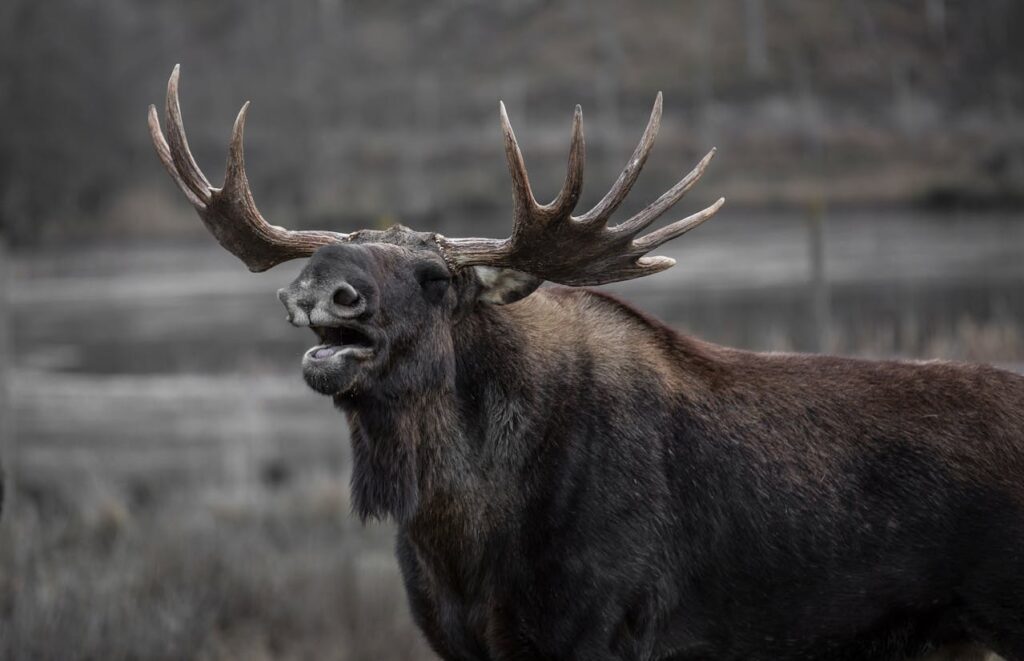
Washington Bear Hunting
Black bear hunting in Washington gives you generous opportunities with a two-bear annual limit and extended seasons. The state’s healthy bear population supports both fall general seasons and spring special permit hunts, so you’ve got options whether you prefer different seasons or schedules.
Black bear general season runs August 1 – November 15, though depending on your GMU you might have to wait until August 15th. This extended season lets you chase bears during different activity periods, from late summer berry feeding to pre-denning behavior in late fall.
For complete bear hunting info including specific GMU regulations and hunting strategies, visit our Washington black bear hunting guide.
Washington Bear Hunting Seasons
Fall general season from August 1-November 15 provides your main bear hunting opportunity, with some GMUs making you wait until August 15th to start. This season covers multiple bear activity periods, from late summer feeding on berries and salmon to fall prep for winter denning.
Spring black bear hunts are based on special permits and management needs, requiring you to apply in February for the following spring. These permits get issued based on population management objectives and provide opportunities when bears are coming out of winter dens and more active during daylight.
Washington Bear Hunting Regulations
Bear hunting regulations emphasize safety and ethical hunting while providing generous harvest opportunities.
- Annual bag limit: 2 bears per year
- Spring permit: Special permit required—apply in February
- Weapon restrictions: Bait and hounds not allowed
- License requirement: Included in Big Game Combo or available as add-on
- Identification: You must be able to tell black bears from other wildlife; no grizzly hunting allowed
Washington Cougar Hunting
Cougar hunting provides a unique predator opportunity with an extended season running September 1 through March 31, 2027. Cougar season is open September 1 – March 31 or until the harvest cap is reached, with unit-specific quotas managing harvest levels across different GMUs.
This extended season lets you pursue cougars during different weather conditions and prey availability periods, from early fall when deer are still active to late winter when snow concentrates both predators and prey in specific areas.
For detailed pursuit strategies and unit-specific information, explore our Washington cougar hunting guide.
Washington Cougar Hunting Seasons
General cougar season runs September 1-March 31, 2027, giving you nearly seven months of hunting opportunity. However, individual GMUs may close early if harvest quotas are reached, so you need to monitor unit status throughout the season.
Early season hunting (September-November) often gives you better weather and more predictable cougar movement patterns, while late season (January-March) can offer tracking opportunities in snow but requires more challenging winter hunting conditions.
Washington Cougar Hunting Regulations
Cougar hunting regulations focus on sustainable harvest management and hunter safety in challenging terrain.
- Season length: September 1-March 31, 2027 (or until unit quotas are met)
- Quota management: Individual GMUs close when harvest limits are reached
- Weapon restrictions: Bait and hounds not allowed
- License requirement: Included in Big Game Combo or available separately
- Harvest reporting: Mandatory harvest reporting within specific timeframes
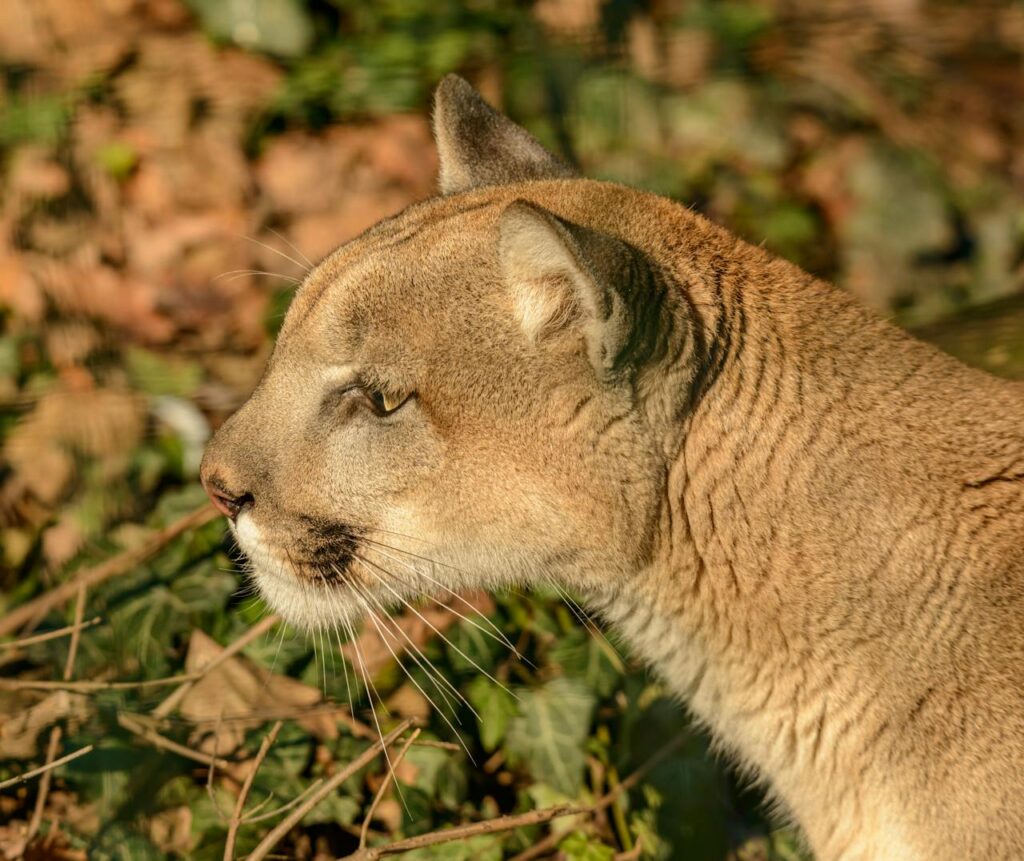
Washington Turkey Hunting
Wild turkey hunting in Washington offers both spring and fall opportunities, with generous bag limits that change by region. Washington offers fall turkey season September 1 – December 31 and spring season April 15 – May 31 for general hunting, giving you extended opportunities for this popular game bird.
Yakima County is famous for its turkey population. With thousands of wild turkeys roaming the area, it’s no surprise that Yakima is a top destination during turkey season. The region’s agricultural landscape and diverse habitat create perfect conditions for both Merriam’s and Rio Grande turkey subspecies.
For comprehensive turkey hunting strategies and location recommendations, visit our Washington turkey hunting guide.
Washington Turkey Hunting Seasons
Fall general season runs September 1-December 31, letting you hunt turkeys during their flocking period when birds are often more predictable in their daily routines. This extended season gives you flexibility to work around other hunting seasons and personal schedules.
Spring 2027 season from April 15-May 31 hits peak gobbling activity during breeding season. Spring hunting offers the classic turkey experience with calling and decoying, when toms are most responsive to hen calls and visual decoys.
Youth seasons provide extra opportunities with special dates in September, giving young hunters priority access during less crowded periods.
Washington Turkey Hunting Regulations
Turkey hunting regulations provide generous opportunities while maintaining sustainable harvest levels across different regions.
- Annual bag limit: 3 turkeys per year (only 2 in Eastern Washington)
- Season structure: Both fall (Sept 1-Dec 31) and spring (April 15-May 31) opportunities
- Youth opportunities: Special youth seasons in September
- License requirement: Small game license or Big Game Combo
- Weapon options: Shotgun, archery, or crossbow depending on season and area
Washington Minor Game Species Hunting
Washington’s diverse ecosystems support excellent populations of waterfowl and upland birds, providing opportunities that complement big game hunting or serve as primary pursuits for dedicated bird hunters.
Washington Waterfowl Hunting Information
For waterfowl hunting, Skagit County is the place to be. Its coastal location and numerous wetlands attract a variety of birds including ducks, geese, and swans. The Pacific Flyway migration route brings millions of waterfowl through Washington each year, creating world-class hunting opportunities.
Duck and goose seasons run October 10-18 and October 21-January 24, 2027, with special youth and veteran days in late September. This split season structure allows for peak migration timing while providing extended opportunities through winter months. Washington’s diverse waterfowl habitats range from coastal estuaries to inland agricultural areas, each offering different species compositions and hunting experiences.
For detailed waterfowl hunting information including species identification and hunting strategies, see our Washington waterfowl hunting guide.
Washington Upland Bird Hunting Information
Forest grouse hunting runs September 1-December 31 with a daily limit of 4 aggregate, providing excellent opportunities in Washington’s extensive forest lands. Each year, thousands of pheasants are released on public-accessible lands in Washington State, supplementing wild populations and creating put-and-take hunting opportunities.
Pheasant season runs October 24-November 30 for general hunting, with special youth and senior dates in September. Quail season begins October 17, while chukar season starts October 3, reflecting the different habitat preferences and population dynamics of these upland species.
For comprehensive upland bird hunting information, visit our Washington small game hunting guide.
Where to Hunt in Washington
Washington is lucky to have almost 20 million acres of public land, providing extensive hunting opportunities across diverse ecosystems from coastal rainforests to high desert. However, with more than half the state’s land in private ownership, WDFW makes agreements with private landowners to open their land to hunting, creating additional access opportunities beyond public lands.
The state’s hunting landscape includes everything from easily accessible wildlife areas near major cities to remote wilderness areas requiring multi-day backpacking expeditions. Understanding the different types of hunting opportunities available helps you choose the best option for your experience level, physical capabilities, and hunting goals.
Best Public Lands
Washington’s public hunting opportunities span multiple agencies and land types, each offering distinct advantages:
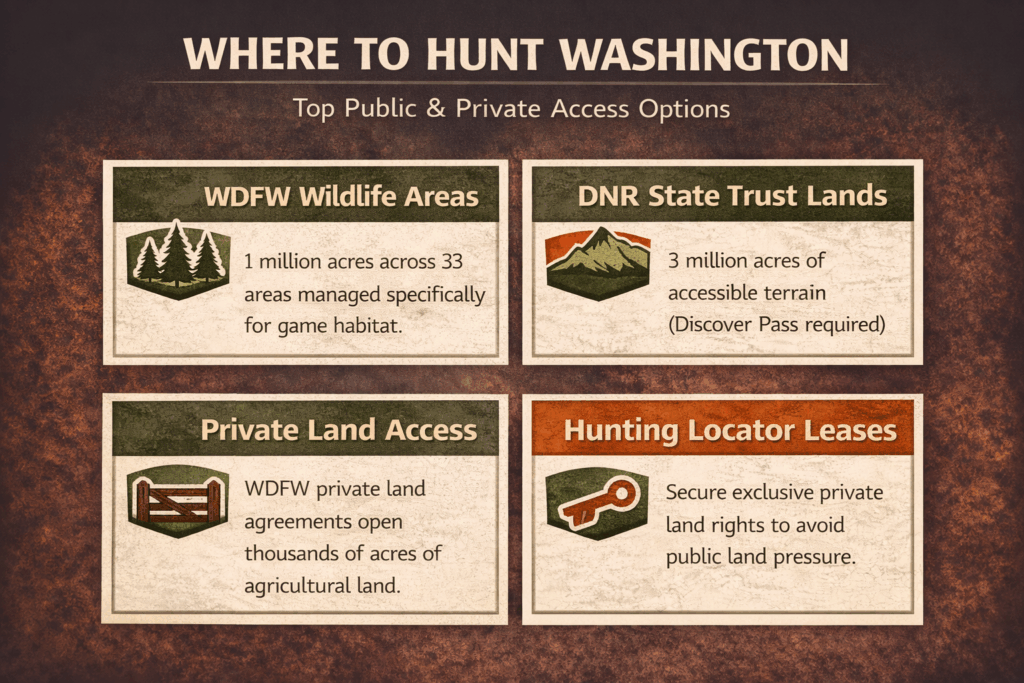
- WDFW Wildlife Areas: WDFW manages about 1 million acres spread across 33 wildlife areas, specifically managed for wildlife habitat and hunting access
- National Forest Lands: Extensive opportunities in the Cascade, Olympic, and Blue Mountain ranges with minimal access restrictions
- DNR State Trust Lands: The Washington Department of Natural Resources manages three million acres of state trust land, requiring a Discover Pass for access
- National Wildlife Refuges: Limited hunting opportunities on select refuges during specific seasons and conditions
Guided Hunts
Washington hosts 29 outfitters offering Washington hunting trips, ranging from day hunts for upland birds to multi-day wilderness expeditions for elk and deer. Roosevelt elk hunts are the most popular, taking place in Southwest Washington’s coastal mountains where these massive animals thrive in old-growth forest environments.
Guided hunts provide several advantages for non-resident hunters or those new to Washington hunting: local knowledge of game patterns and behavior, access to private lands not available to the general public, and professional guidance on field care and meat processing. Quality outfitters also handle logistics like transportation, meals, and lodging, letting you focus entirely on the hunting experience.
When selecting an outfitter, consider their specialization (species and hunting methods), success rates, included services, and client testimonials. Book early for prime dates, especially for Roosevelt elk hunts during peak bugling season.
Private Land Hunting
Private land hunting in Washington offers several distinct advantages: reduced hunting pressure, potentially higher game densities, and more predictable access compared to crowded public areas. It’s getting harder and harder to avoid pressure on public land, making private access increasingly valuable for quality hunting experiences.
Traditional private land access often comes through personal relationships with landowners, agricultural connections, or long-term family arrangements. But these opportunities are getting scarcer as land values increase and liability concerns grow among property owners.
Modern hunters are increasingly turning to professional land leasing services that connect them directly with landowners willing to provide hunting access for fair compensation. This approach benefits both parties: landowners receive income from their property while hunters gain reliable access to quality hunting areas.
Hunting Locator revolutionizes private land access by providing a comprehensive platform where hunters can connect directly with Washington landowners willing to lease or sell hunting properties. Our service eliminates the guesswork and uncertainty of finding private hunting access, offering verified properties with detailed information about game species, acreage, amenities, and lease terms. Whether you’re seeking a weekend hunting lease or looking to purchase your own hunting property, Hunting Locator provides the tools and connections you need to secure premium hunting access in Washington’s competitive land market.
FAQ
What hunting license do I need as a non-resident visiting Washington?
Non-residents planning to hunt multiple species should consider the Big Game Combo license at $1,076.40, which includes deer, elk, bear, and cougar tags. For hunters targeting only one species, individual licenses are available: deer-only ($542.34) or elk-only ($621.00). All hunters born after January 1, 1972, must provide proof of hunter education certification before purchasing their first Washington hunting license.
When should I apply for Washington special hunt permits?
Applications for special hunting permits like moose, mountain goat, and bighorn are available December 1 to mid-May, with specific deadlines changing by species. Spring bear permits require applications in February. These special hunts use a weighted point system, so applying early in your hunting career increases your chances of eventual selection.
Can I hunt the same day I purchase my Washington hunting license?
Yes, Washington hunting licenses are valid immediately after purchase through the MyWDFW app or authorized dealers. However, you must have completed hunter education requirements if born after January 1, 1972, and make sure you understand all regulations for your intended hunting area and species before heading out.
What’s the difference between Eastern and Western Washington hunting regulations?
The Cascade crest divides Washington into distinct hunting regions with different season dates, bag limits, and antler restrictions. For example, elk modern firearm season runs October 31-November 8 in Eastern Washington but November 7-18 in Western Washington. Antler restrictions also vary, with some areas requiring “3-point minimum” while others allow “any buck” harvest.
Do I need a Discover Pass if I have a hunting license?
If you have a valid hunting license, you get free access to all WDFW-managed lands. However, a Discover Pass ($45) is required for access to State Parks and DNR managed lands, which can provide additional hunting opportunities beyond WDFW wildlife areas.
How do I find private hunting land in Washington?
Private hunting access traditionally comes through personal relationships or agricultural connections, but modern hunters increasingly use professional services. Hunting Locator provides a comprehensive platform connecting hunters with Washington landowners offering hunting leases and land sales, eliminating the uncertainty of finding quality private hunting access.
The Final Shot
Washington’s 2026-2027 hunting season offers unmatched opportunities across nearly 20 million acres of diverse hunting terrain, from coastal Roosevelt elk hunting to high desert mule deer pursuits. With over-the-counter elk tags, generous bear limits, and extended seasons for multiple species, the Evergreen State provides exceptional value for both resident and non-resident hunters willing to plan ahead.
Success in Washington hunting depends on understanding the state’s unique regulations, seasonal patterns, and access opportunities. Whether you choose public land adventures, guided hunts, or private land access through services like Hunting Locator, preparation and local knowledge make the difference between a good hunt and an unforgettable experience.
Start planning your 2026-2027 Washington hunting adventure today. Research your target species, secure your licenses, and most importantly, find the perfect hunting location that matches your hunting goals and experience level. Washington’s hunting opportunities are waiting—make this your most successful season yet.


