The Importance of Shot Placement
An accurate shot sets the foundation for ethical and successful deer hunting. It’s crucial to understand the significance of proper shot placement. Remember, taking a shot isn’t just about spotting the deer and pulling the trigger. It determines whether or not your shot opportunities are transformed into lethal shots. It ensures minimum suffering for the animal and enables a higher yield of quality meat for you. It all boils down to shot placement—hitting the right spot at the right angle. It’s not just about taking a shot; it’s about making it count.
Ethical Considerations in Shooting
Ethical considerations take front stage when engaging in hunting activities. What exactly constitutes an ethical shot is often debated among hunters. At its core, this refers to shots that are most likely to result in rapid, humane kills rather than causing an agonizing wound to the animal.
This involves knowledge and preparation; understanding the animal’s anatomy, choosing a quality bullet, having a stout bullet for your chosen game, and displaying proficiency with your weapon.
Sometimes, being an ethical hunter means letting a trophy walk to ensure the animal doesn’t suffer. Breaching these ethical considerations often stem from prioritizing personal records over responsible hunting.
The Anatomy of a Deer
Understanding the anatomy of a deer is crucial for ethical and efficient hunting. Aim to understand the chest cavity’s layout, where vital organs like the heart and lungs are encased within the body cavity and the rib cage. Accurate shooting requires an understanding of these structures. For instance, heart shots would necessitate the right caliber of bullet for swiftness. Alternatively, lung shots provide a larger target but still guarantee a quick, humane kill. Lastly, bear in mind that while brain shots demand absolute precision, a well-placed shot can result in an instant kill.
Lungs, heart, head, and liver are key target areas. If you want more information, check out deer anatomy explained in simple terms.
Environmental Considerations
Thriving in the art of deer hunting asks for more than precise shots and understanding the deer anatomy. It requires a true appreciation of various environmental considerations.
From assessing the fickle weather conditions potentially affecting your shot’s accuracy to conducting a thorough terrain analysis, every detail counts towards a successful hunt. Understanding wind direction and its impact can further optimize your hunting experience, guiding towards perfect shot placement from both an elevated position or at ground level.

In this extensive section, we’ll take a deep dive into detailing these critical components, shedding light on their significant roles in the realm of deer hunting. Each one of these factors intertwines, creating a comprehensive map to your next successful deer hunt. So, let’s delve in!
Weather Conditions
When on a hunting expedition, various weather conditions can present significant challenges, requiring not just sharp shooting skills but also an in-depth understanding of how the environment interacts with both the hunter and the prey.
The Hunter
Firstly, let’s consider the hunter. Extreme temperatures, whether hot or cold, can affect the hunter’s physical condition, impairing concentration and precision. Hot and humid conditions can lead to fatigue and dehydration, potentially impacting judgment and response times, whereas extremely cold conditions can hinder dexterity and muscle response, crucial components for a sharpshooter.
The Target
For the prey, usually being a deer in this context, weather conditions heavily influence their movements and behaviors. Deer are likely to seek shelter and be less active during extreme weather conditions, which can limit the opportunities for a hunter. However, knowledgeable hunters can leverage this behavior by anticipating deer movements to find shelter and food, thus increasing the chances of a successful hunt.
The Shot
Regarding the actual shot, wind is perhaps the most critical weather factor to consider. It can significantly alter the trajectory of a bullet, requiring meticulous adjustments to the aim to ensure an accurate hit. Rain and snow can also impact visibility, and subsequently, the accuracy of the shot, requiring the sharpshooter to have impeccable knowledge of their equipment’s capabilities under such conditions. Additionally, mist and fog can obscure vision and make it challenging to spot the target, necessitating exceptional focus and patience from the hunter.

Weather conditions form an integral part of hunting expeditions. A skilled sharpshooter must be adept at adjusting strategies based on the prevailing conditions to ensure the successful, humane, and ethical conclusion of the hunt. The interplay between weather, hunter, and prey is a delicate dance, one that requires knowledge, experience, and respect for the environment and the animal.
Terrain Analysis: A Key Aspect of Successful Deer Hunting
When you’re out in the wilderness, understanding and analyzing the terrain is crucial to maximize the success of your hunt. As an expert tracker and hunter, here’s what you should focus on:
- Start by identifying deer signs like tracks, droppings, and rub marks on trees, which are indicative of deer presence.
- Next, observe the landscape; valleys, and ridges are travel routes for deer.
- Look for food sources and bedding areas as deer tend to stay close to them.
- When on elevated terrain, position yourself overlooking these areas to spot deer movement.
- Assess the wind direction to approach your target undetected, ensuring your scent is not carried towards the deer.
- Study the escape routes and predict the potential path of the deer post-shot for effective tracking.
Every detail of the terrain speaks, and listening attentively increases your chances of having a great shot agnle to prevent taking a bad shot.
Wind Direction and Its Impact
Wind direction is pivotal when it comes to hunting, as it influences both the hunter’s scent dispersion and the trajectory of the shot. When the wind blows towards the prey, it carries the hunter’s scent, alerting the animal and significantly reducing the chances of a successful approach or shot. Therefore, being downwind of the prey is a strategic necessity, where the wind carries the scent away from the animal, minimizing the chances of detection.
Additionally, wind direction can substantially impact the trajectory of a shot. A crosswind, blowing from either side, can push the bullet off course, necessitating compensation for windage to ensure an accurate shot. Headwind and tailwind, meanwhile, can impact the bullet’s velocity and drop. A headwind slows the bullet down, causing it to drop more, while a tailwind does the opposite.
In essence, a comprehensive understanding of wind direction is crucial for hunters aiming for precise, ethical, and successful shots, with considerations to both scent concealment and shot adjustments.
Understanding Deer Behavior
To win at the game of deer hunting, one first has to understand the player – the majestic deer. Key areas of focus include understanding the engrained Deer Habits and Movements, the seasonal Feeding and Breeding Patterns, and Spotting Signs of Deer in their natural environment. For instance, a mature buck has unique behavioral traits that can signal the perfect timing for the shot. Through careful observation and understanding, you’ll be able to predict their behavior, allowing for a more ethical, effective, and rewarding deer hunting experience. There’s much more to learn, so keep reading the following sections to delve deeper into each aspect.
Deer Habits and Movements
As a novice hunter, there are some essential facets about deer habits and movements that you need to comprehend to achieve a successful hunting experience. An adult buck or a mule deer exhibit consistent movement patterns that are mostly defined by food sources. Over time, you’ll find that pinpointing the location of doe and buck bedding can be a strategic move that enhances your hunting success – after all, deer, especially the gun hunter’s species, are creatures of habit with compact movement patterns. Always remember, indeed, precision in understanding these movements opens up a myriad of hunting opportunities.
Feeding and Breeding Patterns
The natural world thrives on patterns, and deer are no exception. Deer have specific feeding and breeding habits that can provide valuable insight for a more successful hunting experience. Understanding these feeding patterns and breeding patterns can be a game-changer, especially from a deer stand.
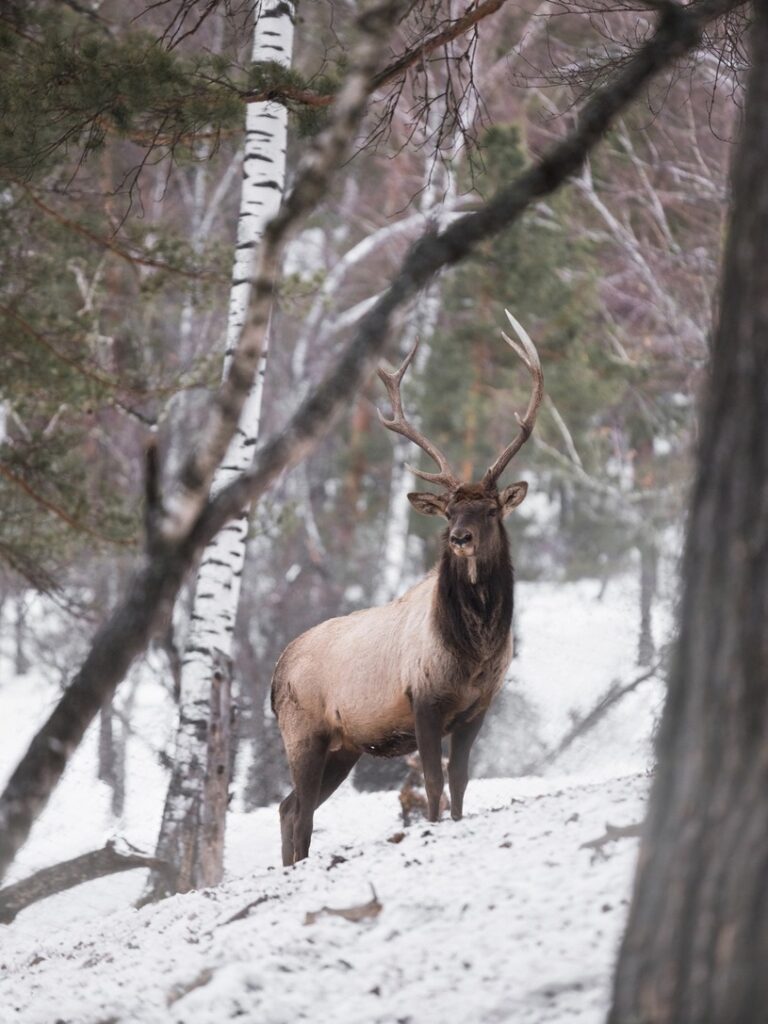
Firstly, the estrus cycle in deer is not dependent on the whims of weather, but rather on the amount of daylight, with the healthiest does entering estrus first.
Secondly, the survival of fawns significantly impacts the timing of various deer breeding phases.
Lastly, geographical location influences deer rutting patterns. Northern areas typically witness more synchronized ruts, while southern regions experience more scattered occurrences, highlighting the importance of regional insight.

Spotting Signs of Deer
Deer signs are valuable markers to locate and understand the deer’s lifestyle, leading to a successful deer shot. As a hunter, to spot such signs proficiently is vital. Consider the following indicators:
- Identifying tracks: This can reveal deer size and the direction they’re heading.
- Observing trails: Trails between feeding and bedding areas picture routine movement.
- Checking for droppings: Fresh, dark deer droppings signal recent activity.
- Locating rubs on trees: These are a deer’s territory marks.
- Finding scrapes: Look for these near trees, as they also reflect deer’s territorial indications.

Reading these signs can improve your shot angle through better planning. You can also get your deer stand into the right place for high-quality elevated shots.
Where To Aim On A Deer? Common Shot Placement Techniques
When hunting deer, the situation is usually far from ideal. For successful and humane hunting, understanding and mastering different shot placement techniques is crucial, as each scenario requires knowledge of deer anatomy and the application of a suitable approach.
1. The Broadside Shot
This is often considered the most ethical shot and offers the largest margin for error, aiming directly for the lungs. It provides a clear view and access to the vital organs, maximizing the chances of a quick and humane kill.
2. The Front Quartering Shot
This shot is intricate due to the deer’s bone structure. It requires careful consideration of bullet choice to penetrate bones and reach vital organs. It is not the most preferred angle, but with proper knowledge and equipment, it can be effective.
3. The Rear Quartering Shot
Here, you navigate no shoulder bone obstruction, but the shot needs to be precise to avoid the rumen and still reach the vital organs. It requires a thorough understanding of deer anatomy to execute successfully.
4. The Front Shot
Precision is key in this scenario to avoid one-lung shots due to a narrow margin of error. It is a challenging shot and is not recommended unless you have a clear shot and are confident in your ability to hit the vital organs.
5. The Shot From Behind
This should only be used in emergencies as it offers a small target area and poses a high risk of wounding the deer. When executed properly, it can quickly incapacitate the deer, but it is usually not recommended due to its difficulty and risk.
6. Uphill/Downhill Shots
The angle of the shot requires adjustments to the aiming points. Without proper adjustment, there is a high probability of missing the vital organs, especially the heart and lungs, and merely wounding the animal.
7. Downhill Broadside
This is particularly important for treestand hunters. The elevation difference requires precise aim adjustment to ensure the projectile reaches the vital organs and does not simply wound the animal.
8. Uphill Broadside
While it may seem uncommon, this shot is necessary in varied terrains. It demands understanding of deer anatomy and precise aim adjustment due to the angle to avoid merely wounding the deer.
9. Combined Angles
When dealing with a combination of angles, a hunter must utilize their knowledge of angles and deer anatomy to make an ethical and effective shot. This is where experience and understanding of ballistics come into play.
10. Front Quartering Downhill
A complex shot that demands precision and knowledge of the deer’s anatomy. The downhill angle and the deer’s positioning make it a challenging shot that requires practice and expertise.
11. Front Quartering Uphill
Similarly challenging due to the angle and the deer’s position, requiring detailed knowledge of deer anatomy and careful aim adjustment to ensure a clean, humane kill.
12. Rear Quartering Downhill:
This shot is complicated and precise, demanding an understanding of deer anatomy and shot trajectory to successfully hit the vital organs from this angle and elevation.
13. Rear Quartering Uphill
Knowledge of deer anatomy and behavior is crucial for this shot, as it requires adjusting the aiming point to account for the angle and elevation to ensure a quick and humane kill.
Mastering these common aiming techniques and shot placements is not only crucial for improving hunting skills but also upholds ethical standards in hunting. A responsible hunter should always aim for a quick and humane kill to minimize the suffering of the animal. Practicing these shots, understanding deer anatomy, and making careful considerations for each shot scenario will contribute to a more ethical and successful hunting experience.
Processing the Deer Post-Shot
Whether you’re a seasoned veteran or a rookie hunter, the adventure doesn’t end with a successful shot. The post-shot process is as important as the hunt itself. From the immediate recovery of the deer, to learning the art of meat processing and discovering delicious cooking techniques, each step is a journey in itself. We must also remember an essential skill: tracking the wounded deer using its blood trail and signs. This section is designed to equip you with the know-how to make your post-shot experience as seamless and rewarding as possible. Stay tuned!
Tracking the Wounded Deer: Following Blood Trails and Signs
Successfully hunting a deer necessitates a balance between patience and knowledge. After the initial shot, pay close attention to the deer’s reaction – this may provide clues about the severity and location of the wound.
How to Analyze the Shot Scene
Analyze the shot scene meticulously. Experienced hunters often advise looking for disrupted vegetation, broken twigs, or any immediate signs that a deer has passed through after being hit. These observations can provide vital initial clues for the direction in which the deer has fled.
Avoid rushing straight to the blood trail. It’s important to give the wounded deer some time, and then investigate the shot scene meticulously.
Tips for Efficient Tracking
Focus on observing the color and pattern of the blood flow, as they indicate the severity of the wound. Bright-red blood usually signals a lung shot, which is often more lethal. Keep an eye out for subtle signs, and maintain a slow and steady pace to ensure you don’t miss any clues.
Always proceed with caution and patience. Tracking can be a slow process, requiring you to observe subtle signs like disrupted vegetation or differences in the color and pattern of blood flow.
Approaching a Wounded Deer Safely
Once the deer is located, approach it with extreme caution. If the deer is still alive but wounded, it can be dangerous. An experienced hunter would advise approaching the deer from behind and touching it with a long stick to ensure it is not responsive before getting closer.
Spotting bright-red blood can indicate a lung shot, which is often more lethal. However, remember that not all hunts follow the same script. From time to time, you might find that recovery relies as much on luck as it does on skill.
Meat Processing and Cooking Techniques
After landing a clean shot on a deer, it’s important to know how to properly handle the rewards of your hunt. Meat processing begins with field dressing, skinning, and deboning the deer. To ensure safety and quality of the meat, use clean equipment and cool spaces. Aging the meat between 33 and 40 degrees Fahrenheit can significantly enhance its flavor. Other crucial steps in your cooking techniques include proper cutting, identifying muscle grains, packaging correctly, and experimenting with fat proportions when making deerburger. These practices not only contribute to the taste but also create a more productive and ethical hunting experience.
Deer Stand: Is it Worth Building?
When it comes to hunting, a pivotal question many hunters grapple with is: Is it worth building a deer stand? After all, constructing a deer stand requires time, resources, and strategic planning. To provide a balanced viewpoint, it’s critical to outline both the pros and cons.
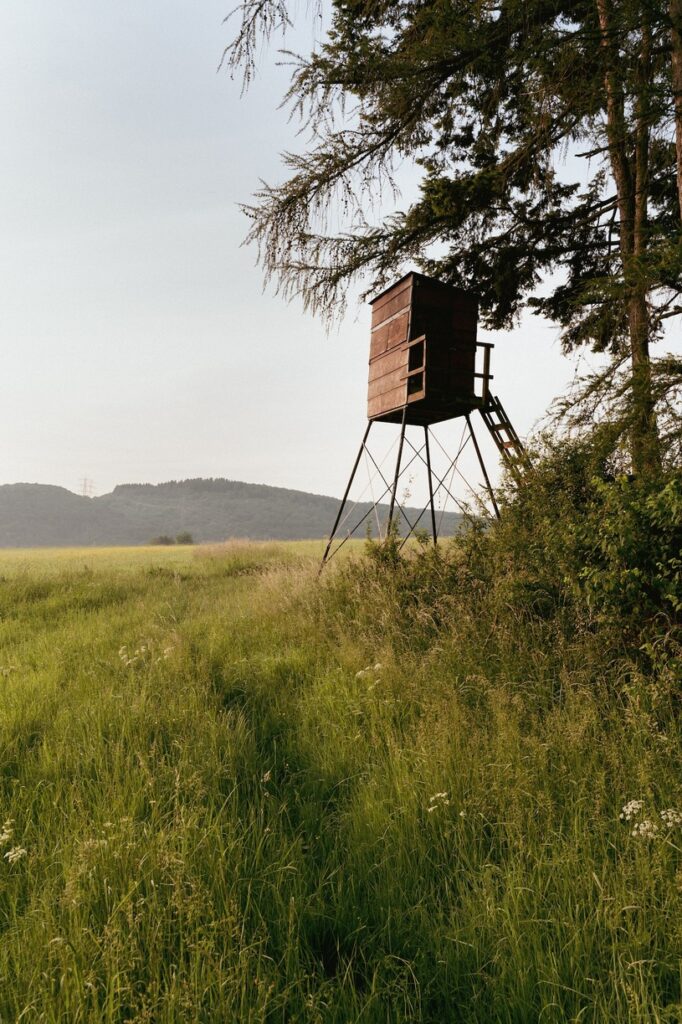
Pros: A well-placed deer stand can provide a vantage point for an elevated broadside shot or an elevated quartering-away shot, partly nullifying the challenges of the terrain and vegetation.
Cons: Building a deer stand may, however, disturb the local flora and fauna, potentially disturbing the natural behavior of deer in the area.
If you’re confident of the deer habits and movements in the area, a deer stand can make you more comfortable and less visible. This will improve your chances of success. But if you put your stand in the wrong tree, you could spend all morning without any sign of deer at all.
Picked your spot? Here’s a guide on how to build a deer stand.
Target Practice Techniques for Deer Hunting
When it comes to deer hunting, perfecting target practice techniques can create a world of difference. Many hunters underestimate the importance of regular practice and, as a consequence, their precision suffers – especially when shooting speed is taken into account. Incorporating 2D or 3-D targets into routine practice can significantly improve hunting performance, offering a practical, life-like experience that sharpens skills.
Remember, it’s not just about hitting the target but knowing the proper aiming point. Utilizing online simulations and tools helps in practicing shot placement techniques. And for traditionalists, nothing beats the old-school appeal of shooting ranges. A seamless blend of these tools and techniques guarantees advancement in this primal art.
Using Shooting Ranges
At shooting ranges, rifle hunters have the ability to hone their shot placement skills. When it comes to bullet construction, try experimenting with different bullet types, as each round behaves distinctly. Through trial and error, you’ll gain insights into ballistics, allowing you to understand how bullet type influences shooting accuracy.
Moreover, using various styles of targets can significantly boost your prowess. Sticking to a single target won’t prepare you for the complexity of real-world hunting. Therefore, alternate between paper targets and 3D life-size deer targets, enabling you to mimic the conditions of actual deer hunting better.
Online Simulations and Tools for Practicing Shot Placement Techniques
One rarely considered, yet effective aid in mastering shot placement techniques is the use of online simulations. They delve into various scenarios helping you visualize ideal broadhead-tipped arrow angles, and prevent a dreaded broken arrow scenario. These simulations focus on enhancing impulse control and promoting safe decisions.
Additionally, they aid in improving a hunter’s hypothetical thinking. Games offer an engaging, repeatable learning experience that not only sharpens your arrow shooting skills but also introduces better decision-making for weapon selection, and enhances species identification skills. Never underestimate the power of repeated play in bolstering your prowess in the field.
Consider a Hunting Lease: Exploring the Benefits and Process
Hunting on public lands is becoming trickier with the steady shrinkage of available areas. This has led to the emergence of a growing trend: hunting leases. Leases can range from short-term agreements for a single hunting season to multi-year contracts. While the costs involved can be higher, the benefits and process of securing a hunting lease can make it an attractive option.
Hunting property under lease often provides better access for game recovery and heightens the chance of successful recoveries. However, keep in mind that leases may come with special rules and stipulations. In terms of quality management and preservation of the natural environment, leased lands often outperform public areas.
We’ve written more resources to help you. Here are some common questions:
Conclusion
As we navigate through the multifaceted world of deer hunting, one key takeaway remains constant: knowledge is power. Understanding deer anatomy and behavior, along with effective shot placement techniques, is critical. Even aspects such as the impact of weather conditions, terrain, and wind direction play a significant part in a successful hunt. Always be mindful of the ethical and environmental considerations, ensuring respect for the animal and preservation of the habitat. Utilize tools for target practice and investigate the potential benefits of hunting leases. Remember, hunting is not just about the thrill of the chase – but the deeper connection with nature and the self-discipline it takes to be a successful hunter.