We’re going to get into everything you need to know about hunting the wily predator. Keep reading, and we’ll show you:
- Specific rules and regulations for coyote hunting in Illinois
- The best times and places to hunt coyotes
- Ethical considerations and controversies surrounding coyote hunting.
- Expert tips for a successful coyote hunting experience.
The first thing to take a look at are the rules and regulations surrounding hunting coyotes. Let’s start there.

Coyote Hunter Rules for Illinois
Coyote hunting in Illinois is regulated to ensure the safety and sustainability of wildlife populations. These rules are there to protect hunters, the environment, and the future of hunting. While they might not be a lot of fun, they are an important part of being a good hunter.
Coyote Season Dates
Coyote hunting in Illinois is generally allowed year-round. The only time when you cannot hunt coyotes is during the firearm deer seasons.
Coyote hunting is prohibited in Illinois during the following firearm deer season dates in 2024:
- November 22-24, 2024 (first segment of firearm deer season)
- December 5-8, 2024 (second segment of firearm deer season)
The Firearm Deer Hunting Season in Illinois is split into two distinct segments to manage hunter distribution and deer population effectively. The first segment begins on November 22nd and ends on November 24th. The second segment provides a longer window from December 5th to the 8th.
So coyote hunting is prohibited statewide during those two periods in late November and early December when the firearm deer seasons are open in Illinois in 2024. Outside of those dates, coyote hunting is allowed year-round in Illinois according to the regulations.
Coyote Hunting Regulations
To hunt coyotes in Illinois, hunters must comply with several licensing, permit, and educational requirements. Here is a detailed breakdown of what is needed:
- Hunting License – Residents: All Illinois residents must have a resident hunting license. There are various types of resident licenses, including lifetime licenses, sportsman licenses (which include both hunting and fishing privileges), senior licenses, and veteran licenses. Non-Residents: Non-residents must have a non-resident hunting license. Options include annual licenses, 5-day licenses, and preserve licenses.
- Youth Hunting License – Available to hunters under 18 years of age. Youth hunters must be supervised by an adult who is 21 years or older and properly licensed.
- Apprentice License – Available to both residents and non-residents of all ages. This license allows hunting without hunter education certification, provided the apprentice is supervised by a licensed adult who is 21 years or older.
- State Habitat Stamp – Required for both residents and non-residents. This stamp is necessary for hunting various species, including coyotes.
- Firearm Owner’s Identification (FOID) Card – Required for Illinois residents who possess firearms, firearm ammunition, tasers, or stun guns. The FOID card must be carried at all times while hunting.
- Hunter Education Certificate – Required for anyone born on or after January 1, 1980, to legally purchase a hunting license. The course can be completed online or in person and must be completed before obtaining a hunting license.
To hunt coyotes in Illinois, hunters need:
- A valid hunting license (resident or non-resident).
- A State Habitat Stamp.
- A FOID card (for Illinois residents).
- A Hunter Education Certificate (if born on or after January 1, 1980).
- An apprentice or youth license if applicable.
These requirements ensure that hunters are properly educated, licensed, and equipped to hunt legally and ethically in Illinois. For more detailed information, hunters should refer to the Illinois Department of Natural Resources website and the most recent Illinois Digest of Hunting and Trapping Regulations.
In Illinois, there are specific regulations regarding the allowable hunting methods for coyotes. Here is a detailed overview based on the provided sources:
Allowable Hunting Methods
- Firearms – Any type and caliber of handgun can be used for coyote hunting. Any type of legal rifle, including large-capacity semi-automatic rifles, is allowed. Shotguns using any type of shell are permitted. When hunting with a shotgun, the magazine must be fitted with a plug that makes the shotgun incapable of firing more than three consecutive shots.
- Archery Devices – Archery equipment, including bows and crossbows, can be used to hunt coyotes.
- Trapping – Coyotes can be trapped from mid-November through mid-February. Trapping requires a trapping license and adherence to specific regulations regarding trap types and placement.
- Dogs – Hunting with dogs is allowed on private property. However, hunters must obtain permission from the landowner or tenant before allowing dogs to hunt on their land.
- Electronic Calling Devices – Electronic calling devices are legal for coyote hunting. These devices can be used to attract coyotes by mimicking the sounds of prey or other coyotes.
- Baiting – It is legal to bait coyotes for hunting as long as any wild game used as bait was legally harvested.
- Night Hunting – Coyotes can be hunted at night using lights with any color of lens, provided the lights are not used from or connected to any vehicle or conveyance (including ATVs, unmanned aircraft, and horses).
Prohibited Methods
- Artificial Light – The use of artificial light from a vehicle or conveyance is prohibited.
- Baiting with Illegal Game – Using bait that was not legally harvested is prohibited.
- Hunting from Vehicles – Hunting coyotes from a vehicle, including helicopters, is not allowed.
- Tree Climbing or Cutting Devices – The use of tree climbing or cutting devices is generally prohibited when hunting furbearing mammals, except for coyotes. However, these devices cannot be used during open deer season unless the hunter is properly licensed for deer hunting.
Hunters in Illinois can use a variety of methods to hunt coyotes, including firearms, archery devices, trapping, dogs, electronic calls, and baiting (with legally harvested game). Night hunting is also permitted with certain restrictions on the use of lights. However, hunters must avoid using artificial light from vehicles, illegal bait, and hunting from vehicles.
Where to Hunt Coyotes
Illinois offers diverse hunting opportunities on both public and private lands. Each type of land has its own set of rules and advantages. Here’s a look at the regulations and how they differ on public land vs private land.
| Regulation | Public Land | Private Land |
| Firearm Restrictions | Only .22 caliber or smaller rimfire firearms allowed from sunset to sunrise; slugs not allowed (with some exceptions) | Any type and caliber of handgun, any type of legal rifle including large-capacity semi-automatic rifles, and shotguns using any type of shell |
| Tree Climbing Devices | Use or possession of tree climbing or cutting devices (e.g., ax or saw) is prohibited | Allowed, except during open deer season unless the hunter is properly licensed for deer hunting |
| Site-Specific Regulations | Must follow additional site-specific regulations, including permits and access requirements | Subject to state regulations and landowner’s rules; fewer site-specific restrictions |
| Permits and Access | May require a windshield card or site-specific permit; check with site office for regulations | Must obtain permission from landowner; no additional permits typically required |
| Hunting Hours and Seasons | More restrictive hunting hours and seasons; must adhere to posted regulations for each public hunting area | More flexible hunting hours and seasons, provided state regulations and landowner agreements are followed |
| Use of Dogs | Dogs may be used, but must follow site-specific regulations and obtain permission from the site office | Dogs allowed with landowner’s permission; must not allow dogs to hunt on another person’s land without permission |
| Baiting | Legal as long as any wild game used as bait was legally harvested | Legal as long as any wild game used as bait was legally harvested |
| Night Hunting | Allowed with lights, but only .22 caliber or smaller rimfire firearms from sunset to sunrise | Allowed with lights; no caliber restrictions for firearms |
| Blaze Orange Requirement | Must wear 400 square inches of solid blaze orange or blaze pink during firearm deer seasons | Must wear 400 square inches of solid blaze orange or blaze pink during firearm deer seasons |
If you’re new to public land hunting, read our guide about How to Hunt Public Land. Once you know you’re ready to go, check out the available public hunting land in Illinois.
Hunting on Private Land
Private hunting leases lead to more efficient hunts with a higher success rate. Better habitat management, more observations of predator routines, and strong preparations lead to a clear understanding of coyote behavior. These make a successful hunt much more likely.
To hunt on private land, you’ll need to do a few things:
- Find the right property. Use Hunting Locator to research available hunting lease properties. You can find a complete list of Illinois hunting leases here. You can filter out properties by hunt type to make it easy to find properties with regular encounters between coyotes and people.
- Secure a hunting lease. Finding the property is just the first step. After that, you’ll need to negotiate and sign a hunting lease agreement. You can use our sample hunting lease agreement as a starting point for your own negotiations.
After you’ve found your property and set up a lease agreement, you’re ready to go. Schedule your hunt and take along friends and family if your lease permits.

Hunting with an Outfitter
Using a hunting guide or outfitter can enhance the coyote hunting experience, especially for those new to the area or the sport. Outfitters provide expertise, equipment, and access to prime hunting locations.
Advantages:
- Expert guidance and local knowledge.
- Access to private lands and specialized equipment.
Recommended Predator Hunting Guides in Illinois:
- Illinois Predator Hunts: Offers guided hunts with experienced guides.
- Close Encounter Guided Predator Hunts: They specialize in guided predator hunts in Southern Illinois. We offer daytime shotgun and night time thermal hunts.
- Pheasant Valley Farms: Deer, wild turkey, rabbit, squirrel, dove and coyote hunting are allowed during their seasons.
Controversy of Coyote Hunting
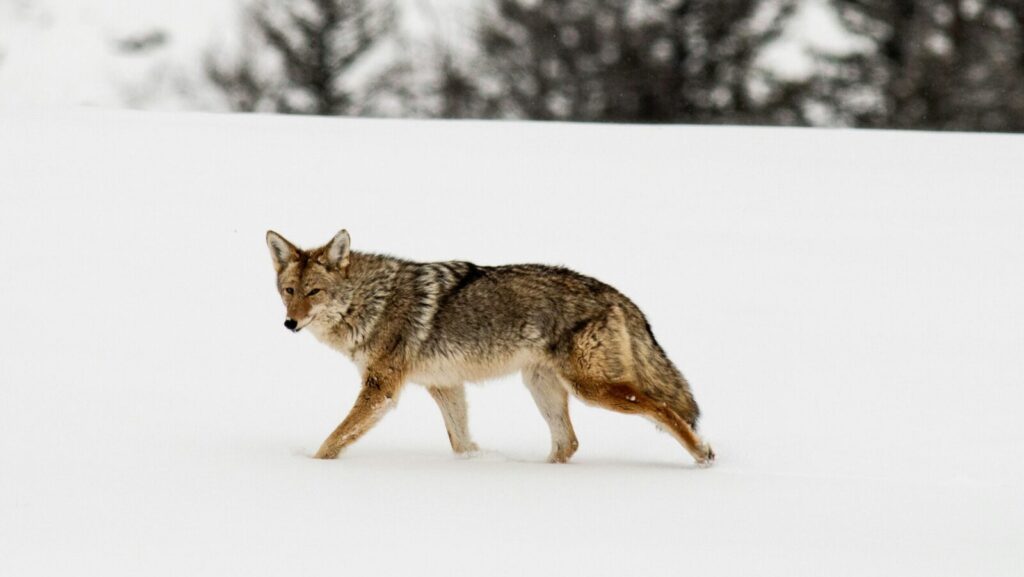
Coyote hunting in Illinois is a topic that generates significant debate among hunters, conservationists, and the general public. While some view it as a necessary tool for wildlife management and a challenging outdoor activity, others criticize certain practices associated with it, particularly unethical hunting methods and killing contests.
Despite differing opinions, there is a general consensus on the importance of adhering to ethical hunting practices and regulations to ensure the sustainability and humane treatment of wildlife.
Arguments Against Coyote Hunting
Critics of coyote hunting often highlight the unethical practices associated with certain hunting methods and events, such as wildlife killing contests. These contests, which award prizes for the most or largest kills, are seen as promoting wanton killing and disrespect for wildlife. Investigations, such as the one conducted by the Humane Society of the United States, have revealed the use of unfair tactics like night vision, thermal imaging, and electronic calls to lure coyotes, leading to high kill numbers and often leaving dependent young to die from starvation or predation.
Additionally, scientific studies suggest that indiscriminate killing of coyotes does not effectively control their populations or reduce conflicts with livestock, and may even exacerbate these issues by disrupting pack structures. Many responsible hunters and wildlife management professionals denounce these practices as unethical and damaging to the reputation of hunting.
Arguments in Favor of Coyote Hunting
Proponents of coyote hunting argue that it plays a crucial role in wildlife management and helps mitigate conflicts between coyotes and humans, particularly in rural areas where coyotes can prey on livestock and pets. Hunting coyotes can help manage their populations and reduce the risks of such conflicts.
Additionally, coyote hunting is seen as a challenging and rewarding outdoor activity that provides opportunities for recreation and contributes to local economies through the sale of hunting licenses, gear, and lodging. Hunters also emphasize the importance of ethical hunting practices, such as obtaining the necessary licenses and permits, hunting only during legal hours, and using appropriate firearms and ammunition to ensure a humane kill.
Responsible and Ethical Hunting
Regardless of one’s stance on coyote hunting, there is a shared understanding of the importance of hunting responsibly and ethically. This includes following all state regulations, obtaining the necessary licenses and permits, and practicing safe and humane hunting methods.
Ethical hunters respect the environment, avoid illegal practices such as using bait or artificial lights from vehicles, and ensure that their actions do not harm the broader ecosystem. By adhering to these principles, hunters can contribute to the sustainable management of wildlife populations and maintain the integrity of the hunting tradition.
Tips for a Successful Hunt
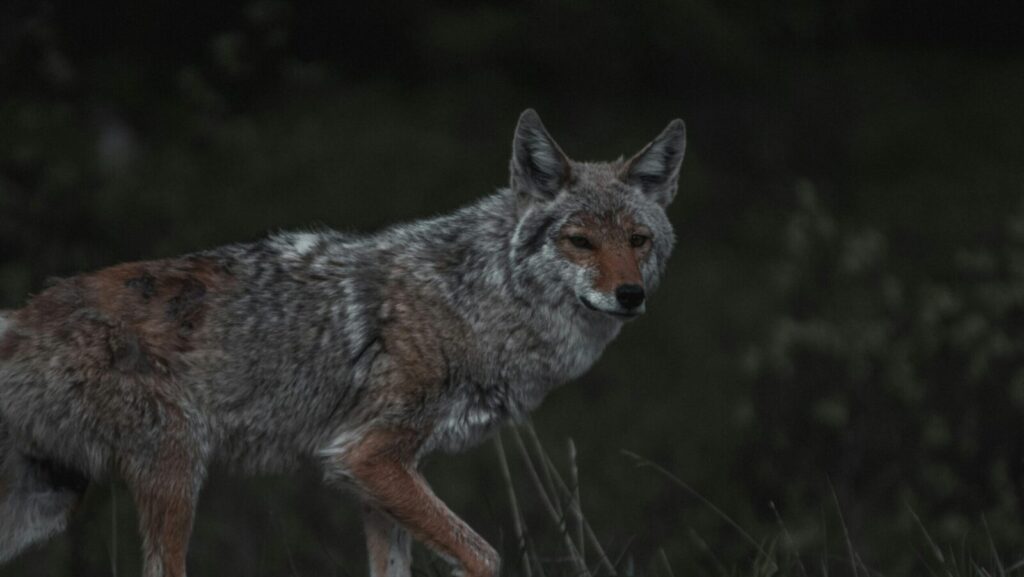
Normal coyotes are smart and wily. They are a difficult predator to hunt because they are wary of contact with people. Coyote populations are also responsive to hunting pressure. So killing one or two coyotes will make the presence of coyotes at the hunting location less likely.
With this in mind, we’ve got some expert tips to help you find success on your next hunt.
Preparation and Scouting
- Scouting:
- Focus on areas with abundant small game, birds, mice, and vermin, as these are primary food sources for coyotes.
- Look for brushy creeks, river bottoms, swamps, marshes, and farmlands, especially those with calves and mice.
- Identify coyote tracks and dens, and pay attention to areas where deer or cows are moving, as coyotes will likely be present.
- Timing:
- The best times to hunt coyotes are early mornings and evenings, as these are their most active periods.
- Winter is particularly effective for coyote hunting due to their thicker fur and limited prey options, making them more active during the day.
Setting Up
- Location:
- Choose spots with good visibility and cover, such as clear-cuts, meadows, loggers’ landings, marsh edges, and cover seams.
- In hill country, set up in hollows, gullies, valleys, and draws to survey the opposite slope for approaching coyotes.
- Avoid setting up too close to coyote dens and ensure your vehicle is well-concealed.
- Wind and Scent Control:
- Always play the wind by calling into the wind or with a crosswind. Keep a good downwind shooting lane.
- Use natural obstacles like rivers, roads, or thick brush to prevent coyotes from approaching downwind.
- Minimize scent trails and consider using scent attractants like rabbit or coyote scent on your call.
Calling and Luring
- Variety in Calls:
- Use a mix of prey distress sounds, coyote vocalizations (lone howls, group howls, challenge howls), and confidence calls (bird sounds like crows or magpies).
- Regularly change your calls to keep coyotes interested and prevent them from becoming accustomed to a particular sound.
- Electronic Callers and Decoys:
- Place electronic callers in areas that offer the easiest path for coyotes to approach, and use decoys to attract their attention visually.
- Start calling at low volume and gradually increase it, as loud, blaring sounds can be unnatural and scare off coyotes.
Stealth and Patience
- Stay Low and Blend In:
- Remain low, use brush for cover, and blend seamlessly into your environment to avoid detection.
- Sit still and stay quiet, as coyotes have excellent hearing and eyesight.
- Patience and Persistence:
- Give each setup at least 20 minutes to a half hour, and double that time if targeting bobcats as well.
- Be ready to shoot as soon as the call starts, as coyotes can appear quickly and unexpectedly.
Shooting and Execution
- Shot Placement:
- Aim for the center mass of the chest if the coyote is facing you, or the top of the shoulder if it is broadside.
- Use a rifle/load combo you are comfortable with, such as .223, .243, or .270 calibers, or a 12 gauge shotgun with No. 4 shot.
- Steady and Accurate Shots:
- Use shooting sticks or a tripod to stabilize your shot, and get your sights on the predator as soon as it is within range.
- If a coyote is spooked and trotting away, try imitating a woof or a small howl to stop it for a shot.
Even if you follow all these tips, you’ll find this to be a challenging hunt. But that’s what makes this a sport and something hunters have enjoyed for decades.
FAQ
Is it legal to hunt coyotes in Illinois year-round?
Yes, coyote hunting is generally allowed year-round in Illinois, but specific regulations may vary by location and season. Always check the latest rules from the Illinois Department of Natural Resources.
What is the best time of year to hunt coyotes in Illinois?
The best time to hunt coyotes is during the winter months when their fur is thickest, and they are more active during daylight hours. Early morning and late evening are particularly effective times.
Are there bag limits for coyote hunting?
No, there are no bag limits for coyote hunting in Illinois, allowing hunters to take as many coyotes as they can legally and ethically harvest.
What type of firearm is recommended for coyote hunting?
High-powered rifles, such as .223 or .22-250 calibers, are commonly recommended for coyote hunting due to their accuracy and range. Shotguns with appropriate loads can also be effective at closer ranges.
Do I need a special permit to hunt coyotes on my own property?
No special permit is required to hunt coyotes on your own property. You must have a valid hunting license and adhere to all state hunting regulations.


