What makes Alaska truly special? It’s not just the incredible wolf population—it’s how straightforward everything is. No complex lottery systems, no years-long waiting lists, no breaking the bank for tags. Alaska welcomes you with open arms, whether you’re a seasoned wolf hunter or ready to tackle your first predator expedition.
Think of this guide as your roadmap to wolf hunting success in the Last Frontier. Whether you’re an out-of-state hunter planning the adventure of a lifetime or a local resident looking to expand your hunting horizons, we’ve got everything you need to turn your wolf hunting dreams into reality.
Alaska Wolf Hunting Regulations Made Simple
Here’s the great news: Alaska keeps wolf hunting refreshingly straightforward. While other states pile on complications, Alaska focuses on what matters—getting you in the field pursuing these magnificent predators.
Getting Your License: Easier Than You Think
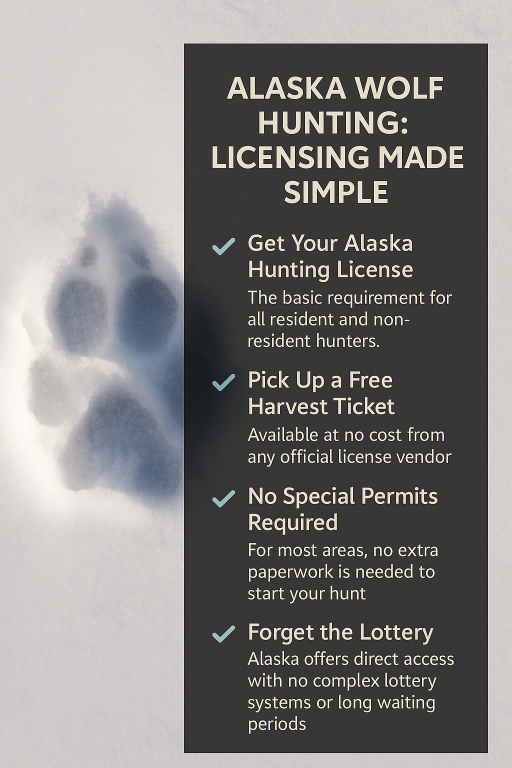
Forget everything you know about complicated hunting applications. Alaska’s wolf hunting system is beautifully simple, and here’s exactly what you need:
Your Essential Checklist:
- Alaska Hunting License – Basic requirement for residents and non-residents
- Free Harvest Ticket – That’s right, completely free from any license vendor
- No Special Permits – Most areas don’t require additional paperwork
- No Lottery Systems – No waiting, no hoping, just hunting
The best part? Along with a hunting license, wolf hunts only require a Harvest Ticket which is available for free. Compare that to other Alaska big game where you’re looking at expensive tags and years of planning. With wolves, you can decide to hunt and be ready within days.
Pro Tip: Non-residents face the same straightforward process as residents—no additional restrictions or complicated applications. This equal access makes Alaska wolf hunting one of the most democratic hunting opportunities in North America.
Bag Limits That’ll Blow Your Mind
Ready for this? Alaska’s bag limits are so generous, you might need to read this twice. A majority of units allow you to take up to five wolves within the season, in some areas such as unit 10 the Aleutian Islands, per day. Yes, you read that correctly—up to five wolves per day in certain areas.
What This Means for Your Hunt:
| Unit Type | Bag Limit | Season Length | Tags Required |
| Most Units | 5 wolves per season | Full season | None |
| Unit 10 (Aleutians) | 5 wolves per day | Full season | None |
| Special Management Areas | Check regulations | Varies | Rarely |
Your Harvest Requirements:
- Sealing Deadline: Hides must be sealed within 30 days of kill
- Harvest Reporting: Submit your completed harvest ticket
- Trophy Preparation: Proper hide care ensures compliance and preserves your trophy
These liberal limits mean something huge for your hunting strategy: instead of worrying about “wasting” your one precious tag, you can focus on trophy quality and learning wolf behavior. Multiple opportunities mean you can pass on marginal shots and wait for that perfect wolf.
Legal Methods: Your Options Are Wide Open
Alaska gives you the flexibility to hunt wolves your way, adapting to conditions and your personal hunting style. Research shows the most successful hunters use a combination of spot and stalk and calling methods.
Approved Hunting Techniques:
- Spot and Stalk: Classic hunting using optics and stealth approach
- Predator Calling: Electronic and manual calls to bring wolves to you
- Stand Hunting: Set up along known travel routes and feeding areas
- Tracking: Follow fresh sign through snow-covered terrain
Your Equipment Arsenal:
- Firearms: Standard hunting rifles appropriate for large predators
- Optics: Quality binoculars and spotting scopes for long-range detection
- Calling Equipment: Multiple call types for different situations
- Cold Weather Gear: Specialized equipment for Alaska’s winter conditions
Success Strategy: The key is staying flexible. Alaska’s diverse terrain and rapidly changing weather mean you’ll need to switch tactics on the fly. The most successful hunters master multiple approaches and read conditions to choose the right technique for each situation.
When and Where to Hunt: Timing Is Everything
Your success starts with being in the right place at the right time. Alaska’s massive wilderness offers incredible opportunities, but knowing when and where to focus your efforts can make the difference between coming home with stories and coming home with wolves.
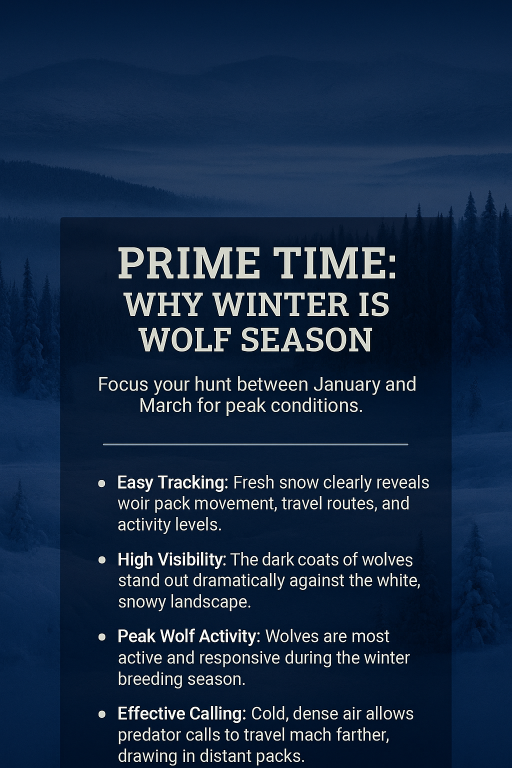
Prime Time: Winter Is Your Golden Opportunity
If you’re serious about wolf hunting, winter isn’t just the best time—it’s the only time that makes sense. If you are looking to only do wolf hunting in Alaska then later in the winter is the prime time, and here’s why experienced hunters swear by these months.
Your Peak Hunting Window:
| Month | Why It’s Perfect | Wolf Activity | Weather Advantage | |
|---|---|---|---|---|
| January | Peak tracking conditions | High (mating prep) | Consistent snow cover | |
| February | Optimal everything | Highest (breeding) | Stable cold patterns | |
| March | Extended daylight | High (post-breeding) | Still great snow | |
| December | Season opener | Moderate | Building conditions |
Professional outfitters consistently schedule predator hunts throughout January, February and March because these months deliver the perfect storm of hunting advantages.
Why Winter Wins:
- Tracking Made Easy: Fresh snow tells the story of wolf movement and activity
- Visual Advantage: Dark wolves stand out dramatically against white landscapes
- Concentrated Prey: Game animals gather in predictable winter habitats
- Sound Travel: Cold air carries your predator calls much farther
- Breeding Behavior: Wolves are more vocal and responsive during mating season
Pro Tip: Plan your hunt for late January through February for the absolute peak experience. This timing gives you the best weather stability, peak wolf activity, and optimal snow conditions all in one package.
Location, Location, Location: Where the Wolves Are
Not all of Alaska is created equal when it comes to wolf hunting. Some regions offer dramatically better opportunities, and knowing where to focus your efforts can save you time, money, and frustration.
Top Wolf Hunting Destinations:
Southeast Alaska – The Wolf Capital
- Why It’s #1: The highest densities occur in Southeast Alaska where Sitka blacktail deer serve as the major food source for wolves
- Access: Boat or aircraft required
- Best For: Hunters serious about finding wolves
- Season Strategy: Longer seasons with consistent opportunities
Interior Alaska – The Versatile Choice
- Wolf Population: High densities with diverse prey base
- Access: Road systems and aircraft options
- Best For: Hunters wanting multiple access options
- Bonus: Combine with other big game hunting
Alaska Range – The Adventure Option
- Population: Moderate to high in specific areas
- Access: Aircraft and snowmobile combinations
- Best For: Experienced hunters seeking remote experiences
- Challenge Level: Higher difficulty, higher reward
Quick Reality Check: While wolf densities are lowest in coastal portions of Western and Northern Alaska, don’t completely write off these areas if you’re already planning hunts there for other species.
Getting There: Transportation That Works
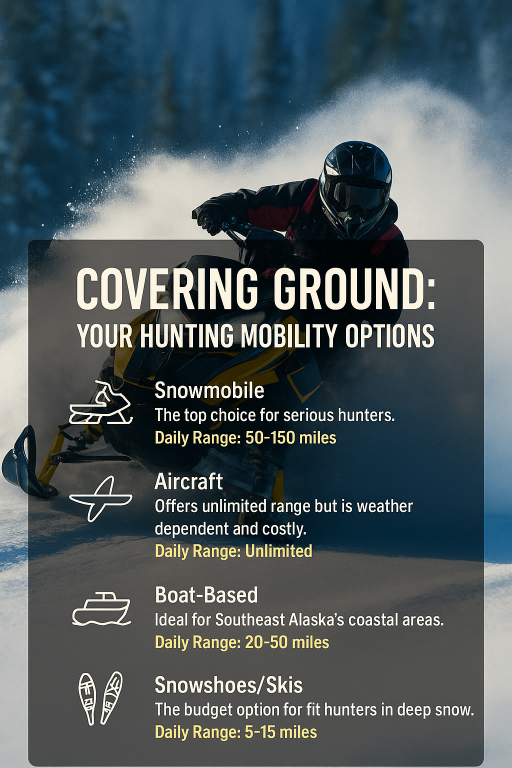
Here’s something that might surprise you: professional guides report they typically snowmobile between 50-150 miles a day in search of wolves. That’s not a typo—wolves cover enormous territories, and you need to match their mobility to succeed.
Transportation Options Breakdown:
| Method | Daily Range | Best Weather | Cost Level | Your Skill Needs |
| Snowmobile | 50-150 miles | Snow cover essential | Moderate | Intermediate riding |
| Aircraft | Unlimited | Weather dependent | High | Licensed pilot required |
| Boat-Based | 20-50 miles | Ice-free conditions | Moderate | Basic boating skills |
| Snowshoes/Skis | 5-15 miles | Deep snow areas | Low | High fitness level |
Critical Planning Points:
- Fuel Strategy: Calculate needs for those 100+ mile days
- Weather Backup: Have alternative transport when conditions change
- Emergency Prep: Carry communication devices for remote travel
- Mechanical Skills: Basic repair knowledge can save your hunt
Reality Check: You will need a snowmobile or snowshoes for serious winter wolf hunting. This isn’t optional equipment—it’s essential for covering the ground necessary to find wolves in Alaska’s vast wilderness.
Planning Your Wolf Hunt: Budget and Logistics
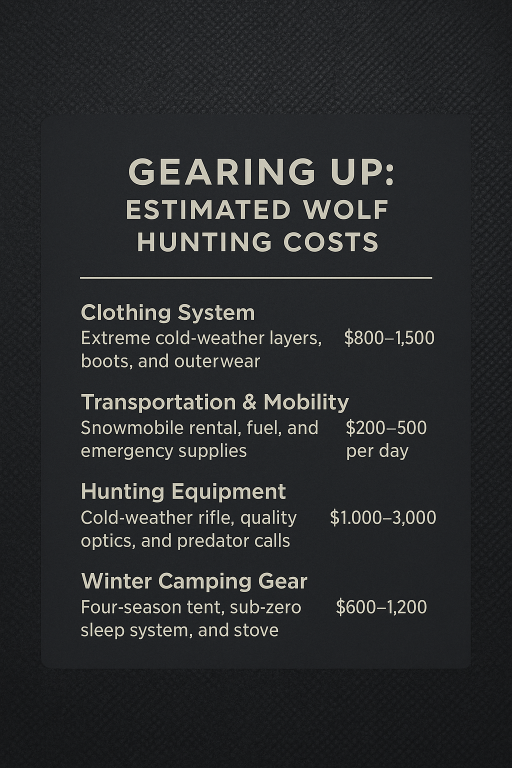
Let’s talk money and logistics—the less exciting part of planning, but absolutely critical for turning your wolf hunting dreams into reality. The good news? You have options for every budget and experience level.
Guided vs. DIY: What’s Right for You?
This decision affects everything: your budget, success chances, and overall experience. Here’s how to choose the path that makes sense for your situation.
Guided Hunt Investment:
You may also book a wolf-only hunt, which will cost between $5,000 and $6,000 with an extensive waitlist. That’s a significant investment, but here’s what you’re buying:
What You Get for Your Money:
- Higher Success Odds: Professional guides know current wolf activity and patterns
- Equipment Included: Snowmobiles, specialized gear, and winter camping equipment
- Local Intelligence: Access to prime areas and real-time wolf movement information
- Safety Net: Professional backup for emergencies in remote areas
- Learning Experience: Absorb years of wolf hunting knowledge in one trip
Smart Budget Alternatives:
- Add-On Hunts: Most outfitters will let you harvest a wolf on a small trophy fee when you’re hunting other game
- Combination Packages: Wolf hunting paired with moose, caribou, or other species
- Group Hunts: Share costs with other hunters on the same expedition
DIY Advantages:
- Budget Control: Eliminate guide fees and daily rates
- Personal Challenge: Experience the satisfaction of doing it yourself
- Schedule Flexibility: Hunt when conditions are perfect, not when scheduled
- Skill Development: Build expertise through multiple self-guided trips
DIY Reality Check:
- Equipment Investment: You’ll need specialized winter gear and transportation
- Learning Curve: Expect several trips before mastering techniques
- Logistics Complexity: Handle all planning, permits, and emergency preparations yourself
Gear Up for Success: What You Actually Need
Alaska wolf hunting isn’t like hunting whitetails back home. The gear requirements are serious, but don’t let that scare you—think of it as an investment in both success and survival.
Your Essential Equipment Investment:
Clothing System ($800-$1,500):
- Base Layers: Merino wool or synthetic materials that wick moisture
- Insulation: Down or synthetic insulation rated for -40°F
- Outer Shell: Windproof, breathable shell for active hunting
- Extremities: Insulated boots, gloves, and headwear systems
Transportation & Mobility ($200-$500/day):
- Snowmobile Rental: Most practical option for visiting hunters
- Fuel Planning: Budget extra for those 100+ mile hunting days
- Emergency Gear: Repair kits and spare parts for remote breakdowns
- Navigation: GPS units with Alaska maps and backup systems
Hunting Equipment ($1,000-$3,000):
- Rifle System: Cold-weather reliable firearm with appropriate caliber
- Optics Package: Quality binoculars and spotting scope for long-range detection
- Predator Calls: Electronic and manual calls for various situations
- Shooting Support: Bipods or shooting sticks that work with winter gloves
Winter Camping Gear ($600-$1,200):
- Shelter System: Four-season tent rated for extreme conditions
- Sleep System: Sleeping bag and pad rated well below expected temperatures
- Cooking Setup: Stoves that function reliably in extreme cold
- Water Storage: Insulated bottles and backup water sources
Pro Tip: Don’t cheap out on the life-safety items like clothing, shelter, and communication gear. You can hunt successfully with budget optics, but hypothermia doesn’t care about your hunting success.
Money-Saving Strategies:
- Rent vs. Buy: Rent expensive items like snowmobiles for your first few trips
- Multi-Use Gear: Choose equipment that works for other hunting and outdoor activities
- Seasonal Sales: Buy winter gear during spring clearance sales
- Group Purchases: Split costs on group camping and cooking equipment
Base Camp and Daily Operations
Your base of operations can make or break your wolf hunting experience. Here’s how to balance comfort, cost, and proximity to the action.
Accommodation Options Compared:
| Option | Comfort | Daily Cost | Wolf Access | Best Situation |
|---|---|---|---|---|
| Remote Cabins | Excellent | $150-300 | Outstanding | Extended hunts |
| Boat-Based | Good | $200-400 | Variable | Southeast Alaska |
| Hotels/Lodges | Excellent | $100-250 | Poor | Staging only |
| Winter Camping | Basic | $0-50 | Outstanding | Budget hunters |
Logistics That Matter:
Time Investment Reality:
Professional hunters consistently advise: Plan on hunting for 7 days at a time and you will get your wolf. This isn’t just a suggestion—it’s based on the reality of wolf behavior and Alaska’s weather patterns.
Your Planning Checklist:
- Weather Buffer: Add 2-3 extra days for weather delays
- Resupply Strategy: Plan food and fuel resupply for extended trips
- Communication Schedule: Establish check-in times with emergency contacts
- Evacuation Planning: Know your options if weather traps you
Daily Operations Strategy:
- Early Starts: Take advantage of dawn activity periods
- Weather Monitoring: Track conditions for optimal hunting windows
- Flexible Planning: Adapt daily plans based on fresh wolf sign
- Equipment Maintenance: Daily gear checks prevent field failures
Master Wolf Hunting Strategies
Now we get to the fun part—actually hunting wolves. This is where preparation meets opportunity, and where understanding wolf behavior can turn a challenging hunt into a successful one.
Proven Techniques That Actually Work
Professional guides achieve consistently high success rates by combining proven methods with adaptability. They report high success for one of the hardest to obtain trophies using systematic approaches that you can learn and apply.
Your Primary Hunting Methods:
Spot and Stalk – The Foundation Technique:
- When It Works Best: Open terrain with good snow cover for contrast
- Key Skills: Patience, quality optics work, and stealth approach
- Success Rate: Highest when combined with other methods
- Equipment Needs: Excellent binoculars, spotting scope, comfortable shooting position
Predator Calling – The Game Changer:
- When It Works Best: Calm weather conditions during dawn and dusk periods
- Key Skills: Understanding wolf vocalizations and territorial behavior
- Success Rate: Moderate to high when executed properly
- Equipment Needs: Electronic calls, manual calls, good concealment
Track and Intercept – The Expert Method:
- When It Works Best: Fresh snow with clear wolf sign
- Key Skills: Expert tracking ability and terrain knowledge
- Success Rate: Moderate but highly rewarding
- Equipment Needs: GPS navigation, detailed topographic knowledge
Advanced Calling Strategies:
- Distress Sequences: Rabbit and deer distress calls attract hunting wolves
- Territorial Howling: Use during breeding season for territorial responses
- Silent Periods: Know when to stop calling and wait
- Weather Adaptation: Adjust volume and frequency for wind conditions
Critical Success Principle: The most effective approach combines spot and stalk and calling methods. Don’t limit yourself to just one technique—adapt based on what the wolves are telling you through their behavior.
Decode Wolf Behavior: Think Like Your Quarry
Understanding how wolves think and behave gives you a massive advantage. Alaska’s wolf ecology creates patterns that experienced hunters learn to read and exploit.
Pack Dynamics You Need to Know:
- Average Pack Size: Average pack size is six or seven animals
- Territory Range: Enormous territories requiring extensive hunter mobility
- Social Structure: Alpha pairs make movement decisions for the entire pack
- Communication: Howling reveals pack location and intentions
Seasonal Behavior Patterns:
Winter Concentration Strategy:
- Prey Following: Wolves concentrate where prey animals winter
- Energy Conservation: Shorter movements during extreme cold
- Breeding Behavior: Increased vocalization and territorial marking
- Pack Cooperation: Coordinated hunting increases success rates
Daily Activity Cycles:
- Dawn Activity: Prime hunting time as wolves return from night hunts
- Midday Rest: Wolves often bed down during warmest part of day
- Dusk Movement: Second prime period as wolves begin evening activities
- Night Hunting: Wolves are most active when you can’t hunt them
Behavioral Challenges You’ll Face:
- Unpredictable Returns: The real problem is figuring out when the wolves will be back in that area again due to massive territorial ranges
- Human Avoidance: Wolves quickly learn to avoid areas with human activity
- Weather Sensitivity: Storm patterns dramatically affect movement and behavior
- Call Shyness: Wolves become educated to calling pressure over time
Pro Tip: Wolves are incredibly intelligent and adaptable. What works in one area or on one day might not work in another situation. Stay flexible and keep learning from every encounter, even the unsuccessful ones.
Maximize Your Success: The Winning Formula
Achieving consistent wolf hunting success requires combining all elements—preparation, technique, timing, and persistence. Here’s how to stack the odds in your favor.
The Time Investment Formula:
Research consistently shows that wolf hunts in Canada and Alaska have higher hunter success than the lower 48 wolf hunts, but success still requires proper time investment.
Your Success Timeline:
- Minimum Hunt Duration: Plan on hunting for 7 days at a time and you will get your wolf
- Multi-Trip Strategy: Budget for several expeditions to build skills and local knowledge
- Peak Season Focus: Concentrate efforts during January-March window
- Weather Flexibility: Maintain schedule flexibility for optimal conditions
Preparation Excellence:
Education First:
Learn everything you can about wolves, wolf hunting, and winter camping before your first expedition. This isn’t just good advice—it’s essential for both success and safety.
Your Learning Checklist:
- Wolf Biology: Understand diet, behavior, and habitat preferences
- Hunting Techniques: Practice calling and shooting in cold weather conditions
- Winter Survival: Master cold weather camping and emergency procedures
- Local Knowledge: Research specific areas and recent wolf activity reports
Adaptive Hunting Tactics:
The Mobility Principle:
Wolves are mobile animals, so hunters must be mobile like wolves are. This means being prepared to cover serious ground when conditions allow.
Your Mobility Strategy:
- Daily Range: Prepare to cover 50-150 miles when tracking hot sign
- Equipment Readiness: Keep gear packed for quick deployment
- Fuel Planning: Carry extra fuel for extended pursuit days
- Flexibility: Change plans instantly when fresh sign appears
Mental Game Mastery:
- Persistence Mindset: Continue hunting despite setbacks and challenging conditions
- Opportunity Recognition: React immediately to fresh sign or wolf encounters
- Shot Discipline: Wait for clear, ethical shots rather than rushing marginal opportunities
- Learning Attitude: Treat every day as a learning experience, successful or not
Frequently Asked Questions
When is the absolute best time to hunt wolves in Alaska?
The peak time is late winter, specifically January through March. If you are looking to only do wolf hunting in Alaska then later in the winter is the prime time. February is often considered the sweet spot when snow conditions, wolf activity during breeding season, and weather stability all align perfectly.
Do I need expensive tags or special permits for Alaska wolf hunting?
No expensive tags required! Along with a hunting license, wolf hunts only require a Harvest Ticket which is available for free. This makes wolf hunting incredibly accessible compared to other Alaska big game species that can cost hundreds or thousands of dollars in tags.
How many wolves can I legally harvest in Alaska?
Alaska offers very generous bag limits. A majority of units allow you to take up to five wolves within the season, in some areas such as unit 10 the Aleutian Islands, per day. These liberal limits reflect Alaska’s healthy wolf population and commitment to effective predator management.
What do I need to do after harvesting a wolf?
You have specific reporting requirements to follow. Hides must be sealed within 30 days of kill, and you must complete and submit your harvest ticket information. This helps Alaska Fish and Game track harvest data for population management.
How much should I budget for a guided wolf hunting trip?
Dedicated wolf-only hunts typically cost between $5,000 and $6,000 with an extensive waitlist. However, you can save significantly by adding wolf hunting to other big game expeditions, as most outfitters will let you harvest a wolf on a small trophy fee when you’re hunting other species.
What’s the most important equipment for Alaska wolf hunting?
Mobility is key—you will need a snowmobile or snowshoes for effective winter wolf hunting. Beyond transportation, invest in quality cold-weather clothing, reliable optics for spotting, predator calls, and appropriate firearms that function in extreme cold.
How long should I plan to hunt to be successful?
Plan for extended expeditions. Experienced hunters recommend: Plan on hunting for 7 days at a time and you will get your wolf. This time frame accounts for Alaska’s weather patterns, wolf behavior, and the persistence required for success.
Are Alaska wolf hunts more successful than other states?
Absolutely. Research shows that wolf hunts in Canada and Alaska have higher hunter success than the lower 48 wolf hunts. This is due to higher wolf populations, better access, and more liberal hunting regulations.
Your Alaska Wolf Hunting Adventure Starts Now
Alaska isn’t just another hunting destination—it’s the destination for serious wolf hunters. With an estimated 7,000 to 11,000 wolves spread across accessible hunting units, you’re looking at opportunities that simply don’t exist anywhere else in North America.
Here’s what makes this so special: Alaska removes every barrier that frustrates hunters elsewhere. No lottery systems that take years to draw. No expensive tags that break your budget. Just you, the wilderness, and some of the most incredible predator hunting on the planet. You need a basic hunting license and a free Harvest Ticket—that’s it.
The generous bag limits of up to five wolves per season in most units mean you can focus on the experience and trophy quality rather than worrying about “wasting” your one precious opportunity.
Your Success Recipe
Timing: Focus your efforts during January through March for optimal conditions
Duration: Plan for at least seven days to give yourself realistic success chances
Preparation: Master both spot-and-stalk and calling techniques
Mobility: Be ready to cover serious ground when wolf sign is hot
Persistence: Approach this as an adventure and learning experience, not just a hunting trip
More Resources From Hunting Locator
Your Alaska wolf hunting adventure is just the beginning. At Hunting Locator, we provide all the tools you need to plan this hunt and discover every other opportunity the Last Frontier has to offer. Use these resources to find your land, connect with experts, and make your next trip a success.
- Hunting Locator Homepage – Start your journey here. The homepage is your main portal to thousands of listings for hunting leases, land for sale, and professional outfitters across the United States.
- Secure Your Hunt with a Hunting Lease Agreement – If you choose to hunt on private land, a solid lease agreement is essential. This guide explains the key components of a contract to ensure you and the landowner have a clear and fair arrangement.
- Find Professional Alaska Hunting Outfitters – While wolf hunts don’t require a guide, their expertise in logistics and locating packs is invaluable. Use our directory to connect with vetted, professional outfitters who can elevate your Alaskan hunt.
- Buy Your Own Alaskan Hunting Land – For the ultimate investment in your hunting future, explore hunting properties for sale in Alaska. This resource is your gateway to finding and owning a personal piece of the Alaskan wilderness.
- Explore Alaska’s Public Hunting Areas – A DIY wolf hunt often begins on public land. Our database helps you identify state and federal lands, including WMAs and forests, where you can begin your pursuit.
- Find Private Wolf Hunting Leases in Alaska – Gain an edge by securing exclusive access to prime wolf habitat. This page connects you directly with landowners offering private hunting leases across Alaska.
- Plan an Alaska Moose Hunt – Many hunters combine wolf hunting with other big game pursuits. Use this comprehensive guide to plan for an iconic moose hunt, which often takes place in prime wolf territory.
- Your Complete Guide to Hunting in Alaska – Get the big picture of what the Last Frontier offers. This guide covers all of Alaska’s premier big game species, helping you understand how a wolf hunt can fit into a larger lifetime of Alaskan adventures.
Take Action Today
Ready to make this happen? Start with the Alaska Department of Fish and Game website for current regulations and licensing information. Remember, successful wolf hunting demands respect—for the quarry, for Alaska’s wilderness, and for the incredible challenge you’re about to undertake.
This isn’t just hunting; it’s pursuing one of North America’s most intelligent and challenging trophies in the world’s premier hunting destination. The wolves are out there, the regulations welcome you, and Alaska’s wilderness is waiting.
Your wolf hunting adventure in America’s Last Frontier starts with a single decision—are you ready to make it happen?
Start planning today, because somewhere in Alaska’s vast wilderness, your wolf is moving through the snow, and this could be the year your paths finally cross.


