This guide transforms overwhelming regulatory information into a clear action plan, helping you move from confused researcher to confident caribou hunter ready to experience Alaska’s legendary hunting opportunities.
What You’ll Discover:
- Essential season dates, licenses, and permit requirements made simple
- Prime hunting locations from public lands to exclusive private access
- Proven strategies from experienced Alaska caribou hunters
Let’s explore everything you need to know about Alaska caribou hunting success.
Quick Overview: Alaska Caribou Hunting at a Glance
Here’s your essential reference guide covering the most critical information every Alaska caribou hunter needs to know upfront.
Alaska Fish and Game data shows that adult bulls average 350-400 lbs, making them substantial trophy animals. Most hunting opportunities occur during peak migration periods when success rates are highest.
| Season Element | Details | Key Regulations | Important Notes |
|---|---|---|---|
| Primary Season Dates | August 1 – September 30 | General season harvest tickets | Peak migration timing |
| Hunting Methods | Rifle, archery, spot & stalk | No same-day-airborne restrictions for caribou | Weather-dependent access |
| Bag Limits | 1 bull per regulatory year (most units) | Some units allow 2 bulls for non-residents | Unit-specific variations |
| Key Requirements | Hunting license + caribou tag + harvest ticket | Bone-in meat salvage requirements | Emergency communication recommended |
Research shows that non-resident hunters must purchase a hunting license and caribou tag from Alaska Fish and Game before arriving, plus a General Season Caribou Harvest Ticket which is free and guaranteed and available over the internet.
Essential Documentation:
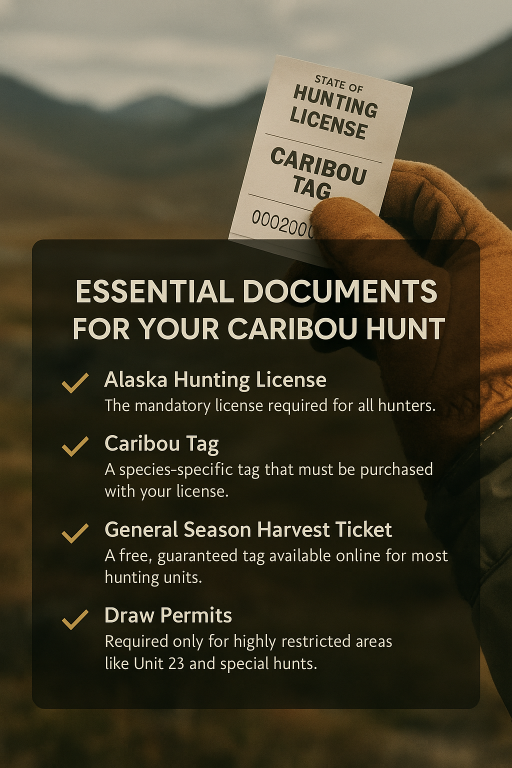
- Alaska Hunting License: Required for all hunters (resident/non-resident pricing varies)
- Caribou Tag: Species-specific tag purchased with license
- General Season Caribou Harvest Ticket: Free, guaranteed, available online for most units
- Draw Permits: Only required for Unit 23 and special hunts
Quick Cost Reference:
- Non-resident hunting packages typically range from $3,600 for DIY hunts to $4,995-$6,495 for guided experiences
- License and tag fees are separate from hunt costs
For complete Alaska hunting information, visit our Alaska Hunting Guide.
If you want one place to start planning your hunt, go to the Alaska Department of Fish and Game Hunt Maps by GMU page. You can select your hunt area, and it will show you a detailed map of that area as well as a list of all the hunts you can apply for. These details will help you know which hunts you are eligible for as a resident or non-resident.
Alaska Caribou Hunting Seasons Explained
Understanding Alaska’s caribou season structure is essential for planning your hunt timing and selecting the right hunting opportunity for your experience level and budget.
General Season Caribou Hunts
Most subunits are managed through over-the-counter permits issued as general season harvest tickets, making these the most accessible hunting opportunities. These hunts typically run from August 1 through September 30, coinciding with peak caribou migration periods.
Key Advantages:
- No drawing required – guaranteed tags available
- Flexible planning without application deadlines
- Multiple unit options across Alaska
- Suitable for first-time Alaska hunters
Outfitters report that “Hunting Trips are from 1 August – 15 September All hunters will be off the ground by 15 September” for many operations, emphasizing the concentrated nature of prime hunting periods.
Draw Hunt Opportunities
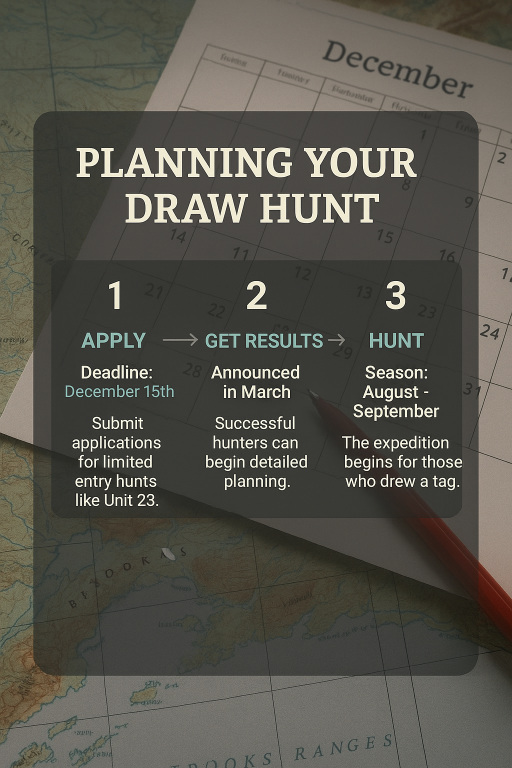
Limited draw hunts provide access to premium hunting areas with restricted hunter numbers. Alaska’s application deadline is 5 P.M. (AKST) on December 15, requiring advance planning for the following year’s hunting season.
Draw Hunt Timeline:
- December 15: Application deadline (previous year)
- March: Drawing results announced
- August-September: Hunting seasons commence
Unit 23 represents the primary draw-only caribou hunting opportunity, offering potentially less crowded hunting conditions but requiring commitment without guaranteed tags.
Subsistence and Special Seasons
Alaska prioritizes subsistence hunting rights, which affects non-resident opportunities during population fluctuations. When caribou numbers are low, nonresident hunting opportunities are often among the first to be reduced to align with cuts in subsistence hunting.
Alaska Caribou Licenses and Permits: Complete Requirements
Navigating Alaska’s licensing system requires understanding the distinction between basic hunting licenses, species-specific tags, and harvest documentation.
Alaska Hunting Licenses for Caribou
All caribou hunters must obtain an Alaska hunting license before pursuing caribou, with significant cost differences between residents and non-residents.
| License Type | Resident Cost | Non-Resident Cost | Duration | Where to Purchase |
|---|---|---|---|---|
| Annual Hunting License | $25 | $160 | Calendar year | Online, license vendors |
| Caribou Tag | $25 | $650 | Per animal | With hunting license |
| Harvest Ticket | Free | Free | Per hunt | Online after license purchase |
Additional Requirements:
- Hunter education certification (varies by state of residence)
- Federal duck stamp (if hunting waterfowl concurrently)
- Military/senior discounts may apply for residents
Connect with experienced guides through our Alaska Hunting Outfitters directory for licensing assistance and hunt planning.
Understanding Caribou Harvest Tickets and Draw Permits
The most common confusion involves the difference between harvest tickets and draw permits. General Season Caribou Harvest Tickets are free and guaranteed and available over the internet for most hunting units.
Step-by-Step Process:
- Purchase hunting license and caribou tag from Alaska Fish and Game
- Obtain harvest ticket online for your chosen hunting unit (free)
- Apply for draw permits only if hunting Unit 23 or special seasons
- Complete harvest reporting within required timeframes after hunt
Most Alaska caribou hunting occurs under general season regulations, eliminating drawing uncertainty and allowing flexible hunt planning.
Where to Hunt Caribou in Alaska: Location Intelligence
Selecting the right hunting location significantly impacts your success rate, costs, and overall hunting experience in Alaska’s vast wilderness.
Best Public Lands for Caribou Hunting
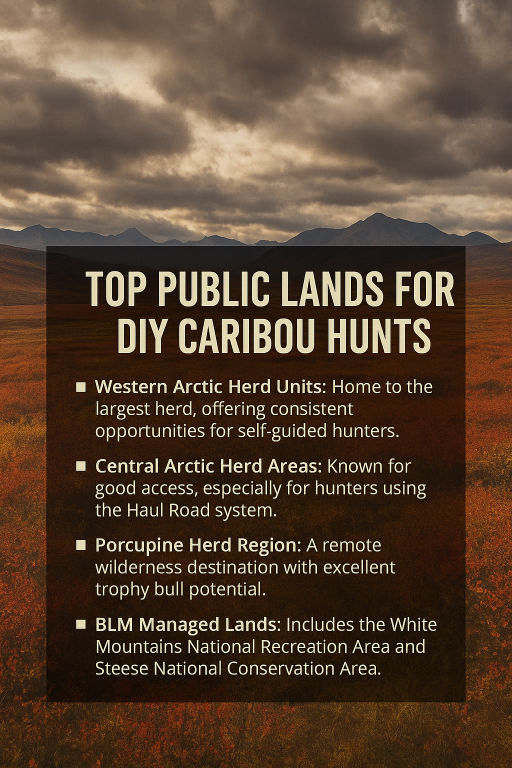
For self-guided hunters, the Western Arctic, Central Arctic, and Porcupine herds in northern Alaska are popular choices, offering excellent hunting opportunities on public lands without the expense of private land access or guided services.
Top Public Land Options:
- Western Arctic Herd Units: Largest herd with consistent hunting opportunities
- Central Arctic Herd Areas: Good access via Haul Road for road-system hunters
- Porcupine Herd Regions: Remote wilderness hunting with excellent trophy potential
- BLM Lands: White Mountains National Recreation Area and Steese National Conservation Area
Explore detailed maps and access information through our Alaska Public Hunting Areas resource.
Guided Caribou Hunt Options
Professional outfitters provide complete hunting experiences with significantly higher success rates than DIY hunts. Pricing ranges from $4,995.00 per hunter in 2025 to $6,495.00 per hunter in 2027, reflecting the premium nature of guided Alaska hunting experiences.
Guided Hunt Advantages:
- Expert knowledge of caribou migration patterns
- Professional field care and meat processing assistance
- Emergency communication and safety protocols
- Transportation and logistics handled by outfitters
Browse qualified outfitters through our Alaska Hunting Outfitters directory.
Private Land Hunting Through Hunting Locator
Public land hunting faces increasing pressure from growing hunter numbers, while private land access remains limited and expensive through traditional channels. Hunting Locator revolutionizes private land access by connecting hunters directly with landowners offering exclusive caribou hunting opportunities.
Private Land Benefits:
- Reduced hunting pressure compared to public lands
- Exclusive access to prime caribou migration routes
- Flexible scheduling without draw hunt uncertainties
- Potential for combination hunting opportunities
Hunting Locator Advantage: Our platform provides direct connections to verified landowners offering caribou hunting leases, eliminating the guesswork and networking challenges of finding private land access independently. From day leases to seasonal agreements, Hunting Locator opens doors to Alaska’s best-kept hunting secrets.
Discover exclusive opportunities through our Alaska Hunting Land and Private Hunting Leases platforms.
Proven Alaska Caribou Hunting Tips
Success in Alaska caribou hunting combines preparation, timing, and adaptability to rapidly changing conditions in remote wilderness environments.
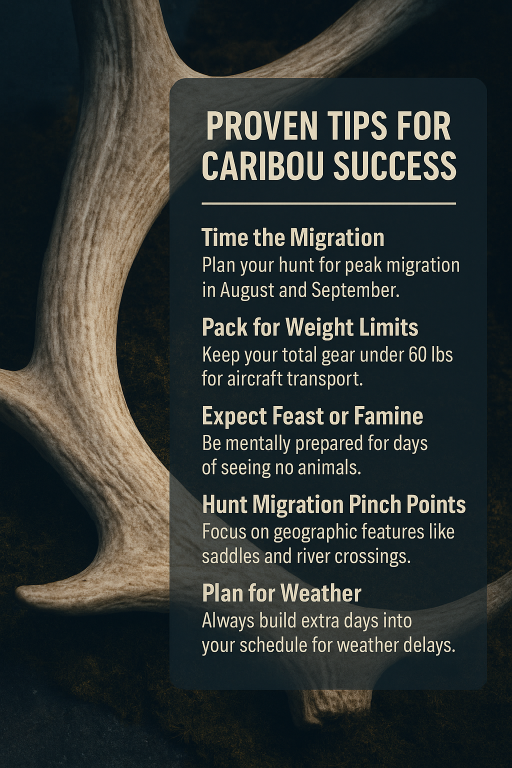
Time Your Hunt for Peak Migration: Professional guides report that “Trophy Bulls are plentiful during migration,” making timing absolutely critical for success.
Pack Under Weight Limits: Outfitters specify “we ask that you keep your gear under 60lbs” due to aircraft restrictions, requiring careful gear selection and multi-purpose items.
Prepare for Feast or Famine: Experienced hunters know “Caribou hunting is a feast or famine type of hunt, its typical to go days without seeing many animals and at other times your being over run.”
Master Field Judging: Hunters can “expect to harvest a bull in the 350 – 400″ class with a few bulls a year going over 400″” when hunting during peak periods with proper field judging skills.
Plan Weather Contingencies: Alaska’s unpredictable weather requires flexible travel plans, as delays of several days may occur due to severe weather keeping airplanes grounded.
Focus on Migration Pinch Points: Successful hunters concentrate efforts on well-known geographical features that funnel caribou movement, rather than randomly searching vast tundra areas.
More Resources from Hunting Locator
Maximize your Alaska hunting success with our complete platform designed specifically for serious hunters seeking the best opportunities and information.
- Hunting Locator Homepage – Start your Alaska hunting journey with access to all our hunting resources and tools
- Hunting Lease Agreement Guide – Protect your investment with proper legal documentation for private land access
- Alaska Hunting Outfitters – Compare verified outfitters and read reviews from successful hunters
- Alaska Hunting Land – Invest in permanent hunting access with prime Alaska hunting properties
- Alaska Public Hunting Areas – Detailed maps and access information for public hunting opportunities
- Alaska Moose Hunting Guide – Combine your caribou hunt with Alaska’s premier big game species
- Alaska Wolf Hunting – Add predator hunting to your Alaska adventure
Frequently Asked Questions
How much does an Alaska caribou hunt cost?
DIY hunts start around $3,600 per person, while guided hunts range from $4,995-$6,495 per hunter depending on the year and outfitter. These costs exclude licenses, tags, transportation to Alaska, and personal gear.
Can non-residents hunt caribou in Alaska without a guide?
Yes, non-residents can hunt caribou without a guide. There are three types of self-guided caribou hunts that non-residents can do in Alaska – drop camps, float trips, and hunting the Haul Road. Unlike some Alaska species that require guides for non-residents, caribou hunting allows complete independence for out-of-state hunters.
What are the caribou bag limits in Alaska?
Typically, the most popular caribou units allow for a harvest of one bull per regulatory year, though some units allow non-residents to take two bulls per regulatory year in specific areas. Bag limits vary by hunting unit, so hunters must verify specific regulations for their chosen hunting area.
When is the best time to hunt caribou in Alaska?
The prime caribou hunting window runs from August through mid-September, with many outfitters operating from August 1-September 15. This timing coincides with caribou migration patterns and occurs before the rut affects meat quality.
Do I need to apply for caribou tags in Alaska?
Most caribou hunting requires only a General Season Caribou Harvest Ticket which is free and guaranteed and available over the internet after purchasing your hunting license and caribou tag. Only Unit 23 and special hunts require drawing applications.
The Final Shot
Alaska caribou hunting represents one of North America’s most accessible yet adventurous big game opportunities, combining abundant wildlife populations with the raw challenge of hunting in America’s last wilderness. From understanding the distinction between harvest tickets and draw permits to selecting between DIY public land adventures and exclusive private access, successful caribou hunting starts with solid planning and reliable information.
With 950,000 caribou distributed across 32 herds, Alaska offers opportunities for every hunting style and budget. Whether you choose the independence of public land hunting, the expertise of professional guides, or the exclusive access available through Hunting Locator’s private land platform, your Alaska caribou adventure awaits.
Start planning your Alaska caribou hunt today – the herds are moving, the seasons are set, and your hunting adventure of a lifetime is just one decision away.


Looking at non-res OTC, the regs seem to say areas like the Northwest, 40-mile, and ANWR are not allowed for non-res. Any insight? Thanks!
HI DT,
Alaska has a lot of GMUs and regulations for them. Sometimes, neighboring GMUs have completely different restrictions. Start here: https://www.adfg.alaska.gov/index.cfm?adfg=huntingmaps.bygmu and pick your GMU specifically. That will bring up a list of the hunts allowed. GMU 23, for example, is up near the ANWR. Non-residents can apply for the hunt DC923 that kicks off on Aug 1st. Of course, it might be too late to get in on that this year. But hopefully you cna use the map to find the right area that ahs a hunt open for you.
Thanks for flagging this up for us!