This guide walks you through everything. Season dates, what you’ll pay for licenses, where you can actually hunt, and how to make it happen. We’re talking real information you can use, not fluff. And if you want the bigger picture on Kansas hunting, check out our complete Kansas hunting guide covering all game species.
What’s inside:
- Every 2026 season date you need to know
- Exact costs for residents and non-residents (including that game tag change)
- Real options for finding land to hunt
Quick Overview: Kansas Spring Turkey Season 2026
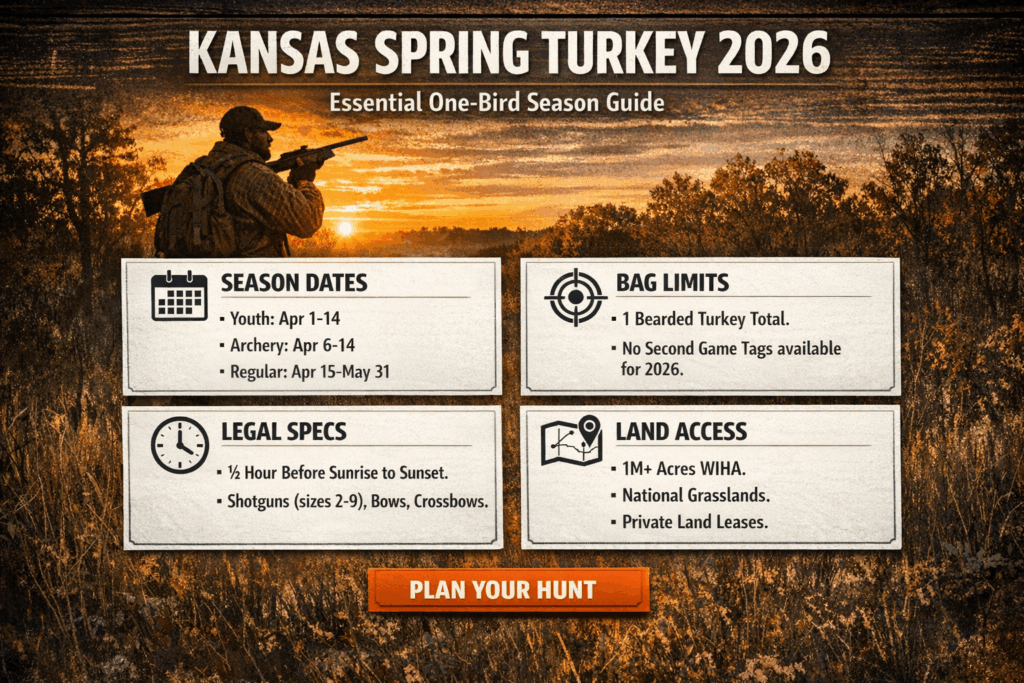
Here’s what matters for 2026, no filler:
| Element | 2026 Details |
|---|---|
| Youth/Disabled Season | April 1–14, 2026 |
| Archery-Only Season | April 6–14, 2026 |
| Regular Season (Firearms & Archery) | April 15–May 31, 2026 |
| Bag Limit | 1 bearded turkey statewide |
| Game Tags (Second Bird) | Not available for 2026 |
| Shooting Hours | Half hour before sunrise to sunset |
| Legal Equipment | Shotguns (shot sizes 2-9), bows, crossbows |
That game tag elimination? It’s the biggest deal for 2026. Everyone gets one bearded turkey, period.
What you need to hunt legally:
- Valid Kansas hunting license (if you’re 16 or older)
- Spring Turkey Permit (everyone needs this)
- Hunter education certificate (born after July 1, 1957)
Kansas Turkey Hunting Seasons
Kansas breaks spring turkey season into three chunks. Each one has its own rules about who can hunt and what gear you can use. All the details are here if you want to dig deeper.
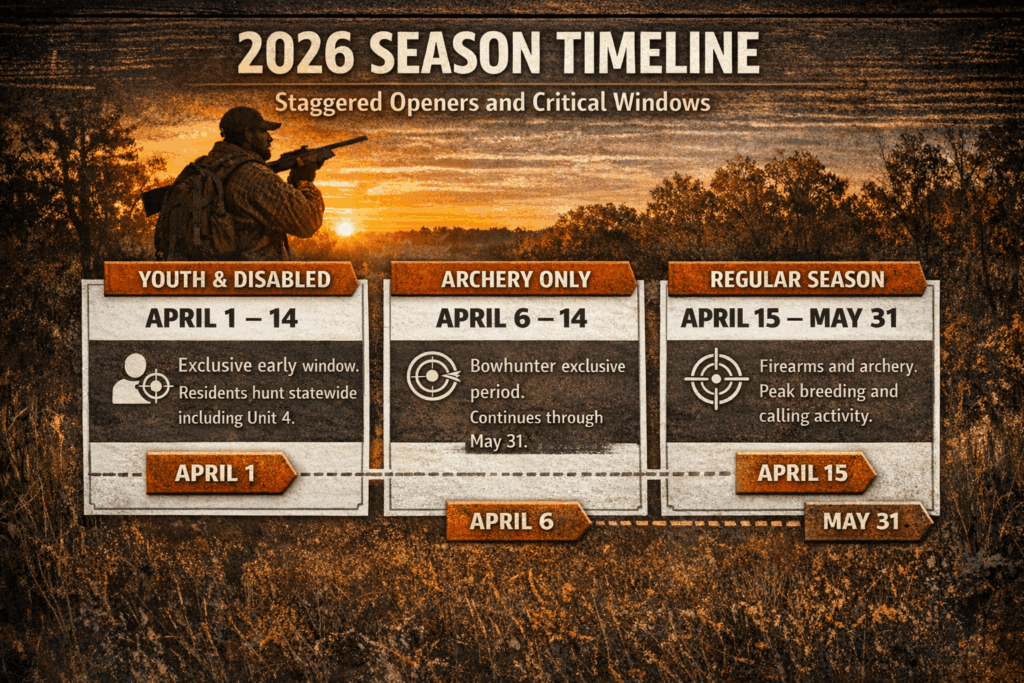
Youth and Disabled Hunter Season
Dates: April 1–14, 2026
This early window is smart. Kansas gives youth and disabled hunters first crack at the birds before everyone else shows up. Less pressure, better experience. If you’re 15 or younger and a Kansas resident, you can hunt anywhere in the state, even Unit 4 where access gets restricted later.
The pricing makes sense too. Youth permits cost $7.50 for statewide access. That’s how you get kids hooked on turkey hunting without breaking the bank.
Archery Season
Dates: April 6–14, 2026 (archery only), then continues through May 31 during regular season
Bowhunters get their own window before the shotguns start booming. Longbows, recurves, compounds, crossbows—all legal per KDWP rules.
Here’s the sweet part: you get an exclusive early period, then you can keep hunting straight through May 31 when firearms season opens. That’s flexibility. Hunt the early birds, or wait until mid-season when patterns change. Your call.
Regular Season (Firearms and Archery)
Dates: April 15–May 31, 2026
This is when it gets good. Spring turkey hunting in Kansas peaks during breeding season when toms are fired up and responding to calls. The timing matches up perfectly with breeding activity, which means gobblers are looking for hens and you can call them in.
Legal gear includes shotguns with shot sizes 2-9, any bow type, crossbows, plus certain handguns with barrels at least 10 inches long. Shooting hours stay the same: half hour before sunrise until sunset.
Kansas has two distinct turkey subspecies worth knowing about. Rio Grande turkeys live in western and central Kansas, hanging around grasslands and river bottoms. Long legs, bronze-green feathers. Eastern turkeys stick to eastern Kansas where the woods get thick. They’re bigger, more colorful, with white wing bars. Want the full breakdown? Check out our Kansas turkey subspecies guide for habitat maps and hunting tactics.
Kansas Turkey Licenses and Permits
Getting legal in Kansas isn’t complicated, but you need to understand the system. Everything comes from KDWP, and you buy it at GoOutdoorsKansas.com or through their mobile app. Paper applications? Gone. Mail-in forms? Forget it.
Kansas Hunting Licenses
You need a valid Kansas hunting license if you’re between 16 and 74 (residents) or any age (non-residents). Exception: hunting your own land. Born after July 1, 1957? Take hunter education first.
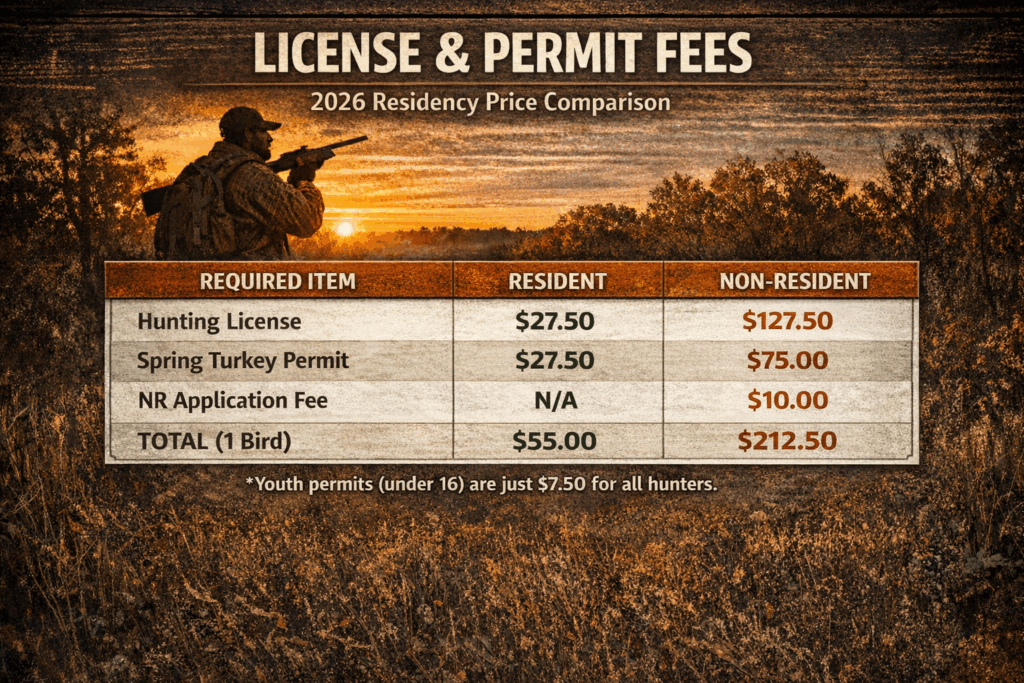
| License Type | Resident Cost | Non-Resident Cost | Notes |
|---|---|---|---|
| Basic Hunting License | $27.50 | $127.50 | Required for all hunters 16+ |
This is separate from your turkey permit. You need both. Buy online at GoOutdoorsKansas.com, through the app, or at vendors around the state.
Kansas Turkey Permits
Every hunter needs a Spring Turkey Permit, and each permit is good for one bearded turkey. Now here’s where 2026 gets different.
Big 2026 Change: No game tags available this year. Resident or non-resident doesn’t matter. One bird, done.
| Permit Type | Resident Cost | Non-Resident Cost | Notes |
|---|---|---|---|
| Spring Turkey Permit | $27.50 | $75.00 | Required for first bearded turkey |
| Youth Spring Turkey Permit | $7.50 | $7.50 | Valid statewide including Unit 4 |
| Non-Resident Application Fee | N/A | $10.00 | Required for lottery application |
| Turkey Game Tag | $15.00 | $30.00 | Not available for 2026 |
Non-Resident Application Process
Non-residents can’t just buy a permit. Application window is 01/13/26 – 02/13/26. Submit at www.gooutdoorskansas.gov or call 1-833-587-2164. That’s it. No other options.
Don’t draw? You get a preference point for next year’s lottery.
Kansas Turkey Hunting Units
Kansas splits the state into management units with different permit numbers for non-residents. If you’re coming from out of state, this matters.
Non-Resident Unit Quotas:
| Unit | Non-Resident Permits Available |
|---|---|
| Unit 1 | $700.00 |
| Unit 2 | $2,400.00 |
| Unit 3 | 2,800 |
| Unit 5 | $900.00 |
| Unit 6 | 2,900 |
| Unit 4 | Limited lottery (375 total, 200 reserved for landowners) |
How it works:
- Residents: Buy permits over-the-counter for Units 1, 2, 3, 5, or 6 at GoOutdoorsKansas.com or through the app
- Non-Residents: Lottery only, January 13 – February 13, 2026
Non-residents planning a Kansas hunt? Apply when that window opens in mid-January. Don’t wait.
Where to Hunt Turkey in Kansas
Finding land beats everything else. Better than fancy calls, better than expensive camo. You can’t hunt turkeys if you don’t have somewhere to hunt them.
Kansas actually makes this easier than most states. Multiple ways to get on birds.
Best Public Lands for Turkey Hunting
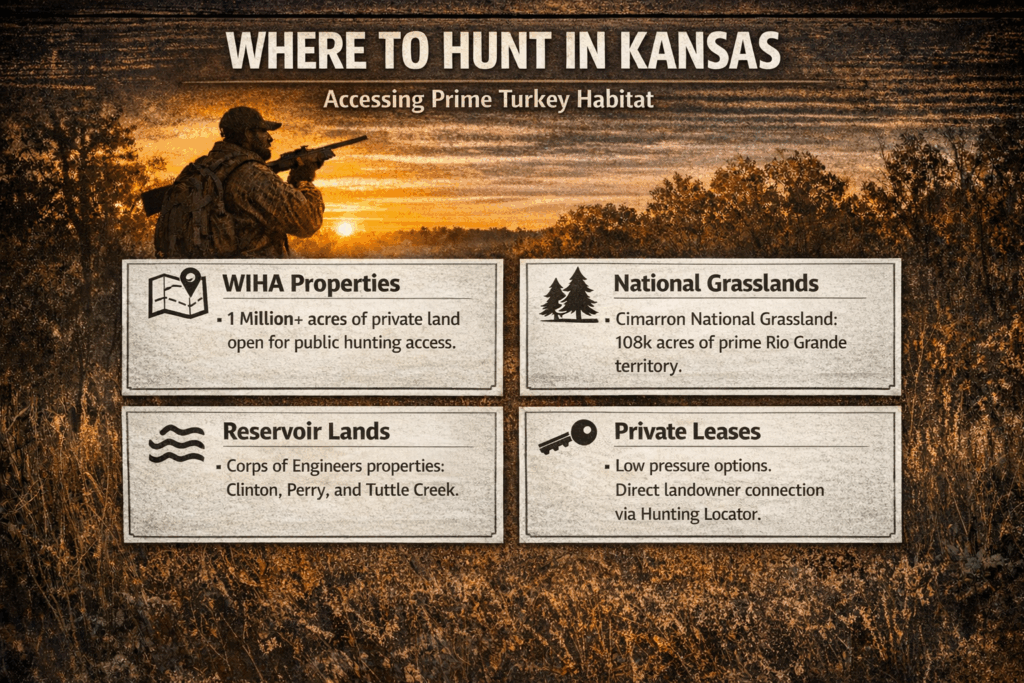
Kansas public land access is legitimately good. The Walk-In-Hunting Areas program opens up private lands statewide with over 300,000 acres enrolled. WIHA alone provides nearly 1.05 million acres of hunting opportunity.
WIHA is unique to Kansas. Private landowners enroll their property for public hunting access. You get way more ground than just state and federal lands. Free to use with valid license and permits.
Where you can hunt:
- Walk-In Hunting Access (WIHA): Over 1 million acres of enrolled private land, free access with proper licensing. Properties range from small parcels to massive tracts across every region
- Wildlife Management Areas: State-managed properties built for hunting and wildlife. Check KDWP website for specific area rules and access points
- Cimarron National Grassland: 108,000 acres of federal land in southwest Kansas. Rio Grande turkey country, mixed-grass prairie
- Corps of Engineers Lands: Reservoir properties with turkey access. Clinton, Perry, and Tuttle Creek are popular spots
Public land is free and can produce birds. But expect pressure, especially opening week (April 15-17). Successful public land hunters scout hard before season. Find the roosts, learn the patterns.
Guided Turkey Hunts
Guides handle everything. Land access, scouting, local knowledge. You show up and hunt. For non-residents with limited time, it makes sense.
Scouting matters in turkey hunting. Guides already know where birds roost and travel. That local intel is worth something, especially when you’re driving from another state with three days to make it happen.
Pricing varies based on what’s included. One Kansas outfitter runs unguided three-day, two-night hunts for two Rio turkeys at “$975 per hunter – Min. Two Unguided – Each Addition Days $250 per hunter.” Full-service guided hunts with calling help cost more but deliver the complete package.
Guides arrange land access, scout before you arrive, and often call for you in the field. Book early. Good outfitters fill spring turkey slots months ahead.
Private Land Hunting
Private land consistently beats public. Less pressure, better bird numbers, more control over your hunt. The challenge? Getting access.
Traditional methods work: knock on doors and ask permission, network through hunting clubs or personal connections, lease directly from landowners. Each takes serious time and often depends on luck and timing.
Turkey hunting leases vary wildly. Location, acreage, exclusivity, lease length—all factors. Day-use access and seasonal leases are both common. Costs range from modest day fees to premium rates for exclusive seasonal access to prime habitat. Browse Kansas hunting land opportunities to see what’s currently available.
Hunting Locator connects hunters with Kansas landowners offering leases or land sales. Search by location, acreage, game type. Day-use for spring turkey or longer-term leases—both options exist. The platform cuts out the guesswork of traditional land access. Direct contact with property owners, transparent information about what’s available.
Turkey Hunting Tips for Kansas Success
Proper licenses and land access get you in the game. But killing a Kansas turkey requires understanding bird behavior and using tactics that actually work.
- Scout Before Season Opens: Scouting is critical. Experienced hunters know where birds roost and travel. Spend late March finding roosting areas, feeding zones, travel corridors. This pre-season work pays off opening day.
- Master Basic Calling Techniques: Different calls bring in birds—yelping, clucking, purring, cackling, more. You don’t need expert-level skills. Basic hen yelps and clucks cover most situations. Practice before season. Don’t over-call.
- Use Proper Camouflage: Camo is essential because turkeys have incredible eyesight and spot movement instantly. Head-to-toe coverage including face mask and gloves. Turkeys see uncovered skin from ridiculous distances.
- Set Up Near Roosting Areas: Position yourself 100-200 yards from known roosts before first light. Call sparingly at dawn. Gobblers fly down to investigate hen sounds. That first hour of legal shooting time is prime.
- Remain Motionless When Birds Are Visible: Once a gobbler shows up, freeze completely. Turkeys detect the slightest movement. Shift position when a bird is looking? Hunt’s over.
- Bring Comfortable Seating: A good seat or turkey vest matters because you’ll sit for extended periods. Physical discomfort causes movement. Movement spooks birds.
- Hunt Different Times of Day: Early morning is prime, but don’t ignore mid-morning and afternoon. Gobblers with hens all morning often respond to calling between 9 AM and noon when hens leave to nest.
- Adapt to Subspecies Differences: Rio Grande turkeys in western Kansas inhabit open terrain and may respond differently than Eastern turkeys in eastern forests. Adjust setup locations and calling based on subspecies and habitat.
Before you head out, make sure your gear is dialed in. The Hunting Locator store carries quality equipment selected specifically for turkey hunters. Calls, decoys, camo, safety gear.
More Resources from Hunting Locator
Expand your Kansas hunting knowledge with these resources:
- Kansas Hunting Seasons Overview – Complete calendar for all Kansas hunting seasons
- Kansas Deer Hunting Season – Whitetail hunting guide covering archery, firearms, muzzleloader
- Kansas Waterfowl Hunting Season – Duck and goose season dates and regulations
- Kansas Upland Game Hunting Season – Pheasant, quail, and upland bird information
- Turkey Hunting in Kansas – Deep dive on Kansas turkey hunting, subspecies, habitat, strategies
- Kansas Small Game Hunting Season – Rabbit, squirrel, and small game seasons
- Kansas Migratory Bird Hunting Season – Dove, woodcock, and migratory bird guide
- Kansas Elk Hunting Season – Limited elk hunting opportunities
- Kansas Antelope Hunting Season – Pronghorn hunting in western Kansas
- Hunting Locator Main Site – Search hunting leases, outfitters, land opportunities nationwide
Frequently Asked Questions
When does Kansas spring turkey season open in 2026?
Three different opening dates depending on your situation: Youth/Disabled season starts April 1, Archery-only begins April 6, Regular season (firearms and archery) opens April 15. Everything closes May 31, 2026.
How much does it cost for a non-resident to hunt turkeys in Kansas?
You’ll need a Kansas hunting license ($127.50), Spring Turkey Permit ($75.00), and non-resident application fee ($10.00). Total minimum: $212.50. That gets you one bearded turkey. No game tags available for a second bird in 2026.
Can I buy a Kansas turkey permit over the counter as a non-resident?
No. Non-residents go through lottery draw. Application period runs January 13 – February 13, 2026. Submit at www.gooutdoorskansas.gov or call 1-833-587-2164. Residents can buy permits over-the-counter for most units.
How many turkeys can I harvest in Kansas during spring 2026?
One bearded turkey. Everyone—resident and non-resident. No game tags available in 2026. The second bird option from previous years is gone.
Where can I hunt turkeys in Kansas if I don’t own land?
Kansas offers over 1 million acres through the Walk-In Hunting Access (WIHA) program. Plus Wildlife Management Areas, Cimarron National Grassland, Corps of Engineers lands. Private land leases and guided hunts work too if you want less pressure and potentially better odds.
What is the difference between Rio Grande and Eastern turkeys in Kansas?
Rio Grande turkeys live in western and central Kansas around grasslands and river bottoms. Eastern turkeys stick to eastern Kansas in thick woods. Easterns are bigger with more vibrant coloration and white wing bars.
The Final Shot
Kansas’s 2026 spring turkey season delivers real opportunities for both Rio Grande and Eastern turkey hunting across varied terrain. But showing up with a license and a call won’t cut it. You need a plan.
Understanding the season structure matters. Youth season starts April 1, regular season closes May 31. Pick your timeframe based on your schedule and hunting style.
That game tag elimination for 2026 changes everything. One bird per hunter. Makes shot selection and strategy more important than ever. Whether you’re a Kansas resident or coming from out of state for your first Kansas hunt, land access is still the biggest factor in your success.
Kansas provides options for every budget. Free public access through WIHA properties or exclusive private leases. The key is starting now. Non-residents: mark January 13, 2026 for permit applications. Everyone benefits from early scouting and land access arrangements.
Ready to find your Kansas turkey hunting spot? Visit Hunting Locator to connect with landowners offering hunting access across Kansas. Browse properties by location and game type. Secure your land access before 2026 season arrives.


