Turkey hunting in Kansas offers unique opportunities across diverse landscapes and multiple subspecies. Whether you’re planning to hunt turkeys during the spring season or seeking information about permits, this guide covers everything needed for a successful hunt.
Kansas Turkey Hunting Permits and Licensing
A valid Kansas hunting license and spring turkey permit are required before you can hunt turkeys in Kansas. Understanding the permit system helps ensure a legal and hassle-free hunting experience.
Basic License Requirements
Every hunter needs both a valid Kansas hunting license and a valid spring turkey permit. The number authorized per hunter varies based on the unit and season:
| Hunter Type | License Requirement | Permit Requirement |
|---|---|---|
| Resident (16-74) | Full-price license | Spring turkey permit |
| Resident (65-74) | Half-price license | Spring turkey permit |
| Resident Youth (15 & under) | License not required | Youth spring turkey permit |
| Non-resident | Full-price license | Lottery draw permit |
Spring Turkey Permit Options and Delivery
Hunters can obtain permits through several methods:
- Electronic Delivery: Purchase online at GoOutdoorsKansas.com or through the GoOutdoorsKS mobile app (internet convenience fee applies)
- Counter Permit: Available at authorized vendors as a paper permit
- Landowner/Tenant: Special permits for those who own or operate 80 acres or more
Youth spring turkey permits are available at a reduced fee and are valid statewide, including Unit 4. Regular permits allow harvest of one bearded turkey per permit.
Special Permit Categories
Hunt-On-Your-Own-Land Permits: Available to resident or nonresident tenant hunters who actively engage in agricultural practices on 80 acres or more. These permits are valid only on owned or operated land.
Lottery Draw System: Non-resident permits and Unit 4 resident permits are awarded through a limited lottery draw permit application process. Hunting partners can draw together by linking their limited draw applications.
Turkey Species and Population
Kansas hosts a thriving turkey population with distinct subspecies across different regions. Recent surveys show healthy numbers throughout the state, with specific traits and behaviors that affect hunting strategies.
Eastern Turkeys
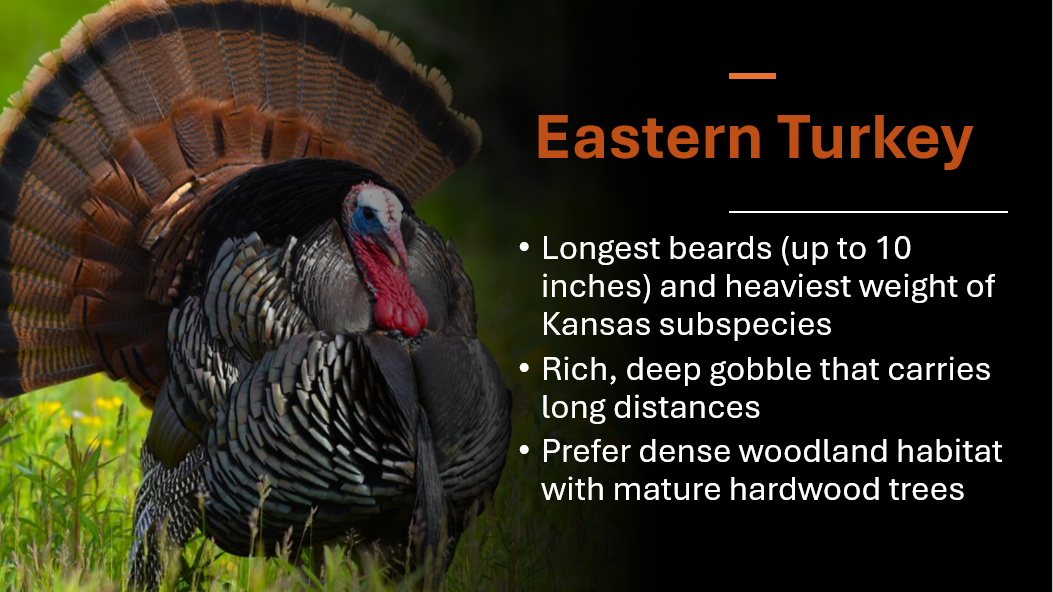
Eastern turkeys dominate the eastern portion of Kansas, with approximately 130,000 birds counted in fall 2024. These impressive birds are the most widely distributed subspecies east of the Mississippi River, and Kansas represents part of their western range.
Male Eastern turkeys (toms) weigh between 18-30 pounds and can sport beards up to 10 inches long. Females typically range from 8-12 pounds and lack beards. Their strong, distinctive gobble carries far in the dense woodlands they prefer.
Rio Grande Turkeys
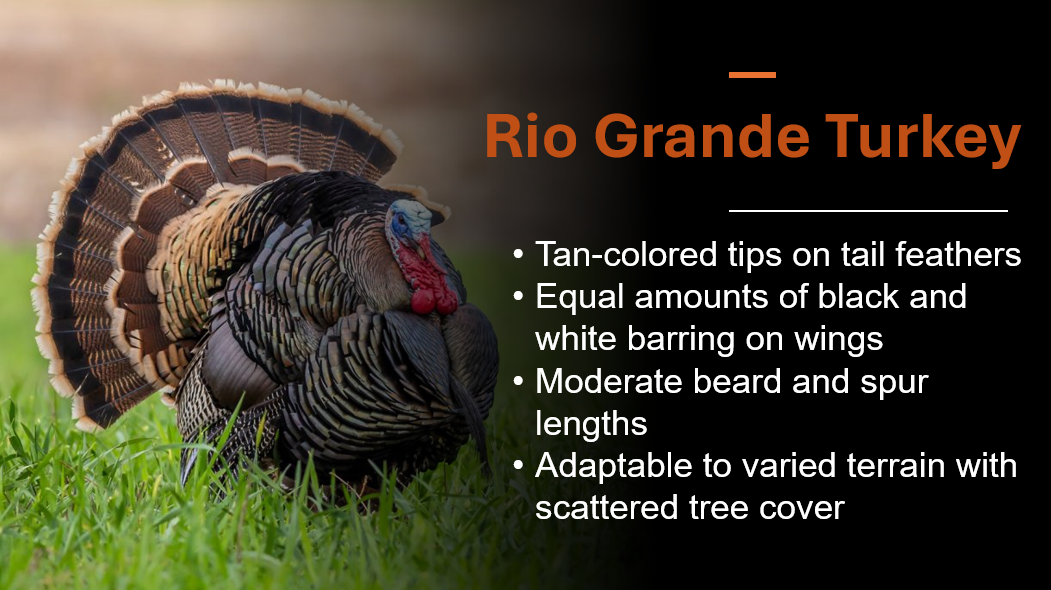
Western Kansas supports roughly 75,000 Rio Grande turkeys. This subspecies thrives in the western desert regions of Kansas and neighboring states, showing excellent adaptation to more open terrain.
Rio Grande toms are slightly smaller than Easterns, weighing around 20 pounds with beards reaching 6 inches. Their gobble has a moderate volume and pitch. These birds excel at spotting movement across open spaces.
Hybrid Areas and Identification
Central Kansas creates a natural mixing zone where Eastern and Rio Grande turkeys interbreed. Hybrid birds show mixed characteristics in size, coloring, and behavior.
Hunters should focus on location rather than trying to identify hybrid birds. The hunting unit you choose typically determines which subspecies you’ll encounter most often.
Key characteristics of hybrid turkeys:
- Mixed features from both parent subspecies (tail coloring, wing barring)
- Variable gobble strength and beard length
- Most common in central Kansas transition zones
Season Dates and Regulations
The Kansas Department of Wildlife, Parks and Tourism has established specific seasons and rules for 2025. Understanding these regulations ensures a legal and ethical hunt.
2025 Season Calendar
| Season Type | Dates | Special Notes |
|---|---|---|
| Youth/Disabled | April 1-15 | Special permit required |
| Archery Only | April 7-15 | All bow types allowed |
| Regular | April 16 – May 31 | Firearms and archery |
Permit Requirements
Resident hunters can obtain permits for most units directly through the state system. Unit 4 requires a special lottery application for all hunters.
Non-residents must enter a lottery for all units, with applications accepted January 14 through February 14, 2025. The lottery system helps manage hunting pressure and maintain sustainable turkey populations.
Bag Limits and Tags
Each permit allows harvest of one turkey with a visible beard. The state has suspended additional game tags for 2025 to support population management efforts.
| Hunter Type | Purchase Method | Additional Notes |
|---|---|---|
| Resident | Online or counter | Direct purchase for Units 1, 2, 3, 5, 6 |
| Non-resident | Lottery only | Limited draw applications required |
| Youth | Online or counter | Purchase youth permits at reduced fee |
Hunting Locations
Kansas offers diverse hunting opportunities across public and private lands. Success rates vary by location, with Unit 2 showing the highest success at 52% during the 2024 season.
Public Land Options
Kansas offers several premier public hunting areas, each with unique characteristics and opportunities:
- Harmon Wildlife Area: Located near the Neosho River, this area combines bottomland forests with diverse wildflower meadows. Morning hunts prove most productive, especially along forest edges where turkeys move from roosts to feeding areas. Be prepared for challenging terrain and seasonal ticks.
- La Cygne Wildlife Area: Known for consistent turkey activity and well-maintained access roads, La Cygne supports large flocks throughout the season. While popular among hunters, the area offers numerous secondary locations that often produce successful hunts when primary spots are occupied.
- Melvern Wildlife Area: Dominated by tallgrass prairie, Melvern offers excellent visibility for spotting turkeys. Strong winds can challenge hunters, but natural draws and creek bottoms provide effective setup locations. The area’s diverse terrain supports healthy turkey populations year-round.
- Mined Land Wildlife Area: This unique landscape of reclaimed mining land features a mix of native grasses and timber stands. Less crowded than other public areas, it requires careful navigation but rewards hunters with minimal competition and abundant turkey activity.
- Perry Wildlife Area: Despite seasonal flooding challenges, Perry maintains strong turkey populations. Successful hunters adapt to changing water levels and maintain multiple backup locations. Higher ground near flood plains often provides excellent hunting when conditions are right.
Choosing Your Location
Public land success depends heavily on proper scouting and timing. The latest hunting apps can help you identify promising areas and track turkey movement patterns.

Private Land Access
While public lands offer excellent hunting, private land access can provide additional opportunities with less hunting pressure. Building relationships with landowners requires patience and professionalism.
Permission and Relationships
Always obtain written permission before hunting private property. Many landowners appreciate hunters who show interest in their land management goals and offer to help with conservation efforts.
The best time to seek permission is several months before hunting season. This allows time to build trust and understand property-specific rules or concerns. Consider offering to share your harvest or assist with property maintenance.
Lease Options
Private land hunting leases come in several forms:
- Seasonal Leases: Cover spring turkey season only
- Annual Leases: Include multiple hunting seasons
- Day Leases: Provide short-term access
- Hunt Clubs: Offer shared access to multiple properties
Evaluating Lease Opportunities
When considering a hunting lease, examine these key factors:
Habitat Quality
- What to Check: Terrain variety, food sources
- Why It Matters: Affects turkey population density and movement patterns
Access
- What to Check: Road conditions, parking areas, entry points
- Why It Matters: Impacts hunting convenience and ability to access during different weather conditions
Hunting Pressure
- What to Check: Number of other hunters allowed, scheduling system
- Why It Matters: Influences success rates and overall hunting experience
Cost Analysis
Why It Matters: Determines overall value and helps compare different opportunities
What to Check: Price per acre or season, additional fees
Finding Private Land Access
Ready to explore private land turkey hunting opportunities in Kansas? Hunting Locator connects hunters with quality hunting leases across the state. Many hunters find their ideal turkey hunting grounds within weeks through the platform’s extensive network of vetted properties. Browse available Kansas hunting leases.
Looking for a more permanent hunting solution? Invest in your own piece of prime turkey hunting territory. Hunting Locator’s property listings include carefully vetted Kansas hunting land for sale, ranging from small parcels to large tracts with established turkey populations.
Equipment and Hunting Methods
Kansas regulations specify permitted hunting equipment and methods to ensure fair chase and hunter safety.
Legal Hunting Equipment
Hunters may use the following equipment when pursuing turkeys:
- Shotguns: 20 gauge or larger, using shot sizes 2-9
- Archery: Longbows, recurve bows, or compound bows
- Crossbows: Legal for all hunters during archery and regular seasons
- Calls: Non-electronic turkey calls and decoys permitted
Safety Requirements
All hunters must wear appropriate safety gear and follow specific guidelines:
- Fluorescent orange not required but recommended
- Proper firearm handling and transport protocols
- Maintaining safe shooting distances from structures
- Following shooting hours regulations
Harvest Reporting Requirements
Successful hunters must complete harvest reporting within 48 hours. Follow these steps:
- Immediately Upon Harvest:
- Tag your bearded turkey before moving it
- Note harvest location and time
- Ensure beard remains attached during transport
- Within 48 Hours:
- Access the KDWP website or mobile app
- Enter your permit number
- Provide harvest details as requested
- Complete mandatory harvest survey
- Documentation Required:
- Keep confirmation number
- Maintain permit until processing complete
- Save survey completion certificate
These mandatory reporting requirements help wildlife managers monitor turkey populations at both the state and regional level.
Conservation and Ethics
Kansas’s turkey hunting future depends on current conservation efforts. The state’s “Save the Gobble” program demonstrates this commitment to sustainable hunting.
Population Management
Recent harvest data shows encouraging trends. The 2024 season saw a 40% reduction in hunting incidents while maintaining healthy turkey populations across all units. The fall turkey season remains suspended at both the state and regional level due to ongoing population management efforts.
Hunter Responsibilities
Ethical hunting practices ensure long-term sustainability:
- Proper Identification: Always positively identify your target
- Clean Harvest: Follow field dressing guidelines
- Habitat Protection: Minimize impact on hunting areas
- Report Violations: Support conservation law enforcement
For the most current information about conditions and regulations, contact the Kansas Department of Wildlife, Parks and Tourism at 620-672-5911 or visit ksoutdoors.com. Their staff provides regular updates on conditions, regulations, and conservation efforts.


