Here’s what’s inside this comprehensive Virginia turkey season guide:
- 2026 season dates and structure — Youth Weekend, Early Season, Late Season with bag limits and legal hours
- License costs breakdown — What residents and non-residents actually pay, including the permits people forget about
- Where to hunt — Public land reality check, guided hunt considerations, and how to access private ground
Let’s get into the dates first.
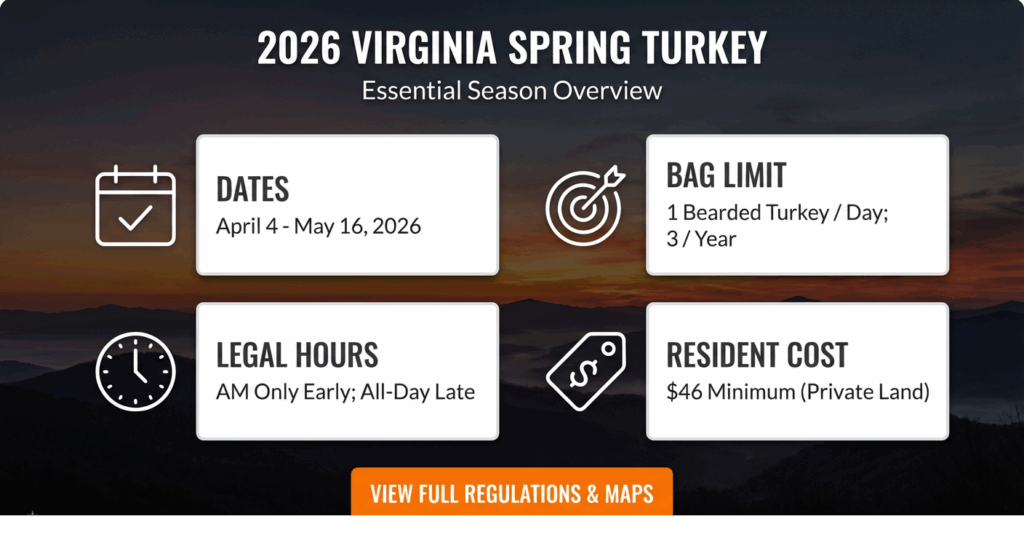
Quick Overview: 2026 Virginia Spring Turkey Season at a Glance
Bookmark this section. Come back when you need a quick reference during the season.
| Season Type | Dates | Bag Limit | Legal Hours | Notes |
|---|---|---|---|---|
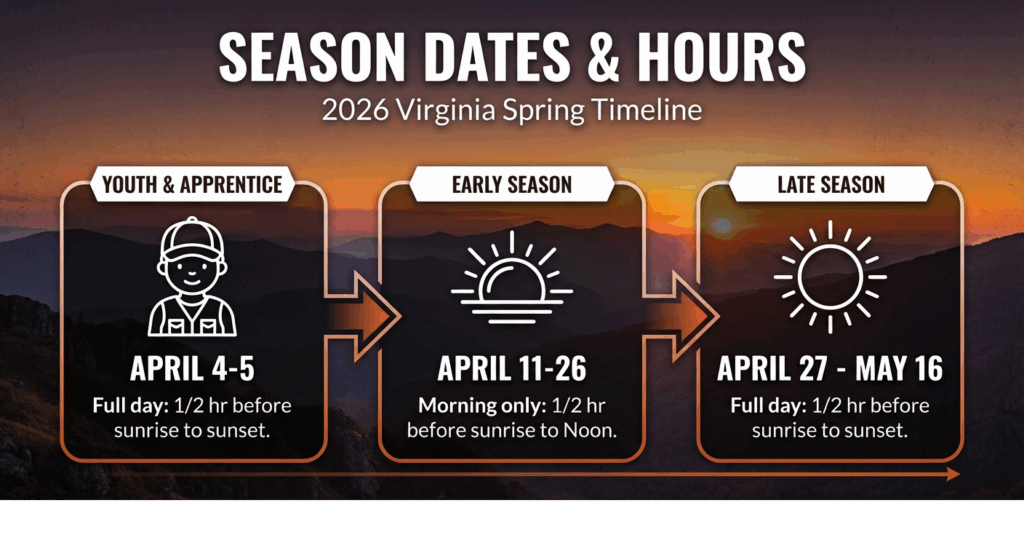
| Youth & Apprentice Weekend | April 4-5, 2026 | One bearded turkey per hunter | ½ hour before sunrise to sunset | Hunters 15 and under OR apprentice license holders with adult supervision |
| Early Spring Season | April 11-26, 2026 | One bearded turkey per day | ½ hour before sunrise to noon | First 16 days — morning-only hunting |
| Late Spring Season | April 27-May 16, 2026 | One bearded turkey per day | ½ hour before sunrise to sunset | Last 20 days — all-day hunting allowed |
| Annual Limit | Entire license year | Three bearded turkeys maximum | — | Includes fall season harvest |
Virginia Department of Wildlife Resources runs a five-week spring season with a three-bird bag limit. Pay attention to the legal hours shift: first 16 days end at noon, last 20 days run until sunset.
License and Permit Requirements:
- Basic Hunting License — Everyone 16 and older needs this
- Deer/Turkey License — Required on top of your basic license
- National Forest Permit — Only if you’re hunting George Washington or Jefferson National Forests ($23 annual)
- Hunter Education — Required unless you’re hunting under an apprentice license with supervision
Now let’s break down each season.
Virginia Turkey Hunting Seasons
Virginia splits spring turkey season into three chunks. Each one hunts differently.
Understanding the spring season structure helps you pick the right time based on your schedule and hunting style. Five weeks total, early April through mid-May, right when gobblers are fired up and vocal.
Youth and Apprentice Weekend
April 4-5, 2026 (Saturday-Sunday)
This weekend gives young hunters and apprentice license holders a crack at turkeys before the regular crowd shows up. According to Virginia DWR, “Resident and nonresident youth hunters 15 years of age and under or holders of a valid apprentice hunting license may hunt when accompanied and directly supervised by an adult over the age of 18.”
Key Requirements:
- Age Qualification: 15 years old and younger, OR apprentice license holders (any age)
- Supervision Requirement: Adult supervisors must be 18+, maintain close visual and verbal contact, provide direction, and be able to immediately take control of the firearm
- Bag Limit: One bearded turkey per hunter this weekend
- Legal Hours: ½ hour before sunrise to sunset (full-day hunting)
This weekend’s legit for introducing new hunters. Less pressure, birds aren’t call-shy yet, and you get all-day hunting instead of that morning-only restriction. Just remember: Youth Weekend birds count toward your annual three-bird limit.
Early Spring Season
April 11-26, 2026 (First 16 Days)
Early season hits peak gobbling. Toms are actively courting hens and making noise. Virginia regulations specify hunting hours “from ½ hour before sunrise to 12:00 noon prevailing time during the first 16 days.”
Strategic Considerations:
- Morning-Only Hunting: Everything ends at noon. Every hunter’s crammed into the same morning window
- Peak Gobbling Activity: Research shows “peak mating occurs in early spring, when males perform their courtship rituals and gobbling loudly to attract females”
- Hunting Pressure: Opening weekend? Forget about having public land to yourself
- Bag Limit: One bearded turkey per day
That noon cutoff protects breeding activity while still giving you quality hunting. If you’re hunting early season, scout hard beforehand, get there early to claim your spot, and don’t be shy with your calling during prime morning hours.
Late Spring Season
April 27-May 16, 2026 (Last 20 Days)
Late season opens up the hours and thins out the competition. Virginia regulations allow hunting “from ½ hour before sunrise to sunset during the last 20 days.”
Advantages of Late Season:
- All-Day Hunting: Hunt whenever you want during daylight hours
- Reduced Pressure: Lots of hunters already tagged out
- Turkey Behavior Shift: Birds gobble less but they’re still callable, especially midday and afternoon
- Extended Opportunities: Twenty days gives you room to hunt multiple spots or bounce back from slow starts
Late season hunting’s different. Turkeys get cautious after two weeks of pressure. Gobbling drops off as breeding winds down. But if you adjust your tactics—softer calling, hunt travel routes, take advantage of afternoon activity—you can absolutely kill birds.
Virginia Turkey Licenses and Permits
Virginia’s licensing system stacks. You need multiple licenses, and it’s confusing if you’ve never done it before.
Virginia Hunting Licenses
Virginia requires a basic hunting license PLUS a supplemental Deer/Turkey license. Both. Not one or the other.
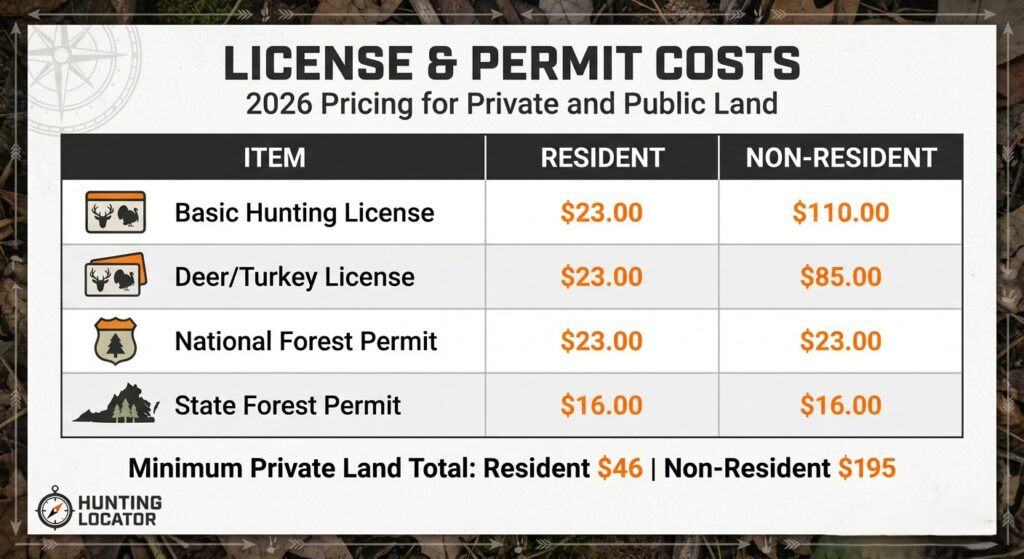
| License Type | Resident Cost | Non-Resident Cost | Notes |
|---|---|---|---|
| Basic Hunting License | $23.00 | $110.00 | Required foundation license for all hunters 16+ |
| Deer/Turkey License | $23.00 | $85.00 | Supplemental license—required IN ADDITION to basic license |
| Total Minimum (Private Land) | $46.00 | $195.00 | Combined cost for turkey hunting eligibility |
License Types Explained:
Basic Hunting License — Foundation license. Covers general hunting but does NOT include turkey or deer by itself. Everyone 16 and older needs this before buying anything else. Get it through Go Outdoors Virginia online, mobile app, or phone at (804) 367-1000.
Deer/Turkey License — This is your turkey authorization. You can’t buy this alone—you need that basic hunting license first. According to Virginia DWR, daily bag limit is one bearded turkey, yearly limit is three birds total (including fall harvest).
Apprentice Hunting License — Alternative for new hunters who haven’t done hunter education yet. Apprentice license holders hunt with a licensed adult who’s completed hunter education. Lets newcomers try hunting before committing to the full certification course.
Important Notes:
- Buy licenses before season starts. Don’t wait until the last minute
- Hunter education certification is required for standard licenses, but apprentice licenses bypass this with proper supervision
- Print your licenses anytime from GoOutdoorsVirginia.com after purchase
- For complete Virginia hunting regulations beyond turkey, check the Virginia hunting season overview
Virginia Hunting Permits
Permits are location-specific. You only need them if you’re hunting certain places.
National Forest Permit
- Cost: $23.00 annual (residents and non-residents pay the same)
- Required For: George Washington and Jefferson National Forests
- Where to Buy: Go Outdoors Virginia system
- Important: This $23 is on top of your $46 (resident) or $195 (non-resident) license costs
State Forest Use Permit
- Cost: $16.00
- Required For: Virginia State Forest lands
- Where to Buy: Go Outdoors Virginia system
Wildlife Management Area (WMA) Quota Hunts
Virginia offers quota spring turkey hunts on seven WMAs, the New Kent Forestry Center, the Adams Daniel Farm, and Progress Park in 2026. Limited entry. You apply through Virginia DWR’s quota system. Apply early—these fill up fast because of reduced pressure.
Mandatory Harvest Reporting
All harvested turkeys MUST be reported using telephone, mobile app, or internet reporting. This isn’t optional. Skip it and you’re looking at violations that can mess with your hunting privileges.
Where to Hunt Turkey in Virginia
Virginia’s got over 2 million acres of public hunting land. Access exists. Quality access? That’s trickier.
Best Public Lands for Turkey Hunting
Public land is accessible and budget-friendly. Virginia provides “National Forests, State Forests, and DWR’s Wildlife Management Areas” for public hunting.
Public Land Options:
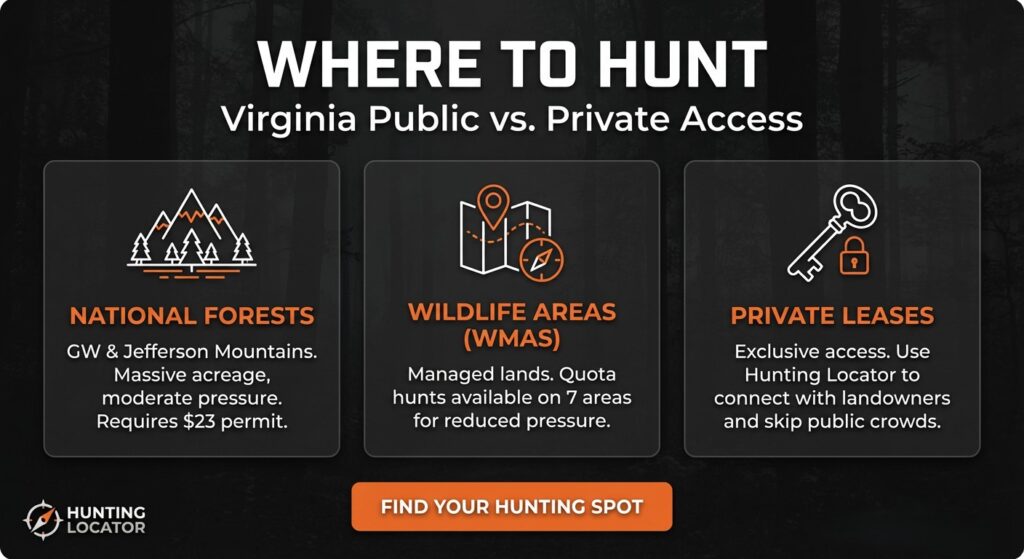
- George Washington and Jefferson National Forests — Massive acreage in western Virginia’s mountains. Requires $23 National Forest Permit. Good turkey populations in hardwood ridges and mixed forest. Expect moderate to heavy pressure near roads and parking areas.
- Wildlife Management Areas (WMAs) — DWR-managed properties scattered across Virginia. Some offer quota hunts with limited entry and way less pressure. Check specific WMA regulations because some have unique restrictions. Quota opportunities available on seven WMAs plus additional properties in 2026.
- State Forests — Need that $16 State Forest Use Permit. Generally see less pressure than National Forests because they’re smaller with fewer access points.
- Department of Forestry Lands — Additional public access on select properties. Verify current access rules before you go.
Honest Assessment:
Popular public areas get hammered. Opening weekend and early season mornings? Everyone’s hunting the same timeframe because of that noon cutoff. Research indicates “hunting mortality can vary from year to year” based on pressure and other factors. Public land success requires serious scouting time, willingness to walk farther than everyone else, and realistic expectations about educated birds.
Guided Turkey Hunts
Guided hunts are turnkey. Good option if you’re unfamiliar with Virginia, visiting from out of state with limited time, or just want to maximize your odds.
Guided turkey hunts typically include private or exclusive-use land access, local knowledge of turkey patterns, expert calling help, sometimes lodging or meals. Costs vary wildly based on what’s included, property quality, guide experience.
Guided hunts make the most sense for non-residents making one annual Virginia trip who want to maximize limited time in unfamiliar territory. Instead of burning precious hunting days learning new ground, you benefit from the outfitter’s established knowledge of turkey movements, roosting areas, productive spots.
Before booking, research the outfitter’s reputation thoroughly. Ask about success rates, property size and turkey population, guide experience, what’s actually included in the package.
Private Land Hunting
Private land typically crushes public ground. Less pressure means less educated turkeys. Being able to scout and pattern specific gobblers over time? That’s a game-changer. The problem? Getting access is tough.
Private Land Options:
Leasing Private Land — Seasonal or annual lease arrangements with landowners give you exclusive or semi-exclusive access. Costs vary significantly based on acreage, location, turkey population quality, whether the lease is exclusive or shared. Leasing eliminates public land crowding while giving you freedom to hunt on your schedule.
Purchasing Hunting Land — For dedicated hunters with long-term commitment to Virginia turkey hunting, land ownership provides permanent access and the ability to manage habitat specifically for turkeys. Significant financial investment, but it serves as both hunting resource and potential retirement or legacy property.
The Access Gap — Most hunters know private land offers better hunting but don’t know how to find landowners willing to lease or sell. Cold-calling rural landowners is time-consuming and usually goes nowhere. Personal connections take years to build.
Hunting Locator connects hunters directly with Virginia landowners who are open to leasing access or selling hunting property. Instead of spending your limited free time knocking on doors, you can browse Virginia hunting leases with verified listings and connect with landowners who actually want to work with responsible hunters. The platform cuts out the awkward uncertainty and helps you find quality private land access for 2026 and beyond.
For turkey hunting gear—calls, decoys, camo, safety equipment—check out the Hunting Locator store.
Turkey Hunting Tips for Success
Regulations and access get you in the woods. These tips help you actually kill a bird.
Scouting Before Season
Scout at least two weeks before opener. Look for turkey sign: tracks, droppings, feathers, scratching in leaves, dusting areas. Listen for gobbling at dawn and dusk to locate roosting areas—but don’t call to birds during scouting. You’ll just educate them before season opens. Map multiple roosting sites so you have backup options if another hunter’s on your primary spot.
Master Basic Calling
You don’t need to win calling contests. You just need to sound like a real hen. Practice yelps, clucks, purrs until they sound natural. During peak mating in early spring, males gobble loudly to attract females—your calling mimics receptive hens. Start soft with basic yelps. Only increase volume if birds don’t respond. Over-calling educates turkeys fast.
Setup Location Matters
Set up where you can see at least 30-40 yards in the direction turkeys will approach. Put your back against a tree wider than your shoulders for safety and concealment. Don’t set up in hollow bottoms where you can’t see approaching birds—turkeys prefer traveling ridges and edges. Public land during early season? Get there well before legal shooting hours to secure good locations.
Patience Wins
Turkeys operate on their schedule, not yours. A gobbler that sounds close might take 30-45 minutes to actually show up. Or he might hang up out of sight waiting for “the hen” (you) to come to him. Don’t move toward gobbling birds—let them come to you. Lots of successful hunts happen after an hour or more of patient waiting.
Adapt to Late Season
As the season progresses, gobblers get quieter but they’re still huntable. During late season (April 27-May 16), use those all-day hunting hours. Focus on midday and afternoon when other hunters have left. Hunt travel corridors between feeding and roosting areas. Use softer, more subtle calling to avoid spooking educated birds.
Safety First
Never wear red, white, or blue turkey hunting. These colors look like a gobbler’s head and can attract dangerous attention from other hunters. Always positively identify your target as a bearded turkey before shooting. Be extra cautious on public land opening weekend when hunter density peaks.
Understand Regulations
Electronic calls are prohibited during Virginia’s spring turkey season—mouth calls or friction calls only. Remember early season hunting ends at noon for the first 16 days. All harvested turkeys must be reported through the official reporting system immediately after harvest.
More Resources from Hunting Locator
Planning your complete Virginia hunting season? These resources keep you informed:
- Virginia Hunting Season Overview — Complete calendar of all Virginia hunting seasons with dates, regulations, licensing requirements for every game species
- Virginia Deer Hunting Season — Detailed guide to Virginia’s deer seasons including archery, muzzleloader, firearms seasons with zone-specific information
- Virginia Black Bear Hunting Season — Everything about bear hunting opportunities, regulations, prime locations in Virginia
- Virginia Waterfowl Hunting Season — Duck and goose season dates, bag limits, best hunting locations for waterfowl
- Virginia Small Game Hunting Season — Comprehensive guide to rabbit, squirrel, other small game hunting seasons and regulations
- Virginia Turkey Hunting Season — Year-round Virginia turkey hunting information including spring and fall seasons
- Browse Virginia Hunting Leases — Connect directly with Virginia landowners offering hunting lease opportunities
FAQ
When does Virginia’s 2026 spring turkey season open?
Virginia’s 2026 spring turkey season starts with Youth and Apprentice Weekend on April 4-5, 2026. Regular spring season opens April 11, 2026, runs through May 16, 2026. Season splits into two periods: early season (April 11-26) with morning-only hunting until noon, late season (April 27-May 16) with all-day hunting until sunset.
How many turkeys can I harvest during Virginia’s spring season?
One bearded turkey per day during spring season. Annual limit is three bearded turkeys total for the entire license year, including any turkeys taken during fall season. If you killed turkeys during fall, those count toward your three-bird annual limit.
What licenses do non-residents need to hunt turkeys in Virginia?
Non-residents need both a Basic Hunting License ($110) and a Deer/Turkey License ($85) for a total minimum of $195. If hunting National Forest land, add a $23 National Forest Permit. If hunting State Forest land, add a $16 State Forest Use Permit. All licenses available through Go Outdoors Virginia system online, mobile app, or by calling (804) 367-1000.
Can I use electronic turkey calls in Virginia?
No. Electronic calls are prohibited during Virginia’s spring turkey season. Mouth-operated calls only (diaphragm calls, box calls, slate calls, etc.). This regulation protects fair chase principles and prevents over-harvesting.
Do I need hunter education to hunt turkeys in Virginia?
Hunter education certification is required for standard hunting licenses in Virginia. But you can bypass this by purchasing an apprentice hunting license, which lets you hunt when accompanied and directly supervised by a licensed adult who’s completed hunter education. The supervising adult must maintain close visual and verbal contact and be able to immediately take control of the firearm.
Where can I find private land to hunt turkeys in Virginia?
Finding private land access through traditional methods like cold-calling landowners is tough. Hunting Locator connects hunters with Virginia landowners actively seeking to lease hunting access or sell hunting property. Browse available Virginia hunting leases to find verified listings and connect directly with landowners interested in working with responsible hunters.
The Final Shot
Virginia’s 2026 spring turkey season runs five weeks from April 4 through May 16. Youth Weekend provides low-pressure introduction opportunities. Early season delivers peak gobbling with morning-only hours. Late season offers all-day hunting flexibility with less competition.
Licensing is straightforward once you understand the stacking: basic hunting license plus Deer/Turkey license for everyone, with additional permits only if you hunt National Forest or State Forest lands. Budget $46 as a Virginia resident or $195 as a non-resident for basic credentials.
Your biggest decision? Where to hunt. Virginia’s 2 million acres of public land provide accessible opportunities, but hunting pressure—especially early season—challenges even experienced hunters. Private land access dramatically improves your odds through reduced pressure and the ability to pattern specific birds. But finding willing landowners traditionally requires time-consuming legwork and personal connections.
Ready to secure quality hunting access for spring 2026? Explore Virginia hunting leases on Hunting Locator and connect with landowners who want to work with responsible hunters. Whether you’re looking for exclusive turkey hunting property or shared access on prime habitat, the platform eliminates the uncertainty and helps you focus on what matters—preparing for a successful spring season in Virginia’s turkey woods.


