This guide cuts through Alaska’s regulatory maze and gives you straight answers without the headache of cross-referencing dozens of scattered rules.
We’ve taken Alaska’s notoriously complex unit-by-unit wolf regulations and turned them into something you can actually use. The Alaska Department of Fish and Game confirms what serious hunters already know: Alaska’s wolf population creates hunting opportunities that simply don’t exist anywhere else, but only if you plan smart.
What you’ll find in this guide:
- Season dates and bag limits broken down by unit for 2026-2027
- Licensing requirements and costs (residents vs. non-residents)
- Where to actually hunt: public access, guides, and private land options
Let’s jump into what matters most.
Quick Overview
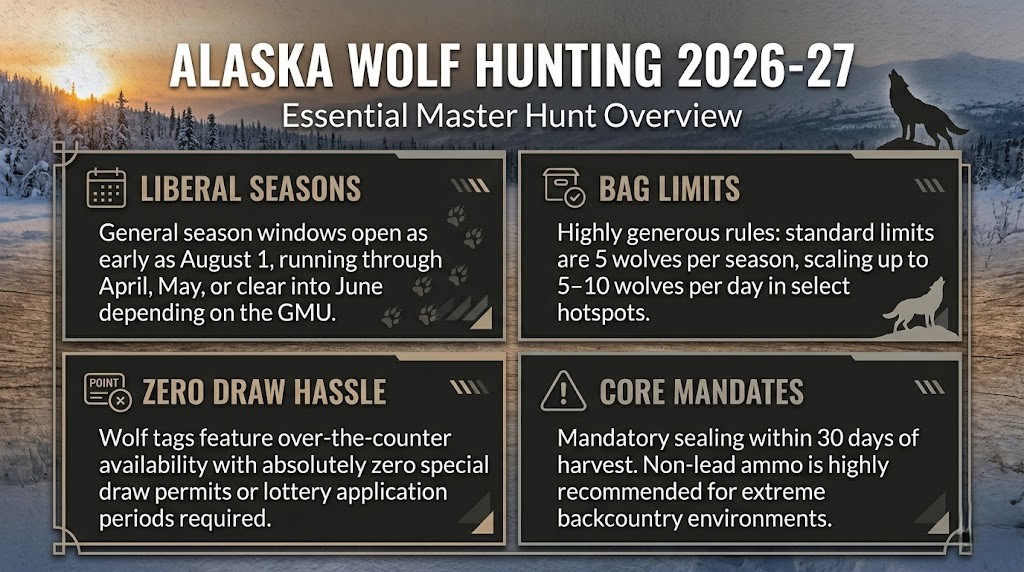
Every Alaska wolf hunter needs this information upfront. We’ll dig deeper into each section below, but always double-check current regs with ADF&G before you hunt. Wildlife management decisions can shift seasons and closures faster than you’d expect.
2026-2027 Alaska Wolf Season Summary
| Unit(s) | Season Dates | Bag Limit | Notes |
|---|---|---|---|
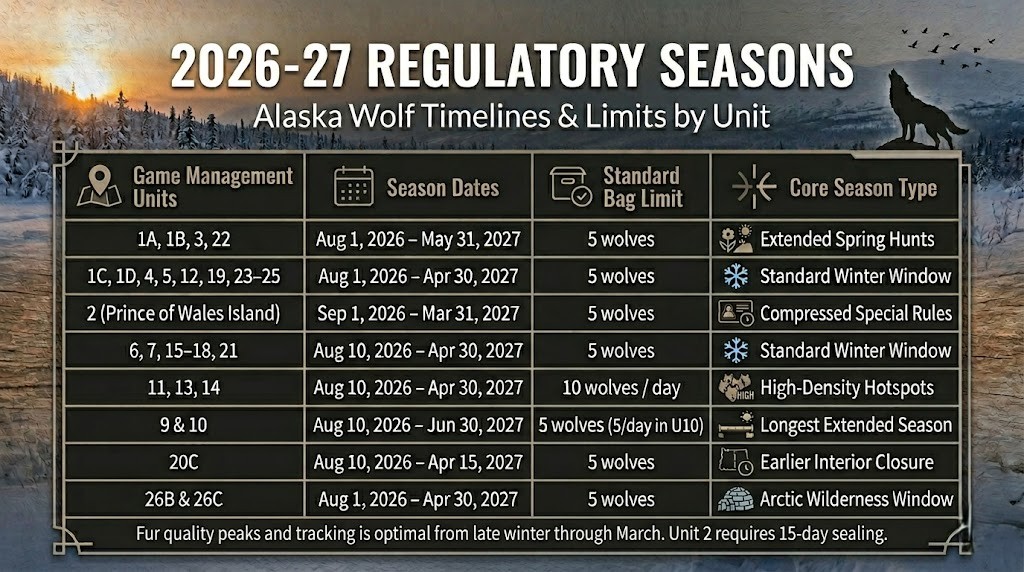
| 1A, 1B, 3, 22 | Aug 1, 2026 – May 31, 2027 | 5 wolves | Extended season |
| 1C, 1D, 4, 5, 12, 19, 23–25 | Aug 1, 2026 – Apr 30, 2027 | 5 wolves | Check unit-specific rules |
| 2 | Sep 1, 2026 – Mar 31, 2027 | 5 wolves | Shorter season |
| 6, 7, 11, 13–18, 21 | Aug 10, 2026 – Apr 30, 2027 | 5-10 wolves | Units 11, 13, 14 allow up to 10/day |
| 9 & 10 | Aug 10, 2026 – Jun 30, 2027 | 5 wolves/day in Unit 10 | Longest season available |
| 20C | Aug 10, 2026 – Apr 15, 2027 | 5 wolves | Earlier closure |
| 26B & 26C | Aug 1, 2026 – Apr 30, 2027 | 5 wolves | Arctic units |
Core Requirements for All Wolf Hunters
Alaska splits requirements pretty dramatically between residents and non-residents:
- Hunting License: Everyone 16+ needs one (residents $45, non-residents $160)
- Harvest Ticket: Free for everyone but absolutely required for harvest reporting
- Locking-Tag: $60 hit for non-residents (skip this fee in Units 1, 3, 9, 10, 12, 13, 15–17, 19–21, and 24–25)
- Hunter Education: Mandatory if you were born after January 1, 1986
- Sealing: All wolf hides need sealing within 30 days of your kill
Alaska Wolf Hunting Seasons
Alaska’s wolf seasons change dramatically depending on which Game Management Unit you’re targeting. Most run August through April or May, but some stretch clear into June. Knowing your specific unit’s timeline isn’t just helpful—it’s make-or-break for planning. For hunters juggling multiple species, check out our complete Alaska hunting guide.
Standard Season Units (August – April/May)
The bulk of Alaska wolf hunting happens during standard season dates across Units 1C, 1D, 4, 5, 6, 7, 11, 12, 13–18, 19, 20C, 21, 23–26. These units represent your best shot at Alaska wolves and line up perfectly with winter hunting when fur quality peaks and snow makes tracking actually possible.
Experienced guides will tell you that “February hits the sweet spot when snow conditions, wolf breeding activity, and stable weather all come together.” Standard season timing lets you chase wolves when their coats are prime while taking advantage of winter tracking conditions that make the difference between success and frustration.
Units 11, 13, and 14 stand out here with bag limits reaching 10 wolves per day. That’s serious opportunity.
Extended Season Units
Units 1A, 1B, 3, and 22 keep seasons open through May 31, 2027, while Units 9 and 10 offer Alaska’s longest wolf season, running clear through June 30, 2027. These extended timeframes create real opportunities for hunters who miss prime winter conditions or want to stack wolf hunting with spring hunts for other species.
Unit 10 (Aleutian Islands) deserves special attention with its 5 wolves per day limit. If you’re serious about wolves and can handle remote logistics, this unit delivers.
Unit 2 Special Season
Unit 2 runs a compressed season from September 1, 2026, through March 31, 2027. The shorter window demands tighter planning, but you get quality hunting in terrain that’s actually accessible from major population centers.
Federal regs are specific here: “All wolves taken will be sequentially numbered, marked with the date and location recorded by the hunter for each wolf.” Unit 2 hunters need detailed harvest records and must complete sealing within 15 days instead of the standard 30.
Alaska Wolf Licenses and Permits
Alaska keeps wolf licensing refreshingly simple compared to other big game. No lottery system, no limited permits, no complicated applications. But costs and requirements split hard between residents and non-residents.
Alaska Hunting Licenses
Alaska’s license structure prioritizes simplicity while extracting revenue from non-resident hunters:
| License Type | Resident Cost | Non-Resident Cost | Notes |
|---|---|---|---|
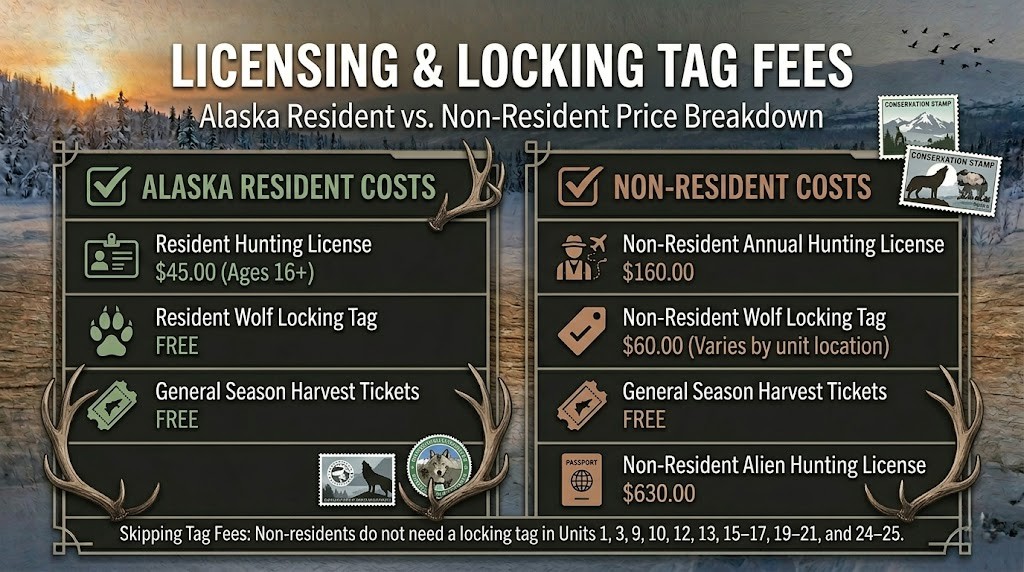
| Annual Hunting License | $45 | $160 | Required for all hunters 16+ |
| Wolf Locking-Tag | Free | $60 | Not required in all units |
| Harvest Ticket | Free | Free | Required in all units |
Non-residents max out at $220 ($160 license + $60 locking-tag where needed), while residents pay just $45 since wolf tags are free. Locking-tags aren’t required in Units 1, 3, 9, 10, 12, 13, 15–17, 19–21, and 24–25, potentially saving non-residents $60 depending on where they hunt. Hunter education kicks in if you were born after January 1, 1986. Get licenses online through ADF&G or at authorized vendors statewide.
Alaska Wolf Hunting Permits
Here’s the good news: wolf hunting in Alaska requires ZERO special permits or draw applications. That’s a massive advantage over most other big game species. You can plan trips without lottery uncertainty or quota limitations.
Harvest tickets are straightforward—free from ADF&G online or license vendors, must be in your possession before hunting, required for harvest reporting. Sealing requirements are non-negotiable: all wolf hides must be sealed within 30 days at ADF&G offices or authorized sealers.
Alaska Wolf: Where to Hunt
Alaska’s 26 Game Management Units offer wildly different wolf hunting experiences across public lands, guided operations, and private access. Your access strategy makes or breaks hunt success, with each approach delivering distinct advantages based on your experience, budget, and what you’re actually trying to accomplish.
Best Public Lands
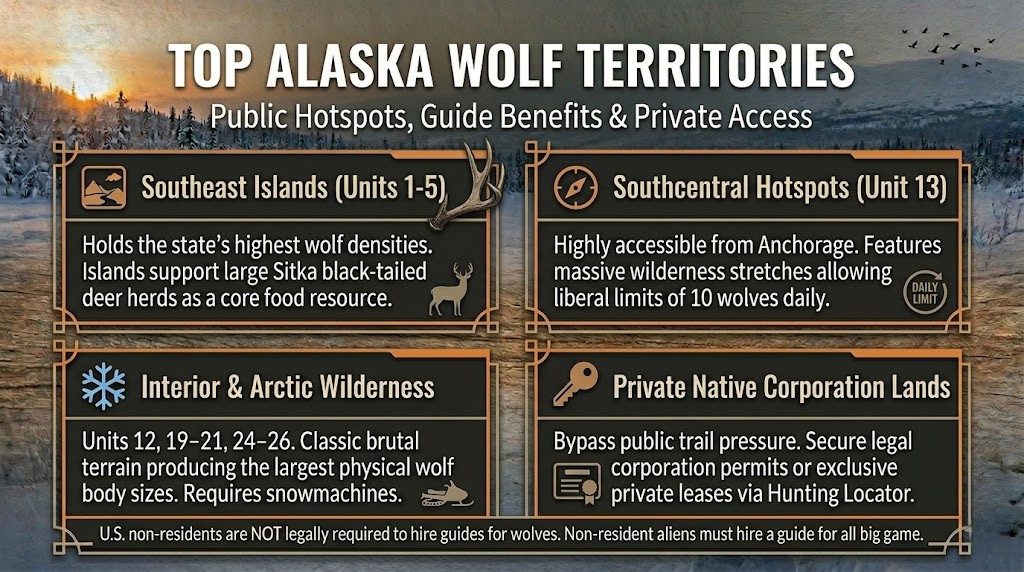
Alaska provides massive public land access for wolf hunting, but success demands understanding where wolf numbers are highest and access is realistic. Alaska Department of Fish and Game data shows “the highest densities occur in Southeast Alaska, where Sitka black-tailed deer serve as the major food source for wolves.”
- Southeast Alaska (Units 1-5): Island hunting with boat access targeting Alexander Archipelago wolves. These wolves run smaller (30-50 lbs) but they’re everywhere, with the state’s highest densities
- Southcentral Alaska (Units 6, 7, 13-16): Accessible from Anchorage with mixed road access and remote areas. Unit 13 allows 10 wolves daily
- Interior Alaska (Units 12, 19-21, 24-25): Classic Alaska wilderness requiring snowmachine or aircraft access in winter. Lower wolf densities but bigger animals
- Western Alaska (Units 17-18, 22-23): Remote and brutal access but incredible opportunities if you’re willing to invest in logistics
- Arctic Alaska (Units 26A-C): Extreme conditions but unique hunting with extended seasons in some subunits
Guided Hunts
Alaska doesn’t require guides for wolf hunting (unlike brown bear, Dall sheep, or mountain goat), but professional outfitters offer huge advantages for non-residents unfamiliar with Alaska’s terrain and conditions. However, nonresident aliens must hunt with Alaska-licensed guides for ANY big game, including wolves.
What to Expect:
- Duration: Typical hunts run 10 days and focus heavily on optics with clients glassing while guides call and spot wolves
- Cost Range: Guided wolf hunts start around $8,500+, with many outfitters adding wolves to other species hunts
- Methods: Professional guides combine “spot, stalk, and calling with high success,” using techniques like “attracting wolves by bait, locating by calling, high seat or drive”
- Timing: Wolf seasons with pros typically run late February through March, with exact dates depending on winter conditions
Private Land Hunting with Hunting Locator
Plenty of prime hunting areas in Alaska are privately owned, with regional and village Native corporations controlling significant acreage. Private land access delivers exclusive hunting away from public land pressure, potentially boosting success rates.
Private land benefits include exclusive access to quality wolf habitat, reduced hunting pressure versus public lands, and opportunities for multi-year lease agreements. Native corporation lands offer permits for hunting bear, wolf, and coyotes on private properties.
Finding quality private land access in Alaska is tough. Landowners are scattered across impossible distances, and connecting with them takes time most hunters don’t have. Hunting Locator fixes this by connecting hunters directly with Alaska landowners offering hunting leases and land sales. Search available properties by location, acreage, and target species. Browse Alaska hunting leases to find your next wolf hunting property.
Wolf Hunting Tips
These tactical insights blend guidance from professional Alaska guides with proven strategies for wolf hunting success across Alaska’s diverse terrain and brutal conditions:
- Stay Mobile: Professional guides report they “typically snowmobile 50-150 miles daily searching for wolves” and can “ride 70-130 miles in a day looking for wolf tracks.” Invest in reliable snowmachines and plan for serious daily mileage
- Master Multiple Calling Methods: Wolves charge into calls during peak response periods. Mix spot-and-stalk with calling, adapting based on wolf behavior and response patterns
- Time It Right: February hits the sweet spot when snow conditions, wolf breeding activity, and weather stability align perfectly
- Gear Up for Cold: Alaska wolf hunting happens in brutal conditions. Quality cold-weather clothing, reliable optics for spotting, predator calls, and firearms that function in extreme cold aren’t optional
- Plan Extended Hunts: Professional hunters consistently say: “Plan on hunting 7 days at a time and you will get your wolf.” Success requires persistence and flexibility for multiple-day hunts
- Use Smart Tracking: Once fresh wolf tracks are found, guides follow them, with one guide tracking through thick trees while another skirts the outside tree line waiting for wolves to flush into open flats
More Resources from Hunting Locator
Expand your Alaska hunting knowledge and opportunities with these resources from Hunting Locator:
- Alaska Hunting Season Guide – Complete season overview across Alaska’s 26 Game Management Units
- Alaska Wolf Hunting – Tactical strategies and expert insights for wolf hunting success
- Alaska Caribou Hunting – Caribou hunting opportunities and migration timing
- Alaska Moose Hunting – Alaska’s premier big game hunting opportunity
- Alaska Brown Bear Season – Brown bear regulations and guided hunt requirements
- Alaska Black Bear Season – Spring and fall black bear hunting strategies
- Alaska Deer Hunting Season – Sitka black-tailed deer hunting in Southeast Alaska
- Alaska Mountain Goat Season – High-country hunting for Alaska’s most challenging species
FAQ
What is the bag limit for wolves in Alaska?
Most units allow 5 wolves per season, while areas like Unit 10 (Aleutian Islands) allow 5 wolves per day. Units 11, 13, and 14 allow up to 10 wolves per day, creating exceptional opportunities for serious wolf hunters.
Do I need a guide to hunt wolves in Alaska as a non-resident?
No, non-residents don’t need guides for wolf hunting in Alaska, unlike brown bear, Dall sheep, or mountain goat hunting. However, nonresident aliens must hunt with Alaska-licensed guides for ANY big game animal, including wolves.
How much does it cost to hunt wolves in Alaska?
Residents pay $45 for an annual hunting license with free wolf tags. Non-residents pay $160 for the license plus $60 for a locking-tag where required, maxing out at $220. Locking-tags aren’t required in Units 1, 3, 9, 10, 12, 13, 15–17, 19–21, and 24–25.
When is the best time to hunt wolves in Alaska?
February hits the sweet spot when snow conditions, wolf breeding activity, and weather stability align perfectly. Most guided operations run late February through March for optimal conditions.
What are the sealing requirements for wolf harvests?
All wolf hides must be sealed within 30 days of harvest at ADF&G offices or authorized sealers. You’ll need to provide harvest location and date information during sealing.
Which Alaska units have the longest wolf seasons?
Units 9 and 10 offer the longest seasons, running August 10, 2026, through June 30, 2027. Units 1A, 1B, 3, and 22 also provide extended seasons through May 31, 2027.
The Final Shot
Alaska’s 2026-2027 wolf hunting season delivers opportunities that simply don’t exist anywhere else. Liberal bag limits, extended seasons, and straightforward regulations create the framework. From Southeast Alaska’s wolf-rich islands to the Interior’s vast wilderness, success comes down to understanding unit-specific rules, timing your hunt right, and securing quality access to productive areas.
Whether you’re planning a DIY public land adventure or booking with a professional outfitter, Alaska wolf hunting success starts with thorough preparation and flexible execution. Get your 2026 wolf hunt rolling by securing licenses, researching target units, and connecting with land access opportunities that’ll give you the edge for a successful Alaska wolf hunting experience.


