This guide breaks down everything you need for the 2026-2027 regulatory year. And here’s something important: Alaska Department of Fish and Game treats brown bears and grizzly bears as the same animal under hunting regulations. No distinction whatsoever.
What you’ll find here:
- Season dates for every Game Management Unit (fall 2026 and spring 2027)
- Complete licensing breakdown with resident vs. non-resident costs
- Mandatory guide requirements that could make or break your hunt
- Best places to hunt, including public lands and exclusive private access through Hunting Locator
Let’s jump into the dates and requirements first, then we’ll tackle the planning details.
Quick Overview: Alaska Brown Bear Hunting at a Glance
Here’s your cheat sheet for Alaska brown bear hunting. These dates and bag limits come straight from Alaska Department of Fish and Game regulations for the 2026-2027 regulatory year (July 1–June 30).
| Game Management Unit | Season Type | Start Date | End Date | Bag Limit |
|---|---|---|---|---|
| Unit 1 | Fall Season | Sep 15, 2026 | Dec 31, 2026 | 1 bear every 4 years |
| Unit 1 | Spring Season | Mar 15, 2027 | May 31, 2027 | 1 bear every 4 years |
| Unit 3 (Residents Only) | Fall/Spring Combined | Sep 15, 2026 | May 31, 2027 | 1 bear every 4 years |
| Units 5, 6A, 6B, 6C | Combined Season | Sep 1, 2026 | Jun 10, 2027 | Unit 5: One bear every four regulatory years. Units 6A, 6B, and 6C: One bear every regulatory year |
| Unit 6D | Combined Season | Oct 15, 2026 | May 25, 2027 | 1 bear every 4 regulatory years |
| Units 7, 11, 12, 15 | Extended Season | Aug 10, 2026 | Jun. 30, 2027 | Units 7, 11, 15: 1 bear every regulatory year Unit 12: 2 bears every year |
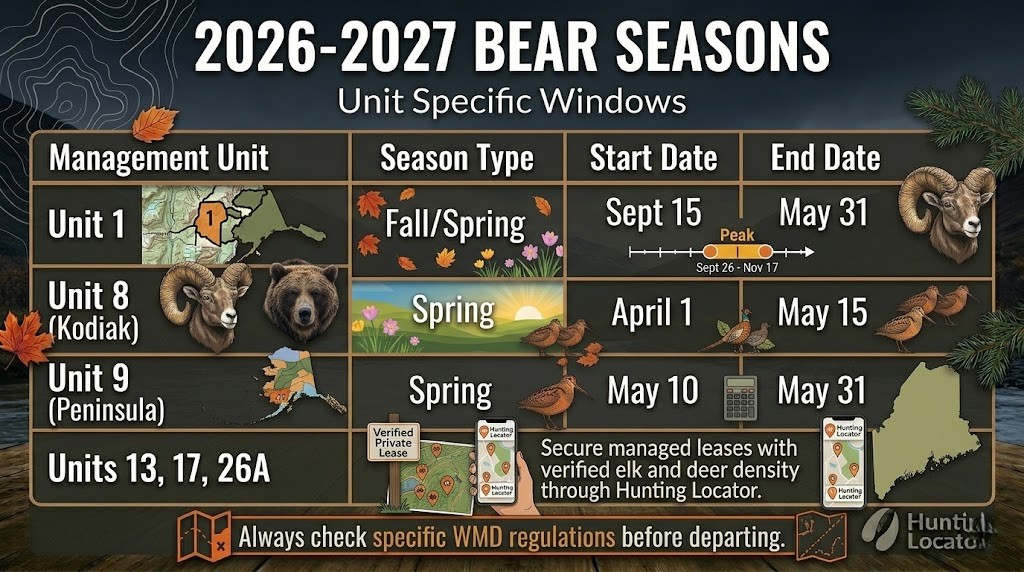
| Unit 8 (Kodiak) | Option 2 | Apr 1, 2027 | May. 15, 2027 | 1 bear every 4 years |
| Unit 9 (Alaska Peninsula) | Option 1 | May 10, 2026 | May 31, 2026 | 1 bear every 4 years |
| Units 13, 17, 21A, 26A | No Closed Season | Year-round | — | 1 to 2 bears per regulatory year |
Big news for 2026: Unit 13 now allows two bears per regulatory year. That’s a game-changer for serious bear hunters.
What you absolutely need before you hunt:
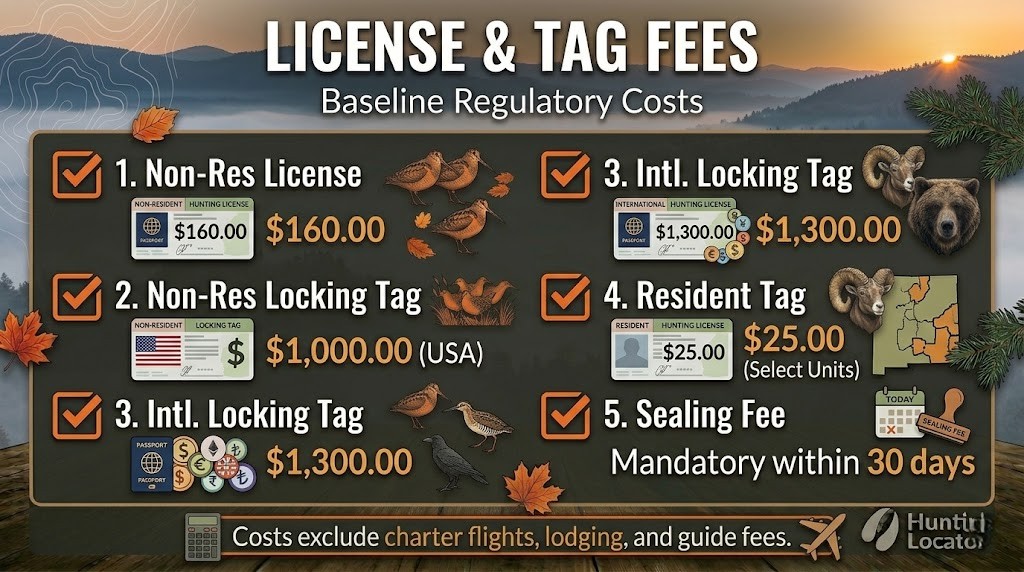
- Alaska Hunting License: Residents pay based on age. Non-residents fork over $160
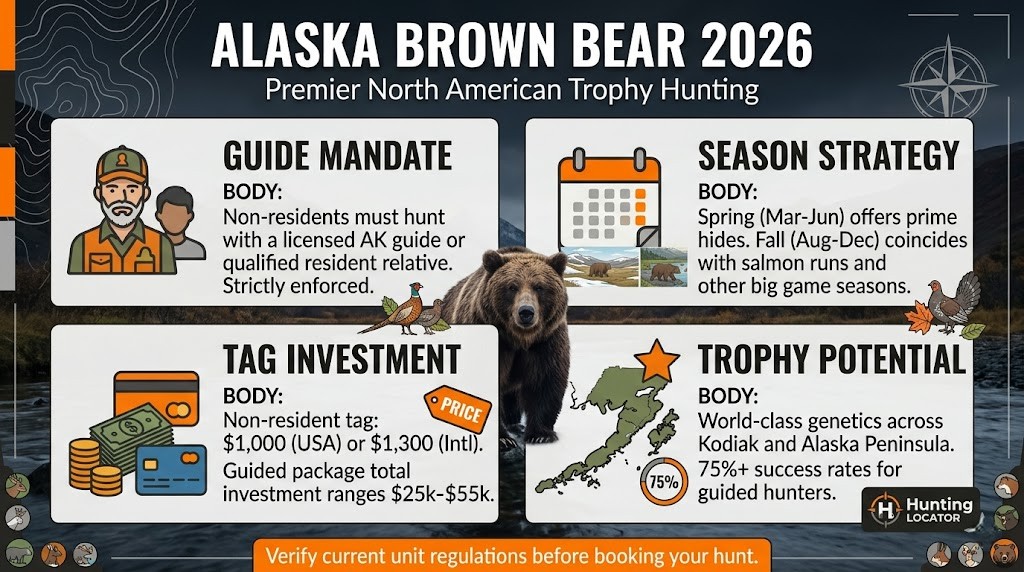
- Brown/Grizzly Bear Locking Tag: Residents need a $25 locking-tag for Units 1-10, 14, and 15. Non-residents (USA): $1,000. Non-residents (International): $1,300
- Guide Requirement (Non-Residents): You must hunt with an Alaska-licensed guide OR an Alaska resident 19+ who’s your spouse, parent, stepparent, sibling, stepsibling, or grandparent
- Permits: Some units require drawing permits (apply by December 15) or registration permits (grab them online at hunt.alaska.gov)
- Sealing Requirement: Every brown/grizzly bear must be sealed. Take the skull and hide to a sealing officer within 30 days
Want the full picture of Alaska hunting? Check out our complete Alaska hunting season guide.
Alaska Brown Bear Hunting Seasons
Alaska structures brown bear seasons around fall and spring periods. Timing changes dramatically depending on which Game Management Unit you’re hunting. Spring hunts are the gold standard for trophy quality and hide condition, but fall hunts offer their own advantages.
Fall Brown Bear Season (September–December 2026)
Fall seasons kick off mid-August and run through December, depending on your unit. Bears are actively feeding before they den up, concentrated around salmon streams and berry patches. September in Western Alaska is peak time—grizzlies hit the streams hard for berries, and interior bears come down the hillsides for their annual fall feast.
Units 7, 11, 12, and 15 start earliest on August 10. Unit 1 begins September 15. Fall hunts work great for combo trips with moose or caribou. Just know that fall hides aren’t as prime as spring hides.
Spring Brown Bear Season (March–June 2027)
Spring seasons run March through early June. Bears emerge from dens with those gorgeous winter coats. Spring hunts are tough physically but produce the best hides. That’s why serious Alaska brown bear hunts happen in spring. Spring hunting means snow machines and snowshoes in many areas, so get ready for a workout.
Unit 9 (Alaska Peninsula) Option 1 runs May 10–31. Unit 8 (Kodiak) Option 2 goes April 1–May 15. You’ll typically see 15-20 bears per hunt, sometimes way more during spring seasons.
Year-Round Hunting Opportunities
Units 13, 17, 21A, and 26A never close. Hunt brown bears 365 days a year if you want. The big news: Unit 13 now allows two bears every regulatory year starting in 2026. That’s huge for harvest opportunities. Even with year-round seasons, timing still matters for hide quality and bear activity.
Alaska Brown Bear Licenses and Permits
Alaska brown bear hunts aren’t cheap, especially for non-residents. These hunts sit at the top of North American big game hunting and require serious planning, budgeting, physical prep, and understanding Alaska’s laws.
Alaska Hunting Licenses
Everyone needs a valid Alaska hunting license before chasing brown bears. Costs and requirements are totally different for residents vs. non-residents.
| License Type | Cost | Notes |
|---|---|---|
| Resident Hunting License | Varies by age | Required for ages 18-59 |
| Non-Resident Hunting License | $160 | Annual license |
| Non-Resident Alien Hunting License | $160.00 | Additional guide requirements apply |
Brown/Grizzly Bear Tag Requirements:
| Tag Type | Cost | Required Units |
|---|---|---|
| Resident Locking Tag | $25.00 | Units 1-10, 14, and 15 |
| Non-Resident Tag (USA) | $1,000 | All units |
| Non-Resident Tag (International) | $1,300.00 | All units |
Beyond licenses and tags, most guided non-resident hunts run $25,000 to $55,000. Peninsula guided hunts cost $26,000 to $40,000. Add round trip air charter from Kodiak to camp: $1,700 plus a $200 Hunters Preservation Fund contribution.
Alaska Brown Bear Permits
Alaska uses three permit types for brown bear hunting: general season (just need license and tag), registration permits, and drawing permits. Draw hunts represent only a small slice of total brown/grizzly permits available in Alaska.
Drawing Hunt Permits:
Applications open November 1–December 15. Results come out the third Friday in February. You can apply for the same hunt choice up to six times on your application, with each choice getting equal odds—potentially six times better chances. Alaska runs pure lottery draws.
Registration Hunt Permits:
Registration permits work first-come, first-served. Get them online at hunt.alaska.gov or in person in Douglas, Haines, Ketchikan, Petersburg, and Sitka. Some registration hunts limit you to one bear every four regulatory years.
Reporting Requirements:
All hunters—successful, unsuccessful, or didn’t hunt—must report by July 15 to ADF&G by phone, mail, or online.
Where to Hunt Alaska Brown Bear
Alaska offers incredible variety for brown bear hunting. Coastal rainforests, interior tundra, you name it. Prime regions include the Alaska Peninsula, Kodiak Island, and Southeast Alaska. Each area delivers unique hunting experiences and trophy potential.
Best Public Lands
Alaska’s massive public lands provide tons of brown bear hunting opportunities across different ecosystems:
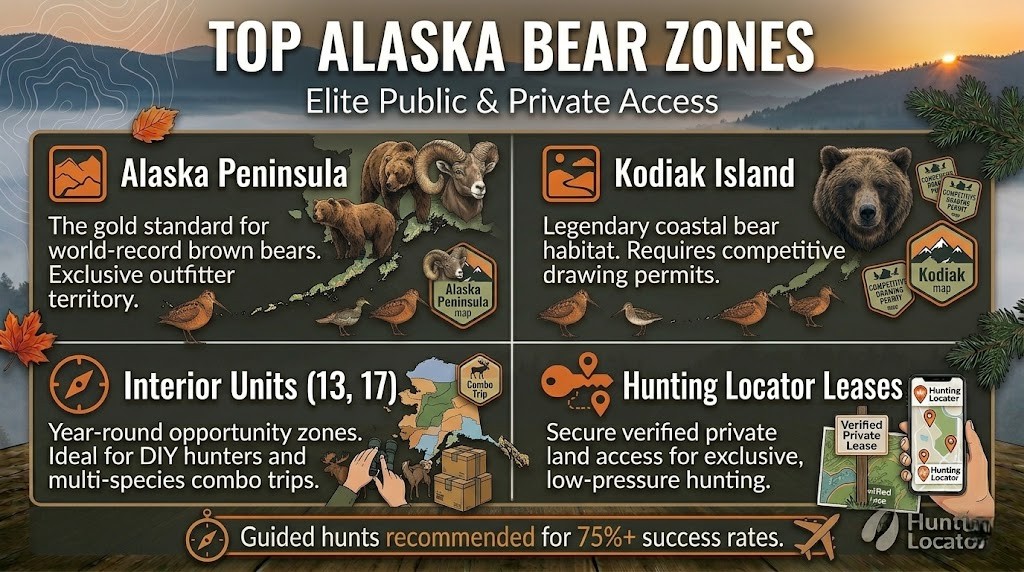
- Alaska Peninsula: Home to some of the world’s biggest brown bears. Excellent spot-and-stalk hunting across huge tundra landscapes
- Kodiak National Wildlife Refuge: World-famous for Kodiak bears, but permits are limited and super competitive
- Chugach National Forest: Brown bear hunting in Southeast Alaska’s coastal rainforest
- Arctic National Wildlife Refuge: Remote interior grizzly hunting in pristine wilderness
- Denali National Park Preserve: Hunting allowed in preserve areas with incredible mountain scenery
Want more Alaska hunting info? Check out our guides on Alaska caribou hunting, Alaska moose hunting, and Alaska black bear hunting season.
Guided Hunts
Non-resident hunters must use licensed Alaska guides or hunt with qualifying Alaska resident relatives. Quality outfitters often book two or more years ahead, so plan early. Guided non-resident hunters average 75% success—way higher than unguided resident success rates.
Quality guided hunts include professional guide services with local knowledge, base camp facilities and meals, transportation to hunting areas, field care of harvested animals, and help with regulations and paperwork. When picking an outfitter, talk to previous clients who hunted the same season you’re considering.
Private Land Hunting with Hunting Locator
Most Alaska brown bear hunting happens on public lands, but private land opportunities exist for hunters wanting exclusive access. Private land hunting means less pressure and potentially better success rates compared to heavily hunted public areas.
Hunting Locator connects hunters with private landowners throughout Alaska who lease or sell hunting rights. Our platform gives you access to exclusive hunting opportunities you won’t find through traditional public land hunting.
Browse verified private hunting opportunities across Alaska at Hunting Locator’s Alaska hunting leases. Our platform connects you directly with landowners willing to lease or sell hunting rights, helping you secure exclusive access that can turn a good hunt into an exceptional one.
Brown Bear Hunting Tips
Success in Alaska brown bear hunting requires careful prep, proper gear, and understanding bear behavior. These tips will boost your chances of a successful and safe hunt:
- Physical Conditioning: Alaska brown bear hunting is brutal physically, especially spring hunts with snowshoes and snow machines. Start conditioning months before your hunt
- Quality Optics: You’ll spend many hours glassing and surveying shorelines, so invest in top-quality binoculars and spotting scopes
- Shooting Practice: Hunters should practice various field shooting positions, including offhand and prone. Practice shooting at different ranges and positions you’ll face in the field
- Weather Preparation: Alaska weather changes fast. Pack layers and quality rain gear for coastal hunts, insulated clothing for spring hunts in snow
- Trophy Evaluation: Learn to judge bear size and trophy quality in the field. Coastal bears are generally bigger than interior grizzlies, with mature boars showing massive heads and broad shoulders
- Safety Protocols: Always follow your guide’s safety instructions. Brown bears are dangerous game—proper safety procedures are essential
More Resources from Hunting Locator
Expand your Alaska hunting knowledge with these guides and resources:
- Alaska Hunting Season Guide – Complete overview of all Alaska hunting seasons and regulations
- Alaska Deer Hunting Season – Sitka blacktail deer hunting throughout Southeast Alaska
- Alaska Mountain Goat Hunting Season – High-country hunting for one of Alaska’s most challenging species
- Alaska Wolf Hunting – Predator hunting opportunities across the state
- Alaska Bison Hunting Season – Limited draw opportunities for Alaska’s largest land mammal
- Alaska Muskox Hunting Season – Unique hunting opportunities for prehistoric-looking game
- Alaska Small Game Hunting Season – Grouse, ptarmigan, and other small game opportunities
- Alaska Furbearer Trapping Season – Trapping regulations and opportunities for fur-bearing animals
FAQ
When is the best time to hunt brown bear in Alaska?
Spring seasons (March-June) are hands down the best for brown bear hunting because bears come out of dens with prime winter coats. Spring hunts are tough physically but produce the best hides, which is why most high-end Alaska brown bear hunts happen in spring. Fall hunts offer different opportunities but the hides aren’t as good.
Do non-residents need a guide for Alaska brown bear hunting?
Absolutely. All non-resident hunters pursuing brown bears must hunt with a licensed Alaska guide OR an Alaska resident 19+ who’s your spouse, parent, stepparent, sibling, stepsibling, or grandparent. This requirement is mandatory and strictly enforced.
How much does an Alaska brown bear hunt cost?
Most guided non-resident hunts cost $25,000 to $55,000. Add the $1,000 non-resident brown bear tag, $160 hunting license, transportation costs, and tips. Peninsula guided hunts run $26,000 to $40,000.
What is the success rate for Alaska brown bear hunting?
Guided non-resident hunters average 75% success—way higher than the 35% success rate for Alaska residents. Success rates vary by region, season timing, and hunting conditions.
Which Alaska units have the longest brown bear seasons?
Units 13, 17, 21A, and 26A never close—hunt year-round. Units 7, 11, 12, and 15 offer extended seasons from August 10, 2026, through June 30, 2027. Unit 13 now allows two bears per regulatory year starting in 2026.
How far in advance should I book an Alaska brown bear hunt?
Quality outfitters often book two or more years ahead. Popular outfitters and prime hunting dates fill up fast, so early planning and booking are essential for getting your preferred hunt timing and location.
The Final Shot
Alaska brown bear hunting is the ultimate North American big game experience. You’re pursuing one of the continent’s most incredible predators in some of the world’s most pristine wilderness. Whether you’re planning a spring hunt for prime hides or a fall hunt to combine with other species, success comes down to understanding Alaska’s complex regulations, choosing the right outfitter, and preparing for the physical and financial demands of this ultimate hunting adventure.
Ready to start planning your Alaska brown bear hunt? Visit Hunting Locator to explore private hunting opportunities, connect with experienced outfitters, and access the resources you need to make your Alaska brown bear hunting dreams happen.


