This South Dakota elk guide covers season dates, license types, fees, the draw process, and where you can realistically find access this year, whether you’re a resident chasing a Black Hills bull or a non-resident trying to figure out what’s actually open to you.
Here’s what’s covered:
- 2026 season dates, license types, and resident fees — the numbers you need to plan and budget your season.
- How the draw and application process works — a step-by-step look at South Dakota’s elk lottery, including deadlines and preference points.
- Where to hunt — public land, private leases through Hunting Locator, and guided hunt options.
Quick Overview
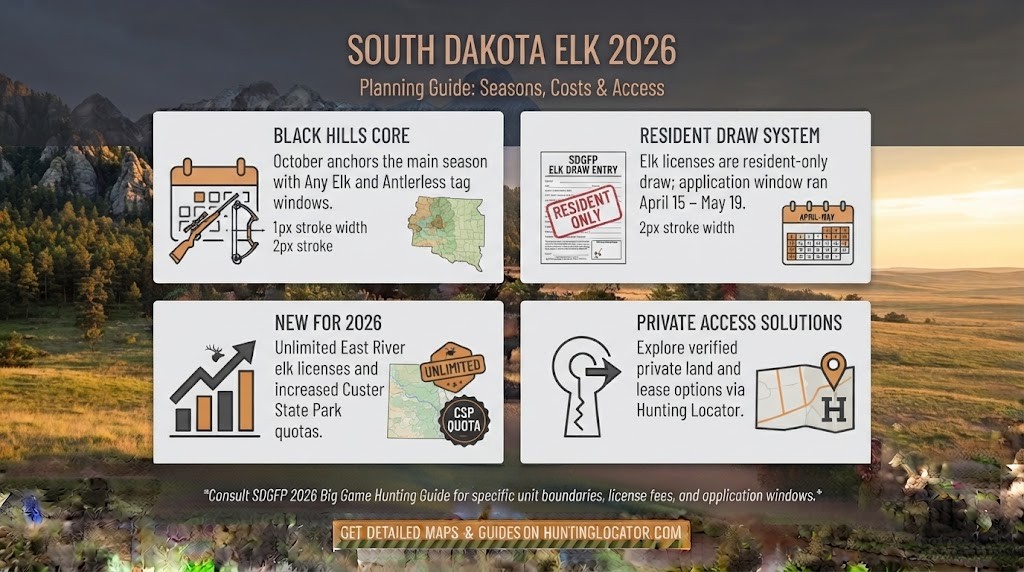
Here’s an at-a-glance reference for the 2026 season. Unit-specific dates can vary, so confirm final details with South Dakota Game, Fish & Parks (GFP) before you head out.
| Season Type | Dates | Bag Limit | Notes |
|---|---|---|---|
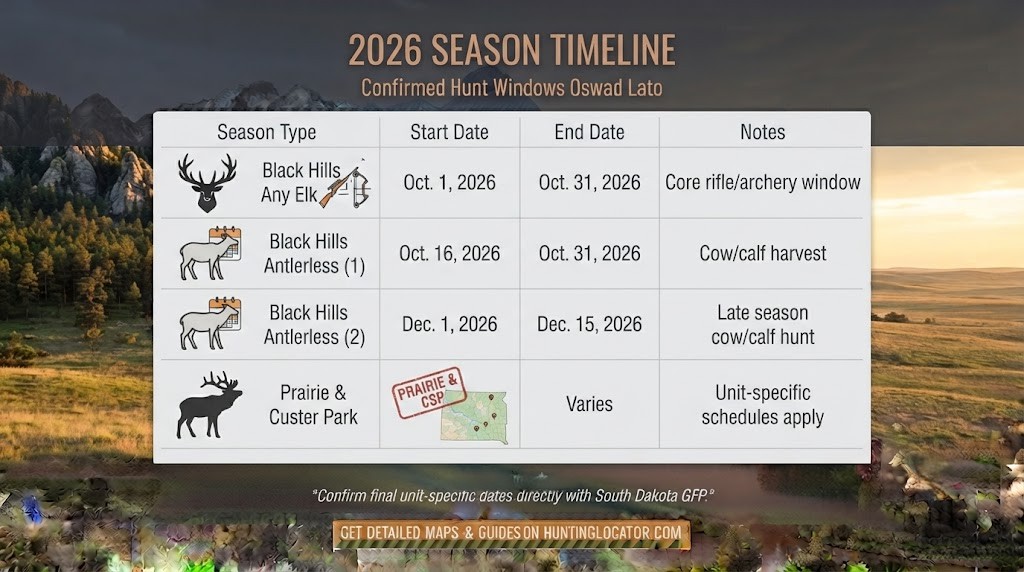
| Black Hills “Any Elk” | October 1 – October 31 | 1 elk per tag | Rifle/archery seasons vary by unit |
| Black Hills “Antlerless Elk” | October 16 – October 31 & December 1 – December 15 | 1 elk per tag | Cow/calf only |
| Prairie & Custer State Park Units | Dates vary by unit — confirm with GFP | 1 elk per tag | Premium Custer State Park tags; new-for-2026 quota increases |
What’s new for 2026: South Dakota approved expanded 2026 elk opportunities, including unlimited elk licenses east of the Missouri River and an increase in Custer State Park antlerless permits — from a cap of 20 up to 100 possible tags — as the state manages a growing herd.
Before applying for any of these seasons, a few requirements need to be in place:
- Valid South Dakota hunting license — the base requirement before you can apply for an elk tag.
- Hunter education (HuntSAFE) — required for hunters 16 and younger, including an in-person field day as part of the hunter education requirement.
- Drawn elk license — elk hunting in South Dakota is draw-only; tags aren’t sold over the counter, with the exception of the new unlimited East River licenses.
For more detail, see the full South Dakota elk hunting season breakdown.
South Dakota Elk Hunting Seasons
South Dakota organizes elk hunting by region, weapon type, and elk classification rather than a single statewide season. The Black Hills carry most of the activity, with October as the core stretch, while prairie and Custer State Park units offer distinct opportunities of their own.
Black Hills Any Elk Season
The Black Hills “Any Elk” season runs October 1 – October 31. A drawn license allows a bull or a cow, depending on the unit and weapon restrictions printed on the tag. It’s the most sought-after elk season in the state and typically requires significant preference points to draw.
Black Hills Antlerless Elk Season
The Antlerless season runs October 16 – October 31 and again December 1 – December 15, restricted to cow and calf elk. At $127, it costs less than the Any Elk license and generally comes with better draw odds, which makes it a reasonable choice for a meat hunt or for hunters prioritizing a higher chance of drawing.
Custer State Park & Prairie Units
Custer State Park offers a premium, tightly limited hunt with its own fee structure — $306 for an Any Elk license — and dates that vary by unit and season type. Beyond the Black Hills, prairie units add opportunities across South Dakota’s open country, including the growing East River population.
For 2026, Custer State Park’s antlerless quota rose from 20 permits to as many as 100, with roughly 50 cow tags expected to be issued, as the park works to bring its elk population back toward target levels. (Antlerless elk means cow or calf, not bull.) Confirm exact Prairie and Custer State Park dates directly with GFP, since unit-specific schedules can shift year to year.
South Dakota Elk Licenses and Permits
Elk hunting in South Dakota requires a base hunting license plus a separately drawn elk license. Every elk license, regardless of type or unit, goes through the state’s draw system, so it’s worth understanding the fees and application process before planning your season.
South Dakota Elk Licenses
Fee breakdown for 2026:
| License Type | Who Can Hunt | Fee |
|---|---|---|
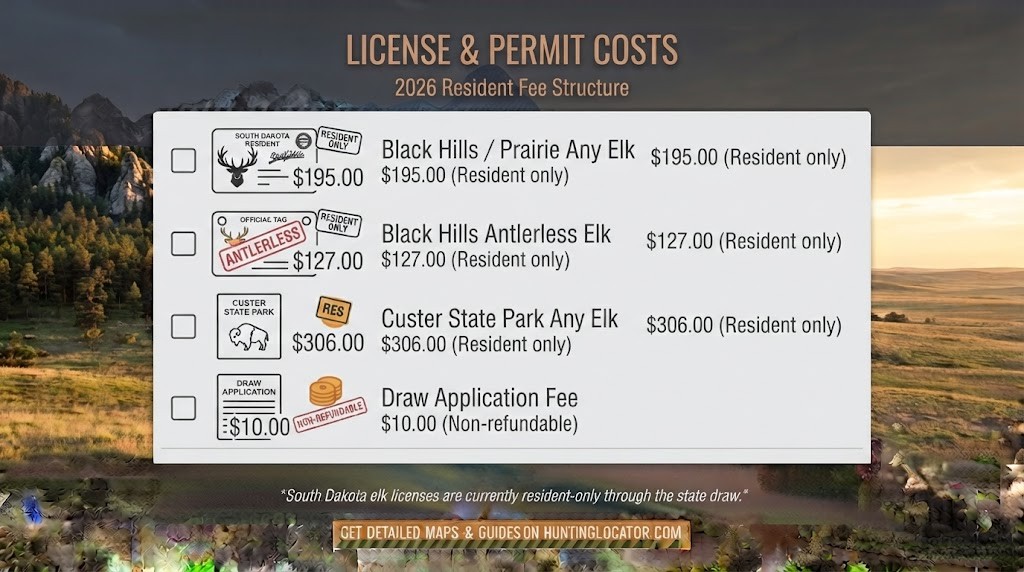
| Black Hills / Prairie – Any Elk | Residents only | $195 |
| Black Hills / Prairie – Antlerless Elk | Residents only | $127 |
| Custer State Park – Any Elk | Residents only | $306 |
| Application Fee (all draws) | All applicants | $10 (non-refundable) |
An “Any Elk” tag covers bull or cow; “Antlerless” covers cow/calf only and costs less. Both carry the same bag limit — one elk per issued tag, restricted to the specific unit, weapon, and elk type listed on the license.
Elk licenses in South Dakota are resident-only, a rule covered in more detail in the “where to hunt” section below. Fees can shift slightly year to year, so check with GFP before submitting an application.
South Dakota Elk Permits & Draw Application
Elk hunting here is draw-only, so understanding the lottery matters as much as knowing the season dates. Preference points accumulate each year you apply and don’t draw, improving your odds in future years.
The 2026 application process, step by step:
- Hold a valid South Dakota hunting license before applying — required before submitting an elk application.
- Apply during the 2026 window: April 15 – May 19, 2026, with the first draw closing at 8:00 AM CDT. Full details are in the official GFP elk application.
- Pay the $10 non-refundable application fee. If you’re drawn, the full license fee is applied automatically.
- First-draw results post May 27, 2026.
- If you’re not drawn, a second draw runs May 28 – June 15, 2026, giving you another shot at an available tag.
A few rules worth knowing before applying:
- One choice per season, first draw — no second choices in the first drawing, though you may apply for each season you’re eligible for.
- One elk license per year — residents are limited to a single elk license annually, regardless of how many seasons they apply for.
- Preference-point forfeiture — using preference points to draw certain seasons forfeits all your points and locks you out of that season’s first draw for nine years.
- Custer State Park repeat rule — previous Early Archery or Firearms Elk recipients can’t reapply for those same seasons.
Where to Hunt Elk in South Dakota
Once the license and application are settled, the next question is where you’ll actually hunt. South Dakota offers three main paths — public land, private access, and guided hunts — and access research matters more here than for many other species.
Best Public Lands
The Black Hills region holds the core of South Dakota’s elk population, and a large share of it sits on public ground.
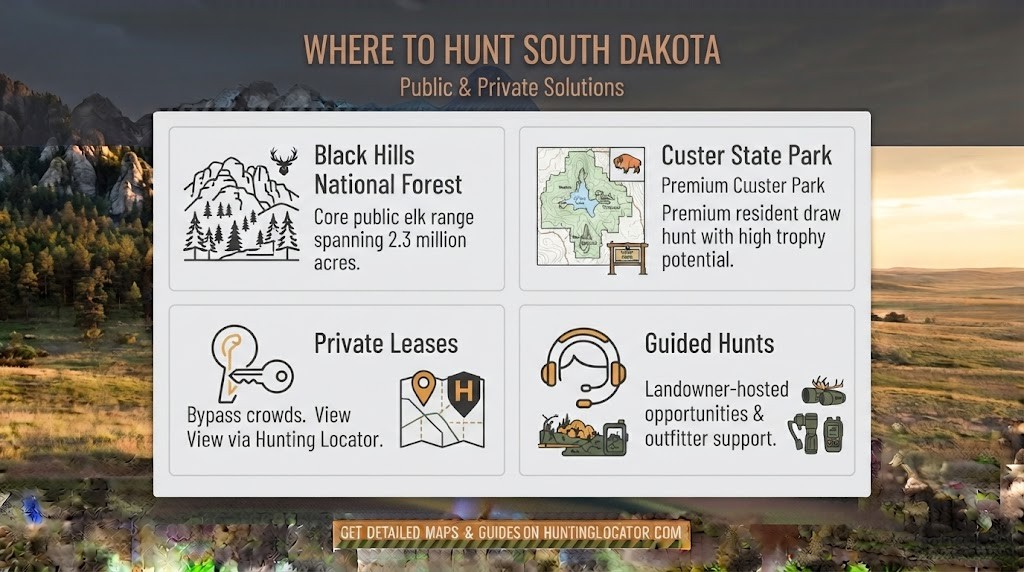
- Black Hills National Forest — the primary public elk range in the state, with public land available for hunting across a substantial portion of its 2.3 million acres.
- Custer State Park — a public draw hunt known for strong trophy potential, though it remains resident-only.
- Prairie / East River public parcels — an emerging opportunity tied to the 2026 unlimited-license expansion east of the Missouri River.
Public elk hunting in South Dakota rewards hunters willing to scout thoroughly and hike past the easy access points. For those looking for a lower-friction alternative, private land is worth considering.
Private Land Hunting with Hunting Locator
Private land offers less-pressured elk, controlled access, and a direct relationship with the people managing the property. Whether you’re leasing seasonal access for this season or buying land for long-term hunting rights, private ground opens options that a crowded public unit can’t match.
That’s the gap Hunting Locator fills. The platform connects hunters directly with landowners ready to lease or sell hunting land, cutting out the guesswork and time pressure that come with searching for quality access on your own. Instead of cold-calling landowners or hoping a public unit isn’t overrun, you can browse verified listings and connect directly with the people who control the ground.
Browse current South Dakota hunting leases to see what’s available.
Non-Resident Access: What You Can Do
South Dakota elk licenses are resident-only, which means non-residents cannot draw a state elk tag under current regulations. Worth knowing before building a trip around a hunt that isn’t currently available to you.
That said, non-residents have other options:
- Species non-residents CAN hunt — South Dakota welcomes out-of-state hunters for South Dakota deer season, antelope hunting season, and buffalo hunting season — all solid options for a South Dakota trip.
- Private-land access — landowner-controlled ground doesn’t carry the same residency restrictions as the state draw, so browsing available leases is a reasonable way to start building relationships and access for future seasons.
South Dakota still has plenty to offer non-resident hunters; it’s a matter of pointing plans toward the species and access options currently available.
Guided Hunts
Whether a guided elk hunt makes sense depends on experience level, budget, and how much value you place on having logistics handled.
- Pros — local knowledge, established land access, handled logistics, and generally higher success rates for hunters new to elk or the region.
- Cons — higher cost, less independence in the field, and the need to vet who you’re hunting with.
Before committing to a guided hunt, check for proper licensing, verifiable references from past clients, clarity on what land access is included, and honest numbers on realistic success rates.
Many private-ranch listings in Hunting Locator’s South Dakota lease listings include guided or landowner-hosted opportunities, giving you a vetted starting point.
Elk Hunting Tips
A handful of field-tested fundamentals matter most for a productive South Dakota hunt:
- Hunt the edges of pressure — hike past the easy logging-road access points, and glass ridges at first and last light when elk are most active.
- Learn basic elk calling — bugles and cow calls can pull bulls into range during the rut-influenced parts of the season; practice before you’re in the field.
- Prioritize glass and optics — quality binoculars turn distant Black Hills ridgelines into real scouting opportunities instead of guesswork.
- Dress for October swings — layer for cold mornings and surprisingly warm afternoons, both common in the Black Hills this time of year.
- Match your weapon to your season — double-check rifle versus archery rules on your specific drawn license before heading out.
If your gear needs an update before opening day, browse elk hunting gear in the Hunting Locator store.
More Resources from Hunting Locator
- Master Hub: all South Dakota hunting seasons — a season-by-season starting point for every species in the state.
- Platform: Hunting Locator platform — find and secure land access anywhere in South Dakota.
- South Dakota Leases: browse South Dakota leases — current lease and land-for-sale listings across the state.
- Store: the Hunting Locator store — gear for your next hunt, whatever species you’re chasing.
- Big Game Guides:
- elk hunting deep dive — an in-depth look at everything elk-specific in South Dakota.
- deer season guide — dates, licenses, and access for South Dakota’s most popular big game hunt.
- antelope season guide — everything for a prairie pronghorn hunt.
- buffalo season guide — details on South Dakota’s bison hunting opportunities.
- bighorn sheep season — coverage of this limited, mountain-country hunt.
- mountain lion season — rules and strategy for South Dakota’s big cat season.
- Small Game & Birds:
- turkey season guide — spring and fall turkey hunting details.
- waterfowl season guide — duck and goose season information statewide.
- upland game season — pheasant, grouse, and other upland opportunities.
- small game season — rounding out your South Dakota hunting calendar.
Frequently Asked Questions
Can non-residents hunt elk in South Dakota?
No — South Dakota elk licenses are resident-only, and non-residents cannot draw an elk tag through the state’s draw system. Non-residents can still pursue deer, antelope, and buffalo, and can secure private-land access through Hunting Locator for future opportunities as regulations evolve.
How much does a South Dakota elk license cost in 2026?
Resident fees for 2026 are $195 for Any Elk, $127 for Antlerless Elk, and $306 for a Custer State Park Any Elk license, plus a $10 non-refundable application fee for all draws. Fees can adjust slightly year to year, so confirm current pricing with GFP before applying.
When can I apply for a 2026 South Dakota elk tag?
The application window runs April 15 through May 19, 2026, closing at 8:00 AM CDT. First-draw results are released May 27, with a second draw running May 28 through June 15. You’ll need a valid South Dakota hunting license before you can apply.
What’s the difference between Any Elk and Antlerless Elk licenses?
An Any Elk license ($195) permits harvest of a bull or cow elk, while an Antlerless Elk license ($127) restricts harvest to cow or calf elk only. Antlerless tags are typically cheaper and easier to draw, but both carry the same bag limit of one elk per issued tag.
How do preference points work for South Dakota elk?
Preference points accumulate each year you apply and don’t draw, improving your odds in future years. Be aware that using points to draw certain seasons forfeits all your points and locks you out of that season’s first draw for nine years.
What’s new for South Dakota elk hunting in 2026?
South Dakota expanded elk hunting opportunities for 2026, introducing unlimited elk licenses east of the Missouri River and raising Custer State Park’s antlerless permit cap from 20 to as many as 100. The changes are driven by herd growth and ongoing crop-damage management concerns.
Where can non-residents find elk-country land access?
Non-residents can explore Hunting Locator’s South Dakota lease and land listings for private-land access, along with guided or landowner-hosted hunting options tied to those properties. Private land access can open doors that state tag restrictions currently don’t allow.
The Final Shot
Success this season comes down to knowing your 2026 dates, with the Black Hills’ October stretch as the core of the action; understanding the resident-only draw and its fee structure; and locking down where you’ll hunt before the crowds do. Confirm final dates with GFP, secure your base hunting license, apply within the April 15–May 19 window, and start scouting access now rather than waiting until fall.
Hunting Locator can help with the access side — connecting you with landowners and land opportunities so you spend less of your season searching and more of it hunting. Browse South Dakota hunting leases or explore the full Hunting Locator platform to see what’s available near you.


