Here’s the thing about crossbow hunting—it’s way more approachable than traditional archery, but there’s still plenty to learn before you head into the woods. This guide covers everything from the legal stuff (boring but necessary) to that incredible moment when you’re field dressing your first crossbow harvest.
Here’s what we’re covering:
- Getting legal without getting lost in regulations
- Gear that actually matters for beginners
- Real hunting tactics that work in the field
Let’s jump into the stuff that’ll keep you out of trouble with game wardens.
Know Before You Go: Essential Prep
Here’s what drives me crazy about hunting regulations—they change faster than gas prices, and every state seems determined to be different. Crossbow hunting laws are rapidly evolving with many states modernizing to increase hunter access while maintaining safety. But here’s the reality: you absolutely have to get this right before you spend a dime on gear.
Regulations Check: Your State-by-State Starting Point
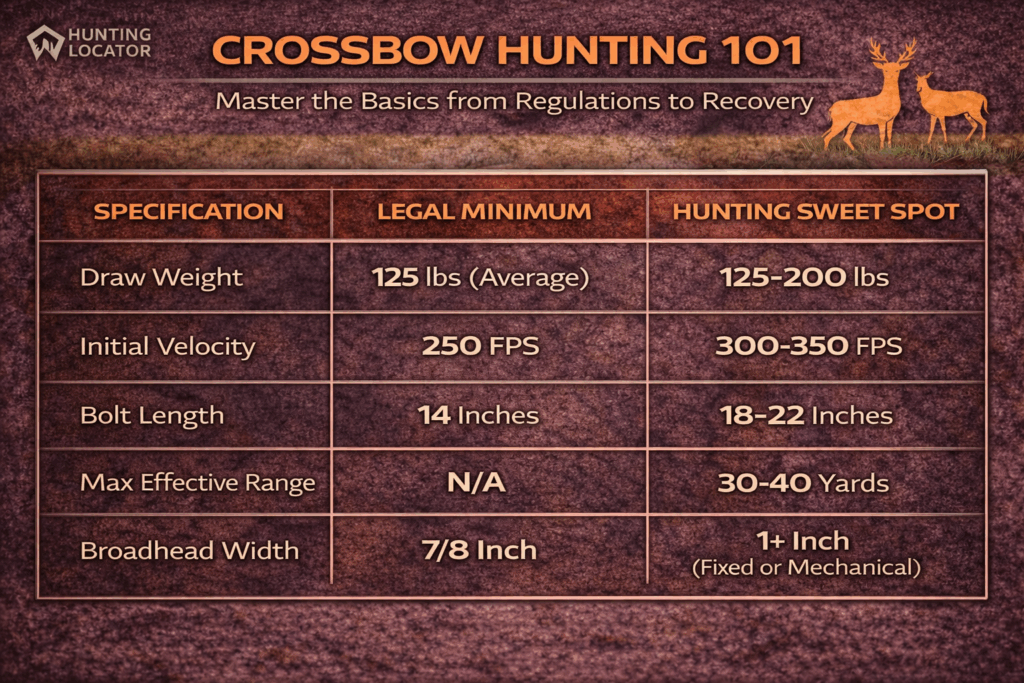
The numbers are encouraging. Crossbows are legal during archery season in 28 states and during a portion of archery season in 2 more. But don’t let that fool you into thinking it’s simple. Take Illinois—they want crossbows with 125 to 200 lb draw weight, minimum 24-inch length, bolts of at least 14 inches, broadheads of at least 7/8-inch diameter, and mechanical safety. That’s pretty specific.
Your pre-hunt homework list:
- Season dates for crossbow hunting in your area
- Equipment specs your state actually requires
- County restrictions (yes, they exist—In West Virginia, crossbows are not legal in Logan, Mingo, Wyoming, and McDowell counties)
- Hunter education requirements
- Transport rules (It is illegal to transport a crossbow in a car or any motorized vehicle with the arrow seated on the flight rail in California)
Money Talk: If you’re hunting out of state, brace yourself. Arizona requires a $160 combo Hunt/Fish License, while West Virginia charges $119 for non-residents. Always double-check current prices because they love raising fees.
Action: Securing Your License and Tags
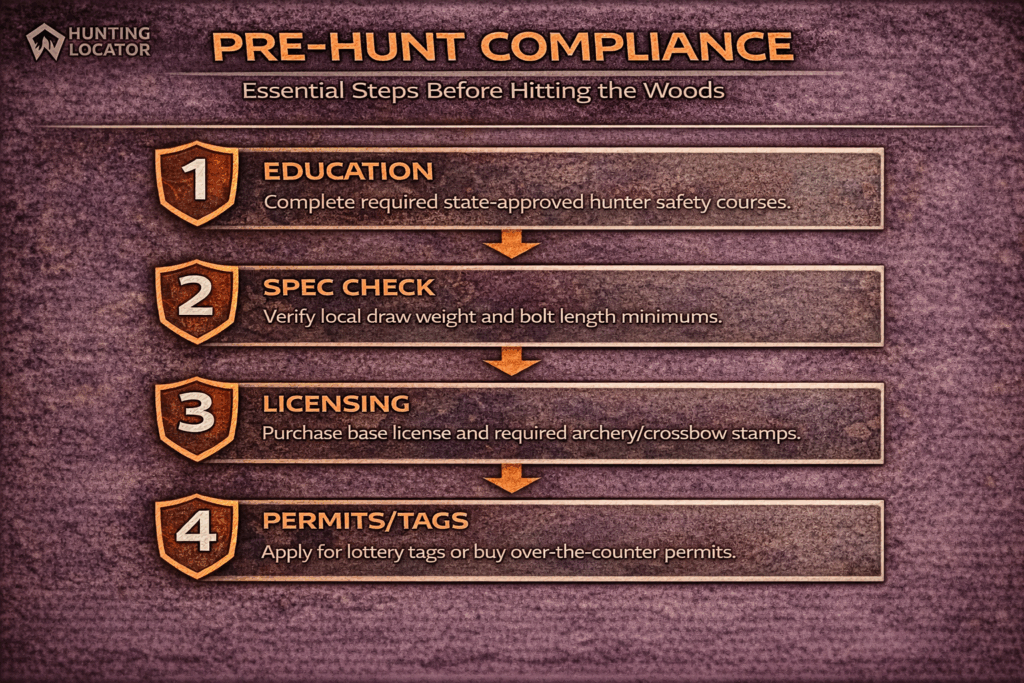
Most states make you jump through hoops, and Georgia’s a perfect example. Any residents and non-residents born on or after January 1, 1961, who wish to obtain a hunting license in Georgia must successfully complete a hunter education course. Here’s your step-by-step:
- Knock out hunter education (many states offer online courses now)
- Buy your hunting license through your state’s wildlife agency website
- Add crossbow permits if your state requires them
- Apply for tags based on what you want to hunt
- Check tag availability—some are lottery-only, others you can buy over the counter
Scouting & Habitat: Finding Your Hunting Ground
Here’s something most people don’t realize about crossbow season timing. Bow season generally falls in the pre-rut season when male deer will be highly mobile and visible, and it is also a warmer season than many gun seasons, making it more comfortable for the hunter. That’s actually huge for beginners—you get active deer and comfortable weather.
Reading Deer Sign for Crossbow Hunters
Forget complicated tracking courses. Focus on these obvious signs:
- Fresh tracks around water and food sources
- Tree rubs where bucks have been marking territory
- Ground scrapes that look like communication hubs
- Worn trails connecting bedding areas to feeding spots
- Fresh droppings showing recent activity
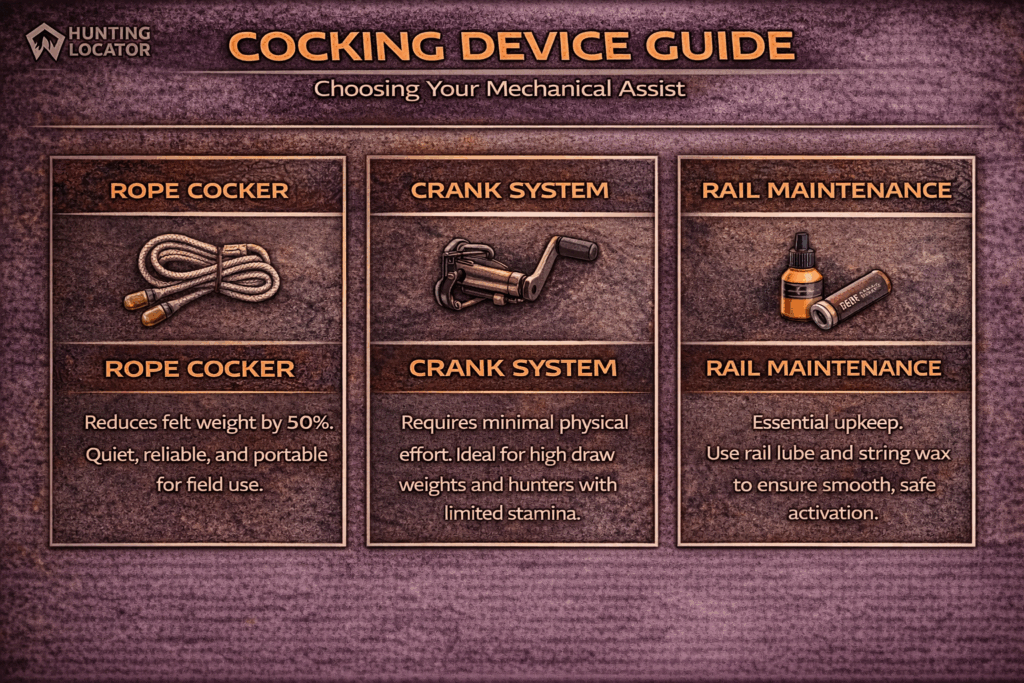
Use hunting apps to find the perfect spot to try out your new crossbow or ask a friend where they prefer to go each season. Technology makes scouting so much easier than it used to be.
Physical & Gear Readiness
This is where crossbows really shine for accessibility. Due to modern bow mechanics, crossbow hunting doesn’t put the same physical strain on the body that drawing a traditional bow repeatedly does, giving wounded veterans, younger hunters, and hunters with disabilities a chance to enjoy the bow season.
Your physical prep is pretty straightforward—practice sitting still for long periods, get comfortable with different shooting positions, and make sure you can safely get into a tree stand if that’s your plan. The gear choices matter way more than being in perfect shape.
Core Gear Checklist: Setting Yourself Up for Success
Let’s cut through the marketing nonsense. As a beginner, focusing on factors such as ease of use, draw power, and accuracy is more critical than getting caught up in fancy features you don’t understand yet.
Quick note for experienced hunters: If you’re coming from compound bow or rifle hunting, most of your gear transfers over. Focus your crossbow budget on the weapon itself, quality bolts, broadheads, and a reliable cocking device.
Choosing Your Crossbow: Key Specifications Explained
The draw weight conversation gets confusing fast. Most crossbows start with a draw weight of 80 pounds, but from a hunting point of view, 40 pounds is a good starting point. For deer hunting, though, most states want at least 125 lbs.
| What Matters | Legal Minimum | Sweet Spot |
|---|---|---|
| Draw Weight | 125 lbs (most states) | 125-200 lbs |
| Arrow Speed | 250 FPS | 300-350 FPS |
| Hunting Range | — | 30-40 yards |
| Bolt Length | 14 inches minimum | 18-22 inches |
Speed matters for clean kills. Choose your crossbow to fire your hunting arrows at an initial velocity of at least 250 to 300 FPS. By generating this speed, the arrow will gain enough kinetic energy to kill any large prey cleanly. Most people consider 40 yards the maximum effective range for a crossbow that shoots over 300 fps.
Budget-friendly option: the Barnett Jackal costs around $300, and comes with power, accuracy, and safety that is just right for a beginner.
Arrows, Bolts & Broadheads: Your Ammunition Essentials
This is where beginners mess up most often. Choosing the correct arrows and broadheads is really important for hunting, especially mechanical broadhead tuning, which can be a challenge for the fastest crossbows.
What you need to know:
- Match everything to your crossbow’s specs—weight, length, the works
- Broadhead choice: Fixed blade is more forgiving for beginners, mechanical flies better but can be finicky
- Size requirements: Most states want at least 7/8 inch broadhead diameter
- Practice with hunting setup: Always sight in with the exact bolts and broadheads you’ll hunt with
Don’t cheap out on ammunition. Quality bolts and broadheads are where your money makes the biggest difference. Check out our arrows, points, and broadheads selection.
Optics & Sighting Systems
Crossbow scopes are weird compared to rifle scopes. Most crossbow scopes are second focal plane, meaning the reticle size stays the same even as the scope’s magnification changes, which means the graduated holdover points change as you zoom in or out. For the lobbing trajectory of an arrow, that’s a big deal.
Bottom line: It is important to sight in and practice your distances before jumping in the tree stand. A decent scope makes accurate shots possible. Browse our archery sights for crossbow-specific options.
Cocking Devices & Accessories
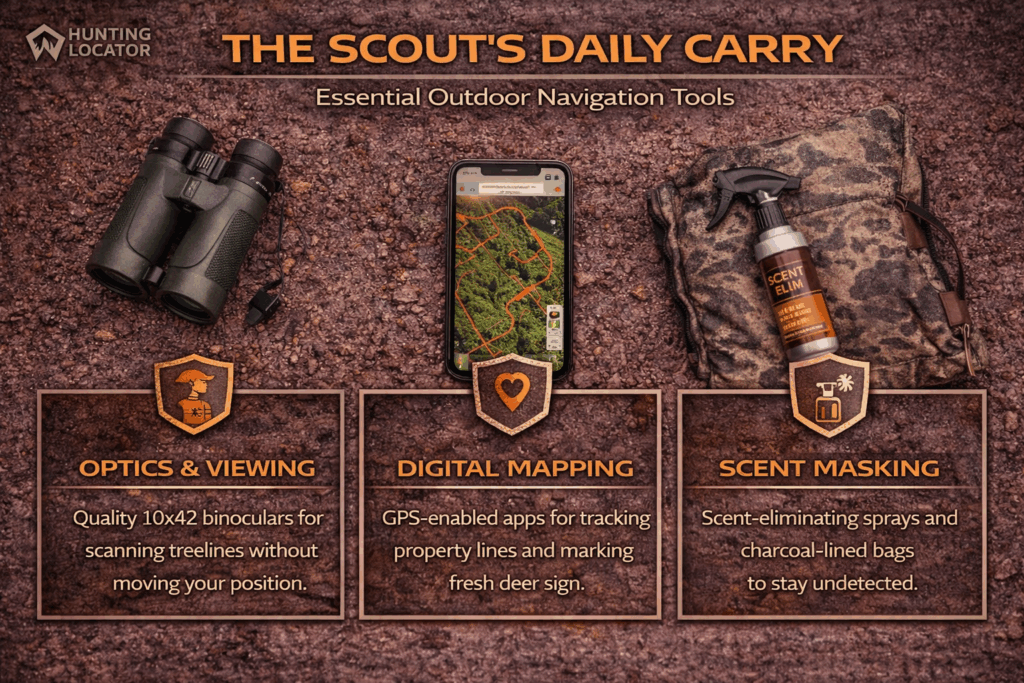
Your back will thank you for getting a cocking device. Cocking devices take the brunt of the cocking pressure, which makes things easier on the user. And many crossbow manufacturers are making assistive cocking devices (manual and electric), which make cocking your crossbow easy no matter the draw weight.
A lever mechanism requires minimal effort and is ideal for individuals who may not have the stamina to pull back a crossbow repeatedly throughout a long day of hunting. For hunting, I recommend using a rope cocking device because they’re reliable and quiet.
Must-have accessories:
- Cocking device (rope or crank style)
- Protective case for transport
- Spare strings and rail lube for maintenance
- Rangefinder for distance judgment
Protect your investment with a quality crossbow case and stock up on essential accessories.
Clothing & Field Essentials
Your gear checklist:
- Base layer: Something that wicks moisture
- Insulation: Match it to your hunting season
- Outer layer: Quiet camo that controls scent
- Boots: Waterproof and insulated for conditions
- Safety gear: Blaze orange where required
- Navigation: GPS, compass, maps
- First aid: Basic field kit
- Processing: Sharp knife, game bags, gloves
Building your kit doesn’t have to break the bank. Start with quality ammunition and a good cocking device. Browse our archery equipment for everything else.
Tactics & Strategy: Hunting Deer with Your Crossbow
Understanding deer behavior beats expensive gear every time. In many cases, beginning hunters keep their shots under 40 yards, as factors like bolt drop, wind drift, and animal movement become more unpredictable at longer distances. Smart approach.
Peak Activity Times: When Deer Move
Deer are creatures of habit:
- Early morning (30 minutes before sunrise to 2 hours after)
- Late evening (2 hours before sunset to 30 minutes after)
- Overcast days when they might move all day
- Pre-rut and rut when bucks throw caution to the wind
Wind & Scent Control: Your Invisible Advantage
Wind direction can ruin your hunt faster than anything else. Always:
- Hunt with wind in your face or crossing, never at your back
- Use scent eliminators on everything
- Check wind constantly throughout your hunt
- Have backup stand locations for different wind directions
The Approach: Getting Within Range
Here’s a critical mistake beginners make: Free-hand shooting is a no-no; the biggest consideration for a shot opportunity is getting your weapon nice and steady, and even at close distances, without a good rest, you’re asking for trouble.
Proven crossbow strategies:
- Tree stands: 15-20 feet high along travel routes
- Ground blinds: Great when trees aren’t an option
- Still-hunting: Moving slowly through habitat (advanced technique)
- Always use a rest: Brace your crossbow for every shot
Shot Placement: Ethical Hunting Standards
Proper shot placement is non-negotiable. For whitetail:
- Broadside: Aim behind the front shoulder for heart/lungs
- Quartering away: Aim slightly back to reach vitals
- Never take: Head, neck, or quartering toward shots
- Wait for clear shots: No shooting through brush or at running deer
Post-Harvest Care: The Work After the Shot
Your job isn’t done when the bolt flies. Proper post-harvest care honors the animal and keeps the meat in great condition.
Tracking & Recovery: Following the Trail
After your shot:
- Mark your position and where the deer was standing
- Wait 30-60 minutes before tracking (longer for questionable shots)
- Examine your bolt for blood, hair, or other sign
- Follow blood methodically, marking each spot
- Bring a flashlight even for daytime recovery
Field Dressing: Cooling the Meat
Work fast to preserve meat quality:
- Cool the carcass quickly
- Make clean cuts to avoid contamination
- Remove all internal organs
- Rinse cavity if water’s available
- Prop chest open for cooling
Transport & Processing: From Field to Freezer
Getting your harvest home safely:
- Keep meat cool during transport
- Follow tagging regulations
- Process within 24 hours or get to a processor
- Package properly for freezer storage
More Resources from Hunting Locator
Expand your crossbow knowledge and gear:
- Archery Equipment Store – Complete crossbow selection for every budget
- Archery Accessories – Cocking devices, maintenance supplies, and more
- Archery Targets – Practice targets built for crossbow bolts
- Bow and Crossbow Cases – Protection for your investment
FAQ
What draw weight crossbow do I need for deer hunting?
Most states require a minimum of 125 pounds draw weight for deer hunting, though from a hunting point of view, 40 pounds is a good starting point for smaller game. Stick with 125-200 pounds for reliable deer performance.
How far can you accurately shoot a crossbow?
Most people consider 40 yards the maximum effective range for a crossbow that shoots over 300 fps. Beginning hunters keep their shots under 40 yards, as factors like bolt drop, wind drift, and animal movement become more unpredictable at longer distances.
Do I need a special license to hunt with a crossbow?
It depends on your state. Any residents and non-residents born on or after January 1, 1961, who wish to obtain a hunting license in Georgia must successfully complete a hunter education course. Some states require additional archery stamps or crossbow permits.
What’s the difference between crossbow bolts and arrows?
Crossbow bolts are shorter (14-22 inches vs 28-32 inches) and heavier than traditional arrows. They’re built to handle the higher forces from crossbow mechanisms and use different fletching and nock systems.
Can I use a crossbow during archery season?
Crossbows are legal during archery season in 28 states and during a portion of archery season in 2 more. But regulations vary wildly—some states restrict crossbows to firearms seasons only.
How much should I spend on my first crossbow?
Quality entry-level crossbows start around $300-400. The Barnett Jackal costs around $300, and comes with power, accuracy, and safety that is just right for a beginner. Budget $500-800 for a complete setup including scope, bolts, broadheads, and accessories.
The Final Shot
Crossbow hunting gives you longer seasons, better accessibility, and the satisfaction of close-range success. From understanding regulations to making clean shots and processing your harvest, each step builds your confidence as a hunter.
Success comes down to preparation—knowing your gear, practicing regularly, and respecting both the animals you hunt and the rules that govern our sport. Start with solid equipment, focus on accuracy over distance, and never compromise on safety or ethics.
Ready to get started? We’ve got everything you need. Check out our complete selection of crossbows, bolts, broadheads, and accessories to set yourself up for success. From beginner packages to advanced gear, we’re here to help you make this your best crossbow season yet.


