This game processing tool guide walks you through everything you need to turn your harvest into restaurant-quality meals:
- Field dressing tools that work when your hands are cold and light is fading
- Home processing gear that pays for itself after two seasons
- Storage systems that keep your meat tasting fresh for years
But first, let’s talk about why most hunters mess this up before they even get started.
The Foundation: Field Care That Actually Matters
If your meat tastes gamey or off, something went wrong between harvest and freezer. Period. This isn’t about fancy equipment or secret techniques – it’s about understanding that great table fare starts in the field, not your kitchen.
Check Your Regs First
Before you buy a single knife, know your local hunting regulations inside and out. Some states get picky about field tagging, transport rules, and home processing requirements. Don’t let a paperwork mistake ruin your season.
Hunting out of state? Double-check transport laws before you leave home. Some states have strict rules about moving processed game across borders.
Field Care Reality Check
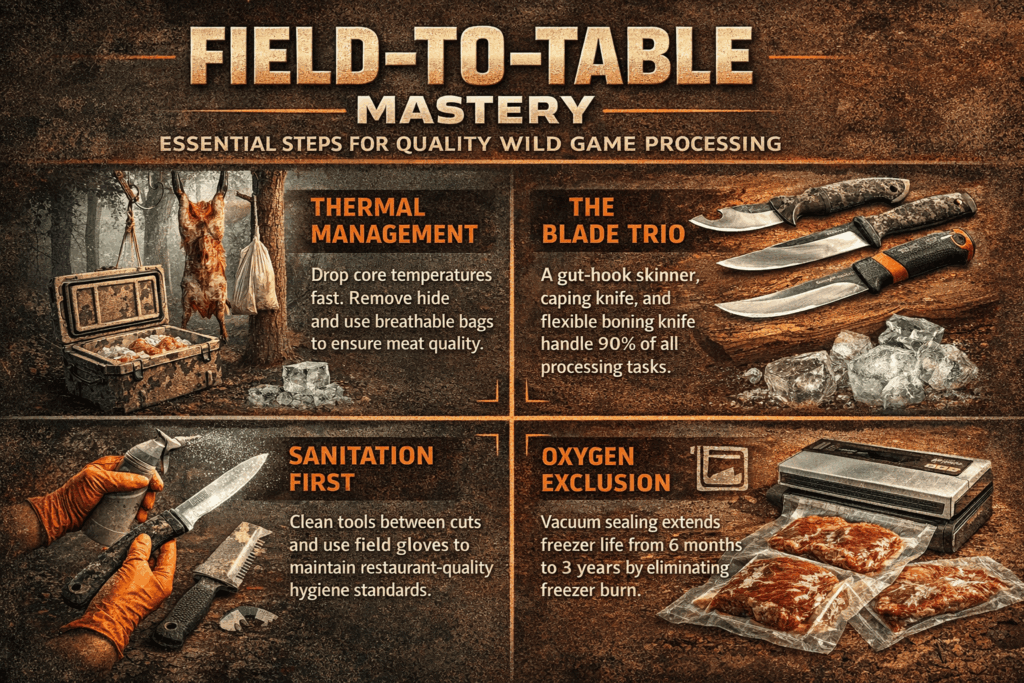
Whether you’re going gutless (removing meat without opening the body cavity – great for backcountry) or doing traditional field dressing, the rules don’t change. Clean, cool, dry. That’s it. The magic happens when you drop that core temperature quickly, especially during early season when it’s still warm out.
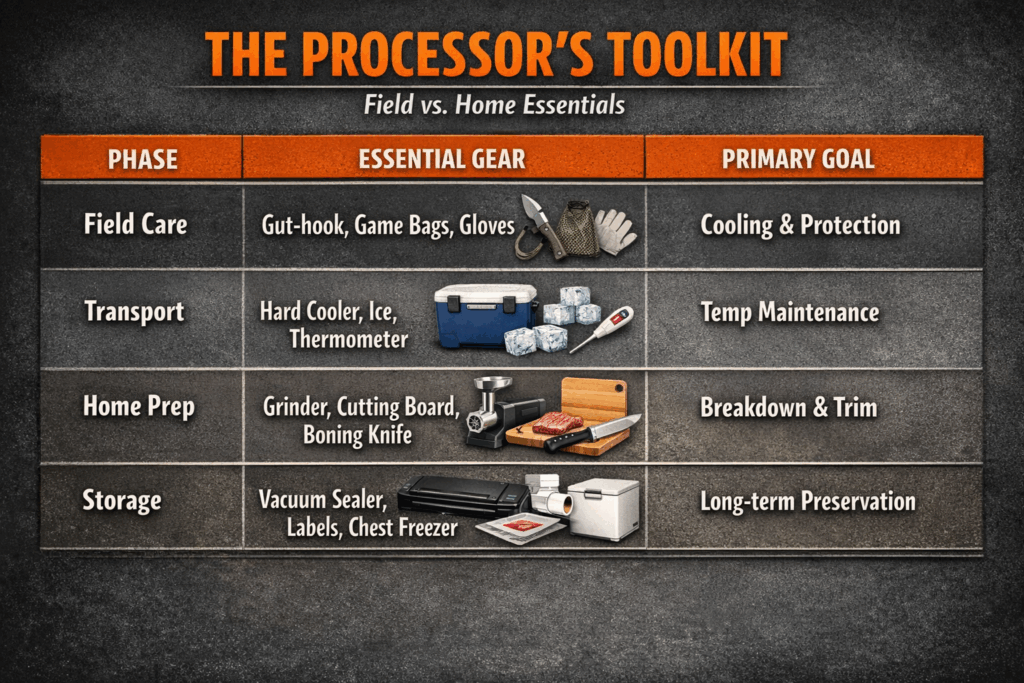
Essential Field Processing Tools
When you’re kneeling next to your harvest with daylight burning, having the right tools makes all the difference. No fumbling around with dull knives or makeshift solutions.
Knives That Actually Work
Your knife is the most important tool in game processing, and the Rocky Mountain Elk Foundation knows that field-to-table success starts with proper tools. Get this wrong and everything else becomes harder.
You need these three knives:
- Gut-hook skinning knife – Opens body cavity without puncturing organs
- Caping knife – For trophy work and detail cuts
- Boning/fillet knife – Separates meat from bone cleanly
New to processing? Skip the 15-piece knife sets. A sharp gut-hook and a good boning knife handle 90% of what you’ll face in the field.
Check out our hunting knife selection for blades that stay sharp when it matters.
Keep Your Knives Sharp (Seriously)
Pack a compact sharpening system every single time. Dull knives are dangerous, slow, and can tear up good meat.
Gloves and Clean-Up Gear
Don’t skip the sanitation stuff. Your field kit needs:
- Field dressing gloves – Protect your hands and keep things hygienic
- Sanitation wipes or spray – Clean tools between cuts
Our survival and first aid gear includes field sanitation essentials.
Game Bags: Not Optional
Quality breathable game bags keep dirt and bugs off while letting air circulate. They’re not just for carrying – they’re part of the cooling process.
Backcountry hunters: Get heavy-duty bags with reinforced seams. Cheap bags fail when you’re miles from the truck.
Browse our complete game processing collection for field-tested gear.
Building your field kit? We’ve tested these tools in real hunting conditions. Shop Game Processing Tools
Getting Your Harvest Home
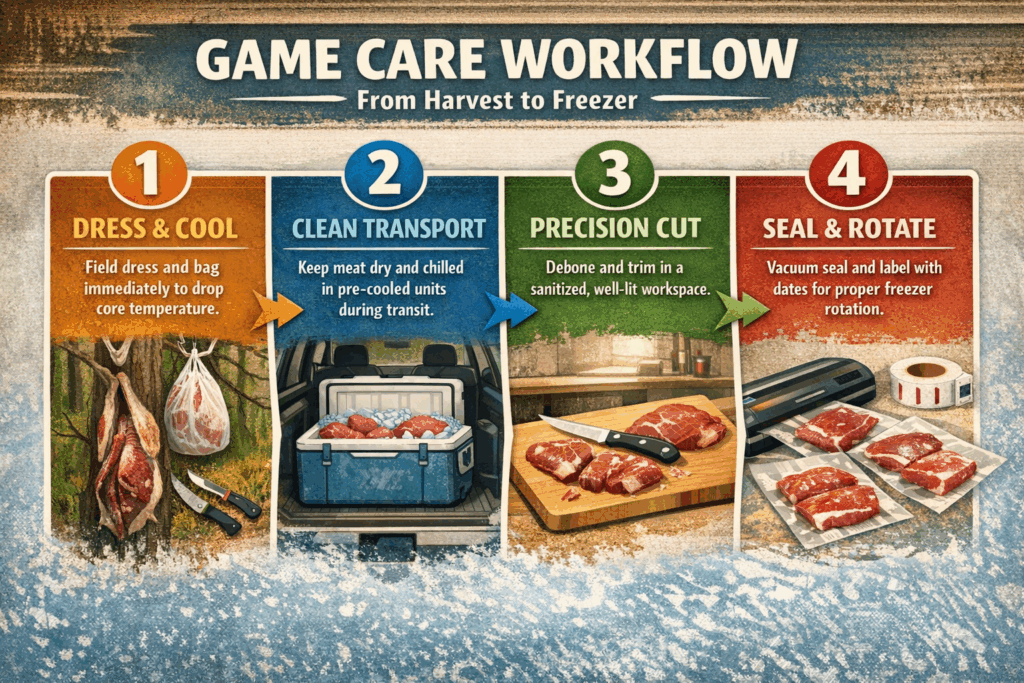
This is where a lot of hunters blow it. Perfect field care means nothing if you mess up transport. Keep it dry and cool until processing sounds simple until you’re facing a 6-hour drive in 70-degree weather.
Coolers and Temperature Control
Core temperature management is everything, especially during warm weather hunts. You need:
- Serious cooler – Big enough for quartered game plus plenty of ice
- Thermometer – Monitor meat temperature during transport
- Enough ice – More than you think you need
Long drive home from an out-of-state hunt? Pre-chill that cooler overnight and pack extra ice. A quality cooler protects hundreds of dollars of meat over its lifetime.
Home Processing: Where DIY Really Pays
Processing a deer costs $75-100 at most shops. Process two deer yourself and you’ve paid for your basic equipment setup. But it’s not just about money – it’s about control.
Setting Up Your Workspace
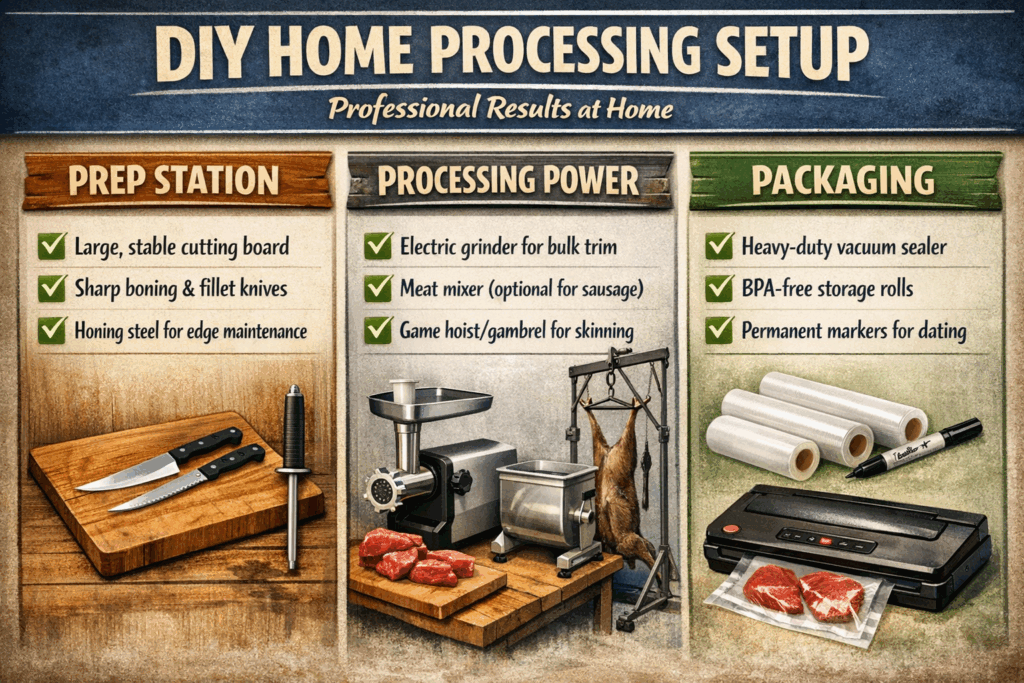
High quality knives and a big cutting board are your most important purchases. Your home setup needs:
- Large cutting board – Stable surface for breaking down quarters
- Complete knife set – Different blades for different jobs
- Sharpening steel – Keep edges sharp during long processing sessions
Find a clean, well-lit space with easy cleanup. Garage, basement, or outdoor table all work great.
Meat Grinders: Manual vs Electric
Manual grinders: Cheaper upfront, no power needed, but slow for large batches Electric grinders: Fast processing, easier on your hands, costs more initially
Processing 1-2 deer per year? A mixer attachment or basic electric grinder works perfectly.
For serious volume, LEM makes 0.5 HP, 1 HP, and 1.5 HP models for professional-grade processing.
Vacuum Sealers: Protect Your Investment
A vacuum sealer keeps those hard-earned calories in perfect condition. It prevents freezer burn, extends storage life, and protects the quality you worked for.
Other Useful Home Tools
Next-level equipment for serious processors:
- Bone saw – Quarter large game and make bone-in cuts
- Game hoist or gambrel – Hang carcasses during skinning
- Butcher paper – Alternative to vacuum sealing for shorter storage
Ready to build your processing setup? Start with quality knives – everything else builds from there. Check out our knives and processing gear.
Storage: Making Your Harvest Last
You’ve done everything right in the field and during processing. Don’t mess it up now with poor storage. Proper storage means that November venison still tastes perfect in July.
Vacuum sealing removes the air that causes freezer burn and extends freezer life from 6 months to 2-3 years. Essential storage gear includes:
- Chest freezer – Dedicated game storage prevents cross-contamination
- Freezer baskets – Organize different cuts and dates
- Labeling system – Track processing dates for proper rotation
Storage tip: Use your oldest packages first. Even vacuum-sealed meat benefits from rotation.
More Hunting Gear from Hunting Locator
Complete your hunting setup with our gear collections:
- Hunting Accessories – Everything you need for successful hunts
- Backpacks and Waist Packs – Carry processing tools and harvest efficiently
- Scent Elimination – Stay undetected
- GPS and Navigation – Never get lost heading to or from processing
- Flashlights and Headlamps – Light for early morning field dressing
- Survival and First Aid – Safety gear for remote processing
FAQ
What’s the single most important tool for new processors?
Your knife is everything in game processing. Get a quality gut-hook skinning knife and sharp boning knife. These handle 90% of processing tasks. Build your kit from there.
How much can I really save processing my own deer?
Deer processing costs $75-100 per animal. Save money from processing two deer and you can buy all the tools you need. Equipment pays for itself fast.
What’s the biggest beginner mistake?
Gamey or bad-tasting meat means something went wrong between harvest and freezer. Usually it’s poor field care – not removing hide quickly, inadequate cooling, or contamination during processing. Technique beats expensive equipment every time.
Do I need a commercial meat grinder?
Mixer attachments work great for small batches, dedicated grinders handle large amounts of trim better. Match your grinder to your processing volume. You can always upgrade later.
How long does vacuum-sealed game meat last?
Vacuum sealers keep your meat in perfect freezer condition. Properly sealed game meat stays quality for 2-3 years frozen, compared to 6-8 months with regular wrapping.
What makes a vacuum sealer worth buying?
Heavy-duty sealers are essential if you process multiple animals yearly – cheap ones break under heavy use. Look for strong motors, wide seal bars, and solid warranties for regular use.
Wrapping It Up
Processing your own game connects you to something bigger than just saving money on butcher fees. It’s about taking complete ownership of your harvest and honoring the animal by using every bit properly.
Every tool in this guide serves one purpose: turning your successful hunt into meals that make people ask for seconds. The investment pays off in more than dollars saved. You control quality, learn valuable skills, and become a more complete hunter.
Quality table fare starts the moment you make your shot. Having the right tools ensures you finish the job right.
Ready to upgrade your processing game? Check out our complete selection of field-tested knives, processing equipment, and field care gear. Your best hunting season starts here.


