Not being able to get the shot happens to more hunters than anyone wants to admit. Cold hands don’t just hurt—they steal opportunities and compromise safety. When you’ve invested serious money in tags, taken precious vacation days, and endured brutal conditions, losing a shot because your fingers won’t cooperate is absolutely maddening.
This hand warmers guide solves that problem. We’ll show you exactly which hand warmers work best for different hunting situations, backed by real performance data and field-tested advice from hunters who’ve been there.
Here’s what you’ll learn:
- Which hand warmer type matches your hunting style – tree stand marathons need different solutions than spot-and-stalk adventures
- Actual performance numbers from independent testing – real battery life, heat ranges, and durability data you can trust
- How to build a complete cold-weather system – integrating warmers with gloves, layering, and hunting tactics
There’s no universal solution here. Bow hunters need different dexterity than rifle hunters. All-day sitters face different challenges than mobile hunters. Let’s find what works for your situation.
Why Cold Hands Ruin Shots
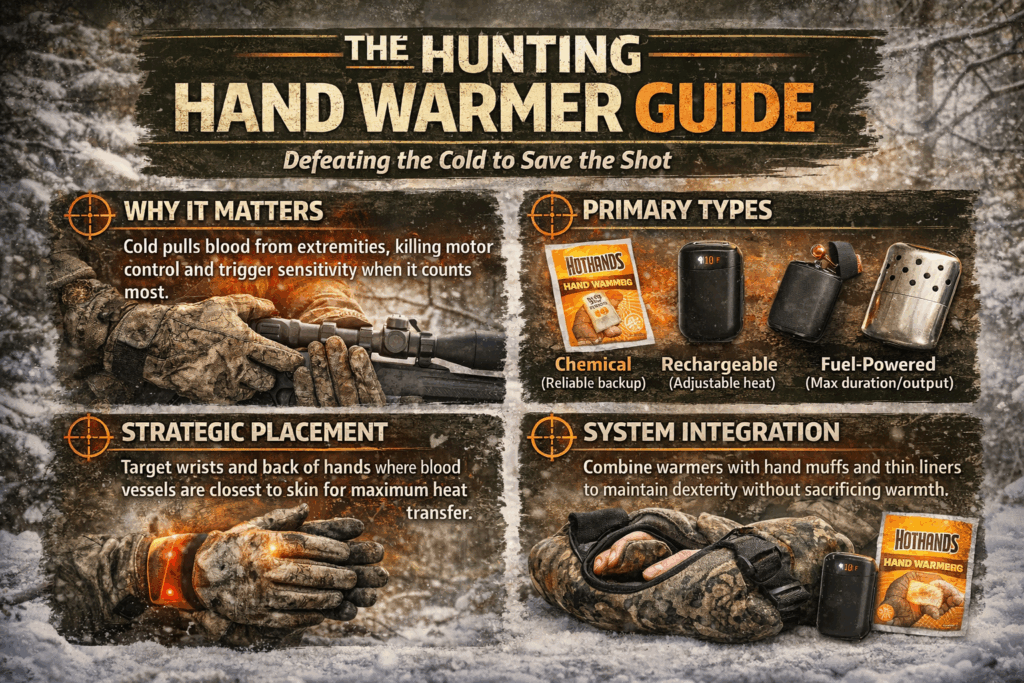
Your body doesn’t care about your hunting success. When temperatures drop, it prioritizes survival by pulling warm blood away from your hands and feet to protect vital organs. Smart biology, terrible for shooting.
As blood flow decreases, everything falls apart. Fine motor control vanishes. Trigger sensitivity disappears. Your bow grip becomes inconsistent. What normally feels natural suddenly feels foreign and clumsy.
Different hunting styles face unique cold-hand challenges:
- Tree stand hunters get hit hardest—sitting motionless for hours while hands get progressively colder with no relief
- Spot-and-stalk hunters deal with temperature swings, warming up during movement but freezing during long glassing sessions
- Bow hunters need bare-finger feel for release triggers, while rifle hunters can work through thin gloves
When you’ve spent hundreds on tags and burned vacation days for late-season opportunities, these aren’t comfort issues. They’re performance killers that can wreck your entire hunt.
Types of Hand Warmers: What Actually Works
Hand warmers break down into three categories, each with real advantages for specific hunting scenarios. Understanding these differences helps you pick the right tool instead of guessing.
Chemical/Disposable Hand Warmers
These air-activated packets use iron powder, salt, and carbon to create heat through oxidation. Simple chemistry that’s been keeping hunters warm for decades.
Why Hunters Love Them:
- Zero charging needed—completely reliable when you’re miles from power
- Lightweight and packable, so you can carry extras without thinking about it
- Cheap enough to use freely all season long
- No electronics to fail when temperatures get brutal
The Downsides:
- Single-use creates ongoing waste and expense
- Can’t control them—once activated, they run until dead whether you need heat or not
- Heat output varies, especially in extreme cold
- Hunters report they “never really get warm again” if you wait until hands are already frozen
Rokslide forum users consistently recommend Hot Hands Super Warmers: “Hot Hands super warmers they claim up to 18 hours” and “I have used them for all day sits in a treestand and they work dark to dark.”
Perfect For: Backup option, multi-day backcountry hunts, budget-conscious hunters
Critical Tip: One experienced hunter shares game-changing timing advice: “Try opening your hand warmer when you leave the truck. Had a hunting buddy tell me this and it works much better. If you wait till your hand gets cold they never really get warm again.”
Rechargeable/Electric Hand Warmers
Battery-powered units with adjustable heat settings represent the modern evolution of hand warming. These USB-rechargeable devices offer consistent, controllable heat that adapts to changing conditions.
Independent testing by Outdoor Life provides hard performance data across multiple brands:
- Unihand: “The Unihand was the highest performing electric hand warmer in my test, lasting over six hours on high and nearly 11 hours on low”
- Ocoopa: Second-best performer in the same testing
- Dnaleo: 4.8 hours on high, 7.5 hours on low
OCOOPA specs show temperature ranges of “95-107°F/104-118°F/118-131°F to Suit Your Needs,” letting hunters dial in heat output based on conditions and battery conservation.
Why They Work:
- Adjustable heat settings stretch battery life and prevent overheating
- Turn off during hikes, reactivate on stand—perfect for mobile hunting
- Reusable all season with proper care
- Consistent heat output regardless of outside temperature
The Drawbacks:
- Need charging access through vehicle, camp, or home
- Electronics can fail—hunters report bent charging ports and weak magnets
- Higher upfront cost than disposables
Perfect For: Daily hunters with vehicle access, tree stand hunters needing all-day heat, hunters wanting precise warmth control
Fuel-Powered Hand Warmers
Catalytic burners like Zippo-style warmers burn lighter fluid to generate long-lasting, high-output heat through controlled combustion.
The Advantages:
- Longest heat duration—12+ hours of steady warmth
- Very high heat output, ideal for brutal cold
- Refillable in the field with standard lighter fluid
- No batteries or charging requirements
The Problems:
- Potential scent issues for whitetail hunters worried about foreign odors
- Requires carrying fuel, adding weight and bulk
- Can’t easily adjust heat once lit
Perfect For: Extreme cold conditions, hunters less worried about scent (waterfowl, predator hunting), extended backcountry trips where weight isn’t critical
Hand Warmer Performance: The Real Numbers
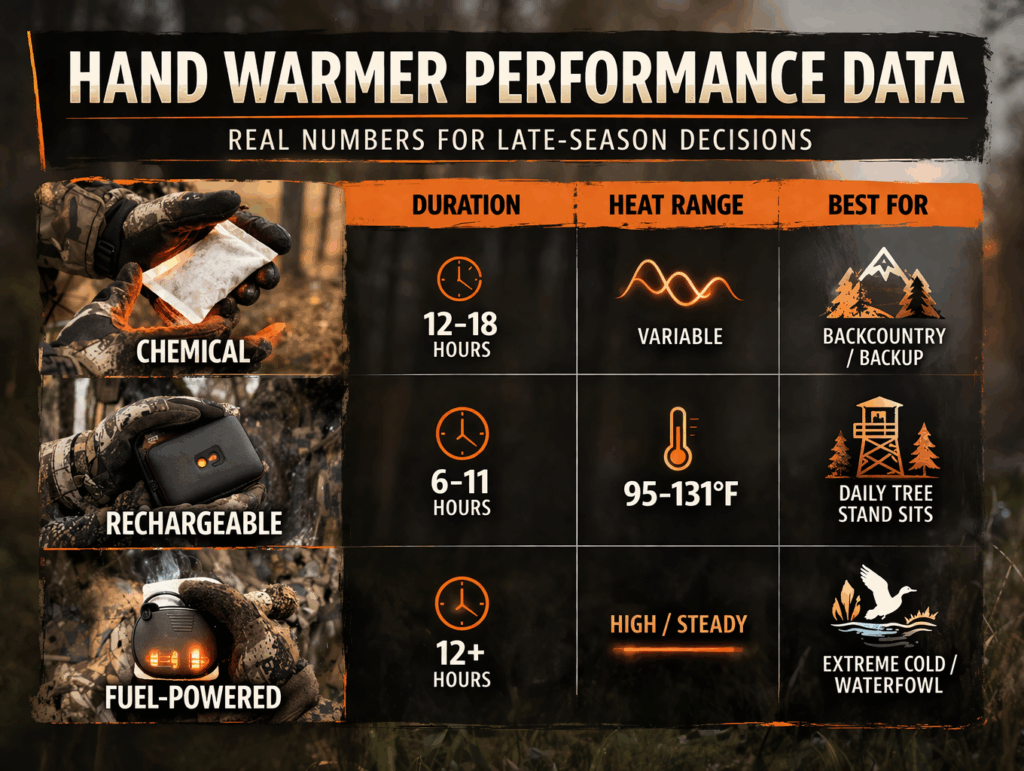
| Type | Heat Duration | Temperature Range | Weight | Price Range | Best Use Case |
|---|---|---|---|---|---|
| Chemical (HotHands Super) | Up to 18 hours | Varies by conditions | ~1 oz each | $1-2 per pair | Backup, backcountry, budget |
| Rechargeable (Top Models) | 6-11 hours | 95-131°F (adjustable) | ~65g each | $20-50 | Daily hunting, tree stands |
| Fuel-Powered (Zippo-style) | 12+ hours | High, consistent | 2-4 oz | $15-30 + fuel | Extreme cold, scent-tolerant hunting |
Tree Stand Hunting Winner: Rechargeable hand warmers with 8+ hour battery life on low. Look for multiple heat settings so you can save battery during warmer parts of the day.
Spot-and-Stalk Champion: Compact rechargeable models you can pocket during movement and fire up during glassing. The on/off capability is crucial for battery conservation.
Building Your Complete Hand Warming System
The best hand warmer fails if it’s not properly integrated with your gloves, clothing, and hunting method. Success comes from treating hand warmers as part of a complete cold-weather system, not a standalone fix.
Hand Warmers Plus Glove Systems
Every hunter faces the same core challenge: balancing warmth with dexterity. You need warm hands, but you also need trigger feel and release control when it matters.
Modern rechargeable hand warmers solve this through compact design. Product specs confirm units are “thinner than a phone, slipping easily into gloves” without killing finger movement.
The glove liner approach works exceptionally well with hand warmers. Thin merino wool or synthetic liners create a barrier between skin and warmer while maintaining dexterity. This combo lets you strip outer gloves for the shot while keeping hands protected and warm.
The Hand Muff Game-Changer
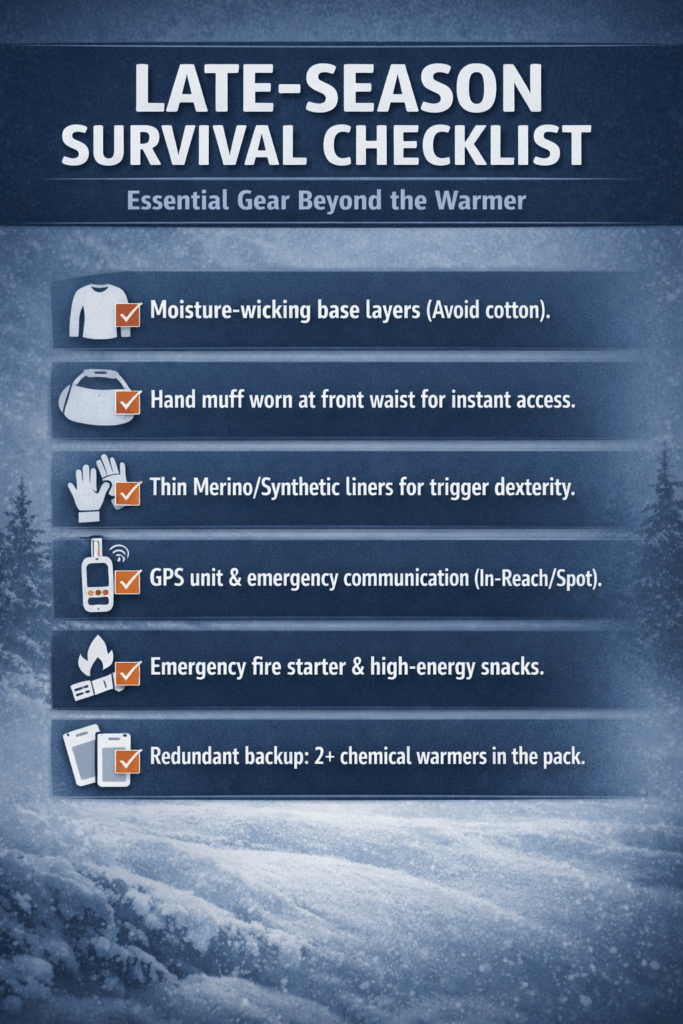
Hand muffs offer a hunting-specific solution that maximizes warmth while maintaining instant shot access. Forum wisdom from seasoned hunters explains: “For late season hunting I like a hand muff worn on the front waist, brown jersey gloves, and one handwarmer inside the muff. Great for dexterity and keeping the hands warm.”
The key advantage? Hands stay warm between action while maintaining instant access when game appears. Unlike glove systems, muffs allow complete hand movement and natural grip when you draw or aim.
Strategic Heat Placement
Smart placement multiplies hand warmer effectiveness by targeting areas where blood vessels run closest to skin. Research confirms that “heat pads can be attached in strategic locations such as wrists, the back of hands, the back of neck and the top of feet where blood vessels come closest to the skin.”
Wrist warming deserves special attention for hunters with circulation issues. Warming wrist arteries helps distribute heat throughout the entire hand—particularly valuable for older hunters or those dealing with conditions like Raynaud’s syndrome.
The Veteran’s Backup Strategy
Experienced hunters always recommend redundancy for hand warming systems. Late-season tags represent serious investments of time, money, and opportunity—too valuable to risk on a single point of failure.
Forum discussions reveal veteran wisdom: “Always keep an old style chemical warmer in my bag for whitetail hunting as backup” and “keep extra disposable warmers with them in case they sit all day.”
The logic is bulletproof: batteries die unexpectedly, chemical warmers occasionally fail to activate, and electronics malfunction in extreme conditions.
Smart Move: Carry your primary rechargeable warmers plus 2-3 chemical warmers as backup, especially for all-day sits or multi-day hunts. The tiny weight penalty is nothing compared to the insurance value.
Check out our hand warmer selection to find the right combination for your hunting style—whether you want rechargeable reliability or need to stock up on chemical backups for peace of mind.
Beyond Hand Warmers: Late-Season Must-Haves
Hand warmers are just one piece of the late-season puzzle. Here’s what experienced hunters prioritize when gearing up for cold-weather success.
Layering That Actually Works
Effective cold-weather hunting starts with proper layering that works with your hand warming system. Research shows that “layering starts with a moisture-wicking base layer, followed by an insulating mid layer, and finishing with a protective outer layer to effectively manage body temperature.”
The make-or-break principle is moisture management. Experts warn that “cotton absorbs and holds moisture, which may be great when hunting early season, but it’s going to be an enemy in the cold and could accelerate the onset of hypothermia.”
Safety Gear That Matters More in Cold
Cold weather amplifies every risk in the hunting environment. Safety experts emphasize that “extremely cold temperatures are much more unforgiving if mistakes are made, and hypothermia can set in quickly when the mercury is below freezing.”
Critical safety items become even more important in late-season conditions:
- A reliable GPS unit becomes essential when weather changes fast and familiar landmarks vanish under snow
- Survival and first aid gear including emergency blankets, fire starters, and high-energy snacks
- Emergency communication for areas with spotty cell coverage
Post-Harvest Prep
Cold temperatures help preserve meat but require efficient field dressing—important when working with cold hands despite your warming system.
Quality game processing gear makes field dressing faster, reducing time your hands are exposed to blood and moisture that can quickly overwhelm even the best hand warmers.
More Hunting Locator Resources
Expand your late-season preparation with these specialized gear categories:
- Hunting Backpacks – Organize cold-weather gear including hand warmers, extra gloves, and emergency supplies
- Hunting Knives – Quality blades for efficient field dressing when working with cold hands
- Scent Elimination – Critical for late-season whitetails when every advantage counts
- Hunting Lights – Extended darkness during late-season hunts demands reliable lighting
- Shooting Support – Stabilize shots when cold conditions affect natural steadiness
FAQ
What’s the best hand warmer for all-day tree stand hunting?
Rechargeable hand warmers with 8+ hour battery life on low settings work best for extended sits. Testing shows top performers like the Unihand last “over six hours on high and nearly 11 hours on low.” Always pack chemical backups for insurance.
How do I keep hand warmers from overheating my hands?
Choose rechargeable models with multiple heat settings. OCOOPA units offer three temperature ranges from “95-107°F/104-118°F/118-131°F” so you can dial in heat based on conditions and activity level.
Will hand warmers mess up my shooting accuracy?
When properly integrated, hand warmers improve accuracy by maintaining trigger finger dexterity. Modern units are “thinner than a phone, slipping easily into gloves” without compromising natural grip or trigger feel.
Should I worry about scent with hand warmers for whitetail hunting?
Chemical and rechargeable hand warmers are generally scent-neutral. Fuel-powered warmers may produce combustion odors that could spook game. Test any new warming system before important hunts to make sure it doesn’t introduce foreign scents.
How many backup hand warmers should I carry?
Experienced hunters recommend carrying 2-3 chemical warmers as backup even when using rechargeable primaries. For multi-day hunts or extreme conditions, pack one backup per day plus extras.
Do hand warmers help hunters with circulation problems?
Yes, but choose high-output models. Hand warmers provide helpful comfort for conditions that cause poor circulation and painful joints like Diabetes, Raynaud’s, Carpal Tunnel, and Arthritis. Consider wrist placement to warm arterial blood flow.
The Bottom Line
Late-season hunting tests everything—your preparation, gear, and determination. When temperatures plummet and game becomes most elusive, success often comes down to details. Few details matter more than keeping your hands warm and functional when the shot opportunity finally arrives.
The right hand warmer system isn’t about comfort. It’s about preserving the accuracy and dexterity you’ve spent countless hours developing. Whether you choose chemical reliability, rechargeable versatility, or fuel-powered high output, the key is matching your choice to your specific hunting style and conditions.
Hand warmers work best as part of a complete cold-weather system. Combine them with proper layering, quality gloves, and smart placement techniques to maximize effectiveness. Always carry backups—late-season tags are too valuable to risk on a single point of failure.
Ready to gear up for your best late-season hunting yet? Visit our hunting accessories store today! We stock the best hand warmers, cold-weather gear, and hunting essentials to ensure your success when temperatures drop and stakes are highest.


