This California spring turkey guide covers what you actually need to know for spring 2026:
- Exact season dates for General, Archery-Only, and Junior seasons with bag limits
- Complete license costs for residents and non-residents
- Where to find huntable land through public access, guides, and private options
Let’s get into the dates and regulations first.
Quick Overview: 2026 California Spring Turkey Season
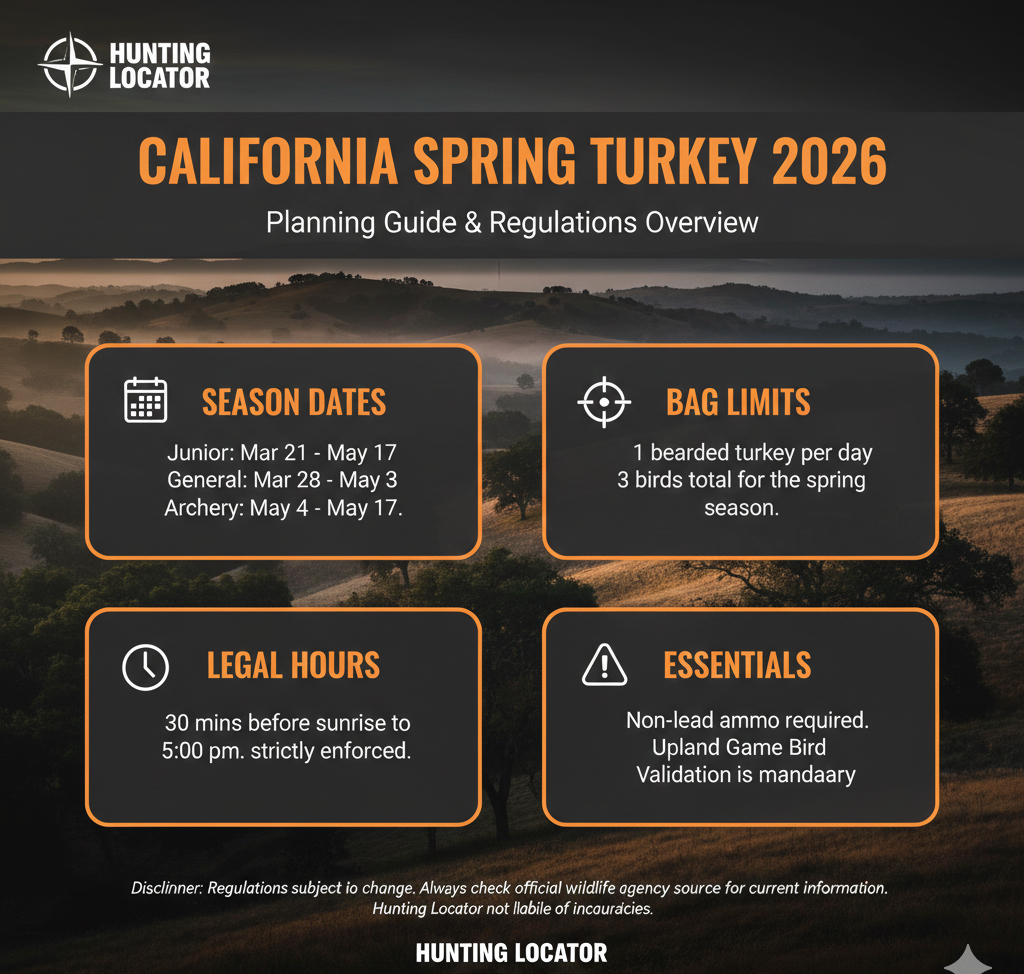
California breaks its spring turkey season into three distinct periods. Each one has specific rules you need to follow.
| Season Type | Start Date | End Date | Bag Limit |
|---|---|---|---|
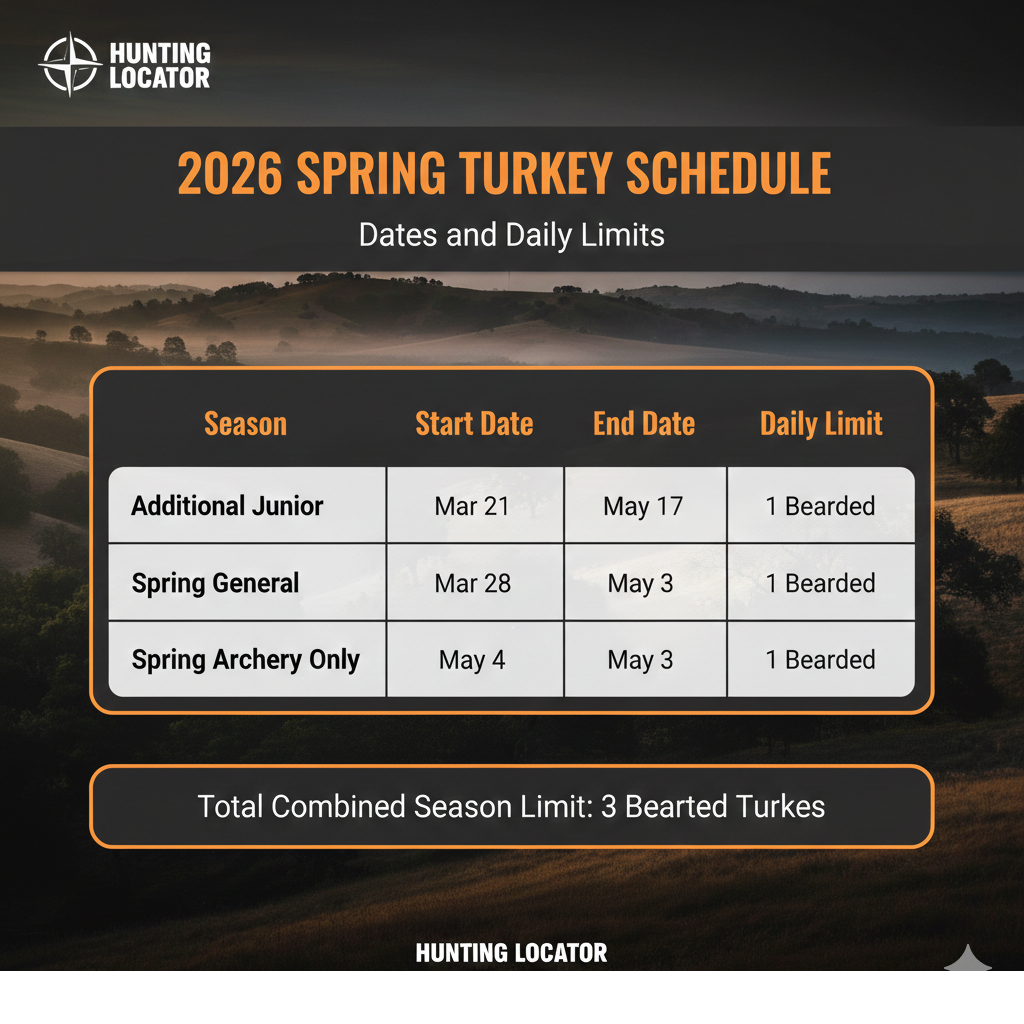
| Spring General | March 28, 2026 | May 3, 2026 | 1 bearded turkey/day |
| Spring Archery Only | May 4, 2026 | May 17, 2026 | 1 bearded turkey/day |
| Additional Junior | March 21, 2026 | May 17, 2026 | 1 bearded turkey/day |
Season Limit: 3 bearded turkeys total across all spring seasons
Junior hunters get a full week head start starting March 21 and can hunt through the entire archery season. That’s the longest turkey hunting window in California, which makes it way easier for families to work around school schedules.
Critical Regulations You Can’t Ignore:
- Hunting Hours: 30 minutes before sunrise to 5:00 p.m. only (not sunset—game wardens enforce this strictly to protect nesting hens)
- Ammunition: Non-lead ammunition required statewide for all firearm hunting
- Transport: Harvested birds must stay identifiable (one fully feathered wing or head attached) until you reach your final destination
- Tag Requirement: Your Upland Game Bird Validation is your tag—fill it out immediately after harvest
What You Need to Hunt Legally:
- California Hunting License (everyone needs this)
- Upland Game Bird Validation (required specifically for turkey—check out California upland game bird requirements for more details)
- Junior Hunting License (for hunters 16 and under—replaces the standard hunting license)
California Turkey Hunting Seasons Explained
California structures its spring turkey season into distinct periods. Each one offers different opportunities and challenges. Understanding these differences helps you make the most of your time in the field.
Spring General Season (March 28 – May 3, 2026)
The 2026 general season runs from March 28 through May 3. That gives you over five weeks to chase California’s gobblers.
All legal methods work here—shotgun, archery, muzzleloader. You can use crossbows during this period. This window lines up with peak gobbling activity when toms are actively seeking hens, making it the best time for calling.
Hunting hours run from 30 minutes before sunrise to 5:00 p.m. This changed in recent years from a 4:00 p.m. cutoff to 5:00 p.m. to give hunters more opportunity while still protecting nesting hens.
Popular public areas get hammered during opening weekend. Show up mid-week or target the latter half of the season when pressure drops off.
Spring Archery-Only Season (May 4 – May 17, 2026)
An archery-only spring season extends two weeks beyond general season, running from May 4 through May 17, 2026. This extension rewards dedicated bowhunters with additional opportunity after firearms hunters have packed it in.
Equipment restrictions apply: Crossbows are allowed during general season but not during archery-only season without a disabled archer’s permit.
With general season hunters gone, archery hunters often find less pressure and toms that have settled back into predictable patterns. Late-season birds can be more call-shy, but decoy setups work really well.
The extended season means you’re hunting later into spring when vegetation is thicker and temperatures are warmer. Adjust your concealment strategies accordingly.
Additional Junior Season (March 21 – May 17, 2026)
California’s extended junior season gives young hunters (16 and under) the longest hunting window, running from March 21 through May 17, 2026. That’s a full week before general season opens and extends through the entire archery season.
The March 21 start date often lines up with spring break. Makes it way easier for families to plan multi-day hunts and give kids the time they need to learn patience and woodsmanship.
Youth hunters must be supervised by a licensed adult 18 years or older who stays within sight and normal voice contact. The supervising adult must have a valid California hunting license but doesn’t need an Upland Game Bird Validation if they’re only supervising.
Junior hunters need only a Junior Hunting License plus the Upland Game Bird Validation. The extended season and reduced competition make this a perfect introduction to turkey hunting.
California Turkey Hunting Licenses and Permits
Understanding California’s licensing structure matters for both residents and out-of-state hunters. Costs differ significantly between residents and non-residents, and specific validations are mandatory for turkey hunting.
California Hunting Licenses
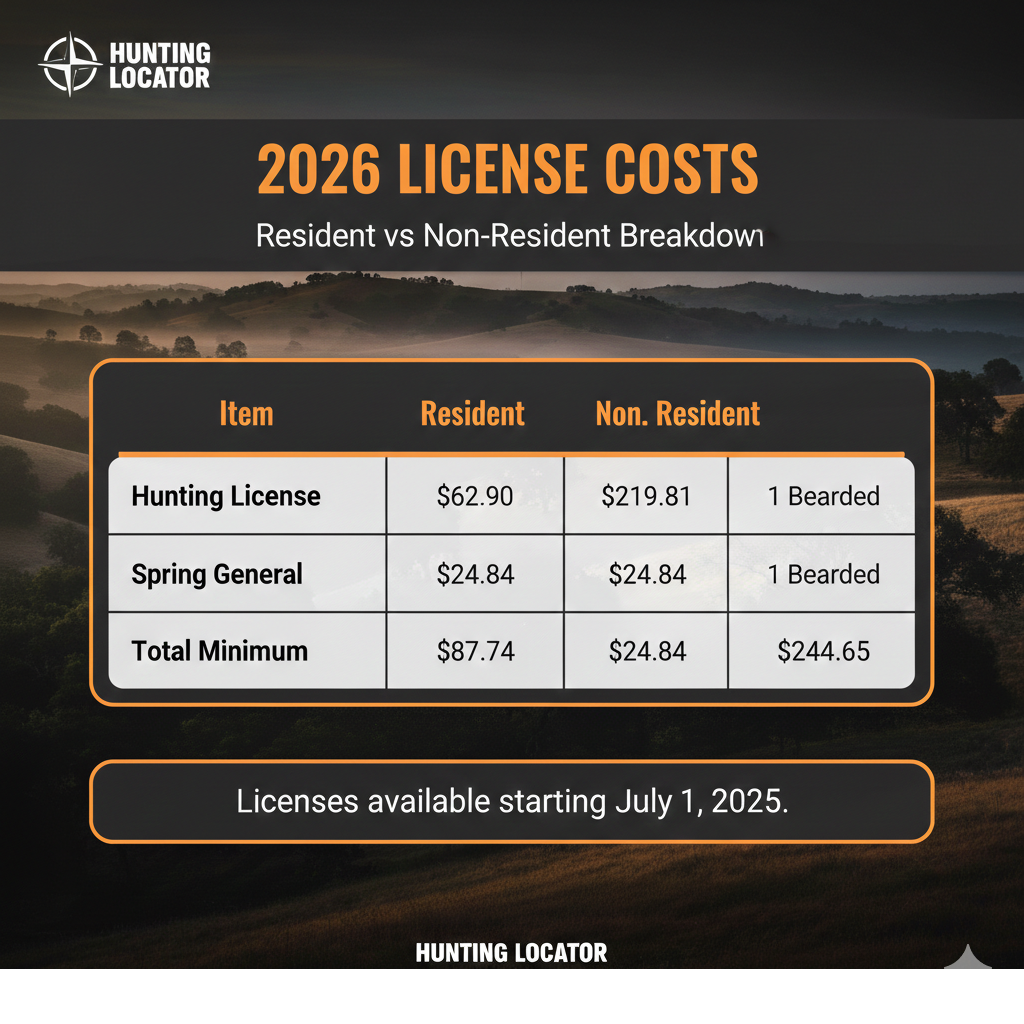
All hunters need a valid California hunting license and upland game bird validation to legally pursue turkeys. Here’s the complete cost breakdown for 2026:
| License/Validation | Resident Cost | Non-Resident Cost | Notes |
|---|---|---|---|
| California Hunting License | $62.90 | $219.81 | Required for all hunters taking birds or mammals |
| Upland Game Bird Validation | $24.84 | $24.84 | Required specifically for turkey hunting |
| Total Minimum Cost | $87.74 | $244.65 | Excluding transaction fees |
For out-of-state hunters, that $244.65 total investment opens access to California’s 250,000-bird population across diverse terrain and multiple subspecies (Rio Grande and Merriam’s).
Junior hunters (16 and under) need only a Junior Hunting License plus the Upland Game Bird Validation. Simplified, more affordable structure for families.
When to Purchase: Licenses become available starting July 1, 2025 for the 2026 season. Purchase online through the California Department of Fish and Wildlife’s licensing system or at authorized retailers statewide. Buy early to avoid last-minute technical issues.
California Turkey Hunting Permits
California doesn’t require an additional turkey-specific permit beyond the hunting license and upland game bird validation. Your Upland Game Bird Validation serves as your tag—fill it out immediately after harvest with the date, time, and location.
Important WMA-Specific Caveat: Some Wildlife Management Areas (WMAs) operated by CDFW require special permits or operate on a reservation system. Spenceville Wildlife Area and Cache Creek Wildlife Area offer excellent hunting, but regulations can vary significantly from statewide rules. Some areas limit hunter numbers through reservation systems, while others have special access hours or restricted zones.
Always check specific WMA requirements before hunting. The California Department of Fish and Wildlife website has current information, and calling the local CDFW office can save you from access surprises.
Where to Hunt Turkey in California
Finding quality turkey habitat is often the biggest challenge for California hunters. The state offers diverse options ranging from free public land to private access through leases and guided services.
Best Public Lands for Turkey Hunting
California offers diverse public land opportunities managed by multiple agencies including the California Department of Fish and Wildlife, U.S. Forest Service, and Bureau of Land Management.
Top Public Land Options:
- National Forests: Los Padres, Mendocino, Shasta-Trinity, and other national forests offer vast acreage with oak woodlands, grassland openings, and reliable water sources creating ideal turkey habitat. Mendocino National Forest provides stellar hunting, particularly for hunters willing to work the elevation changes.
- BLM Lands: Bureau of Land Management parcels throughout the Central Valley provide accessible hunting, with many areas receiving less pressure than national forests. BLM lands often have fewer access restrictions and allow dispersed camping, perfect for multi-day DIY hunts.
- Wildlife Management Areas: CDFW-managed areas like Spenceville and Cache Creek offer excellent turkey habitat, though some require reservations or special permits. These areas often have better infrastructure but may see higher hunter density during peak weekends.
- Ecological Reserves: Additional CDFW properties open to hunting—check specific regulations as they vary by location.
The key is looking for areas with good water sources, oak trees for feed, and roosting habitat. Scout your chosen areas during late winter to locate roost sites before season opens. This pre-season work dramatically increases your success odds.
Popular public areas get hammered during opening weekend. Consider mid-week hunts or targeting the latter half of the season when pressure subsides.
Platforms like Hunting Locator connect hunters directly with California landowners who offer hunting access—often with less pressure and more predictable bird patterns.
Guided Hunts
Guided hunts offer a turnkey solution, especially valuable for non-residents unfamiliar with California’s terrain and regulations. Professional outfitters provide land access, local knowledge, calling expertise, and often lodging—eliminating the scouting and logistics challenges.
Guides know where birds are roosting, understand local calling preferences, and can adjust strategies based on daily conditions. However, DIY hunters willing to put in the research can find productive opportunities at a fraction of the cost.
When evaluating outfitters, ask about success rates, typical group sizes, hunting methods (run-and-gun versus blind hunting), and whether you’ll have exclusive access or be sharing with other hunters.
Private Land Hunting
Private land often holds the best turkey populations due to less hunting pressure and better habitat management. Landowners who actively manage for wildlife create ideal conditions for mature gobblers and consistent hunting success.
Leasing private land for turkey hunting gives you exclusive or semi-exclusive access to quality habitat. Lease arrangements vary from single-day access to seasonal agreements, with costs depending on acreage, game quality, and amenities.
Land purchase represents another option for serious hunters, though this requires significant investment. Buying rural property with turkey habitat gives you permanent access and control, but comes with property taxes, maintenance responsibilities, and substantial upfront costs.
Hunting Locator simplifies the private land access process by connecting hunters directly with California landowners ready to lease or sell hunting rights. Instead of cold-calling ranches or hoping for word-of-mouth leads, you can browse California hunting properties filtered by game type, acreage, and location. More time hunting, less time searching for permission.
California Turkey Hunting Tips
Beyond regulations and access, success in California’s diverse turkey habitat requires understanding the birds’ behavior and adapting your tactics to local conditions.
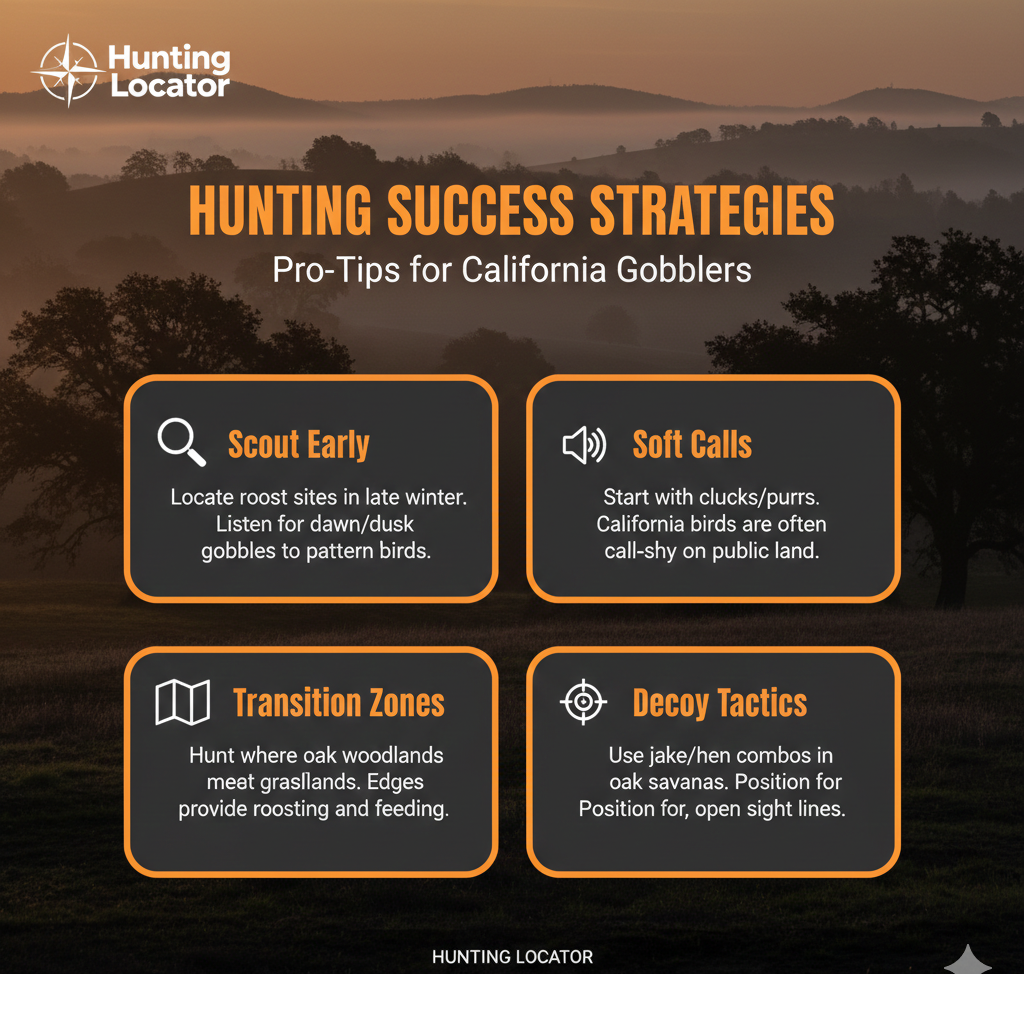
Essential Strategies for California Turkey Success:
- Scout Early for Roost Sites: Get out during late winter to listen for gobbles at dawn and dusk. Locating roosts before season gives you a significant advantage. California’s oak trees provide ideal roosting habitat, and birds often roost on ridges with good visibility.
- Master the Soft Calls First: Start with clucks and purrs to gauge a gobbler’s interest before escalating to aggressive cutting. California birds, especially on pressured public land, often respond better to subtle calling that sounds like a relaxed hen.
- Hunt the Transition Zones: Look for areas where oak woodlands meet grassland openings. These edges provide both roosting cover and feeding areas. Toms often strut in open areas where hens can see them, making these transitions prime setup locations.
- Adjust for California’s Early End Time: With hunting ending at 5:00 p.m. (not sunset), focus your efforts on morning hunts and the mid-morning period (9:00 a.m. to noon) when toms are actively searching after hens leave to nest.
- Use Decoys Strategically: In California’s open oak savannas, decoys work really well. Position them where approaching gobblers have clear sight lines and feel comfortable approaching. A jake decoy with a hen often triggers aggressive responses from dominant toms.
- Respect the Non-Lead Ammunition Requirement: California requires non-lead ammunition for ALL hunting statewide. Lead is not legal on public or private land. Pattern your shotgun with non-lead loads before season, as they perform differently than traditional lead shot.
- Plan for Weather Variability: California’s spring weather ranges from cold, wet conditions in March to hot, dry days by May. Layer your clothing, bring rain gear for early season, and carry extra water for late-season hunts when temperatures can reach the 80s.
- Work Elevation Changes: Mendocino National Forest and other mountainous areas reward hunters willing to work elevation changes. Toms often roost at higher elevations and move downhill to feed. Position yourself between roosting and feeding areas.
Check out the Hunting Locator store for turkey calls, decoys, camouflage, and other essential equipment.
More Resources from Hunting Locator
Hunting Locator offers comprehensive resources for hunters pursuing diverse game across California and throughout the United States:
- California Turkey Hunting Season – Complete year-round guide to California turkey hunting
- Hunting in California – Overview of California’s hunting opportunities
- California Upland Game Hunting – Guide to quail, pheasant, and chukar
- California Deer Hunting Season – Fall deer hunt planning
- California Waterfowl Hunting Season – Duck and goose hunting
- California Wild Pig Hunting – Year-round pig hunting opportunities
- California Elk Hunting Season – Tag application strategies
- California Bear Hunting Season – Black bear regulations
- California Pronghorn Hunting Season – Limited tag information
- California Bighorn Sheep Hunting – Once-in-a-lifetime tag details
- Hunting Locator Home – Browse hunting leases nationwide
FAQ
When does California’s 2026 spring turkey season start?
California’s 2026 spring turkey season has three start dates: Junior hunters can begin March 21, 2026; general season opens March 28, 2026; and archery-only season runs May 4-17, 2026. The extended junior season gives young hunters nearly two full months of opportunity.
How much does a non-resident turkey hunting license cost in California?
Non-resident hunters pay $219.81 for the base California hunting license plus $24.84 for the required Upland Game Bird Validation, totaling $244.65 (excluding transaction fees). This investment provides access to California’s diverse turkey populations with season opportunities extending from late March through mid-May.
What is California’s turkey bag limit for spring 2026?
California allows one bearded turkey per day with a season limit of three bearded turkeys combined across all spring seasons. You can harvest up to three gobblers total during spring season, whether during general season, archery-only season, or junior season. Your Upland Game Bird Validation serves as your tag and must be filled out immediately after harvest.
Can I use a crossbow during California’s archery-only turkey season?
No. Crossbows are allowed during general season but not during archery-only season without a disabled archer’s permit. The archery-only season (May 4-17, 2026) is restricted to traditional bows and compound bows unless you possess a valid disabled archer’s permit issued by CDFW.
Do I need a special permit to hunt turkeys on California public land?
Most California public lands don’t require special permits beyond your hunting license and Upland Game Bird Validation. However, some Wildlife Management Areas (WMAs) operated by CDFW require special permits or operate on a reservation system. Spenceville Wildlife Area and Cache Creek Wildlife Area are examples. Always check specific WMA requirements before hunting.
What time can I legally hunt turkeys in California?
California spring turkey season runs from 30 minutes before sunrise to 5:00 p.m. only (not sunset). These are strict legal requirements that game wardens actively enforce. The end time was pushed back from 4:00 p.m. to 5:00 p.m. in recent years to allow greater hunting opportunity while protecting nesting hens. Be out of the field by 5:00 p.m.
The Final Shot
California’s 2026 spring turkey season offers nearly two months of opportunity across diverse terrain, from coastal oak woodlands to high-elevation conifer zones. With 250,000 birds distributed across 18% of the state, both Rio Grande and Merriam’s subspecies, and season structures accommodating firearms, archery, and youth hunters, California delivers quality turkey hunting for residents and non-residents alike.
Success starts with understanding the regulations. Season dates, bag limits, licensing requirements, and California-specific rules like the 5:00 p.m. end time and mandatory non-lead ammunition. From there, your challenge becomes finding quality access, whether through public land scouting, guided services, or private land connections.
The hunters who consistently fill their three-bird limit scout early, understand turkey behavior in California’s unique habitats, and secure access to productive ground before season opens. Start by browsing available California hunting properties to see what private land options exist in your target areas, then complement that research with public land scouting and pre-season calling practice.
Spring 2026 is approaching fast. Get your licenses squared away, identify your hunting locations, and prepare for what could be your best California turkey season yet.


