This isn’t just frustrating—it’s a nightmare scenario that keeps ethical hunters awake at night. The difference between bringing home meat and losing a wounded animal often comes down to one thing: having right headlamps and flashlights that actually work when you need them most.
Good tracking lights aren’t just convenient—they’re essential for fulfilling your responsibility to recover wounded game. The right headlamp or flashlight can turn a potential disaster into a successful recovery.
Here’s what we’ll cover to make sure you never find yourself in that sinking-gut situation:
- Legal requirements you absolutely need to know before using lights for tracking
- The specs that actually matter (and the marketing fluff you can ignore)
- Specific recommendations for every hunting style and budget
But first, let’s talk about staying legal—because the best tracking light in the world won’t help if you’re facing violations.
Know Before You Go: Regulations and Legal Considerations
The legal side of hunting lights is more complex than most hunters realize.
The Critical Legal Distinction
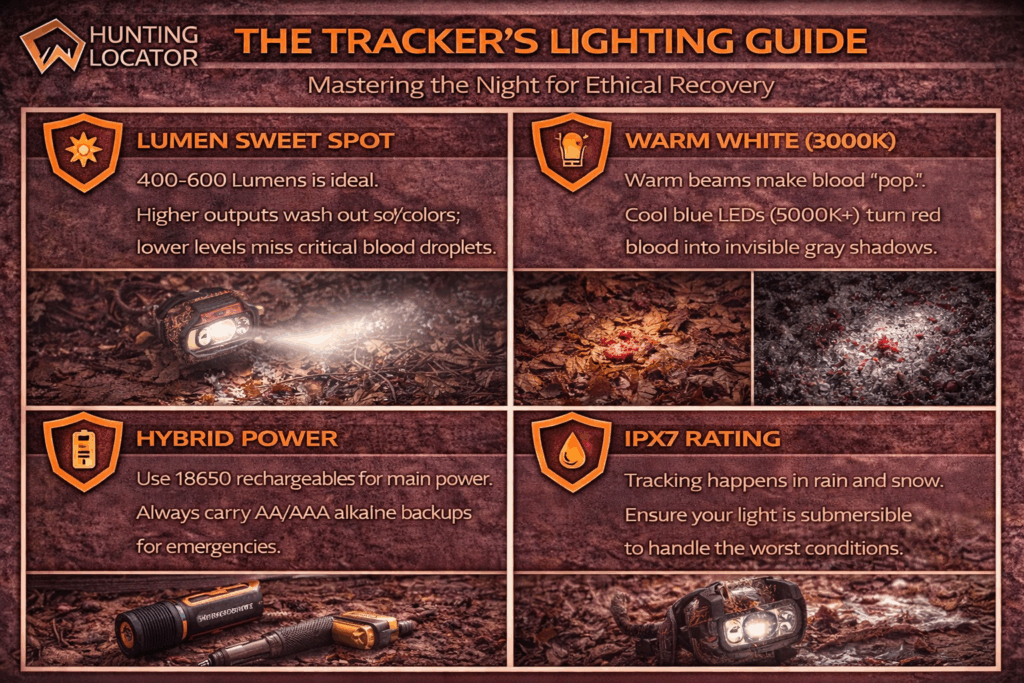
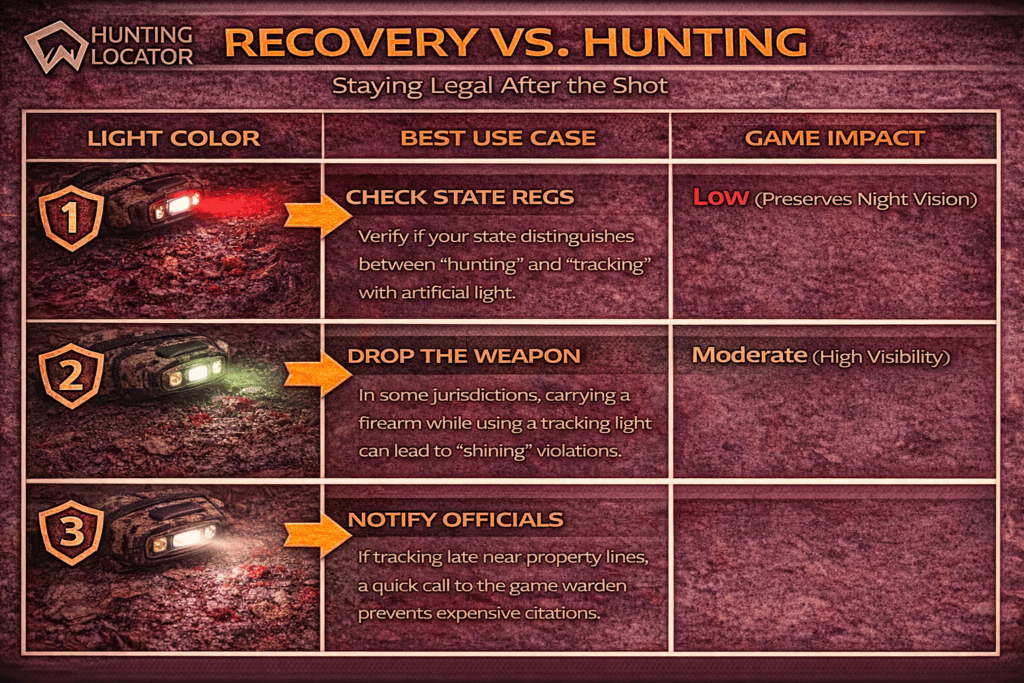
Here’s what every hunter needs to understand: hunting any game animal at night is illegal nationwide—deer, turkey, elk, moose, all of it. But there’s a huge difference between hunting WITH lights and using lights to track wounded animals.
⚠️ Critical Legal Point: Hunting with artificial lights is prohibited in most places. However, most states allow lights specifically for tracking and recovering wounded game. Always check your state’s exact rules before heading out.
State Rules Vary Wildly
Don’t assume your home state rules apply everywhere you hunt. Northeastern states have some of the strictest night hunting laws in the country, while western states often give more leeway for tracking wounded game.
Take New York: they allow night hunting for coyotes from October through March, but ban lights or vision devices completely. Wisconsin takes a different approach—flashlights are OK for finding your way and at the kill site when hunting on foot.
Planning an out-of-state hunt? Contact the state game officials before buying any night vision or lighting equipment. A quick phone call beats expensive violations. Colorado doesn’t mess around—they hit violators with $2,000 fines and license suspension points for improper light use.
Always double-check current regulations through official state wildlife websites before you pack your gear.
Understanding Tracking Light Technology: What Actually Matters
Flashlight marketing is full of impressive numbers that don’t mean much in the real world. Here’s what actually counts when you’re blood trailing at midnight.
Lumens: How Much Light Do You Really Need?
For tracking wounded game, 400-600 lumens hits the sweet spot between brightness and battery life. Experienced hunters consistently report that 530-600 lumens works great for tracking and field dressing.
Think of lumens like engine horsepower. More sounds better, but you need the right amount for the job. That 1,500-lumen tactical light might look impressive, but it’ll wash out blood trails and kill your battery in under an hour. The best headlamps range from 400 to 1,500 lumens at max output, but you’ll spend most of your time in that 400-600 range with dimming options for close work.
Red vs. Green vs. White Light: When Each Works Best
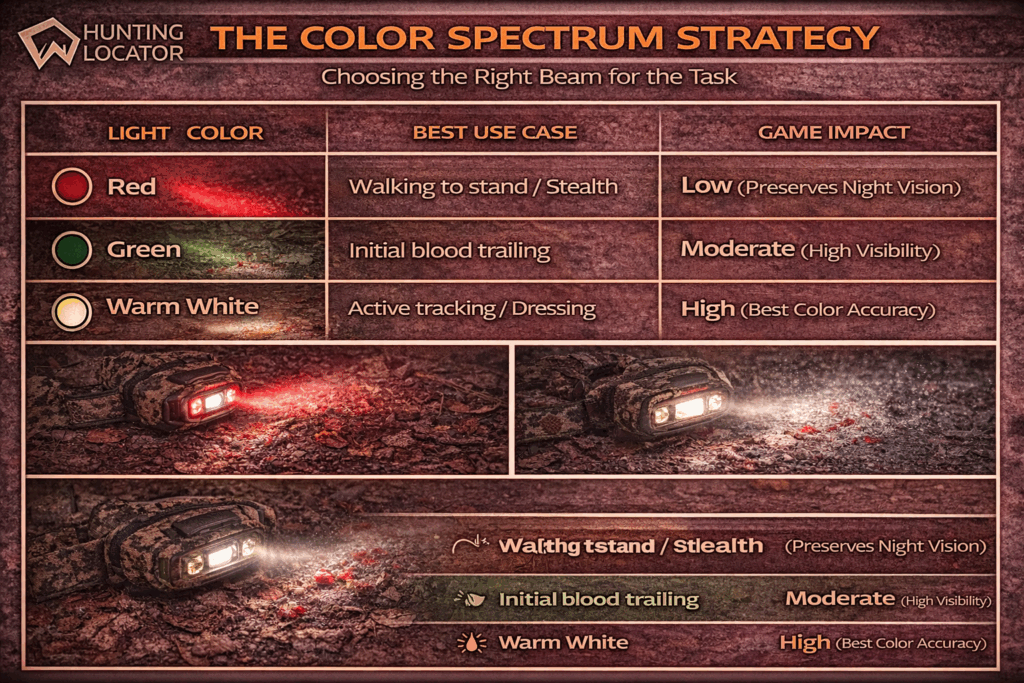
Red light keeps your night vision intact and doesn’t spook game as much—perfect for walking to your stand. Green light shows blood better than red while still being less alarming to wildlife. White light gives you maximum brightness for active tracking and field dressing.
| Light Color | Best For | Night Vision | Blood Visibility | Game Impact |
|---|---|---|---|---|
| Red | Walking to stand, camp work | Excellent | OK | Low |
| Green | Blood trailing, scanning | Good | Good | Moderate |
| White | Active tracking, field work | Poor | Best (right temp) | High |
Here’s something most hunters miss: blood really pops with 3,000K to 3,500K beams, but those higher 5,000-6,000K bulbs wash out color and make blood look gray. Look for “warm white” or adjustable color temperature. Those cool blue-white LEDs in cheap lights can make blood nearly invisible.
Smart approach: start with green for initial trailing, then switch to warm white when you’re actively searching for the animal.
Headlamp vs. Handheld: Why You Want Both
Most hunters end up carrying both types. Headlamps handle camp tasks, field dressing, and hiking when you need both hands free. Hunting headlamps are essential when you need both hands for tracking, camp setup, or gear handling. Handheld lights give you better beam control, the ability to angle light for blood trail visibility, and usually higher output for distance work.
If you can only get one right now, start with a solid headlamp. You’ll use it constantly and can add a handheld later.
Battery Life and Power Options
Rechargeable 18650 batteries crush AAA or AA batteries for runtime—one hunter got 1.5 hours morning use and 2 hours evening use for 2 weeks on one charge. Here’s the breakdown:
Rechargeable (18650/USB-C): Better value long-term, consistent power output, but you need to plan ahead Disposable (AA/AAA): Available everywhere, good backup option, but shorter runtime and higher cost over time
Best advice from experienced hunters: get one with an ‘R’ in the model number—rechargeable is super convenient, but it also works with standard batteries that I carry for backup. Lithium batteries also handle cold weather way better than alkaline.
Durability: Waterproofing and Build Quality
All headlamps at REI can handle rain, snow, and modest drops. For hunting, you want IPX4 minimum (splash resistant), with IPX7 being better (submersible).
Quick Reference Specs – Lumens: 400-600 for tracking – Colors: Red + green + white preferred – Battery: Rechargeable with backup capability – Water resistance: IPX4 minimum, IPX7 better – Weight: Under 8 oz for headlamps
Choosing the Right Light for Your Hunting Style
Now let’s match the tech specs to how you actually hunt.
Whitetail in thick cover: You want flood beam patterns, moderate 400-500 lumens, and hands-free headlamp operation for navigating dense timber.
Western big game in open country: Focus on beam distance, spot capability for long-range scanning, and bulletproof reliability for extended backcountry trips.
Waterfowl/early morning hunts: Red light modes for pre-dawn setup, lightweight design, and serious water resistance for marsh conditions.
Check out our tracking lights and headlamps specifically chosen for field reliability—options for every budget and hunting style.
Core Gear Recommendations: Good, Better, Best
Based on real field performance and hunter feedback, here are our three tiers of recommendations.
Entry Level: Getting Started Right
First season or tight budget? You don’t need to break the bank, but don’t go cheap either. A hunting flashlight needs at least 200-300 lumens for basic tracking effectiveness.
Entry-level must-haves:
- 300+ lumens on high
- At least one color mode (red or green)
- Water-resistant (IPX4+)
- Reliable brand with warranty
A good entry-level headlamp will serve you well for years. Add a handheld later as your needs grow.
Mid-Range: The Sweet Spot
This is where most serious hunters land. The jump from entry to mid-range gives you the biggest improvement in real-world performance without paying for features you’ll never use.
Mid-range essentials:
- 400-600 lumens with multiple brightness levels
- Red AND green modes plus white
- Rechargeable with backup battery option
- IPX7 waterproofing
- Adjustable beam (spot/flood)
Premium: When Failure Isn’t an Option
When you’ve dropped thousands on tags, travel, and time off work, your tracking light isn’t the place to cut corners. Premium lights from proven manufacturers are built for the worst conditions—which is usually when you need them most.
Premium features:
- 600+ lumens with long runtime
- Full color spectrum with adjustable temperature
- Premium rechargeable cells with USB-C
- IPX8 waterproofing
- Lightweight, tough construction
- Extended warranty
Don’t Forget the Backup
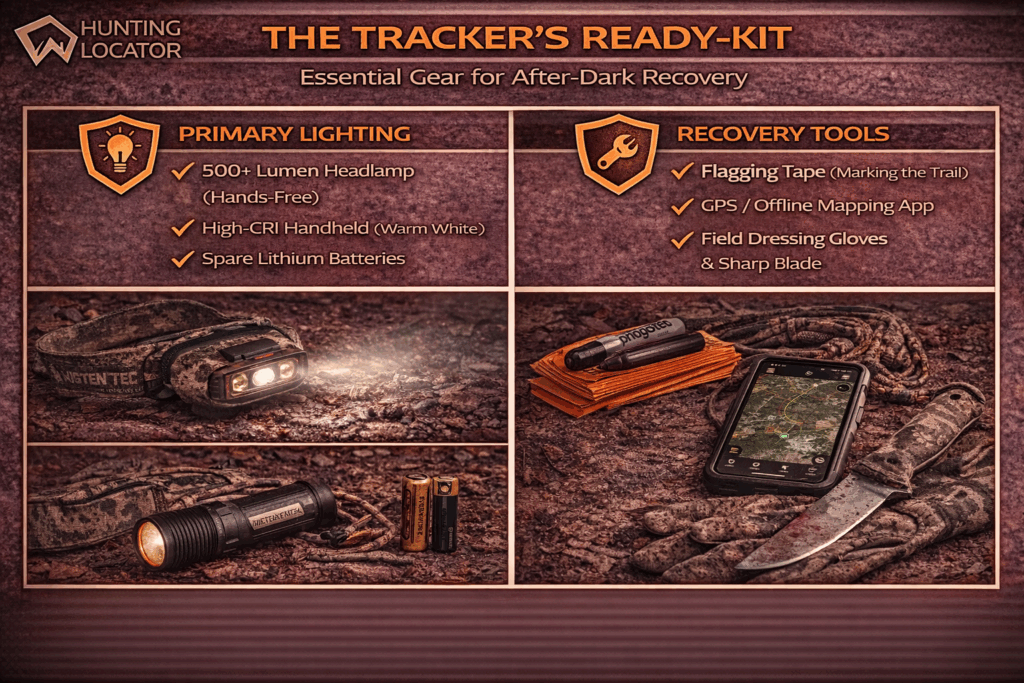
Carrying two lights is smart—it’s a mental safety net that lets you make better decisions when you know you won’t be left in the dark. Get a compact backup that uses different batteries than your primary. If your rechargeable dies, you want your backup running on AAs or AAAs.
Ready to see what’s available? Browse our tracking light selection. We’ve picked options at every price point, and we’re always happy to help you find the right fit.
Beyond the Light: Complete Tracking Readiness
A great tracking light is crucial, but it’s part of a bigger system. Here’s what else experienced hunters have ready before taking the shot.
Navigation and Safety
GPS devices become critical when tracking takes you into unfamiliar territory. Mark your shot location immediately, track your path during follow-up, and make sure you can find your way back in total darkness. Our GPS and navigation gear includes units built specifically for hunting.
Field Processing Tools
Once you’ve successfully tracked and recovered your game, you’ll need quality field processing equipment to handle the harvest properly. Sharp knives, game bags, and bone saws become essential when you’re working by headlamp.
Safety and First Aid
Extended tracking in unfamiliar terrain requires proper safety prep. Our survival and first aid kits are designed for hunters who know that being prepared isn’t paranoia—it’s responsibility.
More Resources from Hunting Locator
We’re here to help hunters succeed with the right gear and knowledge:
- Hunting Accessories – Complete gear selection from trusted manufacturers
- Scent Elimination – Wind isn’t always perfect; proper scent control keeps you undetected during tracking
- Hunting Knives – Quality blades for field dressing and processing your harvest
- Backpacks and Packs – Organized storage keeps tracking essentials accessible
- Hand Warmers – Cold weather tracking requires dexterity; keep your hands working
FAQ
What’s the difference between hunting lights and regular flashlights?
Hunting flashlights are completely different from household lights—hunters need silent operation, color options that don’t spook animals, stable performance in cold/wet conditions, and long runtimes. Regular flashlights usually lack red/green modes, perform poorly in cold weather, and make noise that can spook game.
Can I use my phone’s flashlight for tracking?
Phone lights work for emergencies, but they’re terrible for serious tracking. Phone batteries die fast in cold weather, light output is weak for distance work, and you risk damaging your primary communication device. Dedicated tracking lights are essential for ethical game recovery.
How do I know if my tracking light is bright enough?
Hunters consistently say 530-600 lumens works great for tracking and field dressing. If you can clearly see blood drops at 10-15 feet and tell them apart from leaves or shadows, your light has enough output. Test your gear before hunting season in different conditions.
Should I buy rechargeable or battery-powered lights?
Best approach combines both: get one with an ‘R’ in the model—rechargeable is super convenient, but it also takes standard batteries that I carry for backup. Rechargeable gives better long-term value and consistent performance, while disposables provide backup reliability.
What color light is best for blood tracking?
Green light offers the best balance between blood visibility and night vision preservation. However, blood really shows up with 3,000K to 3,500K beams, while higher Kelvin bulbs wash out color and make blood look gray. Many hunters use green for initial trailing, then switch to warm white for active searching.
How long should my tracking light battery last?
Rechargeable 18650 batteries can give you 1.5 hours morning and 2 hours evening for 2 weeks on one charge with normal use. For tracking sessions, expect 4-8 hours of continuous use on medium settings with quality rechargeable lights, depending on temperature and output level.
The Final Shot
Successful tracking isn’t just about following blood—it’s about having tools that work when ethics meet challenging conditions. The difference between a recovered deer and a sleepless night often comes down to equipment that performs when everything else goes sideways.
Your tracking light represents more than gear. It’s your commitment to ethical hunting and respect for the animals you pursue. Whether you’re gearing up for your first big game hunt or replacing equipment that’s failed you, investing in quality lighting means you can fulfill your responsibility as a hunter.
Ready for your best hunting season yet? Check out our hunting accessories store today! We stock the best tracking lights, field processing tools, and safety equipment to ensure your success in the field.


