Proper cleaning prevents malfunctions that show up exactly when you can’t afford them. It keeps your rifle accurate, extends its life, and honestly? It’s way cheaper than buying a new gun every few years because you let the old one turn into a rust bucket.
Here’s what we’re covering so you never have that nightmare scenario:
- The must-have components for any hunting rifle cleaning kit (spoiler: you don’t need 47 different brushes)
- A realistic cleaning schedule that actually works with hunting seasons
- How to pick gear that matches your hunting style instead of some marketing department’s wishlist
Let’s start with why this stuff matters more than most hunters think.
Why Gun Care Matters for Hunters
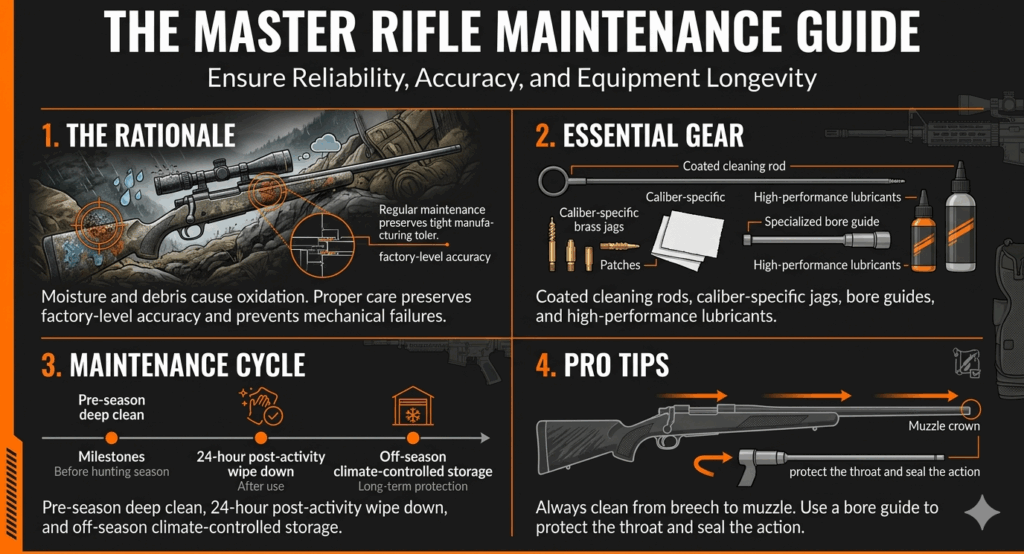
Here’s the brutal truth: moisture gets attracted to all that crud in your bore and action, then corrosion and rust start eating away at the metal. Those surfaces get pitted and rough, destroying accuracy and eventually ruining your hunting weapon. For hunters, this isn’t some theoretical problem—it’s the difference between filling your tag and going home empty-handed.
Skip proper gun care and you’re looking at:
- Your groups opening up as fouling builds in the bore
- Malfunctions when you’ve got one chance at that buck you’ve been tracking
- Expensive repairs or replacement way sooner than necessary
- Safety issues from corroded parts that might fail
A clean barrel lets bullets fly consistently and accurately… removing all that buildup gives you a smooth, uniform surface for the bullet to travel through, which maximizes rotational stability. This matters even more for hunters dealing with rain, snow, and humidity that range shooters never see.
Essential Cleaning Kit Components: What You Actually Need
Forget those 100-piece kits with more gadgets than a Swiss Army knife. The real essentials are cleaning rods, jags, patches, bore brush, bore snake, gun solvent, gun oil, and a general-purpose brush. Everything else is nice to have, not need to have.
Cleaning Rods and Bore Guides
Coated cleaning rods have a protective surface that won’t damage your bore. The best ones also have free-spinning handles that let the rod turn with your barrel’s rifling. This isn’t where you want to cheap out, because those bare aluminum sectioned rods in budget kits can pick up metal shavings and turn into sandpaper for your bore and rifling.
Bore guides are just as critical. They keep your cleaning rod centered so it doesn’t scrape the throat area and seal the chamber so solvents don’t leak back into your action.
What to look for:
- Coated surface (nylon or carbon fiber work great)
- One-piece construction for strength
- Handle that spins freely
- Bore guide that fits your caliber
Bore Brushes and Patches
Cleaning patches are just small fabric squares, usually cotton. After you knock loose the big chunks with a brush, patches wipe away gunpowder and smaller particles. Bronze brushes handle stubborn fouling better, while nylon brushes work fine for regular cleaning and won’t scratch coated barrels.
Get patches that actually fit your caliber. Too big and they won’t go through properly. Too small and they’re basically useless since they won’t contact the bore walls.
Solvents, Oils, and Lubricants
These aren’t interchangeable, even though some people treat them that way. Cleaning agents dissolve or loosen the gunk and make it easier to wipe away. Lubricants go on clean guns to help moving parts work smoothly… Protectants coat exposed metal and help prevent rust and corrosion.
CLP products try to do all three jobs, which is handy for field use but might not match dedicated products for serious cleaning. Hoppes No. 9 and Break-Free CLP have stuck around this long because they work.
Quick tip for experienced hunters: If you’re dealing with stubborn copper fouling after a lot of shooting, grab some dedicated copper solvent like Sweet’s 7.62 alongside your regular cleaner.
Bore Snakes: The Field Cleaning Essential
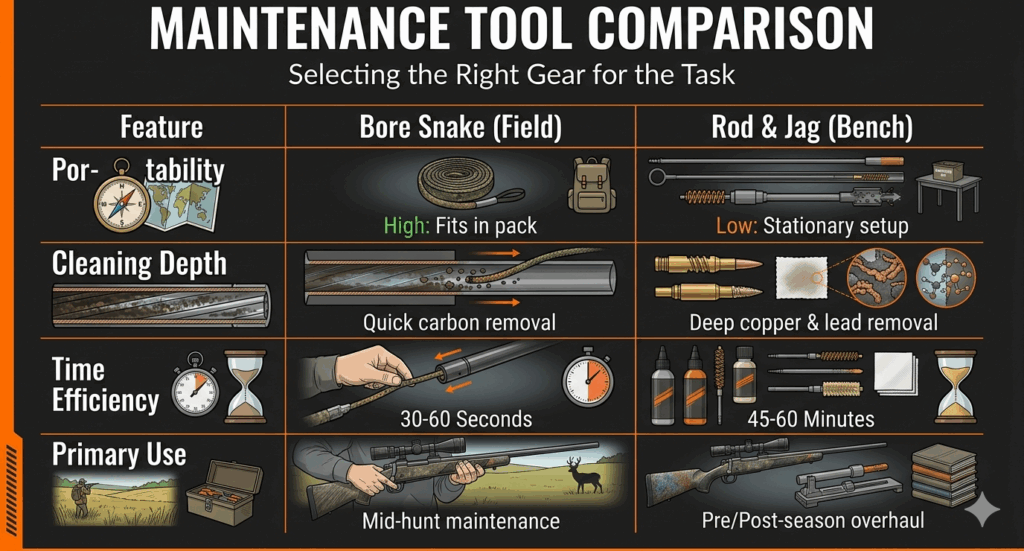
A bore snake is basically cleaning cloth wrapped around a cord, sometimes with a bore brush attached. You thread the cord through the barrel, then pull the cloth and brush all the way through. Perfect for quick cleaning during multi-day hunts when you can’t do a full breakdown.
Universal vs. Caliber-Specific Kits
| Kit Type | Best For | Things to Consider |
|---|---|---|
| Universal Kit | Multiple firearms, first-time buyers | Might have stuff you don’t need; double-check it covers your calibers |
| Caliber-Specific Kit | Single rifle owners, precision cleaning | Perfect fit; you’ll need separate kits for different guns |
Plan to spend at least $40 for a decent universal cleaning kit. Most hunters do fine starting with a good universal kit and adding caliber-specific brushes later.
Check out our gun cleaning kits for complete setups that actually work with hunting rifles and shotguns.
When to Clean: The Hunter’s Maintenance Schedule
Your rifle needs the same kind of pre-season prep you put into scouting. Clean your hunting rifle at minimum before and after season. If it gets exposed to sand, dirt, moisture, or salt, clean it immediately.
Pre-Season Deep Cleaning
When: 2-4 weeks before season opens
Why: Complete inspection and thorough cleaning after months in storage
Plan on about an hour for a thorough barrel cleaning, so don’t wait until the night before opening day.
Here’s your complete pre-season process:
- Double-check it’s unloaded and get all ammo out of your work area
- Field strip per manufacturer instructions
- Apply solvent and let it work to break down built-up fouling
- Scrub with bore brush to loosen stubborn residue
- Run clean patches until they come out spotless
- Light oil coat on bore and metal surfaces
- Reassemble and function test
Safety reminder: Always verify your firearm is completely unloaded before cleaning. Get all ammunition out of the room where you’re working.
Field Cleaning During Hunts
After every range session or hunting trip, dry your firearm thoroughly and wipe down the bolt and exterior metal with a lightly oiled rag. But you don’t need to clean after every hunt unless you did lots of shooting or got debris like sand, mud, or saltwater in the barrel.
Field kit essentials:
- Bore snake for your caliber
- Small bottle of CLP or gun oil
- Microfiber cloth
- Small brush for action and bolt
Keep these in a dedicated pocket of your hunting pack so they’re always accessible without taking up much space.
Post-Hunt Thorough Cleaning
When: Within 24 hours of getting back
Clean your firearms within 24 hours of shooting them. Dirt, grime, and gunpowder that sits around hardens into carbon film that’s much harder to remove later. Rain, snow, and humidity make this even more critical.
While you’re busy with your game processing tools, don’t forget your rifle needs attention too.
Off-Season Storage Prep
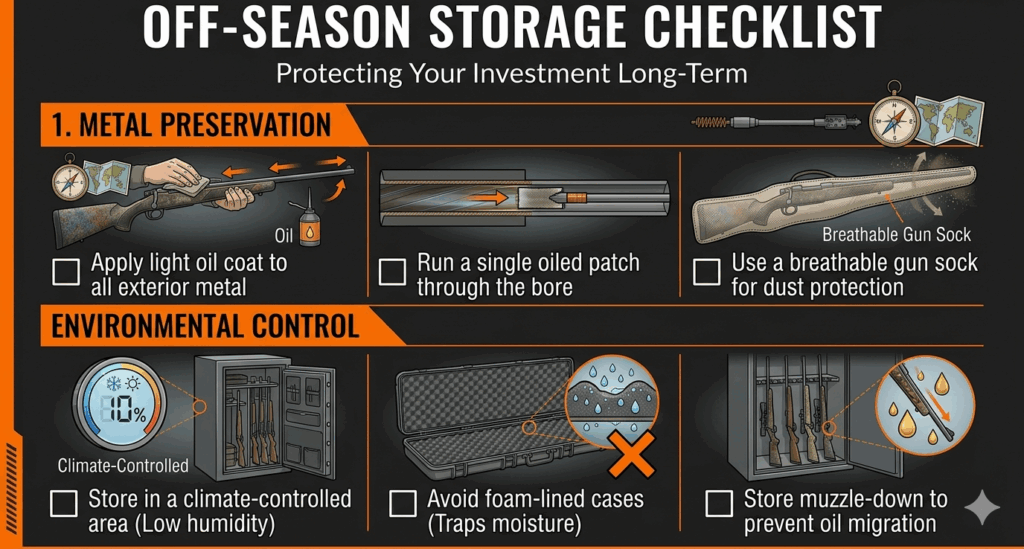
Run a lightly oiled patch through the bore to prevent rust and corrosion during storage. Also, in humid climates, store with the muzzle down or horizontal to prevent oil from migrating from the bore into the action.
Storage checklist:
- Complete cleaning before putting it away
- Light oil on all metal surfaces
- Climate-controlled storage if possible
- Gun sock for dust protection
- Skip foam-lined cases for long-term storage (they trap moisture)
Cleaning Your Hunting Rifle: Step-by-Step Process
This works for most bolt-action hunting rifles. Semi-autos and shotguns might need extra steps.
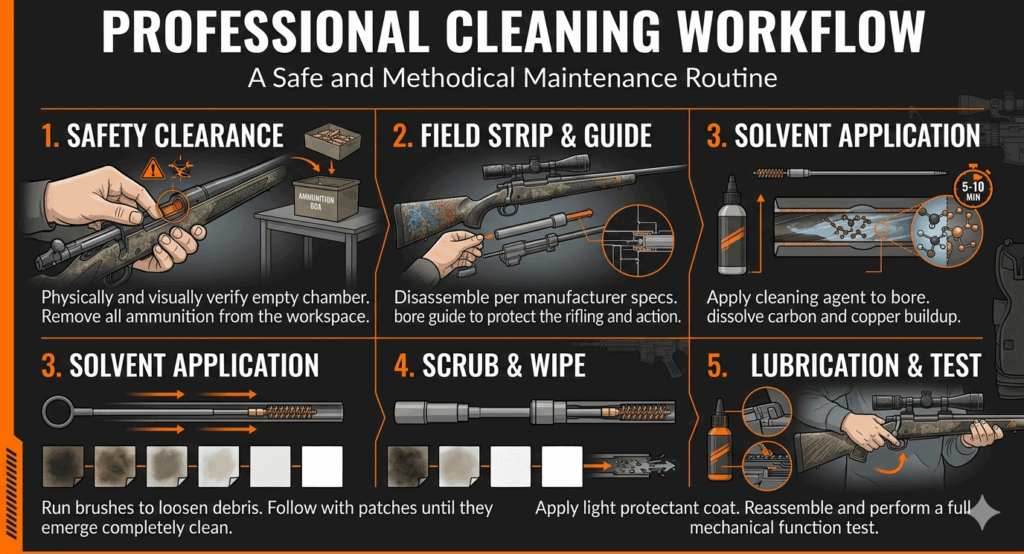
Safety first: Make absolutely sure any firearm is safely unloaded and cleared before any disassembly. Do a safety check, then do it again as a double or triple check. Also, nitrile gloves are smart to reduce contact with harmful chemicals and residues and minimize lead absorption.
Complete Cleaning Steps
- Clear and Double-Check
- Remove magazine, open action, visually and physically verify empty chamber
- Get all ammunition out of your work area
- Set Up Your Work Space
- Use a cleaning mat or protect your surface
- Always clean with the barrel angled downward so excess solvent runs out the muzzle instead of back into the action, bedding, and trigger
- Cover your scope so solvents or brushes don’t accidentally hit the lens
- Field Strip
- Remove bolt following manufacturer directions
- Always use a bore guide. It replaces the bolt and does two things: centers the cleaning rod so it won’t scrape the throat, and seals the chamber so solvents can’t run back into the action
- Clean the Bore
- Put solvent on bore brush and run it through several times
- Let solvent sit 5-10 minutes to break down fouling
- Run clean patches until they come out spotless
- Finish with lightly oiled patch
- Clean Action and Bolt
- Use small brush on bolt face, extractor, and action
- Wipe down all metal surfaces
- Light lubrication on moving parts
- Reassemble and Test
- Put everything back together in reverse order
- Function check to make sure everything works right
Essential Accessories for Complete Gun Care
Beyond basic cleaning supplies, these accessories make maintenance easier:
| Accessory | What It Does | Who Needs It |
|---|---|---|
| Gun Cleaning Mat | Protects work surface, keeps parts organized | Everyone |
| Bore Light | Lets you inspect barrel condition | Precision shooters |
| Action Cleaning Brushes | Detail cleaning of action parts | Regular maintenance |
| Microfiber Cloths | Exterior cleaning and polishing | All firearms |
For organized storage and transport of cleaning supplies, check out hunting backpacks with dedicated pockets for maintenance gear.
More Resources from Hunting Locator
Get your hunting prep dialed in with these gear categories:
- Hunting Knives – Quality blades for field dressing and camp work
- Scent Elimination – Stay undetected with proven scent control
- GPS and Navigation – Reliable navigation tools for remote areas
- Survival and First Aid – Essential safety gear for backcountry hunting
- Flashlights and Headlamps – Dependable lighting for early morning and late evening hunts
FAQ
How often should I clean my hunting rifle during season?
Clean before and after season at minimum. If your rifle gets exposed to sand, dirt, moisture, or salt, clean it right away. For active hunting, quick field cleaning after each trip and thorough cleaning weekly works well.
What’s the difference between CLP and separate products?
CLP does cleaning, lubrication, and protection in one bottle, which is convenient for field use. But dedicated solvents usually clean better for deep maintenance, and separate lubricants might protect better in specific conditions.
Can I use household stuff for emergency cleaning?
Not ideal, but you can use purpose-made gun cleaner or diluted Simple Green in a pinch. Proper gun-specific products are always better for results and safety.
How do I know when my rifle is clean enough?
Run patches through until they come out nearly spotless. Use your bore brush to scrub inside the barrel until you’re not seeing any more dirt, gunpowder, or carbon.
What should I never do when cleaning?
Don’t use bare aluminum sectioned cleaning rods from cheap kits since they can damage your bore. Clean from breech to muzzle when possible, and never force cleaning rods through tight spots.
How long does complete rifle cleaning take?
A thorough barrel cleaning takes about an hour, though this varies based on your rifle’s condition and your experience. Plan accordingly, especially before important hunts.
The Final Shot
Good gun care isn’t just maintenance, it’s your insurance policy for hunting success. From pre-season prep to post-hunt cleaning, the right approach and quality supplies keep your firearms performing when everything’s on the line. Remember, proper cleaning prevents malfunctions at critical moments, extends your weapon’s life, and preserves accuracy and performance.
Ready to gear up for your best season yet? Check out our hunting accessories store today! We’ve got the cleaning kits, maintenance supplies, and field gear you need for success in the field.


