Building a proper hunter’s survival kit with essential hunting accessories isn’t about paranoia. It’s about confidence. When you know you’re prepared for whatever the backcountry throws at you, you hunt better. You make smarter decisions. You enjoy the experience instead of worrying about what could go wrong.
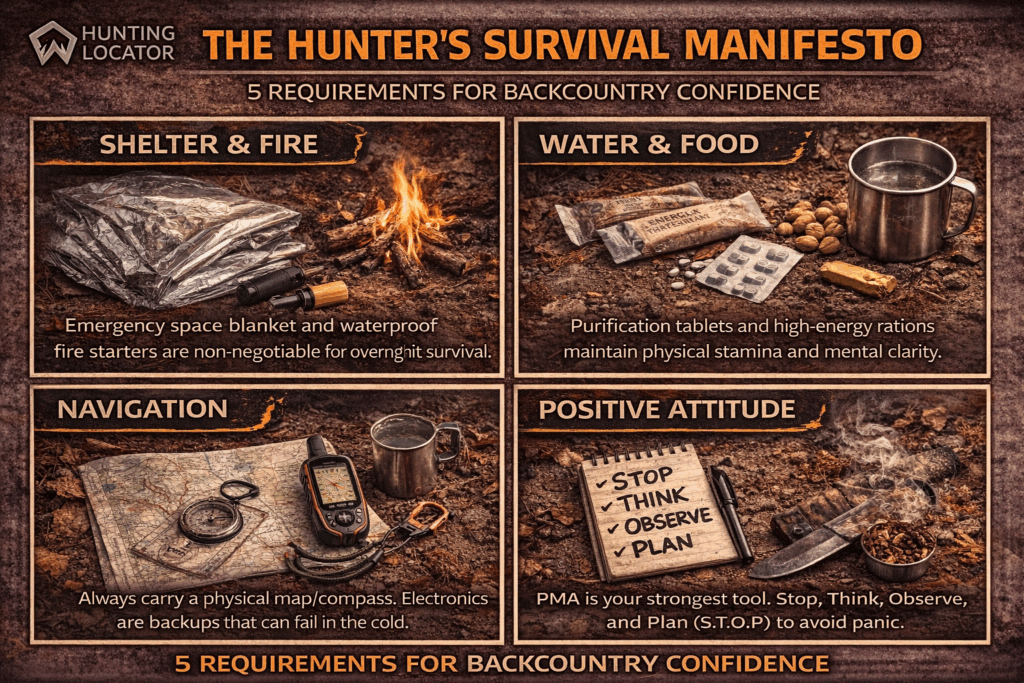
Hunter-Ed.com breaks it down simply: “The five primary requirements for survival are: Shelter, Fire, Water, Food, and a Positive Mental Attitude (PMA).” Everything else builds from there.
This guide covers everything you need:
- Legal requirements that keep you hunting
- Core survival gear for any hunting situation
- Field-tested strategies that actually work
Let’s start with the boring stuff that’ll keep you out of trouble with game wardens.
Know Before You Go: Essential Prep with Hunting Accessories
Here’s the thing about hunting regulations—they’re not suggestions. Miss a deadline, forget your license, or ignore a weapon restriction, and your hunt’s over before it starts. For out-of-state hunters especially, this stuff gets complicated fast.
Regulations Check
Every state does things differently. What works in your home state might be illegal two states over. Some places sell tags over the counter, others make you apply months ahead and hope you draw.
Don’t mess around with these basics:
- Season dates and shooting hours
- Weapon rules (minimum calibers, broadhead specs)
- Bag limits and how to tag your animal
- Where you can actually hunt (public land rules, permission requirements)
- Hunter orange requirements
Out-of-state hunters get hit hardest. Illinois doesn’t mess around with deadlines: “the application and any required supporting documents must be received—and approved—in our office by close of business February 9, 2026” for spring turkey permits. Miss it by a day? You’re done.
Regulations change every year. Always double-check with the state wildlife agency before you go.
Action: License and Tag Acquisition
Getting legal to hunt means more than clicking “buy now” on a website. Here’s what you’re actually dealing with:
- Hunter Education – Most states won’t sell you a license without it
- License Types – Resident vs. non-resident pricing (prepare for sticker shock)
- Tag Systems – Some you buy, others you have to draw
- What to Carry – Paper copies, phone apps, or both
Reality check on costs: Arizona hits non-residents hard at “$160 and is valid 365 days from the date of purchase.” Factor this into your hunting budget early.
Scouting & Habitat: Reading the Land
Your scouting directly determines what gear you’ll need. Hunt thick timber? Pack different than open country. Hunting near roads versus backpacking in for three days? Completely different gear lists.
Look for the basics regardless of species:
- Food sources and water
- Bedding areas and travel routes
- Fresh sign (tracks, scat, feeding areas)
- Wind patterns and terrain features
Technology makes pre-scouting easier. Hunting GPS apps let you study terrain, mark waypoints, and plan approaches from your couch. Way better than showing up blind. A good GPS unit or hunting app pays for itself the first time it guides you back to camp in the dark.
Physical & Gear Readiness
Your fitness level determines your gear choices. Can you carry a 40-pound pack for five miles? Or are you more of a truck-to-stand hunter? Be honest about your capabilities.
Hunter-Ed.com gets it right: “assembling the set of gear that works best for you can take time and plenty of testing.” Don’t expect to nail it on your first try.
Budget reality: You don’t need everything immediately. “You don’t need to splurge on every single piece of gear to have a successful hunt, and there are ways to get started without sending your bank account into a tailspin.”
The Gear Advantage
Good gear doesn’t guarantee success, but bad gear can ruin a hunt fast. When your equipment works reliably, you focus on hunting instead of fighting with broken zippers and dead batteries.
Core Gear Checklist: Building Your Hunter’s Survival Kit with Essential Hunting Accessories
This is where we get serious. Hunter-Ed.com’s survival framework gives us the foundation, but hunters need more than basic survival gear.
The 10 Non-Negotiable Items:
- Fire starter plus waterproof matches
- Sharp knife or quality multi-tool
- Map and compass (GPS as backup)
- Comprehensive first-aid kit
- Emergency shelter or space blanket
- Water plus purification tablets
- High-energy emergency food
- Signaling devices (whistle, signal mirror)
- Extra clothing and rain gear
- Headlamp with spare batteries
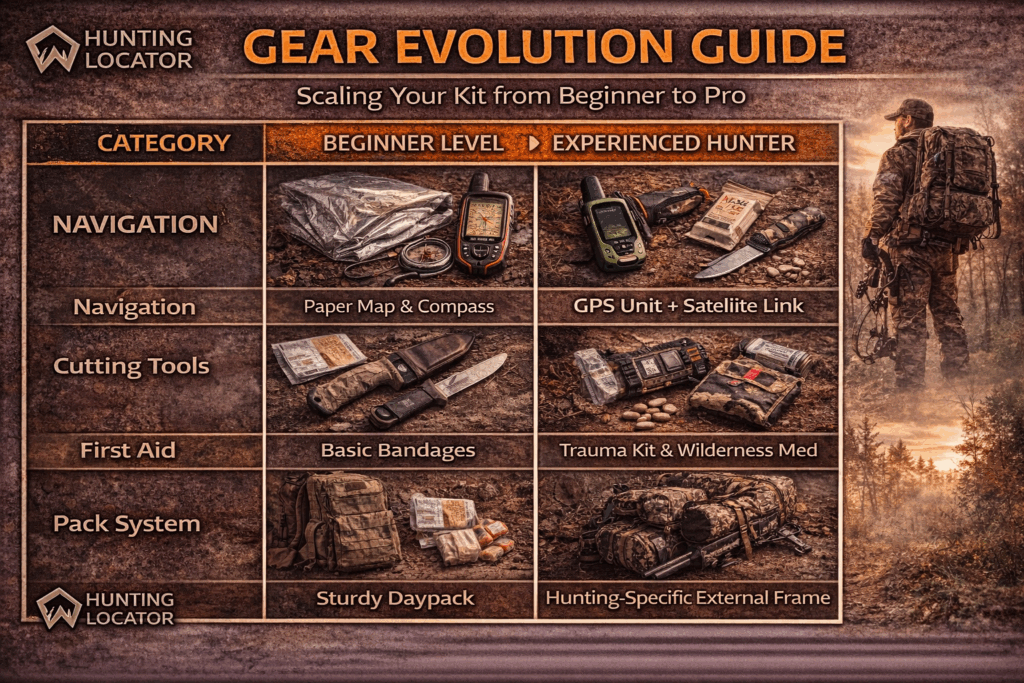
Gear Evolution by Experience:
| Category | Beginner Level | Experienced Hunter |
|---|---|---|
| Navigation | Basic compass + paper map | GPS unit + backup compass |
| Cutting Tools | Simple fixed-blade knife | Multi-tool + replaceable blade system |
| First Aid | Basic bandages and pain meds | Trauma kit + wilderness medicine training |
| Pack System | Sturdy daypack | Hunting-specific frame pack |
| Optics | Entry-level binoculars | Quality glass + rangefinder combo |
Clothing & Layering
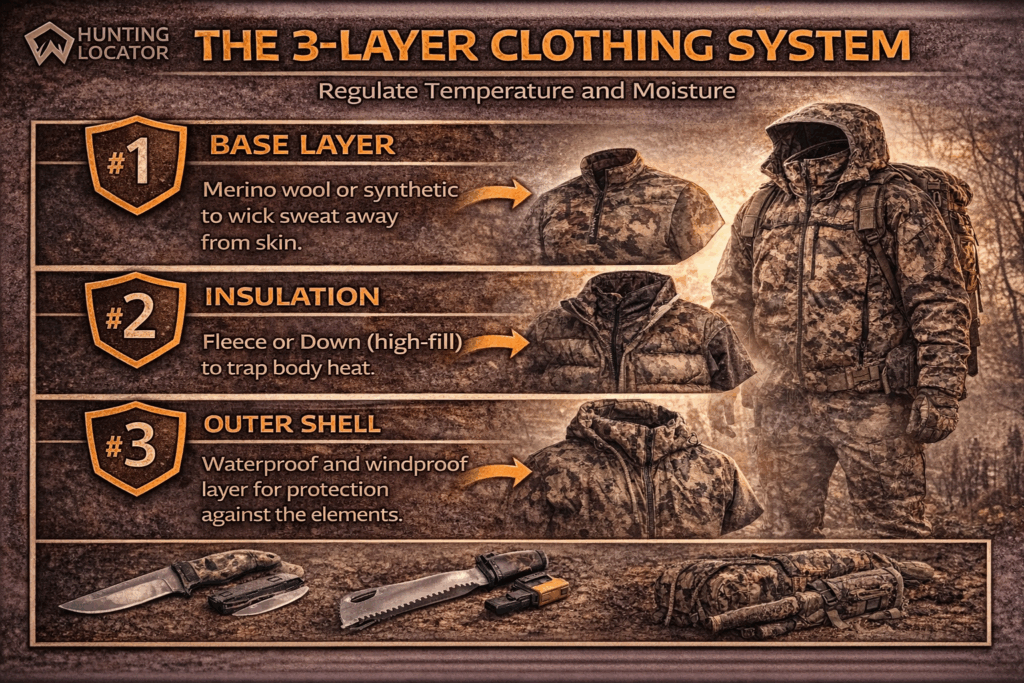
Your clothing system handles four jobs: temperature control, scent management, noise reduction, and camouflage. Mess up any one of these and your hunt suffers.
Layer Smart:
- Base layer: Synthetic or merino wool against your skin
- Insulation: Fleece, down, or synthetic fill
- Shell: Waterproof, breathable outer layer
Down vs. synthetic matters. OnX explains the science: “the higher the fill (900-fill vs. 600-fill), the warmer per ounce the down will be.” But synthetic insulation works when wet.
Boot reality check: Break them in before season. “Break in your boots before hunting season starts, as the only thing worse than blisters are blisters five miles into a hike with no way to turn back.”
Insulation strategy: Match boots to hunting style. “Insulated boots will shine on stagnant hunts like sitting in a treestand or laying in a duck blind, while non-insulated boots will be best for more mobile hunts.”
Hand warmers can save a hunt when temperatures drop unexpectedly.
Weaponry & Ammunition
Your weapon choice is personal and depends on your game, hunting style, and local regulations. We’re not going to tell you what to buy, but we’ll cover what every hunter should consider.
Key factors:
- Match your weapon to the game you’re hunting
- Know your effective range and stick to it
- Practice extensively before season
- Carry appropriate ammo for conditions
Ethics matter most: Clean, quick kills depend on knowing your equipment inside and out. If you’re not confident in the shot, don’t take it.
Investment reality: Quality costs money. “A $250 pair of binoculars might turn into $500 or more. An entry-level, $400 rifle and scope turns into a $2,500 package.”
The Essential Hunting Accessories: Navigation & Safety
This gear isn’t optional. Your life might depend on it.
Navigation backup system:
- Physical map and compass (electronics fail)
- GPS device or reliable hunting app
- Know how to use both systems
Emergency protocol: Hunter-Ed.com teaches S.T.O.P. when things go wrong:
- Stop – Don’t panic or keep moving
- Think – Assess your situation honestly
- Observe – Look and listen for landmarks or help
- Plan – Make deliberate decisions
First aid essentials:
- Various bandages and medical tape
- Antiseptic wipes and antibiotic ointment
- Pain relievers and anti-inflammatory meds
- Tourniquet for serious bleeding
- Your personal medications
- Emergency contact info
A quality first aid kit is the gear you hope never to use but should never hunt without.
Communication backup: Satellite communicators work where cell phones don’t. For remote hunts, they’re worth every penny.
Field Dressing Tools
Once your animal is down, proper field care starts immediately. Having the right tools ready protects meat quality and makes the job easier.
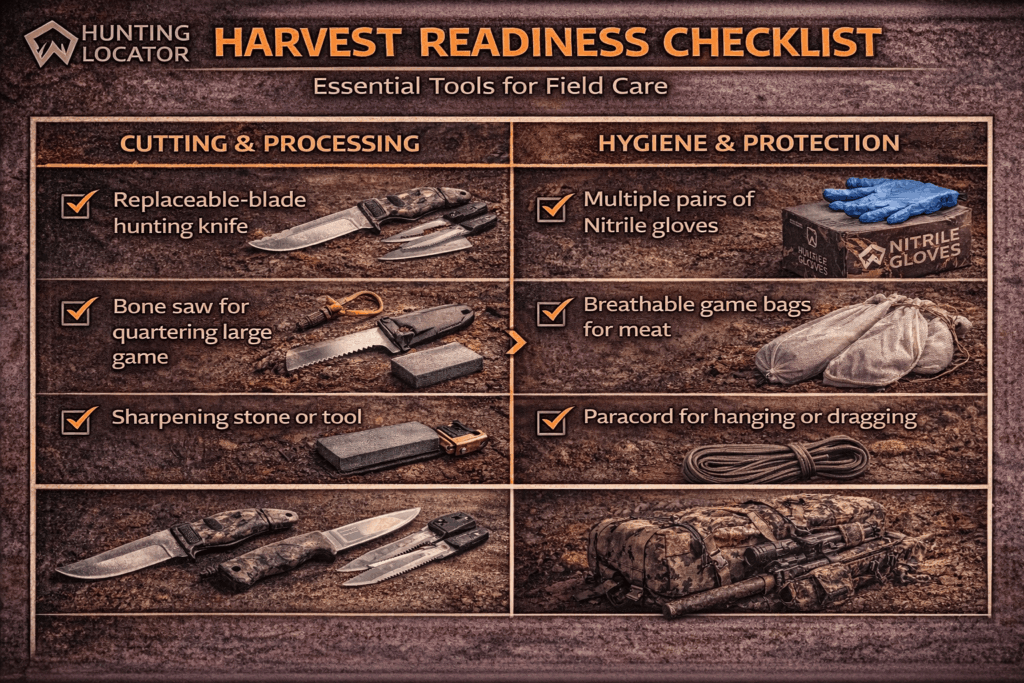
Field dressing essentials:
- Razor-sharp hunting knife (fixed blade preferred)
- Gut hook or replaceable blade system
- Multiple pairs of nitrile gloves
- Game bags for meat protection
- Bone saw for quartering large game
- Paracord for dragging and hanging
Knife evolution: Modern hunters are switching. “A growing number of hunters are now opting to carry knives with replaceable blades because they are ultralight, very sharp and don’t need sharpening, and they are affordable.”
Safety first: Protect yourself. “A quality pair of nitrile gloves makes clean-up easier and aids in the prevention of acquiring diseases like blood poisoning.”
A reliable hunting knife might be your most important tool. A complete field dressing kit means you’re ready for any harvest.
Pack Organization
Your pack is command central. Everything else depends on having your gear organized and accessible when you need it.
Pack considerations:
- Size matches your hunting style (day hunts vs. backpack trips)
- Quiet materials that won’t spook game
- Comfortable fit for long carries
- Smart organization for quick access
goHunt nails it: “a backpack can make or break a hunt, especially on multi-day backcountry elk hunts, as it’s probably the one piece of gear used the most on a hunt.”
The right hunting pack keeps your survival kit organized without slowing you down.
Tactics & Strategy: Putting Your Gear to Work
Having great gear means nothing if you don’t know how to use it strategically. This is where preparation meets execution.
Peak Activity Times
Game movement patterns determine when your gear matters most.
Universal patterns:
- Dawn and dusk see the most activity
- Weather fronts trigger movement
- Moon phases affect nocturnal behavior
- Barometric pressure changes influence feeding
Gear timing: Set up your most demanding equipment (stands, blinds, decoys) around peak activity periods. Save maintenance and organization for midday lulls.
Wind & Scent Control
Wind direction drives every decision you make in the field. Even the best scent control gear can’t overcome poor wind discipline.
Wind basics:
- Always approach from downwind when possible
- Thermals rise with warming air, fall as temperatures drop
- Crosswinds require careful positioning
- Weather apps help, but field conditions change
Modern scent control works best as part of a complete system—clothing, sprays, and smart positioning.
No amount of scent control technology beats good wind discipline. Plan your approach and stand placement around wind direction first.
The Approach
Your survival kit supports different strategies depending on terrain, species, and conditions.
Stand hunting: Elevation gives you visibility and scent advantage. Shooting sticks or bipods provide stable shooting platforms from height.
Still-hunting: Moving quietly requires noise-conscious gear. Secure everything to prevent rattling or snagging on brush.
Blind hunting: Ground blinds extend your hunting time by providing concealment and weather protection. Face paint eliminates the skin shine that blinds can’t hide.
Calling and scents: Scents and lures work with calling to create realistic scenarios that bring game within range.
Shot placement: Know your effective range and only take shots you’re confident in. Your survival kit includes tools to track and recover game after the shot.
Post-Harvest Care: The Work After the Shot
Your hunt doesn’t end when you pull the trigger. Proper post-harvest care honors the animal and preserves meat quality.
Tracking & Recovery
Blood trail basics:
- Mark the last blood before moving forward
- Use flashlights and headlamps to see blood sign clearly
- Take photos of the trail for reference
- Move slowly—rushed tracking loses animals
Recovery prep: Have your field dressing kit ready before you start tracking. Time matters for meat quality, especially in warm weather.
Field Dressing
Key steps:
- Safety first – Wear gloves and ensure sharp knives
- Cool quickly – Remove organs promptly
- Stay clean – Use game bags to protect meat
- Drain well – Position the carcass for blood drainage
Keep your hunting knives sharp throughout the process. Dull knives are dangerous and make everything harder.
Transport & Processing
Field to freezer:
- Keep meat cool and dry during transport
- Plan your route to minimize travel time
- Have coolers and ice ready
- Know your processing options
Your game processing tools need thorough cleaning after each use to prevent contamination.
More Resources from Hunting Locator
Expand your knowledge and gear with these specialized resources:
- GPS and Navigation – Never get lost with hunter-specific navigation tools
- Survival and First Aid – Emergency gear that could save your life
- Flashlights and Headlamps – Reliable lighting for dawn setups and tracking
- Hearing Protection – Protect your hearing while staying alert
- Gun Cleaning Kits – Keep firearms functioning in all conditions
FAQ
What’s the single most important item in a hunter’s survival kit?
A sharp, reliable knife. It handles field dressing, cuts rope, prepares kindling, and serves as an emergency tool. Your knife enables you to use other resources effectively—making it the foundation of any survival kit.
How much should beginners spend on their first hunting setup?
Start smart, not expensive: “You don’t need to splurge on every single piece of gear to have a successful hunt, and there are ways to get started without sending your bank account into a tailspin.” Focus on safety essentials first, then build over time.
What survival gear is legally required for hunting?
Requirements vary by state, but most mandate hunter education certification, valid licenses and tags, and specific amounts of hunter orange clothing. Some states require tree stand safety harnesses. Always check local regulations—they change frequently.
How do I know if my survival kit is complete?
Test everything before you need it: “Spend time with your hunting gear before your trip.” A complete kit covers the five survival essentials (shelter, fire, water, food, positive attitude) plus hunting-specific needs like navigation and game processing.
What’s the biggest mistake hunters make with survival gear?
Overpacking is common, but being unprepared for emergencies is dangerous. Experience teaches balance: “The days that were successful were often the ones when most of the gear stayed in the backpack.” Pack for safety first, convenience second.
How often should I update my hunting survival kit?
Review your kit before each hunting season. Replace expired items (medications, batteries, food), update maps and GPS software, and check gear condition. Seasonal adjustments matter: “Remember to adjust the contents for your location and season.”
The Final Shot
Your hunter’s survival kit isn’t just gear—it’s confidence. When you know you’re prepared for whatever happens out there, you hunt better. You make smarter decisions. You focus on the experience instead of worrying about what could go wrong.
Every piece serves a purpose, from legal requirements that keep you hunting to emergency gear that could save your life. Your kit will evolve as you gain experience, but the foundation stays the same: be prepared, stay safe, and respect the game and land that make hunting possible.
Ready to build your ultimate survival kit? Check out our store for everything you need to hunt with confidence. From navigation tools and first aid supplies to field dressing equipment and scent control, we stock the gear that ensures success no matter where your next hunt takes you.


