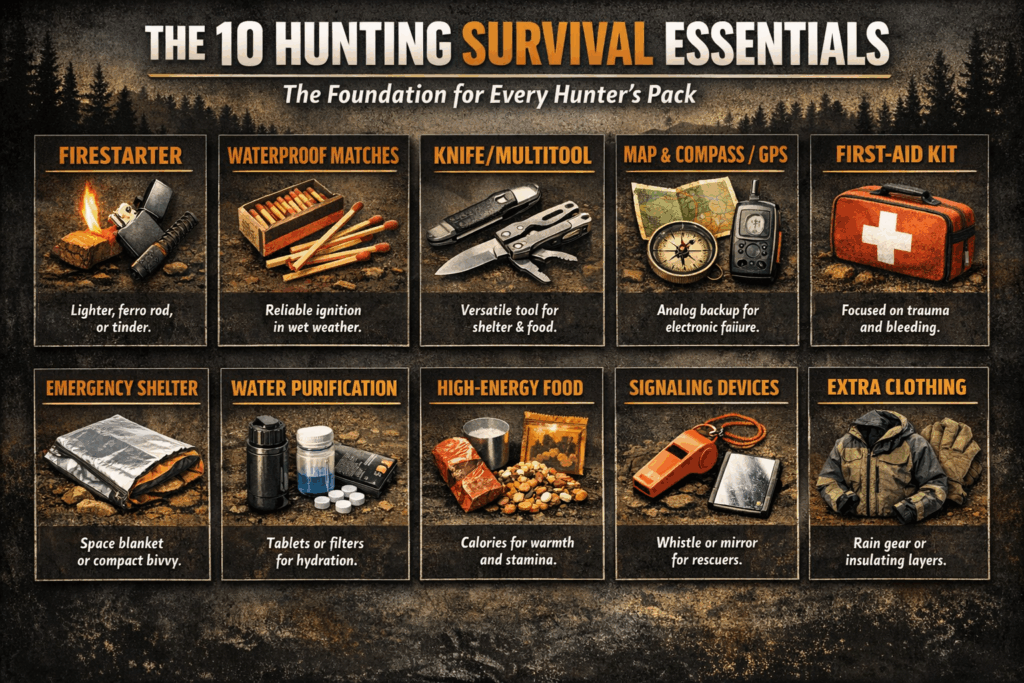
This isn’t about paranoia or worst-case scenarios. It’s about the reality that hunting takes us into places where help isn’t a phone call away. According to Hunter-Ed.com, ten essential items can make the difference between a manageable emergency and a life-threatening situation: firestarter, waterproof matches/lighter, knife or multitool, map and compass/GPS, first-aid kit, emergency shelter or space blanket, water and purification tablets, high-energy food, signaling devices, and extra clothing or rain gear.
Here’s what you’ll learn:
- The ten essentials that belong in every hunter’s pack (and why each one matters when things go sideways)
- How to build a first aid kit that actually works in the field
- Smart ways to organize your safety gear so you can find it fast
Good hunting starts with good preparation. Great hunting means coming home safe.
Know Before You Go: Essential Pre-Hunt Preparation
Your safety gear is only as good as your preparation before you hit the field. Research shows that all states require documentation and have different hunting season rules, making regulatory homework just as important as the gear you pack.
Regulations and Licensing
State hunting regulations aren’t suggestions—they’re legal requirements that vary dramatically between locations. What’s legal in Montana might get you arrested in California. Out-of-state hunts often require applications, lottery draws, or limited-issue tags, and some premium tags take years to draw.
Bottom line: Get your paperwork sorted 3-6 months ahead of time. Nothing ruins a hunting trip faster than showing up without the right licenses or tags.
Physical and Gear Readiness
Your body is your most important piece of hunting equipment. Don’t show up to a backcountry elk hunt if your idea of cardio is walking to the mailbox. And here’s something most hunters don’t think about: you may need to re-sight your rifle for 12,000 feet elevation if you originally sighted it for 200 feet at home.
Getting in shape gets you to the animals. Having the right gear gets you home safely. Visit a local fish and game club, shooting range, or archery range where you can practice your skills, including actually using your first aid equipment before you need it for real.
The Ten Essentials: Your Hunting Safety Foundation
The ten essential survival kit items recognized across hunter education programs nationwide aren’t random suggestions from some committee. They’re battle-tested fundamentals that address the most common ways hunters get into serious trouble.
Here’s a stat that should grab your attention:
Most rescues occur within 24–72 hours — Hunter-Ed.com
This tells you everything about what survival gear is really for. You’re not preparing to live off the land for months—you’re buying time until help arrives.
The Ten Essentials:
- Firestarter
- Waterproof matches or lighter
- Knife or multitool
- Map and compass/GPS
- First-aid kit
- Emergency shelter or space blanket
- Water and purification tablets
- High-energy food
- Signaling devices (whistle, mirror)
- Extra clothing or rain gear
First Aid Kit Essentials: What Every Hunter Should Carry
According to the Alaska Department of Fish and Game, “possibly the most important first aid skill for hunters is to be able to determine when an illness or an injury is serious enough to end the hunt and evacuate the patient.” That’s expert-level thinking right there—sometimes the best first aid is knowing when to get the hell out.
We’re gear people, not doctors. For real first aid training, take a wilderness first aid course. What we can help with is making sure you’ve got the right supplies when seconds count.
Building Your Hunting First Aid Kit
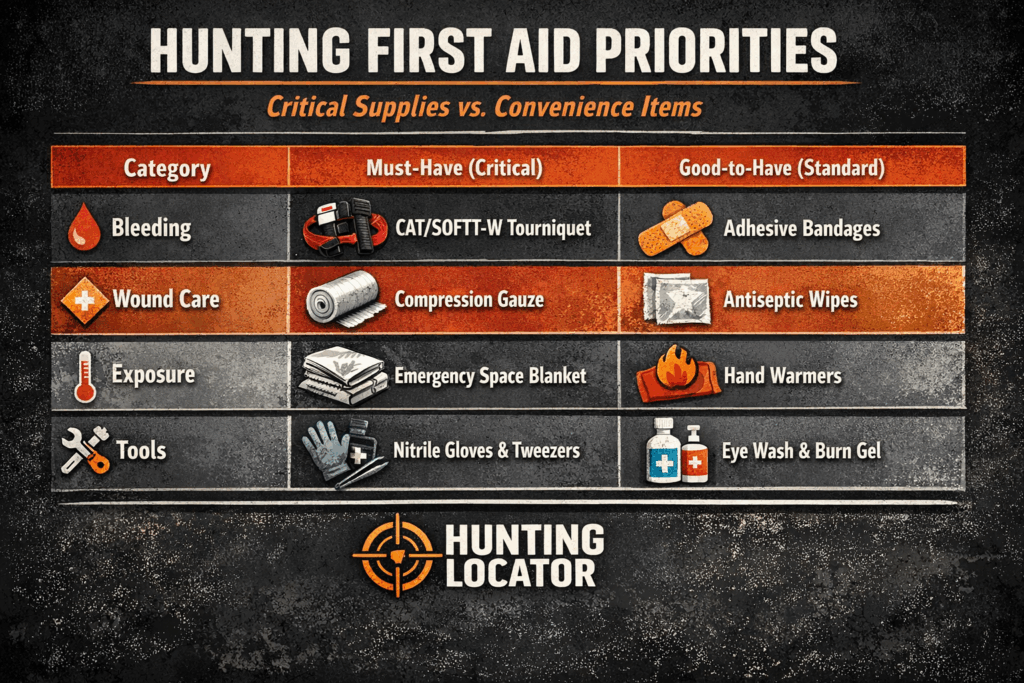
A hunting first aid kit includes bandages, gauze, a tourniquet, scissors, antiseptic wipes, an emergency blanket, eye wash, a cold pack, tweezers, gloves, and ointments. But not everything on that list is equally critical. Here’s how to prioritize:
MUST-HAVE (Your Life May Depend On It)
- Tourniquet (CAT or SOFTT-W style) – This is the most important item in your entire kit. Arterial bleeding from a weapon accident or animal attack can kill you in minutes
- Compression bandages and gauze
- Antiseptic wipes
- Medical tape
- Nitrile gloves (bring extras)
- Emergency blanket/space blanket
- Pain relief medication
- Tweezers
GOOD-TO-HAVE (Depends On Your Hunt)
- Eye wash
- Cold pack
- Splint materials
- Snake bite kit (if you’re hunting snake country)
- Burn gel
- Your personal prescription medications
Ready to build or upgrade your kit? Check out our complete selection of hunting survival and first aid gear for everything on this list.
Training Beats Gear Every Time
According to MeatEater’s experts, “training in first aid and maintaining a current first aid certificate is part of responsible hunting practice”—most people refresh CPR every two years and first aid every three.
The fanciest first aid kit in the world is useless if you don’t know how to apply a tourniquet when your hands are shaking and adrenaline is pumping. Take a wilderness first aid course before you head into remote country. Your hunting partner will thank you.
Survival Gear Beyond First Aid
Emergency preparedness experts at Global Rescue emphasize “gear that serves multiple purposes, like duct tape, paracord, multitools and zip ties”—when you’re in survival mode, one tool that does three jobs beats three tools that do one job each.
Emergency Shelter Options
Your shelter needs depend on where you hunt and how long you’ll be out:
- Space blanket: Lightest option, fits in your pocket, provides basic protection
- Bivvy sack: Better insulation, still compact, easier to set up
- Lightweight tarp: Most versatile, requires some skill, best protection
Start with a quality space blanket as your baseline. Upgrade to a bivvy sack if you hunt in harsh conditions regularly.
Fire Starting Equipment
Carry at least two ways to start a fire. Period. Waterproof matches AND a reliable lighter or ferro rod. Regular matches are worthless when wet, and hunting often means dealing with moisture.
Signaling and Visibility
Signaling devices including an emergency whistle and signal mirror are among the ten essentials for good reason. They don’t need batteries, weigh almost nothing, and can reach rescuers from distances your voice never could.
A good hunting headlamp or flashlight pulls double duty—helps you navigate in low light and signals your position in emergencies. In many areas, wearing bright hunter orange (blaze orange) is legally required to ensure you’re visible to other hunters, and it dramatically reduces the risk of being mistaken for game.
Multi-Purpose Survival Tools
Your hunting knife might be the most versatile survival tool you carry. Building emergency shelter, preparing food, signaling with a reflective blade—a quality knife does it all. Whether you prefer fixed blade or folding, investing in a reliable hunting knife is one of the smartest gear decisions you’ll make.
Navigation and Communication: Your Lifeline to Safety
Getting lost or hurt in an area with no cell service transforms a manageable problem into a potential disaster. Modern navigation and communication tools have revolutionized hunter safety, but only if you actually carry them.
GPS and Navigation Tools
A map and compass/GPS is one of the ten essentials, and ideally you carry both. Electronics fail. Batteries die. A compass and topo map work regardless.
Our hunting GPS and navigation selection covers everything from handheld GPS units to mapping apps that work offline. Pro tip: Use GPS and mapping apps to pre-scout your hunting area—knowing your exit routes before you need them is basic safety.
Satellite Communication Devices
The Alaska Department of Fish and Game recommends that “all hunters and anglers should consider carrying emergency personal locator beacons, even on day hunts close to home.” When Alaska Fish and Game says you need emergency communication for day hunts, you should probably listen.
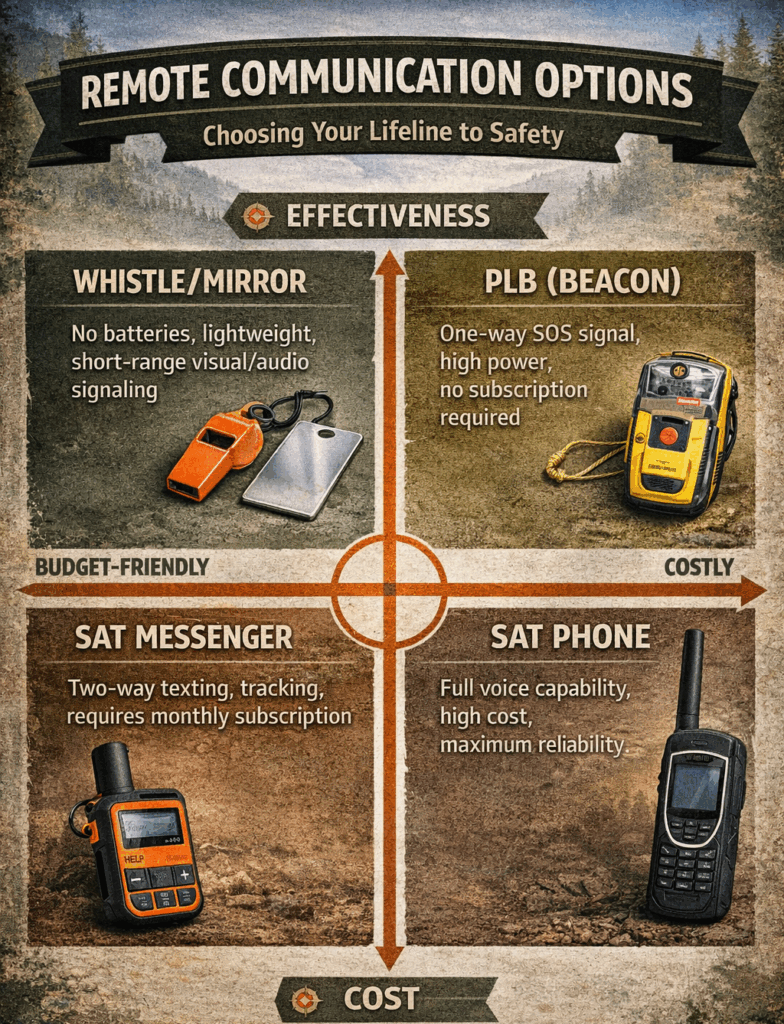
Your Options:
- Personal Locator Beacons (PLBs): One-way emergency signal, no subscription needed
- Satellite Messengers: Two-way communication, requires subscription, most popular
- Satellite Phones: Full voice and text, highest cost, maximum capability
If you’re hunting truly remote areas, a PLB or satellite phone isn’t an expense—it’s insurance. The cost is nothing compared to what you’ve already invested in your hunt.
Organizing Your Safety Gear: Accessibility Matters
The best safety gear in the world won’t save you if it’s buried at the bottom of your pack when you need it. Understanding hunting gear for beginners is all about keeping things simple and light while prioritizing comfort, safety, and preparedness.
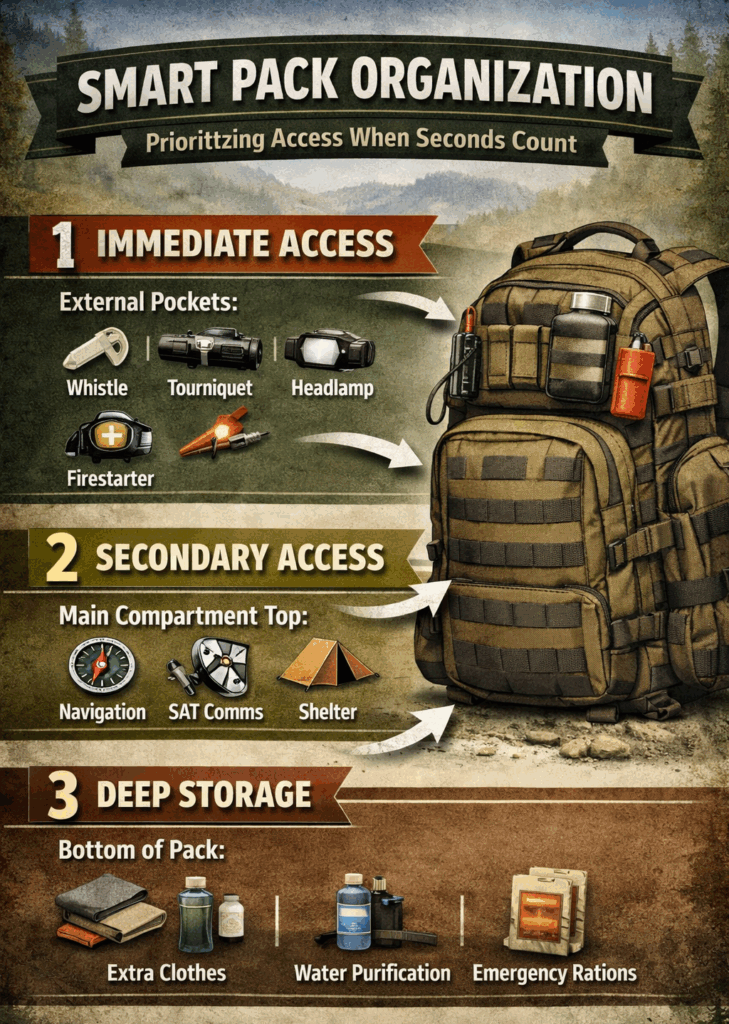
Pack Organization Strategy
Immediate Access (External pockets or top compartment):
- First aid kit
- Emergency whistle
- Headlamp/flashlight
- Fire starting materials
Secondary Access (Main compartment, easy reach):
- Emergency shelter
- Navigation tools
- Communication devices
- Extra batteries
Deep Storage (Bottom of pack):
- Extra clothing
- Emergency food
- Water purification supplies
A hunting pack list is a written or digital reminder of the essentials so you can stay organized and be ready for anything. It should cover safety, survival, and hunting tools while accounting for your specific game and terrain.
Weight and Bulk Management
Look for multi-purpose items whenever possible. Regularly clean out your kit to remove expired or unnecessary stuff. Consider investing in quality hunting backpacks and waist packs designed specifically for hunters—they’re built to carry safety gear alongside hunting equipment efficiently.
Additional Safety Considerations
Hearing Protection
Protecting your hearing isn’t optional. Quality hunting hearing protection lets you hear game movement while protecting against harmful noise levels from firearms.
Scent Control and Concealment
Staying undetected often means staying safer around game animals. Our hunting scent elimination and cover scents help you remain invisible to wildlife, while hunting face paint provides additional concealment.
Shooting Support and Stability
Accurate shot placement is both an ethical requirement and a safety issue. Hunting shooting sticks, bipods, and tripods help ensure clean, ethical shots that reduce tracking time and wounded animal encounters.
More Resources from Hunting Locator
We’ve organized our complete hunting accessories to help you find exactly what you need:
- Complete Hunting Accessories – Browse our full selection
- Game Processing Tools – Essential field dressing equipment
- Gun Cleaning Kits – Keep your firearms reliable
- Hand Warmers – Stay comfortable in cold conditions
- Hunting Scents and Lures – Attract game effectively
FAQ
What’s the most important item in a hunting first aid kit?
A quality tourniquet, hands down. Arterial bleeding from weapon accidents or animal encounters can kill you in minutes. But here’s the catch—it only works if you know how to use it properly. The gear and the training go together.
How often should I replace items in my hunting safety kit?
Check everything twice a year, ideally before spring and fall hunting seasons. Replace expired medications, dead batteries, and damaged items. Adhesive bandages lose their stick, medications expire, and electronics need updates. Set a calendar reminder.
Do I really need a satellite communicator for day hunts?
The Alaska Department of Fish and Game recommends that all hunters and anglers should consider carrying emergency personal locator beacons, even on day hunts close to home. Emergencies don’t care about your planned return time, and “day hunts” have a way of turning into longer adventures.
What’s the difference between a space blanket and a bivvy sack?
Space blankets are ultralight and compact but offer minimal insulation and need external support. Bivvy sacks provide better insulation, wind protection, and structure but weigh more and cost more. Choose based on your hunting environment and weight tolerance.
How much should I expect to spend on basic hunting safety gear?
A solid safety kit with first aid supplies, emergency shelter, fire starting materials, and signaling devices runs $150-400 depending on quality. That’s a fraction of what most hunting trips cost, but it provides invaluable peace of mind and emergency capability.
Should I carry both a GPS and a compass?
Absolutely. Electronics fail, batteries die, and satellites get blocked by terrain. A compass and paper map work regardless of weather, battery life, or satellite coverage. GPS provides convenience and detailed information, but analog backup navigation is essential.
The Final Shot
Hunting safety isn’t about being scared—it’s about being confident. When you’re properly prepared with the right gear and knowledge, you can focus on what you came for: the hunt itself. The money you spend on quality safety equipment pays off not just in emergencies, but in the peace of mind that comes from knowing you’re ready for whatever happens.
Having a basic knowledge of hunting first aid and responding to emergencies can be just as important as knowing how to shoot or navigate the woods. Your safety kit is insurance—hope you never need it, but never hunt without it.
Ready to gear up for your safest hunting season yet? Visit our hunting accessories store today. We stock the best first aid supplies, survival gear, navigation tools, and safety equipment to ensure your success in the field and your safe return home.


