The Peach State runs a smart split-season setup that works with natural migration patterns instead of against them. Whether you’re a Georgia native who’s been hunting these waters for decades or you’re planning your first trip down from up north, we’ve got you covered. Veterans can jump straight to the dates they need, while newcomers get the full breakdown of how Georgia’s system actually works.
Here’s what we’re covering:
- Exact season dates and bag limits for both split periods
- Every license and permit you need (plus what they’ll cost you)
- Where to actually hunt—public spots, guided options, and how to get on private land
Time to dive into what makes Georgia duck hunting special and how to make 2026 your best season yet.
Quick Overview of Georgia Duck Season
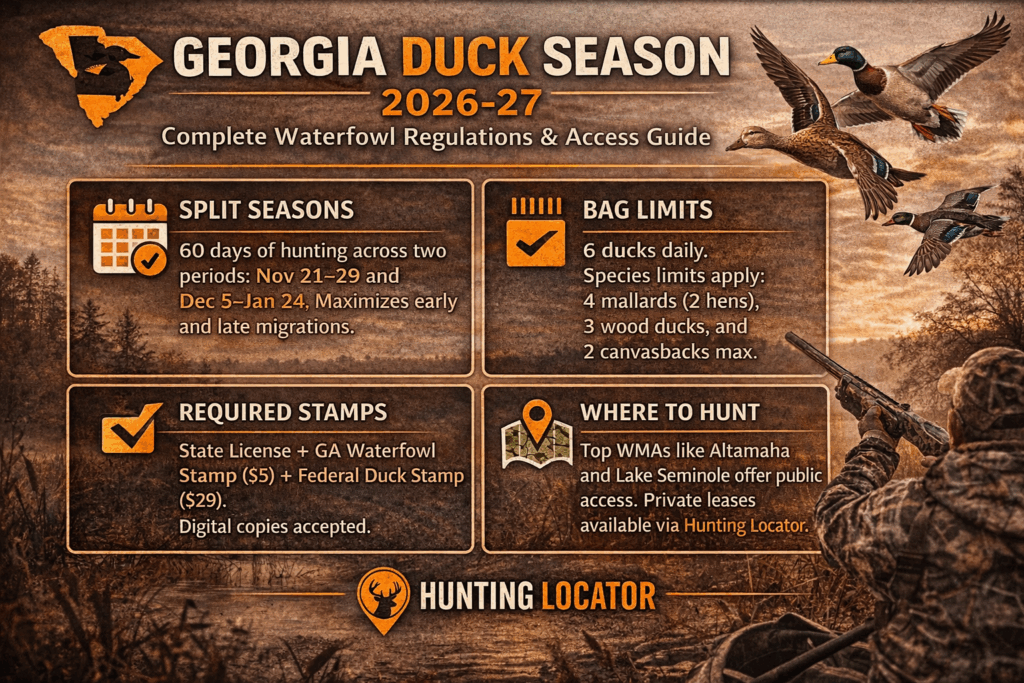
Georgia splits duck season into two chunks, and there’s good reason for it. The state follows Atlantic Flyway migration timing, which means you get to hunt both the early birds and the main winter push.
| Season Type | Dates | Bag Limit | Key Notes |
|---|---|---|---|
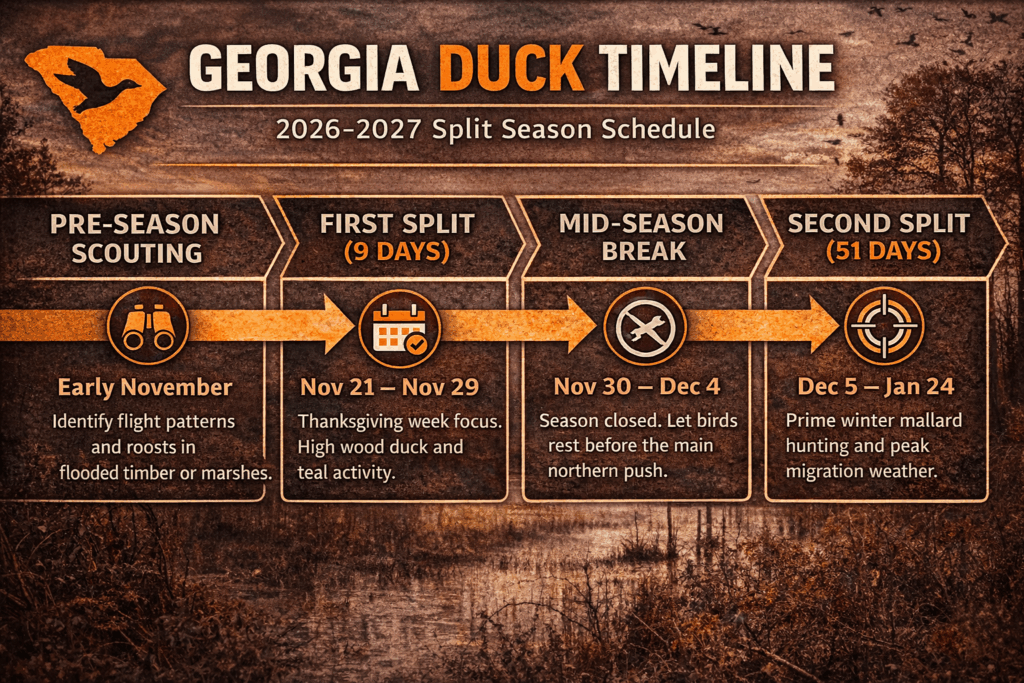
| Split Season – Period 1 | November 21-29, 2026 | 6 ducks daily | 9 days total; hits Thanksgiving week |
| Split Season – Period 2 | December 5, 2026 – January 24, 2027 | 6 ducks daily | 51 days; prime time for northern birds |
That 6-duck limit comes with the usual species restrictions—4 mallards max with only 2 hens, 3 wood ducks, 2 canvasbacks, and so on. Check Georgia DNR for the complete breakdown before you head out.
What You Need to Hunt Legally:
- Georgia Hunting License (resident or non-resident)
- Georgia Waterfowl & Migratory Bird Stamp ($5)
- Federal Duck Stamp ($29)
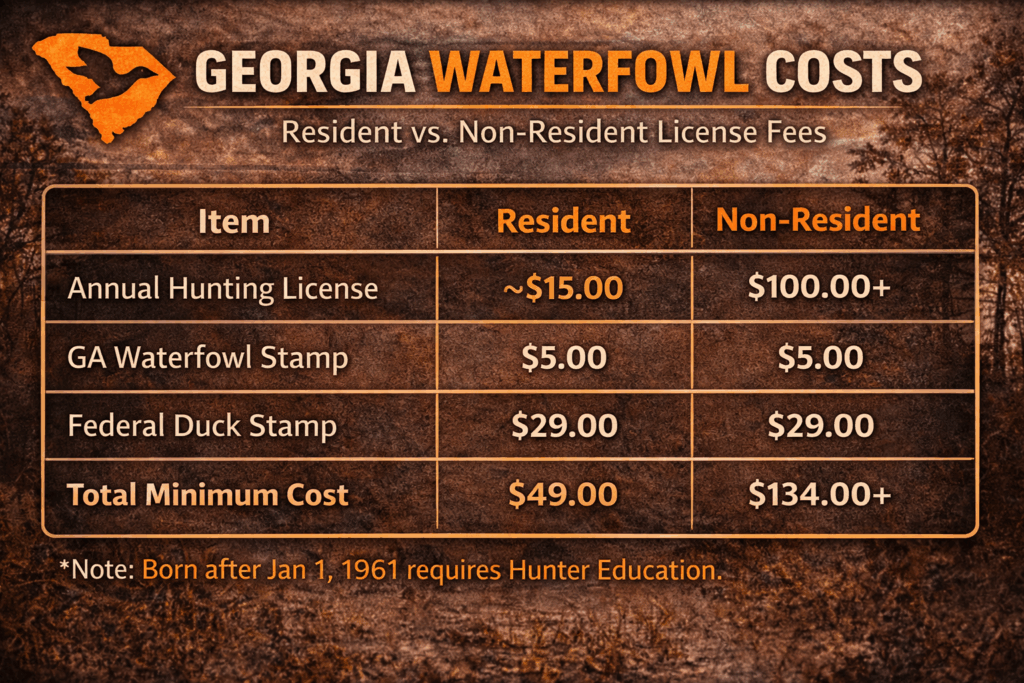
- Bottom line cost: About $49+ for residents, way more if you’re from out of state
Georgia Duck Hunting Seasons
The split season isn’t just bureaucratic nonsense—it actually makes sense when you understand Georgia’s waterfowl patterns. Each period targets different birds and conditions.
Split Season – Period 1
Dates: November 21-29, 2026 (9 days)
This is your early bird special. You’re looking at Thanksgiving week, which means family obligations might interfere with hunting plans. But if you can get out there, you’ll find unpressured birds and warmer weather that makes the hunt more comfortable.
Wood ducks rule this period. They’re everywhere in the flooded timber, and teal are still hanging around too. The downside? Less variety than you’ll see later in the season. The upside? Birds that haven’t been shot at much yet.
Public land fills up fast during this short window. Scout ahead of time and show up early, or you’ll be watching other hunters from the parking lot.
Split Season – Period 2
Dates: December 5, 2026 – January 24, 2027 (51 days)
This is where things get interesting. Cold fronts start pushing birds south from up north, and every weather system can bring fresh waves of ducks. Mallards show up in serious numbers, along with everything else that winters in Georgia.
The trade-off for better bird variety? Weather that’ll test your gear and your commitment. You’ll need chest waders and cold-weather gear that actually works. But time your hunts around incoming fronts, and you could have some of the best duck hunting of your life.
Fifty-one days sounds like a lot, but hunting pressure builds throughout this period. The sweet spot is often mid-December through early January when weather gets serious but before everyone burns out.
Georgia Duck Hunting Licenses and Permits
Game wardens check licenses regularly during duck season, and “I forgot it at home” doesn’t work. Here’s what you actually need to carry.
Georgia Hunting Licenses
Every hunter needs a Georgia hunting license as the foundation. No exceptions, no shortcuts.
| License Type | Cost | Notes |
|---|---|---|
| Resident Hunting License | ~$15 | Must prove Georgia residency |
| Non-Resident Hunting License | ~$100+ | Ouch, but that’s the price |
| Lifetime Licenses | Varies | One-time purchase for residents |
Hunter Education: If you were born after January 1, 1961, you need hunter education before buying your first license. No way around it.
Where to Buy: GoOutdoorsGeorgia.com is the official site. Don’t mess around with sketchy third-party sellers. Need more info on Georgia hunting opportunities? Check out our Georgia Hunting Season Guide.
Georgia Hunting Permits
Georgia Waterfowl & Migratory Bird Stamp: Five bucks. Buy it with your license through GoOutdoorsGeorgia.com. Easy.
Federal Duck Stamp: Twenty-nine dollars and required by federal law for anyone 16 or older hunting waterfowl. You can buy it at post offices, sporting goods stores, or online through USPS. The electronic version works fine—no need to carry paper.
Quota Hunt Permits: Some WMA waterfowl hunts need special permits through a separate application process. These managed hunts limit hunter numbers and usually provide better conditions with less pressure.
Buy everything before you go. The Go Outdoors Georgia app lets you store licenses on your phone, which beats digging through wet pockets when the warden shows up.
Where to Hunt Ducks in Georgia
Georgia’s got everything from coastal salt marshes to inland beaver swamps. Each type of hunting comes with its own challenges and rewards.
Best Public Lands
Wildlife Management Areas give you free access to thousands of acres, but popular spots get hammered. Opening weekend and holidays are especially brutal for finding space.
Top Georgia WMAs for Duck Hunting:
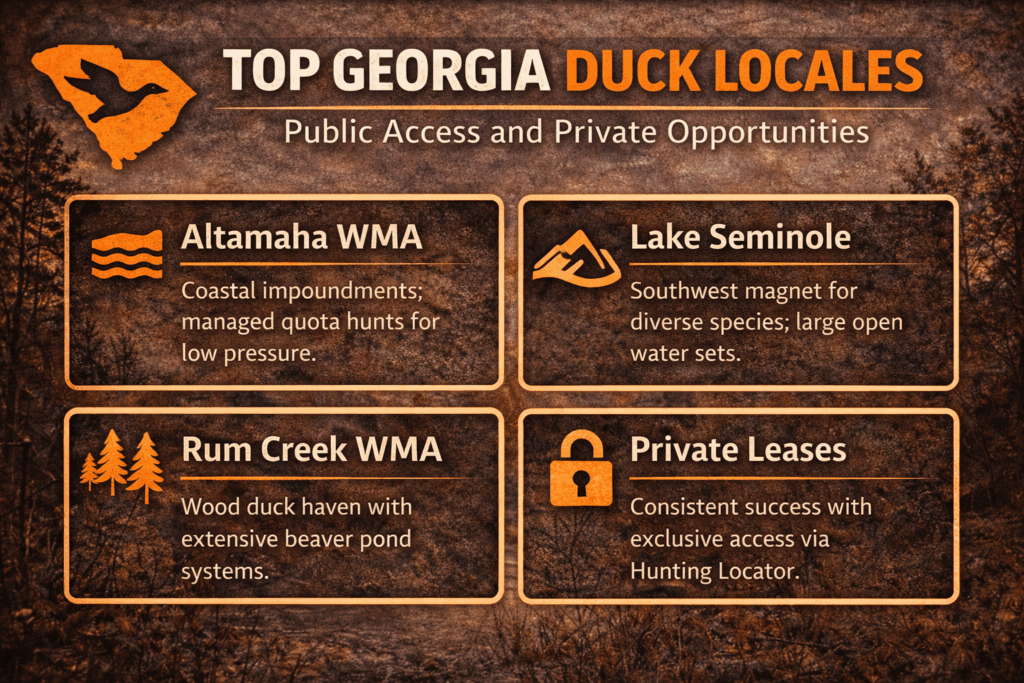
- Altamaha WMA – Coastal location with managed waterfowl impoundments; quota hunts available for better hunting
- Rum Creek WMA – Central Georgia beaver ponds and creek systems; wood duck heaven
- Di-Lane WMA – East-central location with flooded timber and ag fields; diverse habitat
- Lake Seminole WMA – Southwest Georgia waterfowl magnet; brings in everything that flies
- Chickasawhatchee WMA – Southwest Georgia bottomlands; classic flooded timber hunting
Some WMA waterfowl areas require quota permits through application. Scout before season opens and get there early on hunt days to claim decent spots. For more Georgia waterfowl details, check our Georgia Waterfowl Hunting Season guide.
Guided Hunts
Guides know the local patterns, have access to private property, and provide professional setups with trained dogs. This option makes sense for out-of-state hunters and anyone who wants to skip the learning curve.
Expect to pay $200-500+ per person per day depending on what’s included. Research outfitters carefully, check references, and make sure they’re operating legally before you book. A cheap guided hunt that gets you in trouble with game wardens isn’t much of a bargain.
Private Land Hunting
Private land beats everything else for consistent success and less pressure. The challenge is getting access.
Hunting Leases: Seasonal or annual access to private property through lease agreements. Georgia duck hunting leases run from a few hundred dollars for shared access to several thousand for exclusive premium properties. Price depends on acreage, habitat quality, and location.
Land Ownership: Buying your own hunting property eliminates lease uncertainty and lets you manage habitat exactly how you want it. Properties with existing waterfowl habitat like flooded timber, impoundments, and agricultural fields near water cost more but provide permanent access.
Hunting Locator connects hunters with Georgia landowners offering lease and sale opportunities. Looking for a seasonal duck lease or considering buying your own Georgia waterfowl property? Browse Georgia hunting leases to see current options.
Duck Hunting Tips for Success
Georgia duck hunting success comes down to understanding local conditions and adapting to diverse habitats across the state.
- Scout Early and Often – Visit hunting spots before season to learn flight patterns, roosting areas, and feeding locations. Pre-season scouting beats showing up blind on opening day every time.
- Watch Weather Like Your Success Depends on It – Because it does. Cold fronts push fresh birds into Georgia from up north. Monitor weather patterns and time hunts around incoming fronts, especially during the long second split.
- Match Decoy Spreads to Habitat – Small spreads work better in timber, larger spreads in open water. Adjust species mix based on what you’re actually seeing in your hunting area.
- Don’t Ignore Afternoon Hunts – Morning is still prime time, but afternoon hunts can be productive on pressured public lands where birds move later in the day.
- Know Georgia’s Duck Species – Wood ducks dominate early season in flooded timber. Mallards and other species increase as cold weather arrives. Adjust calling and decoy strategies accordingly.
- Invest in Quality Waders – Georgia’s swamps and flooded timber demand chest waders. Don’t underestimate water depth, and never compromise safety for a shot.
Need gear for your Georgia duck hunts? Check out the Hunting Locator store for equipment that’ll help you succeed.
More Resources from Hunting Locator
Expand your Georgia hunting knowledge with these guides:
- Georgia Deer Hunting Season – Complete deer season guide with regulations and prime locations
- Georgia Turkey Hunting Season – Spring and fall turkey season coverage
- Georgia Migratory Bird Hunting Season – All migratory bird opportunities beyond ducks
- Georgia Bear Hunting Season – Bear hunting opportunities and regulations
- Georgia Small Game Hunting Season – Rabbit, squirrel, and other small game info
FAQ
When does Georgia duck season start in 2026?
Georgia’s first split starts November 21, 2026 and runs through November 29. The second split begins December 5, 2026 and continues through January 24, 2027.
How much does it cost to get a Georgia duck hunting license?
Residents pay about $49+ minimum: Georgia hunting license (~$15), Georgia Waterfowl & Migratory Bird Stamp ($5), and Federal Duck Stamp ($29). Non-residents pay much more for the base hunting license.
Can I hunt ducks on Georgia WMAs without a quota permit?
Most Georgia WMAs allow duck hunting without quota permits, but some managed waterfowl areas require special permits through application. Check specific WMA regulations before hunting.
What’s the daily bag limit for ducks in Georgia?
Six ducks daily, but species-specific limits apply within that total. For example, only 4 mallards (with only 2 hens), 3 wood ducks, and 2 canvasbacks count toward your 6-duck limit. Verify current species limits with Georgia DNR.
Do I need steel shot for duck hunting in Georgia?
Yes, non-toxic shot is required for all waterfowl hunting. Steel shot is most common, though other approved non-toxic alternatives work too.
Where can I find private land to hunt ducks in Georgia?
Hunting Locator’s Georgia lease listings connect hunters with landowners throughout the state. Browse available properties and contact landowners directly.
The Final Shot
Georgia’s 2026 duck season gives you 60 days of hunting across two well-planned splits. From late November’s early migration through January’s peak winter waterfowl movement, you’ve got opportunities whether you prefer flooded timber, coastal marshes, or anything in between.
The split season structure works because it follows natural bird movement instead of fighting it. Public lands provide access, but private land access through hunting leases can give you the quality experience that makes the season memorable. Get your licenses sorted early, scout your spots, and prepare for what could be an outstanding Georgia waterfowl season.
Ready to find your perfect hunting spot? Visit Hunting Locator to explore private land opportunities and connect with everything you need for successful 2026 duck hunting in Georgia.


