Here’s what we’re covering in this comprehensive Georgia spring turkey planning guide:
- Exact 2026 season dates for private land, public land, and youth hunts
- Complete license breakdown (residents start at $25, non-residents at $125)
- Where to hunt—public lands, guided options, and private land solutions
Let’s get into the quick-reference stuff first, then we’ll dig deeper into planning your hunt.
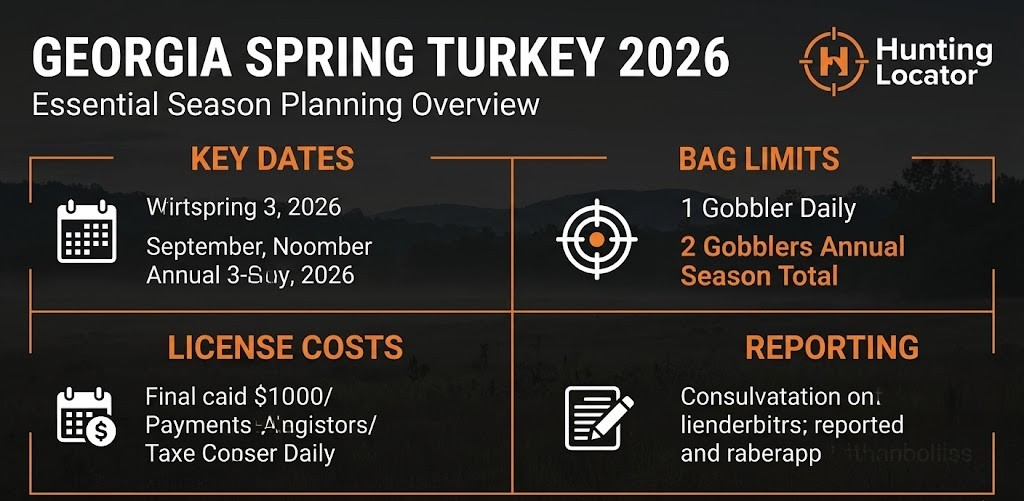
Quick Overview: Georgia Turkey Season 2026
Need the essentials fast? Here’s everything at a glance.
GA Turkey Season Dates and Regulations
| Season Type | Start Date | End Date | Notes |
|---|---|---|---|
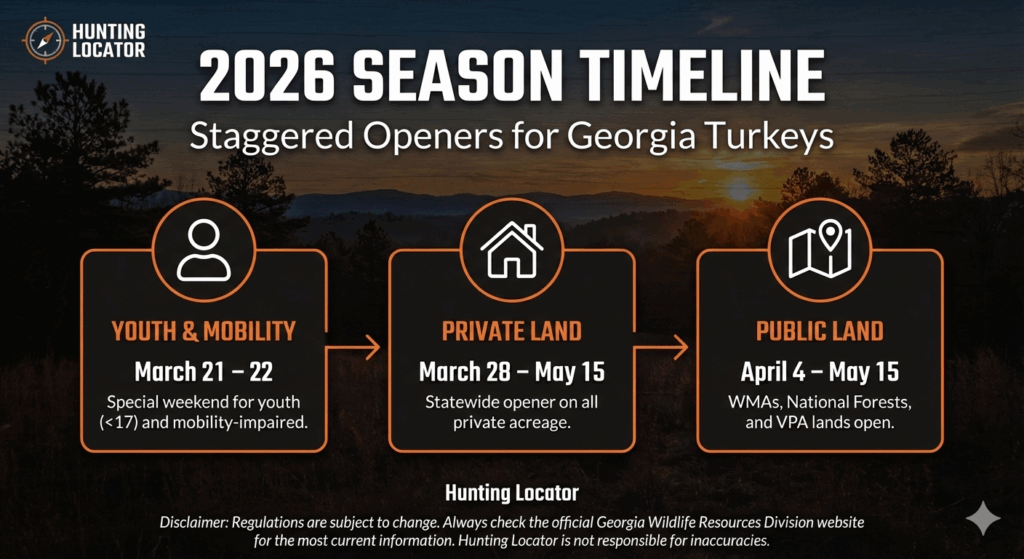
| Private Land (Statewide) | March 28, 2026 | May 15, 2026 | Opens one week before public land |
| Public Land (Statewide) | April 4, 2026 | May 15, 2026 | Includes WMAs, VPA lands, National Forests |
| Youth/Mobility-Impaired | March 21, 2026 | March 22, 2026 | Special weekend before private land opener |
Bag Limit: 1 gobbler per day, 2 gobblers per season
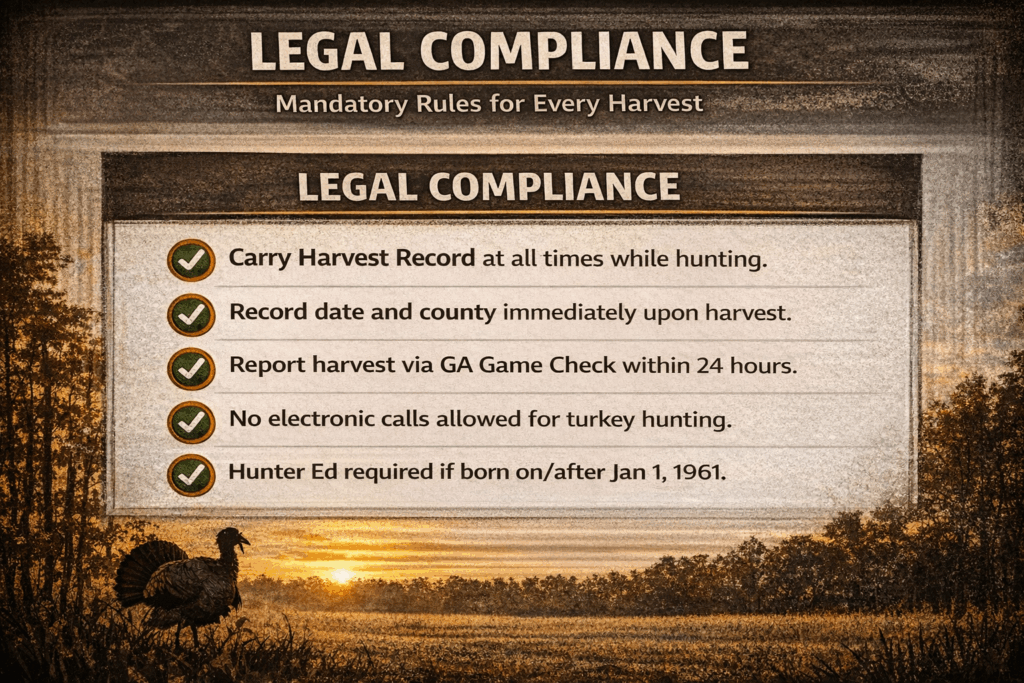
Every turkey you harvest has to be recorded on your Harvest Record and reported through Georgia Game Check within 24 hours. And just so you know, electronic calls are off limits for turkey hunting in Georgia.
License Requirements at a Glance
Before you can legally hunt spring turkeys, you’ll need:
- Basic Hunting License (required for everything)
- Big Game License (covers turkey, deer, and bear)
- Harvest Record (FREE but mandatory—carry it with you)
- Hunter education certification if you were born on or after January 1, 1961
Minimum Total Cost: $25 for residents, $125 for non-residents (plus transaction fees).
Georgia Spring Turkey Hunting Seasons
Georgia’s spring turkey season isn’t just one simple date. The Wildlife Resources Division sets different openers for private versus public land, which makes a huge difference in your hunting strategy. Recent regulation changes pushed opening day back a week on private lands and two weeks on public lands, so even if you’ve hunted Georgia forever, double-check these dates.
Special Opportunity Youth and Mobility-Impaired Season
Dates: March 21-22, 2026 (weekend before private land opener)
This two-day season gives youth hunters (under 17) and mobility-impaired hunters a shot at birds before everyone else hits the woods. It’s honestly the best time to introduce a young hunter to turkey hunting. Birds haven’t been pressured yet and they’re usually more willing to come to a call.
Youth hunters need a licensed adult with them who can take control of the firearm if needed. According to Kentucky’s youth guidelines, which mirror what most states require, adults have to immediately supervise youth hunters and be ready to take control of equipment for safety.
If you’re taking a kid out for their first hunt, throw up a ground blind. Hunting experts recommend this approach because blinds give you room for the youth hunter, parent, and maybe a guide, plus they let kids move around more while waiting for a gobbler to show up.
Private Land Season
Dates: March 28 – May 15, 2026
Private land opens a full week before public land, which is a massive advantage if you’ve got access. Early season gobblers are way more vocal and responsive before hunting pressure ramps up. That March 28 opener puts you right in the middle of peak breeding activity when toms are actively looking for hens.
The hard part? Getting private land access in the first place. You can spend years building relationships with landowners, which takes serious time and effort. If you don’t already have those connections, finding quality access becomes your biggest challenge. We’ll talk about solutions in the “Where to Hunt” section.
Public Land Season
Dates: April 4 – May 15, 2026
Georgia’s public land turkey season kicks off April 4 and runs through May 15, 2026—one week after private land opens. This delayed start is meant to reduce early-season pressure on public lands and give turkey populations on WMAs a bit more breathing room.
You can hunt Wildlife Management Areas, Voluntary Public Access lands, and National Forest lands across Georgia. Expect hunting pressure on popular WMAs to build throughout the season, especially on weekends. Scout early and hunt weekdays if you can swing it.
If public land pressure is driving you nuts, Hunting Locator can help you find private land opportunities. For a complete rundown of all Georgia hunting seasons, check out the Georgia Hunting Season Guide.
Georgia Turkey Licenses and Permits
Georgia’s licensing setup confuses a lot of first-time hunters because you need two separate licenses. Let me break it down so it makes sense.
Georgia Hunting Licenses
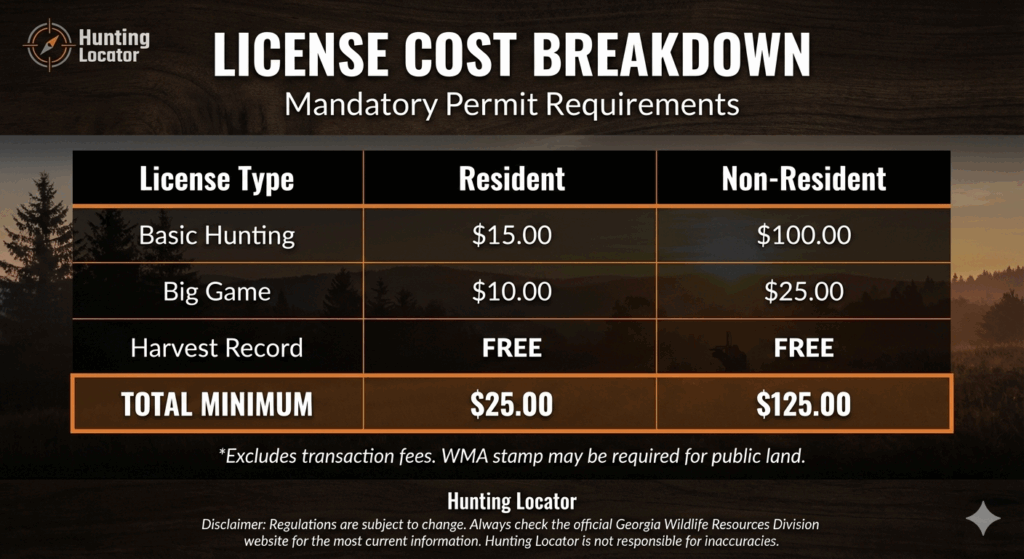
You need both a Basic Hunting License AND a Big Game License to hunt turkeys legally. The Big Game License covers turkey, deer, and bear, but you can’t buy it without the Basic Hunting License first.
| License Type | Resident Cost | Non-Resident Cost | Notes |
|---|---|---|---|
| Basic Hunting License | $15.00 | $100.00 | Required for all hunting |
| Big Game License | $10.00 | $25.00 | Covers turkey, deer, bear |
| Harvest Record | FREE | FREE | Mandatory—carry it while hunting |
| Total Minimum Cost | $25.00 | $125.00 | Plus transaction fees |
For non-residents, that $125 minimum is actually pretty competitive. Several southeastern states charge similar or higher rates—Alabama runs $143.65 and up, Kentucky is $135 and up, though Arkansas comes in cheaper at $55 and up.
Hunter Education Requirement: If you were born on or after January 1, 1961, you need hunter education certification before buying a license.
Where to Purchase: Buy licenses online at GoOutdoorsGeorgia.com, from retail vendors around the state, or by phone. Online is easiest—you can print everything immediately.
Georgia Turkey Hunting Permits
Harvest Record (FREE but Mandatory)
The Harvest Record is free but you absolutely have to have it. Before you move a harvested turkey, you need to immediately write down the date and county on your Harvest Record. Then within 24 hours, complete the reporting through Georgia Game Check.
Carry your Harvest Record on you while hunting. Getting caught without it can mean a citation even if your licenses are valid.
WMA Stamp Requirements
Most public Wildlife Management Areas need a WMA stamp on top of your base licenses. Requirements and costs vary by WMA, so check the specific area you’re planning to hunt before you go.
Where to Hunt Turkey in Georgia
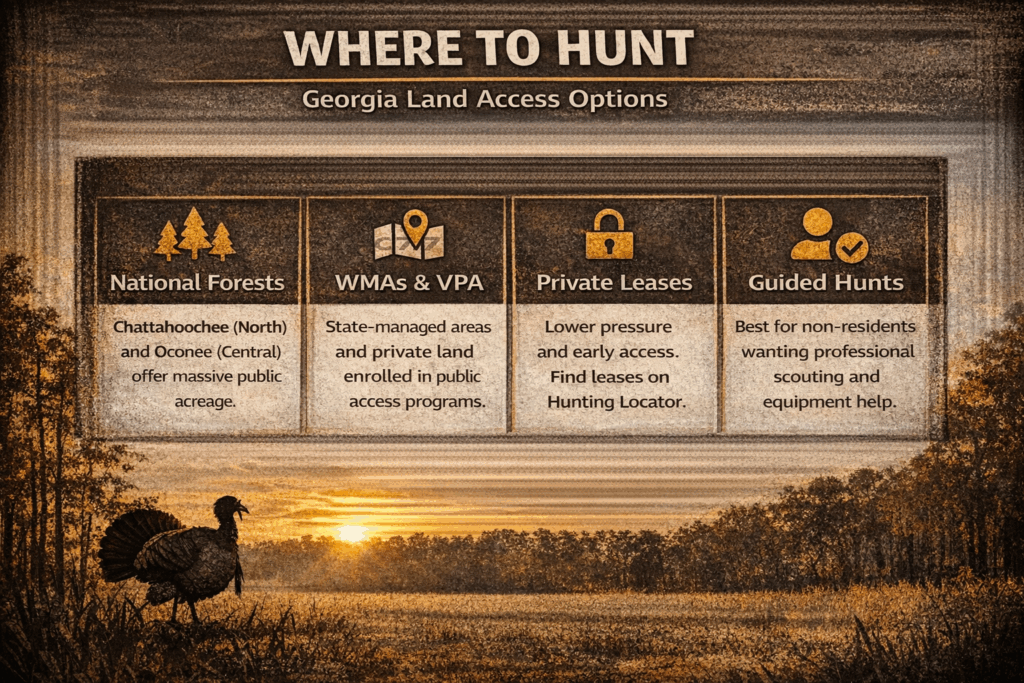
Finding good turkey hunting land is honestly harder than learning to call or picking the right camo. Georgia gives you options though—free public WMAs, guided hunts, and private land leases.
Best Public Lands for Turkey Hunting
Georgia’s Wildlife Management Areas and National Forests offer free or cheap turkey hunting access statewide. Remember public land season runs April 4 – May 15, 2026, and most WMAs need a WMA stamp beyond your base licenses.
Top Public Land Options:
- Chattahoochee National Forest – North Georgia mountains with solid turkey populations across multiple districts. The terrain varies from ridges to hollows to creek bottoms, all good turkey habitat.
- Oconee National Forest – Central Georgia location makes it accessible from Atlanta and offers quality turkey hunting on public land.
- Various Wildlife Management Areas – Georgia runs tons of WMAs across the state, each with its own character and turkey populations. Check Georgia DNR’s WMA maps for locations, regulations, and access points.
- Voluntary Public Access (VPA) Lands – Private lands enrolled in public access programs, giving you more options beyond traditional public lands.
Hunting pressure on popular public lands gets worse as the season goes on, especially weekends. Georgia offers diverse turkey habitats from North Georgia mountains to South Georgia swamps, but competition for access on public land can be brutal. Scout early and hunt weekdays to improve your odds.
Guided Turkey Hunts
Guided hunts work great for non-residents who don’t know Georgia terrain, hunters wanting guaranteed land access, or anyone looking for a higher-success hunt with professional help. Professional guides bring local knowledge, calling skills, and access to quality private land you’d struggle to find on your own.
Guided turkey hunts in Georgia vary wildly in price. Day hunts with guide services usually start around a few hundred bucks, while multi-day packages with lodging and meals can run way higher. What you’re paying for is expertise, land access, and the guide’s investment in scouting and managing turkey populations on their properties.
For out-of-state hunters making a dedicated Georgia trip, guides can be worth every penny. As hunting experts point out, shorter trips cost less overall, but hiring a guide maximizes your limited time by putting you on birds without fumbling around unfamiliar territory.
When you’re checking out outfitters, look for established reputations, references from past clients, and specific details about the properties they hunt.
Private Land Hunting
Private land hunting beats public land in almost every way—earlier season dates (March 28 versus April 4), less hunting pressure, and usually better-managed turkey populations.
Access Options:
Landowner Permission: The old-school approach involves building relationships with landowners over time. This can get you long-term access but takes serious investment in networking, maintaining relationships, and often helping with property work.
Hunting Leases: Paying for seasonal or annual access gives you guaranteed hunting without worrying about year-to-year permission. Lease costs vary based on property quality, location, and acreage.
Land Purchase: If you’re serious about hunting and have the money, buying hunting property gives you permanent access and eliminates the stress of losing hunting spots. It’s a big investment but can be worth it if you want long-term security and the ability to manage habitat for turkeys.
Finding private land access doesn’t have to suck. Hunting Locator connects hunters directly with landowners willing to lease or sell hunting access across Georgia. Whether you want a seasonal turkey lease or you’re thinking about buying your own place, the platform lets you browse thousands of opportunities filtered by state, game type, and acreage. Check out available Georgia hunting leases to see what’s out there right now.
Turkey Hunting Tips for Success
Having the right dates, licenses, and land access is only half the battle. These proven tips will help you actually kill birds during Georgia’s spring season.
Essential Turkey Hunting Success Strategies:
- Scout Early and Often – Find roosting areas and travel patterns before season opens. Pre-season scouting dramatically increases opening-day success. Listen for gobbling at dawn and dusk to pinpoint where birds are roosting and hanging out.
- Master Basic Calls First – Focus on a few fundamental calls (yelps, clucks, purrs) before getting fancy. Overcalling is a rookie mistake that educates gobblers and makes them call-shy.
- Set Up with the Sun at Your Back – Position yourself so approaching gobblers look into the sun, making it harder for them to spot movement. Turkey vision is insanely sharp, and any concealment advantage helps.
- Use Decoys Strategically – A hen decoy can pull gobblers into range, but placement matters. Set decoys within shooting range (usually 20-30 yards) where you have a clear shot, and position them for broadside shots.
- Stay Still and Patient – Turkey hunting is a waiting game. Once you’re set up and calling, minimize movement. Turkeys can spot the tiniest motion from crazy distances.
- Hunt Different Times of Day – Dawn is prime time, but don’t ignore mid-morning and afternoon. Gobblers that have been with hens all morning often get receptive to calling once hens leave to nest.
- Pattern Your Shotgun – Know your effective range before season starts. Pattern your turkey gun to understand where your shot pattern is densest and what your max ethical shooting distance should be.
- Adapt to Hunting Pressure – On public land, pressure increases throughout the season. Hunt deeper into properties, focus on weekdays, or target less-accessible areas where other hunters won’t bother going.
For tactical gear to improve your success, check out the Hunting Locator store for turkey hunting equipment.
More Resources from Hunting Locator
Hunting Locator offers way more than just turkey season info. Here are additional guides for planning your complete Georgia hunting experience:
- Georgia Hunting Season Guide – Complete overview of all hunting seasons in Georgia
- Georgia Deer Hunting Season – Detailed guide to Georgia’s deer seasons
- Georgia Waterfowl Hunting Season – Everything about duck and goose hunting in Georgia
- Georgia Bear Hunting Season – Info on Georgia’s limited bear hunting opportunities
- Georgia Small Game Hunting Season – Guide to hunting rabbits, squirrels, and other small game
- Georgia Alligator Hunting Season – Details on Georgia’s unique alligator hunting
- Georgia Feral Hog Hunting Season – Year-round hog hunting info and regulations
FAQ
When does turkey season open in Georgia for 2026?
Georgia’s 2026 spring turkey season has three different opening dates. Youth and Mobility-Impaired season opens first on March 21, 2026 (runs through March 22). Private land statewide opens March 28, 2026. Public land (WMAs, VPA lands, National Forests) opens April 4, 2026. All seasons close May 15, 2026.
How much does it cost for a non-resident to hunt turkeys in Georgia?
Non-residents need a Basic Hunting License ($100), a Big Game License ($25), and a free Harvest Record, for a minimum total of $125 (plus transaction fees). You might also need WMA stamps if you’re hunting public Wildlife Management Areas. This is competitive with neighboring southeastern states’ costs.
What is the bag limit for spring turkeys in Georgia?
Georgia’s bag limit is one gobbler per day with a season total of two gobblers. All harvested turkeys must be immediately recorded on your Harvest Record and reported through Georgia Game Check within 24 hours.
Do I need hunter education to hunt turkeys in Georgia?
Yes, hunter education certification is required if you were born on or after January 1, 1961 before buying a hunting license in Georgia. If you were born before this date, you’re exempt.
Can I use electronic calls for turkey hunting in Georgia?
No, electronic calls are prohibited for turkey hunting in Georgia. You have to use manual calls like box calls, slate calls, mouth calls, or other non-electronic calling devices.
What’s the difference between private land and public land turkey season dates?
Private land turkey season opens one week earlier than public land—March 28 versus April 4, 2026. This change moved opening day back one week on private lands and two weeks on public lands compared to how it used to be. Both seasons close on the same date: May 15, 2026.
The Final Shot
Georgia’s 2026 spring turkey season offers killer opportunities for both resident and non-resident hunters, with nearly two months of hunting across everything from North Georgia mountains to the coastal plains. Success starts with understanding the season structure—March 21-22 youth season, March 28 private land opener, and April 4 public land opener—and making sure you’ve got the proper licenses before heading out.
Whether you’re hunting familiar ground or exploring new territory, preparation is everything. Secure your hunting access early, scout thoroughly, and practice your calling before opening day. For hunters struggling to find quality private land access, platforms like Hunting Locator can connect you directly with landowners offering lease and purchase opportunities across Georgia.
The 2026 season will be here before you know it. Start planning now, get your licenses squared away, and prepare for what could be your best Georgia turkey season yet. Good luck, hunt safely, and we’ll see you in the turkey woods this spring.


Is there a shot size limit for turkey hunting in Georgia?
Season bag limit in Georgia is 2 gobblers
If you’re going to post hunting regulations the correct bag limit is pretty important
Thank you for letting me know! You are absolutely correct and I’ve updated the article accordingly!