Getting caught hunting out of season isn’t just embarrassing—it’s expensive and can cost you hunting privileges. That’s why we’ve put together this complete breakdown of Georgia waterfowl seasons, cutting through the regulatory maze to give you exactly what you need to know.
Here’s everything covered in this guide:
- Exact 2026 season dates for all waterfowl species with no guesswork
- License costs and requirements that won’t surprise you at the checkout
- Best hunting locations from quota WMAs to private land access through our network
Whether you’ve been hunting Georgia marshes for decades or you’re planning your first trip to the Peach State, this guide eliminates the confusion so you can focus on what matters: putting birds in the bag.
Quick Overview of Georgia Waterfowl Season 2026
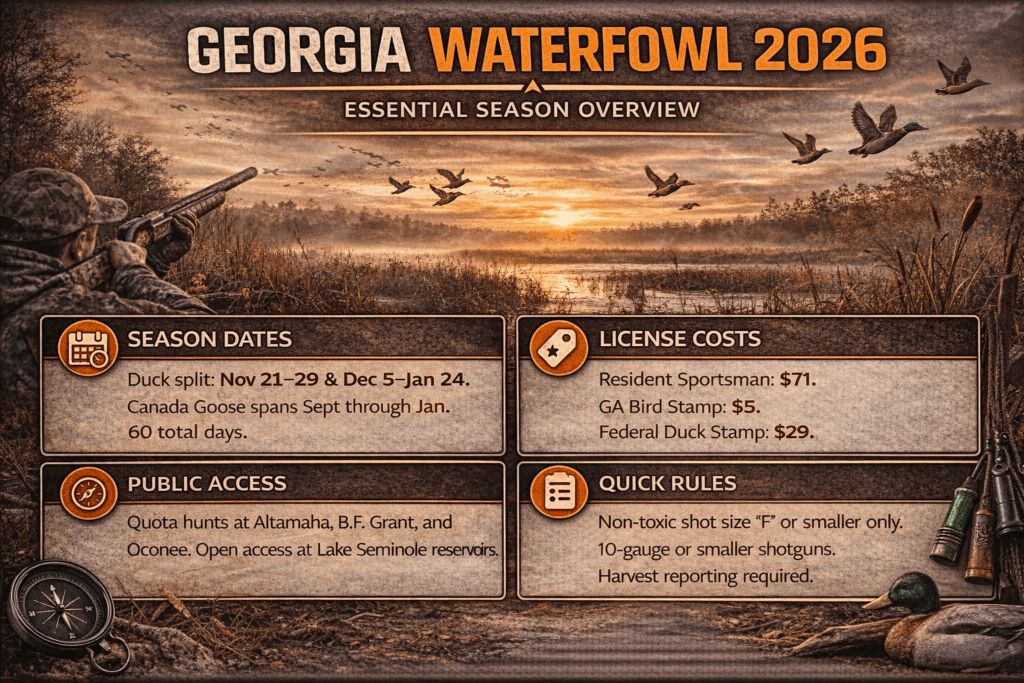
Here’s everything you need to know at a glance. Georgia gets no more than 60 total hunting days with just 1 split allowed, so they stick with the proven formula: 9 days around Thanksgiving plus 51 days for the main season.
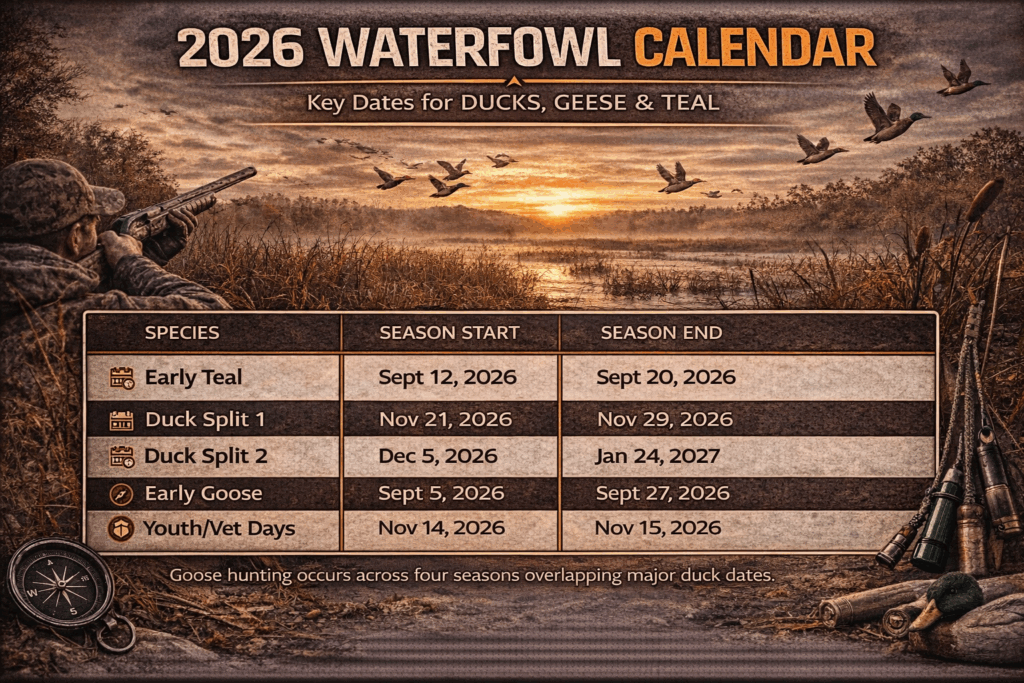
| Species | Season Type | Start Date | End Date | Key Notes |
|---|---|---|---|---|
| Duck | Split Season – Period 1 | Nov 21, 2026 | Nov 29, 2026 | Non-toxic shot required |
| Duck | Split Season – Period 2 | Dec 5, 2026 | Jan 24, 2027 | Federal Duck Stamp required (16+) |
| Canada Goose | Early Season | Sep 5, 2026 | Sep 27, 2026 | Before regular waterfowl season |
| Canada Goose | Second Season | Oct 10, 2026 | Oct 25, 2026 | Targets migrating birds |
| Canada Goose | Third Season | Nov 21, 2026 | Nov 29, 2026 | Overlaps duck Period 1 |
| Canada Goose | Fourth Season | Dec 5, 2026 | Jan 24, 2027 | Overlaps duck Period 2 |
| Early Teal | Special Season | Sep. 12, 2026 | Sep 20, 2026 | 6 daily bag limit |
| Youth/Veteran/Military | Special Days | Nov 14, 2026 | Nov 15, 2026 | Youth 15 & under; must have adult 18+ |
| Sora & Rails | Period 1 | Sep 15, 2026 | Sep 22, 2026 | Often overlooked opportunity |
| Sora & Rails | Period 2 | Oct 14, 2026 | Dec 14, 2026 | Extended season |
What You’ll Pay for Licenses:
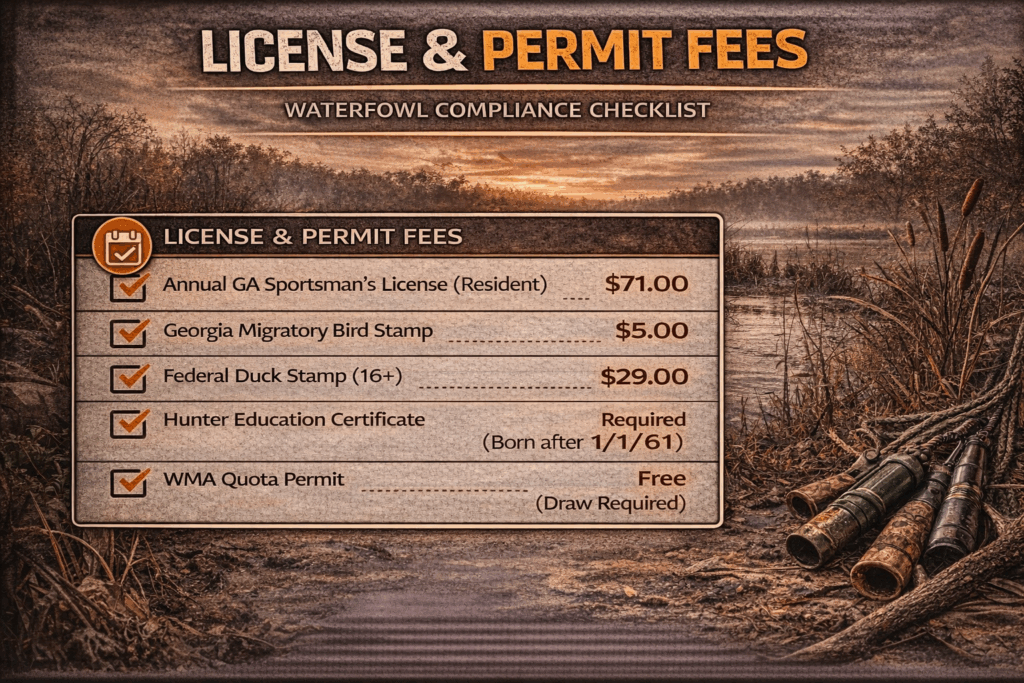
- Georgia Hunting License: $71 for residents (Annual Sportsman’s covers everything)
- Georgia Migratory Bird Stamp: $5.00 (ducks, geese, doves, other migratory birds)
- Federal Duck Stamp: $29.00 (waterfowl hunters 16+)
- Hunter Education: Required if born after January 1, 1961
Duck Hunting Seasons
Georgia’s duck season follows the same basic structure hunters have relied on for years. The traditional 9-day Thanksgiving season leaves 51 days for the winter period when most of the action happens.
Split Season – Period 1
Dates: November 21, 2026 – November 29, 2026 (9 days)
This is the opener everyone waits for. Thanksgiving week means family traditions, cooler weather, and hopefully some fresh birds moving through. But here’s the reality: every public blind will be packed, especially at places like Altamaha and West Point. Hunting hours run from ½ hour before sunrise to sunset, and remember—no lead shot allowed while waterfowl hunting.
Split Season – Period 2
Dates: December 5, 2026 – January 24, 2027 (51 days)
This is where the real hunting happens. Most of Georgia’s 60 allowed days fall in this period, and for good reason. The state sits perfectly on the Atlantic Flyway, so this timeframe catches the main migration push. You’ll often see better variety and numbers during this split than the Thanksgiving rush.
Canada Goose Hunting Seasons
Georgia gives you four separate chances at Canada geese, running from early September clear through January. That’s a lot of opportunities to figure out what these birds are doing.
Early Season
Dates: September 5, 2026 – September 27, 2026
This targets the resident birds before they get educated by duck season pressure. Great way to get some early action while you’re waiting for everything else to open up.
Second Season
Dates: October 10, 2026 – October 25, 2026
Perfect timing for the first waves of migrating birds. October weather can be fantastic for hunting, and the geese haven’t seen much pressure yet.
Third Season
Dates: November 21, 2026 – November 29, 2026
Runs right alongside the first duck split. You can hunt both species during that traditional Thanksgiving window—assuming you can find somewhere to hunt that isn’t completely crowded.
Fourth Season
Dates: December 5, 2026 – January 24, 2027
Lines up perfectly with the main duck season. By this point you’ve got resident birds, migrants, and everything in between. This is often your best bet for consistent goose action.
Early Teal Season
Dates: September 12, 2026 – September 20, 2026 (9 days) Bag Limit: 6 teal daily
Bad news first: Kara Nitschke, the state’s migratory gamebird biologist, says “Early teal season has been shortened to 9 days due to a slight decline in teal numbers during the 2024 survey period.”
Good news? Nine days of teal hunting is still nine days of teal hunting. Blue-wings, green-wings, and cinnamon teal are moving through during this window, and it’s a great way to knock the rust off before the main seasons open.
Youth, Veteran, and Military Waterfowl Days
Dates: November 14, 2026 – November 15, 2026
These special days are for veterans, active-duty military, and youth 15 or younger. The catch for youth hunters: they must be with an adult who’s at least 18, and only the youth can hunt.
Who Can Hunt:
- Kids 15 and under
- Active-duty military
- Veterans
These days typically see way less pressure than regular season openers. Perfect chance to introduce someone new to waterfowl hunting without dealing with crowds.
Sora and Rails Seasons
Period 1: September 15, 2026 – September 22, 2026 Period 2: October 14, 2026 – December 14, 2026
Most hunters completely ignore sora and rails, which is fine by those of us who don’t. These species follow statewide seasons unless specific WMAs say otherwise. They’re not going to fill your freezer, but they add some variety to your hunting.
Georgia Waterfowl Licenses and Permits
Getting legal to hunt waterfowl in Georgia isn’t complicated, but the costs add up fast, especially for non-residents. Buy everything online at GoOutdoorsGeorgia.com, call 1-800-366-2661, or hit up any license vendor.
Georgia Hunting Licenses
Here’s what you’ll actually pay to hunt waterfowl legally in Georgia:
| License Type | Resident Cost | Non-Resident Cost | Notes |
|---|---|---|---|
| Annual Sportsman’s License | $71 | $100 | Best deal for residents |
| Georgia Migratory Bird Stamp | $5 | $5 | Covers ducks, geese, doves |
| Federal Duck Stamp | $29 | $29 | Required for waterfowl hunters 16+ |
Important Stuff You Need to Know:
Federal Duck Stamp Changes: Thanks to the Duck Stamp Modernization Act of 2023, electronic stamps work immediately when you buy them. No more waiting for the physical stamp to arrive.
Hunter Education: Required for hunters born after January 1, 1961. If you’re 16-25, carry that card with you.
Georgia Waterfowl Permits
Some of Georgia’s best waterfowl hunting requires special permits, and these spots fill up fast.
WMA Quota Hunts: Duck hunting on the managed impoundments at Altamaha (Butler & Champney Islands), B.F. Grant, Oconee, Rum Creek, West Point (Glovers Creek), and Cordele Hatchery requires quota permits. These are competitive draws, not first-come-first-served.
How to Apply: Applications open months before season. Apply for multiple locations to improve your odds, and have backup plans ready because you might not draw anything.
Where to Hunt Waterfowl in Georgia
Georgia’s got everything from coastal salt marshes to mountain beaver ponds. Being right on the Atlantic Flyway means birds are constantly moving through, but finding a place to hunt them is the real challenge.
Best Public Lands for Waterfowl
Public land waterfowl hunting in Georgia ranges from world-class to completely overcrowded, sometimes on the same property depending on the day.
Top Public Options:
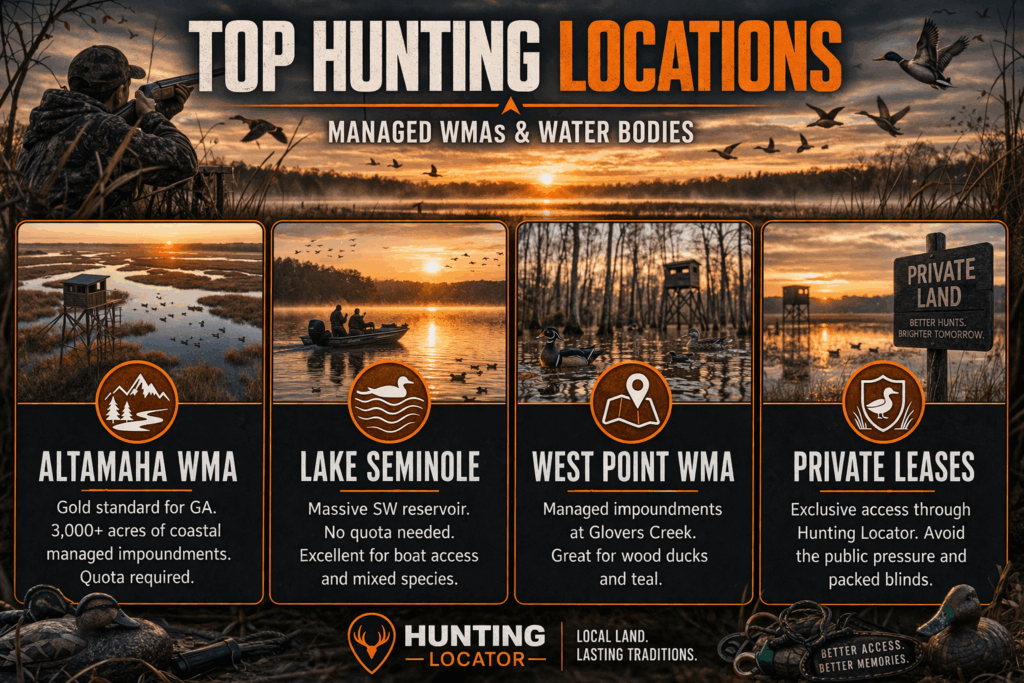
- Altamaha WMA (Darien): This is the gold standard for public waterfowl hunting in Georgia, with 3,154 acres of managed impoundments split into three sections. Butler Island and Champney Island require quota permits, and for good reason.
- Lake Seminole: This massive reservoir in southwest Georgia attracts divers, dabblers, and geese. No quota system here, so you can hunt it whenever you want during legal seasons. Boat access opens up lots of possibilities.
- West Point WMA (Glovers Creek): Quota hunting on managed impoundments, plus special opportunities during youth waterfowl days.
- Oconee WMA: Another quota hunt location with solid wood duck and teal action, especially early in the season.
- B.F. Grant WMA: Central Georgia quota hunting on managed impoundments.
- Joe Kurz WMA: Great option for youth waterfowl hunting days, making it perfect for getting kids started.
Guided Hunts
Georgia’s guide services run the full spectrum from basic day hunts to high-end plantation experiences. Good guides know where the birds are and have access to private land you’ll never see otherwise.
What’s Available:
- Day Hunts: Local guides offering half or full-day hunts, usually including decoys, blinds, and dogs
- Plantation Hunts: High-end operations on large private tracts with luxury amenities
- Coastal Specialists: Guides who focus on Georgia’s 100 miles of saltwater marshes and tidal rivers
- Multi-Day Packages: Complete deals with lodging, meals, and multiple hunt opportunities
Private Land Hunting
Private land is your best bet for avoiding crowds and accessing prime habitat. Georgia has tons of private land options for duck hunters, from individual landowners to hunting clubs.
Private Land Options:
Hunting Leases: Annual or seasonal agreements for exclusive or semi-exclusive access. Most run September through January to cover the full waterfowl season.
Day Permissions: Some landowners allow hunting access by the day, either for a fee or through personal connections.
Club Memberships: Private clubs offer membership access to managed properties with habitat improvements and professional management.
Property Ownership: For serious waterfowl hunters, buying your own hunting property gives you permanent access and complete habitat control.
Hunting Locator cuts through the private land access problem by connecting you directly with Georgia landowners ready to lease or sell their properties. Our platform gives you access to thousands of verified opportunities across the state, from small farm ponds perfect for wood ducks to large coastal properties ideal for diverse waterfowl hunting. Skip the crowded public land lottery and secure quality private access through our network of Georgia landowners.
Waterfowl Hunting Tips
Success in Georgia’s waterfowl hunting comes down to adapting your approach to local conditions and the species you’re targeting. Here’s what actually works:
- Scout Like Your Season Depends on It: Success in Georgia waterfowl hunting requires serious preparation, including proper licensing and investing real time in scouting your chosen areas. Pre-season scouting reveals feeding patterns, flight routes, and roosting areas that stay consistent all season long.
- Don’t Sleep on Wood Ducks: Georgia has resident wood ducks everywhere, and these birds tell you whether a spot will be worth hunting later in the season. Focus on wooded swamps, beaver ponds, and creek bottoms during early morning and late evening flights.
- Mix Up Your Decoy Spread: Smart hunters use a variety of species common to their area to attract multiple types of birds. Mottled ducks, wood ducks, green and blue-winged teal, and ringnecks all work well. Match your spread to what actually flies in your hunting area.
- Work the Tides on the Coast: Georgia’s 100-mile coastline offers incredible saltwater marsh hunting for mallards, black ducks, pintails, and teal. Time your coastal hunts around tidal movements for best results.
- Chase Cold Fronts: Weather systems trigger major waterfowl movement along the Atlantic Flyway. Watch the forecast and plan hunts for the days right after cold fronts when fresh birds are moving through.
- Find the Food: Locate agricultural fields where waterfowl feed, then hunt nearby roosting areas during morning flights or the feeding areas during afternoon returns.
More Resources from Hunting Locator
Get the most out of your Georgia hunting with these guides and services:
- Georgia Hunting Season Guide: Everything you need to know about all hunting seasons in Georgia
- Georgia Deer Hunting Season: Complete guide to Georgia’s extensive deer hunting opportunities
- Georgia Turkey Hunting Season: Master Georgia’s challenging turkey hunting with proven strategies
- Georgia Bear Hunting Season: Explore growing bear hunting opportunities in north Georgia
- Georgia Small Game Hunting Season: Rabbit, squirrel, and other small game hunting across the state
- Georgia Hunting Land Leases: Browse available hunting leases for immediate access to private land
FAQ
When does duck season open in Georgia for 2026?
Duck season opens November 21, 2026 for the first split, running through November 29. The second split opens December 5, 2026 and runs through January 24, 2027.
Do I need a Federal Duck Stamp to hunt ducks in Georgia?
Yes, Federal Duck Stamps ($29) are required for all waterfowl hunters 16 and older. Good news: electronic stamps are valid immediately when purchased thanks to the Duck Stamp Modernization Act.
What are the Youth Waterfowl Hunting Days in Georgia for 2026?
Youth (15 and under), active-duty military, and veterans get special hunting days November 14-15, 2026. Youth hunters must be with an adult who’s at least 18, and only the youth can hunt.
How do I get permits for WMA duck hunting in Georgia?
Managed impoundments at Altamaha (Butler & Champney Islands), B.F. Grant, Oconee, Rum Creek, West Point (Glovers Creek), and Cordele Hatchery require quota permits. Apply through Georgia DNR’s quota system well before season—these permits are limited and competitive.
Can non-residents hunt waterfowl in Georgia?
Absolutely, but non-residents need a Nonresident Hunting, Combo, or Sportsman’s License (except small game hunters under 16). You’ll also need the Georgia Migratory Bird Stamp ($5) and Federal Duck Stamp ($29).
What shot is legal for waterfowl hunting in Georgia?
No lead shot allowed while waterfowl hunting. Use only federally approved non-toxic shot size “F” or smaller in 10-gauge or smaller shotguns.
The Final Shot
Georgia’s 2026 waterfowl season offers some of the best hunting opportunities on the Atlantic Flyway, but only if you plan ahead and secure quality access. From the Thanksgiving opener through late January, the state’s position ensures consistent waterfowl movement and diverse hunting experiences.
The reality is simple: public lands get hammered, especially the good spots. While WMAs provide opportunities, the hunting pressure on popular areas means you need alternatives if you want to actually enjoy your time in the field.
Success in Georgia waterfowl hunting isn’t just about knowing the regulations—it’s about having access to places where you can hunt without fighting crowds. Whether you’re a Georgia resident tired of packed public blinds or a visiting hunter wanting a quality experience, private land access through Hunting Locator connects you with landowners ready to share their prime waterfowl habitat. Get your licenses sorted early, start planning now, and secure your Georgia hunting lease today.


