Whether you’re mounting your first sight, upgrading from entry-level gear, or preparing for an out-of-state hunt, this bow sight guide cuts straight to what matters:
- The three main sight types and which matches your hunting style
- Features that actually improve your shooting versus marketing fluff
- Regulation gotchas that could sideline your equipment
Let’s dive into the foundational knowledge every bowhunter needs before dropping cash on this critical piece of gear.
Know Before You Go: Essential Prep
Smart equipment choices start with understanding the bigger picture. Your bow sight selection has to work within hunting regulations, seasonal conditions, and your specific hunting scenarios.
Regulations Check
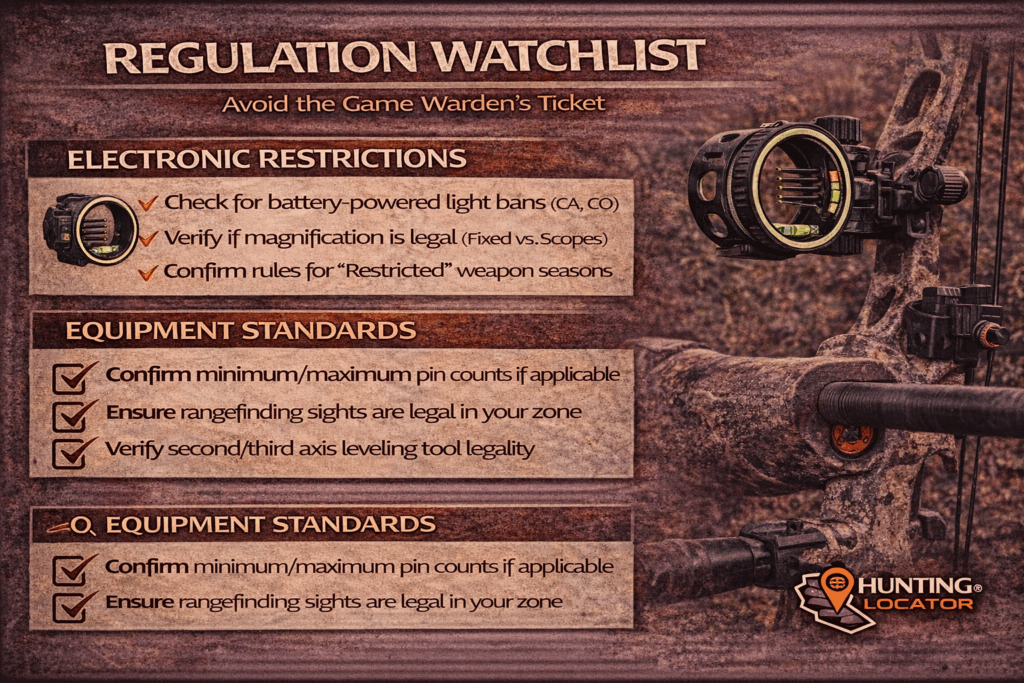
State regulations are all over the map when it comes to bow sight requirements. Some states ban sights that magnify targets or project light, while others allow advanced features during certain seasons. California prohibits “telescopic sights, rangefinding devices, battery-powered or electronically lighted sights”, while Colorado bans “scopes or any other electronic devices attached to the bow”. Meanwhile, Texas allows lighted pins and sight magnification during lawful archery seasons.
Here’s where it gets tricky: In Alaska, bowhunters can legally use lighted sight pins in general seasons but they become illegal during “restricted” weapons hunts. Before buying any sight—especially one with illumination features—check your state’s wildlife department website. Planning a non-resident hunt? Double-check those destination state rules too.
Action: License and Tag Acquisition
Get your licenses and tags locked down well before season, especially if you’re a non-resident facing limited tag allocations. Once you’ve secured your tags and confirmed regulations, you can confidently select equipment that’s legal for your hunt.
Understanding Bow Sight Types: Finding Your Match
Choosing between bow sight types is like picking between a pickup truck and an SUV. Both get you there, but each dominates in different conditions.
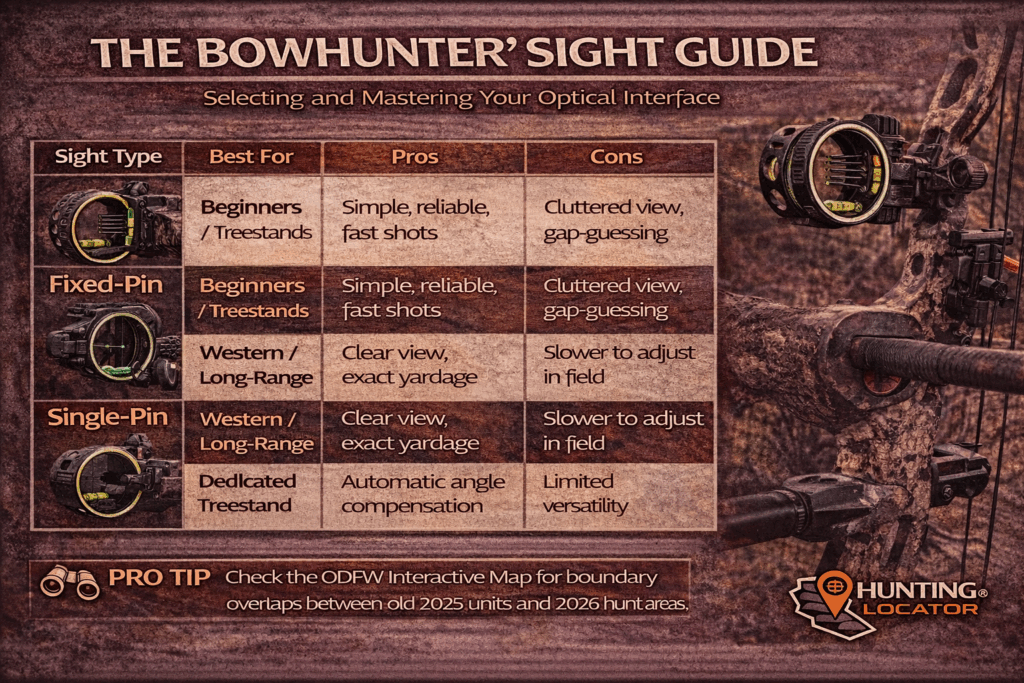
| Sight Type | Best For | Pin Setup | Price Range | Complexity |
|---|---|---|---|---|
| Fixed-Pin | Beginners, treestand hunting, quick shots | 3-5 pins at set distances | $30-60 for quality options | Low |
| Single-Pin Adjustable | Experienced hunters, varied distances, Western hunting | 1 adjustable pin | $80-200+ | Medium |
| Pendulum | Dedicated treestand hunters | Auto-adjusting for angle | $50-100 | Low-Medium |
Fixed-Pin Sights: The Reliable Workhorse
Archery experts love fixed pin sights for their simplicity and reliability—you don’t have to adjust the sight before each shot, which can be a lifesaver in high-pressure situations. If you’re new to bowhunting, a fixed-pin sight is almost always the right starting point.
A typical 5-pin sight setup runs 20, 30, 40, 50, and 60 yards. Most hunters find 3-5 pins plenty—more pins create a cluttered sight picture that’s distracting when it counts.
Fixed pins absolutely shine in Eastern whitetail hunting where shots happen fast and distances are predictable. When a buck steps into your shooting lane at 25 yards, you pick your pin and execute. Done.
Single-Pin Adjustable Sights: Precision at Any Distance
Hunting experts point out that single-pin sights deliver slightly better accuracy because the smaller housing and single pin is easier to center in the peep aperture, plus the uncluttered view enhances focus. For experienced hunters frustrated with pin gaps at odd distances, single-pin sliders eliminate the guesswork—dial to your exact yardage and shoot.
The trade-off? You need time to adjust. In dense Eastern woods where a buck might appear and vanish in seconds, that adjustment time can cost you an opportunity.
For Western hunting with spot-and-stalk scenarios, where most shots happen at 40-60 yards and you often have time to range and prepare, single-pin sliders are extremely popular. Most quality single-pin sights include sight tapes—Black Gold provides 54 sight tapes to fit just about any setup—letting you dial precise yardages without memorization.
Pendulum Sights: The Treestand Specialist
Pendulum sights automatically compensate for angle when shooting from elevated positions. They solve a specific problem well, but they’re limited to treestand hunting at relatively close ranges. If you hunt multiple scenarios, a fixed-pin or adjustable sight offers way more versatility.
Ready to explore your options? Browse our archery sights collection to see what’s available in each category.
Key Features That Actually Matter
Once you’ve narrowed down your sight type, the feature list can feel overwhelming. Here’s what experienced bowhunters tell us actually makes a difference in the field—and what’s mostly marketing noise.
Pin Size and Visibility
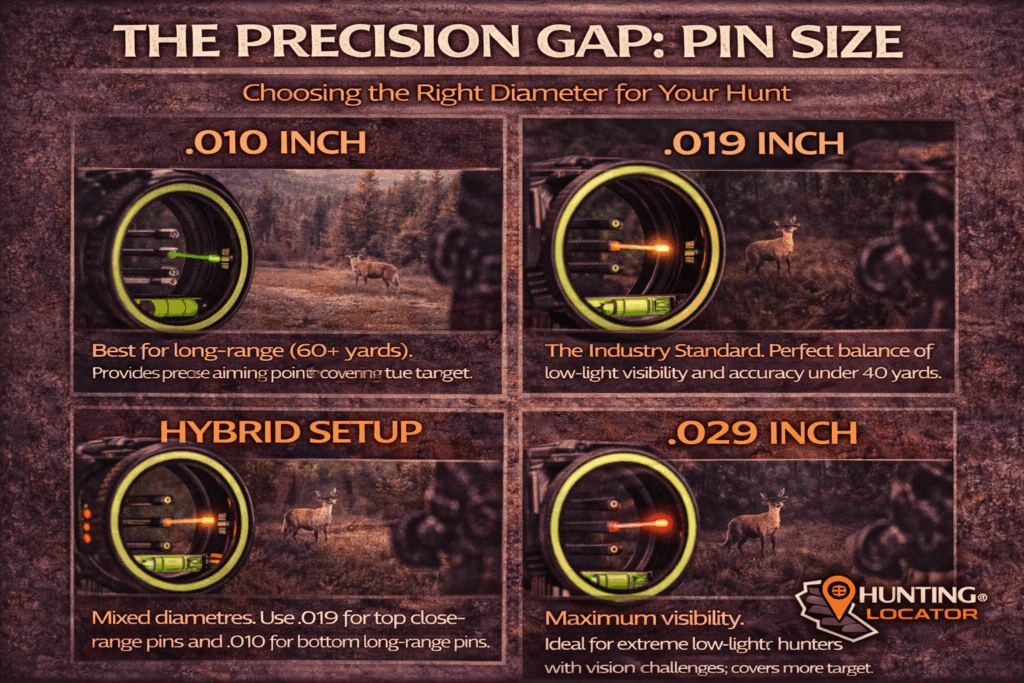
Think of pin size like choosing between a fine-tip pen and a marker. Smaller pins (.010) give precision at distance, while larger pins (.019) are easier to see in low light. For most hunting situations under 40 yards, .019 pins offer the best balance of visibility and precision.
Some sights offer hybrid configurations—two pins at .019 for close range and quick acquisition, with bottom pins at .010 for longer, more deliberate shots.
Micro-Adjustable Windage and Elevation
Precision machining, better materials, and smoother adjustments all contribute to gear that holds zero, tunes more easily, and stays reliable through changing weather and rugged terrain. If you’re upgrading from a budget sight, micro-adjustable windage and elevation often delivers the most noticeable improvement. The difference between clicking into precise adjustments versus wrestling with set screws is night and day.
Some premium sights offer tool-less adjustability, which makes getting dialed in way easier—especially valuable when making last-minute adjustments before a hunt.
Sight Housing and Light Gathering
The smaller housing of single-pin sights is easier to center in the peep aperture and the uncluttered view enhances focus. Larger housings gather more light for dawn/dusk hunting but can feel cluttered. Smaller housings offer cleaner sight pictures but may struggle in low light.
Second and Third Axis Leveling
For hunters who primarily shoot from treestands or hunt steep Western terrain, second and third axis leveling capabilities become critical. Quality sights offer 2nd and 3rd axis leveling capabilities that are essential when shooting in steep terrain, plus a bubble level that’s easy to see inside the housing.
If you’re new to bowhunting and primarily hunting flat ground, don’t stress about these features initially. But they become important as you expand your hunting scenarios.
Durability and Construction
One benefit to upgrading sights is durability—hunters who travel with their bows on elk trips and deer hunting out of boats find their equipment takes a beating at times. Look for precision-machined aluminum construction and quality mounting systems. A sight that loses zero after bumping your bow case isn’t saving you money—it’s costing you opportunities.
Core Gear Checklist: Building Your Complete Setup
Your bow sight doesn’t work in isolation. It’s part of a system. Here’s how to build a complete, reliable setup around your sight choice.
Complementary Archery Equipment
Your sight calibration depends on consistent arrow flight. Quality arrows matched to your bow’s specifications, paired with broadheads that fly true, are essential for your sight to perform as intended. Explore our arrows, points, and broadheads selection to find options that complement your setup.
A quality release aid contributes to the consistent anchor point your sight depends on. Inconsistent releases mean inconsistent arrow impact. No sight can compensate for that. Browse our bow release aids for options that match your shooting style.
The Complete Setup Checklist
Here’s what every complete bow setup needs:
- Bow sight (matched to your hunting style and regulations)
- Quality arrows (consistent spine and weight)
- Broadheads (practice with the same heads you’ll hunt with)
- Release aid (comfortable and consistent)
- Rangefinder (essential for setting pins accurately)
- Bow case (protect your investment during transport)
- Basic tools (Allen wrenches for field adjustments)
Find everything you need in our archery accessories collection. Building your setup? Our archery equipment store has everything on this list—from sights to broadheads to the accessories that complete your kit.
Sighting In: Getting Your Pins Dialed
A quality sight means nothing if it’s not properly sighted in. Here’s the process experienced bowhunters use to get their pins dialed.
Basic Sighting-In Process
Follow these steps for accurate pin placement:
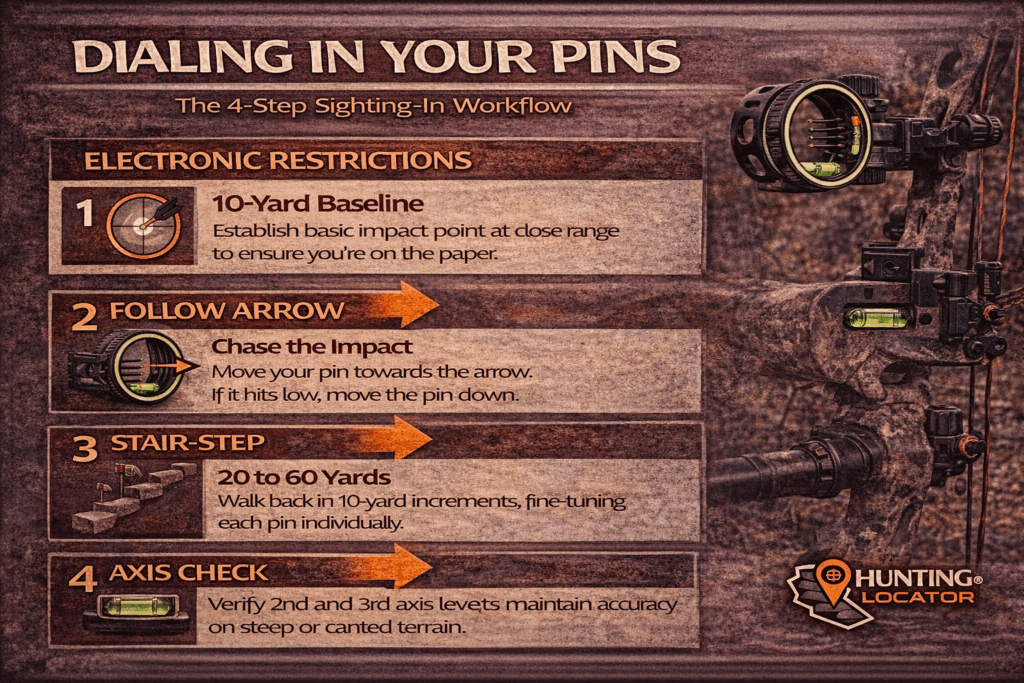
- Start Close – Most bow technicians recommend roughly 10 yards as your starting point
- Follow the Arrow – Unlike sighting in a rifle, bow sight pins follow arrow impact. An arrow impacting low requires the sight pin to be moved down, left requires moving left, and right requires moving right
- Work Your Way Out – Once your 20-yard pin is dead-on, move to 30 yards, then 40, adjusting each pin individually
- Fine-Tune – Make micro-adjustments until each pin hits exactly where you aim
Tactics & Strategy: Maximizing Your Sight’s Performance
Peak Activity Times and Sight Selection
Dawn and dusk hunting puts a premium on sight visibility. If you’re primarily hunting these low-light periods, prioritize larger fiber optic pins and quality light-gathering housings over ultra-precise small pins.
Wind & Scent Control
Your sight won’t matter if game never gets within range. Proper wind awareness and scent control are fundamental to getting shooting opportunities. Understanding wind direction and using quality scent elimination products create the encounters where your sight selection pays off.
The Approach and Shot Placement
Whether you’re hunting from a treestand, ground blind, or spot-and-stalk, your sight choice should match your primary hunting method. Treestand hunters benefit from sights with good angle compensation, while spot-and-stalk hunters often prefer the precision of single-pin adjustable sights for varied distances.
Remember: ethical shot placement is your responsibility regardless of sight type. Know your effective range and stick to high-percentage shots.
More Resources from Hunting Locator
Expand your archery knowledge and gear options with these specialized collections:
- Archery Targets – Practice targets for sighting in and skill development
- Bow Stabilizers – Improve accuracy and reduce bow torque
- Arrow Rests – Critical for consistent arrow flight and sight accuracy
- Bow Cases – Protect your investment during transport and storage
FAQ
What’s the best bow sight for a beginner hunter?
Beginner archers should start with a fixed pin sight. As a beginner, a 3- to 5-pin sight is usually sufficient, with pins set at common hunting ranges such as 20, 30, and 40 yards. A $30-60 investment will buy you a fine-quality hunting sight that’ll serve you well as you develop your skills.
Can I use a lighted bow sight in all states?
Nope, regulations vary significantly by state. Some states prohibit sights on bows that magnify targets or project light. Always check your state’s current hunting regulations and verify rules for any state where you plan to hunt as a non-resident.
How do I know if I need micro-adjustable features?
If you’re frequently making small adjustments to your sight or find yourself frustrated with coarse adjustment mechanisms, micro-adjustable windage and elevation will significantly improve your experience. These features are especially valuable for hunters who travel with their equipment or hunt in varying conditions.
Should I choose .010 or .019 pins?
For shooting out to longer distances, larger pins that are .029 or even .019 of an inch can cover too much of the animal, making it difficult to aim precisely. Experts typically suggest .010 pins to anyone shooting out to and beyond 60 yards. For most hunting under 40 yards, .019 pins offer better visibility in low light conditions.
What’s the difference between fixed-pin and single-pin adjustable sights?
Fixed pin sights are popular with hunters due to their simplicity and reliability—you don’t have to adjust the sight before each shot, which can be beneficial in high-pressure situations. Single-pin sights yield slightly better accuracy because the smaller housing and single pin is easier to center in the peep aperture, and the uncluttered view enhances focus, but require time to adjust for different distances.
Do I need second and third axis adjustments?
Quality sights offer 2nd and 3rd axis leveling capabilities that are critical when shooting in steep terrain. If you primarily hunt from treestands or in mountainous terrain, these adjustments become important for maintaining accuracy at angles. For flat-ground hunting, they’re less critical.
The Final Shot
Choosing the right bow sight isn’t about finding the most expensive or feature-packed option. It’s about matching your equipment to your hunting style, regulations, and skill level. Whether you’re drawn to the simplicity of fixed pins, the precision of single-pin adjustable sights, or the specialized function of pendulum sights, the right choice is the one that builds your confidence and performs reliably when opportunities arise.
Your bow sight is the bridge between practice and performance, between preparation and success in the field. Take time to understand your options, consider your hunting scenarios, and invest in quality equipment that’ll serve you for seasons to come.
Ready to gear up for your best archery season yet? Visit our store today! We stock the best archery equipment, from precision bow sights to broadheads and accessories, to ensure your success in the field.


