In this article, we’ll explore the ins and outs of hunting in Wyoming—delving into detailed season dates, license requirements, and the top spots to bag trophy animals like bighorn sheep and mountain goat. You’ll also discover how the Wyoming Game and Fish Department manages limited quota hunts, how preference points factor in, and where to find interactive maps for planning your next hunting trip. If you’re ready to understand bag limits, the application period, or how to navigate public land vs. private lands, keep reading!
Key Items You’ll Find Here:
- Wyoming hunting quick-reference tables for big game and upland birds.
- Detailed season dates for elk, deer, antelope hunting seasons, and more.
- Guidance on Wyoming hunting license options, from resident to non resident permits.
- A breakdown of the best hunting areas—public land, private access, and more.
Ready to learn how to get the most from your next big game hunt? Let’s dive right in.
Wyoming Hunting Quick Reference Tables
To set you up for success, we’ve compiled handy charts that cover big game, birds and small game, as well as the various Wyoming hunting license types you might need. Bookmark these for a quick overview whenever you’re mapping out your hunting trip.
Big Game Species Overview
Below, you’ll find a snapshot of Wyoming’s most pursued big game species. Each row includes typical season dates, bag limits, the license/tag requirement, and extra notes. Keep in mind that exact season dates can vary by hunt area and year—always confirm with the Wyoming Game and Fish Department.
| Species | Season Dates | Bag Limits | License & Tag Requirements | Notes |
|---|---|---|---|---|
| Elk | Special Archery Season: Sep 1 – Sep 30 General Rifle: mid-Oct – Nov (varies) | 1 per license (bull or cow, area-dependent) | General Tag (nonresident elk must draw) or Limited Quota Tag Preference points can help in limited areas | Elk Wyoming hunts can extend into Dec/Jan for certain antlerless tags. Large herds in mountainous public access terrain. |
| Mule Deer | Oct – Nov (varies by unit) | Usually 1 buck (special areas might allow doe/fawn) | General or Limited Quota Deer License Some trophy units require many preference points | Populations fluctuate; watch out for changes based on harvest information each year. |
| White-Tailed Deer | Early Oct – Dec 1 (many units) | Typically 1 whitetail deer | Included under Deer License or separate White Tailed Deer tags in some areas | Found mostly in riparian zones; some private lands have excellent trophy potential. |
| Pronghorn Antelope | Archery: mid-Aug – Sep 30 Rifle: early Oct – late Oct or early Nov | 1 buck or doe/fawn depending on tag | Limited Quota Antelope License Extra doe/fawn tags often available | Wyoming leads the nation in pronghorn antelope harvest. Very high success rates. |
| Bighorn Sheep | Late Aug – mid-Oct (varies) | 1 ram per license (once in a lifetime for trophy) | Limited Quota Sheep License Bighorn sheep and mountain hunts require advanced planning | Extremely difficult to draw. Whiskey Mountain Conservation Camp area is famous for large rams. |
| Mountain Goat | Sep 1 – Oct 31 | 1 per license (once in a lifetime) | Limited Quota Sheep and mountain goat tags very restricted | Found in northwest WY; physically demanding hunts at high elevation. |
| Moose | Sep 15 – Oct 31 (approx.) | 1 moose per license (once in a lifetime) | Limited Quota Moose License Heavily managed with low tag numbers | Prime moose habitat in western/central corridors. Drafting year to year changes. |
| Black Bear | Spring: Apr 15 – Jun 15 Fall: Sep 1 – Nov 30 | 1 bear per license | General Bear License Some areas require registration for baits | Check the Game and Fish Department for zone-specific harvest quotas. |
| Mountain Lion | Year-round or until quota is met (varies regionally) | 1 lion per license | Mountain Lion License Bag limits enforced by unit quota | Wyoming has healthy lion populations; may overlap with grizzly bear range. |
| Gray Wolf | Roughly Oct – Mar in Trophy Zones, year-round Predator in others | 1–2 in trophy areas (varies) | Wolf License in trophy zone, not required in predator zone | Controversial species with area-specific rules. Always verify season dates. |
| Bison | Typically fall-winter hunts (Nov – Jan) | 1 bison per license | Limited Quota Bison Tag“Hunt Bison” programs are extremely limited | Very tough draw. Many hunts near Yellowstone boundary. |
Birds and Small Game
Wyoming also offers plenty of action beyond big game. From upland birds to waterfowl, there’s a season for nearly everyone.
| Species | Season Dates | Bag Limits | License Requirements | Notes |
| Upland Birds | Sep – Dec (varies by species/area) | Typically 3–5 per day | Small Game/Upland Bird License | Includes pheasant, grouse, partridge. Late releases in some WMAs. |
| Turkey | Spring: Apr – May Fall: Sep – Nov | 1–2 per year (varies) | Turkey License (resident/non resident) | Popular in Black Hills area; additional special licenses may apply. |
| Light Geese | Typically Oct – Jan, plus spring hunts | Up to 20 per day in some areas | Federal Duck Stamp HIP Permit | Wyoming is part of Central/Pacific Flyways. Light goose hunts can extend. |
| Dark Geese | Similar to ducks—Oct – Jan splits | 4–5 daily in many zones | Federal Duck Stamp HIP Permit | Check local zones for details; watch for changing bag limits. |
| Ducks | Usually Oct – Jan splits | 6 daily in Central Flyway, 7 in Pacific | Federal Duck Stamp HIP Permit | Season dates revolve around migratory bird frameworks. |
| Rabbits | Year-round or lengthy seasons (varies) | Often 10+ per day | Small Game License | Cottontail is common; check for snowshoe hare too. |
| Squirrels | Year-round or extended seasons | Usually 5–10 daily | Small Game License | Fox and red squirrels abound in forested areas. |
License Information for Hunting in Wyoming (Resident & Non-Resident)
Licenses are the backbone of any Wyoming hunting plan. Costs and eligibility can vary widely, so use this as a starting point—but always confirm current prices with the Wyoming Game and Fish Department.
| License Name | Description | Resident Cost | Non-Resident Cost |
| General Elk License | Allows hunting in “General” elk areas during open seasons. | ~$62 | ~$692 |
| Limited Quota Elk | Specific hunt area, often for bull elk or special archery season hunts. | Varies ($57–$125) | $700+ (special draws ~$1,283) |
| Deer (General / Limited) | Covers mule deer or white tailed deer, depends on area regs. | $42 | $374 |
| Antelope (Limited Quota) | Required for pronghorn antelope hunting seasons in designated areas. | $37 | $326 |
| Bighorn Sheep | Very limited annual tags; once-in-a-lifetime trophy potential. | $157 | $2,335 |
| Mountain Goat | Extremely limited, also once-in-a-lifetime. | $157 | $2,177 |
| Moose | Limited Quota, distinct from deer/elk apps. | $157 | ~$1,997 |
| Black Bear License | For spring/fall black bear hunts statewide. | $47 | $373 |
| Mountain Lion License | For year-round lion hunts; area quotas apply. | ~$35 | ~$350 |
| Turkey License | Spring/fall turkey hunts; separate license from small game. | ~$16 | ~$74 |
| Small Game/Upland Bird | Needed for rabbits, upland birds like pheasant, grouse. | ~$16 | ~$74 |
| Conservation Stamp | Mandatory stamp required for most hunters each calendar year. | $21.50 | $21.50 |
| Super Tag Raffle | Competitive raffle chances for premium species tags. | $10–$30 per ticket | Same price for all applicants |
Wyoming Hunting Seasons
Whether you’re planning to hunt deer or moose, it’s essential to understand the overarching structure of Wyoming’s hunting calendar. Many big game seasons open in the fall, with special archery seasons in September, and some hunts stretching into the winter.
Wyoming Elk Hunting Season
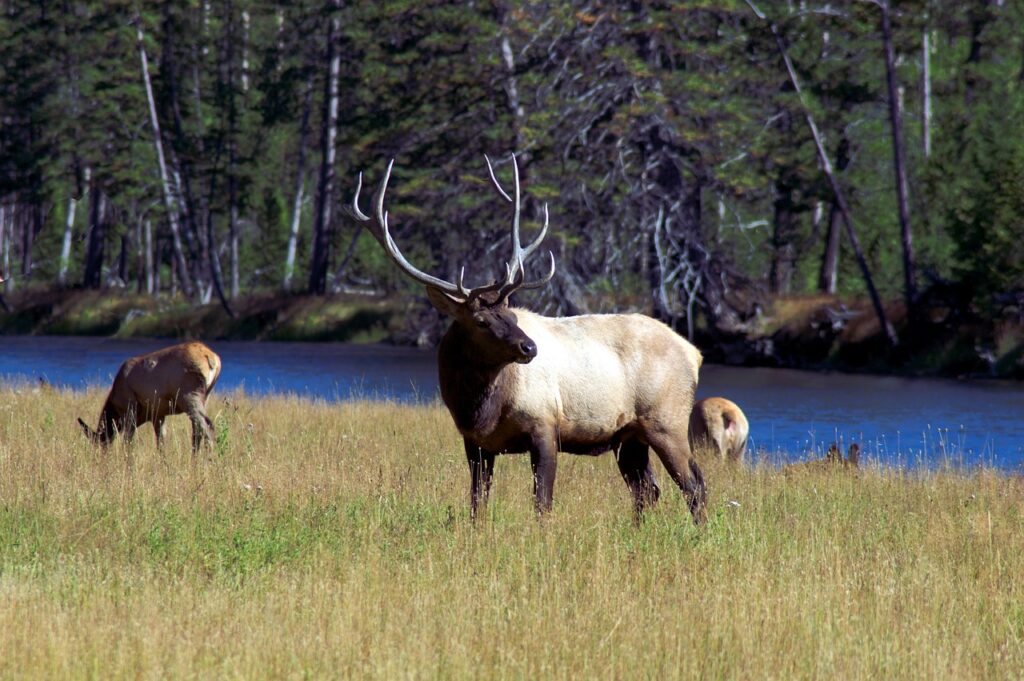
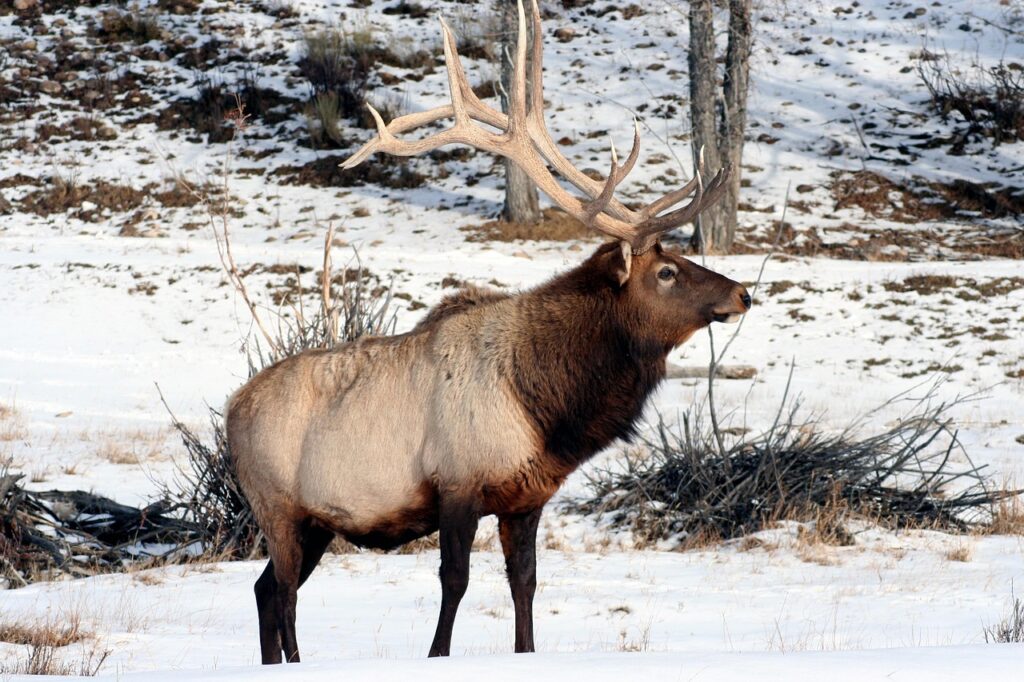
Elk are arguably the state’s most iconic big game attraction. Many big game hunters consider an elk wyoming hunt the pinnacle of success, thanks to the combination of rugged landscapes, large herds, and top-tier trophy potential. Elk live in mountainous public access terrain and can also be found on private lands.
- Season Dates & Structure: Typically, archery seasons begin on September 1 and run through the end of the month. Rifle seasons often start in mid-October and go until late November, though some limited quota hunts or antlerless hunts can run into December or January.
- Special Archery Season: This is perfect for bowhunters who love close encounters with elk. You’ll need an archery equipment permit (sometimes called an archery stamp) in addition to your elk license.
- Nonresident Elk: Non resident hunters often must apply through a draw system, especially in limited quota areas. Preference points can be crucial for prime units.
- Harvest Information: The hunter harvest for elk frequently surpasses 25,000 animals a year, with success rates around 50% or higher. The Wyoming Game and Fish Department’s website features in-depth harvest information.
- Hotspots: The Bighorn Mountains, parts of western Wyoming near Yellowstone, and the Laramie Range have big herds, but plan your hunt area carefully, watch out for grizzly bear territory, and consider if you need a professional outfitter.
Wyoming Deer Hunting Season
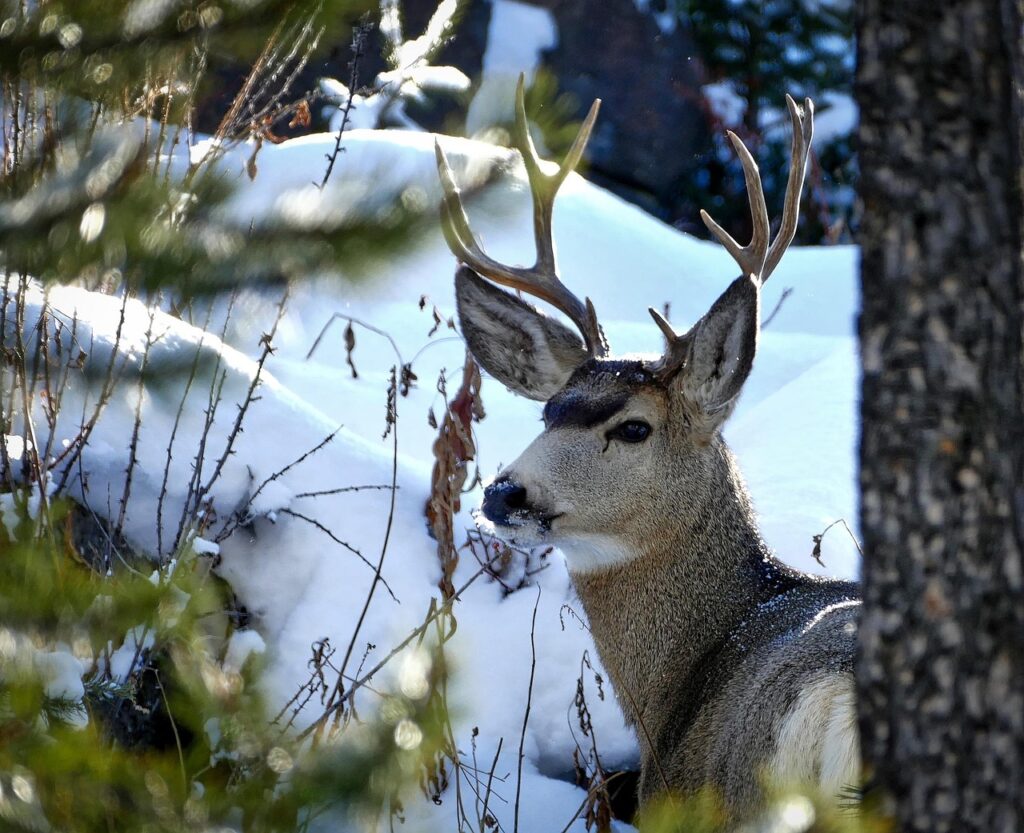
Wyoming’s deer population is split between mule deer and whitetail deer (or white tailed deer). Each species has slightly different habitat preferences and season frameworks.
- Mule Deer: Found across rough terrain, sagebrush basins, and foothills. Some trophy areas are under limited quota. Season dates typically run from early October to mid-November. Mule deer are a top draw for big game hunters aiming for large-antlered bucks. Watch out for application period deadlines if you’re targeting a prized limited quota hunt.
- Whitetail Deer: More common along riparian corridors and farmland. Whitetail deer hunts can extend into late December. You might see them referred to as “white tailed deer” in some regulations. Private lands around the eastern part of the state hold healthy populations. Confirm your license (general vs. whitetail-specific) and bag limits before heading out.
- Bag Limits: Usually 1 buck per license, though some areas offer doe tags. Keep an eye on local restrictions.
- Tips: Use interactive maps and the WGFD hunt planner to identify prime habitats. Bowhunters can try the special archery season starting September 1, but you’ll need the extra archery license.
Antelope Hunting Seasons
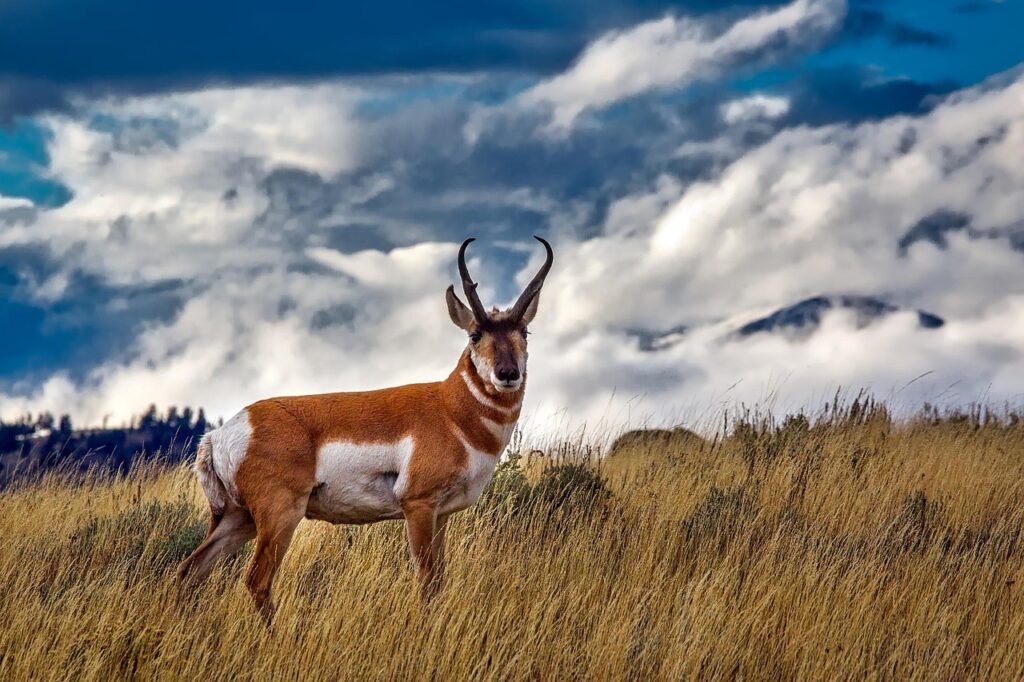
Pronghorn antelope are practically a symbol of Wyoming hunting. The state has the largest pronghorn population on Earth, making for some of the highest success rates in North America.
- Season Dates: Archery hunts often start mid-August, with rifle hunts kicking off late September or early October. Most wrap up by late October.
- Licenses: All pronghorn hunts are limited quota. Many hunters secure preference points in previous years to draw high-demand areas. Doe/fawn tags are more readily available if you just want to fill the freezer.
- Hunting Tactics: Spot-and-stalk in open country. Consider waterhole setups during archery seasons if conditions are dry. Use your hunt planner to find public land that’s accessible, or take advantage of the yes program if you want to hunt private property.
- Success Rates: Often over 85% for rifle hunts. A pronghorn hunt can be a quick, successful hunt if you scout properly.
Bighorn Sheep and Mountain Goat
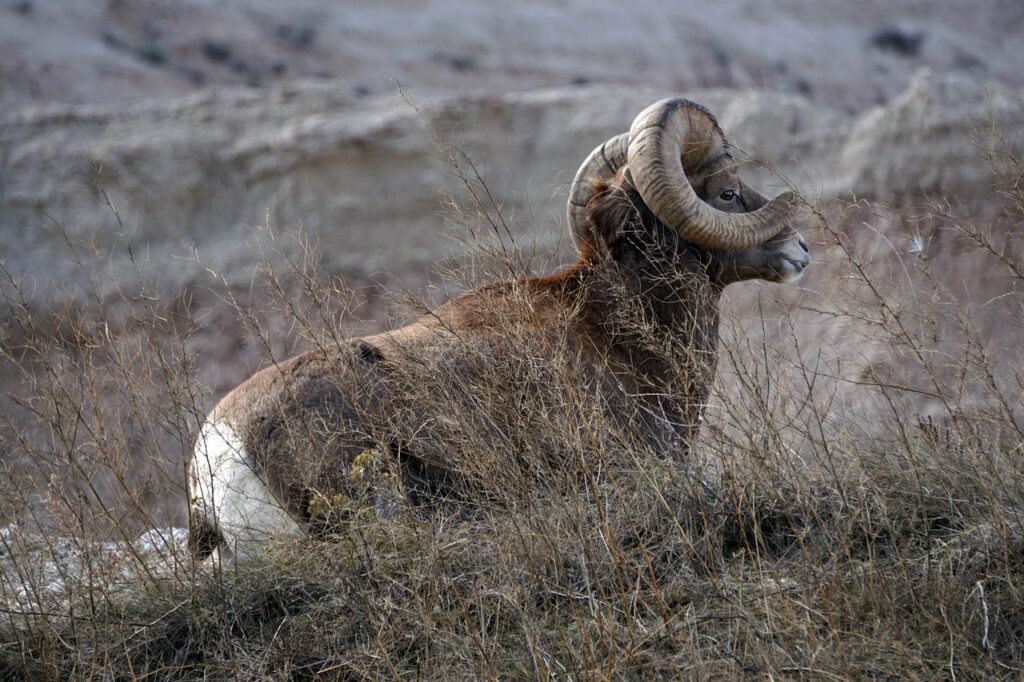
For many hunters, bagging a bighorn sheep is the ultimate big game hunt. These hunts usually require maximum preference points or extreme luck in a random draw.
- Bighorn Sheep: Season dates typically start in late August and may run through mid-October. Only a handful of tags are issued each year. The terrain can be treacherous, and encountering grizzly bear activity is possible in northwest units. Still, the reward is a once-in-a-lifetime ram.
- Mountain Goat: Another once-in-a-lifetime hunt. Season typically runs from September 1 to October 31. Wyoming’s goats are primarily in the high alpine zones near Yellowstone. Expect physically demanding hikes, unpredictable weather, and tough terrain. Sheep and mountain goat hunts are best prepared for with months of conditioning.
Wyoming Moose Season
Moose tags are notoriously limited. Wyoming manages moose carefully due to habitat constraints and disease impacts. A moose license is once-in-a-lifetime for many.
- Season: Typically mid-September through late October. Bull tags are extremely coveted.
- Habitat: Moose favor willow bottoms, riparian edges, and conifer stands. Western and north-central Wyoming have the highest populations.
- Application: This is a limited quota species. Start building preference points if you’re serious about moose.
Black Bear, Mountain Lion, and Gray Wolf
- Black Bear: Spring hunts run mid-April to mid-June; fall hunts start around September 1. Baiting is allowed in certain areas with a permit. Bear density is high in forested mountain zones.
- Mountain Lion: Seasons can be year-round or limited to certain months, each hunt area has a mortality quota. Mountain lion hunting often involves hounds or extensive scouting. One mountain lion per license typically.
- Gray Wolf: Wyoming classifies wolves as trophy game in certain areas (with strict season dates and bag limits) and as predators elsewhere (allowing year-round harvest). Check the game and fish department regulations carefully if you plan to hunt wolves.
Hunt Bison in Wyoming
Bison hunts are extremely rare and controlled by a strict limited quota draw. The application period is early in the calendar year, and most hunts occur in winter near Yellowstone.
- Big Challenge: Harvesting a free-roaming bison is logistically difficult and physically demanding. Deep snow, sub-zero temps, and limited opportunity.
- Bag Limits: Typically 1 bison per license. Some hunts target cows specifically to manage herd numbers.
- Tips: If you’re lucky enough to draw, consider a professional outfitter. A bison weigh-out and field care can be monumental.
Wyoming Hunting License Information
Securing the right hunting license is key. Wyoming offers general licenses for residents in some species (like elk) and limited quota tags for high-demand hunts or specialized areas. Nonresident hunters have a more complex process.
Resident Hunting Permits
Residents enjoy relatively straightforward access to big game, along with special perks and discounts:
- General Elk or Deer License: Residents can usually purchase these over-the-counter if the area is classified as general.
- Limited Quota: Even residents must draw moose, bison, bighorn sheep, and certain premium deer or elk areas. The application period often opens in the early spring. Many hunts fill quickly.
- Pricing: Resident costs are significantly lower (e.g. $62 for an elk license vs. $692 for a non resident). Additional tags for doe/fawn or cow/calf can be picked up if available.
- Conservation Stamp: Every hunter must purchase this once per calendar year. Funds go toward wildlife conservation.
- Program Assists Landowners: Wyoming’s Access Yes (or yes program) fosters cooperation, opening private lands to resident hunters. This helps reduce agricultural damage while giving the public access.
- Resident Guide: If you’re a resident who wants to take a nonresident friend into designated wilderness, you can apply to be their resident guide—no professional outfitter needed.
Non-Resident Hunting Permits
Non resident licenses are more involved due to demand:
- Limited Quota: For prime areas (trophy elk, deer, moose, bighorn sheep), you must apply by the deadlines. The earlier part of the year is typically for elk, with deer/antelope hunts closing applications later.
- Preference Points: Nonresident elk and deer hunts often require preference points to secure top units. Each year you can buy a point if you didn’t draw.
- Special Fees: Nonresident tags cost more, and there may be a “special draw” option that reduces competition for those willing to pay extra. For instance, a special elk license can exceed $1,200.
- Super Tag Raffle: A competitive raffle chances system that allows applicants to win a once-in-a-lifetime tag for species like moose, bighorn sheep, mountain goat, or bison. It’s open to residents and nonresidents.
Wyoming Game Tags and Reporting
Wyoming enforces game tag requirements and mandatory reporting for certain species to maintain accurate harvest data.
Game Tags and Bag Limits
Below is a condensed table illustrating major tags, costs (approx.), and duration:
| Species Tag | Cost (Resident / Nonresident) | Duration | Notes |
| Elk Tag (General) | ~$62 / ~$692 | Valid fall season | 1 elk; can purchase additional antlerless tags if available. |
| Deer Tag (General) | ~$42 / ~$374 | Valid fall season | 1 buck unless area allows doe/fawn. |
| Antelope Tag | ~$37 / ~$326 | Varied (Aug – Oct/Nov) | Typically 1 pronghorn antelope. Additional doe/fawn tags. |
| Bighorn Sheep | ~$157 / ~$2,335 | Late Aug – mid-Oct | Once-in-a-lifetime if a trophy ram is harvested. |
| Mountain Goat | ~$157 / ~$2,177 | Sep – Oct | Once-in-a-lifetime. Very limited. |
| Moose | ~$157 / ~$1,997 | Sep – Oct | Bull/cow options vary by area. |
| Black Bear | ~$47 / ~$373 | Spring/Fall seasons | 1 per license; often area quotas. |
| Mountain Lion | ~$35 / ~$350 | Year-round (varies) | 1 per license; area mortality quotas apply. |
| Gray Wolf (Trophy) | Varies (Resident ~$20 / Nonresident ~$100, approx.) | Seasonal in trophy zones | Predator zone requires no license. Verify boundaries. |
| Bison | ~$400 / ~$4,400 (approx.) | Late fall – winter | Hardest draw in the state. 1 bison. |
Bag limits—the maximum number of animals allowed per tag or day—are strictly enforced. For big game, it’s typically one animal per license. Upland birds and waterfowl have daily bag limits (e.g., 3–7 birds) and possession limits.
Reporting Requirements
Certain species require hunter harvest reporting, either mandatory or via mailed surveys:
- Moose, Bighorn Sheep, Mountain Goat: Mandatory reporting within a set timeframe if you draw a tag. The fish department (i.e., Wyoming Game and Fish) uses this data to track population health.
- Mountain Lion, Black Bear: Must check in the animal within specified days of harvest. A tooth or DNA sample might be collected.
- Voluntary Surveys: For deer, elk, and antelope, you might receive a survey. Responding helps the game and fish department with harvest information and future season proposals.
- Gray Wolf: Must report any wolf harvested in trophy zones within 24 hours, plus present the pelt/skull for sealing.
Wyoming Hunting Regulations
Before heading afield, you need to know the rules that keep hunting safe, fair, and sustainable.
General Hunting Regulations
- Fluorescent Orange: For any firearm big game hunt, you must visibly wear at least one exterior garment of fluorescent orange. This helps ensure a successful hunt without accidents.
- Conservation Stamp: Almost every license holder must purchase one each calendar year, unless exempt.
- Weapon Restrictions: Centerfire rifles for big game must be at least .24 caliber. Archery equipment must meet minimum draw weights (40 lbs for deer/antelope, 50 lbs for elk/moose/bison). Crossbows are allowed if they meet draw requirements.
- Hunter Education: Anyone born after 1966 must complete a certified safety course. This can be done in-person or online with a field day. Present the certificate when purchasing your hunting license.
- Application Period: Key draws open early in the year—nonresident elk typically closes Jan 31, while deer/antelope can extend into May or June. Always confirm application period specifics.
Species-Specific Regulations
- Bighorn Sheep & Mountain Goat: Once you harvest a trophy ram or billy, you generally cannot hunt that species in Wyoming again (once-in-a-lifetime rule). Also, areas with bighorn sheep may be closed off-limits for gray wolf hunts.
- Mountain Lion & Black Bear: Quota-based hunts. If a zone reaches its quota, the season closes immediately. You must check daily updates.
- Gray Wolf: Some zones are trophy management zones with set season dates, bag limits, and license requirements. Other zones treat wolves as predators, meaning you can hunt them year-round without a special license (but you must follow landowner permission and other general laws).
- Agricultural Damage: Landowners can receive kill permits or special consideration if herds cause agricultural damage. This can alter season structures in certain localities.
Hunter Education Requirements
- Age Requirements: Youth can start at age 11 if they turn 12 that calendar year.
- Course Content: Teaches safe firearms handling, wildlife conservation, and ethics. Wyoming’s fish department recognizes other states’ certifications.
- Mentor Hunting: Wyoming allows novice hunters lacking hunter ed to hunt under direct supervision of a qualified adult mentor for limited time.
Wyoming Hunting Areas
Wyoming’s variety of habitats—from soaring peaks and pine forests to sagebrush plains—means big game thrives across the state. Success often depends on choosing the right region and understanding landownership patterns.
Wyoming Private Land Hunting
- Private Lands: Some ranches have excellent populations of mule deer, whitetail deer, or elk. Access can be tricky, but a program assists landowners called the “yes program” or Access Yes, which offers financial incentives for opening land to the public.
- Leasing Private Land: Many outfitters partner with landowners to provide exclusive guided hunts. This can reduce pressure and increase trophy potential. If you have the budget, a private-land hunt is often a guarantee of low hunting pressure.
- Benefits: More stable herds, often less wary game, fewer hunters around you, and minimized agricultural damage.
There are a few ways to hunt on private land. The simplest is just going over to the property of someone you know who invites you to hunt their land. Of course, if you don’t have that friend, you’ll need to do something else. You can check out the hunting land for lease in Wyoming. Our listings should help you find the perfect hunting spot.
If you want something a lot more permanent, then find your ideal location and buy a hunting parcel. Look through our Wyoming hunting land for sale listings to find a place that suits your needs.
Wyoming Public Land Hunting
Over 40% of Wyoming is public land, offering a vast playground for big game. National forests and BLM lands see intense demand during peak season.
- Shoshone National Forest: Great for elk, deer, and black bear. However, watch for grizzly bear territory.
- Medicine Bow National Forest: Prime for mule deer, elk, moose, plus some whitetail pockets.
- Bighorn National Forest: Known for scenic hunts of elk, moose, and black bear. Bighorn sheep inhabit the higher crags.
- Thunder Basin National Grassland: Ideal for pronghorn antelope hunting seasons, mule deer, and upland birds.
- Yellowstone Border Zones: Potential to encounter truly giant elk or a gray wolf near the park boundary, but also higher risk of grizzly bear run-ins.
Ready to brave the wilderness? Check out this page to see the public hunting land in Wyoming.
Guided Hunts and Outfitters
If you prefer a more structured approach, a professional outfitter can handle logistics, especially in wilderness areas. Remember, nonresident elk hunters who want to enter federal wilderness need either a resident guide or a licensed outfitter.
- Benefits: They handle horses, gear, scouting, and can drastically improve your odds of a successful hunt.
- Well-Known Outfitters: Many reputable businesses operate near the Bighorn Mountains or in western Wyoming. Always check references and confirm they hold the proper license.
- Competitive Raffle Chances: Some outfitters assist with super tag raffle entries or leftover license processes, guiding you through last-minute opportunities.
The Final Shot
Wyoming stands as a cherished destination for big game hunts—from high-elevation mountain goat pursuits to antelope hunting seasons on sweeping prairies. The combination of well-managed herds, wide open spaces, and robust licensing structures makes for an unforgettable hunting trip. As you plan your next adventure, consult the Wyoming Fish and Wildlife Department (commonly known as Wyoming Game and Fish) for up-to-date regulations, and explore resources like the Hunt Planner or local Hunting Locator services to refine your route.
No matter your target—be it elk, moose, deer, black bear, or even a chance to hunt bison—Wyoming’s breathtaking scenery and thriving wildlife can deliver the experience of a lifetime. Just be sure to bring your fluorescent orange vest, pack your archery equipment or rifle responsibly, and keep an eye on bag limits, season dates, and license requirements. Best of luck on your quest for a successful hunt!


