Here’s what we’re covering in this Idaho hunting guide to get you ready:
- The new non-resident draw system and every critical deadline you can’t miss
- Real costs for licenses and tags (spoiler: non-resident elk tags hit $651.75)
- Where to actually hunt—from public land gems to private access solutions
Whether this is your first Idaho rodeo or you’re a veteran adapting to new rules, this guide cuts through the confusion and gets you hunting.
Quick Overview: Season Dates, Idaho Hunting Licenses, and Regulations
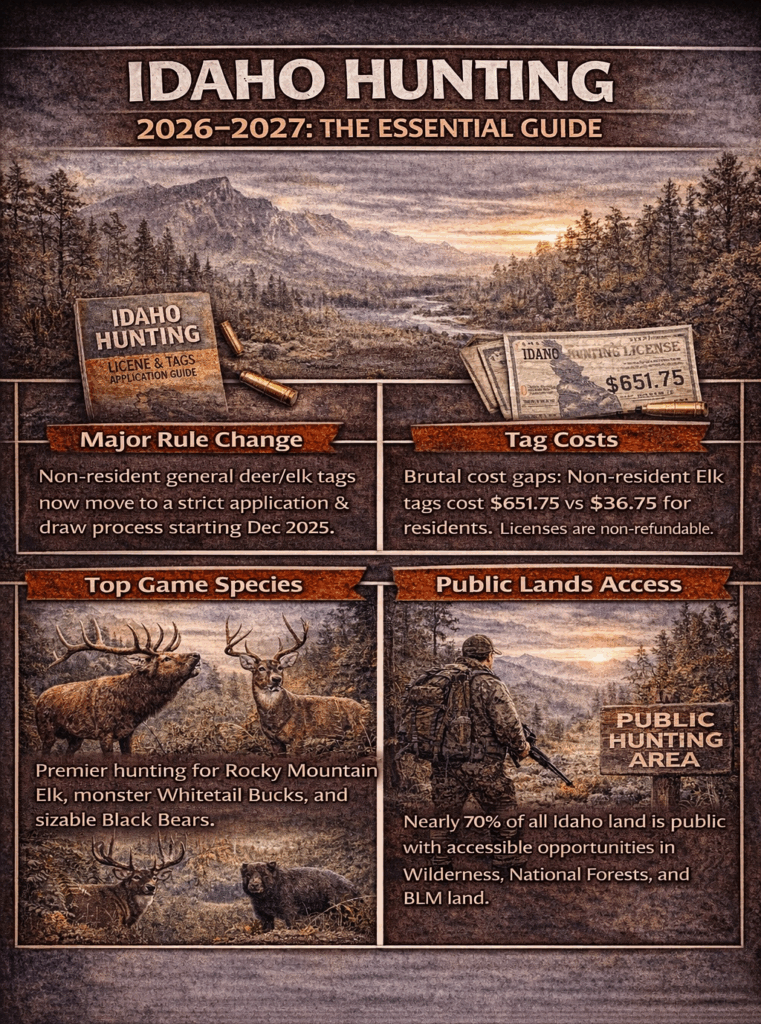
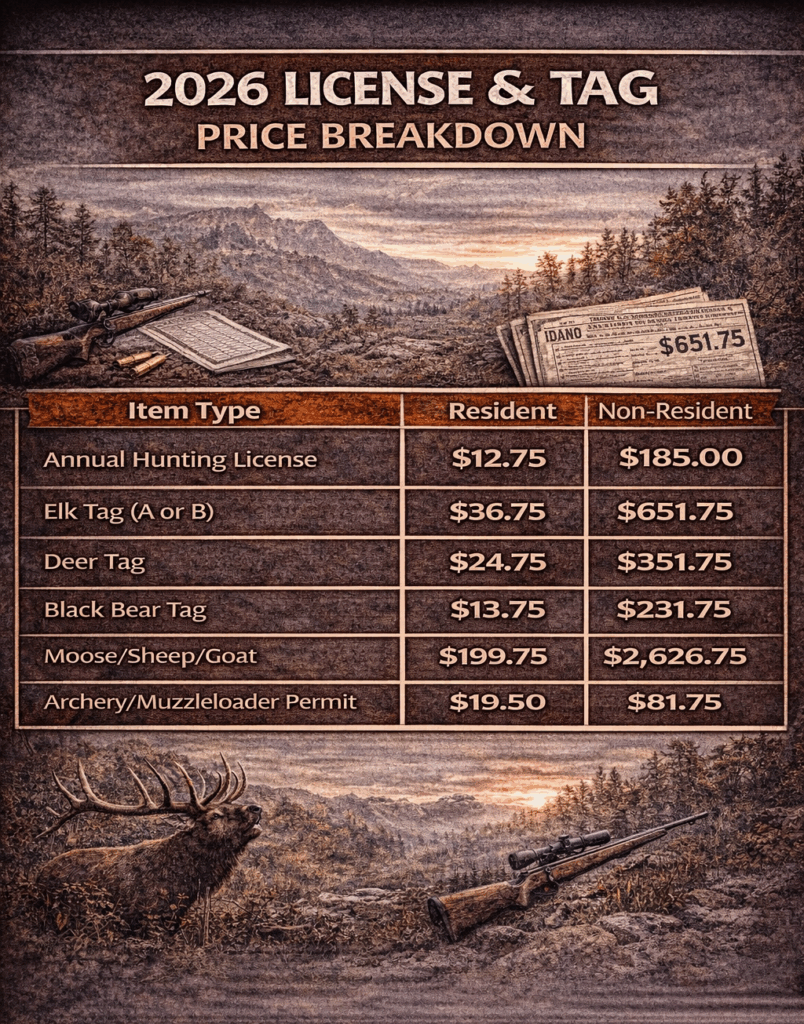
The cost difference between resident and non-resident hunting in Idaho is brutal. The sticker price on a nonresident license to hunt is $185 and is nonrefundable—you pay that just to apply for the draw. The nonresident draw allows up to five hunt choices on an application and up to four hunters can be on one application, but all must have a valid annual hunting license.
| License/Tag Type | Resident Cost | Non-Resident Cost |
|---|---|---|
| Annual Hunting License | $12.75 / $15.75 | $185.00 |
| Combo (Hunt/Fish) | $33.50 / $38.75 | $264.00 |
| Sportsman’s Package | $124.25 / $144.60 | N/A |
| Junior (Ages 10-17) | $13.75 / $16.00 | $91.75 |
| Disabled Veteran (DAV) | $5.00 / $5.75 | $31.75 |
| Deer Tag (Regular/White-tail) | $24.75 | $351.75 |
| Elk Tag (A or B) | $36.75 | $651.75 |
| Pronghorn (Antelope) | $31.25 | $342.75 |
| Black Bear | $13.75 | $231.75 |
| Wolf | $13.75 | $31.75 |
| Mountain Lion | $13.75 | $204.50 |
| Moose/Sheep/Goat | $199.75 | $2,626.75 |
| Archery/Muzzleloader Permit | $19.50 | $81.75 |
| Upland Game Bird (Stocked) | $28.75 | $56.75 |
| Migratory Bird (HIP) | $2.75 | $5.00 |
| Federal Duck Stamp | $29.00 | $29.00 |
Look at those numbers. A non-resident elk tag costs $651.75 while residents pay $36.75. That’s not a typo—it’s nearly 18 times more expensive. When you’re dropping that kind of money, you better have a solid plan. Additional charges will be assessed for online and phone applications, including a 3% surcharge of the total application amount plus a minimal transaction fee.
Idaho’s seasons get complicated fast. Different units, weapon types, and species all have their own dates. Verify seasons and restrictions for your tag when the Idaho Big Game 2026 Seasons and Rules brochure is published in April 2026. Don’t assume anything—check your specific unit.
| Species | Season Type | Dates | Notes/Bag Limits |
|---|---|---|---|
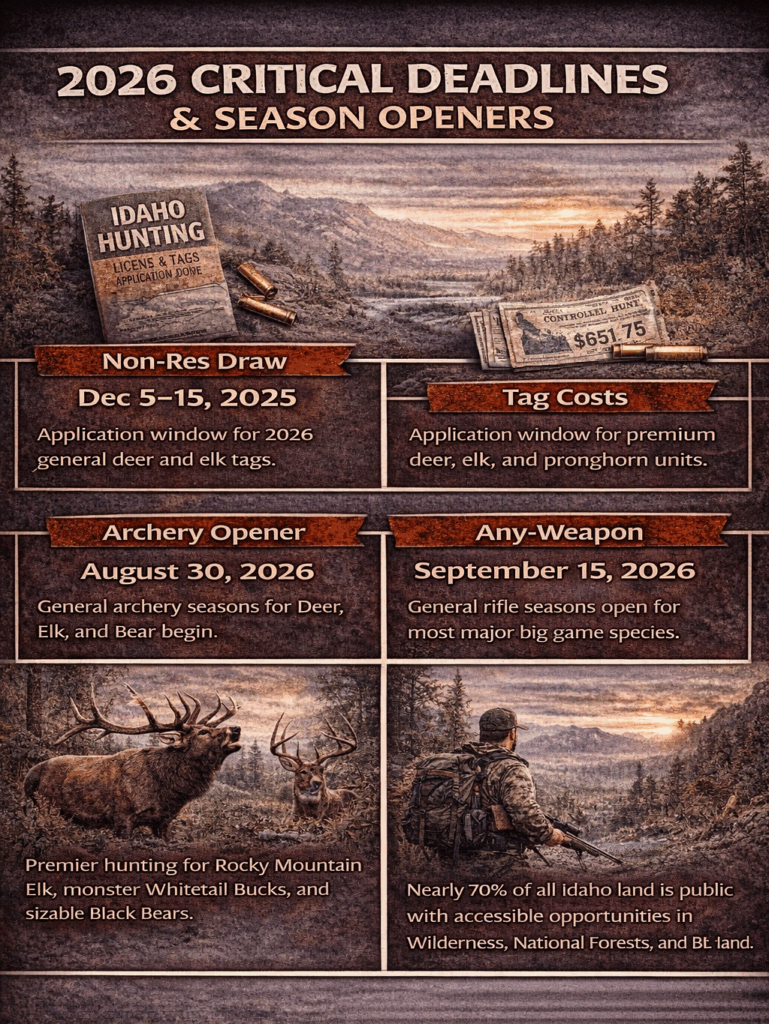
| Deer | Archery | Aug 30 – Dec 31 | Units 8, 11, 13–16, 18, 21, 29, 30 |
| Deer | Any-Weapon | Sept 15 – Nov/Dec | Varies by unit; check local unit split |
| Deer | Muzzleloader | Nov 10 – Dec 1 | Most units; Unit 10A extends to Dec 11 |
| Elk | Archery | Aug 30 – Dec 24 | General seasons in most zones |
| Elk | Any-Weapon | Sept 15 – Oct 31 | Some zones extend to Dec 9 |
| Elk | Muzzleloader | Nov 10 – Dec 14 | General season |
| Moose/Sheep/Goat | Archery | Aug 30 | Controlled hunts only |
| Moose/Sheep/Goat | Any-Weapon | Sept 15 | Controlled hunts only |
| Pronghorn Antelope | Archery | Aug 30 | Controlled hunts only |
| Pronghorn Antelope | Any-Weapon | Sept 15 | Controlled hunts only |
| Black Bear | Fall Season | Aug 30 – Nov 30 | 2026 season |
| Black Bear | Spring Season | April 1 – July 31 | 2027 season |
| Mountain Lion | General | July 1, 2026 – June 30, 2027 | Year-round season |
| Gray Wolf | General | July 1, 2026 – June 30, 2027 | No limit |
| Ducks/Coots | Waterfowl | Oct 2 – Jan 31 | 7 ducks / 25 coots daily |
| Canada Goose | Waterfowl | Oct 9 – Feb 15 | 5 daily, 15 possession |
| Early Teal | Waterfowl | Sept 1 – Sept 9 | 6 daily, 18 possession |
| Mourning Dove | Upland | Sept 1 – Oct 30 | 15 daily, 45 possession |
| Pheasant | Upland | Oct 1 – Jan 31 | 4 roosters (varies by area) |
| Chukar/Partridge/Quail | Upland | Aug 30 – Jan 31 | 8 Partridge, 10 Quail |
| Forest Grouse | Upland | Aug 30 – Jan 31 | 6 aggregate |
| Sandhill Crane | Migratory | Sept 1 – Sept 30 | 2 per day/season |
| Turkey | Spring 2027 | Youth: Apr 8; General: Apr 15 – May 25 | Controlled hunts |
| Rabbit/Hare | Small Game | Year-round | 10 limit (Jackrabbit unlimited) |
| Coyote/Groundhog | Predator | Year-round | No limit |
Don’t Miss These Deadlines:
- Non-resident Deer/Elk Draw: December 5-15, 2025 (Results January 2026)
- Spring Turkey Controlled: February 1 – March 1, 2026
- Big Game Controlled (Deer, Elk, Antelope): May 1 – June 5, 2026
- Super Hunt Drawing: May 31 (First) and August 10 (Second)
Idaho Elk Hunting
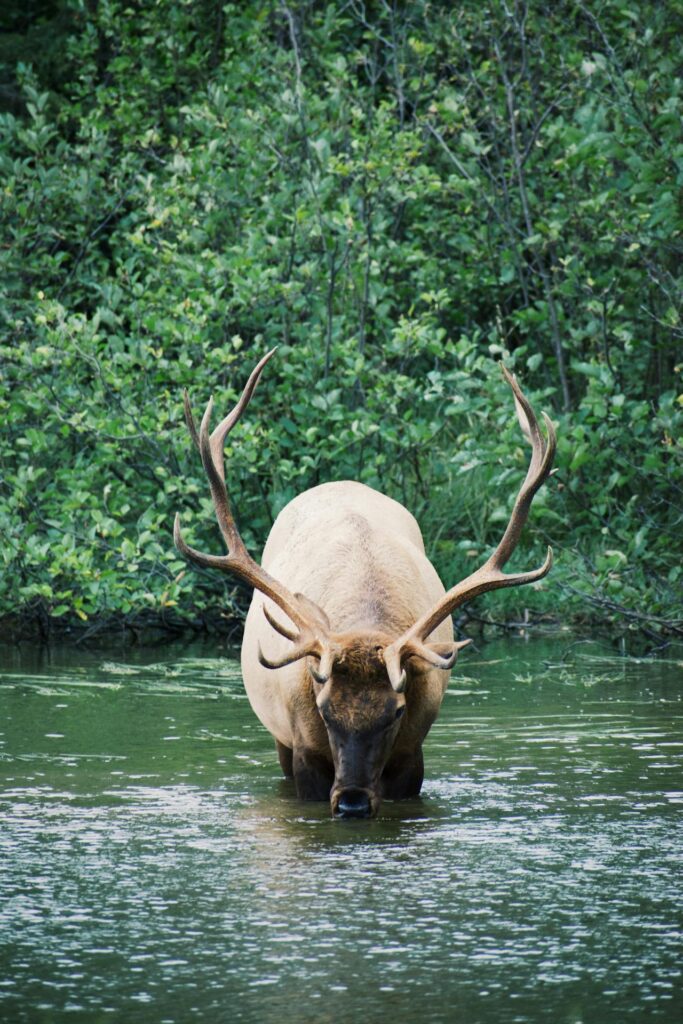
Idaho elk hunting is legendary for good reason. The state produces monster bulls, offers general season opportunities, and has elk populations that can handle hunting pressure. But at $651.75 for a non-resident tag, you’re making a serious investment that demands serious preparation.
The beauty of Idaho elk hunting lies in its variety. You can chase bugles in September during the rut, hunt the late muzzleloader seasons when snow pushes elk to lower elevations, or spend months with a bow chasing pressured bulls. Each approach requires different strategies, different gear, and different expectations.
For hunters wanting the full breakdown on unit selection, draw odds, and hunting strategies, our detailed Idaho elk hunting season guide digs deep into what you need to know.
Idaho Elk Hunting Seasons
Archery Season: August 30 through December 24 gives you nearly four months to hunt elk with a bow. That’s the longest season Idaho offers, and it covers everything from early season bulls still in bachelor groups to late season animals moving toward winter range. Archery permits run $19.50 for residents, $81.75 for non-residents, and you need minimum 40-pound draw weight. Here’s something many hunters don’t know: Crossbows are legal during archery season for any licensed hunter—Idaho doesn’t restrict crossbows to disabled hunters anymore.
Any-Weapon Season: September 15 through October 31 covers the heart of the rut, when bulls are most vocal and aggressive. Some zones extend to December 9, giving you options for late-season hunting when elk behavior changes completely. These are general season dates—your specific unit might be different.
Muzzleloader Season: November 10 through December 14 puts you in the field when other hunters have gone home and elk are settling into winter patterns. You’ll need a separate muzzleloader permit on top of your elk tag, but the hunting can be exceptional if you can handle cold weather and potentially deep snow.
Controlled Hunt Reality: Idaho’s best elk units require controlled hunt tags. Applications run May 1 through June 5, 2026, with fees of $6.25 for residents or $18.00 for non-residents. Draw odds vary wildly by unit and weapon type.
Idaho Elk Hunting Regulations
- Tag Types: A tags get you antlered elk, B tags are for antlerless. Some units offer either-sex opportunities, others restrict you to bulls only. Know what your tag covers before you start hunting.
- Weapon Requirements: Each season type has specific requirements. Archery needs minimum draw weights, rifles have caliber restrictions, muzzleloaders must meet state standards. Check the regs for your weapon.
- Harvest Reporting: You must report your elk harvest. Methods and deadlines vary by unit, so don’t assume anything.
- CWD Sampling: CWD monitoring expanded to additional units, and if hunters hunt deer or elk in designated surveillance zones, they should expect mandatory sampling requirements. It’s not optional if you’re in a surveillance zone.
- Safety: Idaho Fish & Game strongly encourages wearing hunter orange as a voluntary safety measure during rifle seasons. It’s not required, but it’s smart.
Idaho Deer Hunting
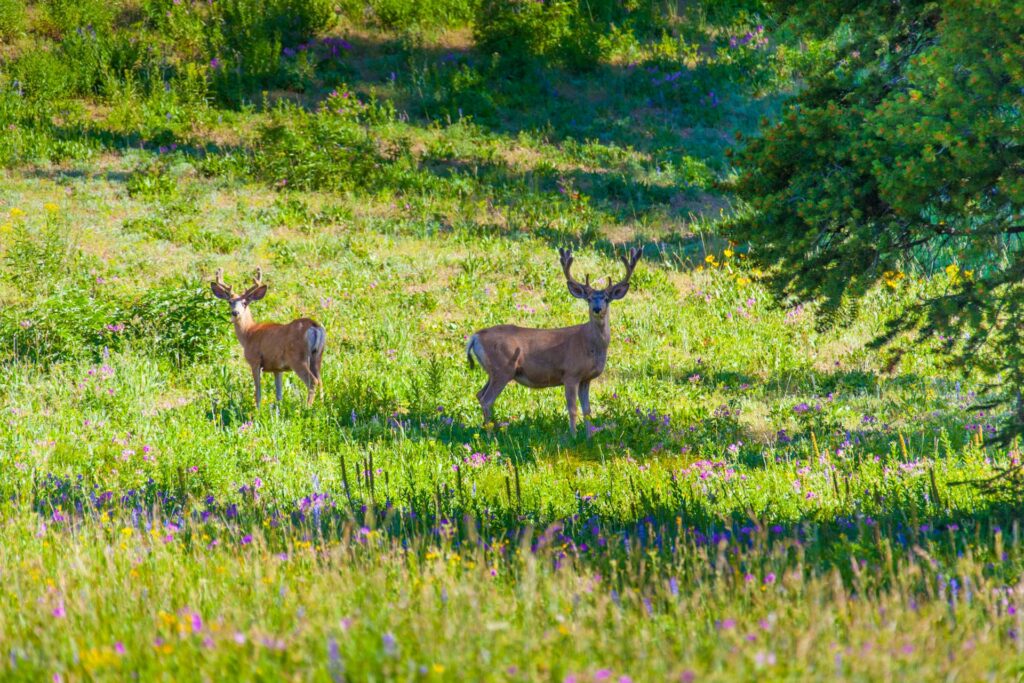
Idaho’s deer hunting offers something for everyone—massive mule deer bucks in the southern mountains and whitetails in the northern forests. With the new non-resident draw system and $351.75 tags, planning becomes critical for out-of-state hunters.
The state’s deer populations have rebounded well from harsh winters in previous decades, and some units now produce trophy-class bucks regularly. But like everything else in Idaho, success depends on knowing which units to hunt and when.
For unit-specific analysis, draw odds, and detailed hunting strategies, check out our comprehensive Idaho deer hunting season guide.
Idaho Deer Hunting Seasons
Archery Season: August 30 through December 31 in Units 8, 11, 13-16, 18, 21, 29, and 30. That’s four months to hunt deer with a bow, covering everything from early season patterns to late migration routes. The extended timeframe lets you hunt multiple phases of deer behavior.
Any-Weapon Season: September 15 through November or December, depending on your unit. End dates vary significantly—some units close in early November while others stay open through December. Check your specific unit split because these date differences can make or break your hunt.
Muzzleloader Season: November 10 through December 1 in most units, with Unit 10A running until December 11. Late-season muzzleloader hunting often coincides with deer moving to winter range, concentrating animals but also bringing weather challenges.
Species Considerations: Your deer tag might cover mule deer, whitetails, or both. Know what you’re hunting and where each species lives in your unit.
Idaho Deer Hunting Regulations
- Antler Restrictions: Some units have point restrictions, others don’t. These can range from any-buck to specific point minimums. Check your unit’s requirements.
- Tag Types: Either-sex versus antlered-only tags affect both your application strategy and how you hunt. Antlerless tags can offer better draw odds in some units.
- Harvest Reporting: Mandatory for all deer harvests, with deadlines and methods that vary by region. Don’t forget this step.
- CWD Monitoring: Chronic Wasting Disease surveillance expanded to more units. If you’re hunting in a surveillance zone, expect mandatory sampling requirements.
- Unit Boundaries: Some unit boundaries changed based on updated land ownership and management needs, GPS coordinates and maps in the regulations booklet reflect current boundaries. Don’t rely on old maps.
Idaho Black Bear Hunting
Black bear hunting in Idaho gives you two seasons and reasonable tag costs compared to other big game. At $13.75 for residents and $231.75 for non-residents, bear tags won’t break the bank, and you can hunt both spring and fall seasons.
Bears offer a different hunting experience than ungulates. They’re smart, have incredible noses, and live in thick country. Success rates aren’t as high as deer or elk, but a successful bear hunt creates memories that last forever.
For detailed information on bear hunting methods, seasonal strategies, and unit selection, our Idaho black bear hunting season guide covers everything you need to know.
New Requirement Alert: All black bear hunters are now required to complete a new bear identification course before hunting. This isn’t optional—complete the course or don’t hunt bears.
Idaho Black Bear Hunting Seasons
Fall Season: August 30 through November 30, 2026. This overlaps with deer and elk seasons, so you can hunt multiple species on the same trip. Fall bears are focused on feeding before winter, making them more predictable around food sources.
Spring Season: April 1 through July 31, 2027. Spring bear hunting offers a dedicated season when other big game seasons are closed. Bears are coming out of hibernation, focused on feeding, and often more active during daylight hours.
Idaho Black Bear Hunting Regulations
- Bear Identification Course: Mandatory before hunting. This new requirement ensures you can identify legal bears and understand current regulations.
- Hunting Methods: Bait and hound regulations vary by unit. Some areas allow these methods, others don’t. Check your specific unit.
- Harvest Reporting: Required for all bear harvests with specific deadlines that vary by region.
- Protection Rules: Sows with cubs are protected statewide. You must be able to identify family groups before shooting.
- Unit-Specific Rules: Season dates and quota limitations can vary by unit. Don’t assume statewide rules apply everywhere.
Idaho Minor Game Species Hunting
Idaho’s small game and bird hunting extends your season well beyond big game opportunities. These hunts offer year-round action, lower costs, and chances to explore different parts of the state.
Idaho Turkey Hunting Information
Spring turkey hunting runs through controlled hunts only. Youth seasons start April 8, general seasons run April 15 through May 25, 2027. Applications are due February 1 through March 1, 2026.
Turkey hunting in Idaho can be challenging—birds are scattered across diverse terrain and hunting pressure affects their behavior. Success requires scouting, understanding turkey behavior, and adapting to local conditions.
For comprehensive turkey hunting information including unit selection and hunting strategies, check our Idaho turkey hunting season guide.
Idaho Waterfowl Hunting Information
Idaho’s waterfowl seasons offer excellent hunting for ducks, geese, and other migratory birds. Duck and coot seasons run October 2 through January 31 with daily limits of 7 ducks and 25 coots. Canada goose seasons extend October 9 through February 15 with 5 daily and 15 possession limits. Early teal seasons provide September 1-9 opportunities with 6 daily and 18 possession limits.
You’ll need the HIP permit ($2.75 residents, $5.00 non-residents) plus the federal duck stamp ($29.00 for hunters 16 and older). The duck stamp requirement applies regardless of residency.
Our Idaho waterfowl hunting season guide provides species-specific information and hunting location details.
Idaho Upland Game Hunting Information
Upland hunting in Idaho runs August 30 through January 31 for most species. Pheasant seasons are October 1 through January 31 with 4-rooster limits. Chukar, partridge, and quail seasons run August 30 through January 31 with 8 partridge and 10 quail limits. Forest grouse follow the same dates with 6-bird aggregate limits.
Mourning dove hunting offers early season action from September 1 through October 30 with 15-bird daily limits. Sandhill crane hunting provides a specialized September 1-30 opportunity with restrictive 2-bird daily and seasonal limits.
For detailed upland hunting information including locations and species identification, our Idaho upland game hunting season guide has you covered.
Idaho Small Game and Predator Hunting Information
Small game hunting includes year-round rabbit and hare seasons with 10-animal daily limits, though jackrabbits have no restrictions. Coyote and groundhog hunting operates year-round with no limits.
These year-round seasons keep you hunting when other seasons close and help with wildlife management objectives. Predator hunting can be especially productive during winter months.
Where to Hunt in Idaho
Idaho covers over 83,000 square miles of incredibly diverse terrain. From desert sagebrush to alpine peaks, the state offers habitat for every North American game species. The challenge isn’t finding places to hunt—it’s finding the right places.
Best Public Lands
Idaho’s public lands provide millions of acres of hunting access, but not all public land is created equal.
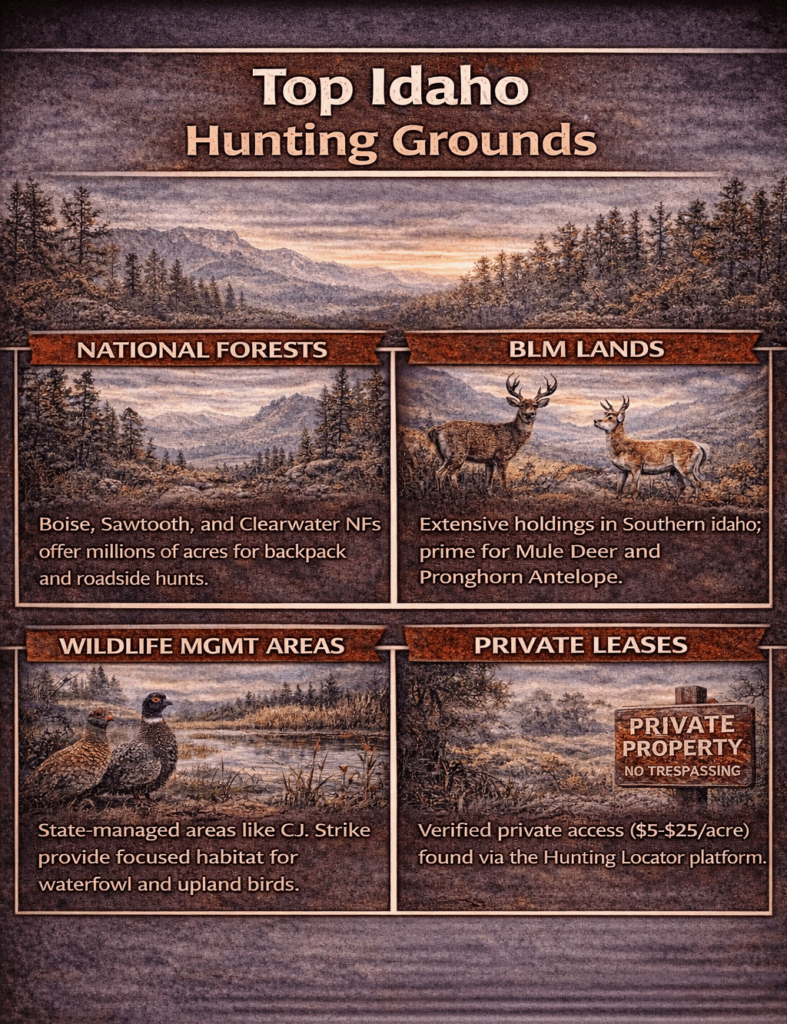
- National Forest Lands: Boise, Payette, Sawtooth, Salmon-Challis, Idaho Panhandle, and Clearwater National Forests offer diverse hunting from desert foothills to high alpine basins. Access varies from roadside hunting to multi-day backpack adventures.
- Bureau of Land Management (BLM): Extensive BLM holdings throughout southern Idaho provide excellent hunting for mule deer, elk, pronghorn, and upland birds. Many areas offer vehicle access and established camping.
- Idaho Department of Fish and Game Wildlife Management Areas (WMAs): State-managed areas designed specifically for wildlife habitat and hunting access. Popular destinations include C.J. Strike, Hagerman, and Mud Lake WMAs.
- State Endowment Lands: Idaho Department of Lands manages state properties that provide hunting access, though some require access permits or have use restrictions.
Guided Hunts
Idaho’s outfitting industry offers professional hunting services across all major game species. Licensed outfitters provide everything from fully guided hunts with meals and lodging to drop-camp services for self-sufficient hunters.
Expect to pay $3,000-$8,000 for guided elk and deer hunts, with premium hunts and specialty species costing more. When selecting an outfitter, verify current licensing through Idaho Outfitters and Guides Licensing Board, check recent client references, and understand exactly what’s included in quoted prices.
Private Land Hunting
Private land hunting offers reduced pressure, potentially higher game densities, and more controlled hunting experiences. Finding places to hunt on private land is becoming more of a challenge, making reliable access platforms increasingly valuable.
Leasing Private Land: Private hunting leases in Idaho vary widely in cost and terms. Annual leases typically range from $5-$25 per acre depending on location, game populations, and amenities.
Purchasing Private Land: For long-term investment, purchasing hunting property provides permanent access and management control. Rural Idaho hunting properties typically range from $2,000-$10,000 per acre depending on location, improvements, and habitat quality.
Hunting Locator provides a comprehensive platform connecting hunters with verified landowners offering lease and purchase opportunities. Our database includes thousands of Idaho properties with detailed information about acreage, game species, access terms, and pricing.
Browse available Idaho hunting leases to discover private land opportunities that match your hunting preferences, budget, and location requirements.
FAQ
When is the deadline for non-resident deer and elk tag applications in Idaho?
December 5-15, 2025, with results announced in January 2026. This is a major change for 2026—beginning for the 2026 season, nonresident general season deer and elk tags will be issued via an application and draw process. You must buy the $185 non-resident hunting license before applying, and that license is non-refundable even if you don’t draw.
How much do non-resident hunting licenses and tags cost in Idaho?
Non-resident costs are significantly higher than resident fees. Basic hunting license costs $185, elk tags are $651.75, deer tags are $351.75, and premium species like moose, sheep, and goat tags hit $2,626.75. Additional charges will be assessed for online and phone applications, including a 3% surcharge of the total application amount plus a minimal transaction fee.
What are the main differences between Idaho’s archery, rifle, and muzzleloader seasons?
Archery seasons run longest (August 30 – December 31 for deer in certain units), require minimum 40-pound draw weight, and need a separate $81.75 archery permit for non-residents. Any-weapon seasons are shorter but allow rifles and other firearms. Muzzleloader seasons run latest (November-December) and require separate permits. Crossbows are legal during archery season for any licensed hunter—Idaho doesn’t restrict crossbows to disabled hunters anymore.
Do I need to complete any courses before hunting in Idaho?
Yes, specific activities require mandatory education. All black bear hunters are now required to complete a new bear identification course before hunting. First-time hunters need hunter education certification, and some controlled hunts may have additional requirements.
What should I know about Chronic Wasting Disease (CWD) requirements?
CWD monitoring expanded to additional units, and if hunters hunt deer or elk in designated surveillance zones, they should expect mandatory sampling requirements. This helps Fish and Game track disease prevalence and make management decisions. Check whether your hunting unit falls within a CWD surveillance zone—it affects your harvest procedures.
How do I find the best places to hunt in Idaho?
Idaho offers extensive public land hunting on National Forest, BLM, and state lands. For private land access, Hunting Locator provides a comprehensive platform for finding verified private land leases and purchase opportunities throughout Idaho.
The Final Shot
Idaho’s 2026-2027 hunting seasons represent a turning point, especially for non-resident hunters facing the new draw system that fundamentally changes how you access general season deer and elk tags. The days of showing up and buying tags over the counter are over for out-of-state hunters.
Success in Idaho now requires more planning, better timing, and smarter decisions about where you hunt. The regulations are complex, the costs are high, and the competition for tags is increasing. But the hunting opportunities remain world-class for those who do their homework.
The key to success isn’t just understanding regulations and seasons—it’s securing access to quality hunting areas where your investment in licenses, tags, and time pays off. Public lands offer extensive opportunities, but private land access can transform your hunting experience from crowded and competitive to productive and enjoyable.
For hunters ready to discover private land opportunities that can elevate your Idaho hunting experience, Hunting Locator connects you with verified landowners offering lease and purchase opportunities across Idaho’s diverse hunting landscape.


