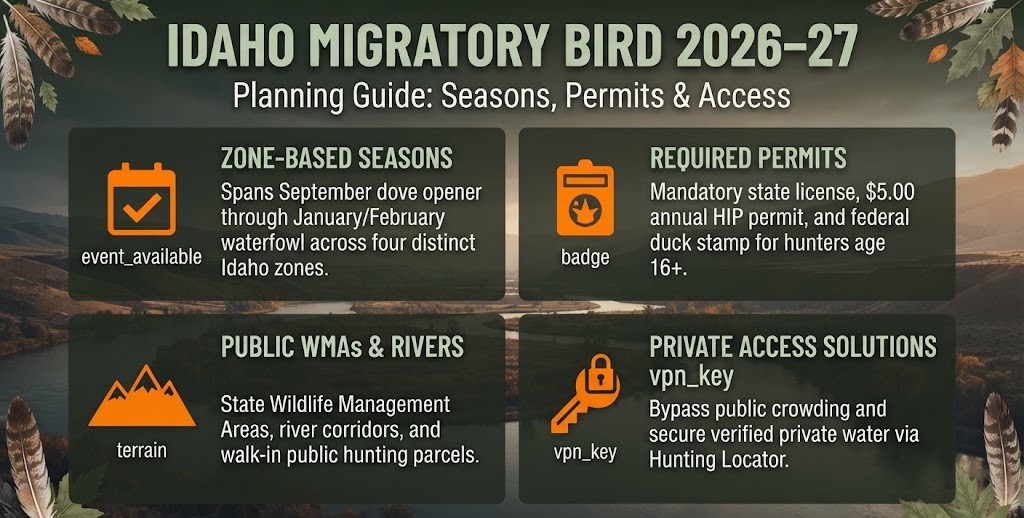
This Idaho migratory bird guide pulls together the confirmed 2026–2027 dates, bag limits, and access options for Idaho’s migratory bird seasons.
Idaho Fish and Game’s 2026–27 migratory game bird booklet is published and available online now, and this guide is built around that framework. Whether you’re a longtime Idaho resident or planning your first out-of-state trip, it covers what you need to get from planning to opening day. For the bigger picture beyond migratory birds, our Idaho hunting season guide covers every species and season the state offers.
Here’s what you’ll find below:
- Confirmed 2026–2027 season dates by species and waterfowl zone (Zone 1–4)
- The license, HIP permit, and federal duck stamp requirements every hunter needs
- Where to hunt — public wildlife management areas, private leases, and guided options
Quick Overview
Migratory birds are managed under international treaties and federal frameworks rather than state regulations alone. Idaho splits the state into four waterfowl zones, each with its own calendar, so “duck season” isn’t a single date range — it depends on where you’re hunting.
Here’s the master summary for the 2026–2027 season:
| Species | Season Dates (2026–2027) | Daily Bag Limit | Notes |
|---|---|---|---|
| Mourning/White-winged Doves | Sept 1 – Oct 30, 2026 (statewide) | Set by IDFG | Migratory, not upland game |
| Ducks, Mergansers, Coots, Snipe | Zone-based (see full breakdown below) | 7 ducks aggregate; 25 coots; 8 snipe | Scaup dates vary by zone |
| White-fronted Geese | Set by IDFG | $6 | Controlled by federal framework |
| Youth/Vet/Military Days | Sept 26–27, 2026 (statewide) | Same as regular season | Special early access |
Migratory bird rules can change mid-season, and corrections are sometimes issued after publication. Confirm current dates and limits through the Idaho Fish and Game migratory bird hunting page before heading out.
Beyond the dates, every migratory bird hunter in Idaho needs to clear the same legal requirements:
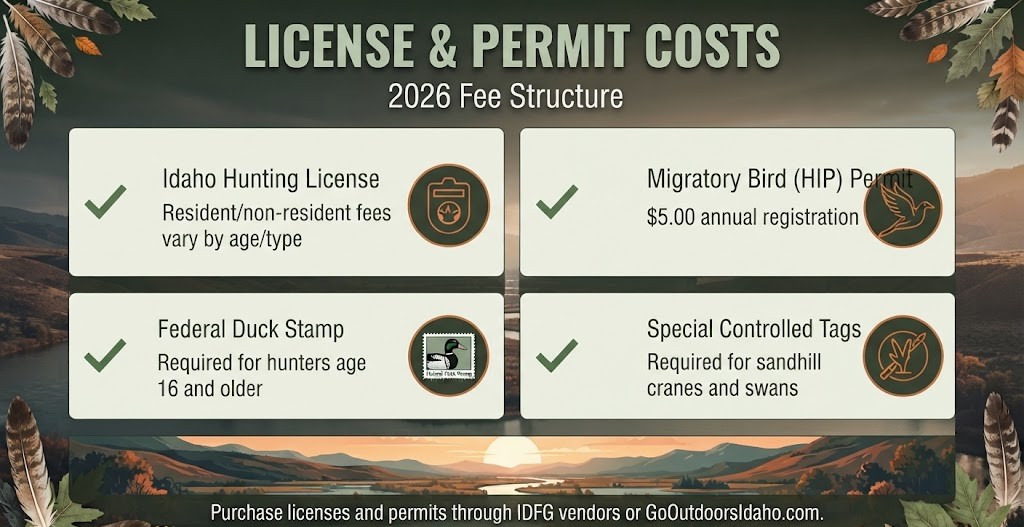
- Idaho Hunting License — required for all hunters; resident and non-resident fees vary by age and license type
- Migratory Bird (HIP) Permit — $5.00, required annually for anyone hunting waterfowl, doves, or cranes
- Federal Migratory Bird (Duck) Stamp — required for hunters age 16 and older
- Special Tags — required if you’re hunting controlled species like sandhill cranes or swans
We cover this in more depth in our companion piece on Idaho migratory bird hunting.
Idaho Migratory Bird Hunting Seasons
Idaho’s migratory bird seasons break into three main groups: the early dove season, the zone-based waterfowl seasons, and geese and controlled species. All dates below come from the confirmed 2026–2027 framework, but as always, check with Idaho Fish and Game for final verification before you load up the truck.
Dove Season (Early Season)
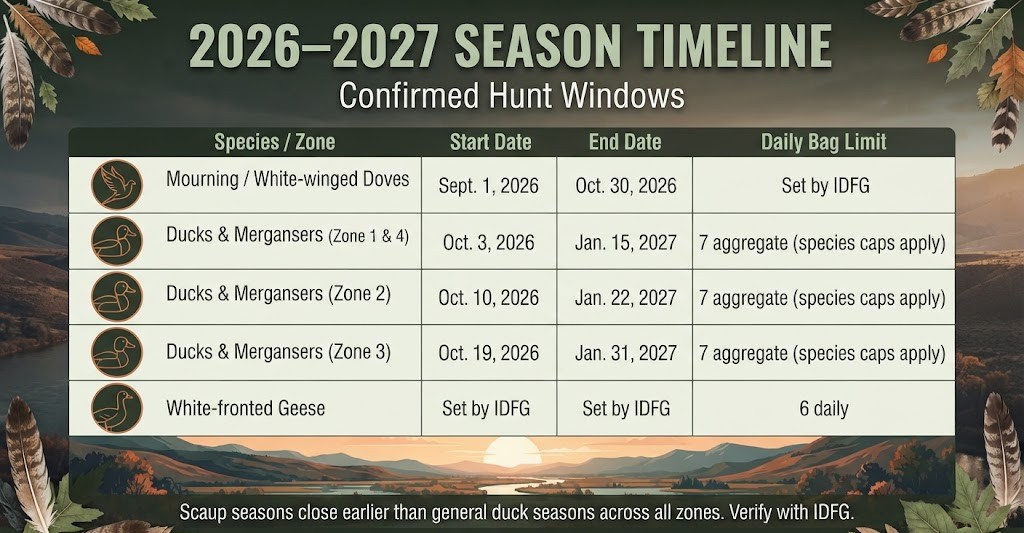
Mourning and white-winged dove season runs September 1 through October 30, 2026, statewide. Doves are classified as migratory birds, not upland game, which means their season structure and legal framework differ from birds like pheasant or chukar, even though hunters often use similar tactics for both.
Dove season works as a natural warm-up before the duck zones open. It’s accessible, doesn’t require the gear investment of a full waterfowl setup, and gives newer hunters a low-stakes way to get comfortable in the field before the bigger push in October.
Duck, Merganser, Coot & Snipe Seasons by Zone
Idaho splits the state into four waterfowl zones, and each one runs on its own calendar for the 2026–2027 season:
| Zone | Season Dates | Scaup Season |
|---|---|---|
| Zone 1 | Oct 3, 2026 – Jan 15, 2027 | Oct 3 – Dec 27, 2026 |
| Zone 2 | Oct 10, 2026 – Jan 22, 2027 | Oct 29, 2026 – Jan 22, 2027 |
| Zone 3 | Oct 19, 2026 – Jan 31, 2027 | Nov 7, 2026 – Jan 31, 2027 |
| Zone 4 | Oct 3, 2026 – Jan 15, 2027 | Oct 3 – Dec 27, 2026 |
Scaup close earlier than the general duck season in every zone. Scaup populations are managed more conservatively under federal guidelines, so the Commission builds in a shorter window for that species even while the broader duck season continues.
Bag limits follow a similar layered structure:
| Species | Daily Limit | Within-Aggregate Restrictions |
|---|---|---|
| Ducks & Mergansers | 7 (aggregate) | Max 2 female mallards, 2 redheads, 2 scaup, 3 pintails, 2 canvasbacks |
| Coots | $25.00 | — |
| Wilson’s Snipe | $8.00 | — |
| White-fronted Geese | $6.00 | — |
The word “aggregate” trips up a lot of newer hunters. In plain terms: your 7-duck daily limit is a total across all duck species combined, but within that total, you can’t exceed the caps for certain species. Shoot your 2 female mallards and 2 scaup, and the rest of your 7 has to come from other legal species.
Idaho’s seasons are set within U.S. Fish and Wildlife Service frameworks and shaped by international treaties, which is part of why the Commission has less flexibility with migratory birds than with resident game like elk or deer. For more on duck-specific strategy and zone nuances, see our dedicated breakdown on Idaho waterfowl hunting season.
Youth, Veteran & Military Waterfowl Days: September 26–27, 2026 (statewide). Daily limits match the regular season. At least one licensed adult (18 or older) must accompany youth hunters in the field at all times, and accompanying adults are not permitted to hunt during these days.
Geese & Controlled Species
White-fronted geese carry a daily bag limit of 6 for the 2026–2027 season. Controlled species like sandhill cranes and swans require special tags rather than falling under the general season framework.
These controlled-species tags typically go on sale through Idaho Fish and Game on fixed dates via GoOutdoorsIdaho.com and licensed vendors, often first-come, first-served. Availability and application windows can shift year to year, so check directly with Idaho Fish and Game for current tag numbers and sale dates before planning a hunt around cranes or swans.
Idaho Migratory Bird Licenses and Permits
Before opening day, every migratory bird hunter in Idaho needs a hunting license, the HIP permit, and — for hunters 16 and older — the federal duck stamp. Here’s what you need and how to get it.
Idaho Hunting Licenses
License fees vary based on age, residency, and license type, and those figures can shift from year to year. Full, current fee details are always listed on the official migratory game bird rules page maintained by Idaho Fish and Game.
Idaho Hunting Permits
Getting fully permitted works as a straightforward step-by-step process:
- Complete hunter education if required — Idaho Fish and Game determines who needs this based on age and hunting history; check their requirements before applying for a license.
- Purchase your Idaho hunting license — available online, by phone, or through a licensed vendor.
- Add the Migratory Bird HIP Permit — $5.00 annually, purchased alongside your license.
- Buy the Federal Duck Stamp — required if you’re 16 or older and planning to hunt waterfowl.
- Secure special tags — necessary if you’re pursuing sandhill cranes or swans this season.
The Harvest Information Program (HIP) permit is a required annual registration for anyone hunting waterfowl, doves, or cranes. It’s how state and federal agencies track harvest data across the country, which shapes future season-setting decisions.
Non-residents follow the same permit stack as Idaho residents — there’s no separate process beyond purchasing the non-resident version of the hunting license. If quotas or caps apply to non-resident licenses in a given year, Idaho Fish and Game publishes those details directly, so check GoOutdoorsIdaho.com or the IDFG licensing page before finalizing travel plans.
Idaho Migratory Bird Where to Hunt
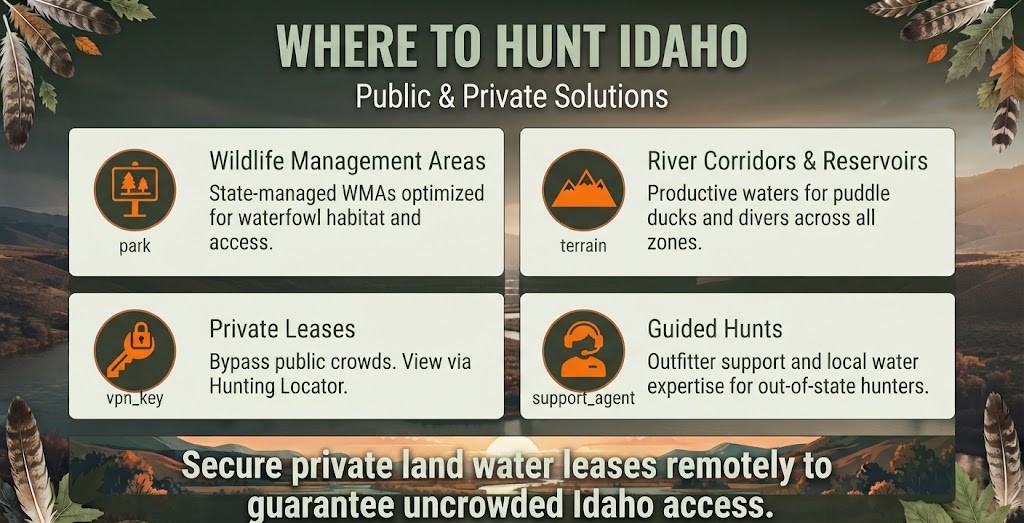
Once your paperwork is squared away, the next question is where you’ll actually hunt. Idaho hunters generally choose from three paths — public land, private leases, and guided hunts — and each fits a different kind of season plan.
Best Public Lands
Idaho offers substantial public access for waterfowl hunters, including wildlife management areas, river corridors, reservoirs, and scattered walk-in areas across the state. These spots remain a low-cost entry point, especially for hunters just getting started or those without a private lease lined up yet.
- Wildlife Management Areas (WMAs) — managed specifically with waterfowl habitat and hunter access in mind
- River corridors and reservoirs — often productive for both puddle ducks and divers depending on the zone
- Walk-in public hunting areas — scattered throughout the state and worth scouting ahead of season
- Public water access points — useful for hunters working a jump-shooting or mobile setup
Any private land, regardless of how promising it looks on a map, requires written permission before you can legally hunt it. That’s why more hunters are turning to structured leasing platforms instead of cold-knocking on doors.
Private Land Hunting with Hunting Locator
Public land comes with trade-offs — more hunting pressure, less predictable birds, and a spot that might be packed by opening weekend. Private land access addresses those problems directly: less pressure, better bird numbers, and a spot you can count on returning to season after season.
Idaho hunters generally have two private-land paths available: leasing land seasonally, or purchasing property outright for long-term access. Leasing tends to be the faster, lower-commitment route, especially for hunters who want dedicated water without the overhead of ownership.
That’s where the Hunting Locator platform comes in. Hunting Locator brings hunters and landowners together in one place, so you can secure access without cold-calling farmers or losing your spot to someone else. Browse thousands of listings nationwide, search by state, game type, or acreage, and connect directly with landowners who are ready to lease or sell.
For Idaho specifically, explore current Idaho hunting land for lease listings and find water that fits your zone, your budget, and your season plan. This matters for non-residents too — you can review and lock in a lease sight-unseen from out of state, so your travel budget goes toward hunting instead of scrambling for access once you arrive.
Browse current Idaho leases and find water near you before it gets claimed.
Guided Hunts
If leasing or public land isn’t the right fit this season, a guided hunt is a legitimate option, particularly for hunters who want local expertise without the upfront work of scouting a new zone.
- Best for non-residents — a guide who already knows the zones and the water saves you from burning your travel budget on a slow hunt.
- Best for first-timers — you’ll learn calling, decoy setups, and blind placement from someone who’s already put in the time on that water.
- What to look for — a licensed outfitter, transparent pricing up front, and access to quality private water rather than crowded public spots.
A guided hunt doesn’t replace your own paperwork — you’re still responsible for carrying your Idaho hunting license, HIP permit, and federal duck stamp regardless of who’s guiding the trip. For non-residents, a guided hunt paired with a pre-booked lease is often the most reliable way to plan an Idaho waterfowl trip from out of state.
Idaho Migratory Bird Hunting Tips
These field-tested tips can make the difference between a quiet morning and a full strap by mid-morning.
- Scout before you shoot — Identify feeding, resting, and roosting areas ahead of your hunt, and watch flight patterns closely to pinpoint the flyways birds are actually using.
- Match the zone calendar — Time your hunts to peak migration windows; northern and eastern Idaho tend to peak in October and November, while southern zones often run better later in the season.
- Decoys and concealment win — Hunting over decoys with solid blind concealment remains the classic, productive setup, while jump-shooting offers a low-cost, beginner-friendly option on public water.
- Know your species ID — With aggregate limits and species-specific caps like 2 scaup and 3 pintails, correct identification in the field keeps you both ethical and legal.
- Gear up before opening day — Waders, calls, decoys, a solid blind bag, and non-toxic shot form the core kit every waterfowl hunter needs before the first zone opens. Everything from decoys to blind bags is available at the Hunting Locator store.
Doves fall under the migratory bird umbrella rather than upland game. If you’re planning to hunt pheasant or chukar later in the season, our guide to Idaho upland game season covers those species and rules separately.
More Resources from Hunting Locator
Planning more than migratory birds this season? Here’s everything in one place.
Migratory bird deep dives:
- Idaho migratory bird hunting — the full companion breakdown on regulations and strategy
- Idaho waterfowl season — duck- and goose-focused detail beyond this guide
- Idaho upland game hunting — pheasant, chukar, and other resident bird species
Plan your access & gear:
- browse Idaho leases — private land access for your next hunt
- Hunting Locator store — gear for every hunt, from waders to calls
- explore Hunting Locator — the full platform connecting hunters and landowners nationwide
- Idaho hunting season guide — every Idaho season in one place
Planning other Idaho hunts this season:
- Idaho elk season — rut timing and tag information
- Idaho deer season — whitetail and mule deer dates
- Idaho antelope season — pronghorn planning essentials
- Idaho turkey season — spring and fall gobbler info
- Idaho black bear season — spring and fall bear dates
- Idaho mountain lion season — cougar hunting information
- Idaho coyote hunting — year-round predator hunting details
- Idaho moose season — controlled-hunt planning
- Idaho bighorn sheep season — once-in-a-lifetime tag info
- Idaho mountain goat season — high-country hunt planning
Frequently Asked Questions
What are the Idaho duck season dates for 2026–2027?
Zone 1 and Zone 4 run October 3, 2026 through January 15, 2027. Zone 2 runs October 10, 2026 through January 22, 2027. Zone 3 runs October 19, 2026 through January 31, 2027. Scaup seasons close earlier in every zone, so double-check your zone’s scaup dates and confirm current details with Idaho Fish and Game before you hunt.
What is an Idaho HIP permit and do I need one?
The Migratory Bird (HIP) Permit is a required annual registration for anyone hunting waterfowl, doves, or cranes in Idaho. It costs $5.00 and is purchased alongside your hunting license. Idaho Fish and Game uses this data to track harvest information across the state, so every migratory bird hunter needs one.
Do non-residents need a federal duck stamp to hunt waterfowl in Idaho?
Yes. Every waterfowl hunter age 16 or older needs a Federal Migratory Bird (Duck) Stamp regardless of residency, in addition to an Idaho hunting license and the HIP permit. Non-residents follow the same permit stack as residents — there’s no separate federal requirement based on where you live.
When are the Idaho youth, veteran, and military waterfowl days in 2026?
These special days run September 26–27, 2026, statewide. Daily bag limits match the regular season, but a licensed adult (18 or older) must accompany youth hunters in the field at all times, and accompanying adults are not permitted to hunt during this window.
Are doves considered migratory birds in Idaho?
Yes — mourning and white-winged doves are classified as migratory birds, not upland game, so their season structure and rules differ from species like pheasant or chukar. Dove season runs September 1 through October 30, 2026. For upland species specifically, see our Idaho upland game hunting guide.
How can non-residents secure hunting land in Idaho before they travel?
Non-residents can pre-book private Idaho hunting leases through Hunting Locator sight-unseen, locking in water before setting foot in the state. Guided hunts are another reliable option for out-of-state hunters who want local expertise paired with dependable access.
The Final Shot
Planning a successful Idaho migratory bird season comes down to three things: knowing your zone’s confirmed dates, clearing the license, HIP permit, and duck stamp requirements, and having a real plan for where you’ll hunt. This guide was built to give you all three in one place.
Before you head out, take one more pass through the current rules at the Idaho Fish and Game rules portal. Regulations can shift mid-season, and a quick check keeps you legal on opening morning.
Find your Idaho lease today, or explore Hunting Locator to see everything the platform offers hunters planning their next season.


