This Illinois migratory bird guide pulls those numbers together, sourced from IDNR (dnr.illinois.gov) and Hunt Illinois (huntillinois.org), and pairs them with practical access resources from Hunting Locator. Whether you’re new to Illinois migratory birds or you’ve hunted the state for twenty seasons, here’s what you’ll get out of it:
- Zone-by-zone season dates and bag limits for ducks, geese, doves, and more
- License, stamp, and HIP requirements explained for residents and non-residents
- Where to hunt: public lands, private leases through Hunting Locator, and guided options
Here’s the full picture before we get into specifics.

Quick Overview: 2026 Illinois Migratory Bird Seasons at a Glance
Illinois splits migratory bird hunting into four zones — North, Central, South Central, and South — and your season dates depend on which one you’re hunting. Dates and fees can shift year to year, so confirm current details with IDNR before you head out.
The table below covers the core numbers for 2026: species, season type, dates, and daily bag limits. For more regulatory detail, see the Illinois migratory bird hunting overview.
| Species | Season Type | Dates | Daily Bag Limit | Notes |
|---|---|---|---|---|
| Doves (Mourning/White-winged) | Split season | Sept. 1 – Nov. 14 and Dec. 26 – Jan. 9 | 15 | Season opener; kicks off Illinois migratory bird hunting |
| Ducks, Mergansers & Coots | Zone-based | Vary by zone — mid-to-late Oct. openers in northern/central zones, late Nov. in southern zones | Ducks: 6 | Species restrictions apply to mallards, wood ducks, and canvasbacks |
| Canada Geese | Zone-based | Concurrent with/following duck zone segments, through Jan. 31 | 3 | Runs alongside regular duck season windows |
| White-Fronted Geese | Zone-based | Through Jan. 31 | Confirm with IDNR | Follows duck zone timing |
| Snow/Ross’s Geese | Zone-based | Through Jan. 31 | 20 | No possession limit |
| Mergansers | Zone-based | Concurrent with duck season | 5 | Max 2 hooded mergansers |
| Rails | Zone-based | Confirm with IDNR | 25 | Niche species, lower hunting pressure |
| Wilson’s Snipe | Zone-based | Confirm with IDNR | 8 | Often overlooked opportunity |
Before heading out, you need the legal side handled. Here’s the short version of what every migratory bird hunter needs:
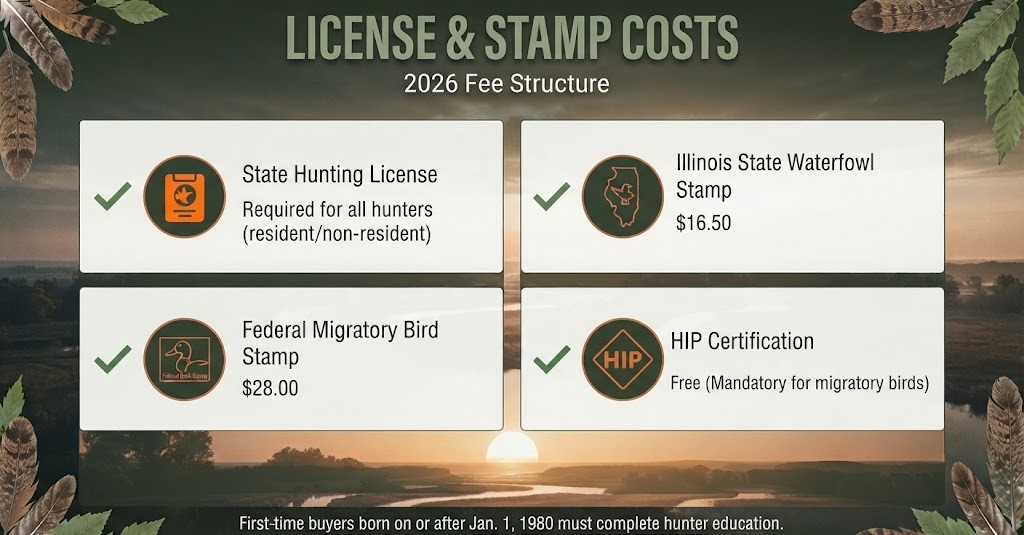
- State Hunting License — required for all hunters, resident and non-resident
- Illinois State Migratory Waterfowl Stamp — $16.50
- Federal Migratory Bird Hunting Stamp — $28.00
- HIP Certification — free, and required for every migratory bird hunter
The licenses section below breaks down how these fit together and in what order to get them. Keep reading for the full zone-by-zone breakdown on Illinois duck season 2026, Canada goose season, and everything in between.
Illinois Duck, Goose & Dove Hunting Seasons
Because Illinois runs zone-based seasons, your exact dates depend on where in the state you’re hunting. Start by identifying which zone — North, Central, South Central, or South — covers your hunting location, since that determines everything else about your timing. For more on how these zones interact with duck and goose seasons, see the detailed Illinois waterfowl season breakdown.

Duck, Merganser & Coot Season
Illinois duck season 2026 opens mid-to-late October in the northern and central zones, with southern zones typically opening in late November. The daily duck limit is 6 birds, with specific restrictions on mallards, wood ducks, and canvasbacks, so know your species before you shoot. Mergansers carry their own limit: 5 daily, with a maximum of 2 hooded mergansers included in that total.
Exact zone opening dates can shift slightly year to year — confirm your specific zone’s dates with IDNR before you finalize travel or lease plans, since zone timing is the detail most likely to change.
Canada & White-Fronted Goose Season
Canada and white-fronted geese run concurrently with, or closely following, the respective duck zone segments, with seasons extending through January 31. The Canada goose daily limit is 3 birds during regular seasons, enough to reward a well-scouted field or flooded timber setup without requiring a huge harvest. If you already know your zone’s duck dates, you’re most of the way to knowing your goose window too, since the two seasons are built to overlap.
Snow & Ross’s Goose Season
Snow and Ross’s geese carry one of the more generous limits in Illinois: 20 birds daily, with no possession limit. That makes the species popular with hunters looking for higher-volume shooting, especially later in the season when snow goose numbers build along the state’s river corridors.
Dove Season (Mourning & White-Winged)
Dove season kicks off Illinois migratory bird hunting each year, running Sept. 1 – Nov. 14 and again Dec. 26 – Jan. 9, with a 15-bird daily limit. It’s also one of the more beginner-friendly seasons here — no zone confusion, and species ID is fairly straightforward.
One note: Eurasian collared-doves don’t count toward your daily limit.
Illinois Migratory Bird Licenses & Permits
The paperwork looks like a lot at first glance, but it’s a short checklist once it’s laid out. Here’s everything you need, from your base hunting license to HIP certification.
Illinois Hunting Licenses
Every migratory bird hunter in Illinois needs a foundational set of licenses and stamps:
| License/Stamp | Who Needs It | Cost/Notes |
|---|---|---|
| State Hunting License | All hunters (resident and non-resident) | Required; resident and non-resident pricing differs — verify current cost with IDNR |
| Illinois State Migratory Waterfowl Stamp | Waterfowl hunters | $16.50 |
| Federal Migratory Bird Hunting Stamp | Waterfowl hunters | $28 |
| HIP Certification | All migratory bird hunters | Free |
Non-residents need this same core set — state hunting license, both waterfowl stamps, and HIP registration. Non-resident waterfowl stamp requirements confirm that most of these can be purchased online, so you can get squared away before crossing state lines.
Costs above reflect the most current figures available, but pricing can shift. Verify current IDNR pricing before you buy. Licenses and stamps are typically purchased online through IDNR or from licensed vendors statewide. Note that your federal duck stamp must be signed and carried on you while hunting, per federal law.
Illinois Hunting Permits, Stamps & HIP
HIP — the Harvest Information Program — is a free HIP registration requirement that applies to every migratory bird hunter in Illinois, from dove hunters to waterfowl hunters. It’s required annually. You can register when you purchase your license or by calling the state’s HIP line directly.
First-time Illinois license buyers have one more step: hunters born on or after January 1, 1980 must complete the Illinois Hunter Education course before their first license purchase. Here’s the full sequence:
- Complete Hunter Education (if required) — mandatory for first-time buyers born on or after Jan. 1, 1980
- Purchase your State Hunting License — required for all hunters
- Add the State Migratory Waterfowl Stamp — $16.50, required for waterfowl hunters
- Add the Federal Migratory Bird Hunting Stamp — $28.00, required for waterfowl hunters
- Register for HIP Certification — free, required for all migratory bird hunters
Follow that order and you’ll be legally covered before opening morning, regardless of species.
Where to Hunt Migratory Birds in Illinois
Knowing your zone and dates doesn’t help much without a legal, productive place to hunt. Access is often the real bottleneck, and Illinois offers a range of options, from public wildlife areas to private leases you can secure yourself.
Best Public Lands for Illinois Waterfowl
Illinois offers strong public hunting options across its river valleys, floodplain wetlands, reservoirs, and marshes. Some of the best-known destinations:
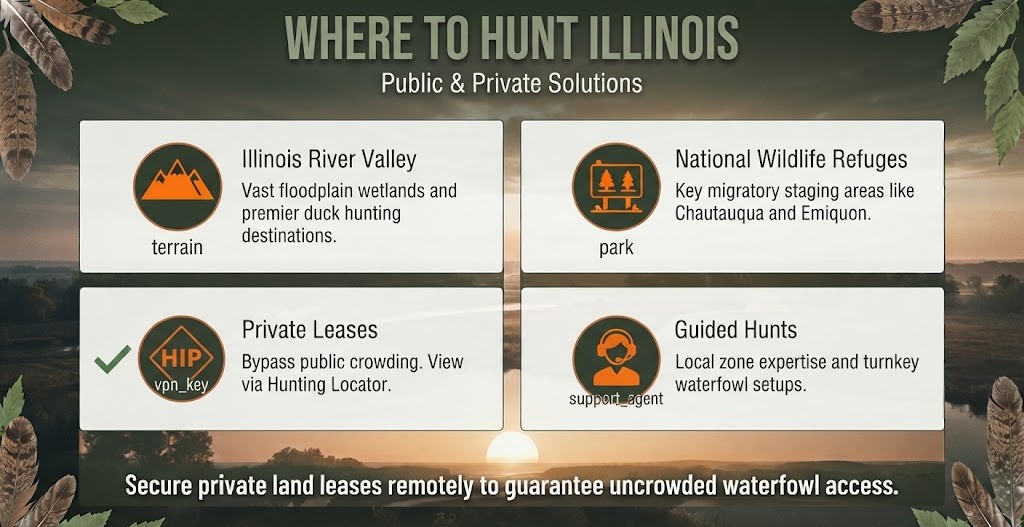
- Illinois River Valley — one of the state’s top duck hunting destinations, known for vast floodplain wetlands
- Chautauqua National Wildlife Refuge — a key staging area for migratory ducks, particularly mallards, as noted in the top Illinois duck destinations
- Emiquon Preserve — another major staging ground along the Illinois River corridor
- Mississippi River wetlands and state reservoirs — scattered public access points throughout the state offering solid waterfowl opportunity
Public land access is real, but so is the competition. Popular spots draw crowds, especially on weekends and during peak migration pushes, which is why many hunters start looking at private access.
Private Land Hunting with Hunting Locator
Leasing or buying private hunting land addresses the biggest frustrations with public access: fewer other hunters, more consistency season over season, and full control over blind setup, decoy spread, and hunting pressure. Whether you’re a resident tired of competing for a spot on public water or a non-resident who wants access locked in before booking a flight, private land changes the calculation.
Hunting Locator connects hunters directly with landowners across Illinois who are ready to lease or sell hunting access, instead of piecing together classifieds or word-of-mouth tips. Browse Illinois leases, connect directly with landowners, and secure your spot through one searchable platform.
Browse Illinois hunting leases and compare properties by acreage, game type, and location. Leasing private land in Illinois carries no residency barrier — non-residents can lease the same ground as lifelong Illinois hunters, provided they find the right match.
Guided Waterfowl Hunts
For hunters who want expert guidance rather than DIY scouting, guided waterfowl hunts are worth considering. This route tends to work best for:
- Non-residents unfamiliar with Illinois zones — a guide already knows the local migration patterns and legal boundaries
- Novice hunters wanting mentorship — hands-on instruction speeds up the learning curve
- Time-strapped hunters — a guide’s local knowledge fills the gap if you can’t spend days scouting
Pricing and booking timelines vary by outfitter and region, so contact any operation you’re considering for current rates and availability. Guided hunts can be a low-risk way to learn Illinois waterfowl hunting before committing to your own lease or gear setup.
Illinois Migratory Bird Hunting Tips
A little preparation goes a long way. Here are the fundamentals that consistently separate a slow day from a limit day:
- Hunt the Food: Locate feeding areas first — doves favor sunflowers and wheat fields, and the best action happens where food meets cover, especially during early morning and evening hours.
- Match Your Zone to the Migration: Rainfall and weather drive how long birds stay in Illinois before pushing further south, so track conditions and time your hunts around migration pushes rather than the calendar alone.
- Dial In Your Shotgun & Shot: A 20-gauge is a popular, manageable choice for dove hunting, and non-toxic shot like steel #7 or #8 is required in many areas — make sure your loads match the regulations for your hunt.
- Know Your Birds: Learn species identification before opening day to stay legal — mourning doves show a soft gray-brown body with a pointed, white-bordered tail, and confusing them with a protected species can cost you.
- Respect Shooting Hours: Dove hunting runs from legal dove shooting hours of sunrise to sunset during open dates. Confirm legal shooting hours for waterfowl separately, since they can differ.
- Gear Up Before You Go: From decoys and blinds to calls and non-toxic loads, having the right equipment ready before opening morning saves your season from unnecessary scrambling.
Whether you need decoys, calls, or a new shotgun setup, the Hunting Locator store is a solid place to gear up before the season opens. If you’d rather buy local, Illinois hunting gear vendors can connect you with suppliers in the state.
More Resources from Hunting Locator
- Illinois hunting season guide — the master hub covering every Illinois hunting season in one resource
- Illinois migratory bird season — a broader look at migratory bird hunting across the state
- Illinois waterfowl hunting season — a deep dive specifically into duck and goose hunting
- Illinois deer hunting season — full season details if you’re planning a fall deer hunt too
- Illinois turkey hunting season — spring turkey season planning for next year
- Illinois coyote hunting season — year-round predator hunting information
- Illinois small game hunting season — rabbit, squirrel, and other small game details
- Illinois hunting leases — browse current private land leases across the state
- Hunting Locator store — gear up with everything from decoys to shotguns
Frequently Asked Questions
When does Illinois dove season open in 2026?
Illinois dove season runs Sept. 1 – Nov. 14 and again Dec. 26 – Jan. 9, with a 15-bird daily limit. Dove season serves as the opener for Illinois migratory bird hunting each year, according to IDNR. Confirm exact dates each season, as they can shift slightly.
What is the duck bag limit in Illinois for 2026?
The daily duck limit in Illinois is 6 birds, with additional restrictions on mallards, wood ducks, and canvasbacks. Exact season dates vary by zone, opening mid-to-late October in northern and central zones and late November in southern zones. Confirm your zone’s specific dates with IDNR.
What stamps and permits do I need to hunt waterfowl in Illinois?
You’ll need a State Hunting License, the Illinois State Migratory Waterfowl Stamp ($16.50), the Federal Migratory Bird Hunting Stamp ($28.00), and free HIP certification. All four are required for legal waterfowl hunting in Illinois, per state licensing requirements.
What is HIP certification and how do I register in Illinois?
HIP is the free, annual Harvest Information Program registration required for all migratory bird hunters in Illinois. You can register when purchasing your hunting license or by calling the state’s registration line directly — it takes a few minutes.
Do non-residents need extra permits to hunt migratory birds in Illinois?
Non-residents need the same core requirements as residents: a state hunting license, the state and federal waterfowl stamps, and HIP registration. Most of these can be purchased online before you arrive, which makes advance planning straightforward for out-of-state hunters.
How many Canada geese and snow geese can I take daily?
Canada geese carry a daily limit of 3 birds during regular seasons, while snow and Ross’s geese offer a higher daily limit of 20 birds with no possession limit. Both seasons run through January 31, based on IDNR and Hunt Illinois data.
The Final Shot
Planning a successful Illinois migratory bird season comes down to three things: know your zone and dates, get your licenses and stamps squared away, and lock in access before the good spots fill. That covers the entire arc, from dove opener to the last goose flight in January.
One last reminder: dates and fees can shift, so double-check current details with IDNR before opening morning. It’s a five-minute step that protects your whole season.
On access, quality hunting ground doesn’t stay available long. If you’re planning your 2026 season, there’s little reason to wait until the migration is already moving south. Head over to Hunting Locator and start browsing available Illinois leases.


