Whether you’re hunting timber squirrels, pushing cottontails out of brushy fence rows, or setting up on a dove field for the September 1 opener, this guide covers the full 2026 calendar in one place for both residents and non-residents.
For a broader look at what Indiana offers, see our full Indiana small game hunting breakdown.
Here’s what this guide covers:
- Season dates and bag limits for squirrel, rabbit, pheasant, quail, and mourning dove
- Licenses, permits, and hunter education requirements for residents and non-residents
- Where to hunt — public lands, private leases through Hunting Locator, and guided options
Quick Overview: Indiana 2026 Small Game Seasons at a Glance
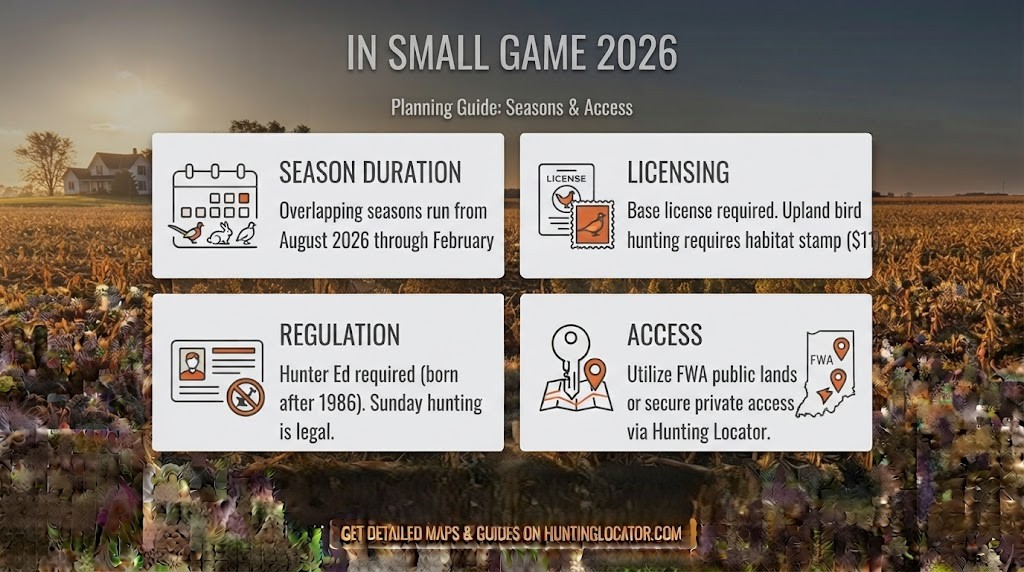
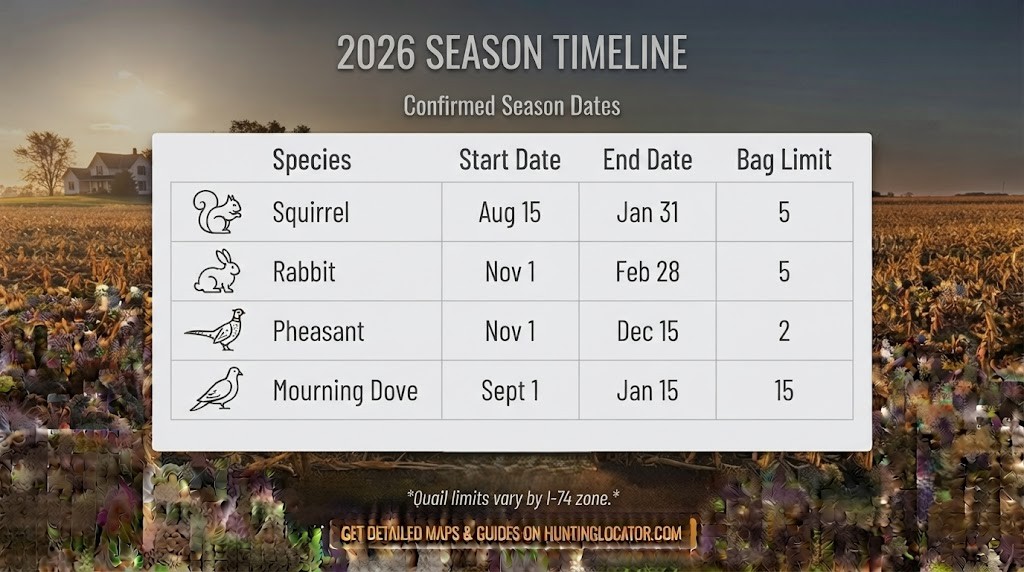
Indiana’s overlapping season structure keeps hunters active from August through late February. The table below consolidates season dates, bag limits, and key notes for 2026.
| Species | Season Type | Start Date | End Date | Daily Bag Limit | Notes |
|---|---|---|---|---|---|
| Squirrel (Gray/Fox) | Small game | Aug 15, 2026 | Jan 31, 2027 | 5 | Longest season; good entry point for beginners |
| Rabbit (Cottontail) | Small game | Nov 1, 2026 | Feb 28, 2027 | 5 | Hunter orange required |
| Pheasant (Cock) | Upland bird | Nov 1, 2026 | Dec 15, 2026 | 2 | Roosters only; Game Bird Habitat Stamp required |
| Quail (North of I-74) | Upland bird | Nov 1, 2026 | Dec 15, 2026 | 4 | Zone-based limit |
| Quail (South of I-74) | Upland bird | Nov 1, 2026 | 01/10/2027 | 8 | Zone-based limit |
| Mourning Dove | Migratory (split) | Sep 1, 2026 | Jan 15, 2027* | 15 | *Split season; non-toxic shot required |
Per-species breakdowns — including equipment recommendations, zone distinctions, and regulatory notes — follow below.
License, Permit & Education Requirements at a Glance
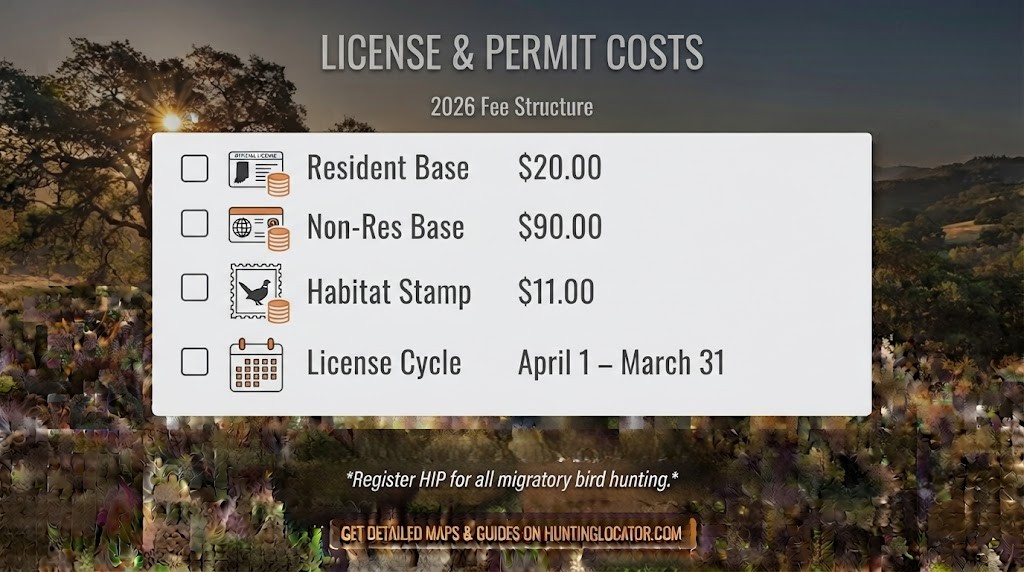
- Base hunting license is required for all small game — residents pay $20 annually; non-residents pay $90. Full details are in the licenses section below.
- Hunter education is mandatory for anyone born after December 31, 1986. Indiana accepts out-of-state hunter education certifications, so non-residents with valid home-state certificates are covered.
- Game Bird Habitat Stamp ($11) is required for all upland bird hunting — both pheasant and quail require this stamp in addition to the base license.
- HIP registration plus a valid state license are both mandatory for all migratory bird hunting, including mourning dove.
- License cycle: Annual licenses go on sale in January and are valid from April 1 through March 31 — confirm your license is active before the season opens.
- Where to buy: Purchase online through Go Outdoors Indiana or at any of the 500+ retailers statewide.
Note: bag limits on some DNR-managed properties may differ from statewide regulations, so verify property-specific rules before each visit.
Indiana Small Game Hunting Seasons
Indiana’s small game lineup spans five species across three regulatory categories — upland game, migratory birds, and small mammals. Seasons overlap, so hunters can pursue multiple species without much downtime, which makes Indiana one of the stronger states in the region for an extended small game calendar.
Indiana Squirrel Season 2026
Gray and fox squirrel season opens August 15, 2026 and runs through January 31, 2027, with a daily bag limit of 5 — Indiana’s longest small game season by a wide margin. There are no equipment or ammunition restrictions for squirrel hunting, though a 20-gauge or smaller shotgun loaded with 6- to 7½-size shot, or a .22-caliber rimfire rifle, is the standard setup.
Squirrel hunting is a practical starting point for beginners — the long season, accessible public land, and generous bag limit give new hunters time to develop field skills before moving to other species. One regulation to know: hunter orange is required during the November 1 through January 31 overlap window when squirrel season runs concurrently with other fall seasons.
Indiana Rabbit Season Dates 2026
Cottontail rabbit season runs November 1, 2026 through February 28, 2027, with a daily bag limit of 5. There are no equipment or ammunition restrictions, but a 12- or 20-gauge shotgun loaded with 6- to 7½-size shot is the standard recommendation.
A few regulations to know before you go:
- Hunter orange is required throughout the entire rabbit season.
- It is illegal to remove a rabbit from a hole, den, or tree hollow with the aid of a ferret or other small animal.
- Swamp rabbits are protected — it is illegal to hunt, take, or possess swamp rabbits, which are an endangered species in Indiana.
Indiana’s farm edges, brushy areas, and young timber cuts hold solid cottontail populations across the state. Dogs aren’t required — beagles are popular, but still-hunting and jump-shooting work well too, making rabbit hunting accessible at any experience level.
Indiana Pheasant Season 2026
Indiana pheasant season opens November 1, 2026 and closes December 15, 2026, with a daily bag limit of 2 roosters (cocks only) — hens are protected. The Game Bird Habitat Stamp ($11) is required in addition to the base license.
Experienced hunters concentrate their efforts in northern Indiana counties, where habitat and stocking programs support huntable bird numbers. At six weeks, the season is short — scouting locations and securing access before the opener matters more here than for most other species.
Indiana Quail Season: North vs. South of I-74
Both quail zones open November 1, 2026, but the regulations differ depending on which side of Interstate 74 you’re hunting:
| Zone | Season Closes | Daily Bag Limit |
|---|---|---|
| North of I-74 | December 15, 2026 | 4 birds |
| South of I-74 | January 10, 2027 | 8 birds |
The zone-based structure reflects population differences between the two regions — the longer season and higher limit south of I-74 correspond to healthier quail numbers in Indiana’s southern habitat. The Game Bird Habitat Stamp ($11) is required in both zones. The I-74 corridor is a hard regulatory boundary — confirm which zone you’re hunting before you go.
Indiana Mourning Dove Season 2026
Indiana’s mourning dove season opens September 1, 2026 and runs as a split season through January 15, 2027, with a daily bag limit of 15 birds. As a migratory species, the season follows a split-season structure with distinct segments built into the calendar.
Key regulations for dove hunters:
- Non-toxic shot is required — lead shot is not legal for migratory bird hunting.
- Shooting hours are sunrise to sunset.
- HIP registration plus a valid state license are both mandatory before you hunt.
The September opener is one of the more social events on Indiana’s hunting calendar. A well-managed sunflower field or harvested grain field can produce fast shooting for groups of hunters on warm late-summer mornings.
Indiana Small Game Licenses and Permits
Indiana Hunting Licenses
| License Type | Resident Cost | Non-Resident Cost | Notes |
|---|---|---|---|
| Annual Base Hunting License | $20 | $90 | Required for all small game hunting |
| Annual Hunting & Fishing Combo | $32 | N/A | Resident option for hunters who also fish |
| Youth Consolidated Hunt/Trap | $12 | N/A | For resident youth hunters |
Stamps for specific species are required on top of the base license. Annual licenses go on sale in January and are valid from April 1 through March 31, so a license purchased in January 2026 covers the entire season calendar in this guide. Licenses are available online through Go Outdoors Indiana or at 500+ retailers statewide.
A few additional notes:
- Nonresident landowners can hunt on their own Indiana farmland without a license, including their spouse and children living with them.
- Youth under 13 can hunt without a license if accompanied by a licensed adult hunter who is at least 18 years old, provided the youth is not carrying a bow or firearm.
- Hunter education is required for anyone born after December 31, 1986. Indiana accepts out-of-state certifications, so non-residents with valid home-state credentials are covered.
Indiana Hunting Permits
Beyond the base license, small game hunters will need the following depending on their target species:
- Game Bird Habitat Stamp ($11): Required for all upland bird hunting — pheasant and quail both require this stamp. Available wherever hunting licenses are sold.
- HIP Registration: Required for all migratory bird hunting, including mourning dove. This is a free federal program; you’ll receive a HIP number when you register, which you must carry while hunting.
- Federal Duck Stamp: Required for waterfowl only — not required for dove, but worth noting if you’re combining a waterfowl trip.
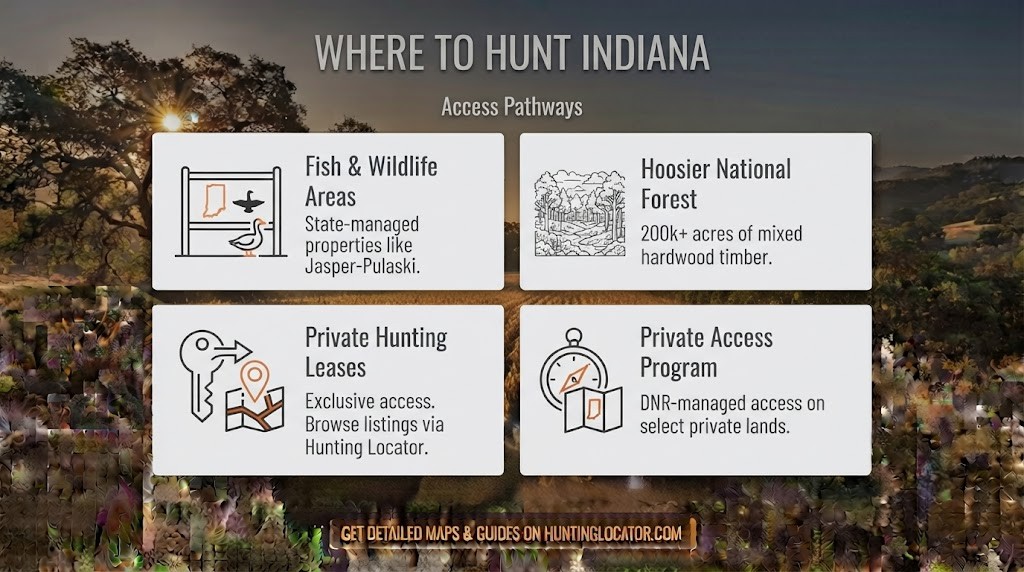
Indiana also runs a Private Lands Access Program through the DNR, which provides financial incentives to landowners in exchange for allowing public hunting on their land. These hunts are limited and allocated through an Indiana DNR lottery, covering pheasant, quail, woodcock, and wild turkey — worth checking if you’re looking for quality upland bird habitat without a lease.
Indiana Small Game: Where to Hunt
Best Public Lands
Indiana’s public hunting network includes Fish & Wildlife Areas (FWAs), State Forests, and National Wildlife Refuges. Visit on.IN.gov/dfwproperties for a complete interactive map of available public hunting properties. Notable options for small game hunters include:
- Jasper-Pulaski Fish and Wildlife Area — 8,062 acres in northwest Indiana, with good pheasant and upland bird habitat in the northern zone
- Kingsbury Fish and Wildlife Area — 5,500 acres in northern Indiana supporting multiple small game species
- Brown County State Park — 15,776 acres of hardwood timber in south-central Indiana, well suited to squirrel hunting
- Hoosier National Forest — 200,000+ acres of varied terrain in southern Indiana, supporting squirrel, rabbit, and turkey across a large footprint
The Indiana DNR maintains dozens of wildlife management areas throughout the state, each with its own restrictions — check area-specific rules before every visit.
Private Land Hunting with Hunting Locator
Private land typically means less hunting pressure, more consistent habitat management, and better access to the specific cover each species prefers. For upland birds like pheasant and quail especially, access to the right ground matters more than time afield on marginal habitat.
Private land access in Indiana comes in two forms: hunting leases and land purchases. Annual lease agreements give you exclusive or semi-exclusive rights to hunt specific properties for a season — a practical option for hunters who want consistent access without ownership. Buying hunting land is the long-term option for hunters who want full control over habitat management and future seasons.
Hunting Locator connects hunters with landowners ready to lease or sell. Whether you’re a resident looking for a new property or a non-resident planning a first Indiana trip, Hunting Locator gives you direct access to a database of available Indiana properties without the cold-calling. Browse current Indiana hunting leases on Hunting Locator and filter by species, acreage, and location.
Guided Hunts
For non-residents visiting Indiana for the first time — or any hunter who wants to improve odds on pheasant and quail without years of local scouting — a guided hunt is worth considering. Local guides know the ground, know how the birds move, and can put you in the right position from the start.
Indiana guided hunt options typically include:
- Half-day and full-day packages for pheasant and quail, often with bird dogs provided
- Combination hunts targeting multiple upland species in a single outing
- Lodging-included packages for out-of-state hunters making a multi-day trip
To find outfitters operating in Indiana, browse the Hunting Locator outfitter and guide directory and filter by state and species.
Small Game Hunting Tips
For gear to back up your time in the field, check out the Hunting Locator store for shotguns, ammunition, optics, and small game essentials.
- Start with squirrels if you’re new to hunting — The long season from August through January and a 5-squirrel daily limit make squirrel hunting an accessible entry point for beginners. You’ll build woods skills and learn to move quietly before pursuing other species.
- Wear hunter orange during overlap periods — Hunter orange is required for both squirrel and rabbit hunting once November arrives. Make it a habit regardless of season to stay visible to other hunters.
- Match your load to your species — A 20-gauge or smaller with 6- to 7½ shot is recommended for squirrels; a 12- or 20-gauge with 6- to 7½ shot covers rabbits. For doves, smaller shot in the 7½ to 9 range with a tighter choke handles fast-moving birds.
- Use non-toxic shot for dove — Non-toxic shot is legally required for all migratory bird hunting in Indiana. Stock up before the September opener and confirm every shell in your vest is compliant.
- Know your quail zone — The I-74 line is a hard regulatory boundary. Which side you’re on determines both your bag limit and your season close date.
- You don’t need a dog for rabbits — Still-hunting and jump-shooting are both effective for cottontails, especially on public land. Walk brushy edges slowly, stop frequently, and vary your pattern to push rabbits out of cover.
- Focus pheasant efforts in northern Indiana — Experienced hunters concentrate in northern Indiana counties where habitat and stocking programs support huntable bird numbers. Spreading out across the state without local knowledge is a difficult way to spend a short six-week season.
- Scout private land before the season — Leasing a property is only the start. Walk it before opening day to identify food sources, travel corridors, and holding cover so you’re hunting productively from day one.
More Resources from Hunting Locator
- Indiana Hunting Season Guide — Full overview of every Indiana hunting season. Start here if you’re planning a multi-species season.
- Indiana Small Game Hunting Season — Dedicated small game coverage for squirrel, rabbit, pheasant, quail, and dove.
- Indiana Deer Hunting Season — Archery, firearms, and muzzleloader dates for Indiana whitetail.
- Indiana Turkey Hunting Season — Season dates, permit information, and tips for spring and fall turkey hunters.
- Indiana Waterfowl Hunting Season — Duck and goose season dates, zone information, and equipment requirements.
- Indiana Migratory Bird Hunting Season — Dove, woodcock, and other migratory species — HIP requirements, season structure, and where to find birds.
- Indiana Furbearer Hunting and Trapping Season — Trapping seasons, furbearer species information, and 2026 bobcat trapping season details.
- Indiana Hunting Leases on Hunting Locator — Browse available private hunting land leases in Indiana by species, acreage, and location.
- Hunting Locator Store — Shotguns, ammunition, calls, decoys, safety gear, and other small game essentials.
FAQ
Do I need a special stamp to hunt pheasant and quail in Indiana?
Yes. The Game Bird Habitat Stamp ($11) is required for all upland bird hunting in Indiana, including pheasant and quail. You’ll need this stamp in addition to your base hunting license. It’s available wherever Indiana hunting licenses are sold, including online through Go Outdoors Indiana.
What is the quail bag limit in Indiana, and does it change by location?
Yes — quail bag limits are zone-based. North of Interstate 74, the daily limit is 4 birds and the season closes December 15, 2026. South of I-74, the daily limit is 8 birds and the season runs through January 10, 2027. The zone-based structure reflects population differences between northern and southern Indiana. Confirm which zone you’re in before you hunt.
Does Indiana accept out-of-state hunter education certificates?
Yes. Indiana accepts hunter education certifications from other states, so non-residents who completed a valid course in their home state don’t need to repeat it. The requirement applies to all hunters born after December 31, 1986.
Can beginners hunt small game in Indiana without a dog?
Yes. While dogs are popular for rabbit and upland bird hunting, they aren’t required. Still-hunting and jump-shooting are both effective for cottontail rabbits, and squirrel hunting requires no dog — just patience, quiet movement through the timber, and a .22 or small-bore shotgun.
When do Indiana hunting licenses go on sale, and how long are they valid?
Annual Indiana hunting licenses go on sale in January and are valid from April 1 through March 31. A license purchased in January 2026 covers the entire 2026–2027 small game season calendar, including seasons that run into early 2027.
How do I find private land to hunt in Indiana as a non-resident?
Hunting Locator’s Indiana lease listings let you search available private land by species, location, and acreage, and connect directly with landowners who are ready to lease. Non-residents should start looking early — quality properties tend to fill up well before season openers.
Planning Your 2026 Season
Indiana’s 2026 small game season runs more than six months, covers five species, and offers a mix of public and private ground that suits hunters at different experience levels and budgets. The regulations are manageable once you understand the zone distinctions and stamp requirements — the bigger variable for most hunters is access to quality habitat.
Browse available Indiana hunting leases on Hunting Locator, gear up at the Hunting Locator store, and get your license sorted before the August opener.


