Kansas hunting isn’t for the weak-hearted. It’s become the place serious hunters circle on their calendars, save up for, and dream about during long summer months. The state’s got this perfect storm of agricultural abundance, incredible genetics, and enough public access to keep things interesting.
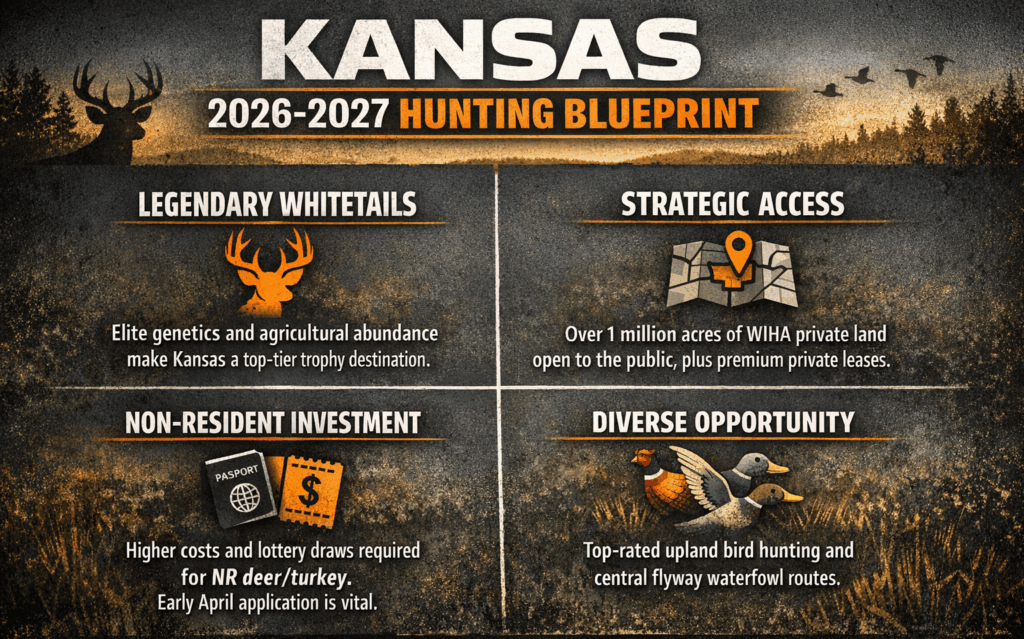
But here’s the thing about Kansas hunting—it’s not as simple as showing up with a license anymore. The regulations have layers, the costs can shock you (especially if you’re coming from out of state), and timing everything right takes some serious planning.
This guide breaks down everything you need to know for the 2026-2027 seasons. We’re talking real numbers, actual dates, and the kind of insider details that separate successful hunts from expensive learning experiences.
What you’ll find here:
- The real cost of Kansas hunting (spoiler: non-residents, brace yourselves)
- Every season date that matters, from youth seasons to extended opportunities
- Where to actually hunt without breaking the bank or breaking laws
Ready to turn your Kansas hunting dreams into tagged reality? Let’s get into the details that matter.
Quick Overview: Season Dates, Kansas Hunting Licenses, and Regulations
Kansas doesn’t mess around when it comes to license fees. If you’re hunting from out of state, you’re going to feel it in your wallet—but most hunters say the trophy potential makes it worth every penny.
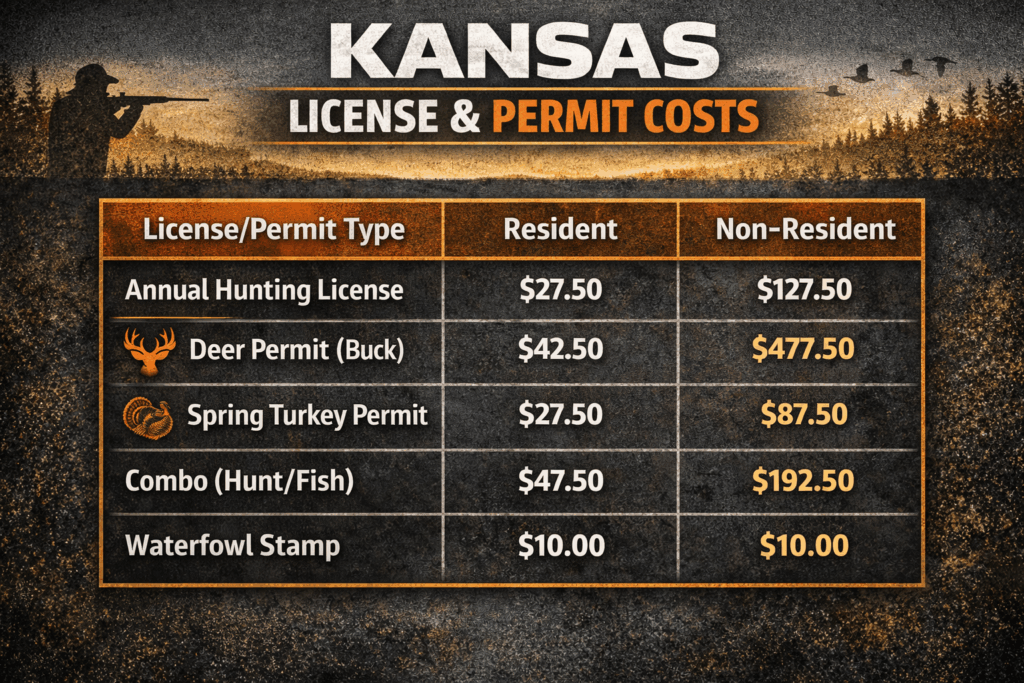
| License Type | Resident Cost | Non-Resident Cost | Notes |
|---|---|---|---|
| Annual Hunting License | $27.50 | $127.50 | Valid for one year from purchase |
| Combo (Hunt/Fish) | $47.50 | $192.50 | — |
| Deer Permit (Buck) | $42.50 | $477.50 | NR includes Whitetail Combo |
| Mule Deer Stamp | N/A | $150.00 | Add-on for NR Whitetail permit |
| Spring Turkey | $27.50 | $87.50 | NR must apply via Jan/Feb lottery |
| Waterfowl Permit | $10.00 | $10.00 | State-specific stamp |
Yeah, you read that right. Non-resident deer hunting will cost you nearly $500 before you even buy gas to get there. But stick around—we’ll show you why hunters keep coming back despite the sticker shock.
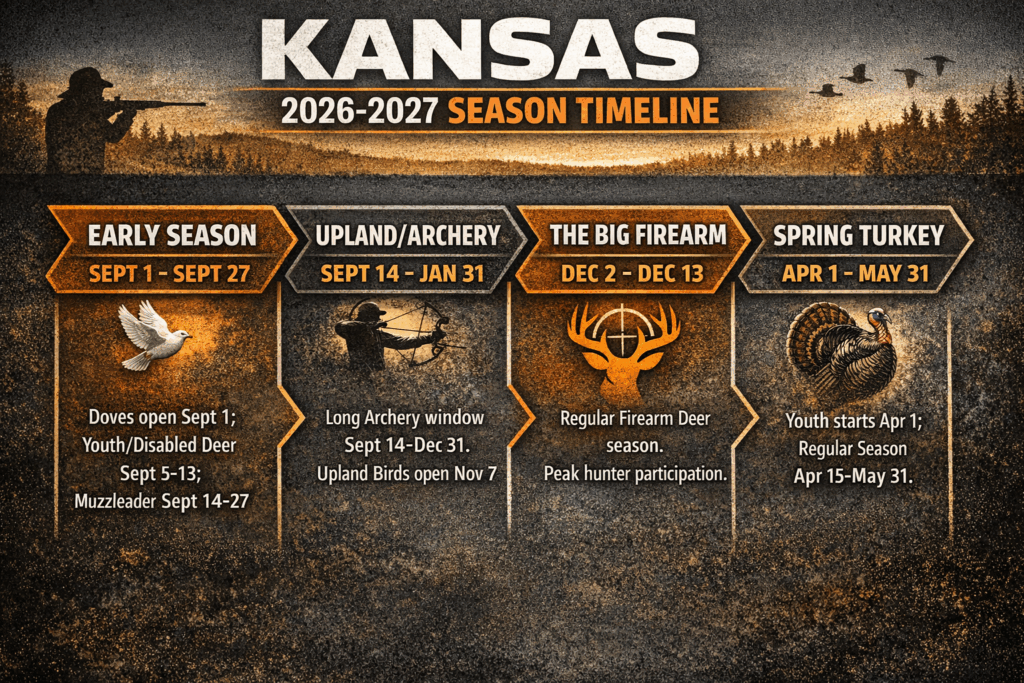
The season dates come straight from the Kansas Department of Wildlife & Parks, so you can plan with confidence.
| Species | Season Type | 2026-2027 Dates | Bag Limit/Notes |
|---|---|---|---|
| Whitetail Deer | Youth & Disabled | Sept 5–13 | Statewide |
| Whitetail Deer | Archery | Sept 14–Dec 31 | Closed during firearm seasons |
| Whitetail Deer | Muzzleloader | Sept 14–27 | Either-species with proper stamp |
| Whitetail Deer | Pre-Rut Antlerless | Oct 10–12 | Firearm; Whitetail only |
| Whitetail Deer | Regular Firearm | Dec 2–13 | The “Big” Season |
| Whitetail Deer | Extended | Jan 1–18* | *Dates vary by unit |
| Mule Deer | Archery/Muzzleloader | Sept 19–Oct 5 | Mule Deer Stamp required |
| Mule Deer | Firearm | Oct 2–5 | Limited units only |
| Turkey (Spring 2027) | Youth/Disabled | Apr 1–14 | — |
| Turkey (Spring 2027) | Archery | Apr 6–14 | — |
| Turkey (Spring 2027) | Regular | Apr 15–May 31 | — |
| Pheasant/Quail | Youth | Oct 31–Nov 1 | — |
| Pheasant/Quail | Regular | Nov 7–Jan 31 | 4 cocks / 8 quail daily |
| Dove | Regular | Sept 1–Nov 29 | 15 daily |
| Teal (Early) | Regular | Sept 19–27 | 6 daily |
| Ducks | High Plains | Oct 10–Jan 3 | Zone-specific |
| Ducks | Low Plains | Oct 3–Jan 5 | Zone-specific |
Heads up: Fall turkey season is still off the table for 2026, and you get one antlered buck for the entire season unless your permit says otherwise.
Kansas Whitetail Deer Hunting
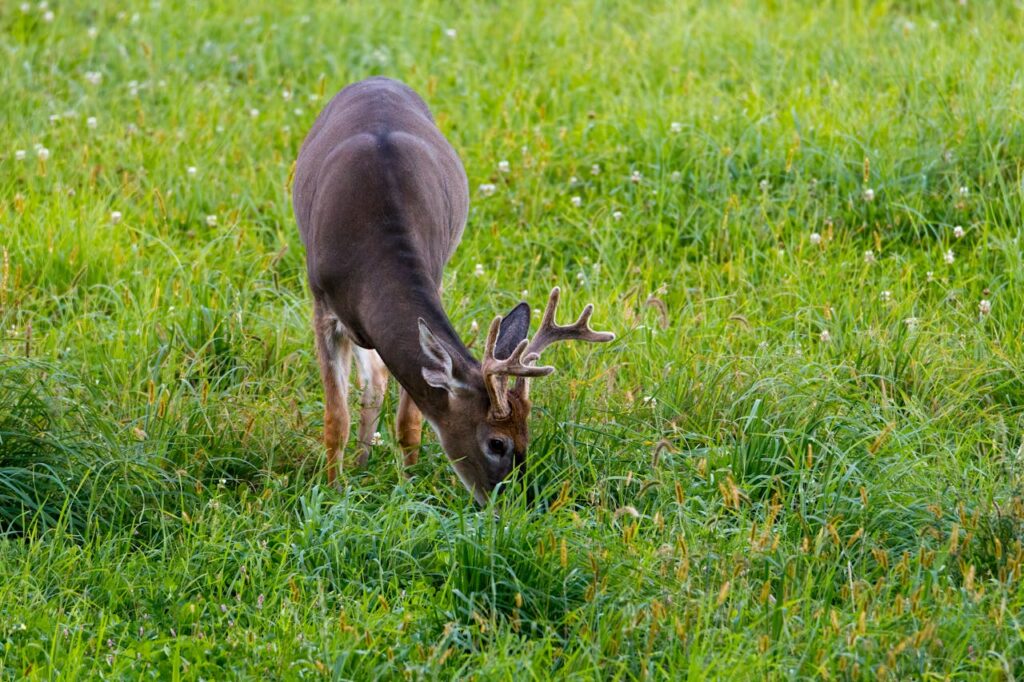
Let’s be honest—this is why most people hunt Kansas. The state has become legendary among serious whitetail hunters, and many experts believe the next world record trophy deer will come from Kansas. When you combine endless corn and soybean fields with genetics that produce absolute monsters, you get hunting that’s worth planning your entire year around.
Kansas Whitetail Deer Hunting Seasons
The Youth & Disabled season kicks things off September 5-13, and it’s honestly one of the best-kept secrets in Kansas hunting. Way less pressure than the regular seasons, perfect weather, and deer that haven’t been spooked yet. If you’ve got a young hunter to mentor, this is your golden opportunity.
Kansas archery season runs September 14 through December 31—that’s over three months of hunting time. The catch? It closes during firearm seasons, so you’ll need to plan around those dates. Your bow needs at least 40 pounds of draw weight for big game, and crossbows are totally legal.
Here’s something cool about the muzzleloader season (September 14-27): it’s “either-species,” meaning you can take whitetail or mule deer if you’ve got the right stamp. Early season, pre-rut activity, and fewer hunters make this a sleeper pick for smart hunters.
The Pre-Rut Antlerless season (October 10-12) is exactly what it sounds like—three days of firearm hunting focused on does. It’s part of the state’s population management strategy, but it also gives you another crack at getting meat in the freezer.
Now we get to the main event: Regular Firearm season, December 2-13. This is “The Big Season” when everyone shows up. Peak rut, maximum hunter participation, and your best shot at a wall-hanger. Just know you’ll have company in the woods.
The Extended season (January 1-18) varies by unit, so double-check your specific area. It’s a great way to extend your season, though the deer behavior will be completely different from the rut hunting most people prefer.
Non-residents, pay attention: Big changes hit in 2025 that affect how you get permits. You now have to enter a draw for Units 1, 2, 3, 5, and 6. They use a preference point system that favors hunters who’ve been unsuccessful recently. Applications usually open in early April and close by late April, so mark your calendar now.
Kansas Whitetail Deer Hunting Regulations
Kansas keeps things pretty straightforward, but there are some rules you absolutely need to know.
- One buck rule: You get one antlered buck for the entire season, period
- Blaze orange is mandatory: 200 square inches total (100 front, 100 back) plus a blaze orange hat during firearm seasons
- Weapon restrictions: Centerfire rifles and handguns (.24 caliber minimum with expanding bullets), shotguns with slugs, or legal archery equipment
- Check-in requirements: They encourage electronic check-in (E-TAG), or you can leave evidence of sex attached to the carcass
- CWD testing: KDWP offers free, limited Chronic Wasting Disease testing during seasons—smart to use it if you’re in an affected area
Kansas Turkey Hunting
Spring turkey hunting in Kansas is like a completely different sport from deer hunting. After months of sitting in tree stands, you’re suddenly calling, moving, and trying to outsmart one of the smartest game birds in North America. The good news? Kansas has solid turkey populations and some really good hunting opportunities.
Kansas Turkey Hunting Seasons
Spring 2027 gives you three different ways to chase gobblers. The Youth/Disabled season (April 1-14) is perfect for getting kids hooked on turkey hunting. Less pressure, birds are still henned up and vocal, and the weather’s usually cooperative.
Archery turkey season (April 6-14) overlaps with youth season, which tells you something about how good the hunting can be during this window. Turkey hunting with a bow is challenging as hell, but incredibly rewarding when you pull it off.
The Regular season (April 15-May 31) gives you almost seven weeks to work on stubborn gobblers. This covers everything from peak breeding activity through late season, when the smart old birds finally make mistakes.
Important for out-of-state hunters: Fall turkey season is still suspended for 2026. And if you’re a non-resident wanting to hunt spring turkeys, you need to apply in the January/February lottery. Miss that window, and you’re out of luck.
Kansas Turkey Hunting Regulations
Turkey hunting has its own set of rules that make sense once you understand spring breeding behavior.
- Shotguns only: Shot sizes 2-9, plus archery equipment. No rifles allowed
- No dogs: Spring season is about calling, not chasing
- Calling gear: Bring your calls and decoys—spring hunting is all about fooling love-struck gobblers
- Standard shooting hours: Half-hour before sunrise to half-hour after sunset
- Separate permit required: You need a spring turkey permit on top of your hunting license
Kansas Upland Bird Hunting
This is where Kansas really shines for a lot of hunters. The state is considered one of the best for quail and pheasant hunting in the country, and Kansas offers some of the best public-land bobwhite quail hunting in the US. Plus, the terrain is forgiving—mostly flat and open, which makes it perfect for newer hunters still learning to navigate safely.
Kansas Pheasant and Quail Hunting Seasons
Youth season (October 31-November 1) gets kids started right. Perfect weather, fewer hunters, and birds that haven’t been pressured yet.
Regular season runs November 7 through January 31—nearly three full months of hunting. Daily limits are generous: 4 cock pheasants (roosters only) and 8 quail per day. That’s enough action to keep any upland hunter happy.
The relatively flat, open country makes Kansas ideal for beginners. You can see your shots, track downed birds easier, and generally stay safer than in heavy cover states.
Kansas Pheasant and Quail Hunting Regulations
Upland regulations focus on keeping harvest sustainable while giving hunters plenty of opportunity.
- Daily limits: 4 cock pheasants (roosters only) and 8 quail
- Shotguns required: Use appropriate shot sizes for the species you’re targeting
- Hunter orange: Check current requirements—they can vary by season
- Dogs welcome: Most upland hunters use dogs, and they’re legal and effective
- WIHA access: The Walk-In Hunting Access program provides excellent upland opportunities
Kansas Waterfowl Hunting
Kansas sits right in the middle of major migration routes, which means excellent waterfowl hunting when conditions align. The state divides into High Plains and Low Plains zones with different season dates, so make sure you know which zone you’re hunting.
Kansas Waterfowl Hunting Seasons
Early Teal season (September 19-27) is a great warm-up for duck season. Six birds daily, and you’re targeting blue-winged and green-winged teal during their early push south.
Duck seasons split by zone:
- High Plains: October 10-January 3
- Low Plains: October 3-January 5
Dove season (September 1-November 29) gives you almost three months with a 15-bird daily limit. It’s excellent practice for wing shooting and a great way to get ready for other migratory bird seasons.
Kansas Waterfowl Hunting Regulations
Migratory birds mean federal oversight, which adds some complexity to the rules.
- Multiple stamps required: Kansas HIP Permit, State Waterfowl Stamp ($10), and Federal Duck Stamp are all mandatory
- Non-toxic shot only: Lead shot is completely prohibited for waterfowl hunting
- No electronic calls: Except during light goose conservation seasons
- Standard shooting hours: Half-hour before sunrise to half-hour after sunset
Kansas Minor Game Species Hunting
Kansas offers some unique hunting opportunities beyond the main attractions. These species can add variety to your trips and extend your time in the field.
Kansas Prairie Chicken Hunting Information
Greater Prairie Chicken hunting is about as “Kansas” as hunting gets. Daily bag limit is 2 birds with seasons running September 15 through January 31. This is native prairie hunting at its finest—a true Great Plains experience.
Prairie chicken hunting happens on native grasslands and requires understanding their daily patterns. Plan for early morning hunts when birds are most active, and be ready for some walking in big country.
Kansas Small Game Hunting Information
Small game hunting is perfect for beginners learning the basics, and it’s a great way to keep hunting when big game seasons close. Squirrel hunting allows 5 daily with a 20-bird possession limit.
Small game seasons typically run alongside other hunting seasons, so you can pursue multiple species during the same trip. It’s a smart way to maximize your hunting time and keep your skills sharp.
Where to Hunt in Kansas
Kansas covers 82,000 square miles of diverse hunting country, from the famous Flint Hills to agricultural river bottoms that produce monster whitetails. The state provides about 300,000 acres of public land, plus landowners make another million acres available through access programs.
Best Public Lands
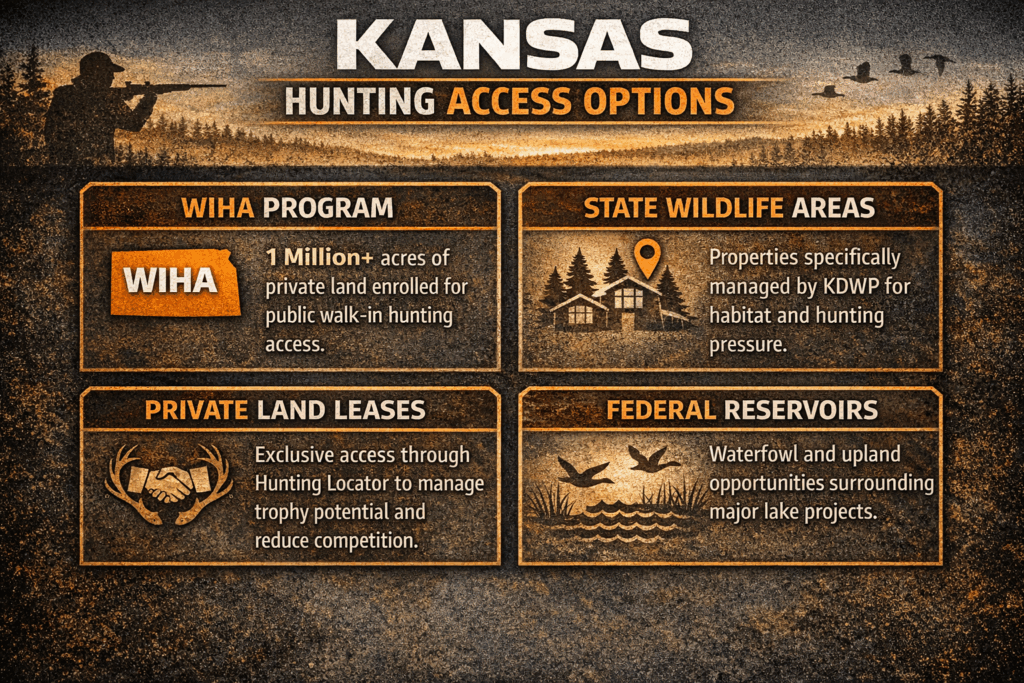
Your public hunting options center around the Walk-In Hunting Access (WIHA) program and traditional wildlife areas. WIHA opens over 1 million acres of private land to public hunting, making it one of the most successful access programs in America.
- WIHA Properties: Over 1 million acres of enrolled private land with specific rules you need to follow
- State Wildlife Areas: Dedicated hunting areas managed for wildlife habitat and hunting access
- Federal Reservoirs: Corps of Engineers properties around major lakes offering waterfowl and upland opportunities
- National Wildlife Refuges: Limited hunting on select federal refuges during specific seasons
Guided Hunts
Kansas guided operations focus heavily on whitetail deer, though many offer turkey, upland, and waterfowl packages too. Most include lodging, meals, game care, and transportation to hunting areas. You’re paying for access to quality private land plus professional guidance.
When choosing outfitters, verify their licenses, insurance, and get references from recent clients. Book early for prime dates, especially November and December rut hunting.
Private Land Hunting
Here’s the reality: most Kansas hunting, especially for trophy deer, happens on private land. Getting access requires either building relationships with landowners or paying for leases.
The relationship route takes time but can be incredibly rewarding. Help with fence repairs, offer to assist during harvest, or provide other services landowners actually need. Many long-term hunting arrangements start this way.
For immediate access, leasing is your best bet. Quality hunting leases offer exclusive or semi-exclusive access to managed properties with food plots, stands, and active wildlife management.
Hunting Locator connects hunters directly with landowners offering lease and purchase opportunities across Kansas. Our platform provides verified properties with detailed information about acreage, target species, and lease terms. Whether you need a weekend lease close to home or a premium trophy property for annual hunts, Hunting Locator’s Kansas lease listings eliminate the guesswork of finding reliable private land access.
FAQ
What is the cost difference between resident and non-resident Kansas hunting licenses?
The difference is massive, especially for deer hunting. Residents pay $27.50 for an annual hunting license and $42.50 for a deer permit. Non-residents pay $127.50 for the hunting license and $477.50 for a deer permit. That’s over $600 just to hunt deer in Kansas as a non-resident, but most hunters say the trophy potential justifies the cost.
When should non-residents apply for Kansas deer permits?
The Kansas non-resident deer draw typically opens in early April and closes in late April. You must enter a lottery for most units, and the draw uses a preference point system favoring hunters who’ve been unsuccessful recently. Apply immediately when the window opens—missing the deadline means no deer hunting that year.
What hunting education requirements apply in Kansas?
Anyone born on or after July 1, 1957 must complete hunter education to hunt in Kansas. The apprentice license works for one season and can be used twice in a lifetime before requiring full certification. Youth under 15 can hunt under adult supervision without hunter education.
How does the Kansas WIHA program work?
WIHA opens over 1 million acres of private land to public hunting with specific restrictions. You can’t drive off designated paths, can’t establish permanent blinds, and must respect all property boundaries. Properties are marked and mapped with access rules posted at entry points.
What are the blaze orange requirements for Kansas hunting?
You need 200 square inches of blaze orange (100 front, 100 back) plus a blaze orange hat during firearm deer seasons. This applies to everyone in the field during firearm seasons, regardless of what you’re hunting or how you’re hunting it.
Why is Fall Turkey season suspended in Kansas?
Fall turkey season remains suspended for 2026 as part of population management. The suspension helps turkey numbers recover and maintain sustainable breeding populations. Focus on spring 2027 turkey seasons (April 1-May 31) for your turkey hunting fix.
The Final Shot
Kansas hunting for 2026-2027 represents some of the best opportunities in America, from potential world-record whitetails to outstanding upland bird hunting. Success comes down to understanding the significant cost differences for non-residents, planning around lottery deadlines, and securing reliable land access in a state dominated by private property.
Whether you’re a Kansas resident looking to hunt multiple species or a non-resident planning a serious trophy investment, early preparation and understanding your access options make all the difference. The combination of WIHA public access, quality outfitters, and private lease opportunities means dedicated hunters can find experiences matching any budget.
Ready to lock down your private land access for the upcoming season? Browse verified Kansas hunting leases and connect directly with landowners offering quality properties across the state. Your best Kansas hunting story starts with access to the right property.


