We’ve pulled together everything you need from official KDFWR sources to plan successful hunts across all the upcoming seasons. Season dates, license costs, hunting spots, gear recommendations – it’s all here so you can spend more time scouting and perfecting your calling instead of hunting down regulations.
What you’ll get from this Kentucky turkey guide:
- Every 2026-2027 season date for spring youth, spring regular, fall archery, crossbow, and shotgun seasons plus exact bag limits
- Full breakdown of license and permit costs for residents and non-residents, including bundled deals that’ll save you money
- Where to actually hunt – top public WMAs plus private land options (which account for 94.2% of Kentucky’s turkey harvest)
Let’s jump straight into the dates you need to circle on your calendar.
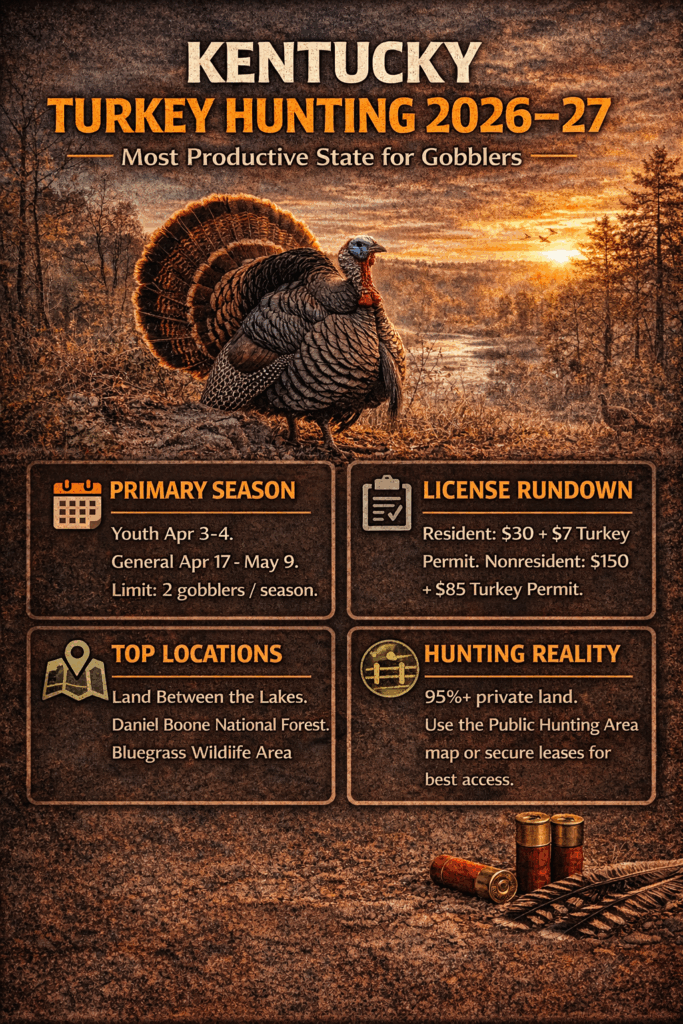
Quick Overview: 2026-2027 Kentucky Turkey Season at a Glance
Here’s everything essential for Kentucky’s upcoming turkey seasons. Detailed breakdowns follow for thorough preparation.
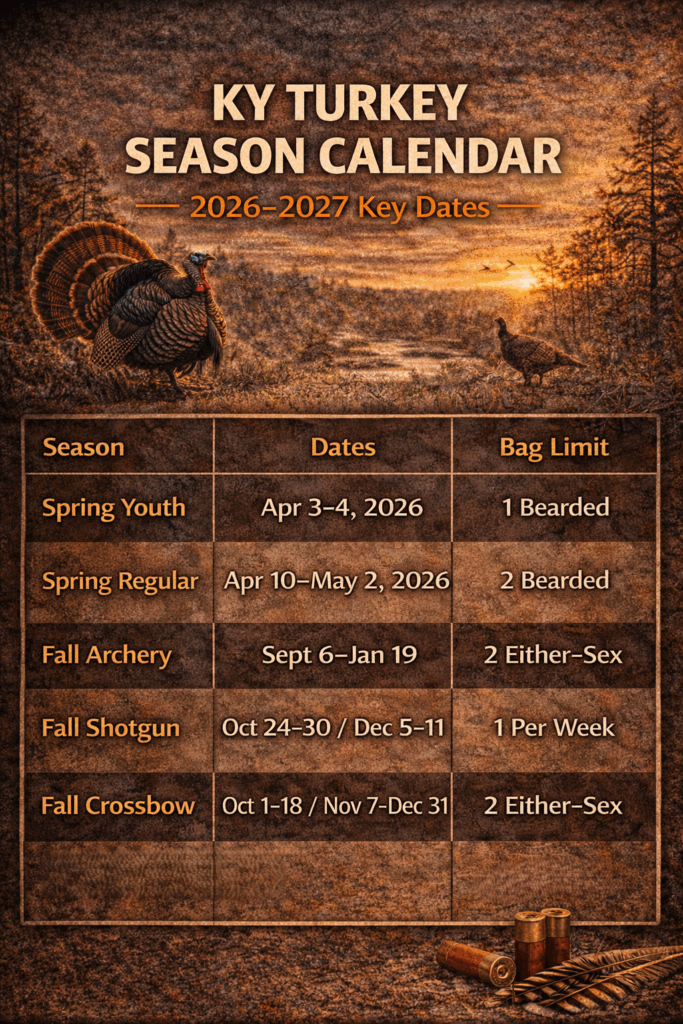
| Season Type | Start Date | End Date | Bag Limit | Notes |
|---|---|---|---|---|
| Spring Youth | April 3, 2026 | April 4, 2026 | 1 bearded turkey | Youth 15 and under only; adult must accompany |
| Spring Regular | April 10, 2026 | May 2, 2026 | 1 bearded turkey | 2 bearded turkeys max for spring season |
| Fall Archery | September 6, 2026 | January 19, 2027 | 2 turkeys (either sex) | Combined fall bag limit |
| Fall Crossbow (Early) | October 1, 2026 | October 18, 2026 | 2 turkeys (either sex) | Combined fall bag limit |
| Fall Shotgun | October 24, 2026 | October 30, 2026 | 1 turkey | 2 total for fall shotgun seasons |
| Fall Crossbow (Late) | November 7, 2026 | December 31, 2026 | 2 turkeys (either sex) | Combined fall bag limit |
| Fall Shotgun (2nd) | December 5, 2026 | December 11, 2026 | 1 turkey | 2 total for fall shotgun seasons |
What Every Hunter Needs:
- Valid Kentucky hunting license (no exceptions)
- Spring or Fall Turkey Permit (season-specific)
- Hunter education certification (if you were born January 1, 1975 or later)
- Telecheck harvest reporting (mandatory for every turkey you bag)
Kentucky Turkey Hunting Seasons
Kentucky delivers solid turkey hunting across spring and fall seasons, with weapon options to match however you like to hunt. Spring focuses on bearded gobblers when they’re fired up during breeding season. Fall opens things up to either-sex harvest over much longer timeframes.
Spring Turkey Season
Kentucky structures its spring season to let turkeys breed before hunting pressure kicks in. Smart wildlife management that creates better conditions for both the birds and your success rate.
Youth Season Details (April 3-4, 2026):
This youth-only weekend gives kids exclusive access before the crowds show up. Youth hunters 15 and under can participate but supervision requirements are strict. KDFWR spells it out clearly: “Each adult must stay close enough to take control of the shotgun (or bow or crossbow) wielded by the youngster he or she is shepherding.”
The adult can help with calling and strategy but can’t harvest during youth weekend. Youth permits run about $10.57 for residents, $15.86 for non-residents. Kids under 12 don’t need licenses or permits but must have constant adult supervision.
General Season Details (April 10 – May 2, 2026):
This 23-day general season hits peak gobbling activity when mature toms are most likely to come running to your calls. You can take one bearded turkey per day, max of two bearded birds for the whole spring season. Shooting hours run “30 minutes before sunrise to 30 minutes after sunset.”
Spring Regulations You Can’t Ignore:
Pre-season calling restrictions protect breeding activity. You can’t use turkey calls “from March 1 until the opening of the youth-only season.” Baiting is completely off-limits too – no grains or other bait to attract turkeys from March 1 – May 31. Every turkey you harvest needs immediate Telecheck reporting before you move or process it.
Fall Turkey Seasons 2026-2027
Fall turkey hunting stretches your opportunities with multiple weapon choices and either-sex harvest flexibility. KDFWR explains it this way: “The fall turkey permit is valid for the fall archery, crossbow and shotgun turkey seasons and allows a hunter to harvest up to the fall season bag limit of turkeys.”
Fall Archery Season (September 6, 2026 – January 19, 2027):
The longest season option gives you over four months, overlapping with deer archery for hunters chasing multiple species. This extended timeframe lets you pattern birds through changing weather and shifting food sources. The combined fall bag limit of 2 turkeys (either sex) covers all fall seasons.
Fall Crossbow Seasons:
Two separate crossbow periods give you flexibility around other hunting seasons:
- Early Period: October 1-18, 2026
- Late Period: November 7 – December 31, 2026
Both periods use the same 2-turkey combined fall bag limit.
Fall Shotgun Seasons:
Two week-long shotgun seasons offer traditional fall turkey hunting:
- First Season: October 24-30, 2026
- Second Season: December 5-11, 2026
Each shotgun season allows 1 turkey harvest, maxing out at 2 turkeys total across both fall shotgun periods. The big advantage of fall seasons? Either-sex harvest flexibility. You’re not stuck hunting only bearded birds like spring.
Kentucky Turkey Licenses and Permits
Kentucky requires both a base hunting license AND a turkey permit specific to the season you’re hunting. Costs vary dramatically between residents and non-residents, but bundled options can save you serious money.
Kentucky Hunting Licenses
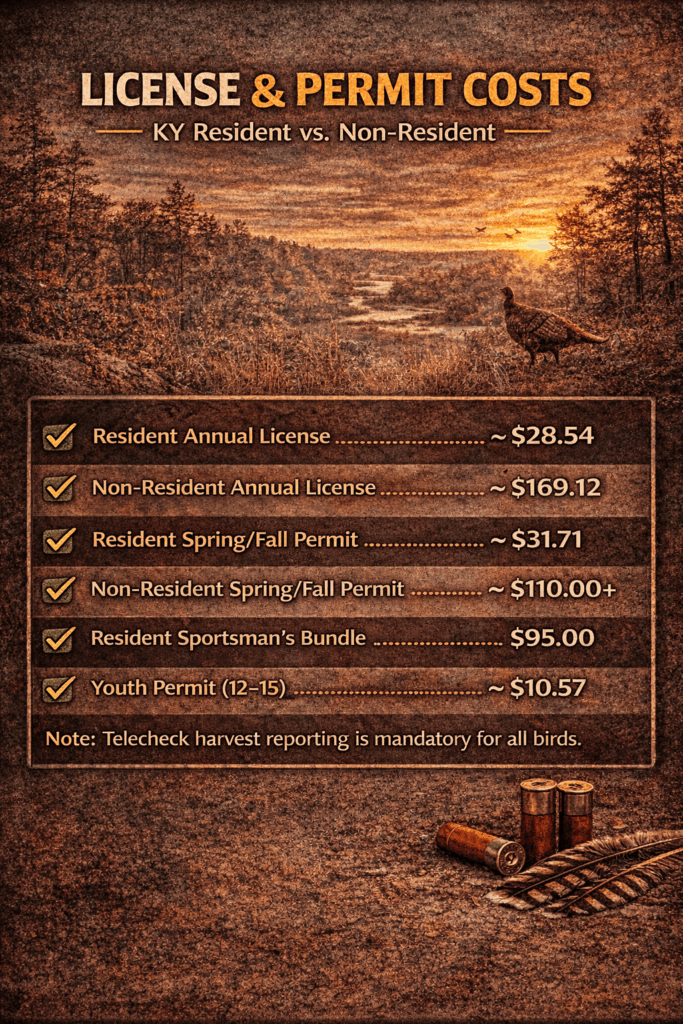
| License Type | Resident Cost | Non-Resident Cost | Notes |
|---|---|---|---|
| Annual Hunting License | ~$28.54 | ~$169.12 | Required base license |
| Sportsman’s License | ~$95 | N/A | Bundled option includes turkey permits, deer permit, fishing license, waterfowl permit, trout permit |
The Sportsman’s License is a steal for Kentucky residents hunting multiple species. KDFWR breaks it down: “Residents may purchase the sportsman’s license at a discounted rate of $95, which includes spring and fall turkey permits.” That’s substantial savings over buying everything separately.
Hunter Education Requirements:
You need certification if you were born January 1, 1975 or later. Exceptions include youth 11 and under (with licensed adult), hunters on land owned by parents/legal guardians, and eligible first-time hunters through apprentice exemptions.
Kentucky Turkey Permits
| Permit Type | Resident Cost | Non-Resident Cost | Valid For |
|---|---|---|---|
| Spring Turkey Permit | ~$31.71 | ~$110-116.27 | 2 bearded turkeys |
| Fall Turkey Permit | ~$31.71 | ~$110-116.27 | 2 turkeys (either sex) |
| Youth Turkey Permit (ages 12-15) | ~$10.57 | ~$15.86 | 1 turkey (spring or fall) |
Turkey permits are available over-the-counter through Kentucky Department of Fish and Wildlife Resources online or at authorized vendors statewide. Unlike many western states, Kentucky doesn’t require draw applications. Permits stay available throughout the season for residents and non-residents alike. But you must buy permits before hunting, and every harvested turkey needs immediate Telecheck reporting.
Where to Hunt Turkey in Kentucky
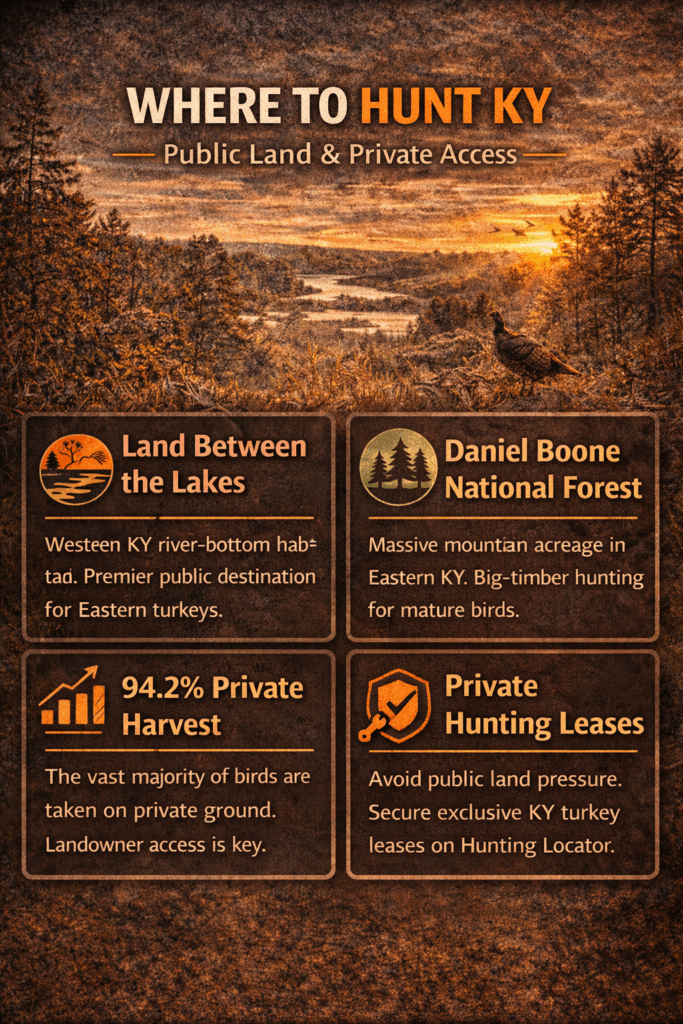
Finding good turkey hunting access in Kentucky means understanding the land ownership reality. Although 95% of the state is privately owned, public hunting exists. But here’s the kicker: 94.2% of all turkeys harvested in Kentucky come from private lands.
Best Public Lands for Turkey Hunting
Kentucky Fish and Wildlife owns, leases or manages more than 85 wildlife management areas (WMAs) for public use, giving you accessible hunting opportunities statewide.
Top Public Turkey Hunting Areas:
- Land Between the Lakes – Western Kentucky’s premier destination spanning the KY/TN border with excellent river-bottom turkey habitat and solid populations
- Daniel Boone National Forest – Eastern Kentucky’s big-timber mountain hunting across massive acreage with mature forest habitat supporting strong gobbler populations
- Peabody WMA – Consistently produces good harvest numbers with documented success
- State WMAs – Check KDFWR website for specific regulations, permit requirements, and seasonal restrictions
Public land turkey hunting means dealing with increased pressure, especially during peak spring weekends. This affects turkey behavior and can make calling less effective.
Guided Turkey Hunts
Non-resident hunters unfamiliar with Kentucky terrain and turkey patterns can gain significant advantages through guided hunts with local expertise and private land access. Guided Kentucky turkey hunts in Western Kentucky are available for bowhunting and shotgun hunting.
Professional outfitters bring local knowledge of turkey patterns, access to private land through landowner relationships, calling expertise for Kentucky conditions, and complete logistics support. Guided hunts cost more than just licensing but can dramatically improve success rates for unfamiliar hunters.
Private Land Turkey Hunting
The numbers don’t lie: 94.2% of harvested turkeys come from private lands. This massive advantage comes from reduced hunting pressure, exclusive access, and the ability to scout and pattern birds without competition.
Private land hunting provides reduced pressure that lets turkeys maintain natural behavior patterns, exclusive access meaning fewer hunters per acre, and the ability to scout properties before season without competing with other hunters.
Two main paths get you private land access: leasing hunting rights through seasonal or annual agreements, and purchasing hunting property as a long-term investment. Hunting Locator connects hunters directly with landowners ready to lease or sell hunting access. Browse verified Kentucky hunting leases with detailed property information, pricing, and direct landowner contact.
Turkey Hunting Tips for Kentucky Success
Successful Kentucky turkey hunting combines understanding local bird behavior with proven calling strategies and proper equipment for Kentucky’s terrain and hunting conditions.
Kentucky Turkey Hunting Tips That Work:
- Master the Yelp and Cluck Combo – Kentucky turkeys respond well to soft yelping sequences followed by single clucks. Practice varying cadence and volume to match hen vocalizations
- Scout Roosting Areas Before Season – Find roosting trees near feeding areas and travel corridors in Kentucky’s mixed hardwood forests
- Hunt Field Edges During Mid-Morning – After initial flydown activity, position between roosting areas and known feeding locations
- Use Decoys Smart in Open Areas – Decoys work great in fields and openings but can backfire in heavy timber
- Call Less in Pressured Areas – On heavily hunted public land, reduce calling frequency and volume for better results with educated birds
- Focus on Weather Transitions – Hunt actively during high-pressure systems and focus on protected areas during storms or high winds
For the right gear to maximize your Kentucky turkey hunting success, check out the Hunting Locator store for calls, decoys, and essential equipment.
More Resources from Hunting Locator
Expand your Kentucky hunting knowledge and opportunities with these comprehensive resources designed to help you plan successful hunting seasons across multiple species and locations.
Additional Kentucky Hunting Guides:
- Kentucky Hunting Season Overview – Complete calendar of all Kentucky hunting seasons with dates, regulations, and planning tips
- Kentucky Deer Hunting Season – Comprehensive guide to Kentucky’s archery, crossbow, and firearm deer seasons
- Kentucky Waterfowl Hunting Season – Duck and goose hunting opportunities, migration timing, and best hunting locations
- Kentucky Elk Hunting Season – Limited draw elk hunting information, application strategies, and hunt area details
- Kentucky Black Bear Hunting Season – Emerging black bear hunting opportunities as Kentucky’s bear population expands
Turkey Hunting Resources:
- Kentucky Turkey Hunting Season – Detailed turkey hunting strategies, calling tips, and location recommendations specific to Kentucky conditions
FAQ
When does Kentucky’s 2026 spring turkey season open?
Kentucky’s spring turkey season starts with youth-only weekend April 3-4, 2027, followed by general season running April 10 through May 2, 2027. Youth season is exclusively for hunters 15 and under with required adult supervision.
How much does a non-resident turkey hunting license cost in Kentucky?
Non-resident hunters need an annual hunting license ($169.12) plus spring or fall turkey permit ($110-116.27). Total cost for non-resident turkey hunting runs approximately $279-285 depending on specific permit type and season.
Can you hunt turkeys on public land in Kentucky?
Yes, Kentucky Fish and Wildlife owns, leases or manages more than 85 wildlife management areas (WMAs), including Land Between the Lakes and Daniel Boone National Forest. However, 94.2% of harvested turkeys come from private lands due to reduced pressure and better access.
What is the bag limit for Kentucky spring turkey season?
Spring season allows 1 bearded turkey per day with maximum of 2 bearded turkeys for the entire spring season. Kentucky Fish and Wildlife states “no more than two birds may be taken per spring season” and no more than one per day.
Do you need hunter education to turkey hunt in Kentucky?
Hunter education certification is required for anyone born January 1, 1975 or later. Youth 11 and under are exempt but must be accompanied by licensed adult. Hunters on land owned by parents/legal guardians may qualify for exemptions, and apprentice exemptions are available for eligible first-time hunters.
What are Kentucky’s fall turkey season dates for 2026?
Kentucky offers multiple fall seasons: Fall Archery (September 6, 2026 – January 19, 2027), Fall Crossbow Early (October 1-18, 2026), Fall Shotgun (October 24-30, 2026), Fall Crossbow Late (November 7 – December 31, 2026), and Fall Shotgun Second (December 5-11, 2026). Fall seasons allow either-sex harvest with 2-turkey combined bag limit.
The Final Shot
Kentucky’s 2026-2027 turkey seasons offer outstanding opportunities for hunters who secure quality hunting access. With improving turkey populations backed by strong brood surveys, the upcoming seasons look excellent for spring gobbler enthusiasts and fall hunters seeking either-sex opportunities.
Here’s the reality of Kentucky turkey hunting success: 94.2% of harvested birds come from private lands. Access is the critical factor in your hunting success. Whether you’re planning youth hunts during the exclusive April weekend, targeting peak gobbling activity during general spring season, or taking advantage of extended fall opportunities, securing quality hunting access determines your results.
Ready to find your perfect Kentucky turkey hunting spot? Browse verified private land opportunities and connect directly with landowners at Hunting Locator. Your most successful Kentucky turkey season starts with the right hunting access.


