Lucky for you, we’ve pulled together all the official Hawaii Department of Land and Natural Resources information so you can focus on what really matters— Lanai Axis deer.
Here’s what we’ll cover in this Lanai Axis Deer guide:
- Season dates, bag limits, and costs for all hunt types (Youth, Muzzleloader, General Rifle)
- Step-by-step licensing and permit requirements for both residents and non-residents
- Where to hunt—from public lottery lands to private land alternatives
Let’s jump into the key details first.

Quick Overview: 2026 Lānaʻi Axis Deer Season
Every Lānaʻi axis deer hunt happens in the Lānaʻi Cooperative Game Management Area (LCGMA) and requires winning the lottery. You’ll pay a $10 application fee per person whether you get picked or not.
| Hunt Type | Season Dates | Bag Limit | Tag Cost (Resident) | Tag Cost (Non-Resident) |
|---|---|---|---|---|
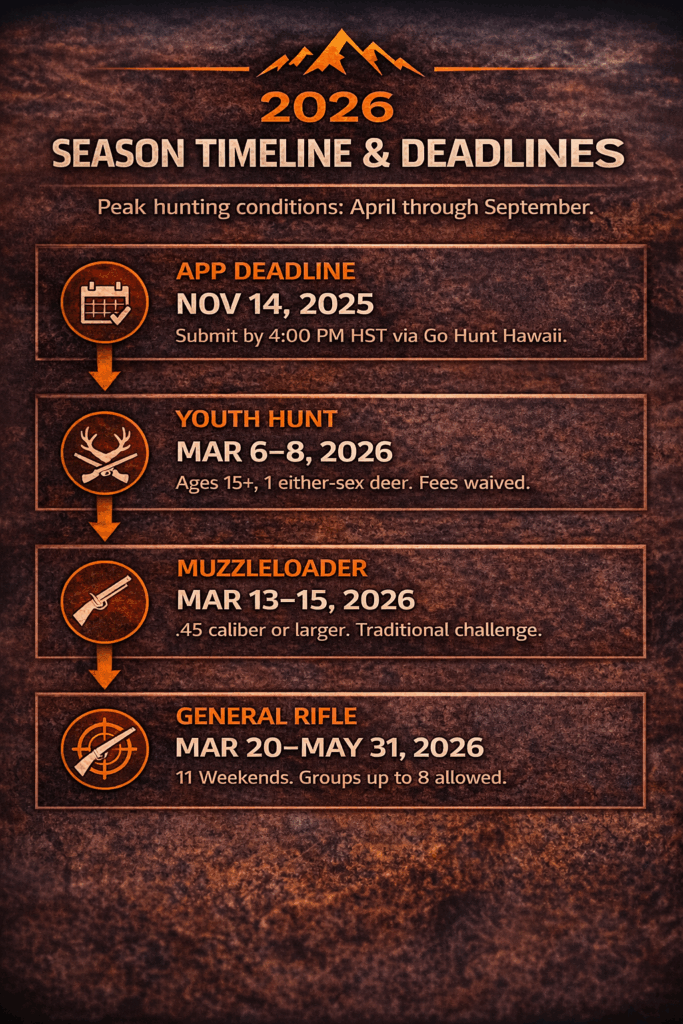
| Youth Hunt | March 6–8, 2026 | 1 either-sex deer | Waived | Waived |
| Muzzleloader Hunt | March 13–15, 2026 | 1 either-sex deer | $20 | $125 |
| General Rifle Hunt | March 20–May 31, 2026 (11 weekends) | 1 either-sex deer | $20.00 | $125 |
Application Deadline: 4:00 PM HST, Friday, November 14, 2025
What every hunter needs:
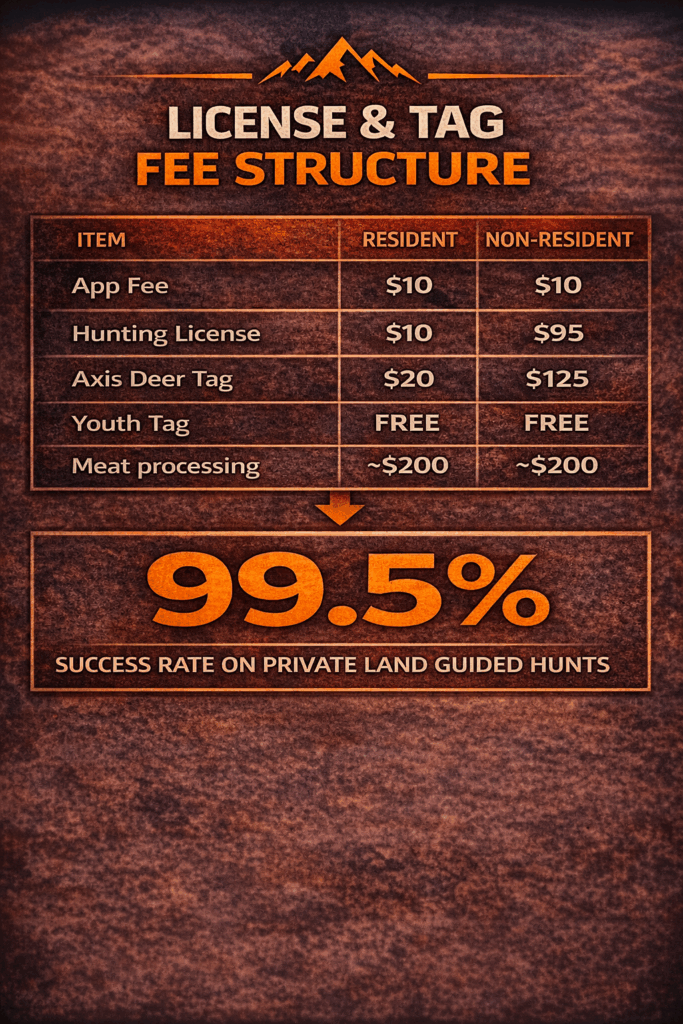
- Valid Hawaii hunting license ($10 resident / $95 non-resident)
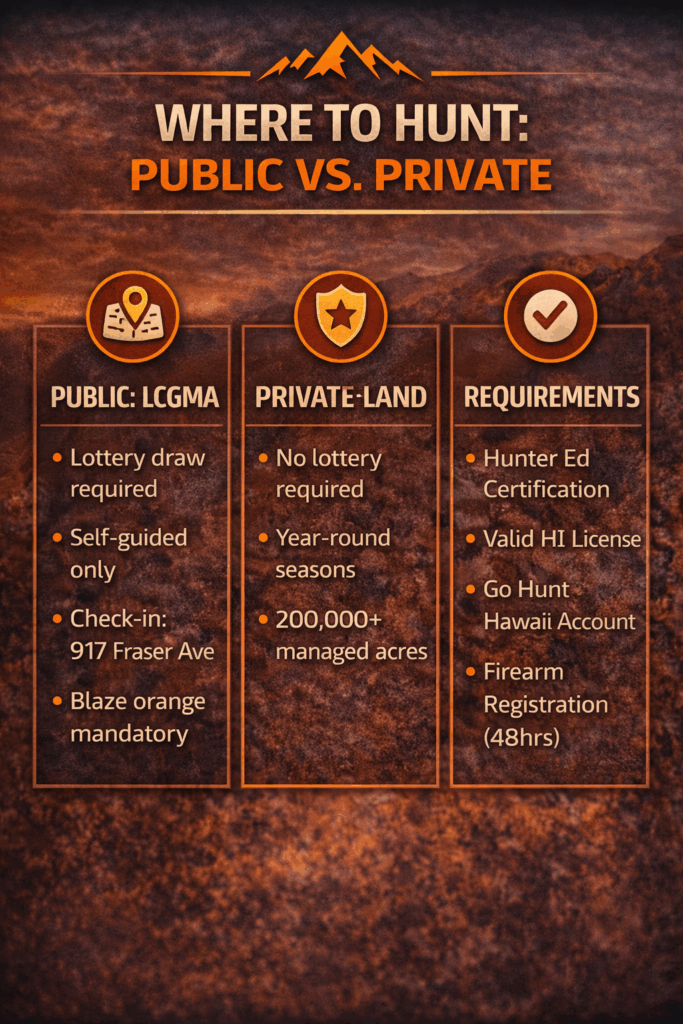
- Hunter education certification (or Letter of Exemption for non-residents)
- Successful lottery drawing for chosen hunt type
- Axis deer tag purchased through Go Hunt Hawaii portal
- Check-in at Lānaʻi hunting station (917 Fraser Ave, Lānaʻi City)
Important note: “Lānaʻi resident” status means six continuous months living on the island and gets you priority in lottery drawings over other Hawaii residents and non-residents.
Lānaʻi Axis Deer Hunting Seasons
Lānaʻi runs three different hunting opportunities, each with separate lottery drawings and specific rules. All hunts limit participation for non-Lānaʻi residents, with Lānaʻi residents getting first priority in every drawing.
Youth Hunt
Youth hunt runs March 6–8, 2026—a special weekend just for young hunters. Youth hunters need to be at least 15 years old for axis deer, and hunter education is required for ages 10-17.
Adult supervision is mandatory, but here’s the catch: “The youth will be the only hunter allowed to hunt. The adult will not be able to hunt as he/she is there to guide the youth in hunter ethics and safety.” This keeps the focus entirely on the young hunter’s experience and success.
Safety is non-negotiable—all youth hunters and adults must wear blaze orange. Weapon choices are flexible: “Each youth hunter shall be limited to carry one bow of legal draw weight, muzzleloader rifle of .45 caliber or larger, rifle, or shotgun in the hunting areas.”
Tag fees get waived for youth, making this an affordable way to get young hunters started.
Muzzleloader Hunt
Muzzleloader hunt happens March 13–15, 2026—one weekend of traditional hunting challenge. You need .45 caliber or larger muzzleloader rifles. This hunt usually gets fewer applicants than general rifle, which might boost your lottery odds.
General Rifle Hunt
Eleven weekends from March 20–May 31, 2026 make this the main hunting opportunity for most people. Minimum caliber is .223 or larger.
You can apply in groups up to eight people—if your group gets drawn, everyone gets tags. Perfect for family trips and group hunting adventures.
The extended season hits good weather patterns since April through September gives you the best hunting conditions in Hawaii. March-May catches the start of this sweet spot.
Hawaii Hunting Licenses and Permits
Hawaii’s licensing system looks complicated at first, especially when you’re figuring out resident versus non-resident requirements. We’ve broken down the official DLNR requirements into simple steps so you know exactly what you need.
Hawaii Hunting Licenses
| License Type | Cost | Valid For | Where to Purchase |
|---|---|---|---|
| Resident Hunting License | $10.00 | 1 year | Go Hunt Hawaii portal |
| Non-Resident Hunting License | $95.00 | 1 year | Go Hunt Hawaii portal |
Hawaii residency for hunting follows standard state residency rules. But there’s a key difference for Lānaʻi hunts: “A Lānaʻi resident is defined as an individual who has a permanent mailing address and has lived on the island for six continuous months.” This Lānaʻi resident status gives you priority in lottery drawings over other Hawaii residents and non-residents.
Hunter education certification is required for everyone. For non-residents, any valid hunter education works—doesn’t matter which state issued it. Non-residents usually need a Letter of Exemption showing their home state’s hunter education certification.
Want to explore other hunting opportunities across the Hawaiian islands? Check out our comprehensive Hawaii hunting season guide for details on more species and seasons.
Lānaʻi Axis Deer Permits and Tags
The lottery application process demands attention to deadlines and procedures. Here’s how it works:
- Create Go Hunt Hawaii Account: Register at gohunthawaii.ehawaii.gov
- Select Hunt Type: Pick Youth, Muzzleloader, or General Rifle
- Pay Application Fee: $10 per person application fee is required whether you win or lose
- Submit Before Deadline: Applications due by 4:00 PM HST, Friday, November 14, 2025
- Wait for Lottery Results: DLNR runs drawings and notifies winners
- Purchase Tags: If selected, buy axis deer tags ($20 resident / $125 non-resident)
Group applications work for up to eight people—if your group wins, everyone gets tags. Makes it much easier for families and hunting parties to hunt together.
Check-in is mandatory: “After purchasing tags/permits you will be required to check in prior to hunting. You can check in physically at an established hunter check-in station OR you can check in using the mobile application called OuterSpatial.” Make sure to verify OuterSpatial app availability for the 2026 season.
Where to Hunt Lānaʻi Axis Deer
Most hunters focus on the public land lottery, but knowing all your options—including private land alternatives—can dramatically improve your chances of experiencing Lānaʻi’s world-class axis deer hunting. This is especially true for non-residents facing limited spots in public hunts.
Public Lands: Lānaʻi Cooperative Game Management Area
All public axis deer hunting on Lānaʻi happens in the Lānaʻi Cooperative Game Management Area (LCGMA), managed by Hawaii DLNR Division of Forestry and Wildlife (DOFAW). Logistics require careful planning. The mandatory check station sits at 917 Fraser Ave, Lānaʻi City—you must check in before hunting and check out after. Blaze orange exterior garments are required, but camouflage orange won’t cut it.
Contact the local DOFAW branch before your hunt for the best experience. They’ll give you current info on hunting conditions, access routes, and any temporary restrictions that might affect your hunt.
Commercial guides can’t operate on public land hunts on Lānaʻi, so you need to be self-sufficient in navigation, game recovery, and field dressing.
Guided Hunts
Commercial guides are banned on LCGMA public hunts, but guided hunting exists through private land outfitters. These operations provide professional help, transportation, and much higher success rates for hunters willing to pay for a premium experience.
Private land outfitters report 99.5% opportunity rates across more than 200,000 acres of managed property. This success rate shows the benefits of less hunting pressure, better-managed deer herds, and professional guidance from experienced local hunters.
Guided hunt packages typically include bunkhouse lodging, airport transportation, utility terrain vehicles, two animals per guest, and safety equipment. For mainland hunters unfamiliar with Lānaʻi’s terrain and deer behavior, professional guides provide invaluable local knowledge and logistical support.
Private Land Hunting
Private land hunting offers serious advantages over the public lottery system, especially for non-residents and hunters wanting guaranteed access. Key benefits include year-round seasons, no lottery requirements, professional guidance availability, less hunting pressure, and better-managed deer herds.
Trophy quality on private land is exceptional—bucks average 29-32 inches and reach up to 38-inch main beams. The managed hunting pressure and professional herd management on private properties often produce bigger, more mature animals than public land hunting.
Finding private hunting land in Hawaii can be tough—that’s where Hunting Locator helps. Our platform connects hunters directly with landowners offering hunting leases and properties for sale across Hawaii. Whether you want a one-time guided hunt or long-term private access, you can browse available opportunities, filter by location and game type, and connect with landowners who understand hunters’ needs.
For hunters interested in combination hunts, some private land operations let you pursue multiple species during your visit. Check out our Lānaʻi mouflon sheep guide for details on adding sheep to your axis deer hunt.
You can browse Hawaii hunting leases to explore current private land opportunities across the Hawaiian islands.
Axis Deer Hunting Tips for Lānaʻi Success
Successful axis deer hunting on Lānaʻi requires understanding both these animals’ unique behavior and the island’s specific hunting conditions. Here are the key strategies experienced hunters use to maximize success:
- Hunt the Edges During Peak Activity: Axis deer behave like elk—they hide during the day and come out to feed in the evenings. Focus your efforts on field edges, water sources, and feeding areas during early morning and late afternoon.
- Master Wind Management: Axis deer have incredible senses, especially smell. Always hunt with wind in your favor and be ready to adjust position as wind patterns change throughout the day.
- Use Spot-and-Stalk Techniques: Lānaʻi’s open terrain favors spot-and-stalk hunting. Bring shooting sticks and quality binoculars—the rocky terrain and thick brush make steady shooting positions challenging.
- Prepare for Varied Terrain: Lānaʻi’s landscape ranges from open grasslands to rocky, brush-covered areas. Wear appropriate footwear for rocky terrain and be ready for challenging recovery situations in thick cover.
- Plan for Meat Care: Hawaii’s tropical climate demands immediate attention to meat care. Bring a quality cooler, ice, and game bags. Processing and packaging costs run around $200 for axis bucks if you use professional services.
For hunters looking to upgrade gear for tropical hunting conditions, visit the Hunting Locator store to find equipment specifically suited for Hawaii’s unique hunting environment.
More Resources from Hunting Locator
Expand your Hawaii hunting knowledge and explore additional opportunities with these comprehensive guides and resources:
- Hawaii Hunting Season Guide – Complete overview of hunting seasons across all Hawaiian islands, including dates, regulations, and species information
- Hawaii Axis Deer Hunting – In-depth guide covering axis deer hunting across multiple Hawaiian islands with behavior insights and success strategies
- Hawaii Boar Hunting Guide – Everything you need to know about wild boar hunting in Hawaii, including seasons, techniques, and locations
- Hawaii Mouflon Sheep Hunting Season – Lānaʻi – Detailed guide for adding mouflon sheep to your Lānaʻi hunting experience
- Hawaii Hunting Leases – Browse current private land hunting opportunities across Hawaii’s islands
- Hunting Locator Store – Find specialized gear and equipment for tropical hunting conditions
FAQ
When is the application deadline for 2026 Lānaʻi axis deer hunts?
Applications must be submitted by 4:00 PM HST on Friday, November 14, 2025. Late applications aren’t accepted, so mark your calendar and apply early to avoid missing this critical deadline.
What’s the difference between Hawaii resident and Lānaʻi resident for hunting purposes?
Hawaii residents pay $10 for hunting licenses, while Lānaʻi residents are defined as individuals with permanent mailing addresses who have lived on the island for six continuous months. Lānaʻi residents get priority in lottery drawings over other Hawaii residents and non-residents.
Can non-residents bring their own firearms to Hawaii for hunting?
Yes, but you must register firearms with the local police department within 48 hours of arrival. Many hunters find it easier to rent firearms locally or book guided hunts that provide equipment.
How many hunters can apply together as a group?
Applicants may apply in parties up to eight persons. If your group gets selected in the lottery, all party members receive tags, making it easier for families and hunting parties to hunt together.
What happens if I don’t draw a tag in the lottery?
Your $10 application fee isn’t refunded, but you can explore private land hunting options that don’t require lottery drawings. Private land outfitters report 99.5% success rates and offer year-round hunting opportunities.
Are there any free hunting opportunities for youth on Lānaʻi?
Yes, tag fees are waived for youth participating in the March 6-8, 2026 youth hunt. However, youth must be at least 15 years old to hunt axis deer and must be accompanied by a licensed adult who cannot hunt during the youth hunt.
The Final Shot
Lānaʻi’s axis deer hunting represents one of America’s most unique big game opportunities. Where else can you hunt world-class trophy deer on a tropical island? The 2026 public hunting season offers three distinct opportunities through the lottery system, but success requires early planning, understanding complex regulations, and having backup options if you don’t draw tags.
Whether you’re excited about introducing a young hunter during the youth season, drawn to the traditional challenge of the muzzleloader hunt, or planning a group adventure during the general rifle season, Lānaʻi delivers an unforgettable hunting experience. For hunters wanting guaranteed access or extended seasons, private land options provide professional guidance and exceptional success rates that make the investment worthwhile.
Ready to start planning your Lānaʻi axis deer adventure? Explore private hunting opportunities or browse our complete hunting gear selection to ensure you’re properly equipped for this bucket-list hunting experience. Your next great hunting story starts with proper planning—and Lānaʻi’s axis deer are waiting.


