This guide covers the 2026 season dates, license fees, tag costs, and land-access options, so you’re not piecing it together from government pages the week before opening day. Whether you’re a longtime resident or planning your first non-resident trip into gator country, here’s what you need for the Louisiana alligator season 2026.
What’s below:
- Exact 2026 season dates by zone (East, West, and Private Waters/WMAs)
- The full license, permit, and tag breakdown for residents vs. non-residents
- Where to hunt — public lands, private leases, and guided hunts — plus gear tips
Louisiana’s alligator regulations are set and enforced by the LDWF (Louisiana Department of Wildlife and Fisheries). For broader state rules, see our Louisiana hunting season guide or our Louisiana alligator hunting breakdown. Here are the dates.
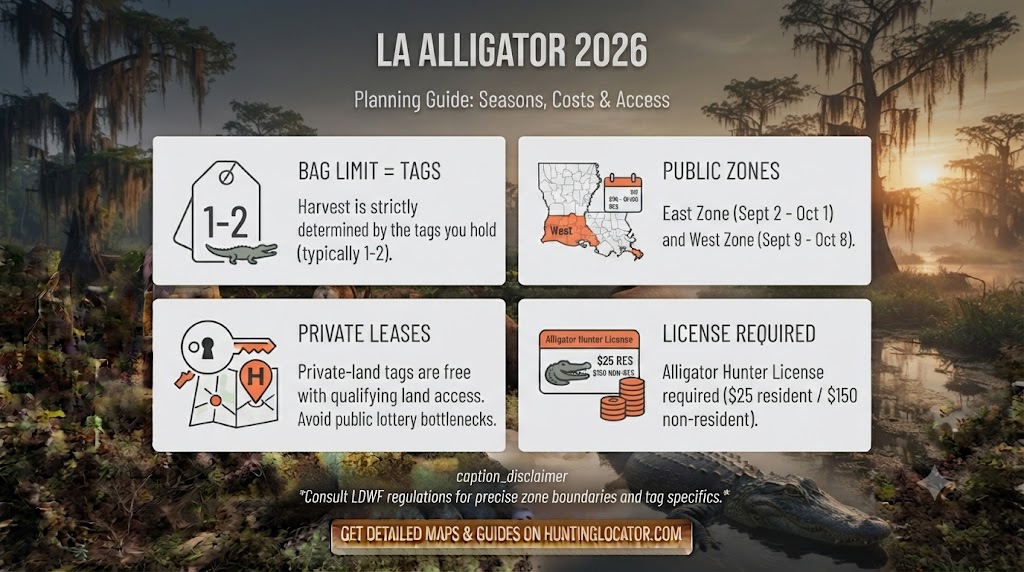
Quick Overview: Louisiana Alligator Season 2026 at a Glance
Louisiana splits public-waters alligator hunting into an East Zone and a West Zone, each with its own opening day. Private Waters and Wildlife Management Areas (WMAs) run on separate schedules set by LDWF. Here’s the breakdown for planning your 2026 hunt.
| Species | Season Type | Start Date | End Date | Bag Limit |
|---|---|---|---|---|
| Alligator | Public Waters (East Zone) | 09/02/2026 | 10/01/2026 | Per tags issued |
| Alligator | Public Waters (West Zone) | 09/09/2026 | 10/08/2026 | Per tags issued |
| Alligator | Private Waters/WMAs | Varies by area | Varies by area | Per tags issued |
“Bag limit” works differently here than it does for most game — it’s simply the number of tags you hold, typically 1 to 2 alligators per person depending on permit type. No tags, no harvest, regardless of how many gators show up on your line. For more on how zones and tags interact, see our full Louisiana alligator hunting guide.
License, Permit & Tag Requirements at a Glance
Before baiting a line, it helps to sort out three terms that trip up first-time hunters: license, tag, and permit.
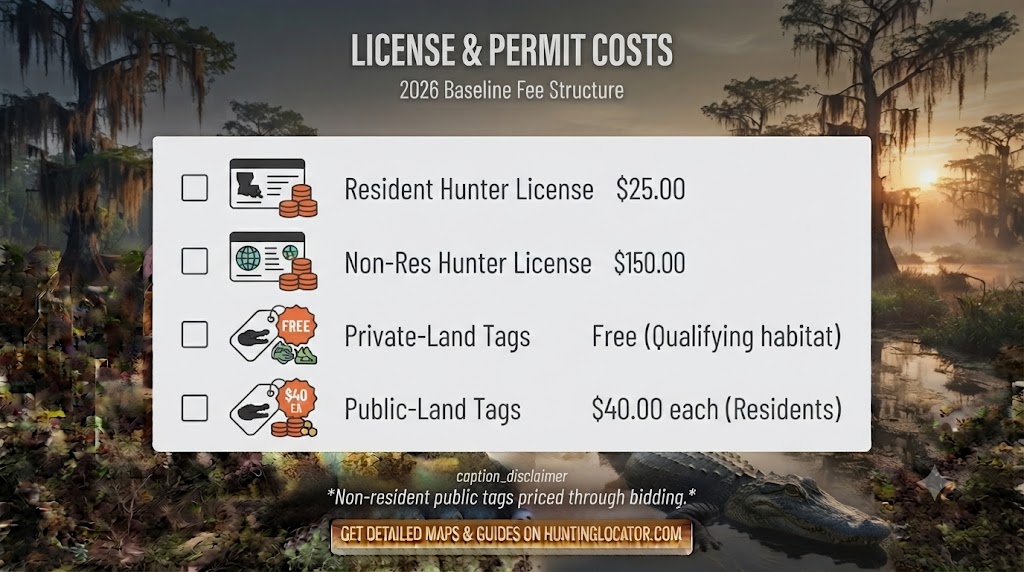
- License — Your legal credential to hunt alligators at all: the Alligator Hunter License. Residents pay $25; non-residents pay $150.
- Tags — Property- and area-specific, tags determine your bag limit. Private-land tags are free, while public-land tags cost $40 for residents or are priced through bidding for non-residents.
- Hunter education requirement — LDWF hunter education requirements apply to alligator hunters, so beginners should confirm eligibility before application season opens.
Keep these three terms straight and the rest of the licensing process moves quickly, even for first-time applicants.
Louisiana Alligator Hunting Seasons
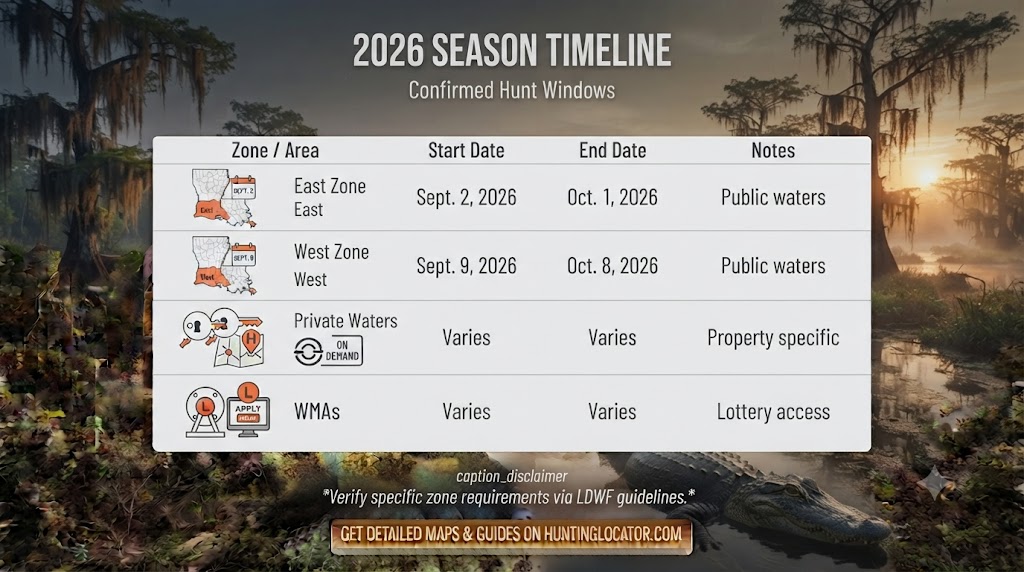
Public-waters alligator hunting is divided by zone, with private lands and WMAs running on their own schedules. The entire public season lasts roughly a month, so knowing your zone and locking in plans early matters.
East Zone Season
The East Zone runs 09/02/2026 through 10/01/2026 on public waters — the earlier-opening of Louisiana’s two public-waters zones. If you’re planning travel or coordinating time off work, this is your target window.
West Zone Season
The West Zone runs 09/09/2026 through 10/08/2026 on public waters, opening exactly one week after the East Zone. That staggered start matters if you’re a non-resident weighing travel logistics, or considering a multi-zone trip to add more days afield.
Private Waters & WMA Seasons
Private Waters and WMA season dates vary by area, set individually for the specific property or wildlife management area. Bag limits work the same way as on public waters — determined by the tags you hold. Resident access to WMA alligator hunting typically runs through LDWF’s lottery program, so if you don’t already have private land access lined up, factor that into your planning.
If you’re leaning toward private-land access instead of the lottery, that’s covered further down. First, the paperwork.
Louisiana Alligator Licenses and Permits
Licensing is straightforward once you know your resident status. The fees and rules below come from LDWF, and getting these numbers right is most of what it takes to plan a hassle-free hunt.
Louisiana Alligator Hunting Licenses
Your starting point is the Alligator Hunter License. Costs from there depend on whether you’re hunting private or public land.
| License / Item | Resident Fee | Non-Resident Fee | Tag Details |
|---|---|---|---|
| Alligator Hunter License | $25 | $150 | Required to hunt/harvest legally |
| Private-Land Tags | Free | Free | Issued for qualifying private wetland habitat |
| Public-Land Tags | $40 each | Priced through bidding | Required for public waters harvest |
Non-residents without their own land access typically hunt as sport hunters and, under LDWF rules, must be accompanied while hunting — worth knowing before you book a trip, since it’s part of why guided hunts exist (more on that below). Whatever tags you’re holding, that number is your bag limit for the season.
Louisiana Alligator Permits & Tags
Tags come in two forms, and knowing which applies to you saves time later. Private-land tags are issued based on qualifying wetland habitat and acreage, and they’re free once you have documented land access. Public-land tags come through LDWF, either via the resident lottery program or, for non-residents, through a bidding process.
Applications for these programs open ahead of the season, with lottery applications for resident WMA and public-lake access historically opening in spring — worth marking on your calendar well before September. Once you’ve harvested an alligator, LDWF also requires tag attachment, validation, and reporting, so the hunt isn’t finished the moment you dispatch your gator. Private landowners applying for tags should have proof of property ownership ready as part of the application.
Where to Hunt Alligators in Louisiana
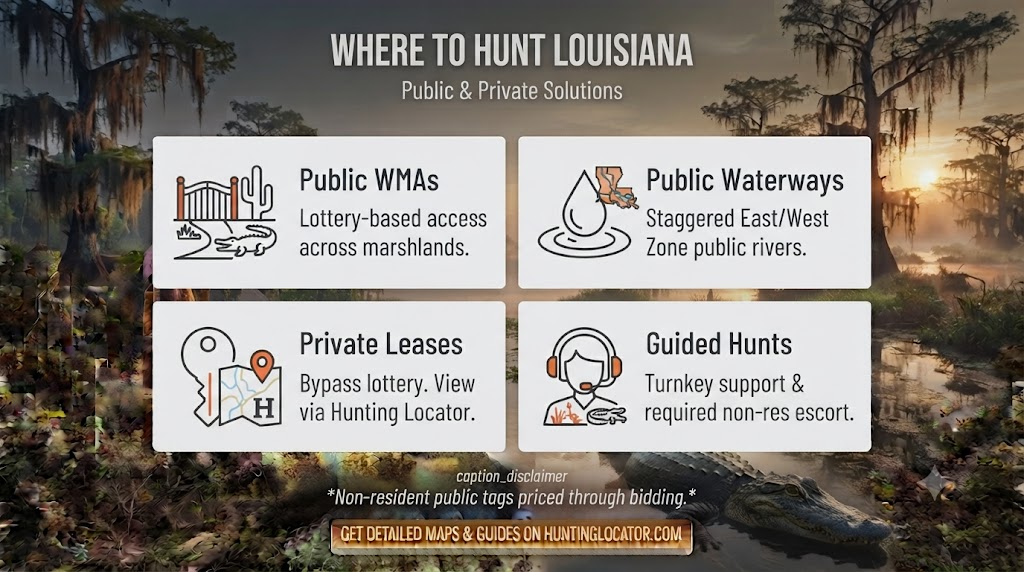
Once your license and tags are sorted, the next question is where. Louisiana hunters generally choose from three pathways — public lands, private leases, and guided hunts — and the right one depends on your experience level, residency status, and how much control you want over your own schedule.
Best Public Lands for Alligator Hunting
Wildlife Management Areas and public lakes are the primary public-waters option for hunters without private land access, generally reached through LDWF’s resident lottery program. Hook-and-line is the standard legal method of take on these areas.
- WMAs and public lakes offer wide-ranging access across the state’s marshes, swamps, and public waterways.
- Lottery-based access means residents apply ahead of season, with no guarantee of a draw.
- Public tags cost $40 each for residents, on top of the base license fee.
- Competition is real — public access is popular, and the lottery system means a spot isn’t guaranteed every year.
Because public access is competitive and largely resident-only, many hunters — especially non-residents locked out of the resident lottery — turn to private leases for more reliable access. Browsing Louisiana hunting leases is often the fastest way to lock in a spot you control.
Private Land Hunting with Hunting Locator
Private land solves two of the biggest headaches of public-waters hunting: tags are free, and there’s no resident-lottery bottleneck. That second point matters for non-residents especially, since it sidesteps a system they’re not even eligible to enter. Add the flexibility to hunt on your own schedule, and it’s clear why private access appeals to a lot of gator hunters.
There are two paths here: leasing private land for the season, or buying land outright for long-term access. Leasing gets you into the marsh fast and at a lower upfront cost — a reasonable option if you’re testing a new area or don’t want a long-term commitment. Buying land costs more, but it means you’re not at the mercy of a lease renewal or a landowner’s change of heart. You have access on your own terms, season after season.
This is the gap Hunting Locator was built to close. We connect hunters directly with landowners across the country who are ready to lease or sell qualifying land, cutting out the guesswork and cold-calling that used to define the search for private hunting access. The listings are vetted and ready whenever you’re ready to look, so you’re not scrambling for a spot once the season’s already open.
Browse Louisiana alligator leases and see what’s available in your target zone. Private leases are the most practical pathway for non-residents shut out of the lottery, and the fastest way for residents to lock in a reliable spot without waiting on a draw.
Guided Alligator Hunts
If you’d rather skip the logistics, a guided hunt is the turnkey option — particularly useful for non-residents, who typically must be accompanied while hunting, and for beginners who want an experienced hand on their first trip.
Guided hunts are best understood by who they serve and what they typically handle:
- Best for non-residents who need an accompanying hunter to satisfy Louisiana’s requirements
- Best for first-timers who want hands-on guidance through baiting, checking lines, and dispatch
- Typically covers access logistics, boat transportation, and on-the-water instruction
Rather than chasing down individual outfitters online, start with Hunting Locator’s Louisiana leases to find your access point — whether you’re leasing land yourself or lining up help for a guided trip.
Alligator Hunting Tips
A short season doesn’t leave much room for trial and error. Preparation, rigging, and gear are what separate a successful hunt from a frustrating one.
- Master the hook-and-line setup — The standard rig involves a baited hook suspended just above the water’s surface, typically using chicken as bait, anchored to sturdy line. Get this dialed in before opening day so you’re not fumbling with rigging while gators are already moving.
- Hunt within legal daylight hours — Alligator harvest happens during legal daytime hours, so plan your days around sunrise and sunset rather than counting on nighttime opportunities.
- Check your lines daily — Daily checks aren’t optional; they’re necessary for a humane, prompt dispatch and for staying compliant with your tag obligations.
- Prep your boat and marsh access — Swamp and marsh terrain demands boat equipment that can handle shallow water, thick vegetation, and unpredictable footing, so run through your gear before the season opens.
- Gear up before opening day — A 30-day season leaves little time for last-minute scrambling. Find hooks, line, and gear at the Hunting Locator store.
More Resources from Hunting Locator
Everything else Hunting Locator offers to help Louisiana hunters plan their season:
- Hunting Locator homepage — Your hub for leases, land listings, and gear across every state, not just Louisiana.
- Louisiana hunting leases — Browse current Louisiana lease and land listings for alligator and other game.
- Louisiana alligator hunting guide — A deeper dive into gator season specifics beyond this overview.
- Louisiana hunting season guide — The master state-wide season overview covering every species.
- Louisiana deer hunting season — Plan your whitetail season alongside your gator hunt.
- Louisiana small game hunting season — Small game dates and details for the rest of your year afield.
- Louisiana turkey hunting season — Get ahead on spring turkey planning.
- Louisiana waterfowl hunting season — Natural overlap with gator country in the state’s marshes and swamps.
- Hunting Locator store — Gear up with the right hooks, line, and equipment for your hunt.
Frequently Asked Questions
When does Louisiana alligator season open in 2026?
The East Zone runs 09/02/2026 through 10/01/2026 and the West Zone runs 09/09/2026 through 10/08/2026 for public waters, per LDWF. Private Waters and WMA dates vary by area, so check your specific property or assigned zone for exact timing.
How much does a Louisiana alligator hunting license cost?
An Alligator Hunter License costs $25 for residents and $150 for non-residents, per LDWF. Private-land tags are free once you have qualifying access, while public-land tags run $40 for residents or are priced through bidding for non-residents.
What’s the bag limit for alligator hunting in Louisiana?
Your bag limit equals the number of tags you hold — generally 1 to 2 alligators per person, depending on permit type. There’s no separate daily or season limit beyond your tag count, so your tags are effectively your harvest quota.
Can non-residents hunt alligators in Louisiana?
Yes — non-residents can hunt with a $150 non-resident Alligator Hunter License. Non-residents without land access are typically excluded from the resident public lottery, so most hunt through private leases or accompanied, guided hunts instead.
What’s the difference between an alligator license, permit, and tag?
Your license is your legal credential to hunt at all. Tags are property-specific and set your actual bag limit — the number of alligators you can harvest. Permits and eligibility tie back to how you access land, whether private, public lottery, or guided.
How do I find private land to hunt alligators in Louisiana?
Private leases offer free tags and reliable access without competing in a resident-only lottery. Browse current Louisiana hunting leases to see available properties in your target zone before the season opens.
The Final Shot
Louisiana’s 2026 alligator season comes down to a handful of essentials: the East Zone runs 09/02–10/01 and the West Zone runs 09/09–10/08, licenses split at $25 for residents and $150 for non-residents, and your bag limit is always determined by the tags you hold. From there, it’s about picking your access pathway — public lottery, private lease, or guided hunt — based on your residency and experience level.
Confirm your zone, secure your license and tags, and lock in your land before everyone else does. This guide was built to save you the scramble, and Hunting Locator is here to connect you to the access that turns a plan into an actual hunt. Start planning your hunt today.


