Drawing a permit is only half the battle. With Maine’s massive moose population of 60-70,000 animals—the largest in the lower 48 states—your success depends on where you hunt and how well you prepare. This guide shows you everything you need to know about Maine moose hunting in 2025, from navigating the permit lottery to accessing prime hunting grounds most hunters never discover.
What you’ll discover:
- Complete 2025 season dates, permit costs, and application deadlines
- Proven strategies for accessing high-success hunting areas beyond crowded public land
- Expert tips that separate successful hunters from the 28% who go home empty-handed
Whether you’re applying for your first Maine moose permit or building bonus points for years, this guide transforms your approach from hoping for lottery luck to implementing a strategic plan for moose hunting success.
Maine Moose Hunting Quick Reference Guide
Here’s the essential information for planning your 2025 Maine moose hunt, including current permit costs, season dates, and key zones where success rates can hit 80%+.
The 2025 Maine Moose Lottery happens in Farmington, Maine on June 21st, 2025, with applications accepted beginning in January through the May 1st deadline.
2025 Permit Costs & Fees
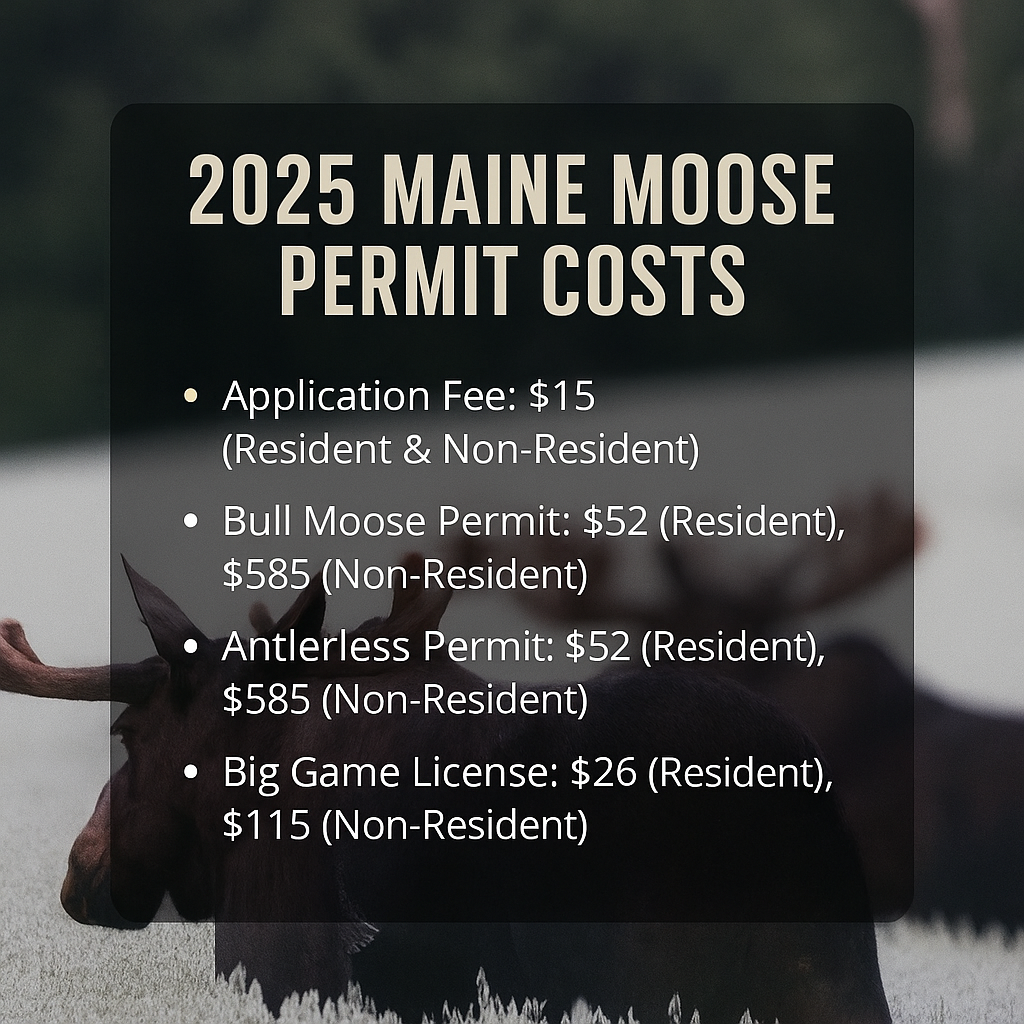
| Permit Type | Resident Cost | Non-Resident Cost | Application Fee |
|---|---|---|---|
| Bull Moose Permit | $52 | $585 | $15 |
| Antlerless Permit | $52 | $585 | $15 |
| Big Game License | $26 | $115 | N/A |
2025 Season Dates
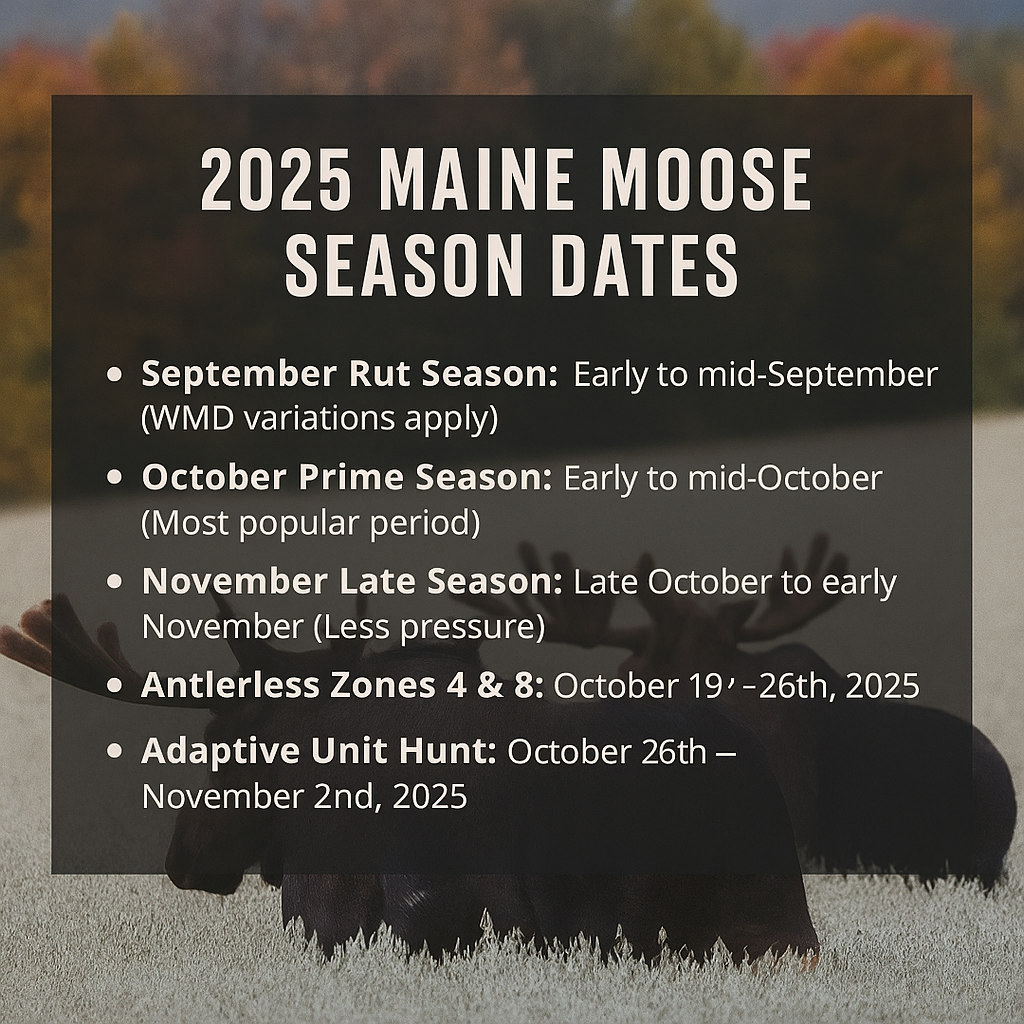
- September Rut Season: Early to mid-September (varies by WMD)
- October Prime Season: Early to mid-October (most popular)
- November Late Season: Late October to early November
- Antlerless Zones 4 & 8: October 19th to 26th, 2025
- Adaptive Unit Hunt: October 26th to November 2nd, 2025
For complete hunting regulations and additional opportunities, check out our comprehensive Maine hunting guide.
Success Rates by Zone
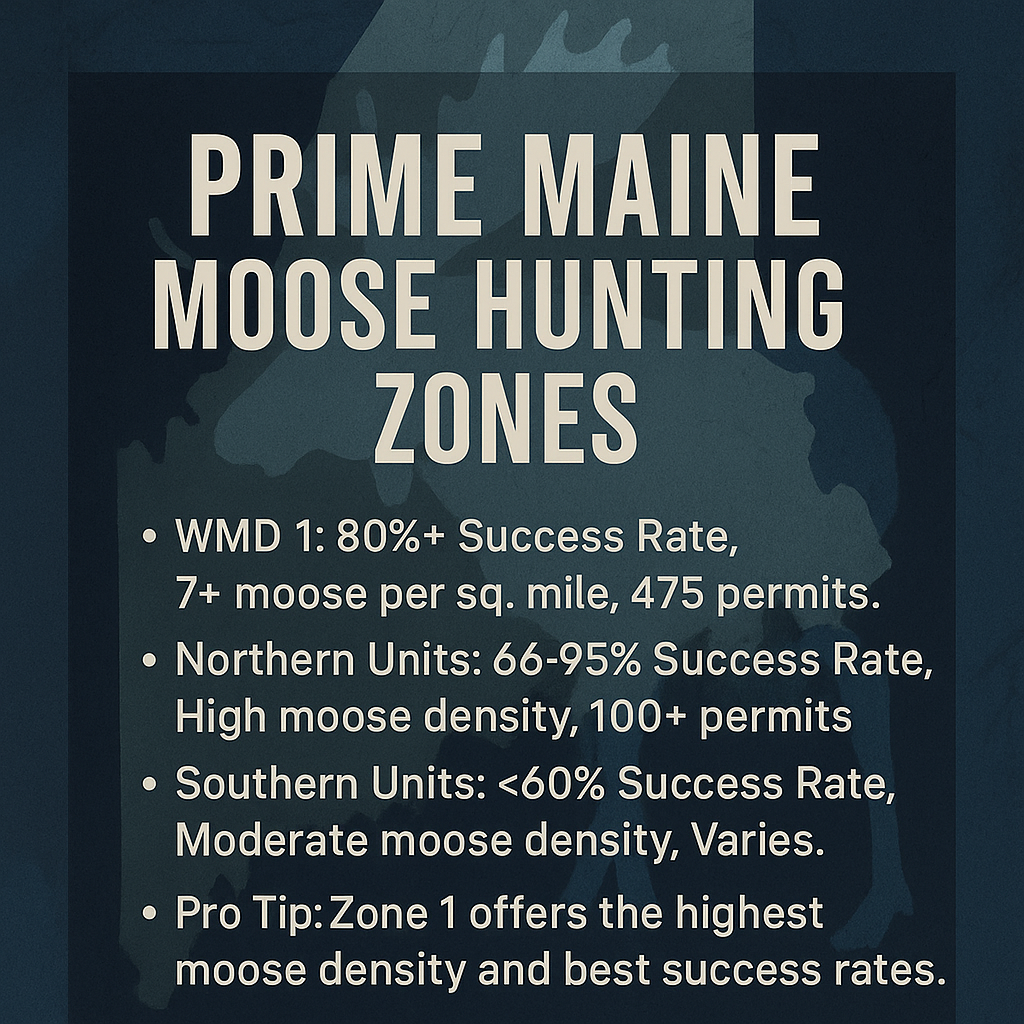
Moose hunting is allowed in 20 of Maine’s 29 Wildlife Management Districts, but success rates vary dramatically between zones. Northern districts consistently outperform southern zones due to higher moose densities.
| WMD | Success Rate | Moose Density | Permits Issued |
|---|---|---|---|
| WMD 1 | 80%+ | 7+ per sq. mile | 475 |
| Northern Units | 66-95% | High | 100+ each |
| Southern Units | <60% | Moderate | Varies |
Pro Tip: Zone 1 has the highest moose density at over 7 moose per square mile, which explains why hunter success rates there have topped 80% over the last five years.
Maine Moose Permits and Licenses
Understanding Maine’s permit system and requirements is crucial for planning your hunt and maximizing your chances of drawing a coveted moose permit.
The Lottery Process
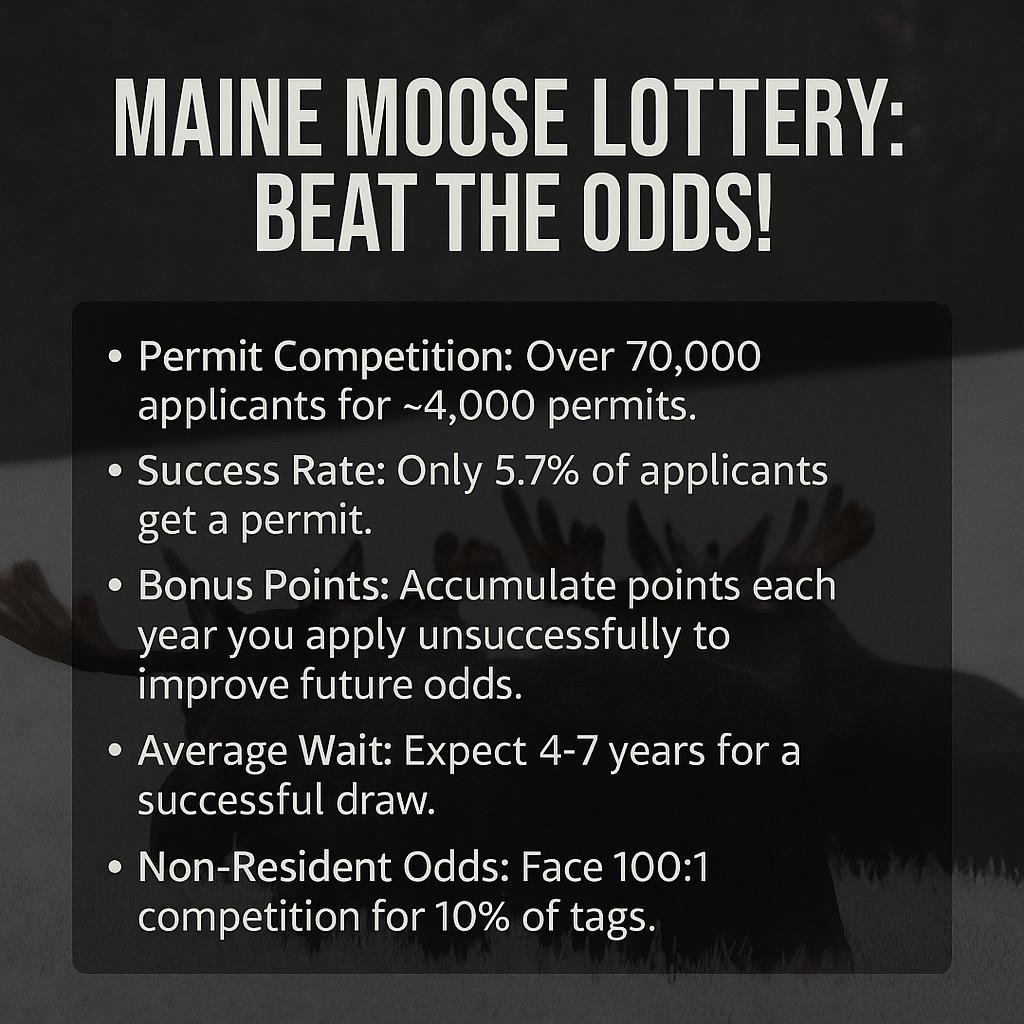
The reality is sobering: over 70,000 applications for the 4,000 moose permits typically issued creates fierce competition. However, Maine’s bonus point system provides hope for persistent applicants.
Key Lottery Facts:
- Application Period: January through May 1st annually
- Drawing Date: June 21st, 2025 in Farmington, Maine
- Bonus Points: Accumulate each year you apply unsuccessfully
- Average Wait Time: Between 4-7 years for a successful draw
- Guaranteed Permits: Residents 65+ with 30+ points are guaranteed a permit
Winners face a 3-year ineligibility period to reapply for a moose permit, making each opportunity precious.
Resident vs. Non-Resident Allocations
Non-resident hunters face steeper odds. Non-residents need to beat out roughly 100 other applicants for one of the 10% of moose tags allocated to non-residents.
Allocation Breakdown:
- Resident Allocation: 90% of available permits
- Non-Resident Allocation: 10% of available permits
- Cost Difference: Non-residents pay over 11 times more than residents
- Competition Level: Approximately 100:1 odds for non-residents
Beyond the standard lottery, Maine offers alternative permit pathways. The Commissioner may allocate up to 2% of the moose hunting permits for special programs including lodge allocations, adaptive unit permits, sub-permittee opportunities, and disabled veteran allocations.
Where to Hunt Maine Moose
Your hunting location choice often determines the difference between success and going home empty-handed, with success rates varying dramatically between public and private land options.
Best Public Lands
Public land offers free access after drawing your permit but comes with significant challenges. While the statewide success rate averages 72%, this includes both public and private land hunters.
Top Public Hunting Areas:
- North Maine Woods: Largest contiguous public hunting area with gate fees of $15.00 per day per nonresident and $11.00 per day for residents
- Baxter State Park: Limited hunting opportunities with special regulations
- State Wildlife Management Areas: Scattered throughout moose hunting zones
- Paper Company Lands: Some timber companies allow public access
Public Land Challenges:
- Heavy hunting pressure in accessible areas
- Limited pre-season scouting opportunities
- Navigation difficulties across vast unfamiliar terrain
Guided Hunts
Fully guided hunts represent the premium option with costs reflecting comprehensive services. Fully guided Maine moose hunts cost $5,500 per week for hunter and sub-permittee, while some outfitters charge $6,000 for permit holder, with an additional $900 for sub-permittee.
| Service Level | Cost Range | Success Rate | Includes |
|---|---|---|---|
| Fully Guided | $5,500-$6,900 | 95%+ | Lodging, meals, guide, retrieval |
| Semi-Guided | $3,000-$4,000 | 80-90% | Limited services, some meals |
| Land Access Only | $500-$1,500 | Varies | Property access, basic directions |
Private Land Hunting
Private land hunting offers significant advantages explaining why some outfitters report 95% success rate putting Maine trophy moose within shooting range.
Benefits include:
- Exclusive access
- Pre-season scouting opportunities
- Local knowledge
- Managed habitat through timber operations
Commercial logging creates prime moose habitat through clear cuts, regrowth areas, and diverse forest management that attracts and holds moose populations. Private landowners often prefer working with serious hunters who respect the land and follow proper protocols.
Pro Tip: Hunting Locator bridges the gap between expensive guided hunts and challenging public land access by connecting hunters directly with Maine landowners offering hunting leases and land for sale. The platform provides exclusive access at costs typically 70-80% less than guided hunts, plus landowner knowledge about moose behavior and patterns.
Moose Hunting Tips
Success in Maine’s moose woods requires understanding moose behavior, seasonal patterns, and proven hunting strategies that separate successful hunters from those who go home empty-handed.
Season-Specific Success Strategies
September Rut Hunting:
- Calling can be very effective with bulls responsive to cow calls and grunts
- Warm temperatures limit hunting to early morning and evening
October Prime Season:
- Cooler weather allows all-day hunting
- Improved visibility as foliage falls
- Hunter competition peaks
November Late Season:
- Less hunting pressure but lower success rates
- Focus on feeding areas and travel corridors
Essential Equipment Requirements
Firearms:
- Minimum .22 magnum for deer, larger calibers recommended for moose
Archery:
- Minimum draw weight of 45 pounds required with broadhead arrows
Field Processing:
- Sharp knives, bone saw, and game bags for field dressing large game
Navigation:
- GPS units, maps, and compass for large hunting areas
Pre-Season Preparation
Successful hunters average 24 hours hunting and 42 hours scouting. Use scouting time to locate:
- Feeding areas
- Travel corridors
- Wallows and rubs
Understanding moose patterns in your hunting area before season opens dramatically increases success probability.
For year-round practice and skill development, consider exploring other Maine hunting opportunities through our Maine deer hunting guide to stay sharp between moose seasons.
More Resources from Hunting Locator
Maximize your Maine hunting success with these specialized resources designed to help you find prime hunting opportunities and navigate regulations effectively.
- Maine Hunting Land for Sale: Browse available hunting properties throughout Maine for permanent access to prime moose habitat
- Maine Deer Hunting Guide: Comprehensive guide to Maine’s deer hunting opportunities for year-round skill development
- Complete Maine Hunting Guide: Full overview of all hunting opportunities and regulations in Maine
- Private Land Access Platform: Connect directly with Maine landowners offering hunting leases and exclusive access opportunities
Frequently Asked Questions
How much does a Maine moose permit cost?
Maine moose permits cost $52 for residents and $585 for non-residents, plus a $15 application fee regardless of residency. Additional costs include the required Big Game license at $26 for Maine residents and $115 for non-residents.
What are the odds of drawing a Maine moose permit?
Just 5.7% of applicants receive permits, with 72,294 people applying for 4,105 available permits in 2024. The bonus point system improves odds over time, with average wait time between 4-7 years for a successful draw.
Can non-residents hunt moose in Maine?
Yes, but with significant limitations. Non-residents receive only 10% of moose tags allocated, creating extremely fierce competition. Non-resident permits cost $585 compared to $52 for residents, plus higher license fees.
When is Maine moose season 2025?
Maine offers three distinct seasons: September (during the rut), October (prime season), and November (late season). Antlerless hunts in Zones 4 & 8 run October 19th to 26th, 2025, while the adaptive unit hunt runs October 26th to November 2nd, 2025.
Do I need a guide for Maine moose hunting?
Guides aren’t required, but success rates vary significantly. While the statewide success rate averages 72%, some guided operations report 95% success rates. Private land leases through Hunting Locator offer exclusive access and landowner knowledge at a fraction of guided hunt costs.
The Final Shot
Maine’s moose hunting opportunity represents one of North America’s premier big game experiences, but success requires more than beating the 5.7% lottery odds. With Maine’s 60-70,000 moose population offering incredible potential, your hunting strategy determines whether you join the successful 72% or return home empty-handed.
The smart approach combines realistic lottery expectations with proactive land access planning. Whether you draw a permit this year or you’re building bonus points for future seasons, establishing relationships with Maine landowners through Hunting Locator transforms uncertainty into opportunity. Instead of gambling on crowded public land after waiting years for a permit, secure exclusive access to prime moose habitat where success rates exceed 80%.
Apply for the lottery with realistic expectations, but don’t let your success depend entirely on beating overwhelming odds. Start exploring private land opportunities now through Hunting Locator, build relationships with landowners, and position yourself for success regardless of lottery results.


