This Maine waterfowl guide pulls together the 2026–2027 season dates, bag limits, licensing costs, and access options for Maine waterfowl hunting. Hunting Locator put it together so you can spend less time hunting for information and more time in the blind. We’ve also linked out to Maine’s upland bird seasons and other Maine hunts you might be planning around your waterfowl trip.
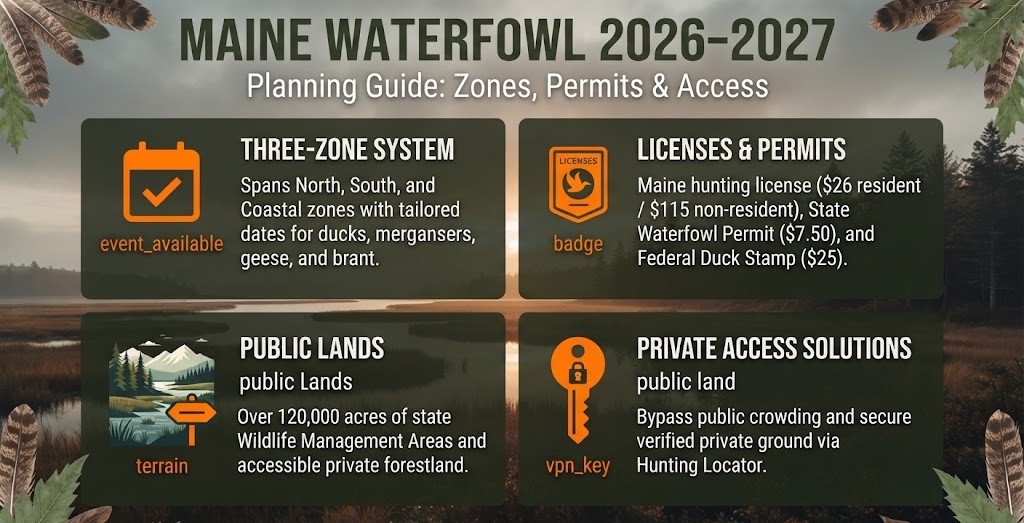
It’s built for two kinds of hunters: Maine residents who need the updated dates fast, and non-residents sorting out licenses, land access, and possibly a guide. Maine runs its waterfowl program on a three-zone system — North, South, and Coastal — and every date and bag limit here depends on which zone you’re hunting. Find your zone first, then use the rest of the guide to plan.
Here’s what’s covered:
- Exact 2026–2027 season dates and bag limits by zone for ducks, mergansers, Canada geese, snow geese, and brant
- License, permit, and Federal Duck Stamp requirements and costs for both residents and non-residents
- Where to hunt — public land, private leases through Hunting Locator, guided hunt options, and the gear to get ready
Quick Overview: 2026–2027 Maine Waterfowl Seasons at a Glance
Here’s the master reference table for Maine’s 2026–2027 waterfowl seasons, broken out by zone.
| Species | Zone | Season Dates | Daily Bag Limit | Possession Limit |
|---|---|---|---|---|
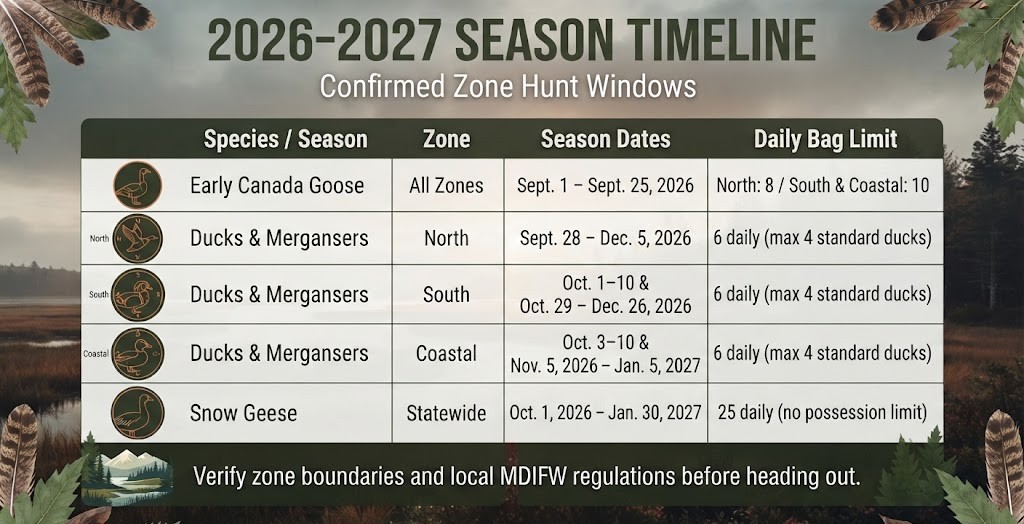
| Canada Goose (Early) | All Zones | Sept 1 – Sept 25, 2026 | North: 8/day; South & Coastal: 10/day | North: 24; South & Coastal: 30 |
| Ducks & Mergansers | North | Sept 28 – Dec 5, 2026 | 6 (standard ducks not listed under exceptions: 4) | 18 |
| Ducks & Mergansers | South | Oct 1–10, 2026 & Oct 29 – Dec 26, 2026 | 6 (standard ducks not listed under exceptions: 4) | 18 |
| Ducks & Mergansers | Coastal | Oct 3–10, 2026 & Nov 5, 2026 – Jan 5, 2027 | 6 (standard ducks not listed under exceptions: 4) | 18 |
| Canada Geese (Regular) | North | Oct 1 – Dec 9, 2026 | 2/day | 6 |
| Canada Geese (Regular) | South | Oct 1–10, 2026 & Oct 29 – Dec 26, 2026 | See current MDIFW limits | See current MDIFW limits |
| Canada Geese (Regular) | Coastal | Oct 3–10, 2026 & Oct 24, 2026 – Jan 5, 2027 | 3/day | 9 |
| Snow Geese | Statewide | Oct 1, 2026 – Jan 30, 2027 | 25/day | No possession limit listed |
| Brant | North | Sept 28 – Oct 31, 2026 | 1/day | 3 |
| Brant | South | Oct 1–10, 2026 & Oct 29 – Nov 21, 2026 | 1/day | 3 |
| Brant | Coastal | Oct 3–10, 2026 & Dec 10, 2026 – Jan 5, 2027 | 1/day | 3 |
Treat these dates as a starting point. Confirm final dates and any last-minute adjustments with Maine DIFW’s official migratory bird regulations before you head out.
Beyond dates and limits, every Maine waterfowl hunter needs the right paperwork in hand:
- A valid Maine hunting license (resident or non-resident)
- The State Migratory Waterfowl Permit ($7.50)
- A Federal Duck Stamp ($25.00) for hunters 16 and older
- Hunter education certification, required for first-time license buyers
The licenses and permits section below breaks down exactly what each of these costs and how they fit together. For now, keep this table bookmarked as your Maine duck season 2026 reference for every zone.
Maine Waterfowl Hunting Seasons by Species
Dates and bag limits shift depending on which of Maine’s three zones you’re hunting, so confirming your zone before opening day matters — it’s the difference between a legal hunt and a costly mistake. Below is a breakdown by species and what applies where.
Ducks & Mergansers
Duck and merganser season dates split by zone: North runs September 28 through December 5, 2026; South runs October 1–10 and October 29 through December 26, 2026; and Coastal runs October 3–10 and November 5, 2026 through January 5, 2027. Both the South and Coastal zones have a gap between their two date ranges — that’s a genuine split season, not an error, so mark your calendar accordingly.
The daily bag limit is 6, though standard ducks not listed under specific exceptions are capped at 4 per day. The possession limit — the maximum number of birds you can legally have on hand after multiple days afield — sits at 18. Along the coast, this stretch of Maine draws dedicated eider and scoter hunters from well beyond state lines every fall.
Canada Geese (Early & Regular)
The early Canada goose season runs September 1 through September 25, 2026, statewide, with a generous bag limit: 8 per day (24 in possession) in the North Zone, and 10 per day (30 in possession) in the South and Coastal zones. It’s a strong opening opportunity to kick off the season.
The regular Canada goose season follows a different rhythm by zone. The North Zone runs October 1 through December 9, 2026, with a bag limit of 2 per day (6 in possession). The South Zone runs October 1–10 and October 29 through December 26, 2026. The Coastal Zone runs October 3–10 and October 24, 2026 through January 5, 2027, with a bag limit of 3 per day (9 in possession). The South Zone’s specific regular-season bag figure wasn’t part of the confirmed data used here, so check current MDIFW limits before hunting that zone during the regular season.
Snow Geese
Snow goose season runs statewide from October 1, 2026 through January 30, 2027 — the longest window of any species in this guide. The daily bag limit is 25 birds, with no possession limit listed. For hunters looking to extend their season and fill the freezer, snow geese offer more room than the tighter limits on ducks and Canada geese.
Brant
Brant hunting follows its own zone-specific schedule: North Zone runs September 28 through October 31, 2026; South Zone runs October 1–10 and October 29 through November 21, 2026; and Coastal Zone runs October 3–10 and December 10, 2026 through January 5, 2027. The bag limit is tight — 1 per day, 3 in possession — which makes brant more of a niche coastal target than a primary-species hunt. Hunters already working the coast for sea ducks should keep an eye out for brant as a bonus opportunity.
Maine Waterfowl Licenses and Permits
Legally hunting any of the species above requires three things layered together: a base Maine hunting license, the State Migratory Waterfowl Permit, and the Federal Duck Stamp. Confusing these three, or assuming one covers the others, is one of the most common mistakes hunters make. Here’s how each one breaks down.

Maine Hunting Licenses
Maine’s hunting license structure differs for residents and non-residents, with a couple of small-game-specific options that may fit your plans depending on what else you’re hunting this season.
| License Type | Resident | Non-Resident |
|---|---|---|
| Full Hunting License | $26 | $115 |
| Small Game Hunt | $15 | $75.00 |
| 3-Day Small Game (Non-Resident only) | — | $50 |
For a Maine trip that includes more than waterfowl, the small-game license option is worth checking against Maine small game season dates to see if it fits your itinerary.
First-time hunters must show proof of hunter education before a license will be issued. Licenses are available online or through approved agents, including sporting goods retailers and municipal offices. Non-residents planning ahead should budget for both the license and the permits below to avoid surprises at the counter.
Maine Waterfowl Permits & the Federal Duck Stamp
Beyond your base license, waterfowl hunting requires two additional credentials. The State Migratory Waterfowl Permit costs $7.50 and is required alongside a valid hunting license — though Maine’s current rules indicate this permit may be integrated into your license rather than issued as a separate physical validation, depending on current Maine DIFW updates. Confirm the exact format when you purchase your license.
The Federal Duck Stamp costs $25.00 and is required federally for any hunter age 16 or older; hunters under 16 are exempt. The state permit is Maine’s own requirement layered on top of your license, while the Federal Duck Stamp is a nationwide requirement tied to federal migratory bird conservation funding. Both are required, and neither substitutes for the other.
Common licensing mistakes include buying the wrong license class, forgetting a required permit, or assuming a permit is automatically included. Permits and stamps are typically obtained alongside your license or through approved agents, but requirements can shift — verify current details with Maine DIFW before your season opens.
Where to Hunt Waterfowl in Maine
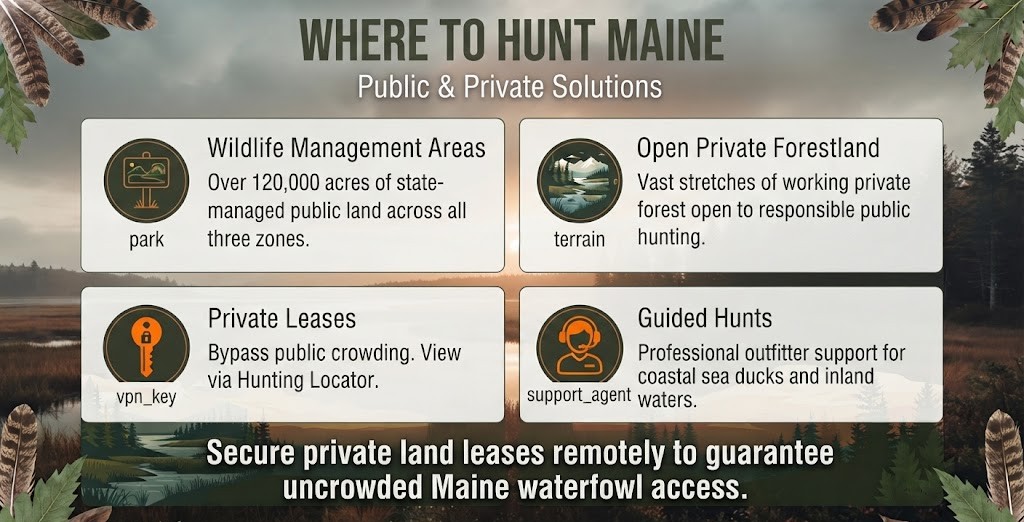
Maine offers a genuinely rare mix of access: significant public land alongside vast stretches of private forest, including more than 120,000 acres managed as Wildlife Management Areas. For a broader look at what the state offers across seasons, see this hunting in Maine overview.
Best Public Lands
Maine’s Wildlife Management Areas give hunters a substantial public-access base to work with, and knowing how to use them well matters as much as knowing where they are.
- Wildlife Management Areas: With more than 120,000 acres under state management, these areas offer a solid starting point for public-land waterfowl hunting across all three zones.
- Private forest open to public hunting: A significant share of Maine’s private forest land remains open to hunters, expanding options well beyond formally designated public land.
- Zone-specific access: Because season dates and bag limits change at zone boundaries, confirm which zone a given piece of public land falls in before committing to a hunt there.
A common and costly error is not checking the Wildlife Management District before leaving home — in Maine, one district line can change your bag limit or whether hunting is even open that day. Because so much access in Maine depends on private working forest, a respectful permission call and a thoughtful parking plan will do more for long-term success than any gear in the truck.
Private Land Hunting with Hunting Locator
Public land works, but private access changes the equation: less pressure, more control over spread and timing, and a level of season-to-season consistency that’s hard to match on shared ground. Whether you’re looking to lease a stretch of marsh for the season or buy land outright for long-term access, private land is where many waterfowl hunters build their most reliable opportunities.
That’s what Hunting Locator is built for. We connect hunters directly with landowners across Maine who are ready to lease or sell land for waterfowl hunting, cutting out the cold calls that used to define the search for private access. Instead of chasing leads through word of mouth, you can browse Maine hunting leases on your own schedule, compare what’s available, and connect directly with landowners.
For non-residents, this is often the fastest path to a reliable spot without scouting public land from out of state. For Maine residents fighting for space on crowded public ground, browsing Maine hunting leases puts you in direct contact with landowners instead of leaving you on a waitlist.
Guided Hunts
For hunters new to Maine’s waterfowl scene, or traveling from out of state, a guided hunt can shortcut a lot of the learning curve. A good guide handles the access, brings the right gear and decoy spreads for the specific water you’re hunting, and knows how to read local conditions — especially along the coast, where tides play a much bigger role than they do inland.
Guided coastal hunts are often how out-of-state hunters experience Maine’s sea-duck opportunities, including eider, scoter, and long-tailed duck hunting that requires specialized rigs and local knowledge to do safely and effectively. A guide familiar with Maine’s tidal waters can make the difference between a productive morning and a wasted one. Hunting Locator can also help connect you with landowners and access points as part of a broader search for a Maine waterfowl trip.
Maine Waterfowl Hunting Tips
Success in the marsh comes down to a handful of fundamentals more than any single piece of gear. Here are the field-tested basics that make the biggest difference for a strong Maine waterfowl season.
- Scout Before You Set Up: Locate feeding and roosting areas in the days before opening morning. Timing and location beat gear every time, no matter how good your spread looks.
- Match Your Decoy Spread: Adjust your decoys for the species and season — early Canada geese call for a different setup than late-season puddle ducks. The right spread convinces birds to commit rather than flare off.
- Conceal Everything: A quality blind and solid camo pattern make a real difference on close shots. Hide your boat, your dog, and yourself — not just your face.
- Choose the Right Shotgun and Steel Shot: A dependable 12-gauge paired with appropriate non-toxic steel loads (sizes 1, 2, or BB) covers the vast majority of Maine waterfowl situations.
- Dress for Cold, Wet Conditions: Insulated chest waders, waterproof outerwear, and warm gloves keep you comfortable and focused longer into a cold Maine morning.
- Learn Basic Calling: A few clean, confident calls at the right moment beat constant noise, especially if you’re still building your calling skills.
- Know Your Zone and Tides: Confirm your zone’s exact dates and limits before you head out, and if you’re hunting the coast, plan your morning around the tide charts for both safety and success.
To fill out your kit before the season opens, you can gear up in our store for everything from decoys to waders.
More Resources from Hunting Locator
Keep planning your Maine season with these Hunting Locator resources, organized by what you’re likely to need next.
- Hunting Locator homepage — the central hub for leases, outfitters, guides, and gear across every state we cover.
- Maine hunting leases — browse current private land leases available across Maine right now.
- Maine waterfowl hunting hub — our broader waterfowl resource page for deeper species and season detail.
- Hunting in Maine guide — a full overview of hunting opportunities across the state.
- Maine deer season — dates and details if you’re planning around big game this fall.
- Maine black bear season — everything you need for Maine’s bear season.
- Maine moose season — permit and season information for moose hunters.
- Maine turkey season — spring and fall turkey season details.
- Maine small game season — rabbit, squirrel, and other small game dates.
- Maine upland bird season — grouse, pheasant, and woodcock hunting information.
- Hunting Locator store — gear up for your next hunt with everything from decoys to outerwear.
Frequently Asked Questions
When does the Maine Canada goose early season open in 2026?
The early Canada goose season opens September 1 and runs through September 25, 2026, statewide. Bag limits are 8 per day in the North Zone and 10 per day in the South and Coastal zones. Confirm final dates with Maine DIFW before your season starts.
What is the daily duck bag limit in Maine for 2026?
The daily bag limit is 6 ducks, though standard ducks not covered under specific exceptions are limited to 4 per day. The possession limit — the total you can legally have on hand across multiple hunting days — is 18 birds.
How much is a non-resident Maine hunting license in 2026?
A full non-resident hunting license costs $115.00. Non-residents also have small-game-specific options available, including a $75.00 small game license or a $50.00 3-day small game license, depending on the trip.
Do I need a Federal Duck Stamp and a state permit to hunt waterfowl in Maine?
Yes. You’ll need the Federal Duck Stamp ($25, required for hunters 16 and older) plus the State Migratory Waterfowl Permit ($7.50) alongside a valid hunting license. The state permit may be integrated into your license rather than issued separately — confirm current requirements with Maine DIFW.
What are Maine’s waterfowl hunting zones?
Maine uses a three-zone system: North, South, and Coastal. Each zone has its own season dates and bag limits, so confirm which zone you’re hunting before opening day to make sure you’re following the correct regulations.
Where can non-residents find private land to hunt waterfowl in Maine?
Hunting Locator’s Maine lease marketplace connects you directly with landowners who lease or sell hunting access across the state. You can browse Maine hunting leases to find options that fit your trip and zone.
The Final Shot
Planning a successful Maine waterfowl season comes down to three essentials: know your zone’s exact dates and bag limits, carry the right license, permit, and stamp before you head out, and lock in quality hunting access early rather than scrambling once the season’s underway. This guide gives you the framework — confirm the final 2026–2027 dates with Maine DIFW before opening morning.
Hunting Locator is here to help with the season ahead: compiling the numbers, connecting you with land, and helping you gear up for what’s next. When you’re ready to lock down your spot for this Maine waterfowl season, find your Maine hunting spot and start your season with access you can count on.


