This Minnesota waterfowl guide covers the regulatory details — dates, fees, bag limits — for the 2026–2027 season, based on current Minnesota DNR regulations, with the handful of changes worth knowing before opening morning noted along the way. It’s part of our broader Hunting Locator coverage of Minnesota seasons.
Here’s what’s ahead, whether you’re a resident who wants the updated zone dates or a non-resident planning a trip from out of state:
- Zone-by-zone 2026–2027 season dates for ducks and geese (early and regular)
- License, stamp, and HIP requirements for residents and non-residents
- Where to hunt — public land, private leases through Hunting Locator, and guided options — plus tips and gear
Quick Overview: Minnesota Waterfowl Season at a Glance
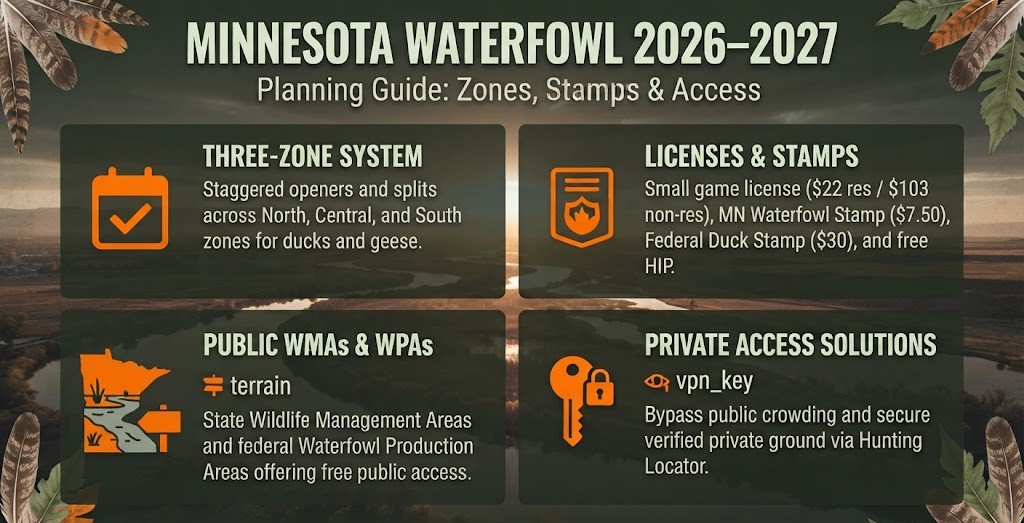
Minnesota organizes its regular waterfowl seasons around three zones — North, Central, and South — and most dates in this guide depend on which zone you’re hunting. Below is the at-a-glance summary for 2026–2027. For more detail, see our companion Minnesota waterfowl hunting season guide.
| Species / Season Type | Zone | Dates (2026–2027) | Key Bag Limit | Notes |
|---|---|---|---|---|
| Early Teal | Statewide | Sept. 5–9, 2026 | Teal only | Shooting hours begin at sunrise, not the usual ½ hour before |
| Youth Waterfowl Hunt | Statewide | Sept. 12–13, 2026 | Ducks, coots, mergansers, Canada geese | Ages 17 & under with a non-hunting adult 18+ |
| Early Canada Goose | Statewide | Sept. 5–20, 2026 | 5 Canada geese combined daily | Watch for wild rice beds |
| Regular Ducks | North | Sept. 26 – Nov. 24, 2026 | 6 ducks total | Single continuous season |
| Regular Ducks | Central | Sept. 26 – Oct. 4 & Oct. 10 – Nov. 29, 2026 | 6 ducks total | Split season |
| Regular Ducks | South | Sept. 26 – Oct. 4 & Oct. 17 – Dec. 6, 2026 | 6 ducks total | Split season, latest close |
| Regular Goose | North | Sept. 26 – Dec. 25, 2026 | 5 combined daily (Canada/white-fronted/brant) | Single continuous season |
| Regular Goose | Central | Sept. 26 – Oct. 4 & Oct. 10 – Dec. 30, 2026 | 5 combined daily | Split season |
| Regular Goose | South | Sept. 26 – Oct. 4 & Oct. 17, 2026 – Jan. 6, 2027 | 5 combined daily | Split season, latest close |
Two 2026 regulatory changes are worth flagging: the Minnesota DNR merged its waterfowl-specific rules into the main hunting and trapping regulations booklet this year, and electronically issued federal stamps are now valid for the entire season the moment you buy them. Confirm these details against the current DNR booklet before you head out, since split dates and limits can shift from year to year.
Before you can legally load up, Minnesota requires a stack of licenses, stamps, and certifications:
- Base small game license — required for residents and non-residents alike; this is your foundational Minnesota small game hunting season license
- Minnesota State Waterfowl Stamp — $7.50, required for residents ages 18–64 and non-residents 16 and older
- Federal Migratory Bird Hunting Stamp — $30, required for all hunters 16 and older
- HIP Certification — required for all migratory bird hunters, typically free when you register at license purchase
- Firearms safety certification — required for youth hunters and anyone born after December 31, 1979
Minnesota Waterfowl Hunting Seasons by Species and Zone
Minnesota structures its waterfowl calendar around two species blocks — ducks and geese — each with an early-season opportunity followed by a zoned regular season. Both regular seasons depend on which of the three zones you’re hunting, so confirming your zone comes before anything else.
Duck Seasons (Early Teal, Youth, and Regular by Zone)
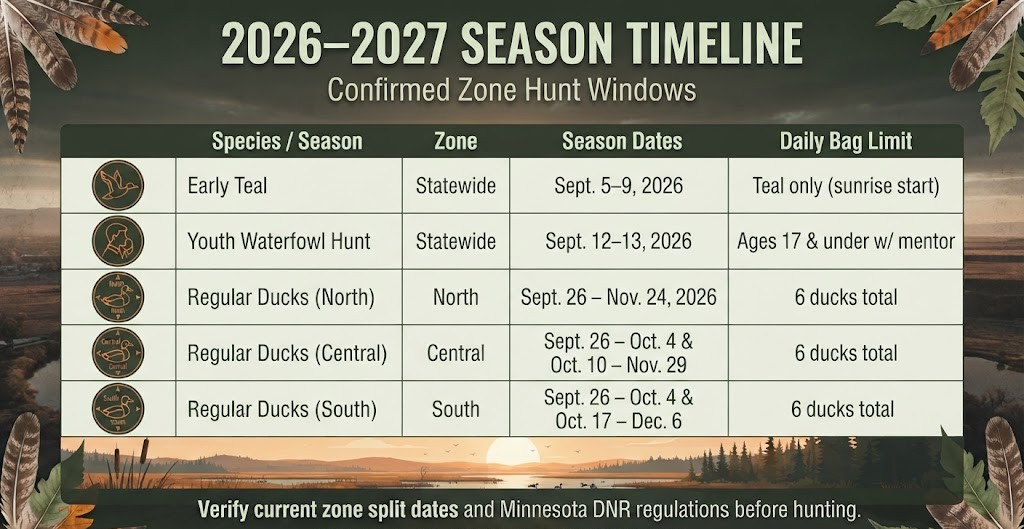
The early teal season runs September 5–9, 2026, statewide, limited strictly to teal — blue-winged, green-winged, and cinnamon. One detail worth remembering: shooting hours during early teal begin at sunrise, not the half-hour-before-sunrise start time that applies the rest of the season.
The Youth Waterfowl Hunt follows on September 12–13, 2026, statewide. Resident and non-resident hunters age 17 and younger can take ducks, mergansers, coots, moorhens, and Canada geese during this weekend, provided they’re accompanied at all times by a non-hunting adult mentor age 18 or older who is authorized by the youth’s parent or guardian and does not hunt during the outing, per youth waterfowl hunt rules.
The regular duck season — which also covers coots, mergansers, and moorhens running concurrently by zone — breaks down like this:
| Zone | Regular Duck Season Dates (2026–2027) |
|---|---|
| North | Sept. 26 – Nov. 24, 2026 |
| Central | Sept. 26 – Oct. 4, 2026, and Oct. 10 – Nov. 29, 2026 |
| South | Sept. 26 – Oct. 4, 2026, and Oct. 17 – Dec. 6, 2026 |
The standard daily duck limit is 6 total ducks, though several species carry their own caps within that number — see the full bag-limit table below. Your possession limit runs three times your daily limit, meaning you can legally have up to three days’ worth of birds on hand at once.
“Hunters should review the regulations and hunting season dates this year. Now is a great time to be scouting and preparing for the season,” said Nate Huck, Minnesota DNR migratory gamebird specialist. Huck also urges hunters heading out for early teal season to take care around wild rice beds, since wild rice typically ripens in early September and is both an important natural resource and a culturally significant one — plants are especially susceptible to damage during this window.
Goose Seasons (Early Canada and Regular by Zone)
The early Canada goose season opens statewide September 5–20, 2026, giving hunters a two-week head start before the zoned regular season takes over. Regular goose seasons follow the same North/Central/South structure as ducks:
| Zone | Regular Goose Season Dates (2026–2027) |
|---|---|
| North | Sept. 26 – Dec. 25, 2026 |
| Central | Sept. 26 – Oct. 4, 2026, and Oct. 10 – Dec. 30, 2026 |
| South | Sept. 26 – Oct. 4, 2026, and Oct. 17, 2026 – Jan. 6, 2027 |
Canada, white-fronted, and brant geese combine for a daily limit of 5, while snow, blue, and Ross’s geese carry a daily limit of 20. Full species detail is below.
2026–2027 Bag Limits and Species Restrictions
Species identification matters as much as counting your total birds. Here’s the complete breakdown of daily limits and restrictions for the 2026–2027 season:
| Species | Daily Limit / Restriction |
|---|---|
| Total ducks | $6 |
| Hen mallard | No more than 1 |
| Black duck | No more than 1 |
| Canvasback | No more than 1 |
| Wood ducks | No more than 2 |
| Redheads | No more than 2 |
| Scaup | No more than 2 (1 early in the season, then 2 later) |
| Pintails | Up to 3 |
| Mergansers | 5 daily (no more than 2 hooded) |
| Coots and moorhens | 15 daily |
| Canada, white-fronted, brant geese | 5 combined daily |
| Snow, blue, Ross’s geese | 20 daily |
These limits and split dates can be adjusted, so confirm everything against the current Minnesota DNR booklet before opening morning.
Minnesota Waterfowl Licenses and Permits
Minnesota’s licensing requirements look complicated at first glance, but they break down into a simple stack: base license, state stamp, federal stamp, HIP certification, and — depending on your birth year — a firearms safety credential.
Minnesota Hunting Licenses
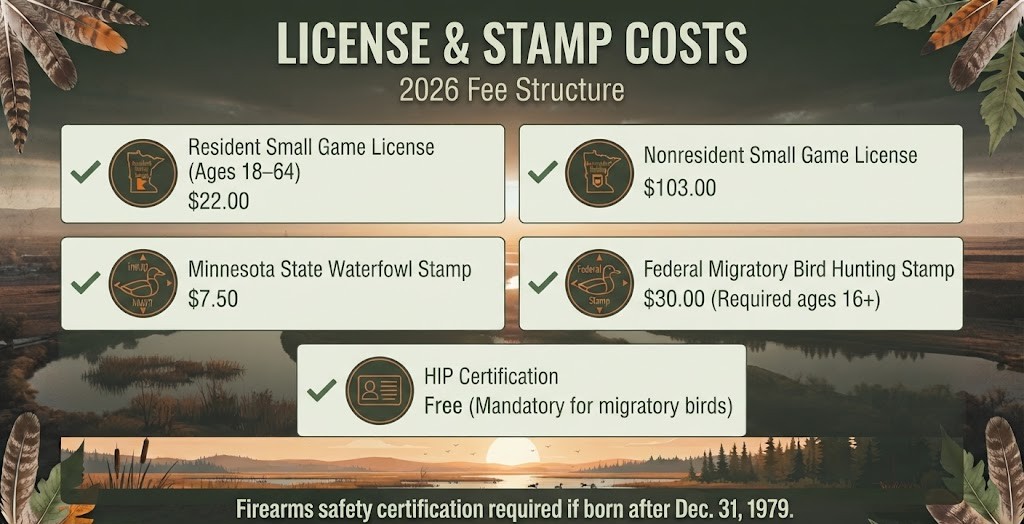
Here’s what residents and non-residents can expect to pay for the 2026–2027 season:
| License/Stamp | Cost | Who Needs It |
|---|---|---|
| Resident Small Game License (Ages 18–64) | $22 | Minnesota residents |
| Nonresident Small Game License | $103 | Non-residents |
| Minnesota State Waterfowl Stamp | $7.50 | Residents 18–64 and non-residents 16+ (free for certain disabled veterans or with specific short-term licenses) |
| Federal Migratory Bird Hunting Stamp | $30.00 | All hunters age 16 and older |
| HIP Certification | Free | All migratory bird hunters |
Your small game license is the base waterfowl license — the same foundational credential covered in our Minnesota small game hunting season guide, so if you’re already licensed for small game, you’re most of the way there. One more planning note: anyone born after December 31, 1979 needs a firearms safety certificate, an apprentice hunter validation, or proof of a completed hunter safety course before hunting with a firearm in Minnesota.
Minnesota Hunting Permits and Stamps
Buying your stamps and completing certifications follows a simple order:
- Buy your base license and state waterfowl stamp — available through the Minnesota DNR’s electronic licensing system, in person, or online.
- Add your federal migratory bird stamp — $30, and when purchased electronically it’s valid for hunting immediately and covers the entire season; the physical pictorial stamp arrives by mail after the season closes.
- Complete HIP certification — this happens automatically when you register for your license, at no extra cost.
If you’re new to the process, HIP is worth a plain explanation: the Harvest Information Program is a free registration that helps wildlife agencies estimate migratory bird harvest across the country, and it’s mandatory for every migratory bird hunter, regardless of experience level. Possession limits, shooting hours, and other core rules are spelled out in the Minnesota DNR waterfowl regulations, which is worth bookmarking before opening day.
Minnesota Waterfowl: Where to Hunt
Once your paperwork is squared away, the next question is where to set up. Minnesota hunters generally choose between three paths — public land, private leases, and guided hunts — and the right answer often depends on how much time you have and how far you’re traveling. Good spots on public water fill up fast, so it pays to sort out your options early.
Best Public Lands
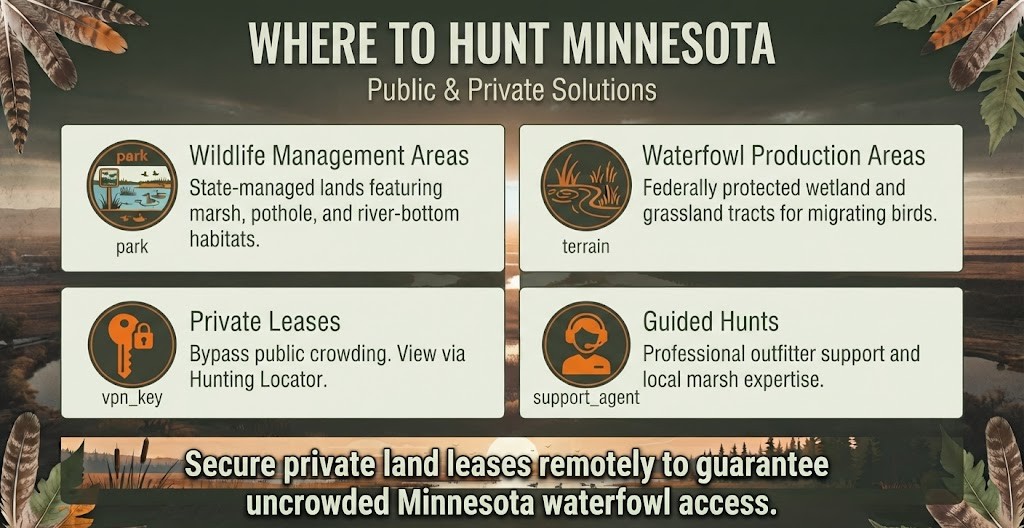
Wildlife Management Areas (WMAs) and federal Waterfowl Production Areas (WPAs) are Minnesota’s free-access starting points, useful if you’re new to the sport or want to scout close to home before committing to a bigger trip. These public options fall into a few general categories:
- State Wildlife Management Areas (WMAs) — state-managed lands open to public hunting, often with marsh, pothole, or river-bottom habitat suited to ducks and geese
- Federal Waterfowl Production Areas (WPAs) — federally protected wetland and grassland tracts specifically managed to support breeding and migrating waterfowl
- State wildlife refuges and public water access sites — additional free-access points, especially useful for hunters scouting new zones
For specific site locations near your zone, the Minnesota DNR’s recreation compass and public-land finder tools are the best way to pinpoint exact boundaries and access points before you head out.
Private Land Hunting with Hunting Locator
Public land comes with real tradeoffs — crowded landings, pressured birds, limited parking — and a promising morning can turn frustrating fast. Leasing or buying private hunting land gives you exclusive access and less competition, which matters even more if you’re a non-resident planning a single dedicated trip to Minnesota.
That’s where Hunting Locator comes in. We connect hunters directly with landowners across Minnesota who are ready to lease or sell their land for waterfowl hunting, doing the scouting legwork so you don’t have to chase dead ends. Browse current listings, connect with landowners directly, and secure your access before the season gets crowded — no cold-calling property owners required.
Current Minnesota waterfowl leases are listed and updated on our platform, organized by zone and acreage so you can find land that matches where you plan to hunt. Take a look at the available Minnesota hunting leases to see what’s currently open near your zone — browsing is free, and it’s often the fastest way to lock in access before opening weekend arrives.
Guided Hunts
If you’re unfamiliar with Minnesota’s zones or you’re traveling from out of state, a guided hunt takes the guesswork out of the equation. Guides bring local knowledge of bird movement, water conditions, and blind setups, and they typically handle gear and setup logistics so you can focus on shooting instead of scouting. This option tends to appeal most to non-residents who want a productive hunt without spending limited trip days learning a new zone from scratch. Hunting Locator connects hunters with landowners and outfitters across the state, making it easier to find the right guided opportunity to match your experience level and budget.
Minnesota Waterfowl Hunting Tips
Whether this is your first season or your twentieth, a few field-tested fundamentals go a long way toward a fuller strap this fall.
- Scout before you go. Water levels, food sources, and bird movement all shift week to week — a quick evening scouting trip the day before your hunt tells you more than any forecast.
- Match your decoy spread to conditions. A well-placed dozen decoys often outperforms an oversized spread; adjust size and species mix based on the zone and time of season, and check the Hunting Locator store for decoy options suited to your setup.
- Learn a few core calls. You don’t need to master every hail call and feed chuckle — a handful of realistic, well-timed calls will outperform constant calling.
- Stay concealed. Ducks and geese have sharp eyes; a solid blind setup or natural cover makes the difference between birds committing and birds flaring at 80 yards.
- Know your species ID before you shoot. With species-specific caps like the one-hen-mallard and three-pintail limits, misidentifying birds in the air is one of the most common ways hunters accidentally exceed their limit.
- Dress for Minnesota’s swing in weather. Early teal season can feel like summer, while late South Zone hunts in December demand real cold-weather layering and waders.
- Respect wild rice and other water users. Early September puts you in the same water as wild rice harvesters — give beds a wide berth and hunt considerately.
The right gear makes each of these easier to execute. Browse waterfowl decoys, calls, blinds, and cold-weather gear at the Hunting Locator store to get outfitted before opening morning.
More Resources from Hunting Locator
Round out your season planning with more of Hunting Locator’s Minnesota hunting coverage, organized below by topic.
- Minnesota master guide:
- Minnesota hunting season guide — the statewide overview of every season, all in one place.
- Waterfowl-adjacent coverage:
- Minnesota waterfowl hunting season — our companion waterfowl season guide with additional detail.
- Minnesota game bird hunting season — related migratory and upland bird seasons worth knowing.
- Minnesota small game hunting season — the base small game license explained in full.
- Other species to plan around:
- Minnesota deer hunting season — dates and details for Minnesota’s biggest big-game season.
- Minnesota bear hunting season — everything you need for fall bear hunting.
- Minnesota elk hunting season — Minnesota’s limited-entry elk opportunities.
- Minnesota furbearer hunting season — trapping and furbearer season details.
- Minnesota turkey hunting season — spring and fall turkey season coverage.
- Land access and gear:
- Minnesota hunting leases — secure private land access for your next hunt.
- Hunting Locator store — gear up for waterfowl season and beyond.
Frequently Asked Questions
When does the 2026 Minnesota duck season open?
The regular duck season opens statewide on September 26, 2026, though early teal runs September 5–9 and the youth weekend runs September 12–13. Zone-specific closing dates vary — North Zone runs through November 24, while Central and South zones split into two segments extending into late November and early December, according to the Minnesota DNR.
How much is a non-resident Minnesota waterfowl license for 2026?
The Nonresident Small Game License costs $103.00. On top of that, you’ll need the $7.50 Minnesota State Waterfowl Stamp, the $30.00 Federal Migratory Bird Hunting Stamp, and free HIP certification completed at registration.
When is the Minnesota youth waterfowl weekend in 2026?
The youth waterfowl weekend runs September 12–13, 2026, statewide. Hunters 17 and younger may participate as long as they’re accompanied at all times by a non-hunting adult mentor age 18 or older, per Minnesota DNR rules.
What is the daily duck bag limit in Minnesota for 2026–2027?
The daily limit is 6 ducks total, with species-specific caps within that number — no more than 1 hen mallard, 1 black duck, 1 canvasback, 2 wood ducks, 2 redheads, 2 scaup, and up to 3 pintails. Your possession limit is three times your daily limit.
Do I need a federal stamp and HIP certification to hunt waterfowl in Minnesota?
Yes. All hunters age 16 and older need the $30 Federal Migratory Bird Hunting Stamp, and every migratory bird hunter needs free HIP certification, completed when you register for your license. Most hunters also need a small game license and the state waterfowl stamp, per the Minnesota DNR.
Where can non-residents find hunting land in Minnesota?
Public Wildlife Management Areas and Waterfowl Production Areas offer free access statewide, though they can get crowded during peak weeks. Private leases offer more consistent, exclusive access — Hunting Locator connects hunters directly with Minnesota landowners who lease or sell land, and current listings are available on our Minnesota leases page.
The Final Shot
Minnesota’s 2026–2027 waterfowl season rewards hunters who plan ahead: know your zone, stack your licenses and stamps correctly, respect the early-teal sunrise rule and wild rice beds, and lock in your hunting ground before the crowds do. With early teal opening September 5 and the regular season following on September 26, there isn’t much runway left to sort out paperwork and land access.
The sequence is straightforward: confirm your zone’s exact dates against the current DNR booklet, buy your licenses and stamps through the DNR’s electronic system, secure your hunting spot, and gear up. From there, it comes down to putting in the scouting time.
If land access is still the missing piece, browse available Minnesota hunting leases now and connect with landowners ready to give you a shot at a productive Minnesota waterfowl season this fall.


