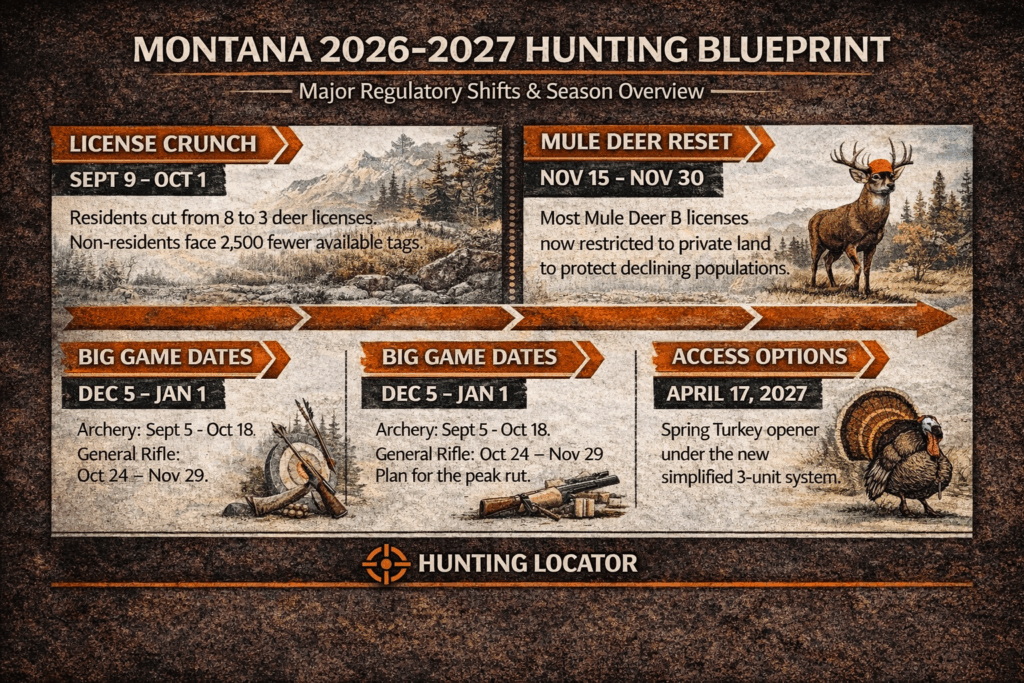
These aren’t minor tweaks. We’re talking about massive cuts to license availability and fundamental changes to how deer hunting works in Big Sky Country.
If you’re a Montana resident who’s been buying eight deer licenses every year, those days are over. Non-residents planning their dream western hunt? You’re competing for 2,500 fewer licenses this year. The commission made these moves to address serious concerns about hunting pressure and declining mule deer numbers, especially in eastern Montana.
Here’s what you need to know to make your 2026-2027 season successful:
- License changes that matter: Residents can now only buy three deer licenses (down from eight), and most mule deer B licenses only work on private land
- Complete season information: Every important date, cost, and regulation for deer, elk, antelope, bears, and all the small game species
- Access strategies: Public land opportunities, outfitter options, and private land connections through platforms like Hunting Locator
Let’s start with the license basics—because if you don’t understand the new system, you won’t be hunting at all.
Quick Overview: Season Dates, Montana Hunting Licenses, and Regulations
Montana runs a two-tier license system that heavily favors residents. If you live here, you can walk into most sporting goods stores and buy deer and elk tags over the counter. Non-residents? You’re entering a lottery system that gets more competitive every year.
These 2026-2027 changes hit both groups hard. Non-residents face tighter quotas and stiffer competition. Residents lose the flexibility they’ve had for decades with multiple deer licenses.
Montana Non-Resident Hunting Licenses
| License Type | Price | Key Inclusions | Availability |
|---|---|---|---|
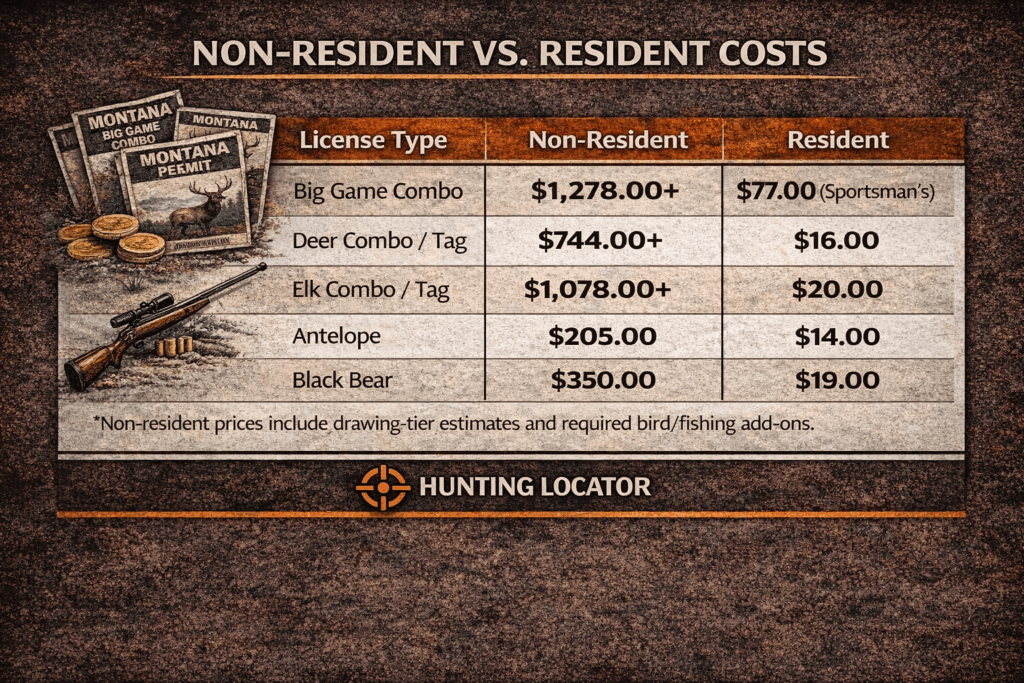
| Big Game Combination | $1,278.00 – $1,315.50 | Deer Tag, Elk Tag, Upland Bird, Fishing License | Drawing (Quota ~17,000) |
| Elk Combination | $1,078.00 – $1,115.50 | Elk Tag, Upland Bird, Fishing License (No Deer) | Drawing |
| Deer Combination | $744.00 – $781.50 | Deer Tag, Upland Bird, Fishing License (No Elk) | Drawing (Quota ~4,600) |
| Antelope | $205.00 | Antelope Tag | Drawing |
| Black Bear | $350.00 | Black Bear Tag | Over-the-Counter |
| Upland Game Bird | $110.00 | Pheasant, grouse, partridge | Over-the-Counter |
| Migratory Bird | $150.00 | Ducks, geese, doves (HIP required) | Over-the-Counter |
Additional Non-Resident Fees:
- Nonrefundable Application Fee: $5.00
- Preference Point: $100.00 (buy these if you’re serious about Montana)
- Bonus Point: $20.00 (for special permit species)
Montana Resident Hunting Licenses
| License Type | Price | Key Inclusions | Availability |
|---|---|---|---|
| Conservation License | $8.00 | Required for everything else | Over-the-Counter |
| General Hunting (Base) | $10.00 | Required for species tags | Over-the-Counter |
| Sportsman’s License | $62.00 – $77.00 | Deer, Elk, Upland Bird, Fishing, Conservation | Over-the-Counter |
| General Deer Tag | $16.00 | One general deer | Over-the-Counter |
| General Elk Tag | $20.00 | One general elk | Over-the-Counter |
| Deer B (Antlerless) | $10.00 | Additional antlerless whitetail | Drawing & OTC |
| Black Bear | $19.00 | Black Bear Tag | Over-the-Counter |
The price gap is insane. Residents pay around $77 for what costs non-residents over $1,200. That’s Montana’s way of taking care of locals while cashing in on out-of-state demand.
BIG CHANGE FOR 2026: Residents can only buy three deer licenses now instead of eight. Plus, most mule deer B licenses only work on private land.
Montana Hunting Season Dates Overview
Montana’s hunting seasons stretch from early September through late winter, with some opportunities running into 2027. Season dates change based on species, weapon type, and which hunting district you’re in.
| Species | Season Type | Start Date | End Date | Bag Limit |
|---|---|---|---|---|
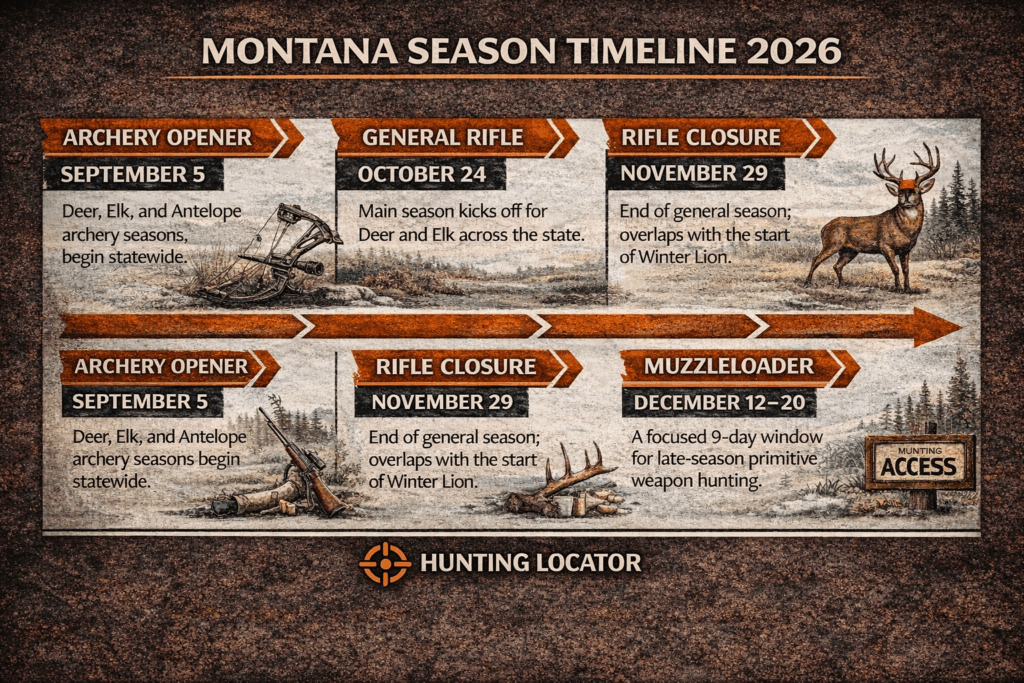
| Deer | Archery | Sept 5, 2026 | Oct 18, 2026 | 1 buck per season |
| Deer | Youth Two-Day Hunt | Oct 15, 2026 | Oct 16, 2026 | Per license |
| Deer | General Rifle | Oct 24, 2026 | Nov 29, 2026 | 1 deer per license |
| Deer | Muzzleloader | Dec 12, 2026 | Dec 20, 2026 | Per license/district |
| Deer | Shoulder Seasons (Select HDs) | Aug 14, 2026 | Feb 14, 2027 | Varies by district |
| Elk | Archery | Sept 5, 2026 | Oct 18, 2026 | 1 elk per season |
| Elk | General Rifle | Oct 24, 2026 | Nov 29, 2026 | 1 elk per license |
| Elk | Shoulder Seasons (Select HDs) | Aug 14, 2026 | Feb 14, 2027 | Varies by district |
| Antelope | Archery | Sept 5, 2026 | Oct 9, 2026 | 1 per license |
| Antelope | General Rifle | Oct 10, 2026 | Nov 8, 2026 | 1 per license |
| Antelope | 900 Series Units | Aug 14, 2026 | Nov 8, 2026 | Per permit |
| Moose | Archery | Sept 5, 2026 | Sept 13, 2026 | 1 per lifetime |
| Moose | General | Sept 14, 2026 | Nov 29, 2026 | 1 per lifetime |
| Bighorn Sheep | Draw Hunts | Aug 9, 2026 | Dec 30, 2026 | 1 per season |
| Mountain Goat | Draw Hunts | Aug 9, 2026 | Dec 30, 2026 | 1 per season |
| Bison | Draw Hunts | Nov 14, 2026 | Feb 14, 2027 | 1 per permit |
| Black Bear | Spring | Apr 14, 2027 | May 30/June 14, 2027 | 1 per season |
| Black Bear | Fall | Sept 14, 2026 | Nov 29, 2026 | 1 per season |
| Mountain Lion | Winter (with/without dogs) | November 29, 2026 | April 13, 2027 | Quota limited |
| Ring-necked Pheasant | Regular | Oct 10, 2026 | Jan 1, 2027 | Daily: 3 roosters |
| Mountain Grouse | Regular | Sept 1, 2026 | Jan 1, 2027 | Daily: 5 combined |
| Turkey | Spring | Apr 14, 2027 | May 30, 2027 | Varies by district |
| Turkey | Fall | Sept 1, 2026 | Jan 1, 2027 | Varies by district |
| Ducks/Mergansers | Regular Season | Oct 3, 2026 | Jan 15, 2027 | Daily: 6 |
| Canada Geese | Regular Season | Varies by zone | Varies by zone | Daily: 5 |
| Wolf | General/Trapping | Sept 14, 2026 | March 14, 2027 | 5 per hunter |
| Coyote | Year-round | Year-round | Year-round | No limit |
Critical Deadlines You Can’t Miss:
- April 1: Application deadline for deer, elk, and combination licenses
- June 15: When over-the-counter Deer B and Elk B licenses go on sale (NEW for 2026)
- July 1 – December 31: When you can buy preference points
Non-residents need to start planning at least a year ahead. The competition is brutal, and $100 preference points are basically mandatory if you want consistent success.
Montana Deer Hunting
Montana deer hunting just got turned upside down. This state has always been a mule deer and whitetail paradise, but 2026-2027 brings changes that’ll affect how everyone hunts deer here. Mule deer numbers have been dropping, especially in eastern Montana, and the commission finally decided to do something about it.
These aren’t small adjustments. We’re talking about fundamental changes to license limits, where you can hunt, and how many deer you can take.
Montana Deer Hunting Seasons
Archery Season (September 5 – October 18, 2026): This is prime time if you can draw a bow. Early fall weather, less hunting pressure, and deer are still in predictable patterns. The state removed the 80 percent let-off limit on bows, so you’ve got more equipment options now.
General Rifle Season (October 24 – November 29, 2026): The main event. This is when most hunters hit the woods, and it covers the peak rut for both mule deer and whitetails. Opening weekend is chaos, but if you can handle crowds, the action can be incredible.
Muzzleloader Season (December 12-20, 2026): For hunters who want a challenge and don’t mind cold weather. December in Montana isn’t for everyone, but deer are concentrated in winter habitat, which can make for focused hunting if you know where to look.
Backcountry Seasons: Special seasons in hunting districts 150, 280, and 316 run from September 5-13 for archery and September 14 through November 29 for general weapons. These require serious physical conditioning, but you’ll find deer that haven’t seen hunting pressure.
Shoulder Seasons (August 14, 2026 – February 14, 2027): Extended seasons in specific districts where they’re trying to manage deer numbers. These vary a lot by area, so check the regulations for your specific district.
Montana Deer Hunting Regulations
This is where everything changed. The 2026-2027 regulations represent the biggest shift in Montana deer hunting in decades.
- Resident License Limits: You can only buy three deer licenses total now—one general plus two B licenses, or three B licenses. That’s down from eight licenses
- Mule Deer B Restrictions: Most mule deer B licenses only work on private land for 2026-2027. Public land antlerless mule deer opportunities just got way more limited
- Nonresident License Cap: About 2,500 fewer nonresident deer licenses available because of new sales caps
- Legal Shooting Hours: Half hour before sunrise to half hour after sunset
- Antlerless Rules: Deer B licenses for antlerless whitetail vary by region—you need to check your specific hunting district rules
Montana Elk Hunting
Montana elk hunting is still world-class, even with all the changes happening elsewhere. We’re talking about nearly 16 million acres of national forest land and some of the best elk habitat in North America. If you’re a non-resident dropping over $1,000 on a combination license, you want to make sure you’re prepared.
Montana’s elk live everywhere from deep wilderness to ranch country, which means you can find hunting opportunities that match your style and fitness level.
Montana Elk Hunting Seasons
Archery Season (September 5 – October 18, 2026): This is elk hunting at its finest. September archery season hits right during the rut when bulls are bugling and responding to calls. If you know how to elk hunt, this is your season. The bow let-off regulation change gives you more equipment flexibility too.
General Rifle Season (October 24 – November 29, 2026): The most popular season, which means the most hunting pressure on accessible areas. This covers post-rut periods when elk are forming winter herds and moving to different areas. Success depends on getting away from roads and other hunters.
Backcountry Seasons: Districts 150 and 280 offer archery from September 5-13 and general seasons from September 14 through November 29. These hunts separate serious hunters from casual ones—you need to be in shape and know what you’re doing.
Shoulder Seasons (August 14, 2026 – February 14, 2027): Extended seasons in specific districts where elk numbers are above management objectives or causing problems for ranchers.
Montana Elk Hunting Regulations
Elk regulations stayed more stable than deer for 2026-2027, but there are still important changes in specific areas.
- Bag Limit: One elk per season, regardless of weapon type
- Region 1 Elk B Restrictions: All Region 1 elk B licenses only work on private land now, limiting public land antlerless elk opportunities in northwestern Montana
- License Quotas: Elk Combination licenses come out of the Big Game Combination pool, affecting draw odds
- Preference Points: $100 preference points are essential for non-residents building draw odds. You can buy them during application or between July 1 and December 31
- Additional Elk B: Second antlerless elk B licenses are available in hunting districts 702, 704, and 705
Montana Antelope Hunting
Antelope hunting in Montana is fast-paced and fun, plus it’s one of the more affordable options for non-residents. Pronghorn thrive across eastern Montana’s plains and provide excellent hunting for anyone who enjoys spot-and-stalk hunting and wants great table fare.
Unlike deer and elk, antelope have their own separate draw process, which makes them a good option while you’re building points for other species.
Montana Antelope Hunting Seasons
Archery Season (September 5 – October 9, 2026): Early season when pronghorn are still in summer patterns and water sources are predictable. Archery hunting antelope is tough because of their incredible eyesight and the open country they live in, but it’s doable with the right approach.
General Rifle Season (October 10 – November 8, 2026): This is when most people hunt antelope. October weather is usually decent, and antelope behavior is still fairly predictable before winter weather changes their patterns.
900 Series Units (August 14 – November 8, 2026): Special units with extended seasons in specific hunting districts. These offer different regulations or access requirements depending on the area.
Montana Antelope Hunting Regulations
- Bag Limit: One antelope per license
- Separate Draw: Antelope applications are separate from deer and elk combination licenses
- License Cost: $205 for non-residents makes this one of the more affordable Montana big game options
- Habitat: Antelope hunting happens mostly in eastern Montana’s plains and agricultural areas
- Access: A lot of prime antelope country is on private land, so landowner relationships or private land access can make or break your hunt
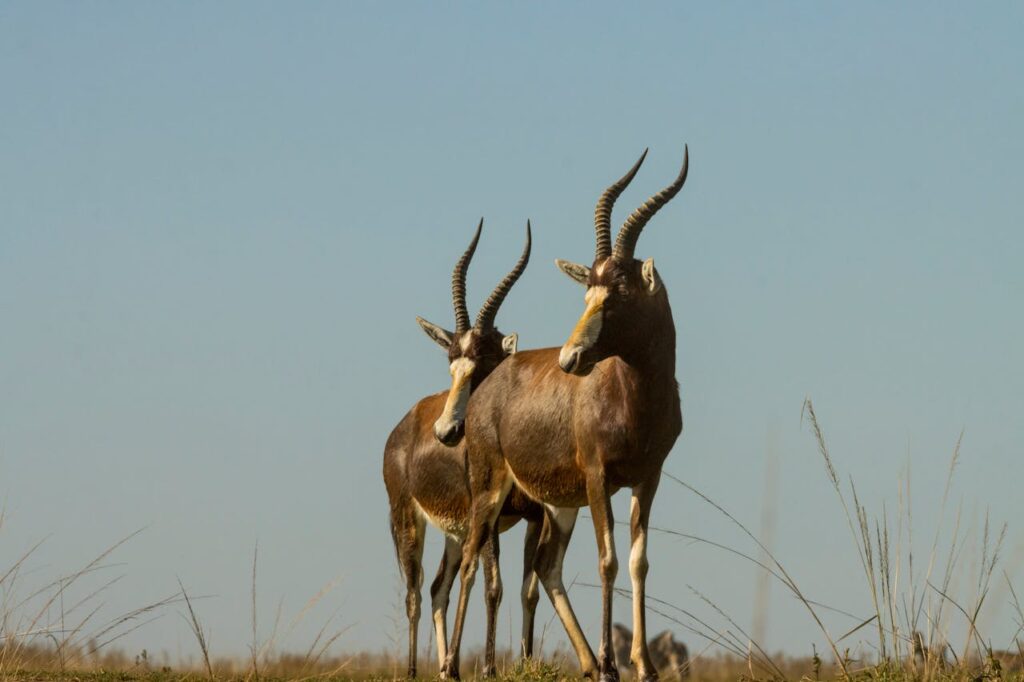
Montana Black Bear Hunting
Black bear hunting in Montana is one of the best over-the-counter opportunities in the state. Healthy bear populations, both spring and fall seasons, and reasonable license costs make this attractive for hunters planning multi-species trips.
Montana Black Bear Hunting Seasons
Spring Season (April 14 – May 30 or June 14, 2027): Spring dates vary by district but generally run from mid-April through late May or mid-June. Spring bears are coming out of dens and actively feeding on new vegetation, making them more active during daylight hours.
Fall Season (September 14 – November 29, 2026): Fall season overlaps with other big game seasons, so you can pursue multiple species on the same trip. Fall bears are feeding heavily to prepare for hibernation, often focusing on berry crops and other high-calorie food sources.
Montana Black Bear Hunting Regulations
- Bag Limit: One bear per season (spring and fall count as separate seasons)
- License Availability: Over-the-counter for residents ($19) and non-residents ($350)
- Baiting: Bear baiting is illegal in Montana
- Color Phases: All color phases of black bears are legal (black, brown, cinnamon, blonde)
- Weapons: Legal weapons vary by season and hunting district
Montana Minor Game Species Hunting
Montana’s hunting opportunities go way beyond big game. The minor game species provide year-round action and over-the-counter licenses that don’t require years of planning or preference point strategies.
Montana Upland Bird Hunting Information
Upland bird hunting in Montana covers multiple species across different habitats. Ring-necked pheasants do well in eastern Montana’s farm country, while various grouse species live in mountain and prairie environments.
Key Species and Seasons:
- Ring-necked Pheasant: October 10 – January 1, 2027 (Daily limit: 3 roosters)
- Mountain Grouse (Blue/Ruffed/Spruce): September 1 – January 1, 2027 (Daily limit: 5 combined)
- Sharp-tailed Grouse: September 1 – January 1, 2027 (Daily limit: 3)
- Sage Grouse: September 1-30, 2026 (Daily limit: 2)
- Partridge (Hungarian/Chukar): September 1 – January 1, 2027 (Daily limit: 8 combined)
You need an Upland Game Bird license ($110 for non-residents, included in resident Sportsman’s License). These hunts work great with pointing dogs or for walk-up hunting.
Montana Waterfowl Hunting Information
Montana sits on major migration flyways, creating excellent waterfowl hunting opportunities. The state’s wetlands, rivers, and reservoirs provide ideal habitat for diverse waterfowl species.
Primary Waterfowl Seasons:
- Ducks/Mergansers: October 3 – December 27, 2026, or December 28, 2026 – January 15, 2027 (varies by zone, Daily limit: 6)
- Canada Geese: Varies by zone (Daily limit: 5)
- Light Geese (Snow/Blue/Ross’s): Varies by zone (Daily limit: 20)
- Mourning Dove: September 1 – October 29, 2026 (Daily limit: 15)
- Sandhill Crane: September 1 – November 29, 2026 (Daily limit: 2)
Waterfowl hunting requires a Migratory Bird license ($150 for non-residents) and HIP certification. Species-specific limits apply for ducks: mallards (4, max 2 females), pintails (2), canvasbacks (2), and redheads (2).
Montana Turkey Hunting Information
Turkey hunting has grown in popularity as populations have expanded across suitable habitat. Spring and fall seasons offer different hunting experiences, with spring focusing on breeding behavior.
Turkey Seasons:
- Spring Season: April 14 – May 30, 2027 (varies by district)
- Fall Season: September 1 – January 1, 2027 (varies by district)
- Falconry Season: September 1 – March 30, 2027
Turkey hunting success requires understanding turkey behavior, habitat preferences, and calling techniques. Spring seasons focus on breeding behavior, while fall seasons target flocks preparing for winter.
Montana Small Game Hunting Information
Small game hunting provides accessible opportunities for hunters of all experience levels. Cottontail rabbits and snowshoe hares offer action-packed hunting, while tree squirrels provide challenging opportunities in forested areas.
Small Game Seasons:
- Cottontail Rabbit/Snowshoe Hare: October 1 – March 30, 2027 (Daily limit: 10 combined)
- Tree Squirrels: September 1 – January 1, 2027 (Daily limit: 5)
Small game hunting requires only basic hunting licenses and provides excellent opportunities for introducing new hunters or adding action during big game seasons.
Montana Predator and Furbearer Hunting Information
Predator hunting provides year-round opportunities for species like coyotes and seasonal opportunities for wolves, mountain lions, and furbearers. These hunts often complement big game hunting and provide additional challenges.
Key Predator Seasons:
- Coyote: Year-round (No limit)
- Wolf: September 14, 2026 – March 14, 2027 (5 per hunter)
- Mountain Lion: November 29, 2026 – April 13, 2027 (quota limited)
- Bobcat: December 1, 2026 – February 14, 2027 (trapping, quota limited)
Where to Hunt in Montana
Montana offers over 30 million acres of public land plus extensive private holdings, creating opportunities for every hunting style and budget. From wilderness backcountry to agricultural area hunts, knowing your access options determines your hunting success.
Montana has over 30 million acres of state and federal lands—nearly one-third of the state. That’s massive public hunting opportunity. But finding productive, accessible areas that aren’t overrun with hunters takes work.
Best Public Lands
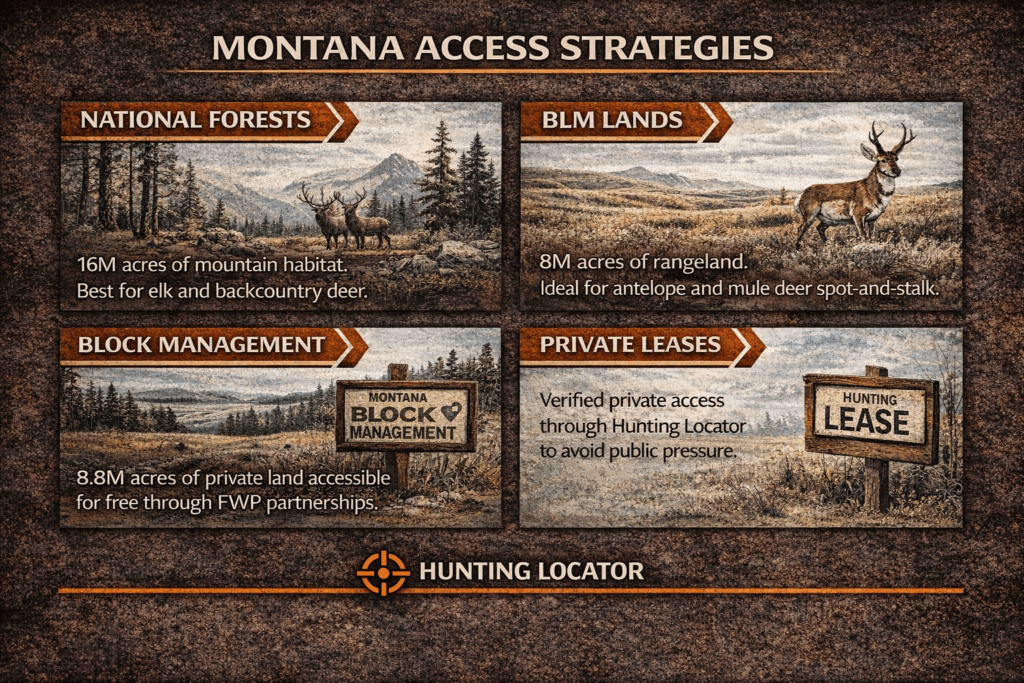
Montana’s public land hunting spans multiple agencies and land types. National forests cover nearly 16 million acres, while BLM manages over 8 million acres of mostly rangeland across the state.
- National Forest Lands: Nearly 16 million acres of diverse habitat from mountain wilderness to foothill forests. Excellent elk, deer, and bear hunting with established trail systems and camping areas
- Bureau of Land Management (BLM) Areas: Over 8 million acres of primarily rangeland habitat perfect for antelope, mule deer, and upland birds. Often has vehicle access and fewer restrictions than wilderness areas
- Wildlife Management Areas (WMAs): Montana FWP owns and manages WMAs that provide free public hunting statewide, with some allowing camping and designated motorized routes
- Block Management Areas: Hunters can access about 8.8 million acres of private land for free through the cooperative Block Management program between private landowners and Montana FWP
- State School Trust Lands: Scattered sections throughout the state requiring State Recreational Use Licenses but often providing less-pressured hunting
Every hunter must know land ownership of where they’re hunting. Finding productive, legally accessible areas takes effort. Successful public land hunters invest time in map study, scouting, and understanding access regulations.
Guided Hunts
Montana’s professional outfitting industry provides comprehensive hunting services for hunters seeking expert guidance, local knowledge, and higher success rates. Licensed outfitters offer everything from day hunts to week-long wilderness adventures.
Guided Hunt Advantages:
- Local Knowledge: Professional guides understand animal behavior, seasonal patterns, and productive hunting areas within their territories
- Private Land Access: Many outfitters lease or own prime hunting properties not available to the public
- Equipment and Logistics: Full-service outfitters provide specialized equipment, transportation, and handle hunting logistics
- Higher Success Rates: Professional guidance typically results in higher success rates, especially for non-resident hunters unfamiliar with Montana conditions
- Meat Care: Outfitters handle field care, processing arrangements, and shipping for non-resident hunters
Research licensed outfitters through Montana’s Board of Outfitters, read recent client reviews, and verify insurance and licensing status. Quality outfitters provide references, clear contracts, and transparent pricing.
Private Land Hunting
Private land hunting in Montana offers significant advantages: reduced hunting pressure, managed wildlife populations, and often higher success rates than public alternatives. Much of Montana’s prime habitat sits on private ranches and farms, making private land access crucial for serious hunters.
Direct Landowner Contact: Building relationships with private landowners through respectful communication, offering ranch work assistance, or providing services can lead to hunting permission. Many landowners appreciate hunters who contribute to property maintenance or wildlife management.
Hunting Leases: Private land leases provide exclusive or semi-exclusive hunting access for individuals or groups willing to pay annual fees. Lease arrangements vary from day-use permits to season-long exclusive access, with costs reflecting property quality, game populations, and exclusivity levels.
For hunters seeking premium private land access without the hassle of direct landowner negotiations, Hunting Locator connects serious hunters with verified landowners offering lease opportunities across Montana. Our platform streamlines finding, evaluating, and securing private land hunting access, so you spend more time hunting and less time searching for places to hunt.
FAQ
When do Montana hunting license applications open for non-residents?
Montana hunting license applications for non-residents typically open in early February, with the critical April 1 deadline for deer, elk, and combination license applications. The April 1 deadline requires advance planning—successful hunters often start their Montana hunting journey 12-18 months before their intended hunt.
How much do Montana hunting licenses cost for non-residents?
Non-resident Montana hunting licenses range from $110 for upland game birds to $1,315.50 for the Big Game Combination license. Popular options include Big Game Combination ($1,278-$1,315.50), Elk Combination ($1,078-$1,115.50), and Deer Combination ($744-$781.50). Add a $5 application fee and optional $100 preference points that significantly improve draw odds.
What are the major changes to Montana hunting regulations for 2026-2027?
The 2026-2027 season brings massive changes: approximately 2,500 fewer nonresident licenses, resident deer license limits cut from eight to three, and most mule deer B licenses valid only on private land. Plus, archery regulations removed the 80 percent let-off maximum for hunting bows.
Can non-residents hunt Montana without a guide?
Absolutely. Non-residents can hunt Montana independently without hiring a guide. Montana offers extensive public land access including nearly 16 million acres of national forest and over 8 million acres of BLM land. However, every hunter must know land ownership and understand access regulations before hunting.
What’s the best time to hunt elk in Montana?
Depends on your hunting style and weapon choice. Archery season (September 5 – October 18, 2026) hits peak elk rut activity, offering incredible calling opportunities but requiring advanced skills. General rifle season (October 24 – November 29, 2026) provides more weapon options but brings higher hunting pressure, especially opening weekend.
How do Montana preference points work for non-residents?
Montana preference points cost $100 each for non-residents and dramatically improve draw odds for combination licenses over time. You can buy points during application or between July 1 and December 31. Each point increases your chances in the preference point draw, which allocates up to 75% of available licenses before the random draw. Building points over multiple years is essential for consistent draw success.
The Final Shot
Montana’s 2026-2027 hunting seasons mark a turning point in the state’s hunting history. These regulatory changes will reshape hunting opportunities for years to come. Whether you’re adapting to new resident license limits or navigating increased non-resident draw competition, success requires understanding these changes and planning accordingly.
The reduced license availability and new restrictions make strategic planning more important than ever. That means building preference points for future draws, securing private land access, or exploring alternative hunting opportunities. Montana’s incredible diversity of game species and hunting opportunities remains, but the game has changed—literally and figuratively.


