Ready to hunt bigger, smarter, and tougher game? Step up from whitetailed deer and axis deer to the big boys of deer hunting: Texas mule deer. These elusive animals present unique challenges for hunters. Let’s get into where and how you can find your next big trophy mule deer buck.
We’re going to show you some key info to bag your next trophy mule buck. You might be interested in a few other resources. Here’s a quick list you might come back to:
- Texas Hunting Seasons – Just in case you want to hunt other game
- Texas Deer Season – Details for all the deer in Texas, including whitetail, mule deer, and axis deer
- Axis Deer Hunting in Texas – Hunters love the venison from Axis Deer
- 12 Best Hunting Areas in Texas – get to the right place for a more successful hunt
- How to Scout for Deer – Brush up on your strategies to be the best hunter you can be
Now, let’s get into the meat of this article. Here’s what we’ve got for you:
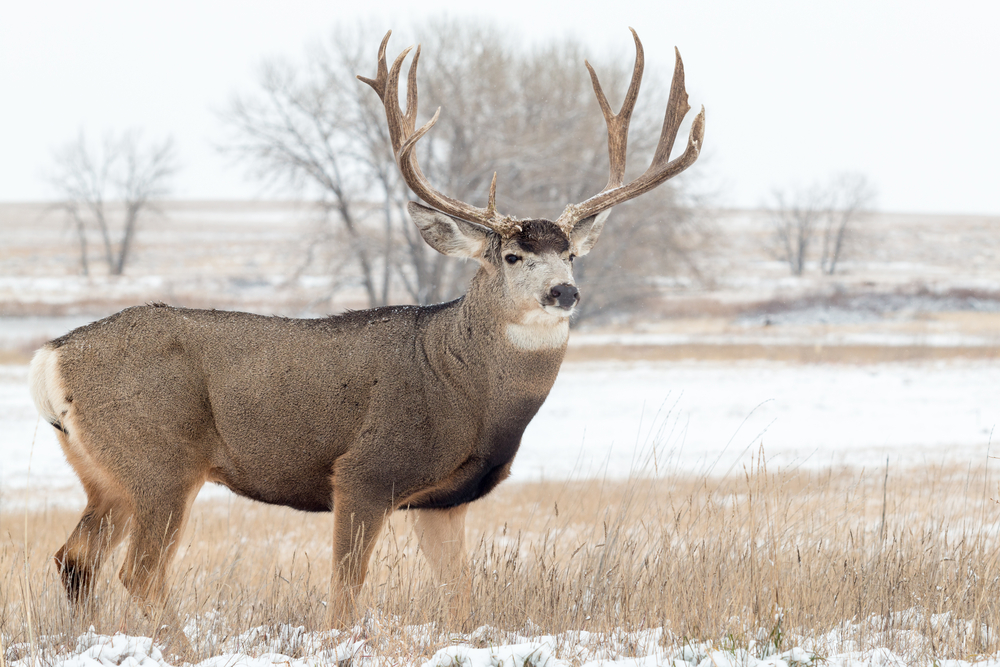
Quick Facts About Mule Deer Hunting in Texas (2025–2026)
Note: All dates and details are projected based on historical trends. Please verify the latest information with the Texas Parks and Wildlife Department (TPWD) before planning your hunt.
Mule Deer Season Dates (Projected):
| Season Type | Date Range (Projected) | Notes |
|---|---|---|
| Archery Season | September 27 – October 31, 2025 | Confirm with TPWD closer to the season. |
| General Season – Texas Panhandle | November 15 – November 30, 2025 | Check local rules for potential variations. |
| General Season – Trans-Pecos | November 21 – December 7, 2025 | Includes Brewster, Pecos, & Terrell Counties. |
Bag Limit:
- General Rule: 2 deer per hunter annually, with no more than 1 buck.
- Important: Limits can vary by county and on Managed Lands Deer Permit (MLDP) properties. Verify local regulations.
License and Permits:
- License Required: Valid Texas Hunting License is mandatory.
- Youth under 17 require a youth hunting license.
- Tags/Permits:
- Mule deer tags are generally included with your hunting license.
- Additional permits may be required on wildlife management areas or state parks.
Antler Restrictions:
- In 29 designated counties, mule deer bucks must have an outside antler spread of at least 20 inches to be legally harvested.
- Note: These restrictions do not apply in Chronic Wasting Disease (CWD) zones or on MLDP properties. (For a complete list of counties, please refer to the TPWD guidelines.)
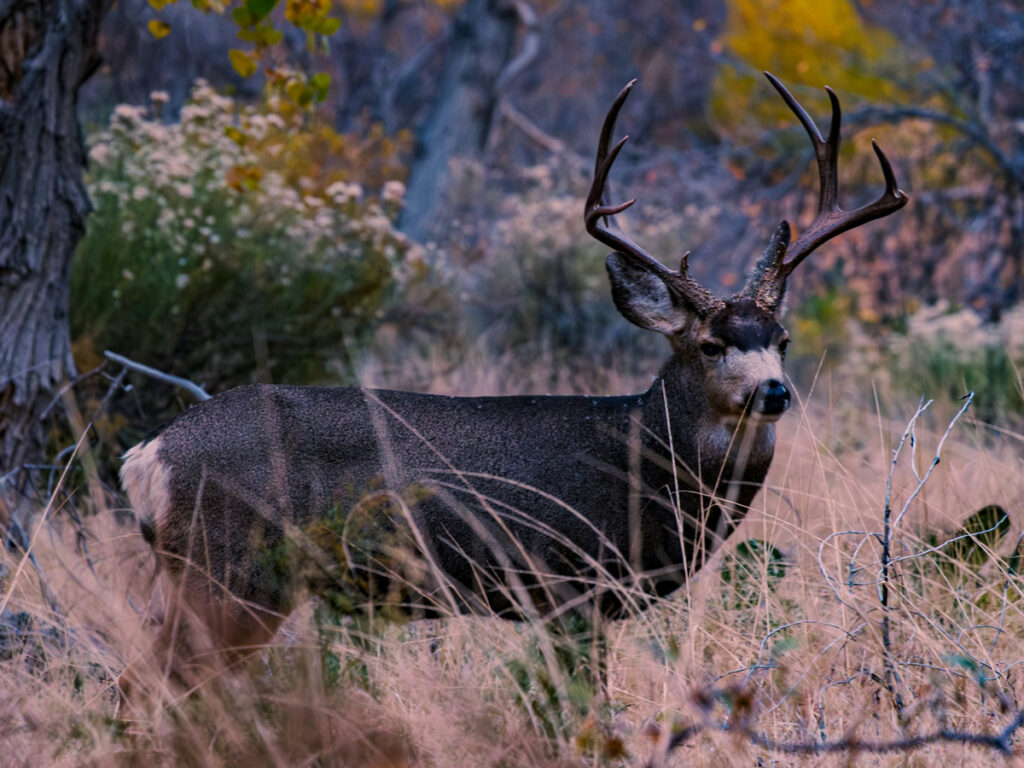
What Makes Mule Deer Hunting Unique?
Mule deer present a distinct challenge that sets them apart from other deer species. Their behavior, habitat, and physical characteristics demand a unique approach from hunters. The rugged terrain and unpredictable movements of these animals mean that success often comes to those who can adapt and plan meticulously.
Key challenges when hunting mule deer include:
- Elusive Behavior:
Desert Mule deer are known for their shyness and high level of wariness. Their acute senses—especially their keen sense of smell—make them harder to approach undetected. - Rugged Terrain:
Typically found in the arid, mountainous regions of West Texas, mule deer inhabit areas that require significant physical endurance and advanced navigation skills. - Nomadic Movements:
Unlike more sedentary species, a mature mule deer buck can travel long distances in search of food and water. This mobility can complicate scouting and tracking efforts. - Variable Diet and Habitat:
Their ability to thrive on a diverse diet across harsh landscapes means that mule deer can be less predictable than other species. Understanding the subtle cues in their habitat is essential.
These challenges require hunters to adopt specialized strategies. Success often hinges on thorough pre-season scouting, effective use of technology such as GPS mapping and trail cameras, and a deep understanding of the local terrain. Adapting to these conditions not only increases your chances of a successful hunt but also transforms the pursuit into an engaging and rewarding adventure.
Where Are the Best Texas Mule Deer Hunts?
Finding the ideal location for mule deer hunting in Texas is a crucial part of your overall strategy. The state offers a range of opportunities—from high-end guided hunts to more affordable public land adventures—each with its own advantages. Below are the key options updated for the 2025–2026 season.
Mule Deer Hunting Texas Prices
Prices for mule deer hunts in Texas vary widely depending on the type of hunt, location, and amenities provided. Here’s what you can expect:
- Guided Hunts:
- Standard Hunts: Approximately $3,500–$5,000 per hunter.
- Trophy Hunts: Ranging from $7,000 to $15,000+; some luxury packages may exceed $20,000.
- DIY or Public Land Hunts:
- Lower overall costs, though hunters should factor in additional expenses such as permits and equipment.
Remember, pricing is influenced by market demand, inflation, and seasonal availability, so it’s a good idea to compare options well in advance. You can also check out the difference between fully guided hunts and semi-guided hunts. Both can be very successful but one might save you a few bucks.
Guided Mule Deer Hunting Texas
Guided hunts provide access to expert knowledge, premium hunting grounds, and often a more comfortable overall experience. They’re ideal for hunters new to the region or those seeking a hassle-free adventure. Consider these points:
- Expert Guidance:
- Experienced guides can share insights on mule deer behavior and terrain-specific challenges.
- Prime Locations:
- Popular guided hunt areas include the Davis Mountains, Big Bend region, and the Panhandle—each known for consistent mule deer activity and trophy potential.
- All-Inclusive Packages:
- Many outfitters offer packages that include lodging, meals, and transportation, which can simplify the planning process.
When booking a guided hunt, verify the outfitters’ licensing and check current reviews to ensure the best experience.
Cheap Mule Deer Hunting Texas
For those on a tighter budget, affordable options are available through public land and certain private leases. Although these hunts often require more personal effort, they can offer excellent opportunities if you’re well-prepared.
- Public Land Hunts:
- Managed by Texas Parks and Wildlife (TPWD) via the Drawn Hunts program.
- Application fees are typically low (around $10–$20), with additional access fees that may range from $80 to $130 upon selection.
- We have a listing of all the Texas public hunting land. Check it out to find the best spot for your next hunt.
- Private Leases:
- Some landowners offer day hunts or seasonal leases starting around $2,500 per hunter.
- These options can be more challenging and require thorough pre-season scouting and local knowledge.
- Check out our Texas hunting leases for the best properties currently available.
Plan ahead and be prepared for a more rugged experience if you choose the budget-friendly route.
Hunting Mule Deer on Public Land in Texas
Public lands provide a raw, unfiltered hunting experience with the opportunity to explore Texas’s expansive wilderness. Key highlights include:
- Wildlife Management Areas (WMAs):
- Black Gap WMA & Elephant Mountain WMA: Known for limited-entry mule deer management hunts through TPWD’s Drawn Hunts program.
- Big Bend Ranch State Park: Offers mule deer hunting under special permit conditions—ideal for those who are comfortable with backcountry navigation.
- Regulations and Competition:
- Public hunts are highly competitive, so thorough pre-season scouting and knowledge of local regulations are essential.
- Hunters should expect fewer amenities compared to guided hunts and be self-reliant in the field.
Each of these options has its own set of benefits and challenges. Whether you choose a guided hunt for convenience or a public land hunt for a more self-reliant adventure, Texas offers diverse opportunities to suit different hunting styles and budgets. The mule deer population is pretty big, so you can find your next trophy.
| Hunt Option | Estimated Cost Range | Pros | Cons |
|---|---|---|---|
| Guided Hunts | • Standard: ~$3,500–$5,000 per hunter per season • Trophy/Luxury: ~$7,000–$15,000+ (some packages >$20,000) | • Expert guidance from seasoned locals • Access to prime hunting grounds • All-inclusive packages (lodging, meals, transport) • Hassle-free planning | • Significantly more expensive • Less flexibility in scheduling |
| Public Land Hunts (DIY) | • Application fees: ~$10–$20 • Access fees: ~$80–$130 upon selection | • Lower upfront costs • Experience the rugged, raw wilderness • Greater self-reliance and challenge | • Highly competitive entry • Requires extensive pre-season scouting • Minimal amenities, self-sufficiency required |
| Private Land Leases | • Starting around ~$2,500 per hunter per season | • Often less competition than public lands • Opportunity to access high-quality, trophy-oriented areas • More controlled environment | • Can require long-term or group commitments • Limited additional support (e.g., lodging, meals) • Varies widely by property quality |

Special Hunting Opportunities
Texas offers unique hunting opportunities designed to enhance the sport while promoting sustainable wildlife management. Two notable special hunt types are available:
Youth Hunts:
- Eligibility: Designed for hunters under 16 years old.
- Purpose: These hunts provide a safe and educational experience, encouraging young hunters to learn ethical practices and gain early field experience.
- Details:
- Often feature less competitive entry and modified regulations to ensure a safe environment.
- Specific dates and requirements vary by county—check local TPWD guidelines.
Late-Season Hunts:
- Eligibility: Open to hunters during extended seasons.
- Purpose: Allow for the harvest of antlerless deer or bucks with unbranched antlers to help manage deer populations and provide additional hunting opportunities.
- Details:
- Typically scheduled after the primary season, these hunts offer extra chances for those who may have missed earlier opportunities.
- Regulations, including bag limits and permitted hunting zones, may differ from the main season—confirm details via the TPWD Outdoor Annual.
These special hunts are integral to Texas’ overall hunting strategy, providing flexible options to meet diverse needs and ensuring sustainable deer populations. Always verify the specific requirements and schedules for these hunts before planning your trip.
Ten Strategic Tips for More Success
Success in mule deer hunting depends on a combination of preparation, patience, and smart tactics. The following tips have been updated for the 2025–2026 season and incorporate modern tools and methods to help you secure your trophy mule deer buck.
- Scout Early and Often:
Begin your pre-season scouting well in advance. Use trail cameras and GPS mapping apps to locate bedding areas, feeding sites, water sources, and travel corridors. - Mind the Wind:
Mule deer have a keen sense of smell. Always position yourself downwind of your target area to minimize the risk of detection. - Leverage Technology:
Utilize modern GPS apps (like OnX Hunt or HuntStand) for navigation and mapping. Weather apps can also help track wind and forecast conditions in real time. - Practice Long-Range Shooting:
Given the open and rugged terrain, hone your skills at longer distances—aim for targets beyond 200 yards to prepare for those critical shots. - Control Your Scent:
Use scent-eliminating sprays, wash your gear with scent-free detergents, and consider using an ozone generator to reduce your scent signature while in the field. - Adapt to the Terrain:
Familiarize yourself with the unique topography of your hunting area. Be prepared for steep, rocky terrain by training physically and using proper footwear and lightweight gear. - Perfect Your Timing:
Plan your hunts around mule deer activity peaks—typically early morning and late evening. During the rut, bucks may be active throughout the day, so remain flexible. - Stay Patient:
Hunting mule deer often requires long periods of waiting. Exercise patience and be prepared to remain in a well-concealed position for extended periods. - Know Your Regulations:
Ensure you’re fully informed of local hunting rules, bag limits, antler restrictions, and CWD regulations. Staying compliant not only avoids penalties but also contributes to sustainable management practices. - Learn from Experience:
Every hunt offers a learning opportunity. Reflect on each outing—whether successful or not—to refine your strategies and improve your understanding of mule deer behavior.
By using these tips into your hunting strategy, mule deer hunters can enhance their chances of success while enjoying a challenging and rewarding experience in the Texas backcountry.
The Final Shot
Finding and bagging a trophy mule buck is going to be a challenge. These big deer are smart, they live in marginal habitats, and they move in unpredictable ways when spooked. But you can be successful if you find the right piece of land and stalk them carefully.


Excellent information learned new things I didn’t know. THANK YOU FOR SHARING YOUR KNOWLEDGE WITH THE HUNTING WORLD..