This guide walks you through everything about Nebraska’s 2026 elk seasons. We’re talking permit applications, unit breakdowns, and finding actual hunting ground that produces elk. First-time applicant or seasoned hunter who finally drew a tag? We’ve got you covered. Make sure you’re equipped with quality Nebraska hunting gear before you head out.
Here’s what this Nebraska Elk Season Guide delivers:
- 2026 season dates, permit costs, and deadlines straight from official sources
- Unit-by-unit analysis to help you pick the right spot
- Real strategies for accessing private and public land when it matters most
Let’s dive into the dates and regulations that’ll make or break your hunt.
Quick Overview: Nebraska Elk Season 2026
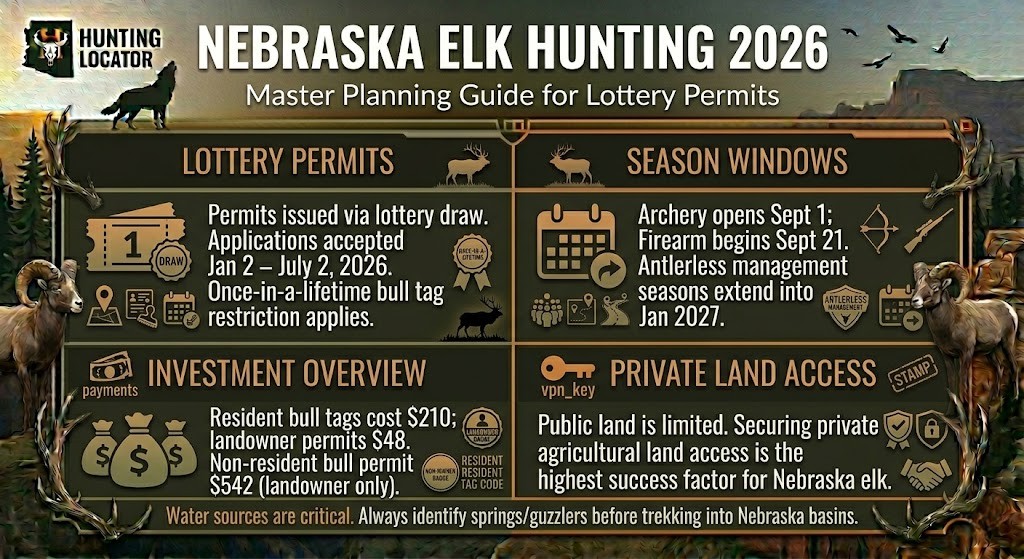
Nebraska elk hunting isn’t something you can wing. Limited permits, strict harvest rules, and lottery-based permit distribution through Nebraska Game and Parks Commission mean every detail matters.
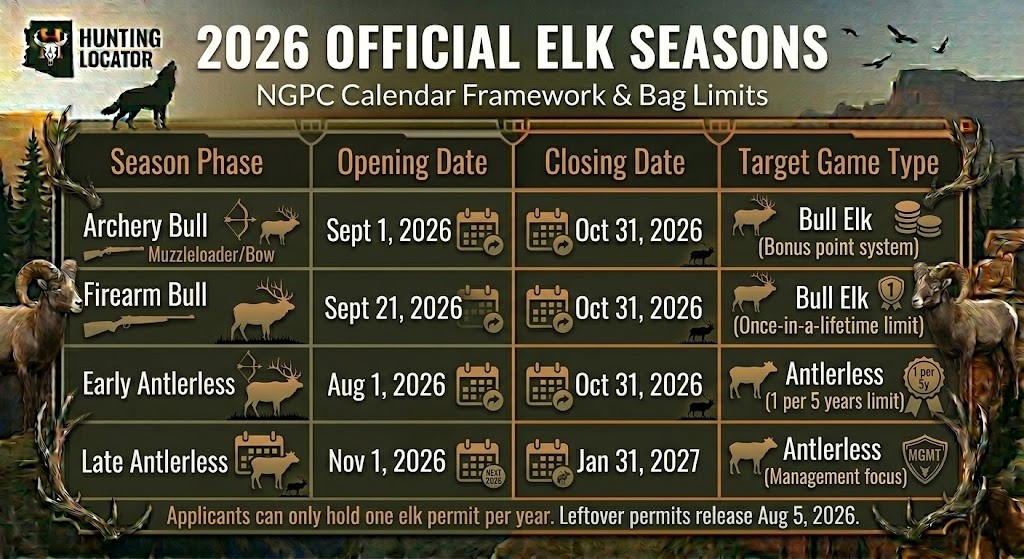
| Season Type | Start Date | End Date | Bag Limit | Key Notes |
|---|---|---|---|---|
| Archery Bull | Sept. 1, 2026 | Oct. 31, 2026 | 1 bull | Bonus point system for drawing |
| Firearm Bull | Sept. 21, 2026 | Oct. 31, 2026 | 1 bull | Once-in-a-lifetime harvest limit |
| Early Antlerless | Aug. 1, 2026 | Oct. 31, 2026 | 1 antlerless | Lottery system; max once per 5 years |
| Late Antlerless | Nov. 1, 2026 | Jan. 31, 2027 | 1 antlerless | Extended season for population management |
Every Nebraska elk hunter needs:
- Valid Nebraska hunting license (resident or nonresident)
- Elk permit from lottery drawing (apply January 2 – July 2, 2026)
- Hunter Education certification for ages 12-29
- Habitat Stamp for nonresidents
- Telecheck harvest report before leaving state
Nebraska Elk Hunting Seasons
Nebraska runs several elk seasons targeting different animals with different weapons. Knowing which season fits your hunting style and goals makes all the difference when you’re choosing permit types.
Archery Bull Season
The 2026 archery bull season opens September 1 and runs through October 31, 2026, per Nebraska Game and Parks Commission regulations. This gives you the longest bull season window, hitting prime rut activity when bulls are bugling and moving.
Archery hunters get the best deal here. Two full months to work with weather patterns and elk behavior. Spot-and-stalk tactics work exceptionally well during archery season when staying quiet matters most. That extended timeframe? It’s huge when you’re working with a once-in-a-lifetime bull tag.
Firearm Bull Season
Firearm bull season runs September 21 through October 31, 2026. Shorter window than archery, but you get the range advantage that Nebraska’s open country demands.
Here’s the kicker: harvest a bull during this season and you can never draw another general bull permit. Ever. That once-in-a-lifetime restriction means you better get it right the first time. Most firearm hunters prefer the extended range capability for Nebraska’s terrain, but that compressed season creates serious hunting pressure.
Early Antlerless Season
Early antlerless season kicks off August 1 and runs through October 31, 2026—earliest opener of any Nebraska elk season. This targets cow elk for population management through a separate lottery system from the bonus point setup used for bulls.
Antlerless permits max out at one every five years, so it’s still a significant opportunity. August hunting means heat and different elk patterns compared to fall hunting. But that long season gives you flexibility to work around weather and find the right conditions.
Late Antlerless Season
Late antlerless season extends from November 1, 2026 through January 31, 2027. This helps manage elk numbers while giving hunters opportunity after bull seasons wrap up.
Winter hunting in western Nebraska gets challenging fast. But elk concentrate near food sources during this period, making them more predictable. Hunters watch crop fields during morning and evening hours as elk hit agricultural areas for winter feed. That extended timeframe lets you plan around severe weather while capitalizing on predictable feeding patterns.
Nebraska Elk Licenses and Permits
The permit system breaks down into multiple categories with different costs and requirements, all managed through Nebraska Game and Parks Commission.
Nebraska Hunting Licenses
You need a valid Nebraska hunting license before you can even think about elk permits. The license is separate from your elk permit and required regardless of which permit type you pursue.
| License Type | Eligibility | Key Requirements |
|---|---|---|
| Resident Hunting License | Nebraska residents | Proof of residency |
| Nonresident Hunting License | Out-of-state hunters | Valid ID; Habitat Stamp required |
| Youth License | Ages 12-15 | Hunter Education required |
Hunter Education is mandatory for hunters ages 12-29 using firearms, and Bowhunter Education is required for ages 12-29 hunting big game with archery equipment. Get your licenses through GoOutdoorsNE.com any time of year.
Nebraska Elk Permits
Nebraska elk permits split into three main categories: General Bull, General Antlerless, and Landowner permits. Every elk permit requires going through the drawing system with different drawing methods and restrictions.
General Bull permits use a bonus-point system where unsuccessful applicants build points for future drawings. General Antlerless permits run on a lottery system after the Bull permit drawing concludes.
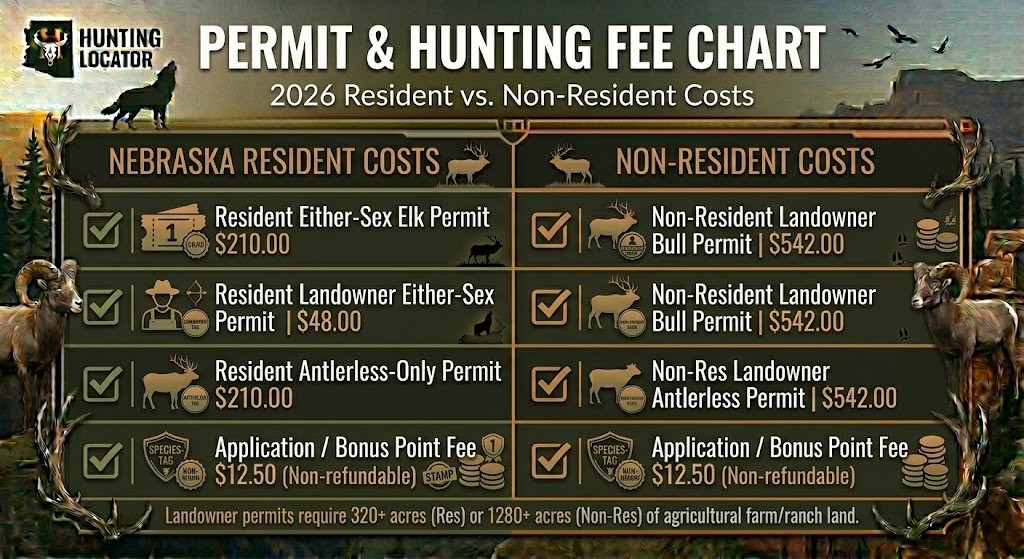
| Permit Type | Resident Cost | Nonresident Cost | Notes |
|---|---|---|---|
| Either Sex or Antlerless | $210 (includes $11 application fee) | — | General drawing |
| Landowner Permit | $48-$55 (includes $10-$11 application fee) | $542 (includes application fee) | Requires land ownership verification |
| Preference Point Only | $55 | $602 | For building points without entering draw |
| Super Tag Lottery | $11.50-$29 | $11.50-$29 | Multi-species entry options |
Application Timeline:
- Application Period: January 2 – July 2, 2026
- Draw Results Available: On or before June 19, 2026
- Leftover Permits Available: August 5, 2026 at 10 a.m. Central Time
Critical Restrictions: You can only hold one elk permit per year and submit one application annually. General Bull harvest is once in a lifetime, while General Antlerless permits max out at one every five years.
Landowner Permit Eligibility:
Acreage Requirements:
- Resident landowners: Must own at least 320 acres OR lease at least 640 acres of farm/ranch land for agricultural purposes
- Nonresident landowners: Must own at least 1,280 acres of farm/ranch land for agricultural purposes
- Important: Land leased for hunting or recreational purposes doesn’t qualify for landowner permits
Application Periods:
- Period 1: Third Monday in May at 1 p.m. through first Friday in June
- Period 2: First Monday in August at 1 p.m. (leftover permits)
Where to Hunt Elk in Nebraska
Drawing your elk permit is just the beginning. Finding quality hunting ground—especially private land access—often determines whether your once-in-a-lifetime opportunity pays off or becomes a frustrating lesson in poor planning.
Best Public Lands
Public land exists, but elk activity concentrates heavily on private properties. Still, public land options exist for hunters without private connections.
Check the Public Access Atlas from Nebraska Game and Parks Commission for detailed public hunting land information. Your public land options include:
- Wildlife Management Areas: Nebraska Game and Parks manages 250+ WMAs open year-round for hunting; check the Public Access Atlas for locations within elk units
- National Forest Land: Nebraska National Forest portions fall within elk hunting units
- Open Fields and Waters Program: 380,000+ acres of private land enrolled for walk-in hunting access; check current enrollment maps
- Unit 15 Flexibility: Permits for Units 1-12, 14, 131 and 132 work in Unit 15 for elk harvest in eastern Nebraska
Unit Selection Strategy: Units 1-7 match historic elk use areas with quality and permit success similar to previous years. Units 8-12, 14, 131 and 132 cover peripheral areas where elk use is unpredictable, with lower quality and success rates.
Guided Hunts and Outfitters
Since this is a once-in-a-lifetime harvest for residents, many successful tag holders hire outfitters to secure private access and maximize success chances. Securing private access or working with an outfitter significantly improves success chances.
When You Should Consider an Outfitter:
- Zero connections to private landowners in elk country
- Unfamiliar with Nebraska’s elk habitat and terrain
- Want professional scouting and local knowledge
- Prefer guided experience with logistics handled
What to Look For:
- Verify legitimate private land access in your permitted unit
- Ask about success rates and hunting methods
- Confirm what’s included (lodging, meals, game processing, etc.)
- Check references from previous elk hunters
Private Land Hunting with Hunting Locator
Research consistently shows the best elk habitats and hunting spots are primarily on private property, with nearly all encounters and harvests occurring on private lands. Landowner permission is always required for private land hunting.
Traditional networking with local farmers and ranchers takes forever and usually fails for out-of-area hunters. Many successful elk hunters secure access through hunting leases, providing guaranteed access to quality properties with limited hunting pressure.
Hunting Locator: Your Private Land Solution
Finding quality private land for elk hunting just got easier. Hunting Locator connects hunters directly with Nebraska landowners offering hunting leases and land sales, eliminating the guesswork and rejection from cold-calling landowners. Our platform provides direct access to verified landowners with elk hunting opportunities, detailed property information, and secure communication tools.
Check out Hunting Locator’s Nebraska listings to browse available elk hunting properties and connect with landowners ready to lease their land to qualified hunters.
Elk Hunting Tips
Success in Nebraska elk country requires adapting your strategy to the state’s unique terrain and elk behavior. Due to varied terrain, many hunters prefer spot-and-stalk methods, while others watch promising crop fields during morning or evening hours.
Essential Nebraska Elk Hunting Strategies:
- Scout Before Season Opens – Permit holders should make at least one trip to elk country before hunting season to finalize access or scout potential hunting areas. Use this time to identify travel corridors, feeding areas, and bedding locations.
- Master Spot-and-Stalk Techniques – Spot and stalk involves locating animals from distance, usually from high vantage points, then stalking on foot, requiring patience, stealth, and keen knowledge of animal behavior. Nebraska’s rolling hills and open country make this the go-to method.
- Focus on Agricultural Areas – Hunters watch promising crop fields during morning or evening hours, similar to deer hunting. Elk regularly feed in corn, alfalfa, and wheat fields during early morning and late evening.
- Hunt Water Sources – The Pine Ridge region features rugged buttes and ponderosa forests that elk prefer, with the Niobrara River corridor creating natural travel routes for migrating herds. Focus on creeks, stock tanks, and natural springs.
- Understand Terrain Advantages – Prime elk territory includes ponderosa timber, creeks, water holes, badlands, cultivated fields, and open prairie mixed with deep rocky canyons. Use high vantage points for glassing and plan stalking routes through cover.
- Prepare for Variable Weather – Pack for Nebraska’s variable fall weather conditions. Weather changes dramatically affect elk movement and behavior patterns.
More Resources from Hunting Locator
Hunting Locator provides comprehensive resources to help Nebraska hunters succeed across all game species and hunting situations:
- Nebraska Hunting Season Guide – Complete overview of all Nebraska hunting seasons, regulations, and opportunities for the current year
- Nebraska Deer Hunting Season – Detailed guide to Nebraska’s extensive deer hunting opportunities and prime locations
- Nebraska Turkey Hunting Season – Spring and fall turkey hunting strategies and season information for Nebraska hunters
- Nebraska Antelope Hunting Season – Pronghorn hunting guide covering units, tactics, and access in Nebraska’s antelope country
- Nebraska Waterfowl Hunting Season – Duck and goose hunting along the Central Flyway with season dates and top locations
- Hunting Locator Store – Quality hunting gear and equipment specifically selected for Nebraska hunting conditions
FAQ
When do I need to apply for Nebraska elk permits in 2026?
Submit applications online at GoOutdoorsNE.com during applicable periods from January 2 through July 2, 2026. Draw results will be available on or before June 19, 2026, with leftover draw permits available for purchase on August 5, 2026, at 10 a.m. Central Time.
Can I hunt elk on public land in Nebraska?
Yes, but while public land is available, elk activity concentrates on private properties. Check the Public Access Atlas for detailed public hunting land information in Nebraska, showing federal, state, and conservation partner lands open to hunting.
How many times can I harvest an elk in Nebraska?
General Bull harvest limit is once in a lifetime, while General Antlerless permits are limited to one every five years maximum. This makes proper planning and execution absolutely critical for hunting success.
What happens if I don’t draw an elk permit?
You’ll accumulate preference points for future drawings if you applied for a bull permit. Leftover draw permits will be available for purchase on August 5, 2026, at 10 a.m. Central Time for hunters who didn’t draw in the initial lottery.
Do I need Hunter Education to hunt elk in Nebraska?
Hunter Education is required for hunters ages 12 through 29 who hunt with firearms, and Bowhunter Education is required for those hunting big game with archery equipment in the same age range.
Which elk hunting units offer the best success rates?
The Final Shot
Your Nebraska elk hunting adventure represents way more than just another hunting season. It’s a once-in-a-lifetime shot at pursuing one of North America’s most magnificent game animals in the heart of the Great Plains. With solid planning, quality gear from the Hunting Locator Store, and access to prime hunting ground, your 2026 elk hunt can become the hunting story you’ll tell for decades.
Building preference points for future applications or already drew your golden ticket? Remember that success often comes down to land access. Don’t leave your once-in-a-lifetime hunt to chance. Secure quality private land access through Hunting Locator’s Nebraska listings and give yourself every advantage for the hunt of a lifetime.


