This Nebraska game bird guide lays out every 2026-27 season date, bag limit, and regulation, pulled directly from the Nebraska Game and Parks Commission. Before you head out, you can gear up for opening day so you’re not scrambling the week before your trip.
Here’s what’s covered:
- Every 2026-27 season date, bag limit, and regulation in one reference table
- Which licenses, permits, and stamps you need, and what they cost
- Where to hunt: public WMAs, private leases, and guided options
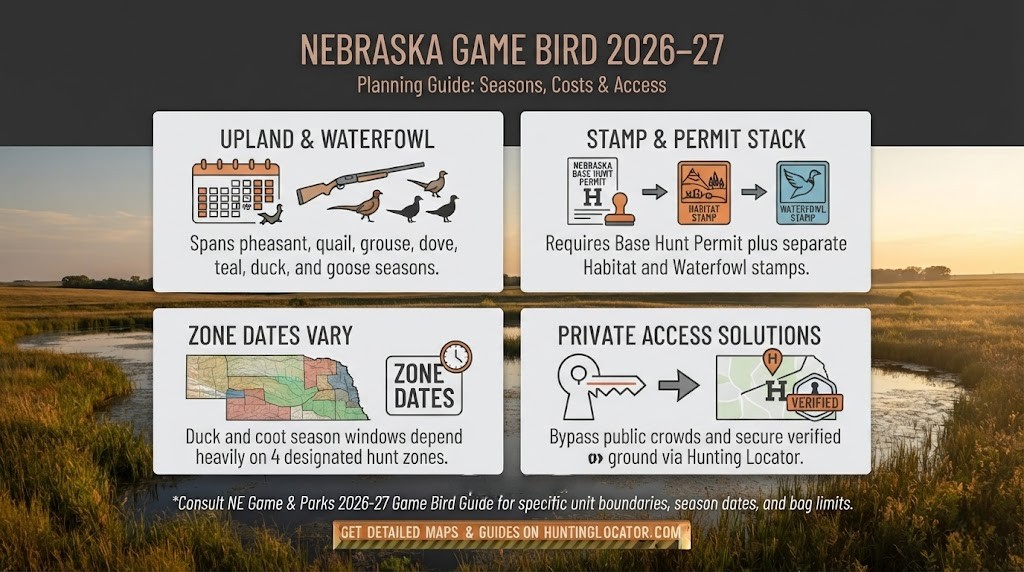
Nebraska Game Bird Season: Quick Overview
Every date below comes from the official Nebraska Game and Parks seasons page. Here’s the full 2026-27 lineup.
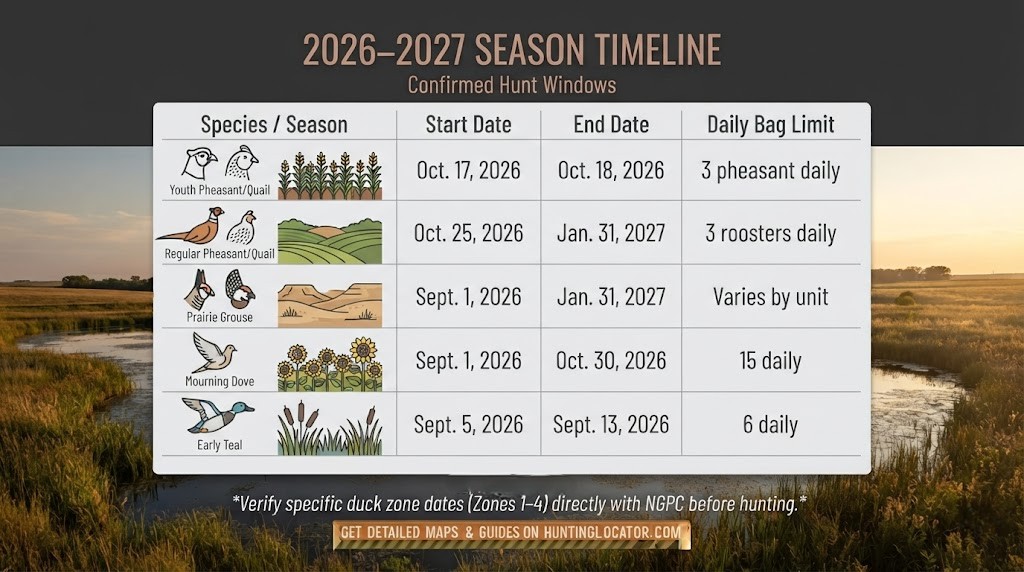
| Species | Season Type | Dates | Daily Bag Limit | Notes |
|---|---|---|---|---|
| Pheasant/Quail/Partridge | Youth | Oct 17–18, 2026 | 3 pheasant daily | Hunters 15 & under |
| Pheasant/Quail/Partridge | Regular | Oct 25, 2026–Jan 31, 2027 | 3 pheasant daily | Roosters only |
| Prairie Grouse | Regular | Sep 1, 2026–Jan 31, 2027 | Varies by unit | Special permits in some units |
| Dove | Regular | Sep 1–Oct 30, 2026 | 15 daily | Mourning dove |
| Teal | Early (Both Zones) | Sep 5–13, 2026 | 6 daily | Requires waterfowl stamp |
| Duck & Coot | Zone 1 | Oct 10–Dec 22, 2026 | Varies by species | |
| Duck & Coot | Zone 2 Low Plains | Oct 3–Dec 15, 2026 | Varies by species | |
| Duck & Coot | Zone 2 High Plains | Jan 6–27, 2027 | Varies by species | |
| Duck & Coot | Zone 3 High Plains | Oct 24, 2026–Jan 5, 2027 | Varies by species | |
| Duck & Coot | Zone 4 | Oct 24, 2026–Jan 5, 2027 | Varies by species | |
| White-fronted Goose | Statewide | Oct 3–Dec 13, 2026 | 3 daily | |
| White-fronted Goose | Statewide (Late) | Jan 24–Feb 8, 2027 | 3 daily | |
| Light Goose | Statewide | Oct 3–Dec 30, 2026 | No limit | |
| Light Goose | Statewide (Late) | Jan 24–Feb 8, 2027 | No limit | |
| Light Goose | Conservation (East) | Feb 10–Apr 15, 2027 | No limit | |
| Light Goose | Conservation (West) | Feb 10–Apr 5, 2027 | No limit |
You’ll also need the right paperwork before heading out:
- Hunt Permit (16+): $20
- Youth Hunt Permit (15 & under): Free
- Habitat Stamp: Required for most small game/bird hunters
- Waterfowl Stamp: Required in addition to the habitat stamp for ducks and geese
- Hunter Education: Required for hunters ages 12–29 hunting with a firearm; youth under 12 must be accompanied by a licensed adult 19+
Costs and the buying process are covered in detail below.
Nebraska Game Bird Hunting Seasons
Seasons here run from upland birds — pheasant, quail, prairie grouse — through migratory species: dove, teal, ducks, and geese. Waterfowl zone structures get their own breakdown below so you know which dates apply to you.
Pheasant, Quail & Partridge Season
Nebraska’s marquee upland season runs October 25, 2026 through January 31, 2027, with a daily bag limit of 3 pheasant (roosters only). Quail and partridge run the same dates, though quail carry a separate daily limit of 8 birds. The southeastern county tier holds the state’s highest quail density. Hunters must leave the head or one leg attached to any pheasant or grouse for species identification.
For a younger hunter, the youth-only weekend runs October 17–18, 2026, open exclusively to hunters 15 and under, with the same 3-bird limit and much less hunting pressure than the regular opener. For more on upland strategy and regional detail, see the Nebraska small game season details.
Prairie Grouse Season
Prairie grouse season runs September 1, 2026 through January 31, 2027, with bag limits varying by management unit. Certain units east of Highway 81 require special permits as part of the state’s population management approach in those areas — check current unit-specific rules before you go. Because the season opens September 1, residents can fit in an early hunt well before pheasant season starts.
Dove Season
Mourning dove season runs September 1 through October 30, 2026, with a 15-bird daily bag limit, one of the more generous limits in the state’s bird lineup. It’s also a good beginner-friendly opener for introducing a new hunter to wingshooting before pheasant season.
Early Teal Season
The early teal season runs September 5–13, 2026 in both zones statewide, with a 6-bird daily limit. This is Nebraska’s first migratory bird hunt of the fall, and it requires the waterfowl stamp in addition to your base hunting permit (more on that distinction in the licenses section below). For the full fall and winter duck and goose calendar, see the Nebraska waterfowl season guide.
Duck & Coot Season (by Zone)
Nebraska splits duck season into zones — Zone 1, Zone 2 (further divided into Low Plains and High Plains), Zone 3 High Plains, and Zone 4 — and your season dates depend on which zone you’re hunting:
| Zone | Dates |
|---|---|
| Zone 1 | Oct 10–Dec 22, 2026 |
| Zone 2 Low Plains | Oct 3–Dec 15, 2026 |
| Zone 2 High Plains | Jan 6–27, 2027 |
| Zone 3 High Plains | Oct 24, 2026–Jan 5, 2027 |
| Zone 4 | Oct 24, 2026–Jan 5, 2027 |
Bag limits vary by species within the duck and coot season, so confirm species-specific numbers with NGPC before you head out. Non-residents planning a trip should nail down their target zone before buying a license and stamps — hunting the wrong dates for your zone is an easy mistake to make.
Goose Season (White-fronted & Light)
White-fronted goose season runs statewide October 3–December 13, 2026, with a 3-bird daily limit, plus a late season from January 24–February 8, 2027. Light goose season runs statewide October 3–December 30, 2026 with no daily limit, followed by the same late window of January 24–February 8, 2027, also unlimited.
Nebraska also runs a spring light goose conservation order to address snow goose overpopulation, a management concern across the flyway. The East zone runs February 10–April 15, 2027, while the West zone runs February 10–April 5, 2027, both with no daily limit.
Nebraska Licenses and Permits
Once you know your seasons, the next step is making sure you’re legal to hunt them. Everything runs through the state’s GoOutdoorsNE portal. Fees below reflect the most current confirmed figures, but double-check pricing on GoOutdoorsNE before you buy, since state fees can shift year to year.
Nebraska Hunting Licenses
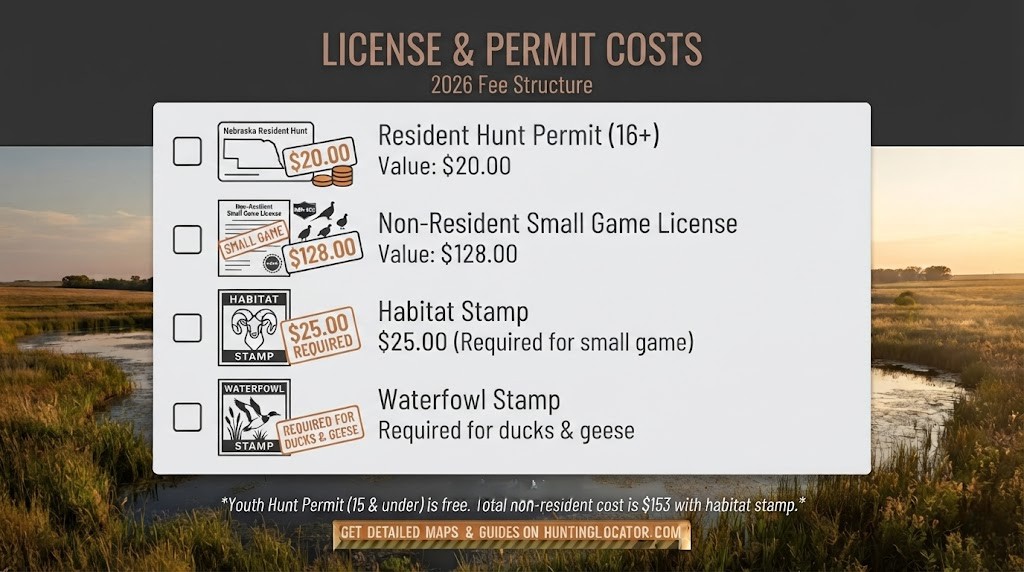
| Permit/Stamp | Who Needs It | Cost |
|---|---|---|
| Hunt Permit (ages 16+) | Required to hunt game birds | $20 |
| Youth Hunt Permit (15 & under) | Youth hunters | Free |
| Habitat Stamp | Most small game/bird hunters | $25 (confirm current on GoOutdoorsNE) |
| Waterfowl Stamp | Duck & goose hunters (in addition to habitat stamp) | Confirm current on GoOutdoorsNE |
| Non-Resident Annual Small Game License | Out-of-state bird hunters | $128 (+ $25 habitat = $153 total) |
For anyone traveling in from out of state, $128 plus the $25 habitat stamp puts your total at $153.
Note that the habitat stamp and waterfowl stamp are two different requirements. The habitat stamp covers most small game and bird hunting broadly, while the waterfowl stamp is an additional, separate requirement specifically for ducks and geese. Hunting both pheasant and ducks on the same trip means you’ll need both stamps. Youth hunters should also check for any free or low-cost validations that may still apply under the free youth permit.
Nebraska Hunting Permits & How to Buy Them
- Confirm your species, zone, and season dates using the overview table above so you know exactly what you’re buying for
- Complete hunter education if required — mandatory for hunters ages 12–29 hunting with a firearm
- Go to GoOutdoorsNE.com, a Nebraska Game and Parks office, or an authorized vendor to make your purchase
- Buy your Hunt Permit and Habitat Stamp, adding a Waterfowl Stamp if you’re hunting ducks or geese
- Carry proof afield and keep any required species-ID parts (head or one leg on pheasant/grouse) attached to harvested birds
All permits and stamps are valid for the current calendar year, so plan your purchase timing accordingly if your season spans a year-end boundary, as several of the waterfowl seasons do.
If you’re bringing a young hunter along, firearm hunter education is required for ages 12–29, and any youth under 12 hunting with a firearm or crossbow must be accompanied by a licensed adult 19 or older. Nebraska also offers hybrid and online hunter education options: hunters ages 11–15 complete an online course plus an in-person Hunt Safe session, while hunters 16–29 can certify fully online.
Where to Hunt Game Birds in Nebraska
Dates and permits only get you halfway there. Nebraska offers three main paths: public land, private leases, and guided hunts, and which one fits depends on your budget, timeline, and how much control you want over your ground.
Best Public Lands
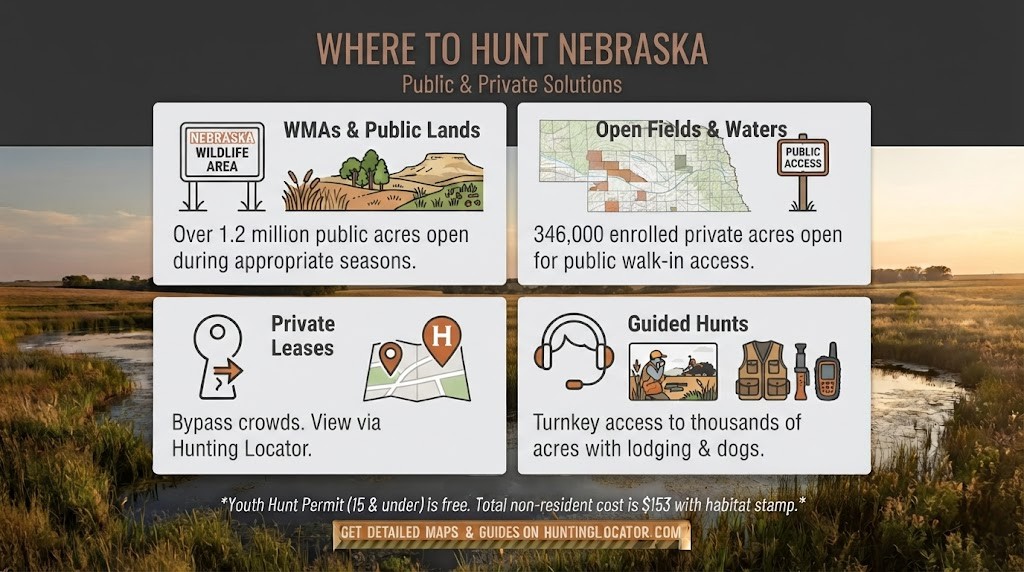
- WMAs: Nebraska has over 1.2 million acres of publicly accessible hunting land, including Wildlife Management Areas open during appropriate seasons
- Open Fields and Waters Program: Roughly 346,000 acres of private land enrolled for public hunting access, a program many hunters don’t know exists
- CRP fields: Conservation lands hold most of Nebraska’s pheasant population — focus your effort where CRP grasses meet farm ground
- Top pheasant country: The southwest and south-central counties — Chase, Dundy, Hitchcock, Hayes, Frontier, Red Willow, and Furnas — consistently produce the best bird numbers, while the southeastern tier (Richardson, Nemaha, Pawnee, Johnson, Gage) is the best bet for quail
Public land is a reasonable starting point if you’re not ready to commit to a lease, or if you’re introducing a beginner to the sport without a big upfront investment.
Private Land Hunting with Hunting Locator
Public land access is real, but it comes with real competition, and for hunters driving in from out of state, wasting travel days scouting inaccessible ground eats into a limited trip. That’s the problem private land access solves.
There are generally two paths with private ground: leasing for a season, or buying outright. Leasing makes sense for an annual trip where you want reliable access without a long-term commitment — it’s the more common option for non-resident hunters and residents looking to upgrade their access. Buying makes more sense for permanent ground you can manage and improve year after year, whether that’s planting food plots, maintaining CRP cover, or building a camp.
The Hunting Locator platform connects hunters directly with landowners who are ready to lease or sell, cutting out the cold-calling that used to define the private land search. Instead of hoping you know someone who knows a farmer, you can search listings, connect directly with landowners, and lock down access on your own timeline.
You can browse Nebraska hunting leases available now and get your ground secured before the fall rush. This isn’t only a non-resident tool — Nebraska residents use leases to upgrade their access too, and mentors looking for safe, low-pressure ground for a first-time youth hunt often find what they need through a private lease.
Guided Hunts
For hunters short on time, new to Nebraska, or looking for a turnkey experience, a guided hunt removes most of the guesswork. Guided pheasant operations typically give access to thousands of acres of farmland, CRP, and native prairie — ground that would otherwise take years to scout and build relationships to access.
Most guided operations offer a similar core package:
- Access to managed private ground spanning thousands of acres of farmland, CRP, and prairie habitat specifically managed for bird numbers
- Lodging arrangements for multi-day hunts, often on-site or nearby, so you’re not driving long distances between hunts and rest
- Dogs and instruction for hunters who want the full experience without owning or training their own bird dog
Guided hunts work especially well for non-resident hunters on a tight schedule and for beginners who want expert guidance on their first serious bird hunt.
Game Bird Hunting Tips
- Hunt the CRP edges: Focus your effort where CRP grasses meet crop fields — that transition zone is where pheasant and quail hold tightest.
- Time your season: Early-season birds hold tighter and flush more predictably, while late-season roosters get wild and educated — adjust your approach as the season progresses.
- Know your zone before you go: This matters most for waterfowl — confirm which duck zone you’re hunting so you’re working from the correct dates.
- Bring the right gear: A reliable 12- or 20-gauge shotgun, blaze orange, sturdy upland boots, and a good bird vest make long walks through cover far more productive. Shop upland hunting gear to get outfitted before your trip.
- Start beginners on dove or pheasant: Generous bag limits and forgiving cover make these two species good first hunts for a new or youth hunter.
- Mind species-ID rules: Keep the head or one leg attached on harvested pheasant and grouse — it’s a legal requirement for species identification.
More Resources from Hunting Locator
Planning a bigger Nebraska trip, or hunting more than birds this season? Here’s more from Hunting Locator.
- Nebraska master hub: see all Nebraska seasons, a starting point for every species Nebraska offers.
- Game bird, waterfowl & small game cluster:
- the parent Nebraska game bird guide, the broader bird hunting overview this guide builds on.
- Nebraska waterfowl season details, deeper detail on duck and goose zones and strategy.
- Nebraska small game season guide, covering pheasant, quail, and other small game.
- Nebraska turkey season, for anyone planning a spring trip too.
- Big game cluster (plan a combo trip):
- Leases and gear:
- browse Nebraska hunting leases, for current private land access available across the state.
Frequently Asked Questions
How are Nebraska’s duck hunting zones structured for 2026?
Nebraska divides duck seasons into Zones 1–4, with Zone 2 further split into Low Plains and High Plains, and each zone runs its own set of dates. Zone 1, for example, runs October 10–December 22, 2026. Confirm your specific zone’s dates directly with NGPC before you plan your trip.
How much does a non-resident Nebraska bird hunting license cost in 2026?
A non-resident annual small game license costs $128, plus the mandatory $25 habitat stamp, bringing your total to $153. Fees can change year to year, so confirm current pricing on GoOutdoorsNE before you buy.
What’s the difference between the habitat stamp and the waterfowl stamp?
The habitat stamp is required for most small game and bird hunters in Nebraska, while the waterfowl stamp is an additional requirement specifically for ducks and geese. Hunting waterfowl means you’ll need both stamps on top of your base hunting permit.
Does Nebraska require hunter education for youth hunters?
Yes. Firearm hunter education is required for all hunters ages 12–29. Youth under 12 hunting with a firearm or crossbow must be accompanied by a licensed adult age 19 or older. Nebraska also offers online and hybrid hunter education courses.
When is the 2026 Nebraska youth pheasant season?
The youth-only pheasant weekend runs October 17–18, 2026, for hunters 15 and under. It carries the same 3-bird daily limit as the regular season but with far less hunting pressure than the October 25 opener.
Where are the best pheasant hunting counties in Nebraska?
The southwest and south-central counties — Chase, Dundy, Hitchcock, Hayes, Frontier, Red Willow, and Furnas — consistently produce Nebraska’s best pheasant numbers, largely thanks to abundant CRP-rich ground that supports strong bird populations.
The Final Shot
This guide covers what a 2026 Nebraska bird season requires: the dates in one reference table, a clear picture of license and stamp requirements, and options for where you’ll actually hunt.
From here, confirm your zone and season dates, buy your permit and stamps through GoOutdoorsNE, and lock down your access early. Every date in this guide traces back to the Nebraska Game and Parks Commission.
Access is the piece most hunters underestimate until it’s too late. Whether you’re browsing leases, scouting public ground, or lining up a guided hunt, use this guide as a planning reference and get your ground squared away before the fall rush hits.


